• Pacific High School and Sitka Conservation Society partner up to serve local fish in school lunches

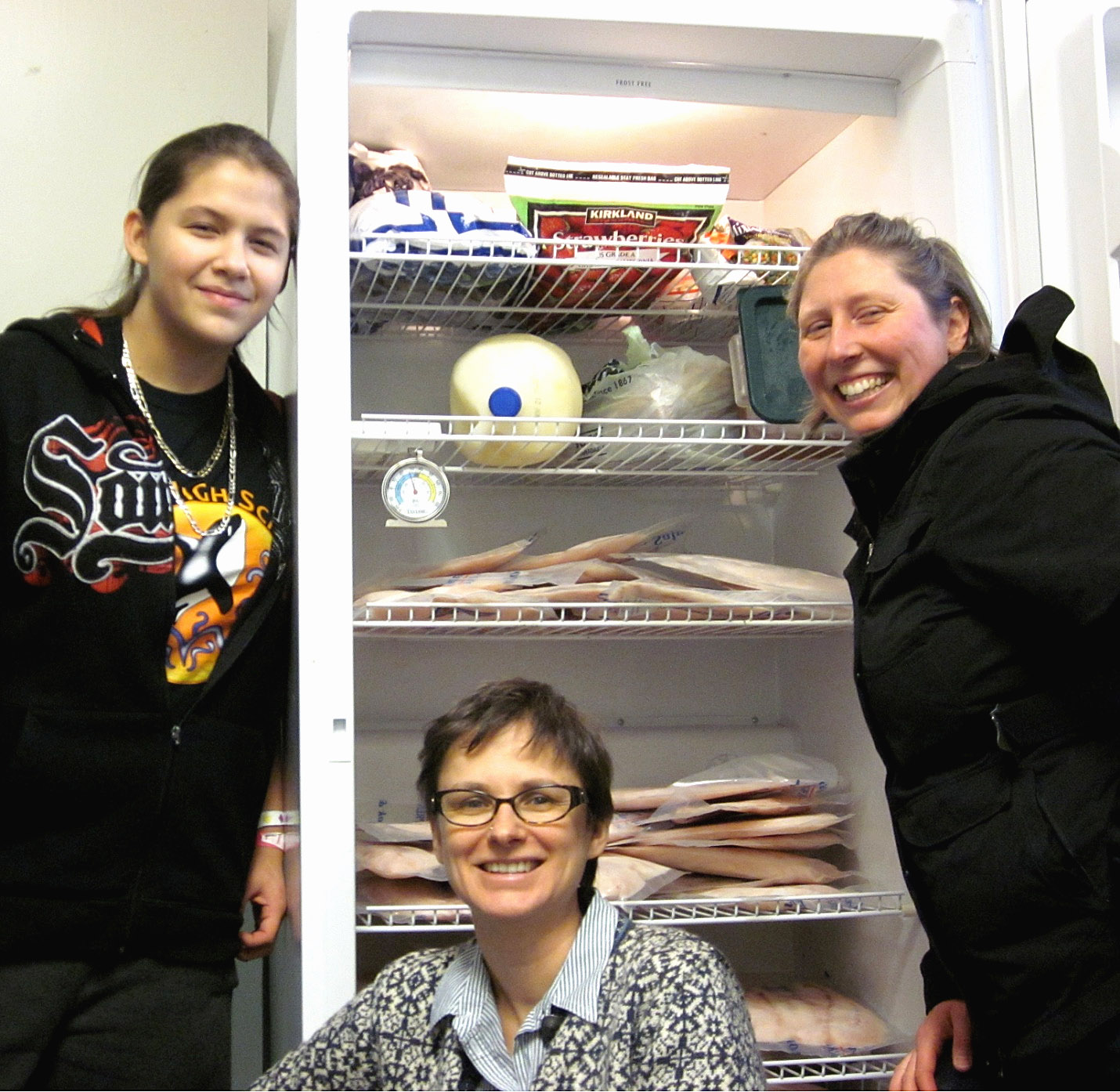
Pacific High School student Jessie Young, left, co-principal Sarah Ferrency, center, and lunch coordinator Johanna Willingham load rockfish into the freezer at Pacific High School. an alternative high school in Sitka, Alaska. (PHOTO COURTESY OF TRACY GAGNON / SITKA CONSERVATION SOCIETY)

Pacific High School student Jessie Young, left, co-principal Sarah Ferrency, center, and lunch coordinator Johanna Willingham load rockfish into the freezer at Pacific High School. an alternative high school in Sitka, Alaska. (PHOTO COURTESY OF TRACY GAGNON / SITKA CONSERVATION SOCIETY)

Pacific High School now serves local seafood in the cafeteria and joins the growing ranks of schools connecting to local foods. Starting Wednesday, Feb. 1, Pacific High students will have a choice of local seafood dishes twice a month due to a partnership with the Sitka Conservation Society.

Sitka, Alaska, is the ninth largest fishing port in the country, but only recently did school children have access to the abundance of local seafood in school lunches. The project began in 2010 after getting more fish in school lunches was voted on as one of Sitka’s four health priorities at the Sitka Health Summit. The Sitka Conservation Society took the lead on the project and partnered with Blatchley Middle School in the winter of 2010-11 school year and then with Keet Gooshi Heen Elementary School in 2011-12 to launch a Fish to Schools program. Due to the success of that program, it has evolved and spread to another school in the community.

Tracy Gagnon, Fish to Schools coordinator at Sitka Conservation Society said, “To kick off the new partnership, SCS’s Fish to Schools program will cook with Pacific High students to rally support for local fish lunches. A favorite recipe will be chosen for an upcoming Fish to Schools benefit.”

LOCALLY MADE– Americorps Volunteer Lauren Hahn, left, and Pacific High School students in the culinary arts program, Brendan Didrickson and Jenny Jeter, prepare a lunch of Caribbean rockfish with sweet potato fries, baked apples and wild rice at the school on Wednesday, Feb. 1. This was the first Pacific High lunch in the Fish to Schools program. The program began in 2010 as a Sitka Health Summit project when Sitka Conservation Society joined Blatchley Middle School to serve locally caught fish in school lunches. Since then, Keet Gooshi Heen Elementary School and now Pacific High have joined the twice-monthly program. On Wednesday, Feb. 8, SCS is inviting commercial fishers to join students at Keet for lunch. (Daily Sitka Sentinel photo by James Poulson, printed in the Tuesday, Feb. 7, 2012, edition)

LOCALLY MADE– Americorps Volunteer Lauren Hahn, left, and Pacific High School students in the culinary arts program, Brendan Didrickson and Jenny Jeter, prepare a lunch of Caribbean rockfish with sweet potato fries, baked apples and wild rice at the school on Wednesday, Feb. 1. This was the first Pacific High lunch in the Fish to Schools program. The program began in 2010 as a Sitka Health Summit project when Sitka Conservation Society joined Blatchley Middle School to serve locally caught fish in school lunches. Since then, Keet Gooshi Heen Elementary School and now Pacific High have joined the twice-monthly program. On Wednesday, Feb. 8, SCS is inviting commercial fishers to join students at Keet for lunch. (Daily Sitka Sentinel photo by James Poulson, printed in the Tuesday, Feb. 7, 2012, edition)

Unlike at the middle and elementary schools, Pacific High (the Sitka School District’s alternative high school) has more flexibility in the dishes it prepares with local fish. For example, the first Pacific High local seafood lunch will be Caribbean rockfish with sweet potato fries, baked apples and wild rice. Students help prepare the meals through the school’s culinary arts program. Every student earns their food handlers’ card and annually they cycle through a six-week cooking class. Students graduate high school with enough experience to enter into the cooking industry, bringing with them the knowledge to prepare scratch meals with healthy and local ingredients.

“We are striving to change the system by incorporating more local and traditional foods that the students want to eat,” said Johanna Willingham, Pacific High School lunch coordinator. “Through our innovative food-based meal program, the students are learning valuable life skills by developing recipes they enjoy and cooking with their local bounty.”

The Fish to Schools program creates new partnerships by uniting the local conservation organization and high school with community-based processors and fishermen. That partnership allows more students access to healthy lunches, as fish are packed with vitamins, proteins and omega-3 fatty acids that promote healthy hearts and healthy brains.

“Our community depends on the fish that comes out of the ocean, yet our school lunches were so disconnected from our local resources,” said Beth Short-Rhoads, Fish to Schools volunteer organizer, mother and fishing woman. “Thanks to Fish to Schools, our children now have access to local seafood. The fact that it is incredibly healthy is an even bigger bonus.”

There are more than 9,000 schools across the United States involved with local Farm to Schools programs. The majority of the programs serve land-based foods in the cafeterias, so Pacific High adds another layer by providing local seafood to students. This is an exciting opportunity to be part of the growing farm — or fish — to school movement across the country,” Gagnon said.

The Fish to Schools program also serves up local fish dishes at Blatchley Middle School and Keet Gooshi Heen Elementary School on the second and fourth Wednesdays during the school year. On Wednesday, Feb. 8, the program is honoring local commercial fishermen by inviting them to join the students at lunch so they can share the meal and answer questions the students may have about the fish. (Editor’s note: On Feb. 6, Tracy Gagnon, Beth Short-Rhoads and students Grace Gjertsen, Zofia Danielson and Sienna Reid were interviewed by Robert Woolsey about the We Love Our Fishermen! promotion on the Morning Edition show on KCAW-Raven Radio.)

The Sitka Conservation Society has been working to protect the temperate rain forest of Southeast Alaska and Sitka’s quality of life since 1967. SCS is based in the small coastal town of Sitka, in the heart of the Tongass National Forest, the nation’s largest national forest. For more information, go to http://www.sitkawild.org. To learn more about the Fish to Schools program, contact Tracy Gagnon at tracy@sitkawild.org or 747-7509.

• Sitka Conservation Society hosts a Sitka Salmon Tour for Kids

The Sitka Conservation Society will host a family friendly walking tour of Sitka’s salmon habitat from 5:30-7 p.m. on Friday, Aug. 26, starting at the Sitka Sound Science Center(834 Lincoln St.).The walking tour will explore the magic of salmon from stream to plate. It is similar to the walking tours offered this summer by Sitka Salmon Tours and the Sitka Conservation Society.

This special family friendly walking tour is a benefit for the Fish to Schools program, which provides local fish and stream to plate education in Sitka schools. Tickets are $15 for adults and $5 for children and available at Old Harbor Books. Space is limited to 20 participants.

For more information, contact Sitka Salmon Tours and/or the Sitka Conservation Society at 747-7509 (both can be reached at this number).

• Flier for Sitka Salmon Tour for Kids

• KCAW-Raven Radio highlights new walking tour about salmon in Sitka

Recently, KCAW-Raven Radio summer intern Emily Bender produced a story about a new walking tour that teaches tourists and locals about something near and dear to Sitka’s heart — wild salmon.

According to the story, Nicolaas Mink, owner and tour guide for Sitka Salmon Tours, leads behind-the-scenes walking tours of the local salmon fishery from stream to dinner table.

“The tours are really seeking to raise awareness of among healthy forest, healthy ecosystems, healthy community and we’re really doing that through the lens of our salmon fishery here and to a lesser extent our commercial fishery,” says Mink.

“In many ways, it’s a big interpretive project, we’re taking two dozen sites in Sitka, and stringing them together through a walking tour that’s narrated generally by me.”

Mink said the tour is by foot, rather than by bus, because it’s an eco-friendly way to present the subject. It also follows the philosophy of the Sitka Conservation Society, which helps produce the tours. To learn more and watch an audio slideshow, click this link.

• Sitka photographer Psalm Oines celebrates Lori Adams’ Down-To-Earth U-Pick Garden

Sitka photographer Psalm Oines didn’t look far to find her latest subject for a photo essay. Psalm drove a couple of miles down Sawmill Creek Road to the Down-To-Earth U-Pick Garden owned by Lori Adams. Lori’s garden, located at 2103 Sawmill Creek Road, is popular with people looking for fresh veggies before the Sitka Farmers Markets get started each summer or during the weeks in between the markets. Click this link to see Psalm’s great photos of Lori’s garden. To learn more about Lori (shown here during an August 2010 Sitka Farmers Market) and her garden, go to this link from 2010.

• New group working to start a Sitka Food Co-Op

A new group will meet from 3-5 p.m. on Sunday, July 10, at Balanced Practice yoga/massage studio (208-B Lake St.) to discuss the creation of a Sitka Food Co-Op.

“We are just getting ready to have our first meeting to gather up those interested in being part of a start-up committee, so our goals and ideas will change as we are more clear on what is wanted by the community,” said Ann Betty, who is coordinating the project. “But as of right now, we want to provide a place where locals can sell their goods and a place where we can buy bulk goods for a great price. In the future, we would like to be a full-scale retail co-op, and that will come after much time and research. Right now, we are very new and just getting our ideas together.”

Ann said people are welcome to join the steering committee, and she started an e-mail list and blog site to update people on the project. She asked that people interested in the project can e-mail her at sitkafoodcoop@gmail.com or like the Sitka Food Co-Op page on Facebook.

“Please look over the information below to see how you can be most helpful in this great endeavor,” Ann said. “This initial meeting will go a long way in organizing our efforts to be a valuable community asset. Please respond by email if you will be attending this meeting, or if you can’t and would still like to be a committee member.”

FYI: The Co-op Start-up Steering Committee

The steering committee is responsible for moving the co-op through its early stages, until more formal structures can be established. Depending on time and resources, the committee may do the following tasks itself or assign these tasks to outside professionals:

  • Research and gather information
  • Conduct a preliminary feasibility study
  • Survey potential members
  • Establish a membership structure
  • Recruit members
  • Explore options for financing
  • Pursue initial inquiries with financing agencies
  • Report on progress to members
  • Hold membership meetings as needed
  • Prepare a business plan
  • Coordinate publicity and public relations concerning the co-op

Subcommittees might include:

  • A planning committee to conduct a feasibility study; research locations and eventually handle real estate negotiations; research equipment sources, local regulations, and suppliers; and coordinate preparation of a business plan
  • A finance committee to develop financial projections, research funding options, and coordinate a campaign for member loans
  • A membership committee to research membership structures, prepare information about the co-op and the paperwork needed for membership administration, coordinate recruitment of new members, organize membership communications (newsletters, websites, letters) and meetings, survey members, and plan outreach to the community

Keep in mind that certain committee tasks require a level of confidentiality, responsibility, and follow-up. Depending on what you need people to do, be clear about roles and ensuring accountability.

For more information about food co-ops, please visit the sites http://www.cgin.coop/ or http://www.foodcoopinitiative.coop/resources/toolbox. The Food Co-Op Initiative also produced a short video about starting a food co-operative in your community.

• ‘Getting Real About Food and the Future’ film explains the importance of local food

Why is it so important to promote local foods and local foods systems? This 30-minute video by Christopher B. Bedford explains some of the reasons why local food is so important.

According to the brief synopsis, “The growing oil, water, and climate crises threaten food security in all communities. This new film by Chris Bedford looks at the deeper issues of food security and community survival in this new age of global chaos and scarcity. ‘Getting Real About Food and the Future’ features the wisdom of John McKnight, Bill McDonough, Lester Brown, Bob Costanza, and David Korten in a 30 minute film designed for use in classrooms, meetings, and conferences.”

• 2011 prices set for Alaskans Own community supported fisheries (CSF) seafood subscriptions

It’s time to sign up for your 2011 community supported fisheries (CSF) seafood subscription with Alaskans Own seafood company in Sitka. This is the second summer Alaskans Own has offered CSF seafood subscriptions, and they were very successful last year.

Subscriptions are available in full shares (40 pounds total for the season) and half shares (20 pounds total for the season) and include locally-caught king and coho salmon, halibut, black cod, lingcod and yelloweye. Product is flash-frozen, portioned and vacuum packed — perfect for summer or winter eating. Pick-ups will happen once per month during May, June, July and August.

Subscription costs are $425 for a full share (40 pounds) and $225 for a half share (20 pounds). All proceeds benefit the Fishery Conservation Network (http://www.alaskansown.com/fishery-conservation-network.php).

For more information, call Beth Short at 738-3360 or visit http://www.alaskansown.com/seafood-subscription.php.

• Alaskans Own™ community supported fisheries program expands from Sitka to Juneau

The Juneau Empire on Sunday, Jan. 23, featured an article that Sitka-based Alaskans Own™ seafood cooperative is expanding its Community Supported Fisheries program into Juneau this summer.

Last summer, Alaskans Own™ became the first community supported fisheries (CSF) program in Alaska, using a model popular with farmers called Community Supported Agriculture (CSA) where customers buy a subscription and share in the harvest. In recent weeks there has been news that the Anchorage-based Alaska Marine Conservation Council is going to offer a CSF this year for Kodiak tanner crab, making it the second Alaska program to offer a CSF. With renewed emphasis on local foods, CSFs and CSAs are becoming very popular around the country since they help the customers connect directly with the harvesters.

Alaskans Own™ still is finalizing its plan for this year’s programs in Juneau and Sitka, with prices being set once the long-lining season opens in February and they see what the seafood market price ranges are for the year. Fish quantities may be limited, so Alaskans Own™ suggests signing up for subscriptions early. Full- and half-shares are available, with each share featuring a variety of salmon, halibut, black cod (sablefish), yellow-eye rockfish and other species. Alaskans Own™ also sells some fish during the Sitka Farmers Markets.

For more information, go to the Alaskans Own™ website, e-mail alaskansown@gmail.com, or call 738-3360 (Sitka) or 209-1187 (Juneau).

• Alaska Journal of Commerce article spotlights local food offerings of Sitka chef Josh Peavey

Josh Peavey, right, talks over Baranof beer at a recent all-Alaskan dinner at Bayview Restaurant and Wine Bar in Sitka. The entire menu down to the butter and the bread was made by Peavey with only Alaskan ingredients. (Courtesy Photo Josh Peavey)

Josh Peavey, right, talks over Baranof beer at a recent all-Alaskan dinner at Bayview Restaurant and Wine Bar in Sitka. The entire menu down to the butter and the bread was made by Peavey with only Alaskan ingredients. (Courtesy Photo Josh Peavey)

The Dec. 23-29, 2010, edition of the Alaska Journal of Commerce statewide business weekly newspaper has a feature story about the local food offerings of Sitka chef Josh Peavey. The article also was featured in the Dec. 29-Jan. 4 issue of Capital City Weekly.

Peavey is the executive chef at the New Bayview Restaurant and Wine Bar. He also owns The Alaskan Kitchen catering company. Peavey’s wife, Alicia, headed up the inaugural Sitka Seafood Festival in August.

In the article, Peavey discusses his efforts to serve more local foods in his restaurant and catering meals, even if that means looking elsewhere in Alaska to find ingredients. In November, Peavey hosted an all-Alaska-ingredients fundraising dinner that included some produce from the Sitka Local Foods Network and several types of finfish and shellfish from a variety of Sitka fish companies. The meal also included pork from North Pole, reindeer sausage from Anchorage, dairy products from the Matanuska-Susitna valleys and even beer from Sitka’s own Baranof Island Brewing Co.

• New ‘Field Guide to Seaweeds of Alaska’ will help Sitka residents identify various types of seaweeds

Alaska Natives have been gathering seaweeds and other sea vegetables for centuries, with the seaweeds providing an excellent source of vitamins and minerals. There are dozens of types of seaweeds available in Alaska, and most of them are edible.

The Alaska Sea Grant program from the University of Alaska Fairbanks recently released a new book by Mandy R. Lindeberg and Sandra C. Lindstrom called “Field Guide to Seaweeds of Alaska.” This book is billed as the first and only field guide to more than 100 common seaweeds, seagrasses and marine lichens of Alaska. The book features color photos, written descriptions and it is printed on water-resistant paper.

As part of the Sitka WhaleFest Maritime Market this weekend, one of the authors (Lindeberg) will be in Sitka signing copies of the new guide at 2:45 p.m. on Saturday, Nov. 6, at the Old Harbor Books booth at Harrigan Centennial Hall. Lindeberg is a self-proclaimed “nerdy” Juneau biologist who works for the National Oceanic and Atmospheric Administration/National Marine Fisheries Service Auke Bay Laboratory.

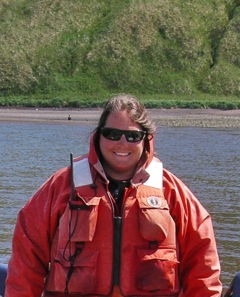
Mandy Lindeberg

Mandy Lindeberg

Lindeberg spent nearly 15 years working on the book with the help of Lindstrom, a professor and researcher in botany and marine ecology at the University of British Columbia who was born and raised in Juneau. Lindeberg took about 80 percent of the photos in the book, hoping to come up with enough decent images so scientists and naturalists had more than the sometimes-hard-to-decipher drawings found in most previous books, while Lindstrom helped with the taxonomic work and reviewed the scientific descriptions.

Lindeberg said the new guidebook will help people be able to better identify the types of seaweeds when they are out gathering (Editor’s note, federal and state subsistence laws prohibit the gathering of seaweed in urban nonsubsistence areas such as Juneau/Douglas and Ketchikan/Saxman, but seaweed gathering is legal in rural areas of Alaska including Sitka and most other Southeast Alaska communities, including areas just outside Juneau/Douglas and Ketchikan/Saxman).

Lindeberg said her guidebook will help people identify the various types of seaweeds, but it does not discuss which seaweeds are edible and how to prepare them, so people might want to use it with another Alaska Sea Grant book, “Common Edible Seaweeds in the Gulf of Alaska,” by Dolly Garza. The new “Field Guide to Seaweeds In Alaska” costs $30 and is available at Old Harbor Books or through the Alaska Sea Grant program’s online bookstore.