• Sitka Health Summit project to get more fish in school lunches to start pilot study

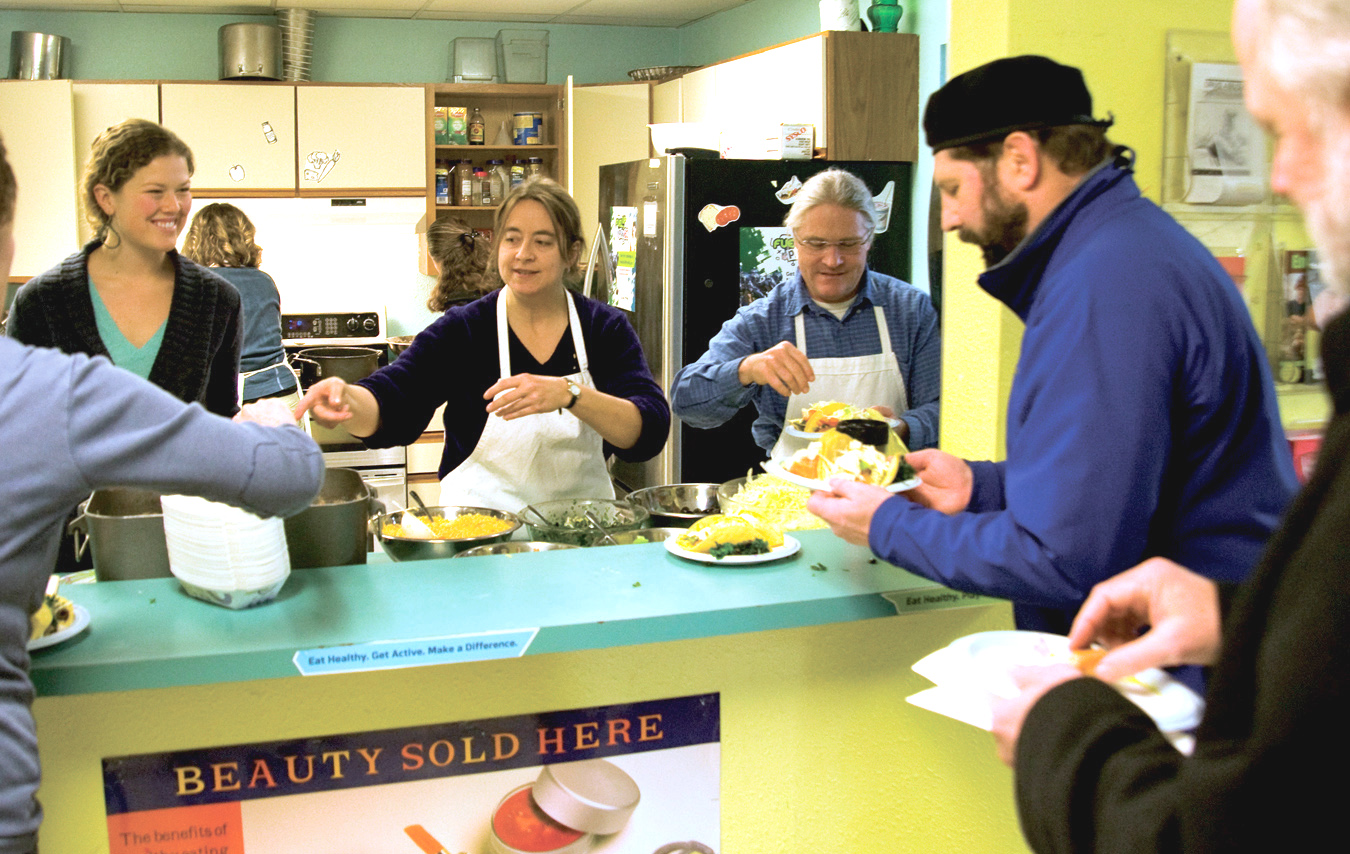
From left, Lexi Fish, Linda Wilson and Kerry MacLane serve up fish tacos at Pacific High recently. At right are Sitka School Board President Lon Garrison and Superintendent Steve Bradshaw. The Sitka School District is considering adding locally caught fish to the school lunch program. (Daily Sitka Sentinel photo by James Poulson)

From left, Lexi Fish, Linda Wilson and Kerry MacLane serve up fish tacos at Pacific High recently. At right are Sitka School Board President Lon Garrison and Superintendent Steve Bradshaw. The Sitka School District is considering adding locally caught fish to the school lunch program. (Daily Sitka Sentinel photo by James Poulson)

Members of the Sitka Health Summit group trying to get more locally caught wild fish served in school lunches met with Sitka school officials Friday, Nov. 19, over a meal of fish tacos and agreed to a pilot study to see how many students will choose fish for lunch.

The project is one of four community health priorities/goals to come out of the 2010 Sitka Health Summit this October. Community members want to have more locally caught wild fish served in school lunches because the food is healthier than the usual school-lunch fare, especially with the Omega 3 fatty acids found in most finfish. Also, by using local fish will help the local commercial fishing industry and there is less of an environmental impact because there are fewer transportation miles used to get the food to Sitka.

On Friday, Nov. 19, members of the project task force — called FISH!, or Fish In Schools, Hooray! — met with Sitka School District Superintendent Steve Bradshaw and other school officials, including NANA Management Services, which has the food service contract for the school district. Representatives from several of Sitka’s fish processors and commercial fishing organizations also attended the fish taco lunch at the Southeast Alaska Career Center (located behind Pacific High School). One of the key issues is trying to find reasonably priced fish that doesn’t exceed the school district’s budget for protein.

During the meeting, the school district and FISH! decided to run a pilot project at Blatchley Middle School starting in January and running through the end of the school year. During the test program, fresh fish (starting with Pacific cod) will be served once a month as one of the four options available to students. If enough of the students select the fish, then the project will spread to all schools next year. The task force will promote the fish through the school newspaper, school newsletter and other local media. The task force will sponsor the cost difference during the first month of the project, with other groups picking up the cost difference in following months.

In addition to the Sitka School District, the task force also is working with Pacific High School (which creates its own menus separate from the district), Mt. Edgecumbe High School (which is run by the Alaska Department of Education and Early Development) and the Sitka Pioneer Home to get more locally caught wild fish into their menus.

(EDITOR’s NOTE: The Wednesday, Nov. 24, 2010, edition of the Daily Sitka Sentinel included a story about the project. The story is posted below as a PDF file, since the Sentinel’s site requires a password.)

• Daily Sitka Sentinel article from Nov. 24, 2010 — Schools Hope to Hook Students on Fish

• Sitka Health Summit project to plant 200 fruit trees gains momentum

A cluster of Parkland apples (photo from the Alaska Pioneer Fruit Growers Association gallery, http://www.apfga.org/)

A cluster of Parkland apples (photo from the Alaska Pioneer Fruit Growers Association gallery, http://www.apfga.org/)

The work group formed during the 2010 Sitka Health Summit to plant 200 fruit trees in Sitka met on Monday, Nov. 8, and the project is gaining momentum.

The group plans to plant 200 apple, crabapple or cherry trees in Sitka before the next Sitka Health Summit on Sept. 30-Oct. 1, 2011. The work group has been researching which trees grow best in Sitka’s climate, researching possible funding sources, and researching possible locations to plant 200 fruit trees around the community. The work group also might plant some berry bushes around town to complement the fruit trees.

The group will go public with some of its plans during the Sitka Conservation Society‘s wild foods potluck and annual meeting from at 5-8 p.m. on Saturday, Nov. 13, at Harrigan Centennial Hall.

A couple of members in the work group attended the city’s Tree and Landscape Committee’s meeting later in the week and presented a list of about 3-4 dozen locations around Sitka they think might make good locations for fruit trees.

Notes from both meetings are posted below as PDF files. The next meeting for the 200 fruit trees in Sitka work group is from 7-8:30 p.m. on Monday, Dec. 13, at Harrigan Centennial Hall. For more information, contact Kari Lundgren at kari.lundgren@searhc.org or 738-2089.

• Notes from the Sitka Fruit Tree Planting Work Group meeting held on Nov. 8, 2010

• List of possible fruit tree locations presented at the Sitka Tree and Landscape Committee

• Sitka Local Foods Network board of directors to meet on Monday, Nov. 1

The Sitka Local Foods Network board of directors will hold its monthly meeting from 5-6:30 p.m. on Monday, Nov. 1, at the Sitka Local Foods Network’s new office in the Unitarian Fellowship Building, 408 Marine St.

Key topics for the meeting include an update on the Sitka Community Greenhouse and Education Center project, an update on St. Peter’s Fellowship Farm and Blatchley Community Garden, a recap of the Sitka Farmers Markets, an update on the Alaska Food Policy Council, an update on the two new food projects from the Sitka Health Summit (planting 200 apple or other fruit trees in Sitka and getting more locally caught fish served at Sitka schools), and more.

Board meetings are free and open to the general public. We always welcome new volunteers interested in helping out with our various projects. For more information, contact Kerry MacLane at 752-0654.

• Planting fruit trees in Sitka and getting more seafood into local school meals are 2010 Sitka Health Summit projects

Cherry blossoms at Blatchley Community Garden

Cherry blossoms at Blatchley Community Garden

When Sitka residents met for the community planning day during the Sitka Health Summit earlier this month, two of the four health priority projects they chose to work on this year centered around local food issues.

One of the projects is to plant 200 fruit trees — apples, crabapples or cherry trees — in Sitka by the next Sitka Health Summit on Sept. 30-Oct. 1, 2011. The other food-related project is to get more locally caught wild fish into school lunch menus.

Both groups already are making progress toward their goals, and public meetings have been organized so Sitka residents can participate.

The fruit tree planting group meets from 7-8:30 p.m. on Monday, Oct. 25, at The Loft (408 Oja Way, Suite A, located across the residential street and a couple of buildings over from the Sitka Police Department’s side entry door on Oja Way). Apple cider and an apple dish will be offered.

All Sitka residents are welcome, especially those who have grown fruit trees in Sitka or Southeast Alaska and can share their experiences. Group member Lisa Sadleir-Hart created a brief survey about fruit trees in Sitka, and you can answer it by clicking this link, http://www.surveymonkey.com/s/QPWMJ3N. Please complete the survey, even if you can’t attend the meeting. The group temporarily is being facilitated by Kari Lundgren, who can be reached at 738-2089 for more information.

Black cod (aka sablefish) on the grill from the Alaska Longline Fisherman's Association booth at the Sitka Farmers Market

Black cod (aka sablefish) on the grill from the Alaska Longline Fisherman's Association booth at the Sitka Farmers Market

The wild fish for school lunches group has been meeting with officials with the Sitka School District and Mt. Edgecumbe High School, local fish vendors, catchers and processors, to see what they can do to get more locally caught wild fish — salmon, halibut, cod, sablefish, rockfish, etc. — served in Sitka schools.

The wild fish group’s first meeting will be for a fish lunch at noon on Friday, Nov. 19, at Pacific High School. Some people will show up at 11 a.m. to help cook the fish, which will be served at noon, and the actual meeting will be from 12:30-1:30 p.m. at the Southeast Alaska Career Center (located right behind Pacific High School). To learn more about the group, contact Kerry MacLane at 752-0654 or maclanekerry@yahoo.com.

• Sitka Local Foods Network board of directors to meet on Monday, Oct. 11

The Sitka Local Foods Network board of directors will hold its monthly meeting from 5-6:30 p.m. on Monday, Oct. 11, at the See House behind St. Peter’s By The Sea Episcopal Church.

Key topics for the meeting include a recap of the Running of the Boots, an update on the Sitka Community Greenhouse and Education Center project, an update on St. Peter’s Fellowship Farm and Blatchley Community Garden, a recap of the Sitka Farmers Markets, an update on the Alaska Food Policy Council, an update on the two new food projects from the Sitka Health Summit (planting 200 apple or other fruit trees in Sitka and getting more locally caught fish served at Sitka schools), and more.

Board meetings are free and open to the general public. We always welcome new volunteers interested in helping out with our various projects.

• Fourth annual Sitka Health Summit takes place on Monday-Tuesday, Oct. 4-5

Sitka residents are invited to join their community in honoring our local wellness champions and planning our health priorities for the next year during the fourth annual Sitka Health Summit, “Working Together for a Healthier Sitka,” on Monday and Tuesday, Oct. 4-5, at Harrigan Centennial Hall.

The Sitka Local Foods Network got its start as two community food security projects from the 2008 Sitka Health Summit — to create a local foods market and to create a community greenhouse/expand local community gardens. In 2009 the Sitka Local Foods Network received a community wellness champion award for nutrition.

There are two main community events during the Sitka Health Summit — the Sitka Community Dessert and Awards Ceremony on Monday, Oct. 4, and the Planning Day: Real Ideas Into Action on Tuesday, Oct. 5.

Julien Naylor, MD, MPH

Julien Naylor, MD, MPH

Doors open for Monday’s program at 6 p.m., with the program starting at 6:30 p.m. The event features a selection of free local and organic desserts provided by Sitka Spuce Catering for the first 200 people. The keynote presentation will be by Dr. Julien Naylor, an internal medicine/diabetes specialist at SEARHC Mt. Edgecumbe Hospital who will speak about the importance of creating a healthy community in Sitka and how to help people move toward a more healthful life. Following the presentation will be an awards ceremony honoring our community wellness champions. This event is free, but donations will be accepted for the Sitka Health Summit’s new Health Initiatives Fund. Also, raffle tickets for a watercolor by local artist Pat Kehoe and other prizes are being sold for $5 each to raise money for the Health Initiatives Fund.

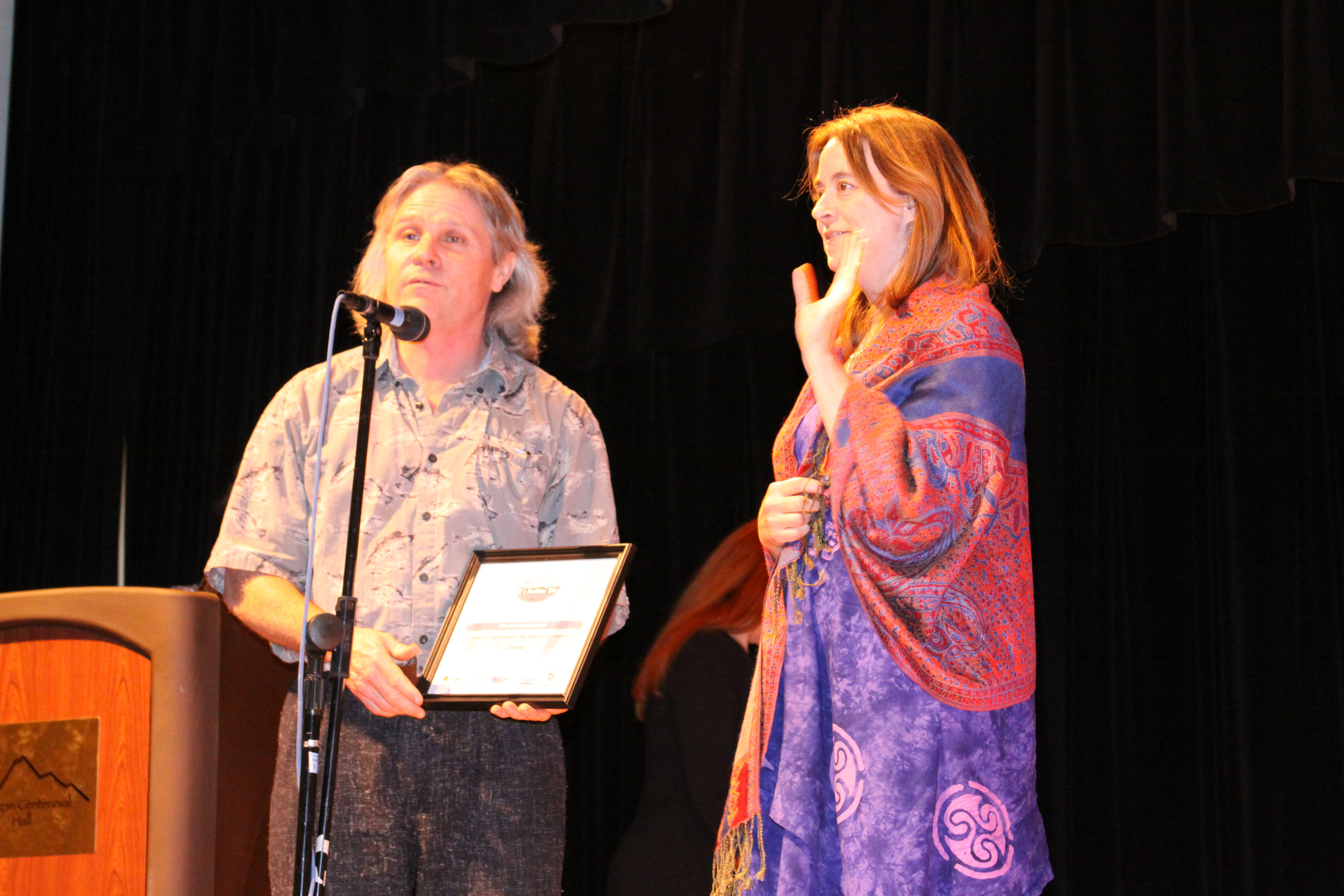
Sitka Local Foods Network president Kerry MacLane, left, and secretary/treasurer Linda Wilson say a few words after the Sitka Local Foods Network received a Community Wellness Champion award for nutrition at the 2009 Sitka Health Summit

Sitka Local Foods Network president Kerry MacLane, left, and secretary/treasurer Linda Wilson say a few words after the Sitka Local Foods Network received a Community Wellness Champion award for nutrition at the 2009 Sitka Health Summit

Tuesday’s program from 9 a.m. to 4 p.m. will allow Sitka residents to set the community’s health and wellness goals for 2010-11. Some of our recent past goals were to make Sitka more bicycle friendly and to start a market for local foods, and they resulted in Sitka becoming Alaska’s first official Bicycle Friendly Community in 2008 and the creation of the Sitka Farmers Market. This year’s top goals and priorities will receive seed money from the new Health Initiatives Fund. There also will be a community health and wellness resource room open to the public from 10 a.m. to 5 p.m. in the Exhibit Room. Snacks and lunch will be available.

The Sitka Health Summit is brought to you by Sitka Community Hospital and the SouthEast Alaska Regional Health Consortium (SEARHC), with major financial help from Premera Blue Cross Blue Shield of Alaska, the City and Borough of Sitka, Scott Insurance Services, White’s Inc./Harry Race Pharmacy/White’s Pharmacy and the University of Alaska Southeast-Sitka Campus. The Sitka Health Summit’s vision is “to serve our great state as a model for community wellness by creating a healthy community where all Sitkans strive for and enjoy a high quality of life.”

For more information about the Sitka Health Summit, contact Holly Keen at 738-2707 or sitkahealthsummit@gmail.com, or go to our Web site at http://www.sitkahealthsummit.org/.

• Sitka Health Summit poster (PDF file, feel free to print out and post around town)

• Kerry MacLane provides update on Sitka Community Greenhouse and Education Center project

An artist's concept of one version of a proposed Sitka Community Greenhouse and Education Center

An artist's concept of one version of a proposed Sitka Community Greenhouse and Education Center

About a dozen people joined Sitka Local Foods Network president Kerry MacLane for a PowerPoint presentation about the proposed Sitka Community Greenhouse and Education Center on Wednesday, May 12, at the SEARHC At Kaník Hít Community Health Services Building first-floor conference room. Kerry showed his presentation (attached) and provided a status update for the project. He also took feedback from the participants, seeking ideas for the next steps needed to complete the project.

The Sitka Community Greenhouse and Education Center is a project of the Sitka Local Foods Network to address one of the top local health priorities identified at the 2008 Sitka Health Summit. Sitka residents said they wanted a community greenhouse in order to make more locally grown fruits and vegetables available in town, and a community greenhouse is seen as a way to grow fruits and veggies all year. In addition to local food being healthier for you, local food also provides food security in case of a disaster or other event that keeps the barges or airplanes from delivering (it’s estimated that 95 percent of the food eaten in Alaska is shipped in from the Lower 48 or overseas).

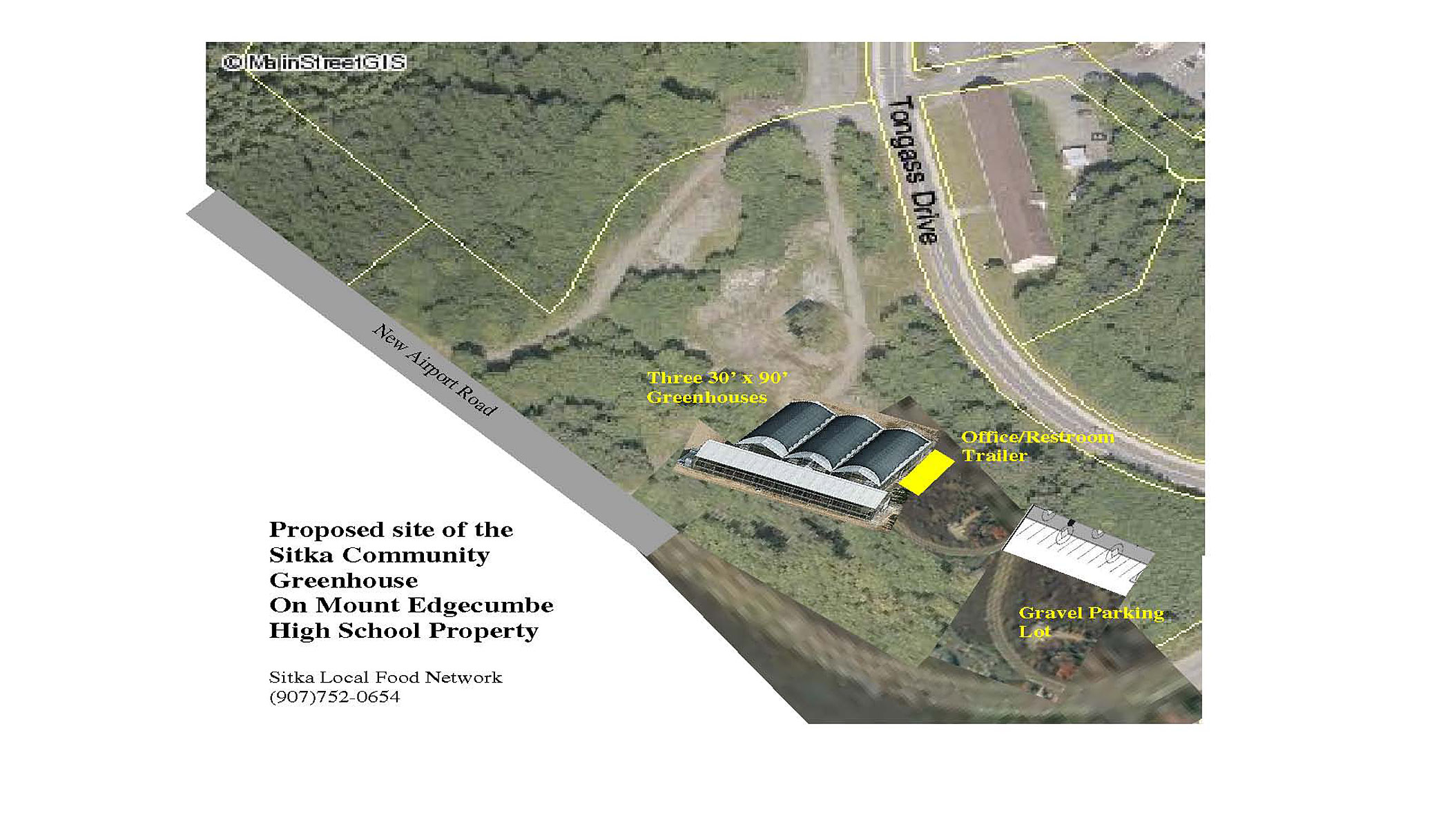
Currently, the Sitka Local Foods Network is in negotiations with the State of Alaska to lease an unused piece of Mt. Edgecumbe High School-owned land on Japonski Island near Mt. Edgecumbe Hospital. If the lease goes through, the community greenhouse will help Sitka grow more fruits and vegetables locally while extending our short growing season. The greenhouse can provide educational opportunities for Mt. Edgecumbe High School and University of Alaska Southeast-Sitka Campus students, as well as for other school, church and community groups who want to learn more about growing their own food. The community greenhouse also can provide horticultural therapy for medical and behavioral health patients.

Kerry said the model for the Sitka Community Garden and Education Center is the Cheyenne Botanic Gardens in Cheyenne, Wyo. Kerry used to work at the Cheyenne Botanic Gardens several years ago, and he has been given pointers by Cheyenne Botanic Gardens director/founder Shane Smith. The Cheyenne Botanic Gardens started out as a small-scale community greenhouse in 1977 that now features more than nine acres of extensive gardens, a solarium, arboretum and other features. It combines educational opportunities with production gardening and horticultural therapy (see fact sheet linked below).

Kerry said he is seeking letters of support from individuals and groups in Sitka who support the Sitka Community Greenhouse and Education Center, and a sample letter is attached below. For more information, contact Kerry at 966-8839 or 752-0654.

Sitka Community Greenhouse and Education Center PowerPoint presentation

Sitka Community Greenhouse and Education Center proposal 2010

Sample Letter of Support for the Sitka Community Greenhouse and Education Center

Cheyenne Botanic Gardens factsheet

• SEARHC hosts May 12 lunchtime presentation about Sitka Community Greenhouse and Education Center project

An artist's concept of one version of a proposed Sitka Community Greenhouse and Education Center

An artist's concept of one version of a proposed Sitka Community Greenhouse and Education Center

Have you heard about the proposed Sitka Community Greenhouse and Education Center? Join us for a short lunchtime presentation at noon on Wednesday, May 12, at the SEARHC At Kanik Hít Community Health Services Building first-floor conference room (1212 Seward Ave., down the hill from Mt. Edgecumbe Hospital, the building with the big totem pole in front).

The Sitka Community Greenhouse and Education Center is a project of the Sitka Local Foods Network to address one of the top local health priorities identified at the 2008 Sitka Health Summit. Currently, the Sitka Local Foods Network is in negotiations with the State of Alaska to lease an unused piece of Mt. Edgecumbe High School-owned land on Japonski Island near Mt. Edgecumbe Hospital.

If the lease goes through, the community greenhouse will help Sitka grow more fruits and vegetables locally while extending our short growing season. The greenhouse can provide educational opportunities for Mt. Edgecumbe High School and University of Alaska Southeast-Sitka Campus students, as well as for other school, church and community groups who want to learn more about growing their own food. The community greenhouse also can provide horticultural therapy for medical and behavioral health patients.

This short lunchtime PowerPoint presentation will be made by SEARHC Grant Writer Kerry MacLane, who also serves as president of the Sitka Local Foods Network, http://www.sitkalocalfoodsnetwork.org/. For more information, contact Kerry at 966-8839.

A 2009 proposal for the Sitka Community Greenhouse and Education Center (note, the education aspect of the project has been expanded since this proposal was written)

• Two associated with Sitka Local Foods Network win awards at Alaska Health Summit

Sitka filmmaker Ellen Frankenstein, center, of Frankenstein Productions, greets fans after the Sitka premiere of her film "Eating Alaska" in October 2008

Sitka filmmaker Ellen Frankenstein, center, of Frankenstein Productions, greets fans after the Sitka premiere of her film "Eating Alaska" in October 2008

The Alaska Public Health Association (ALPHA) honored two programs with ties to the Sitka Local Foods Network during the Alaska Health Summit banquet on Dec. 9. Sitka filmmaker Ellen Frankenstein (and her Frankenstein Productions company) and the SouthEast Alaska Regional Health Consortium (SEARHC) Steps to a Healthier SE Alaska program both won the Alaska Community Service Award. According to ALPHA, the Alaska Community Service Award “recognizes an organization, business or group making a significant contribution to improving the health of Alaskans. It is ALPHA’s intent that nominees outside the public health tradition be considered for this award. A nominee does not need to be an ALPHA member.”

Frankenstein has produced several documentary films over the years, including “Eating Alaska,” which focuses on how we choose the food we eat. Eating Alaska debuted in the fall of 2008, and Frankenstein has taken it to film festivals all over the state and country. “Eating Alaska” received funding support from the SEARHC Steps to a Healthier SE Alaska program and other funders, plus technical support was provided by SEARHC health educators, physicians and dietitians. Some of Frankenstein’s other films include “No Loitering,” “Carved from the Heart,” “A Matter of Respect,” and “Miles from the Border.” She currently is working on a documentary film project with Haida weaver Dolores Churchill.

“As someone who fills in the occupation blank on forms with ‘filmmaker/artist,’ this award represents the fact that labels and lines don’t matter when it comes to social change and to making our lives healthier,” Frankenstein wrote from Austin, Texas, where she was attending a screening of Eating Alaska. “It not only validates my work, but represents your open-mindedness to the potential of working collaboratively and creatively with kids and adults, using art, media and storytelling to influence well-being and healthy communities.”

Frankenstein also sent this note to her e-mail group:

EATING ALASKA: ART AND HEALTH!
We just got the news the project has been awarded The Alaska Public Health Association’s 2009 Community Service Award for Health. In the process of making this film and in its use we’ve worked with nutritionists, health educators, medical and public health practitioners to add to the conversation about what we can do to make our homes, workplaces, schools and communities healthier and more sustainable. We appreciate the help everyone has given to the project to help us “contribute to improving the health of Alaskans” and others far beyond.

The SEARHC Steps to a Healthier SE Alaska program, which closes this month, was honored for the work it did over the life of its five-year grant (the national Steps to a Healthier US grant has ended, so that means all of the local grants that were part of the national grant also are ending). The Steps program funded 77 projects worth just over $1.1 million in 12 Southeast Alaska communities. Steps was one of the major funders and organizers of the Sitka Health Summit, which is where the Sitka Local Foods Network originated.

The Steps program’s goals were to increase opportunities for physical activity, improve nutrition and reduce the impact of tobacco in Southeast Alaska. The program also worked to reduce diabetes, obesity and asthma in Southeast communities. To accomplish its goals, Steps developed partnerships with schools, worksites, tribes and other community groups so they could change social norms and policies, and make evidence-based and culturally relevant interventions. In addition to the projects, Steps also hosted conferences and workshops to help programs learn how to work in collaboration.

The Steps program used the socio-ecological model, which emphasizes that an individual’s health status is influenced not only by his or her attitudes and practices, but also by personal relationships and community and societal factors. Nearly half of the 77 Steps grants (37) went to community projects, with the others geared toward schools and worksites. More than three-quarters of the grants (60) focused on improving nutrition and/or increasing physical activity. Together, the projects reached 128,000 people (with many people reached by multiple projects) in the communities of Angoon, Craig, Haines, Hoonah, Hydaburg, Juneau, Kake, Kasaan, Klawock, Klukwan, Sitka and Wrangell.

“Overall, the Steps initiative helped build capacity within communities, worksites and schools to work collaboratively, to plan evidence-based programs, and to monitor and evaluate program success,” said Grace Brooks, Steps Grant Manager. “Steps also contributed to an overall increased understanding of the importance of policy in supporting community, school and workplace health.”

In other local foods news from around the state this past week, the Alaska Dispatch ran an article about an indoors farmers market this winter at Anchorage’s Northway Mall.

Capital City Weekly featured a story by Carla Petersen about how the search for elusive cranberries is worth the challenge.

The National Oceanic and Atmospheric Administration (NOAA) announced last week that it is encouraging the use of catch shares to preserve the remaining stocks of halibut (the article features a photo from Sitka).

The Anchorage Daily News featured a story about Gov. Sean Parnell proposing to spend $1.3 million to research declining Yukon River salmon runs.

The Juneau Empire had a story about how an arts advocacy group in Juneau, Arts for Kids, has teamed up with Sitka-based Theobroma Chocolate Co. to offer SmART bars as a fundraiser for art scholarships for graduating seniors in Juneau.

The publicity poster for the movie Eating Alaska