• New curriculum guide released for movie “Eating Alaska” by Sitka filmmaker Ellen Frankenstein

The publicity poster for the movie Eating Alaska

Sitka filmmaker Ellen Frankenstein has released a new curriculum book for teachers using her movie, “Eating Alaska.” You can click here to download the guide from the New Day Films site, which has more info about the movie, or you can download the PDF file by clicking the attachment below.

EATING ALASKA GUIDE NOV 2009

• Sitka film featured in Palmer’s “Local Harvest, Local Food” film festival, a Sitka café featured for using local food and other local foods news

Food Film Fest Poster-2

Join the Palmer Arts Council for its inaugural “Local Harvest, Local Food” film fest from Thursday, Nov. 19, through Sunday, Nov. 22, at the Strangebird Consulting Office in downtown Palmer. “Good Food” screens at 7 p.m. on Thursday, Nov. 19; “Fresh” shows at 7 p.m. on Friday, Nov. 20; “Eating Alaska” by Sitka filmmaker Ellen Frankenstein screens at 7 p.m. on Saturday, Nov. 21; and “Ingredients” shows at 3 p.m. on Sunday, Nov. 22. After the Sunday showing there will be a discussion about women in agriculture with Cynthia Vignetti. Suggested donations are $10-15 for all films except for Sunday, which is free.

A Sitka restaurant, the Larkspur Café, was featured in Capital City Weekly last week. The article talks about the origins of the restaurant, which is located in the same building as KCAW-Raven Radio. It also discusses the restaurant’s use of local foods, including owners Amelia Budd and Amy Kane purchasing produce from the Sitka Farmers Market during the summer.

In other local foods news from around the state, the National Oceanic and Atmospheric Administration (NOAA) recently announced an expansion to the state’s subsistence halibut fishery to include more rural residents (this includes the Sitka area). The new rules, which take effect on Dec. 4, redefine who qualifies as a rural resident. The previous rules defined rural residents as people living in a rural community or people belonging to a Native tribe with customary and traditional uses of halibut, and the news rules try to catch subsistence halibut users who fell outside the previous definition. Click this link for more information about subsistence halibut regulations and applications.

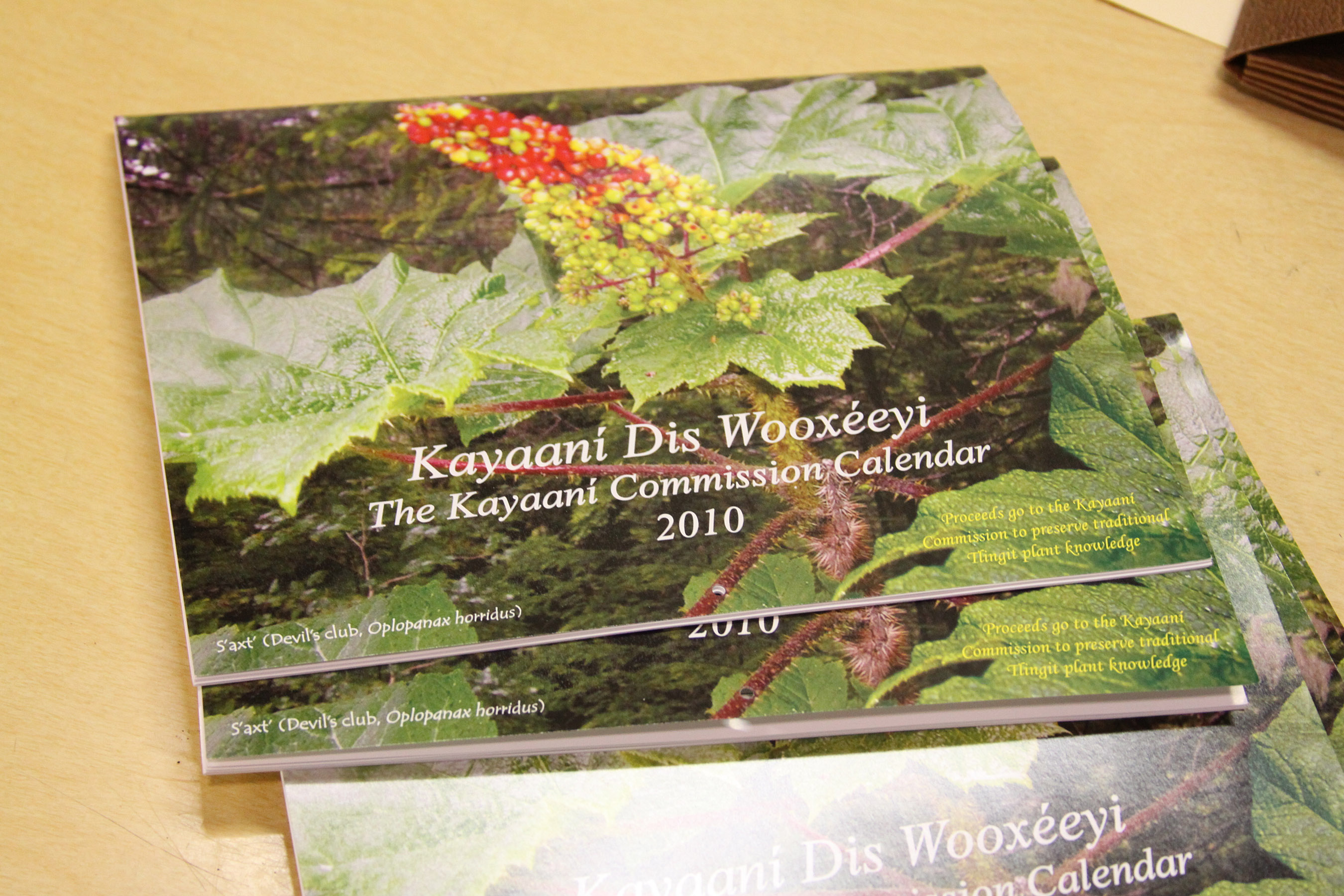
The Daily Sitka Sentinel has been running a brief announcement from the Sitka Tribe of Alaska’s Kayaaní Commission, which is selling 2010 calendars, CDRoms and field guides about traditional uses of native plants. Here is the information:

Kayaaní Native Plant Publications Available: 2010 Kayaaní Harvest Calendars featuring native plants and their traditional and cultural uses ($16, $2 postage per address); Interactive Ethnobotanical CDRoms with native species, their Tlingít, scientific and common names, and interviews with Elders on the traditional and medicinal uses of plants ($15, $1 postage per address); Ethnobotanical Field Guides ($16, $1 postage per address). We will mail to the addresses of your choice. Order by Dec. 18 for guaranteed delivery before Christmas. Call or e-mail with your order: 907-747-7178, pbass@sitkatribe.org, STA Kayaaní Commission, 456 Katlian. All proceeds will assist the nonprofit Kayaaní Commission in protecting, perpetuating and preserving knowledge of native plants.

The Chilkat Valley News weekly newspaper from Haines featured an article about sixth-graders at Haines School learning how to compost their leftover food (including leftover meat) so it can be used for gardening. The school is working with the Takshanuk Watershed Council to teach the students about composting. The students call their compost project “Marvin” because it’s a living organism.

The Alaska Dispatch recently ran a feature called “Growing Season” that discusses some of the farms in the Matanuska-Susitna valleys that grow local food. The feature includes video clips of harvest time at a couple of the farms featured.

The Mat-Su Frontiersman had a feature called “Chicken U,” which is about raising chickens in Alaska and getting them to produce eggs during the winter months.

The Anchorage Daily News also mentioned Chicken University, which will be one of several presentations at the Alaska Farm Bureau annual meeting on Friday, Nov. 13, at the Millennium Hotel in Anchorage. Other presentations are on growing apples in Alaska and preserving your harvest.

The Anchorage Daily News also had an article about how to get local produce in Anchorage during the winter, either through the Glacier Valley CSA produce boxes from Palmer or the indoor farmers market at the Northway Mall.

Anchorage Daily News garden columnist Jeff Lowenfels wrote a column about how hydroponic gardening is easier and cheaper than ever. The column includes lots of links for people who want to try this method of growing food without soil (by the way, there is a hydroponic garden at McMurdo Station in Antarctica that keeps the scientists there stocked in fresh produce in a land of ice).

Fran Durner’s “Talk Dirt To Me” blog on the Anchorage Daily News site includes a post about how snow can act as mulch for the garden.

The Ester Republic, a monthly publication for the community near Fairbanks, runs periodic articles about sustainability and local food security issues. Some of the articles are linked in the archives, and the editors are working to get more of the past articles on these topics online so more people can enjoy them.

KayaaniCommissionCalendarFront´

• Thanks for “Growing in Sitka and Southeast Alaska” presentation

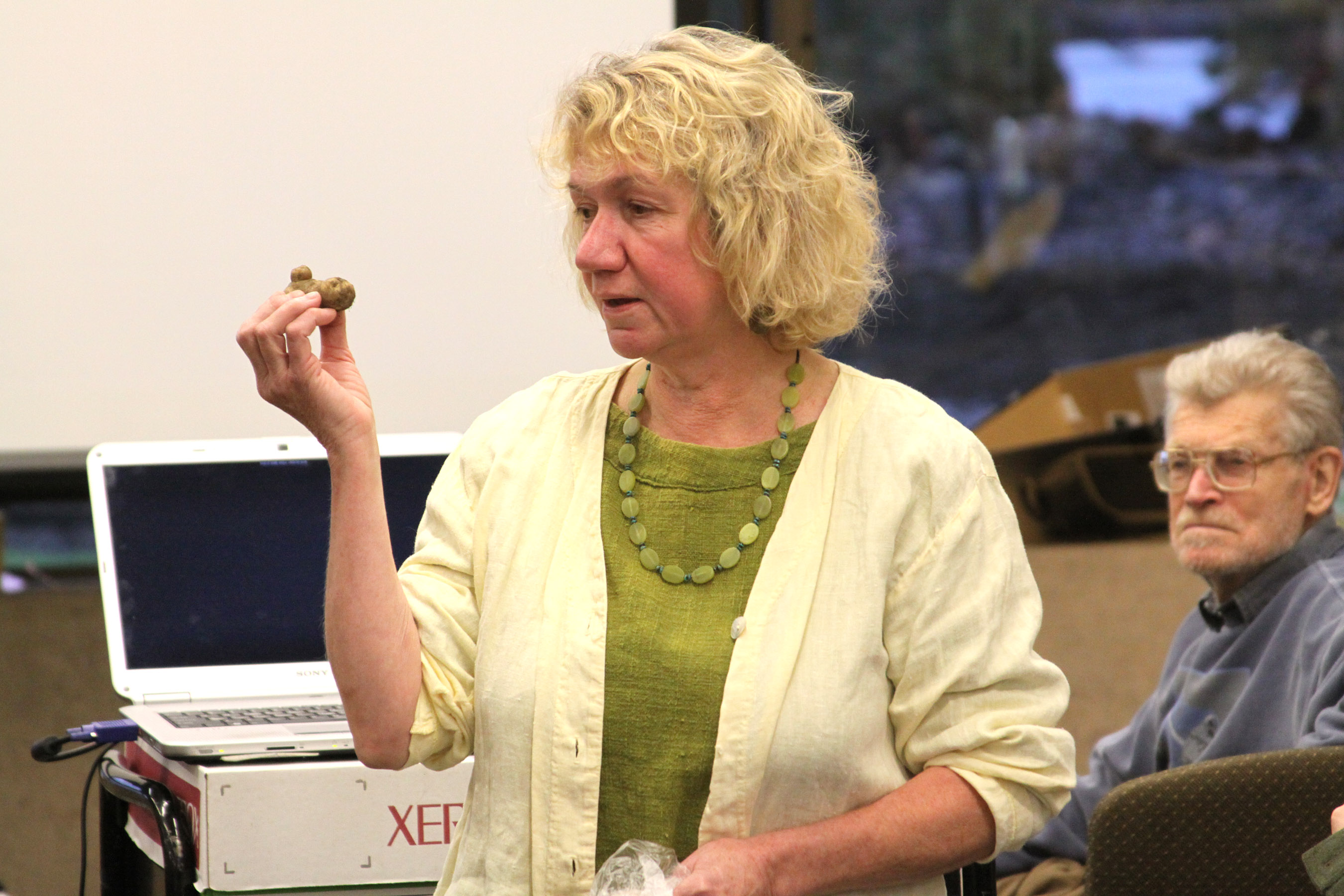
Elizabeth Kunibe shows off a Tlingít potato (also known as "Maria's potato")

On Friday afternoon, the Sitka Local Foods Network hosted anthropology student Elizabeth Kunibe of Juneau for a presentation, “Growing in Sitka and Southeast Alaska: Food of Today, Tomorrow and 200 Years Ago.” This presentation took place at the Kettleson Memorial Library and we had a standing-room-only crowd of 50-plus, despite being arranged less than a week before the event and competing with several Alaska Day happenings.

The Sitka Local Foods Network thanks Elizabeth for taking the time to make the presentation on what, for her, was a pleasure trip to Sitka for Alaska Day. We also thank the library and librarian Sarah Jones for allowing us to use Kettleson Memorial Library for the presentation.

Finally, we thank everybody who came to the presentation to hear Elizabeth discuss traditional Tlingít, Russian and American gardens in Sitka and Southeast Alaska, the Tlingít and Haida potatoes, an agricultural fair in Fort Yukon, the phytonutrients of potatoes and plant diseases.

For those people who weren’t able to attend, the presentation was recorded and it will be aired at various times this week on public access TV (Channel 11). Elizabeth said she might send over some notes from the presentation, and when those arrive they will be posted on the Sitka Local Foods Network site, http://www.sitkalocalfoodsnetwork.org/. A small gallery of photos from the presentation is posted at this link.

Thanks again,
Charles Bingham, event organizer
Sitka Local Foods Network

• Sitka Conservation Society hosts Wild and Scenic Environmental Film Festival

91

The largest environmental film festival in North America is coming to Sitka. Sitka Conservation Society is hosting the second annual Sitka tour stop of the Wild and Scenic Environmental Film Festival on Saturday, Oct. 24, at the Sitka Performing Arts Center.

Doors will open at 6 p.m. with informative and action booths hosted by local community groups and organizations, including a booth from the Sitka Local Foods Network. The films will begin at 6:30 p.m.

“The films include narratives coming directly from people throughout the world engaged in protecting our natural resources and wild places,” says tour manager Susie Sutphin. “The films highlight the ‘tipping point’ that the planet is reaching. Yet portrays the ‘turning of the tides,’ as communities realize what needs to change and how they are responding with creativity, resolve and heart.”

One of the films scheduled to be shown on Saturday, Homegrown Revolution, deals with the local food movement. This film examines a family’s efforts at growing all their own food in the midst of a densely urban setting in downtown Pasadena, Calif. For over twenty years, the Dervaes family has transformed their home into an urban homestead. As a family for this new paradigm, they harvest nearly three tons of organic food from their one-10th-of-an-acre garden plot while incorporating many back-to-basics practices, as well as solar energy and biodiesel.

A new film trailer by local filmmaker Ellen Frankenstein — who made the film, Eating Alaska — will be shown during the festival as well as several other films from around the world.

Tickets are $15 for adults and $10 for students and seniors. They are available at Old Harbor Books, Mountain Miss or at the door. Discounted and free tickets are available for individuals and families that sign up to be a Sitka Conservation Society member.

The film festival also will include door prizes and Young Alaskans Building Affordable Housing will sell concessions during intermission. For more information, go to http://www.sitkawild.org/ (note, site down for maintenance this week) or call 747-7509.

• Sitka Local Foods Network gets mentions in Juneau Empire, Daily Sitka Sentinel, Capital City Weekly and on APRN’s Talk of Alaska show

The Sunday edition of the Juneau Empire and Monday edition of the Daily Sitka Sentinel (Page 4) both featured a press release about a Sitka Local Foods Network-hosted presentation about “Growing in Sitka and Southeast Alaska: The Food of Today, Tomorrow and 200 Years Ago” that takes place at 5 p.m. this Friday, Oct. 16, at the Kettleson Memorial Library. The presentation is by UAS anthropology student Elizabeth Kunibe of Juneau, who has spent the last six years researching traditional gardens in Southeast Alaska. The presentation also received a write-up in this week’s issue of Capital City Weekly that came out on Wednesday.

Monday’s issue of the Daily Sitka Sentinel also featured a press release about a put-the-garden-to-bed work party the Sitka Local Foods network is hosting from 10 a.m. to 1 p.m. on Saturday, Oct. 17, at the St. Peter’s Fellowship Farm.

On Tuesday, the Alaska Public Radio Network’s statewide call-in show “Talk of Alaska” was about food security and during the show the work of the Sitka Local Foods Network was mentioned. The Talk of Alaska topic on food security was a preview of the Bioneers In Alaska conference this weekend (Oct. 16-18) in Anchorage where food security will be one of the topics. Kerry MacLane, president of the Sitka Local Foods Network, is supposed to travel to Anchorage to participate in the conference.

In addition to the Sitka Local Foods Network mentions, there has been a lot of other local foods news around Alaska this week.

In Sunday’s Juneau Empire, Ginny Mahar (a chef at Rainbow Foods) wrote a column featuring a mac and cheese recipe with king crab. Ginny also writes the Food-G blog, which features a lot of local foods recipes for Southeast Alaska.

Also in Sunday’s Juneau Empire was an article about the Alaska Native Brotherhood/Alaska Native Sisterhood Grand Camp meeting in Juneau and discussion about subsistence fishing rights following the recent arrest of Sen. Albert Kookesh.

In this week’s Capital City Weekly, there is an article from Carla Peterson about the chocolate lily and how to prepare this edible plant for food.

In the Alaska Newsreader blog Wednesday on the Anchorage Daily News Web site was a link to a feature from TheDailyGreen.com, which listed Anchorage ninth among U.S. cities in per capita space given to community gardens. The list (opens as PDF document) was compiled by the Trust for Public Land, and it had a distinct Northwest feel with Seattle ranked No. 1 and Portland, Ore., was No. 2. Click here to learn more about Anchorage’s community gardens program.

In his Anchorage Daily News garden column last week, Jeff Lowenfels wrote about planting garlic now for spring flowers and an August crop.

The Mat-Su Frontiersman recently ran an article about a sustainability project at the University of Alaska Fairbanks Mat-Su College where students were gathering organic spuds.

Finally, while this isn’t about Alaska, you might want to read an article about efforts to preserve our biodiversity so we don’t lose more food plant varieties and why these efforts are important.

• Sitka Local Foods Network hosts garden work party on Oct. 17

The Sitka Local Foods Network will host a “putting the garden to rest” work party from 10 a.m. to 1 p.m. on Saturday, Oct. 17, at St. Peter’s Fellowship Farm.

The Oct. 17 work party involves a last bit of weeding, pulling out the annual plants for compost, putting mulch and protective coverings over the perennials, and getting all the tools inventoried and stored away for the winter. This will help make the garden easier to get ready for spring planting. Most of the vegetables grown at the St. Peter’s Fellowship Farm are sold at the Sitka Farmers Markets during the summer.

For more information about the work party, contact Lisa Sadleir-Hart at 747-5985 or Maybelle Filler at 738-1982.

To learn more about the Sitka Local Foods Network and how it supports community gardens and greenhouses, organizes the Sitka Farmers Market, supports traditional foods and provides education and encouragement to local gardeners, browse through this site.

• Sonja Koukel of the UAF Cooperative Extension Service writes about home canning crab and shrimp

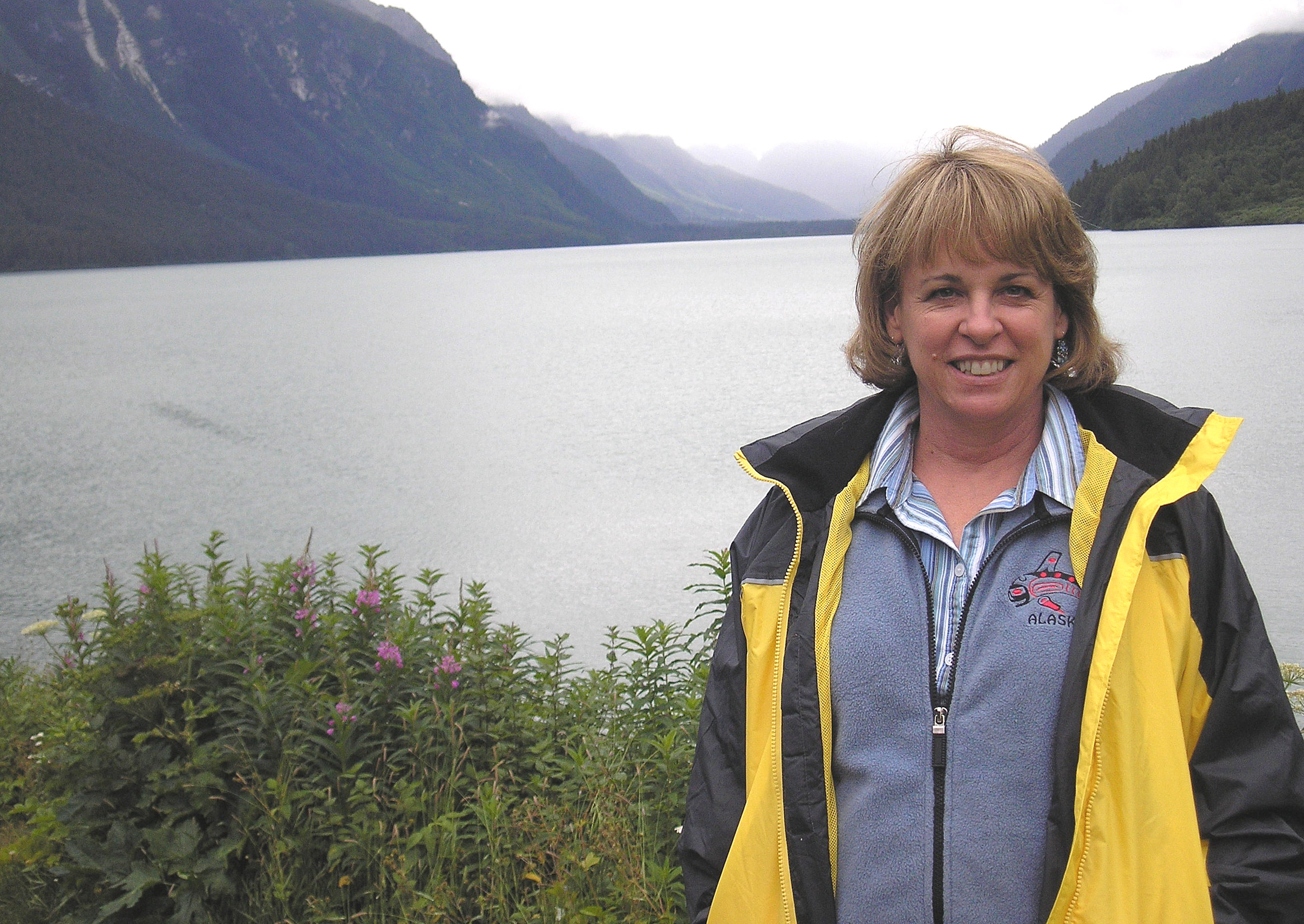
Dr. Sonja Koukel of the UAF Cooperative Extension Service
Dr. Sonja Koukel of the UAF Cooperative Extension Service

2814027500088610947sTovNd_ph

The following column originally appeared in the Sept. 30-Oct. 6, 2009, issue of Capital City Weekly and was made available to the Sitka Local Foods Network site. This column runs monthly.

More on Home Canning Seafood: Crab and Shrimp

By Dr. Sonja Koukel, PhD
Health, Home & Family Development Program
UAF Cooperative Extension Service

For the Aug. 5 Capital City Weekly issue, I submitted an article focusing on home canning seafood, specifically crab and geoducks. I was pleased to receive an e-mail from a reader asking for more information. As many of you may have had the same questions I’m sharing my responses here.

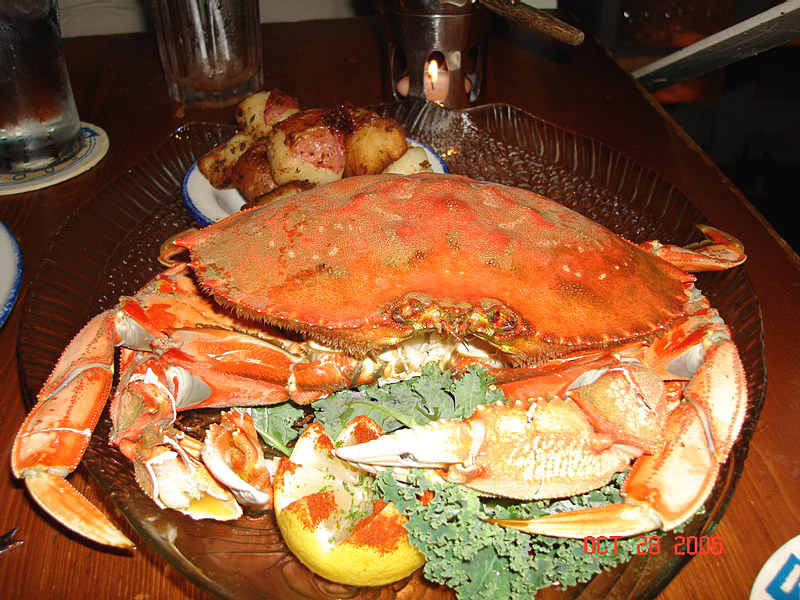
To refresh: In the article, I provided the guideline for freezing crab as that is the best preservation method for this food. Experts recommend boiling the live crab for five minutes -– at which time the crab is considered “cooked.”

Our reader asked two questions.

The first:

“Please let me know if this [recommended time] is a misprint. All the people I know who cook crab heat water in a crab cooking vessel until the water boils, then they boil the crab a minimum of 15 minutes before cooling it. I have often wondered if the 15-minute boiling period is too long, but have always deferred to the locals with crab experience. What is the critical issue in crab cooking?”

The second question:

“When cooking shrimp, on the other hand, the accepted practice seems to be: put the critters in a pot, bring the water to boil, then remove the shrimp when they float to the surface, which does not take very long.”

My responses to these two questions follow.

Dear Capital City Weekly Reader,

In regards to your questions, I did some further research over the weekend on the topics of cooking crab and shrimp. Here is what I found.

Crab:

The University of Alaska Fairbanks Cooperative Extension Service uses the University of Georgia Extension publication, “So Easy to Preserve,” as the main resource for home canning and food preservation information. Much of the information in this publication is based on the USDA, “Complete Guide to Home Canning,” as well as research from Extension Services across the US. In fact, Alaska Cooperative Extension is represented in the publication for the processing times for canning fish in quart jars (Kristy Long, Foods Specialist UAF CES).

For more information, I resourced other Extension websites and found a variety of cooking times for preparing crab for freezing. Oregon State University Extension publication, “home freezing of seafood” (PNW0586), recommends the following for whole crab: [after preparing crab] Cook in boiling salt water (2-4 Tbsp. per gallon, according to your taste preference) for 12-15 minutes. If the back is left intact, add 10 minutes to the cooking time. Add 2-3 minutes to the cooking time if the water doesn’t boil within a few minutes after adding the crab.

This from the Sea Grant Extension Program, UC Davis, “Freezing Seafood at Home”: You can either freeze crabmeat in the shell or as picked crabmeat. Cook crab before freezing to prevent discoloration of the crabmeat. Drop live crabs into enough boiling water to cover the crabs. Cover and return water to a boil. Boil for about 25 minutes. Remove crabs from boiling water and cool them immediately in cold water. Let crabs cool for several minutes and then drain.

One purpose served by boiling the crab prior to freezing is that the process makes the meat easier to remove from the shell. As far as food safety, boiling will kill any parasites and/or bacteria that contribute to the decay of the shellfish. My sources claim that this is done after one minute in the boiling water. A celebrity chef wrote on his website that the cooking time for crab is not based on food safety but on the product being undercooked, cooked, and overcooked. A good guideline for cooking crab is to check the color of the shell. When the crab is done, the shell turns an orange/red color.

Something to take into consideration when looking at information on the Internet, many sources group all types of crab into one category. On the East Coast, most crab will be Maryland blue crab which are smaller than the Dungeness crab normally consumed in the Northwest. Just keep in mind that you have a safe and easy to handle product when the crab is boiled at least five minutes prior to freezing.

Now, the reply to the shrimp question.

The Sea Grant Extension Program, University of Delaware, instructs cooking the live shrimp just to the point of being done (the flesh turns from translucent to opaque). The cooking method you describe — putting live shrimp in a pot of boiling water and removing when they float to the top — is right on. If you were to time this procedure you probably will find that it takes approximately 3-5 minutes to boil one pound of medium sized shrimp.

I appreciate input from readers and welcome all suggestions, inquiries, and ideas. Please contact me via email: sdkoukel@alaska.edu or phone: 907-796-6221.

Sonja Koukel, PhD, is an assistant professor in the Health, Home & Family Development Program for the Juneau District office of the UAF Cooperative Extension Service. Reach her at sdkoukel@alaska.edu or 907-796-6221.


• Aliens from Running of the Boots fundraiser show up in Daily Sitka Sentinel and Juneau Empire

Screenshot of the Daily Sitka Sentinel site on Monday with the aliens photo from the 2009 Running of the Boots

Screenshot of the Daily Sitka Sentinel site on Monday with the aliens photo from the 2009 Running of the Boots

Screenshot from Tuesday's Juneau Empire featuring the aliens photo from the Running of the Boots

Screenshot from Tuesday's Juneau Empire featuring the aliens photo from the Running of the Boots

The green-headed aliens were the hit of the Running of the Boots on Saturday, earning spots on the front page of the Daily Sitka Sentinel on Monday and in Tuesday’s issue of the Juneau Empire. The Running of the Boots is a fundraiser for the Sitka Local Foods Network, and we greatly appreciate race founder Sheila Finkenbinder and the Greater Sitka Chamber of Commerce donating the proceeds from the event to our organization. A photo gallery from the race is posted just below this one, or click here to go directly to the gallery.

In other recent local foods news, Sitka filmmaker Ellen Frankenstein and her movie, “Eating Alaska,” are featured in Wednesday’s Anchorage Daily News. Ellen will be in Anchorage to show her film on Sunday night at the inaugural Alaska Local Food Film Festival, which runs Oct. 2-8 at Anchorage’s Beartooth Theatrepub and Grill.

Click here to read a “Local Flavor” column by chef Ginny Mahar about chanterelles from Sunday’s Juneau Empire, which local mushroom enthusiasts can find throughout Southeast Alaska about this time of the year. Ginny, who works for Rainbow Foods in Juneau, writes the Food-G blog where she has posted several recipes that use chanterelles. Chanterelles are popular this week, because Carla Peterson also writes about them in Capital City Weekly.

Click here to read a letter to the editor in Tuesday’s Juneau Empire about how to eat healthy foods on a budget. The letter, written by staff members from the Juneau office of the University of Alaska Fairbanks Cooperative Extension Service, was in response to a Fairbanks Daily News-Miner story (that appeared later in the Juneau Empire) about Alaska lawmakers trying to live on food stamps for a week.

Click here to read a Seattle Times article about how Northwest cooks are falling in love with the sablefish (aka, black cod), a fish frequently caught in Sitka waters and available at the Sitka Farmers Market. The article includes a recipe.

Click here to read a blog post on The Atlantic Food Channel called “Local Food Comes To Alaska,” by New York University nutrition, food studies and public health professor Marion Nestle (author of “Food Politics,” “Safe Food,” “What To Eat,” and “Pet Food Politics,” as well as the “Food Matters” column for the San Francisco Chronicle).

If you haven’t visited the “Eat Local Northwest” blog, it’s worth a look. This blog is maintained by two friends — Stephen lives in the Mat-Su Valley and works in Anchorage, while Audrey is from the Seattle area. In the most recent post (as of Tuesday night), Stephen writes about his happy discovery that some of the prices at the South Anchorage Farmers Market actually were comparable or lower than what he was finding at several of local grocery stores. There is a link to this blog in our blog roll on the right side of the page.

Click here to read a story from KTUU-TV (Anchorage NBC affiliate) about Meyer’s Farm in Bethel, a project started by Tim Meyers that now involves a CSA (Community Supported Agriculture) program where local residents pay a fee and get weekly boxes of fresh, local produce. You can click a video link in the upper right corner, too. Meyer’s Farm was featured in the April 2009 issue of Alaska Magazine (link opens a PDF file of the article). There also is a Flickr photo gallery that shows nearly 100 photos of Meyer’s Farm.

Finally, the new farmers market near the White House isn’t about Alaska food, but it does promote and encourage people to eat local food. Click here for a story about the new farmers market on National Public Radio and click here for an article from the Washington Post. Click here for an article from USA Today about the growth of farmers markets across the nation.

• Big crowd joins Running of the Boots to support Sitka Local Foods Network

High school exchange students dressed as aliens won the best group costume category in the costume contest

High school exchange students dressed as aliens won the best group costume category in the costume contest

Despite a heavy downpour before the race, about 200 people showed up the Crescent Harbor Shelter on Saturday, Sept. 26, 2009, for the 15th annual Running of the Boots, a fundraiser for the Sitka Local Foods Network. The event was part of the second annual Summer’s End Celebration hosted by the Greater Sitka Chamber of Commerce and the Alaska Cruiseline Association.

Many of the runners showed up in costume, including green-headed aliens, pirates, fairy princesses and even a young frog. Others wore enough heavy rain gear so they looked more like ancient mariners than runners. While there was a little bit of a race, the event was all about fun, with a lip-synch event and blues band to spice things up. And we even had a table to sell Sitka Farmers Market produce, and Keri Fish brought along her crepe-making booth.

Click here to view a photo gallery from the 15th annual Running of the Boots. The Sitka Local Foods Network appreciates everybody who participated in this fundraiser. Our next event will be to host an informational table at the Wild and Scenic Film Festival on Saturday, Oct. 24, at the Sitka Performing Arts Center and hosted by the Sitka Conservation Society. Booths open at 6 p.m. and the movies start at 6:30 p.m. We look forward to seeing you there.

A pack of kids takes off at the start of the 2009 Running of the Boots on Sept. 26

A pack of kids takes off at the start of the 2009 Running of the Boots on Sept. 26

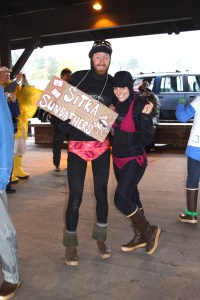
Sitka sunbathers huddle up before the race

Sitka sunbathers huddle up before the race

The Three Moo-sketeers

The Three Moo-sketeers

Young runners all dressed up and ready to run. The boy on the left had the fastest boots on Saturday

Young runners all dressed up and ready to run. The boy on the left had the fastest boots on Saturday

• Daily Sitka Sentinel features Running of the Boots preview, plus other news about local foods from around the region

Celebration_Logo-forever

Runners hit the trail during the 14th Annual Running of the Boots race on Sept. 27, 2008, in Sitka.

Runners hit the trail during the 14th Annual Running of the Boots race on Sept. 27, 2008, in Sitka.

The Friday issue of the Daily Sitka Sentinel featured an article and photo previewing the 15th annual Running of the Boots on Saturday (Page 9), which is a fundraiser for the Sitka Local Foods Network. Unfortunately, the announcement did not make onto the Sentinel’s Web site. The Running of the Boots starts at 11 a.m. on Saturday, Sept. 26, at the Crescent Harbor shelter (registration opens at 10 a.m.). The entry fee is $5 per person, or $20 per family, and there is a lip-synch contest after the race that costs $10 to enter. Click here for all the details about Running of the Boots.

In other news about local food around the region, the Juneau Empire ran several stories in its Outdoors section on Friday.

Click here to read the On The Trails column by Mary Willson, who writes about picking berries this late in the season.

Click here to read a brief item about some gardening presentations hosted by the Juneau Garden Club from 1-4:30 p.m. on Saturday, Sept. 26, at Centennial Hall in Juneau.

Click here to read a story by Kwame Diehl about a fishing trip in Juneau to catch some halibut.

Click here to read a story by Abby Lowell about where to catch silver (coho) salmon in the Juneau area.

Click here to read Anchorage Daily News photographer Fran Durner’s “Talk Dirt To Me” garden blog, who writes about growing organic produce and a potato dig in Palmer this weekend.