Check out the December 2016 edition of the Sitka Local Foods Network newsletter

snapshotdecember2016slfnnewsletter

The Sitka Local Foods Network just sent out the December 2016 edition of its monthly newsletter. Feel free to click this link to get a copy.

This month’s newsletter includes short articles about our #GivingTuesday campaign on Nov. 29, a request for new board members, an update on two food-related Sitka Health Summit projects, and info about some upcoming classes at the Sitka Kitch. Each story has links to our website for more information.

You can sign up for future editions of our newsletter by clicking on the registration form image in the right column of our website and filling in the information. If you received a copy but didn’t want one, there is a link at the bottom of the newsletter so you can unsubscribe. Our intention is to get the word out about upcoming events and not to spam people. We will protect your privacy by not sharing our email list with others.


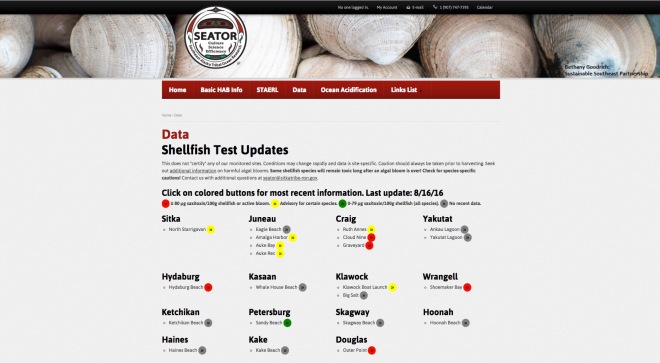
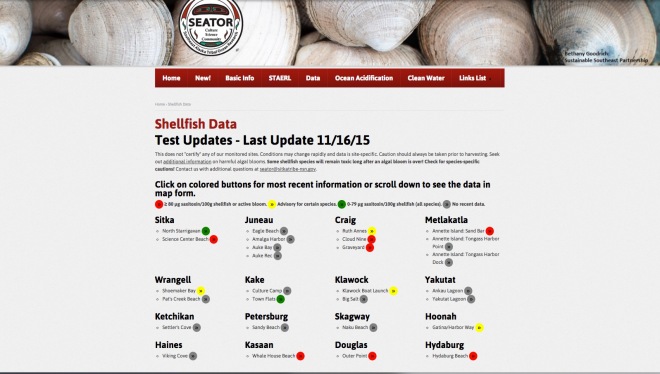
Paralytic shellfish poisoning (PSP) advisory lifted for Starrigavan Beach North in Sitka, but others remain

snapshotseatorshellfish11172016

The SouthEast Alaska Tribal Ocean Research (SEATOR) project, SouthEast Alaska Tribal Toxins (SEATT) partnership and the Sitka Tribe of Alaska Environmental Research Lab (STAERL) on Thursday, Nov. 17, lifted an advisory warning that people should not eat molluscan shellfish (bivalves such as clams, oysters, scallops, mussels, geoducks, cockles, etc.) harvested at Starrigavan Beach North in Sitka.

However, the recent harmful algal bloom warning for the Sitka Sound Science Center Beach remains in place. There also have been new warnings issued on Wednesday, Nov. 16, for Gartina/Harbor Way Beach in Hoonah and the Annette Island/Moss Point and Sand Bar beaches in Metlakatla.
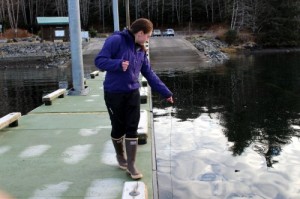
Esther Kennedy of the Sitka Tribe of Alaska Resource Protection Department samples water near the Starrigavan Recreation Area dock for marine biotoxins such as paralytic shellfish poisoning. (Photos by Emily Kwong, KCAW-Raven Radio)

Esther Kennedy of the Sitka Tribe of Alaska Resource Protection Department samples water near the Starrigavan Recreation Area dock for marine biotoxins such as paralytic shellfish poisoning. (Photo by Emily Kwong, KCAW-Raven Radio)

Samples harvested by STAERL at Starrigavan Beach North on Monday, Oct. 31, had elevated levels of the paralytic shellfish poisoning (PSP) toxins above the FDA regulatory limit of 80µg/100g. When samples were taken on Monday, Nov. 14, the toxin levels had dropped below the regulatory limit, which allowed SEATOR to lift the advisory, which includes little-neck clams, butter clams and cockle clams.

The Sitka Sound Science Center Beach advisory is based on shellfish harvested on Oct. 24. Molluscan shellfish from this site should not be harvested at this time. The Hoonah and Metlakatla advisories are based on shellfish harvested on Monday, Nov. 14, having PSP toxins above the FDA regulatory limit.

The PSP advisories are for bivalve shellfish that have been recreationally or subsistence harvested. It does not apply to commercially harvested shellfish, which are tested before they enter the market. The advisory does not apply to other shellfish, such as crabs or shrimp, which do not carry PSP (unless you eat the crab butter or viscera).

There have been several harmful algal bloom alerts released by SEATOR this summer, but this recent announcement is a good reminder that PSP can happen throughout the year. It also discredits the myth that you don’t have to worry about shellfish harvested in months containing an R.

According to SEATOR, “This does not ‘certify’ any of our monitored sites. Conditions may change rapidly and data is site-specific. Caution should always be taken prior to harvesting.”
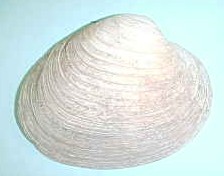
The butter clam has one set of rings that go one direction only, around the same center point (Photo courtesy of Alaska Department of Environmental Conservation)

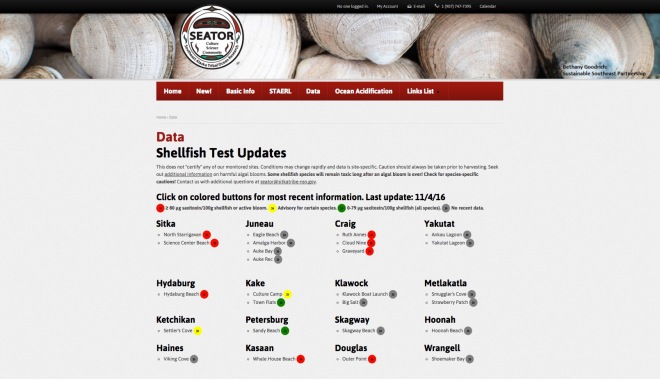
SEATOR posts updates and information to its website at seator.org/data, which can help provide Southeast Alaska residents with reliable information so they can choose whether or not to harvest shellfish. In addition to testing water samples weekly from certain Southeast beaches, STAERL also tests samples of butter clams, littleneck clams, and blue mussels (which is STAERL’s indicator species, because of how quickly blue mussels absorb saxotoxins).

In addition to the saxitoxins that cause PSP, the lab in Sitka has been monitoring for other blooms that cause amnesic shellfish poisoning (ASP). PSP and ASP can cause severe health problems, including death in some cases.

Since most beaches in Alaska aren’t tested for harmful algal blooms, SEATOR and the SEATT partnership were formed in October 2014 to train people to test beaches in Southeast Alaska. In April 2015, the Sitka Tribe of Alaska opened a regional lab on Katlian Street, so samples could be tested in Sitka without having to be sent to the Lower 48, which delayed results. By testing for harmful algal blooms, SEATOR and the SEATT partnership hope to be able to provide information so people can make informed choices whether or not to harvest or eat shellfish.

Harmful algal blooms, such as paralytic shellfish poisoning (PSP), typically have not been monitored in Southeast Alaska for subsistence and recreational harvesters of clams, mussels, oysters, cockles, and other bivalves (commercial harvests are tested). Even though many people in Southeast Alaska love to harvest shellfish, eating it comes with some risks. There have been several PSP outbreaks in recent years that sent people to the hospital, and in 2010 two deaths were attributed to PSP and other HABs, such as Alexandrium, Pseudo-nitzchia and Dinophysis.

To learn more about harmful algal blooms and how they can raise the risk for PSP and ASP (amnesic shellfish poisoning, which also can be fatal), go to SEATOR’s resources page. If you have shellfish you recently harvested and want to test it, click this link to learn what you need to do to have it tested by STAERL or watch this video. SEATOR also has a new Facebook page, where people can find updates. Please contact STAERL at 747-7395 with any additional questions.


New harmful algal bloom warning issued for shellfish harvested in Starrigavan Beach North in Sitka

snapshotpspadvisory

The SouthEast Alaska Tribal Ocean Research (SEATOR) project, SouthEast Alaska Tribal Toxins (SEATT) partnership and the Sitka Tribe of Alaska Environmental Research Lab (STAERL) on Friday, Nov. 4, issued a warning that people should not eat molluscan shellfish (bivalves such as clams, oysters, scallops, mussels, geoducks, cockles, etc.) harvested at Starrigavan Beach North in Sitka. There also is a recent harmful algal bloom warning for the Sitka Sound Science Center Beach.

Esther Kennedy of the Sitka Tribe of Alaska Resource Protection Department samples water near the Starrigavan Recreation Area dock for marine biotoxins such as paralytic shellfish poisoning. (Photos by Emily Kwong, KCAW-Raven Radio)

Esther Kennedy of the Sitka Tribe of Alaska Resource Protection Department samples water near the Starrigavan Recreation Area dock for marine biotoxins such as paralytic shellfish poisoning. (Photo by Emily Kwong, KCAW-Raven Radio)

Samples at Starrigavan Beach North harvested Oct. 31 had elevated levels of the paralytic shellfish poisoning (PSP) toxins above theFDA regulatory limit of 80µg/100g. The Sitka Sound Science Center Beach advisory is based on shellfish harvested on Oct. 24. Molluscan shellfish from these sites should not be harvested at this time.

The PSP advisory is for bivalve shellfish that have been recreationally or subsistence harvested. It does not apply to commercially harvested shellfish, which are tested before they enter the market. The advisory does not apply to other shellfish, such as crabs or shrimp, which do not carry PSP (unless you eat the crab butter or viscera).

There have been several harmful algal bloom alerts released by SEATOR this summer, but this recent announcement is a good reminder that PSP can happen throughout the year. It also discredits the myth that you don’t have to worry about shellfish harvested in months containing an R.

According to SEATOR, “This does not ‘certify’ any of our monitored sites. Conditions may change rapidly and data is site-specific. Caution should always be taken prior to harvesting.”

The butter clam has one set of rings that go one direction only, around the same center point (Photo courtesy of Alaska Department of Environmental Conservation)

SEATOR posts updates and information to its website at seator.org/data, which can help provide Southeast Alaska residents with reliable information so they can choose whether or not to harvest shellfish. In addition to testing water samples weekly from certain Southeast beaches, STAERL also tests samples of butter clams, littleneck clams, and blue mussels (which is STAERL’s indicator species, because of how quickly blue mussels absorb saxotoxins).

In addition to the saxitoxins that cause PSP, the lab in Sitka has been monitoring for other blooms that cause amnesic shellfish poisoning (ASP). PSP and ASP can cause severe health problems, including death in some cases.

Since most beaches in Alaska aren’t tested for harmful algal blooms, SEATOR and the SEATT partnership were formed in October 2014 to train people to test beaches in Southeast Alaska. In April 2015, the Sitka Tribe of Alaska opened a regional lab on Katlian Street, so samples could be tested in Sitka without having to be sent to the Lower 48, which delayed results. By testing for harmful algal blooms, SEATOR and the SEATT partnership hope to be able to provide information so people can make informed choices whether or not to harvest or eat shellfish.

Harmful algal blooms, such as paralytic shellfish poisoning (PSP), typically have not been monitored in Southeast Alaska for subsistence and recreational harvesters of clams, mussels, oysters, cockles, and other bivalves (commercial harvests are tested). Even though many people in Southeast Alaska love to harvest shellfish, eating it comes with some risks. There have been several PSP outbreaks in recent years that sent people to the hospital, and in 2010 two deaths were attributed to PSP and other HABs, such as Alexandrium, Pseudo-nitzchia and Dinophysis.

To learn more about harmful algal blooms and how they can raise the risk for PSP and ASP (amnesic shellfish poisoning, which also can be fatal), go to SEATOR’s resources page. If you have shellfish you recently harvested and want to test it, click this link to learn what you need to do to have it tested by STAERL or watch this video. SEATOR also has a new Facebook page, where people can find updates. Please contact STAERL at 747-7395 with any additional questions.
Check out the November 2016 edition of the Sitka Local Foods Network newsletter

november2016slfnmonthlynewsletterscreenshot

The Sitka Local Foods Network just sent out the November 2016 edition of its monthly newsletter. Feel free to click this link to get a copy.

This edition of the newsletter has brief stories about our need for new board members, a new #GivingTuesday fundraising campaign that launches on Nov. 29, two food-related projects chosen at the recent Sitka Health Summit, and the Sitka Kitch hosting a Cooking From Scratch class series for Fall 2016. Each story has links to our website for more information.

You can sign up for future editions of our newsletter by clicking on the registration form image in the right column of our website and filling in the information. If you received a copy but didn’t want one, there is a link at the bottom of the newsletter so you can unsubscribe. Our intention is to get the word out about upcoming events and not to spam people. We will protect your privacy by not sharing our email list with others.

Check out the October 2016 edition of the Sitka Local Foods Network newsletter


snapshotoctoberslfnnewsletter

The Sitka Local Foods Network just sent out the October 2016 edition of its monthly newsletter. Feel free to click this link to get a copy.

This edition of the newsletter has brief stories about the Sitka Farmers Market earning Best In Class honors from the American Farmland Trust Farmers Market Celebration voting, the Sitka Kitch hosting a Cooking From Scratch class series for Fall 2016, the October meeting of the informal Sitka Garden Club. Each story has links to our website for more information.

You can sign up for future editions of our newsletter by clicking on the registration form image in the right column of our website and filling in the information. If you received a copy but didn’t want one, there is a link at the bottom of the newsletter so you can unsubscribe. Our intention is to get the word out about upcoming events and not to spam people. We will protect your privacy by not sharing our email list with others.

Check out the September 2016 edition of the Sitka Local Foods Network newsletter

September2016NewsletterScreenshot

The Sitka Local Foods Network just sent out the September 2016 edition of its monthly newsletter. Feel free to click this link to get a copy.

This edition of the newsletter has brief stories about the Running of the Boots costumed fun run fundraiser, the last two Sitka Farmers Markets of the summer, an informal Sitka Garden Club meeting, and the University of Alaska Fairbanks Cooperative Extension Service’s decision not to close its Sitka office. Each story has links to our website for more information.

You can sign up for future editions of our newsletter by clicking on the registration form image in the right column of our website and filling in the information. If you received a copy but didn’t want one, there is a link at the bottom of the newsletter so you can unsubscribe. Our intention is to get the word out about upcoming events and not to spam people. We will protect your privacy by not sharing our email list with others.


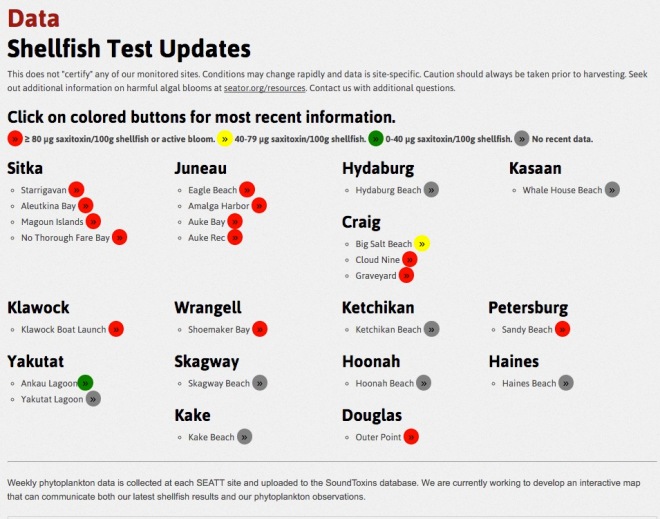
New harmful algal bloom warnings issued for shellfish harvested in Starrigavan Beach, other SE beaches

SEATORPSPWarningAug17

The SouthEast Alaska Tribal Ocean Research (SEATOR) project, SouthEast Alaska Tribal Toxins (SEATT) partnership and the Sitka Tribe of Alaska Environmental Research Lab (STAERL) on Wednesday, Aug. 17, issued a warning that people should not eat shellfish harvested at Starrigavan Beach in Sitka and Hydaburg Beach in Hydaburg.

Esther Kennedy of the Sitka Tribe of Alaska Resource Protection Department samples water near the Starrigavan Recreation Area dock for marine biotoxins such as paralytic shellfish poisoning. (Photos by Emily Kwong, KCAW-Raven Radio)

Esther Kennedy of the Sitka Tribe of Alaska Resource Protection Department samples water near the Starrigavan Recreation Area dock for marine biotoxins such as paralytic shellfish poisoning in 2015. (Photo by Emily Kwong, KCAW-Raven Radio)

Samples harvested Aug. 17 at those beaches showed the presence of Alexandrium, a phytoplankton that produces saxitoxins that can cause paralytic shellfish poisoning (PSP). Mulluscan shellfish (bivalve shellfish such as clams, mussels, oysters, cockles, scallops, etc.) from these sites should not be harvested at this time.

In addition, mulluscan shellfish from Hydaburg Beach on Aug. 17 tested near or above the regulatory limit of 80μg/100g for saxitoxins and all species of mulluscan shellfish should not be harvested at this time. On Aug. 18, butter clams from Shoemaker Beach in Wrangell tested near or above the regulatory limit of 80μg/100g for saxitoxins and should not be harvested at this time.

The PSP advisory is for bivalve shellfish that have been recreationally or subsistence harvested. It does not apply to commercially harvested shellfish, which are tested before they enter the market. The advisory does not apply to other shellfish, such as crabs or shrimp, which do not carry PSP (unless you eat the crab butter or viscera).

There have been several harmful algal bloom alerts released by SEATOR this summer, but it’s the first one in about a month or so for Sitka. In addition to the saxitoxins that cause PSP, the lab in Sitka has been monitoring for other blooms that cause amnesic shellfish poisoning (ASP). PSP and ASP can cause severe health problems, including death in some cases.

According to SEATOR, “This does not ‘certify’ any of our monitored sites. Conditions may change rapidly and data is site-specific. Caution should always be taken prior to harvesting.”

The butter clam has one set of rings that go one direction only, around the same center point (Photo courtesy of Alaska Department of Environmental Conservation)

The butter clam has one set of rings that go one direction only, around the same center point (Photo courtesy of Alaska Department of Environmental Conservation)

SEATOR posts updates and information to its website at seator.org/data, which can help provide Southeast Alaska residents with reliable information so they can choose whether or not to harvest shellfish. In addition to testing water samples weekly from certain Southeast beaches, STAERL also tests samples of butter clams, littleneck clams, and blue mussels (which is STAERL’s indicator species, because of how quickly blue mussels absorb saxotoxins).

Since most beaches in Alaska aren’t tested for harmful algal blooms, SEATOR and the SEATT partnership were formed in October 2014 to train people to test beaches in Southeast Alaska. In April 2015, the Sitka Tribe of Alaska opened a regional lab on Katlian Street, so samples could be tested in Sitka without having to be sent to the Lower 48, which delayed results. By testing for harmful algal blooms, SEATOR and the SEATT partnership hope to be able to provide information so people can make informed choices whether or not to harvest or eat shellfish.

Harmful algal blooms, such as paralytic shellfish poisoning (PSP), typically have not been monitored in Southeast Alaska for subsistence and recreational harvesters of clams, mussels, oysters, cockles, and other bivalves (commercial harvests are tested). Even though many people in Southeast Alaska love to harvest shellfish, eating it comes with some risks. There have been several PSP outbreaks in recent years that sent people to the hospital, and in 2010 two deaths were attributed to PSP and other HABs, such as Alexandrium, Pseudo-nitzchia and Dinophysis.

To learn more about harmful algal blooms and how they can raise the risk for PSP and ASP (amnesic shellfish poisoning, which also can be fatal), go to SEATOR’s resources page. If you have shellfish you recently harvested and want to test it, click this link to learn what you need to do to have it tested by STAERL. Please contact STAERL at 747-7395 with any additional questions.

Check out the August 2016 edition of the Sitka Local Foods Network newsletter

August2016SLFNNewsletterScreenshot

The Sitka Local Foods Network just sent out the August 2016 edition of its newly launched monthly newsletter. Feel free to click this link to get a copy.

This edition of the newsletter has brief stories about the Sitka Farmers Markets, a series of ‘Building A Local Food System’ articles by intern Claire Chang, a reminder that you can still add Pick.Click.Give. donations to your Alaska Permanent Fund Dividend application through Aug. 31, and an update on the Sitka Local Foods Network board of directors. Each story has links to our website for more information.

You can sign up for future editions of our newsletter by clicking on the registration form image in the right column of our website and filling in the information. If you received a copy but didn’t want one, there is a link at the bottom of the newsletter so you can unsubscribe. Our intention is to get the word out about upcoming events and not to spam people. We will protect your privacy by not sharing our email list with others.

Check out the July 2016 edition of the Sitka Local Foods Network newsletter

July2016SLFNNewsletterScreenshot

The Sitka Local Foods Network just sent out the July 2016 edition of its newly launched monthly newsletter. Feel free to click this link to get a copy.

This edition of the newsletter has brief stories about the Sitka Farmers Market opening on Saturday, changes to the Sitka Local Foods Network board of directors, a student-built school garden at Keet Gooshi Heen Elementary School, and info about several sh. Each story has links to our website for more information.

You can sign up for future editions of our newsletter by clicking on the registration form image in the right column of our website and filling in the information. If you received a copy but didn’t want one, there is a link at the bottom of the newsletter so you can unsubscribe. Our intention is to get the word out about upcoming events and not to spam people. We will protect your privacy by not sharing our email list with others.


Harmful algal bloom expands PSP advisory to several Southeast Alaska beaches

SEATORDataUpdate06102016

Seator-Logo-Best-June-30-2015-7pm-215x215The SouthEast Alaska Tribal Ocean Research (SEATOR) project, SouthEast Alaska Tribal Toxins (SEATT) partnership and the Sitka Tribe of Alaska Environmental Research Lab (STAERL) have expanded a recent paralytic shellfish poisoning (PSP) advisory to include more beaches in Southeast Alaska.

The advisory, initially announced on May 26, now includes multiple beaches in Sitka, Juneau, Craig, Petersburg, and Klawock. The PSP advisory is for bivalve shellfish — such as clams, mussels, oysters, cockles, scallops, geoducks, etc. — that have been recreationally or subsistence harvested. It does not apply to commercially harvested shellfish, which are tested before they enter the market. The advisory does not apply to other shellfish, such as crabs or shrimp, which do not carry PSP (unless you eat the crab butter/viscera).

According to a SEATOR press release, “Recent samples on June 6 confirmed elevated levels of Alexandrium, the phytoplankton species that produces saxtoxins causing PSP, have been observed at the following locations and shellfish from these sites should not be harvested at this time.” The affected beaches from June 6 are Auke Bay, Amalga Harbor, Eagle Beach, and Auke Rec beaches in Juneau; Cloud 9 and Graveyard beaches in Craig; Starrigavan beach in Sitka; and the Boat Ramp beach in Klawock.

The butter clam has one set of rings that go one direction only, around the same center point (Photo courtesy of Alaska Department of Environmental Conservation)

The butter clam has one set of rings that go one direction only, around the same center point (Photo courtesy of Alaska Department of Environmental Conservation)

In addition, the press release said, “On June 9 shellfish from the following sites tested above the regulatory limit of 80µg/100g for saxitoxins and should not be harvested at this time.” The June 9 list of beaches includes Sandy Beach in Petersburg (butter clams only); Auke Bay, Amalga Harbor, Eagle Beach, and Auke Rec beaches in Juneau; Aleutkina Bay, No Through Fare Bay, Magoun Islands, and Starrigavan (butter clams only) beaches in Sitka; and the Boat Ramp beach in Klawock. The advisory is for all shellfish on all beaches, except where noted.

According to SEATOR, “This does not ‘certify’ any of our monitored sites. Conditions may change rapidly and data is site-specific. Caution should always be taken prior to harvesting.”

SEATOR posts updates and information to its website at seator.org/data, which can help provide Southeast Alaska residents with reliable information so they can choose whether or not to harvest shellfish. In addition to testing water samples weekly from certain Southeast beaches, STAERL also tests samples of butter clams, littleneck clams, and blue mussels (which is STAERL’s indicator species because of how quickly blue mussels absorb saxotoxins).

Since most beaches in Alaska aren’t tested for harmful algal blooms, SEATOR and the SEATT partnership were formed in October 2014 to train people to test beaches in Southeast Alaska. In April 2015, the Sitka Tribe of Alaska opened a regional lab on Katlian Street, so samples could be tested in Sitka without having to be sent to the Lower 48, which delayed results. By testing for harmful algal blooms, SEATOR and the SEATT partnership hope to be able to provide information so people can make informed choices whether or not to harvest or eat shellfish.

Harmful algal blooms, such as paralytic shellfish poisoning (PSP), typically have not been monitored in Southeast Alaska for subsistence and recreational harvesters of clams, mussels, oysters, cockles, and other bivalves (commercial harvests are tested). Even though many people in Southeast Alaska love to harvest shellfish, eating it comes with some risks. There have been several PSP outbreaks in recent years that sent people to the hospital, and in 2010 two deaths were attributed to PSP and other HABs, such as Alexandrium, Pseudo-nitzchia and Dinophysis.

To learn more about harmful algal blooms and how they can raise the risk for PSP and ASP (amnesic shellfish poisoning, which also can be fatal), go to SEATOR’s resources page. If you have shellfish you recently harvested and want to test it, click this link to learn what you need to do to have it tested by STAERL. Please contact STAERL at 747-7395 with any additional questions.

• June 10, 2016, press release about PSP advisory for Southeast Alaska