• Free pressure canner gauge testing offered at the Sitka Farmers Market on Saturday, July 18

Canner

SarahLewisTestsCannerGaugeThis is a great time of the year to be in Sitka. The fish are running, gardens are starting to produce, and berries are ripe for the picking.

Many Sitka residents have pressure canners to preserve their harvest, and this weekend Sarah Lewis of the Juneau District Office of the University of Alaska Fairbanks Cooperative Extension Service is in town to teach four classes about canning on Thursday, Friday and Saturday at the Sitka Kitch (a rental community commercial kitchen at First Presbyterian Church, 505 Sawmill Creek Road, note, all classes are full). She also provide free pressure canner gauge testing at the Sitka Farmers Market from 10 a.m. to 1 p.m. on Saturday, July 18, at the Alaska Native Brotherhood Founders Hall.

“People can bring the gauge or the lid with the gauge still attached,” Sarah said about the pressure canner gauge testing. “If they have any questions about the full canner (gaskets, damage, how to use, etc.) they can bring the whole thing.”

In addition to testing pressure canner gauges, Sarah plans to work with Jasmine Shaw of the Sitka District Office of the UAF Cooperative Extension Service to have a wide variety of publications available about home canning. In addition, the UAF Cooperative Extension Service has a series of online tutorials on its website called “Preserving Alaska’s Bounty.” Pressure canner gauges should be tested at least once a year to make sure they are hitting the right pressures for safe food preservation.

A reminder about the Sitka Farmers Market, due to health codes we can’t allow any pets other than licensed service dogs in the ANB Hall or the parking lot. We also don’t allow smoking at the Sitka Farmers Market (in ANB Hall or the parking lot) because this is a health event.

Also, if you are in Sitka and you can’t make the pressure canner gauge testing event at the Sitka Farmers Market, you can call Jasmine Shaw at 747-9440 at the Sitka office of the UAF Cooperative Extension Service to set up a time when you can stop by and have her test your gauge in the office. She now has a gauge and is trained on using it.

• Scenes from the first Sitka Farmers Market of the 2015 summer

Sitka Local Foods Network Board Secretary Alli Gabbert, left, and Sitka Farmers Market Manager Debe Brincefield, right, present the Table Of The Day Award to Jennifer "Springer" Black of Charlee Oh Creations at the first Sitka Farmers Market of the 2015 summer on Saturday, July 4, at the Alaska Native Brotherhood Founders Hall in Sitka. Springer is a new vendor at the Sitka Farmers Market and she sold handmade soft-soled shoes for babies and toddlers, some with matching bibs. Springer received a gift bag with fresh greens, fresh rhubarb, fresh mint, and some handmade earrings donated by Taylor Ihde. This is the eighth year of Sitka Farmers Markets, hosted by the Sitka Local Foods Network. The next market is from 10 a.m. to 1 p.m. on Saturday, July 18, at the Alaska Native Brotherhood Founders Hall, 235 Katlian St. Bring your canner pressure gauge to this market to have it checked. For more information about the Sitka Farmers Markets and Sitka Local Foods Network, go to http://www.sitkalocalfoodsnetwork.org/ or check out our Facebook page at https://www.facebook.com/SitkaLocalFoodsNetwork. (PHOTO COURTESY OF SITKA LOCAL FOODS NETWORK)

Sitka Local Foods Network Board Secretary Alli Gabbert, left, and Sitka Farmers Market Manager Debe Brincefield, right, present the Table Of The Day Award to Jennifer “Springer” Black of Charlee Oh Creations at the first Sitka Farmers Market of the 2015 summer on Saturday, July 4, at the Alaska Native Brotherhood Founders Hall in Sitka. Springer is a new vendor at the Sitka Farmers Market and she sold handmade soft-soled shoes for babies and toddlers, some with matching bibs. Springer received a gift bag with fresh greens, fresh rhubarb, fresh mint, and some handmade earrings donated by Taylor Ihde. This is the eighth year of Sitka Farmers Markets, hosted by the Sitka Local Foods Network. The next market is from 10 a.m. to 1 p.m. on Saturday, July 18, at the Alaska Native Brotherhood Founders Hall, 235 Katlian St. Bring your canner pressure gauge to this market to have it checked. For more information about the Sitka Farmers Markets and Sitka Local Foods Network, go to http://www.sitkalocalfoodsnetwork.org/ or check out our Facebook page at https://www.facebook.com/SitkaLocalFoodsNetwork. (PHOTO COURTESY OF SITKA LOCAL FOODS NETWORK)

Sitka celebrated its independence from over-processed store-bought food with the first Sitka Farmers Market of the season on Saturday, July 4, at the Alaska Native Brotherhood Founders Hall.

We were greeted by gorgeous sunny weather, a Sitka rarity for the Fourth of July, and several new booths. A reminder, due to health codes we can’t allow any pets in the ANB Hall or the parking lot other than service dogs. We also don’t allow smoking at the Sitka Farmers Market because this is a health event.

The second Sitka Farmers Market of the summer is from 10 a.m. to 1 p.m. on Saturday, July 18, at ANB Founders Hall, 235 Katlian Street. Don’t forget to bring your pressure canner gauge and lid because Sarah Lewis of the University of Alaska Fairbanks Cooperative Extension Service Juneau District Office will be in town offering free pressure canner gauge testing. You should have your pressure canner gauge tested once a year to make sure it’s safe.

A slideshow from the first Sitka Farmers Market is posted below.

This slideshow requires JavaScript.

• Check out the July 2015 edition of the Sitka Local Foods Network newsletter

July2015SLFNNewsletterScreenshot

The Sitka Local Foods Network just sent out the July 2015 edition of its newly launched monthly newsletter. Feel free to click this link to get a copy.

This edition of the newsletter has brief stories about the Sitka Farmers Market opening its eighth season on July 4, how you can help us win $15,000 for the St. Peter’s Fellowship Farm communal garden and other programs in the Gardens for Good contest, a series of free food preservation and entrepreneurship workshops offered by the SEARHC WISEFAMILIES Traditional Food program and UAF Cooperative Extension Service at Sitka Kitch, and the grand opening of the first home horticulture stand under a new zoning ordinance passed by the Sitka Assembly. Each story has links to our website for more information.

You can sign up for future editions of our newsletter by clicking on the registration form image in the right column of our website and filling in the information. If you received a copy but didn’t want one, there is a link at the bottom of the newsletter so you can unsubscribe. Our intention is to get the word out about upcoming events and not to spam people. We will protect your privacy by not sharing our email list with others.

• SEARHC, Cooperative Extension to host free food preservation and entrepreneurship workshops at Sitka Kitch

SitkaKitch2015CanningClasses

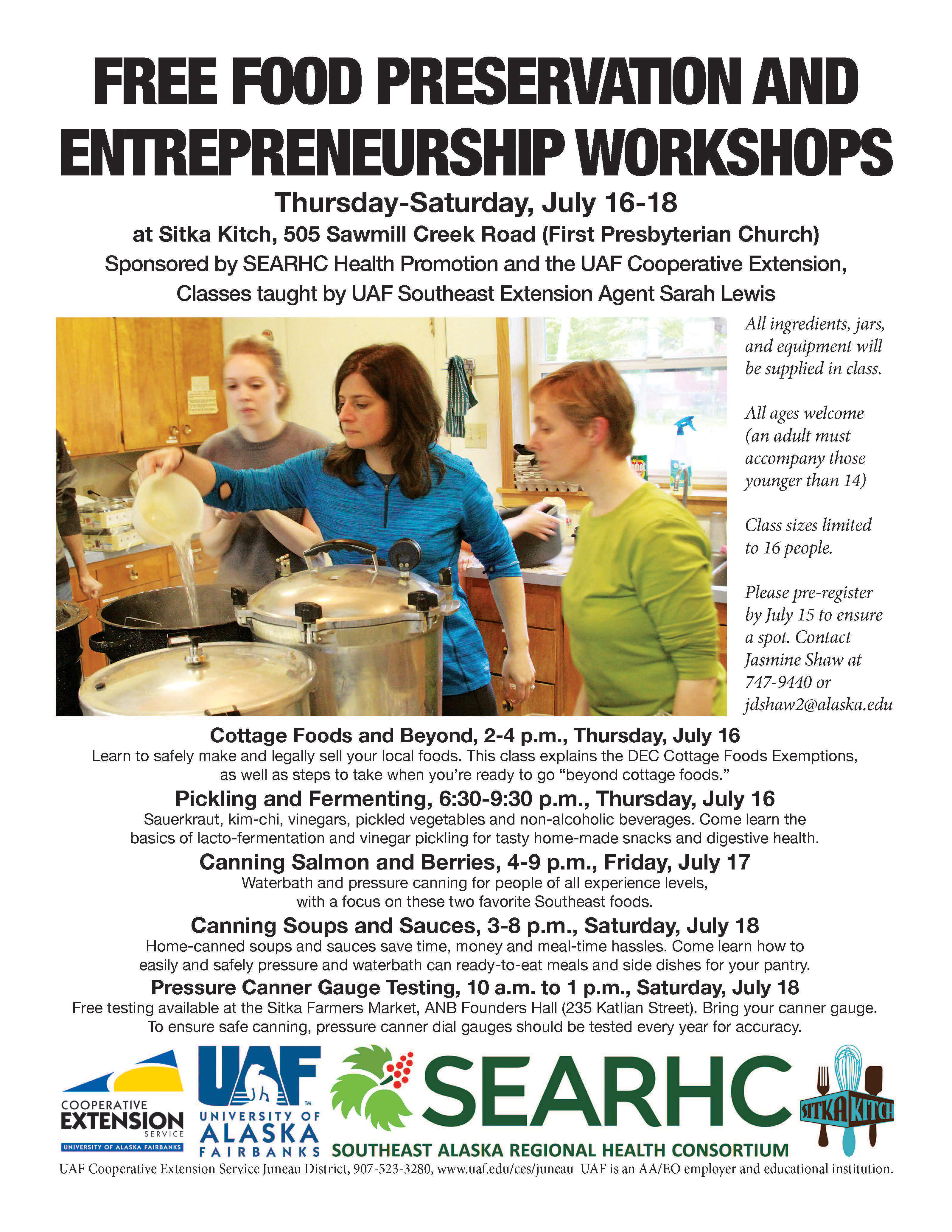
The SouthEast Alaska Regional Health Consortium (SEARHC) WISEFAMILIES Traditional Foods program and the University of Alaska Fairbanks Cooperative Extension Service are teaming up to offer a series of four free food preservation and entrepreneurship workshops on Thursday through Saturday, July 16-18, at the Sitka Kitch. There also will be free pressure canner gauge testing at the Sitka Farmers Market on July 18.

The Sitka Kitch is a rental community commercial kitchen project coordinated by the Sitka Conservation Society, in partnership with the Sitka Local Foods Network, located inside the First Presbyterian Church, 505 Sawmill Creek Road. The Sitka Kitch was a project from the 2013 Sitka Health Summit designed to improve food security in Sitka while also providing a space for people wanting to get into the cottage food business or wanting to preserve their harvest for storage in the home pantry. Sitka Kitch officially opened in March 2015 after a series of renovations to make it pass Alaska Department of Environmental Conservation commercial kitchen food safety standards.

UAF Southeast Extension Agent Sarah Lewis of the Juneau District Office will teach four classes — Cottage Foods and Beyond, Pickling and Fermenting, Canning Salmon and Berries, and Canning Soups and Sauces. These classes are open to Sitka residents of all ages, but an adult must accompany those younger than 14 years old. Class sizes are limited to 16 people. Thanks to a grant from the SEARHC WISEFAMILIES Traditional Foods program, all ingredients, jars, and equipment will be supplied in class.

“The WISEFAMILIES Traditional Foods program is partnering with the UAF Cooperative Extension Service because their work complements our purposes, which is to help Native families reduce their risk for disease while working toward getting back to a traditional way of eating,” said SEARHC Health Educator Clara Gray, of the SEARHC WISEFAMILIES Traditional Foods program.

The SEARHC WISEFAMILIES Traditional Foods program promotes healthy lifestyles by connecting Alaska Natives in Southeast Alaska to their culture. Members of the program learn how to harvest, cook, and preserve their traditional Alaska Native foods, which usually are healthier than heavily processed store-bought foods. In addition, participants learn traditional language, dancing, carving, weaving, and other skills that help reconnect them to their culture.

SarahLewisWithBoilingPotsThe UAF Cooperative Extension Service offers a variety of programs geared toward food, how to grow it, how to preserve it for storage, and how to make it into cottage foods you can sell. For those who can’t make the classes, the service offers a series of free online tutorials about home canning called Preserving Alaska’s Bounty.

“As a UAF Cooperative Extension Agent, I try to teach that family and community resilience are strengthened when local foods are used to cook meals at home,” Lewis said. “Through my food preservation and entrepreneurship workshops I offer the knowledge and skills needed for people to discover the nutritional benefits and financial stability that come from making and preserving homemade meals with local ingredients.”

Here are the details and schedules of the four classes:

  • Cottage Foods and Beyond, 2-4 p.m., Thursday, July 16 — Learn to safely make and legally sell your local foods. This class explains the DEC Cottage Foods Exemptions, as well as steps to take when you’re ready to go “beyond cottage foods.”
  • Pickling and Fermenting, 6:30-9:30 p.m., Thursday, July 16 — Sauerkraut, kim-chi, vinegars, pickled vegetables and non-alcoholic beverages. Come learn the basics of lacto-fermentation and vinegar pickling for tasty home-made snacks and digestive health.
  • Canning Salmon and Berries, 4-9 p.m., Friday, July 17 — Waterbath and pressure canning for people of all experience levels, with a focus on these two favorite Southeast foods.
  • Canning Soups and Sauces, 3-8 p.m., Saturday, July 18 — Home-canned soups and sauces save time, money and meal-time hassles. Come learn how to easily and safely pressure and waterbath can ready-to-eat meals and side dishes for your pantry.

In addition to teaching the four classes, Lewis will offer free pressure canner gauge testing at the Sitka Farmers Market, from 10 a.m. to 1 p.m. on Saturday, July 18, at the Alaska Native Brotherhood Founders Hall, 235 Katlian Street. She also will provide other resources about home canning and food preservation. To ensure safe canning, pressure canner dial gauges should be tested every year for accuracy.

Due to limited class space, please pre-register by Wednesday, July 15, to ensure a spot. To pre-register, contact Jasmine Shaw of the Sitka District Office of the UAF Cooperative Extension Service at 747-9440 or jdshaw2@alaska.edu.

• Check out the May 2015 edition of the Sitka Local Foods Network newsletter

May2015SLFNNewsletterScreenshot

The Sitka Local Foods Network just sent out the May 2015 edition of its newly launched monthly newsletter. Feel free to click this link to get a copy.

This edition of the newsletter has brief stories about how Sitka was Alaska’s original garden city back in the 19th and early 20th Centuries, an update on upcoming Sitka Local Foods Network education programs, an update on the Sitka Farmers Market’s new manager, and a reminder about the Plant a Row for the Hungry program. Each story has links to our website for more information.

You can sign up for future editions of our newsletter by clicking on the registration form image in the right column of our website and filling in the information. If you received a copy but didn’t want one, there is a link at the bottom of the newsletter so you can unsubscribe. Our intention is to get the word out about upcoming events and not to spam people. We will not share our email list with others to protect your privacy.

• The Garden Show returns to KCAW-Raven Radio spring programming lineup

KittyLaBountyAndMollieKablerKCAWGardenShow

,


For more than 20 years, Mollie Kabler and Kitty LaBounty have taken to the airwaves during the spring months for The Garden Show on KCAW-Raven Radio.

The show returned to the programming lineup earlier this month and airs from 5:30-6 p.m. on Saturdays from April through June, or longer into the summer if work schedules permit. Topics include timely tasks for gardening in Southeast Alaska, taking on-air questions, and themes around basic and more advanced gardening of vegetables, flowers, fruit, etc.

Mollie and Kitty both have been gardening in Sitka for more than 25 years, and they also have gardening experience from their childhoods in Wisconsin (Mollie) and Oregon (Kitty). They both have passed the Master Gardener classes offered by the University of Alaska Fairbanks Cooperative Extension Service.

To call the show with gardening questions, call 747-5877 between 5:30-6 p.m. on Saturday.

• In the 19th and early 20th Centuries, Sitka was Alaska’s original garden city

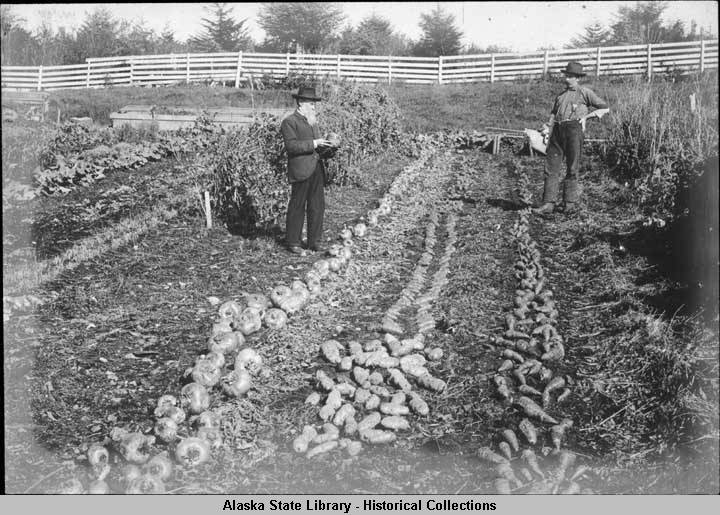
The 1900 potato harvest in the Sitka garden of Gov. John G. Brady. (Photo courtesy of Alaska State Library Historical Collections)

The 1900 harvest of potatoes and other vegetables from the Sitka garden of Gov. John G. Brady. (Photo courtesy of Alaska State Library Historical Collections)

Sitka cattle on the beach in 1887 (Photo courtesy of Alaska State Library Historical Collections)

Sitka cattle on the beach in 1887 (Photo courtesy of Alaska State Library Historical Collections)

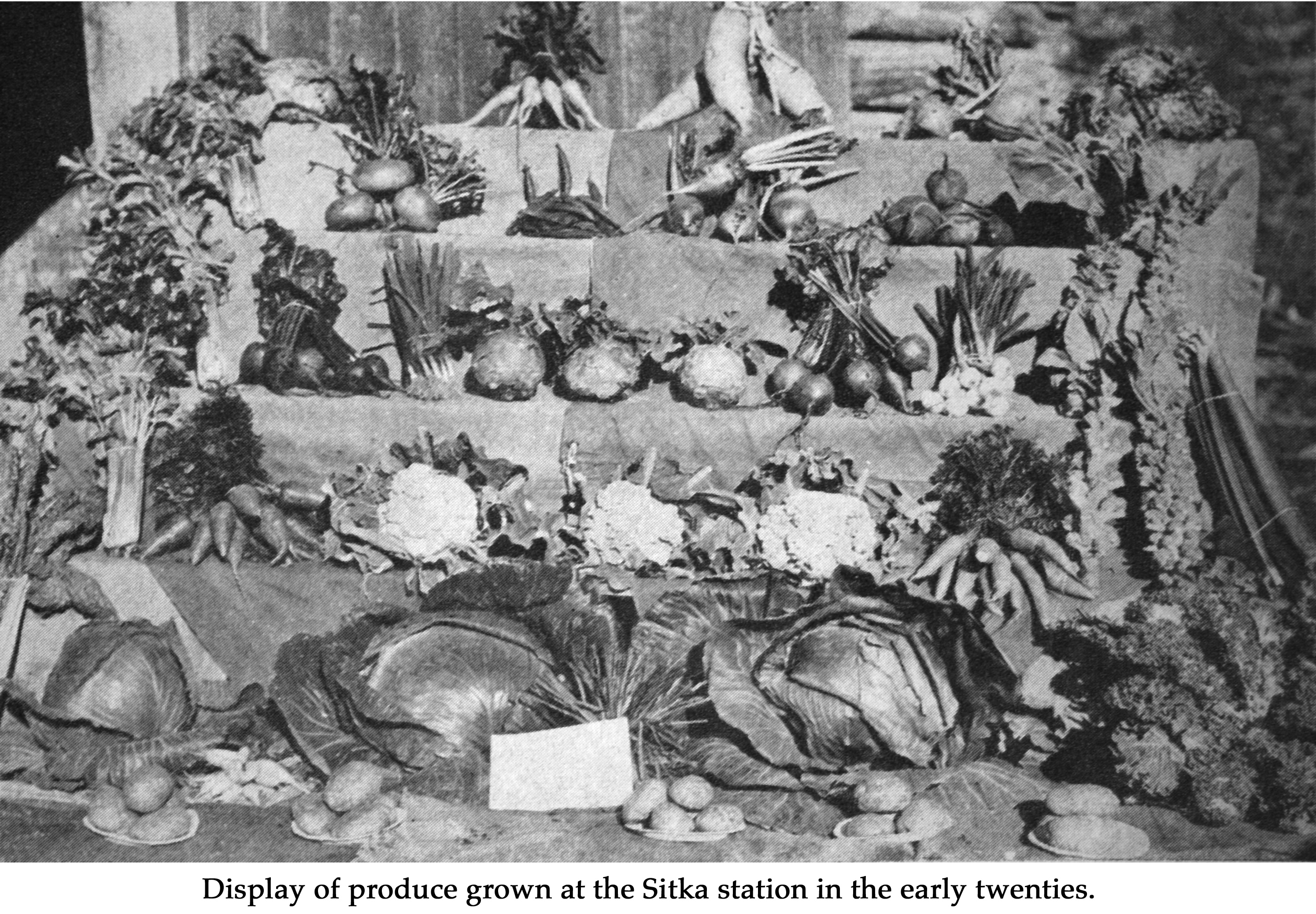
Even though Sitka doesn’t have much in the way of commercial agriculture and gardening these days, at one point in the 19th Century and early 20th Century Sitka was Alaska’s original garden city.

Sitka has a unique history that includes the Tlingít, Russian and American cultures. Even before the first Russians arrived in the 1700s and made Sitka (or New Archangel, as the Russians called it) the capital of Russian America in 1803, the Tlingíts had simple gardens for potatoes and other crops they’d received from Spanish and other explorers. The Tlingíts would plant potatoes and other root vegetables before they headed out to their fish camps, then they’d harvest the gardens as they made their way to their hunting and winter camps. In addition, the Tlingíts in Shee Atiká (Sitka) were constantly gathering roots, berries, and other food and medicinal plants that grew in the area. The Tlingíts also created an early form of mariculture, creating clam gardens by creating rock-walled beach terraces at low tide to keep clams and other shellfish in certain areas for easy growth and harvest.

produceWhen the Russians arrived in Sitka, they were fur trappers and not colonists. However, the Russian czar required all land patents to have gardens, and that established the first formal vegetable and fruit production in Sitka. The Russians (along with the Finns and Swedes who served as indentured servants to the Russians) maintained several large gardens until 1867, when Russian America was sold to the United States.

Among the first Americans to arrive in Alaska were missionaries, including Dr. Sheldon Jackson who established a school for Native Americans in Sitka that eventually became Sheldon Jackson College and also served as Alaska’s Superintendent for Indian Education with the U.S. Department of Interior. In 1891, Dr. Jackson lobbied Congress to create a U.S. Department of Agriculture experimental farm in Sitka to see if agriculture had any potential in Alaska. It wasn’t until 1897, when Congress acted, passing a bill that in 1898 created USDA experimental farms in Sitka and Kodiak. Over the next few years, more USDA experimental farms would be established in Kenai, Rampart, Fairbanks, Copper Center, and Matanuska (Palmer).

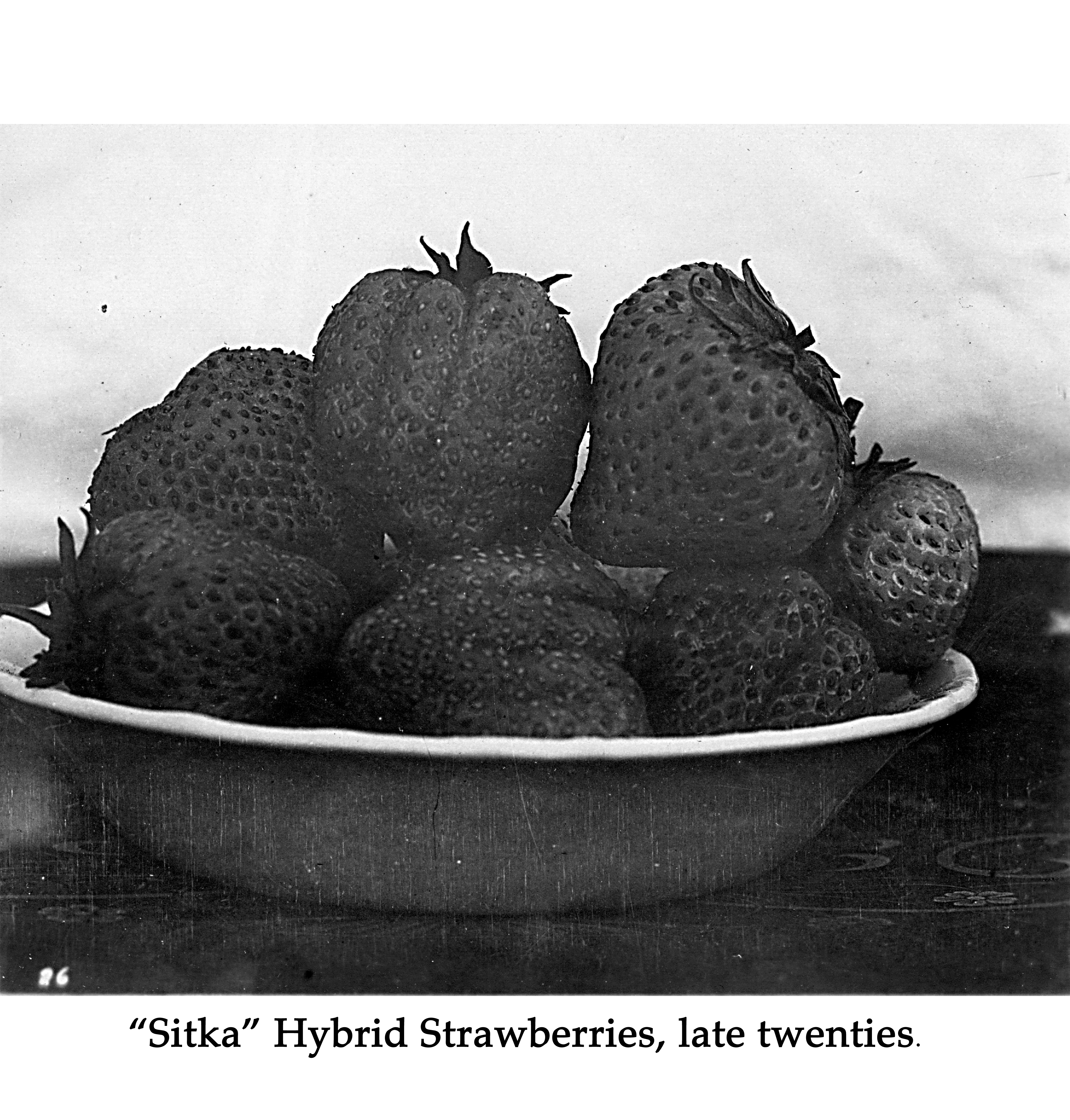
ccg2Many details about the USDA experimental farm in Sitka can be found in an article in the Spring 1998 issue of Agroborealis (Pages 7-11), celebrating 100 years of agriculture research in Alaska. The article includes information about some of the experiments run by lead horticulturist Charles Christian Georgeson, who later moved to the Fairbanks experimental station and now has a botanical garden named for him at the University of Alaska Fairbanks. One of Georgeson’s first experiments involved growing potatoes, and he noted how well the local seaweed worked as a fertilizer. He also developed the Sitka hybrid strawberry in 1905, combining a wild beach strawberry from Yakutat with a commercial variety of unknown origin (see Pages 30-32).

Ph 2824Unfortunately, many of the experimental farms were closed, except the two in Fairbanks and Palmer. The Sitka experimental station closed in 1931, and much of the land was converted to other uses. Until he retired in 2014, Bob Gorman, a longtime University of Alaska Fairbanks Cooperative Extension Service employee, maintained a few small garden plots on the former Sitka experimental farm site where he conducted a few experiments (including growing corn in a high tunnel). Some of the fruit trees planted by Georgeson more than 100 years ago still produce fruit.

A photo gallery of historic Sitka gardening photos is below, followed by a photo gallery of more recent photos of the former Sitka experimental farm taken during a September 2013 tour for the International Master Gardeners Conference Cruise when it visited town. The historical photos were provided to the Sitka Local Foods network in 2008 by then-Sitka Historical Society and Museum curator Ashley Kircher (now Ashley Oliphant) and intern Amy Thompson.

This slideshow requires JavaScript.

This slideshow requires JavaScript.

• Check out the April 2015 edition of the Sitka Local Foods Network newsletter

SLFN April 2015 newsletter screenshot

The Sitka Local Foods Network just sent out the April 2015 edition of its newly launched monthly newsletter. Feel free to click this link to get a copy.

This edition of the newsletter has brief stories about how to build a simple raised garden bed, the Plant a Row for the Hungry program, our open manager and assistant manager positions for the Sitka Farmers Market, some upcoming garden mentor program and other free garden classes, and the 2015 Pick.Click.Give. fundraising campaign. Each story has links to our website for more information.

You can sign up for future editions of our newsletter by clicking on the registration form image in the right column of our website and filling in the information. If you received a copy but didn’t want one, there is a link at the bottom of the newsletter so you can unsubscribe. Our intention is to get the word out about upcoming events and not to spam people. We will not share our email list with others to protect your privacy.

• Sitka added as site for UAF Cooperative Extension Service agriculture grant-writing seminar

GrantWritingLocalFood

The University of Alaska Fairbanks Cooperative Extension Service will offer a free grant-writing workshop from 1-5 p.m. on Monday, March 30, to help Alaskans apply for federal grants relating to local food production and farmers markets.

Palmer Extension agent Steve Brown will teach the free workshop from 1 to 5 p.m. in Palmer and by videoconference in Kenai, Homer, Nome and Fairbanks. At the request of Sitka residents, on Wednesday, March 25, Sitka was added as an additional site for the videoconference.

The 2014 farm bill authorized $30 million annually for grants to be awarded nationally through the U.S. Department of Agriculture’s Farmers Market and Local Food Promotion Program. The program awards competitive grants to develop new market opportunities for farm and ranch operations serving local and regional markets. According to USDA, farmers market grants will support farmers markets and other producer-to-consumer activities, while the local food promotion grants will support enterprises that aggregate, store, distribute and process local and regional food.

The workshop will be offered at the Matanuska Experiment Farm in Palmer, the Kenai Community Library, Kenai Peninsula College in Homer, the district Extension office in Fairbanks at 724 27th Ave. and the Northwest Campus, B West, in Nome. The Sitka location for the workshop is Room 106 of the University of Alaska Southeast Sitka Campus.

The preferred registration deadline is Friday, March 27, but since Sitka was added as a site so close to the presentation walk-in participants will be allowed at this location. For more information or to register, call the Palmer Extension office at 907-745-3360. Sitka residents should pre-register by contacting Jasmine Shaw at 747-9440 or jdshaw2@alaska.gov.

• Check out the special PFD edition of the Sitka Local Foods Network newsletter

SnapshotPFDNewsletter

The Sitka Local Foods Network just sent out a special PFD application edition of its newly launched newsletter. Feel free to click this link to get a copy.

This special edition of the newsletter has just one story in it, a reminder that the Alaska Permanent Fund Dividend application deadline is one week away (March 31). We encourage Alaskans to participate in the 2015 Pick.Click.Give. charitable giving program that’s part of the PFD application, and we appreciate your support of the Sitka Local Foods Network through the program. A regular monthly newsletter will come out on or near April 1.

You can sign up for future editions of our newsletter by clicking on the registration form image in the right column of our website and filling in the information. If you received a copy but didn’t want one, there is a link at the bottom of the newsletter so you can unsubscribe. Our intention is to get the word out about upcoming events and not to spam people. We will not share our email list with others to protect your privacy.