• Lori Adams discusses everything she’s learned about growing beets in her latest Daily Sitka Sentinel garden column

LoriAdamsDownToEarthUPickGarden(Lori Adams, who owns Down-To-Earth U-Pick Garden and is a frequent vendor at the Sitka Farmers Market, will be writing a regular garden column in the Daily Sitka Sentinel this summer. The Sentinel is allowing us to reprint the columns on this site after they first appear in the newspaper. This column appeared on Page 9 of the Friday, Nov. 2, 2012, edition of the Daily Sitka Sentinel.)

GARDENING IN SITKA

By Lori Adams

EVERYTHING I’VE LEARNED ABOUT GROWING BEETS

I have had bad luck with beets, but they grow really well here for most people.  I am not sure what the problem is, but I suspect that it is because I don’t really care for the way they taste. Therefore, I procrastinate about planting them, don’t spend much time preparing the soil for them and then just toss the seeds out in some random spot that’s squeezed between other vegetables that I DO enjoy.

Beets are a root crop that bear edible leaves (greens). They will do best in a bed that is prepped with bonemeal (starfish, pulverized deer bones or fish skeletons), sandy organic material that is not too rich with nitrogen (beach mulch gathered in the fall), and plenty of lime (seashell sand). The seeds can be started indoors mid-March and then transplanted outdoors mid-April, but most people just plant them directly outdoors mid-April.

Each beet “seed” is actually a capsule that contains roughly 2-4 seeds. The seedlings will sprout together in a really tight clump but it is not necessary to thin them because each beet plant will grow “out” from the clump center. If the surrounding spacing is adequate there will be enough room for all of them. You can plant the seeds directly into your bed with about three-inch spacing if you are growing them for the greens, but if you are trying to grow large roots you should space the seeds at least six inches apart.

Another option is to plant them close together at first and then when the greens are large enough to eat you can thin the bed by pulling enough plants to achieve six-inch spacing which will produce large roots for later harvest. If beet seeds are planted too closely together the plants will just sprout up tall and spindly with tiny roots, so plant your seeds carefully.

Most of us are familiar with the typical round, red beet with dark green leaves, but beets come in many varieties with different colors, shapes and sizes.  I think they all do well here.

Be sure to cover the entire bed with floating row cover and leave it on as long as possible. Beets like it warm and can take a long time to mature in Sitka, so row cover can really speed up maturity.

Beets are edible at any stage. You can harvest baby greens or entire baby plants to eat raw or cooked, or you can wait and harvest plants that have roots 2 inches across for cooking. Roots that are larger than 2 inches across can become more fibrous.  Leaves that are harvested from mature plants tend to be tough and will need to be cooked. When harvesting roots, leave at least one inch of foliage on the root to avoid excess bleeding during the cooking process. I have heard that roasting beets in the oven is quite delicious too, but I wouldn’t know. I don’t really like beets.

Brought to you by Down-To-Earth U-Pick Garden

2103 Sawmill Creek Road

Open June-August / Monday to Saturday, 11 a.m. to 6 p.m.

747-6108 or 738-2241

http://downtoearthupick.blogspot.com/

• Sitka community food assessment project to hold kick-off meeting on Monday, Oct. 29

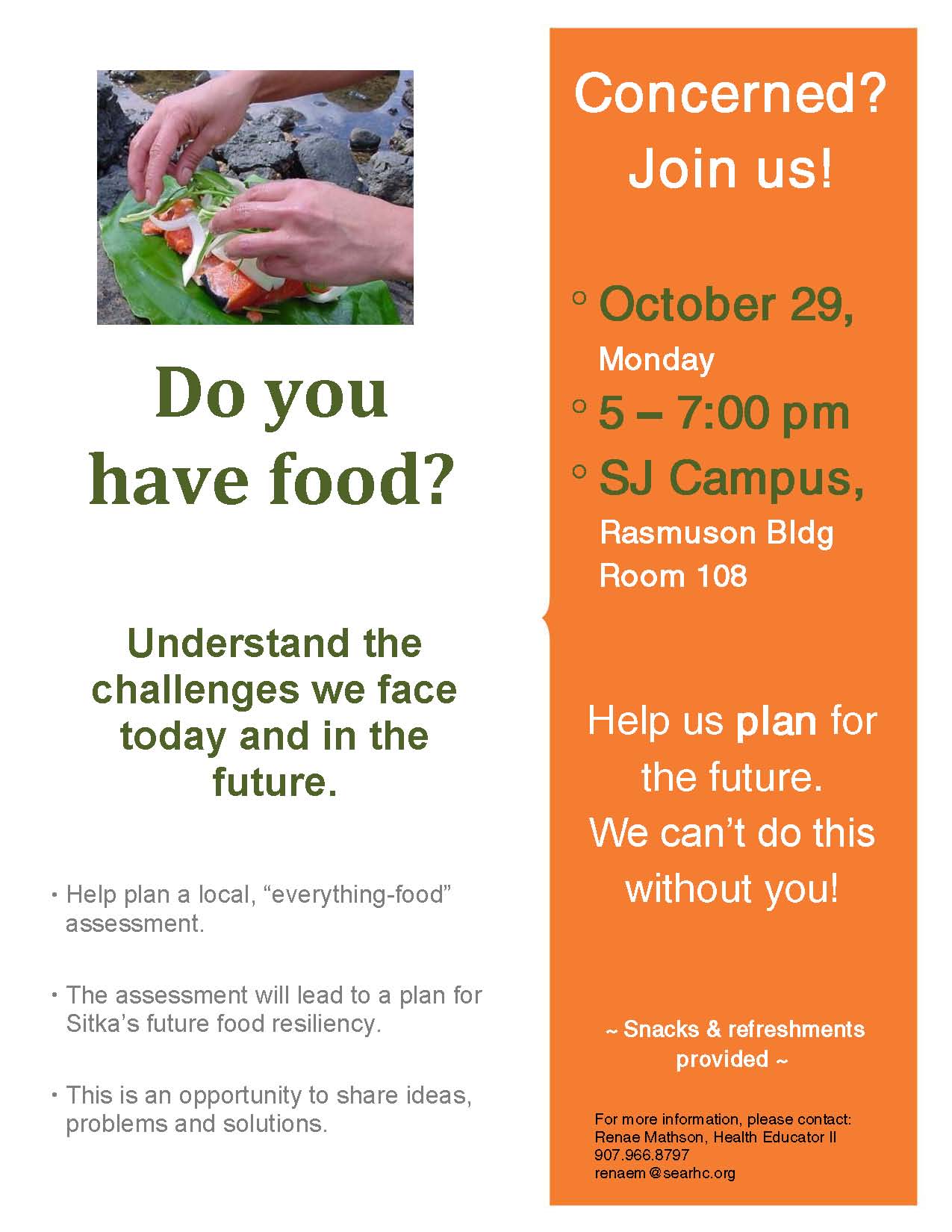
At the 2012 Sitka Health Summit, “Developing a Community Food Assessment for a Food Resilient Sitka” was selected as one of the top three goals for 2012-2013. All members of the public who are interested in this initiative are cordially invited to a kick-off gathering from 5-7 p.m. on Monday, Oct. 29, in Room 108 at the Rasmuson Building located on the Sheldon Jackson campus.

Are you concerned about where your food comes from and how it gets to Sitka? Have you ever wondered what happens if the barge doesn’t arrive? Are you worried about rising food prices and do you worry about the future of Sitka’s food needs? What percentage of Sitka’s food is locally harvested? Do you feel the fish and game food resources you harvest are adequately protected?

Those and other questions will be asked as part of the community food assessment. All members of Sitka’s community have a need for and a right to healthy, stable, affordable food. We are interested in finding community groups and individuals who can help us in the planning stages of this assessment.

Snacks and refreshments will be provided. For more information, contact Renae Mathson at 966-8797 or renae.mathson@searhc.org.

• Lori Adams discusses everything she’s learned about growing zucchini in her latest Daily Sitka Sentinel garden column

LoriAdamsDownToEarthUPickGarden(Lori Adams, who owns Down-To-Earth U-Pick Garden and is a frequent vendor at the Sitka Farmers Market, will be writing a regular garden column in the Daily Sitka Sentinel this summer. The Sentinel is allowing us to reprint the columns on this site after they first appear in the newspaper. This column appeared on Page 4 of the Wednesday, Oct. 24, 2012, edition of the Daily Sitka Sentinel.)

GARDENING IN SITKA

By Lori Adams

EVERYTHING I’VE LEARNED ABOUT GROWING ZUCCHINI

Oh, zucchini …. the “hit or miss” crop.  Some years it does fantastic and you start to think that you’re an expert, and then the next year it totally fails and you realize that you know nothing.

I DO know that zucchini plants hate to get wet, that almost all varieties need insects to pollinate them to produce fruit, and that the plants do best in warm weather.  The best zucchini plants I’ve seen in town have been grown under some sort of clear roofing with open sides.  The roofing lets in the sun but protects the plants from rain.  The open sides allow the wind to blow through (reducing mildew and rot), and gives the insects access to the blossoms.

If you grow yours outside don’t expect the plants to get huge and sprawl across the garden like they do in a greenhouse or down south — they will probably only get big enough to take up about nine square feet.  I grow mine in black plastic longline tubs on a shelf that runs the length of my house.  They are under the eaves which gives them a little protection from bad weather.

Zucchini is a heavy feeder so prep your bed or pots with plenty of nitrogen rich fertilizer (fish carcasses or compost).  It also needs potassium to produce healthy fruit  (seaweed) and plenty of lime (sea shell sand).  Early April is the time to start seeds indoors.  This is where I often run into trouble.

This year I planted my seeds in seedling trays in the sunroom and none of them germinated.  TWICE. I figured there must be something wrong with the seeds and did a germination test (sandwiched seeds between damp paper towels in an open Ziplock bag in the warm kitchen) and ALL of the seeds germinated. Once they germinated I carefully planted them into the seedling trays and then they did really well!  (If the sprouts were stuck to the paper towel I just cut around them with a scissors and planted the whole thing.) I have decided that from now on this is how I am going to germinated zucchini seeds every year.  Once the seedlings have been planted into trays they can be placed in a cooler environment, but they still do not like to be really cold.

Zucchini seedlings can be transplanted outdoors in early May. Handle them very carefully because they hate to be transplanted.  If you are planting in tubs be sure to make a depression in the soil, dig a hole in the bottom of the depression and then plant the seedling in the hole up to its first set of true leaves.

Tubs have a tendency to dry out really quickly, so the depression can help channel the water to the roots rather than just running out between the soil and the sides of the tub.  It’s a good idea to add a 3-4 inch layer of seaweed as mulch on top of the soil to help retain moisture, but be sure it doesn’t touch the seedlings possibly causing them to rot.  If you are planting in the ground then catching water is not as critical.

It’s really important to protect the seedlings from the cold.  I cut the bottoms off of plastic milk jugs and place the tops over the seedlings (with the lids off) like little miniature greenhouses and then cover the entire bed with floating row cover that is held up by hoops.  When the plants grow big enough to “fill” the milk jugs I take them off but continue to use floating row cover.  Once the plants start to blossom I remove the row cover, but have it handy for cold nights or really bad weather.  If you keep your blossoming plants covered the insects will not be able to pollinate the blossoms and you will not get any zucchinis to mature.

Each zucchini plant produces both male and female flowers.  The male flowers grow on long skinny stems and the female flowers grow at the end of tiny baby zucchinis that are on short squatty stems. The blossoms are only open for about a day or two and if the female flower does not get pollinated during this time the baby zucchini will start to wither and then die.  If this keeps happening you could try to hand pollinate by breaking off a male flower, pulling back it’s petals and rubbing a little bit of it’s pollen inside a couple of female flowers.  Some people chose to grow “self-pollinating” varieties to eliminate this problem.

Once the blossoms have closed they are of no use to the plant and should be removed, but be sure they are “ready” to come off.  Gently break them off sideways with your fingers.  If they don’t want to come off easily then just wait a day or two otherwise you might break off the entire tip of the zucchini and ruin it.

Zucchini blossoms are edible and quite delicious when stuffed with cheese, dredged in flour and fried in butter.  But be sure to leave them on the plant until they have done their job!  Zucchinis are edible at any stage of maturity, but it seems like a waste to eat them when they are tiny.  On the other hand it is not good to leave them on the plant until they get huge because the plant will think it has done its job and will stop producing fruit.  For best results harvest all the zucchinis that are over nine inches long and then your plants will keep producing fruit until the first frost kills the plant.

Brought to you by Down-To-Earth U-Pick Garden

2103 Sawmill Creek Road

Open June-August / Monday to Saturday, 11 a.m. to 6 p.m.

747-6108 or 738-2241

http://downtoearthupick.blogspot.com/


• Pacific High School’s local food meal featured on KCAW-Raven Radio

Photo courtesy of KCAW-Raven Radio

Photo courtesy of KCAW-Raven Radio

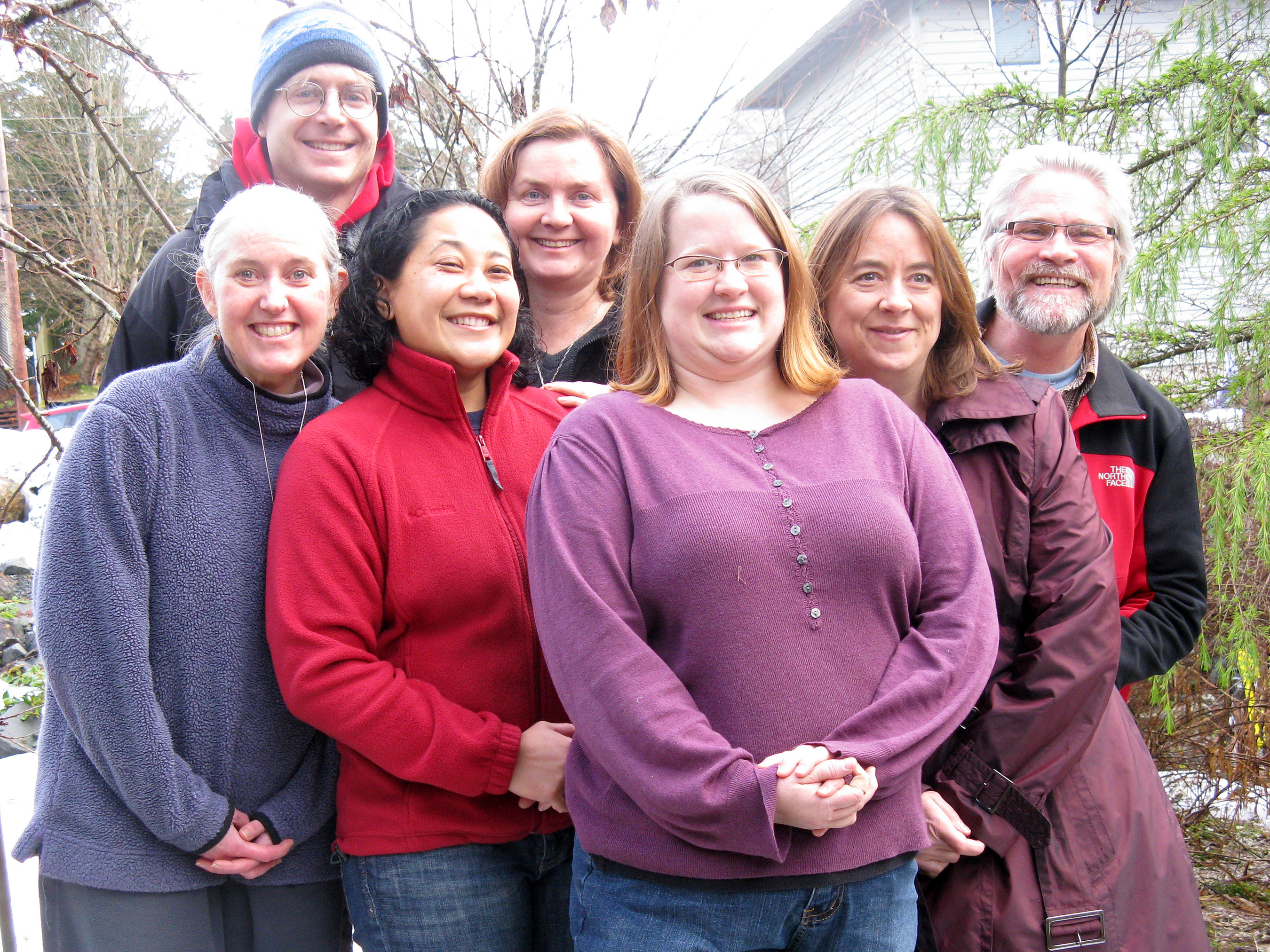
A special local food meal cooked and eaten by students at Pacific High School in Sitka was featured in a story by reporter Anne Brice on the Wednesday, Oct. 24, morning and evening newscasts on KCAW-Raven Radio.

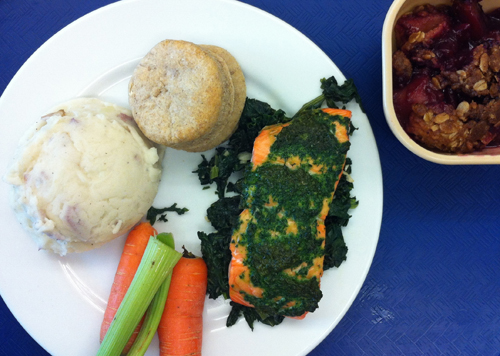
October is National Farm To School Month, and Oct. 24 was Food Day, so the students cooked up a meal featuring coho salmon with a lemon swirl and dill pesto served on a bed of kale. The fish was provided as part of the Sitka Conservation Society’s Fish-to-Schools program (a 2010 Sitka Health Summit project), and the veggies and herbs came from Lori Adams’ Down-To-Earth U-Pick Garden.

• Lori Adams discusses everything she’s learned about growing broccoli in her latest Daily Sitka Sentinel garden column

(Lori Adams, who owns Down-To-Earth U-Pick Garden and is a frequent vendor at the Sitka Farmers Market, will be writing a regular garden column in the Daily Sitka Sentinel this summer. The Sentinel is allowing us to reprint the columns on this site after they first appear in the newspaper. This column appeared on Page 4 of the Friday, Oct. 19, 2012, edition of the Daily Sitka Sentinel.)

GARDENING IN SITKA

By Lori Adams

EVERYTHING I’VE LEARNED ABOUT GROWING BROCCOLI

Broccoli loves the climate here in Sitka and with a few tips you can have delicious broccoli to eat for months.

Broccoli is from the brassica family and is a fairly heavy feeder.  Preparation should begin in the fall by amending your bed with nitrogen rich fertilizer and lime (or salmon carcasses, seaweed and seashell sand).

Start your seeds indoors mid-March.  They sprout up fast and grow tall quickly, so for best results after germination reduce the temperature in the room to 40-50 degrees F and turn the trays 180 degrees at least once a day to keep the seedlings from getting leggy and falling over.  It is also a good idea to have an oscillating fan in the room blowing gently across the trays to make the seedlings as strong as possible.

Transplant seedlings outdoors mid-April in a bed that has not had brassica’s planted in it the year before. Make a dish-shaped depression in the soil, then dig a hole in the bottom of it for the seedling and bury it up to its first set of true leaves.  The depression acts as a catch basin for water and will keep the seedling from drying out.

If your seedlings are a bit spindly, just do your best to prop them up and as they grow they will get stronger and straighten up on their own.  Space the seedlings about 20 inches apart.  It’s tempting to crowd them together to get more plants in the garden, but broccoli plants that are too close together produce small heads.

Mulch the entire bed with a generous layer of seaweed but try to keep the seaweed from touching the seedlings to prevent rot.  Cover the entire bed with floating row cover to protect the plants from the dreaded root maggot fly using hoops to keep the cover up off the plants if possible.  Leave the cover on until at least July 15.

In a few months you will see tiny broccoli head starting to form.  Some varieties of broccoli produce small heads and some varieties of broccoli produce large heads.  Immature heads are very tightly formed, mature heads are loosely formed and overly mature heads open up into flowers.

The key is to harvest before the heads flower regardless of size.  Harvest heads with a knife cutting the stem at a sharp angle.  This prevents water from setting on the stump and causing the plant to rot.  Broccoli leaves are edible and can be used like kale and broccoli stems can be eaten raw or cooked.  If the skin is tough just peel it away and eat the center.

Unfortunately, slugs LOVE broccoli.  Damaged leaves aren’t so bad, but when a slug crawls across a head and leaves a slimy, rotten track behind it, it can be very aggravating.  It’s easy to become discouraged and think the entire plant is ruined, but don’t pull it out. Just harvest the damaged head, eat the good parts and leave the plant in the ground because most varieties of broccoli will produce more, smaller heads called “sprouts” for months to come.  I have harvested fresh broccoli from my garden for Thanksgiving.

Brought to you by Down-To-Earth U-Pick Garden

2103 Sawmill Creek Road

Open June-August / Monday to Saturday, 11 a.m. to 6 p.m.

747-6108 or 738-2241

http://downtoearthupick.blogspot.com/
• Tour de Coop, a chicken tour of Sitka takes place on Oct. 27 in honor of National Food Day

Have you always been curious about what it takes to raise chickens in Sitka? Several of Sitka’s chicken coop owners will host the Tour de Coop — a guided walking tour of chicken coops at four homes in the Biorka neighborhood in honor of Food Day. This event features two tours starting at 11 and 11:45 a.m. on Saturday, Oct. 27, from the Baranof Elementary School playground parking lot (from the Market Center side).

During the guided walking tour, participants will learn chicken how-to basics from Sitka residents who are raising chickens for eggs and meat. Participants will learn the basics of raising chickens from chicks, what types of chickens do best in Sitka’s climate, what types of feed to use, how to build a coop, and how to protect the coop from bears and dogs. This tour is family friendly and interactive, fun guaranteed.

The Tour de Coop is brought to you by the Sitka Local Foods Network, Sitka Conservation Society, Sitka Food Co-op, and Food Day. Food Day, which is Oct. 24 each year, is a national celebration and movement promoting healthy, affordable and sustainable food. For more information, contact Jud Kirkness at judkirkness@yahoo.com or call the Sitka Conservation Society at 747-7509. (Editor’s note: The KCAW-Raven Radio Morning Interview on Friday, Oct. 26, featured Jud Kirkness and Ellen Frankenstein being interviewed by Holly Keen about the Tour de Coop and other food issues in Sitka.)

• Lori Adams discusses everything she’s learned about growing sunflowers in her latest Daily Sitka Sentinel garden column

(Lori Adams, who owns Down-To-Earth U-Pick Garden and is a frequent vendor at the Sitka Farmers Market, will be writing a regular garden column in the Daily Sitka Sentinel this summer. The Sentinel is allowing us to reprint the columns on this site after they first appear in the newspaper. This column appeared on Page 7 of the Friday, Oct. 12, 2012, edition of the Daily Sitka Sentinel.)

GARDENING IN SITKA

By Lori Adams

EVERYTHING I’VE LEARNED ABOUT GROWING SUNFLOWERS

Many people think that it is impossible to grow nice sunflowers here in Sitka, but it is possible. It just takes careful planning.

Sunflowers grow in just about any type of soil, but will do much better in soil that is rich with organic material and fertilizer. I start my sunflowers by seed indoors in mid-March. Once they have germinated it is important to reduce the temperature in the room to about 40-50 degrees to prevent the starts from getting leggy and spindly.  If they have to lean to reach the sun, be sure to rotate them 180 degrees at least once a day to get them to grow as straight as possible. It is also a good idea to have an oscillating fan gently blowing across them to encourage them to grow strong.

I transplant my starts outdoors between mid-April and mid-May.  Transplanting time is the most important step for ensuring success.  The weather should not be too cold or too hot.  (This year I transplanted at the beginning of a long stretch of rainy weather and I had a horrible success rate.)  The starts should not be transplanted near a lot of brush or in a crowded perennial bed because these settings encourage rot and slug damage.

The larger the starts are the better chance they have of surviving, but be sure they don’t get too tall and spindly or they may fall over or break in the wind.  Prepare supports of some sort before transplant time. Supports can really help. After the starts have been outdoors for awhile and have recovered from transplant shock they will start growing again and become stronger, but in the meantime the supports will help them.

You can attach the stems of the sunflowers to the supports but be sure to check them once in a while during the season to be sure they have not gotten too tight as the stems grow thicker.  Even a large mature sunflower will benefit from support.  I have had beautiful, huge plants uprooted or broken off by the wind. It was very sad.  If my starts get leggy and spindly I still transplant them outdoors and prop them up the best I can.

I’ve been amazed at how hardy they can be.  The ones that recover from the shock of transplanting take root, get stronger, grow taller, straighten out and develop thick, healthy stalks.  The key is to transplant at the right time, in the right place, with the right supports. Take some time to do it right.

Although you shouldn’t plan on it, it is possible to harvest sunflower seeds to eat if the weather cooperates.  A mature head will often tip down, thereby preventing damage from rain and allowing the seeds to mature.  If you want to try to harvest seeds do not prune spent flowers — let them die on the plant.

Amazingly enough, some of the best sunflowers I have ever grown have volunteered from sunflower seeds that were thrown outside the year before.  Of course this is a hit or miss procedure, but you might try it.

Throw some seeds out right now, mark the spot and see what happens.  You might scratch them in a bit or cover them with a thin layer or dirt to prevent birds from eating them. I have noticed that volunteer sunflowers are stronger and healthier than ones I have started indoors as long as the slugs didn’t get them.

I have grown many different varieties and colors of sunflowers, but I highly recommend the basic yellow and brown branching varieties that produce more than one blossom on a plant. The other colors don’t do as well here and don’t stand out like the traditional ones. And nothing says, “There’s a garden here!” like the sunny face of a brown and yellow sunflower.

Brought to you by Down-To-Earth U-Pick Garden

2103 Sawmill Creek Road

Open June-August / Monday to Saturday, 11 a.m. to 6 p.m.

747-6108 or 738-2241

http://downtoearthupick.blogspot.com/

• Sitka residents pick three Sitka Health Summit wellness projects for 2012-13; including a community food assessment

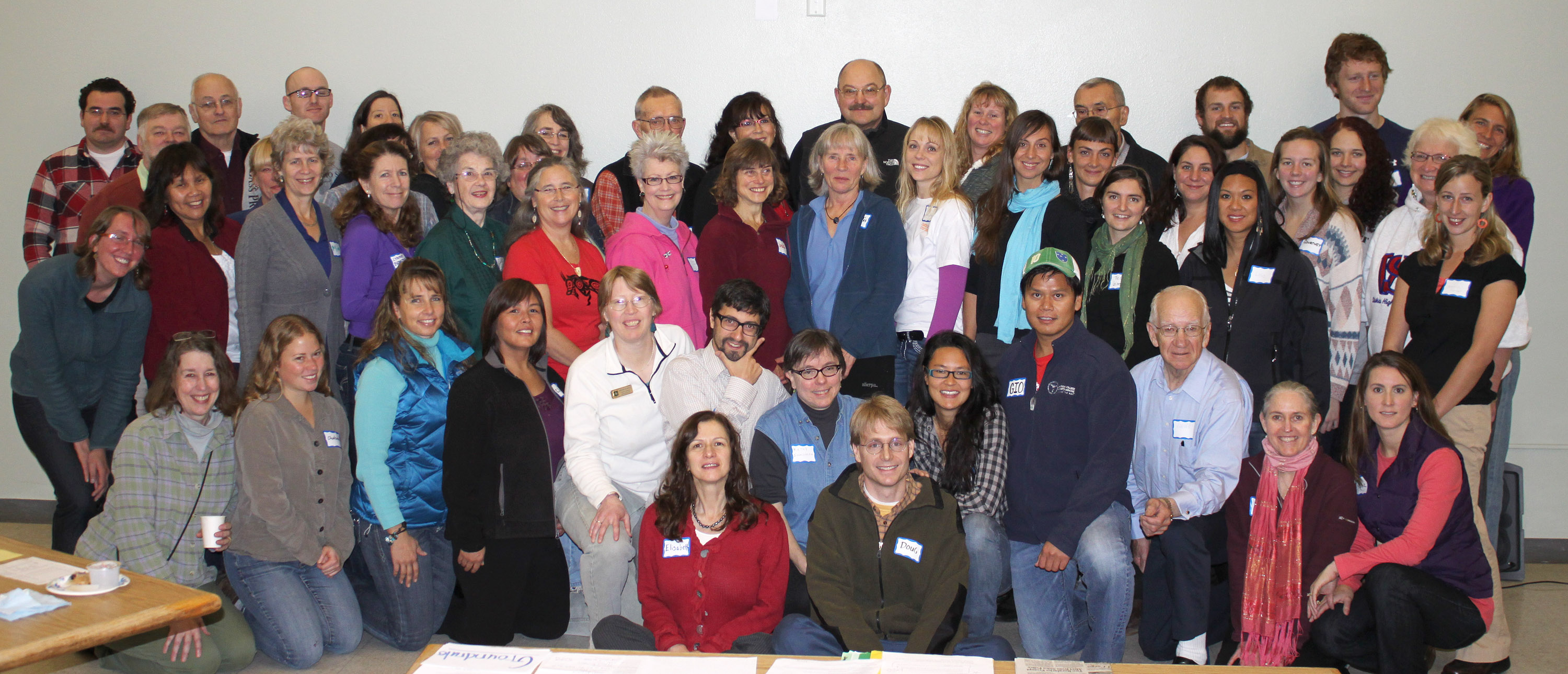
Sitka residents gather for a group photo during the Sitka Health Summit planning day on Friday, Oct. 12, 2012, at Sweetland Hall on the Sheldon Jackson Campus.

Sitka residents gather for a group photo during the Sitka Health Summit planning day on Friday, Oct. 12, 2012, at Sweetland Hall on the Sheldon Jackson Campus.

Sitka residents want to revitalize the downtown core area, perform a community food assessment for food resiliency, and apply for a Walk Friendly Community award to show how walkable Sitka is as a community.

Those were the three community health priorities Sitka residents chose to work on this next year when they met during the Sitka Health Summit’s community planning meeting on Friday, Oct. 12, at Sweetland Hall on the Sheldon Jackson Campus. Sitka residents chose these three projects out of dozens of brain-stormed ideas. Each project will receive assistance with facilitation and $750 of seed money from the summit’s Health Initiatives Fund to start working on meeting the health goals.

The groups working on each project are setting up their first meetings and getting their contact lists together, and Sitka residents who want to participate are welcome to contact the interim group leaders (through the group’s first meetings, group leaders may change after the first meetings) listed below to find out more information.

  • Sitka downtown revitalization project, Angela McGraw, 747-1737, angelam@sitkahospital.org, first meeting at 5:30 p.m. on Tuesday, Oct. 30, at Harrigan Centennial Hall.
  • Sitka community food assessment, Renae Mathson, 966-8797, renae.mathson@searhc.org, first meeting at 5 p.m. on Monday, Oct. 29, in Room 108 at Rasmuson Hall on the Sheldon Jackson Campus.
  • Walk Friendly Community, Charles Bingham, 738-8875, charleswbingham3@gmail.com, first meeting at 7 p.m. on Wednesday, Nov. 7, at Swan Lake Senior Center.
Sitka Mayor Mim McConnell speaks to Sitka residents at the Sitka Health Summit planning day on Friday, Oct. 12, 2012, at Sweetland Hall on the Sheldon Jackson Campus.

Sitka Mayor Mim McConnell speaks to Sitka residents at the Sitka Health Summit planning day on Friday, Oct. 12, 2012, at Sweetland Hall on the Sheldon Jackson Campus.

The sixth annual Sitka Health Summit took place on Saturday, Oct. 6; Monday, Oct. 8; Wednesday, Oct. 10; and Friday, Oct. 12, at various locations around Sitka. In addition to Friday’s community planning meeting, the Sitka Health Summit opened the Sitka Community Health Fair and Neighborhood Block Party on Saturday at Sweetland Hall. It also featured a lunch-and-learn on Monday at Kettleson Memorial Library where Don Lehmann, MD, discussed “Exercise as Medicine;” and it featured the Sitka Health Summit Community Wellness Champion Awards Celebration on Wednesday night at the Sheet’ká Kwáan Naa Kahidi.

The Sitka Health Summit is brought to you by Sitka Community Hospital, the SouthEast Alaska Regional Health Consortium (SEARHC), Alaska Communications and the University of Alaska Southeast-Sitka Campus. Additional financial help and in-kind donations were provided by the City and Borough of Sitka, Guardian Flight Inc., Premera Blue Cross Blue Shield of Alaska, Scott Insurance Services, Shee Atiká Inc., AC Value Center/Lakeside, Sitka Vision Clinic, Wells Fargo, White’s Inc. (Harry Race Pharmacy, White’s Pharmacy, Seasons), Spenard Builders Supply, Don and Penny Lehmann, Alaska Health Fair Inc., and the State of Alaska Division of Public Health Nursing. The Sitka Health Summit’s vision is “to serve our great state as a model for community wellness by creating a healthy community where all Sitkans strive for and enjoy a high quality of life.”

For more information about the Sitka Health Summit, call Doug Osborne at 966-8734 or Alyssa Sexton at 747-0388, or go to our website at http://www.sitkahealthsummit.com/.

• Lori Adams discusses everything she’s learned about growing potatoes in her latest Daily Sitka Sentinel garden column

(Lori Adams, who owns Down-To-Earth U-Pick Garden and is a frequent vendor at the Sitka Farmers Market, will be writing a regular garden column in the Daily Sitka Sentinel this summer. The Sentinel is allowing us to reprint the columns on this site after they first appear in the newspaper. This column appeared on Page 3 of the Wednesday, Sept. 26, 2012, edition of the Daily Sitka Sentinel.)

GARDENING IN SITKA

By Lori Adams

EVERYTHING I’VE LEARNED ABOUT GROWING POTATOES

I am relatively new to growing potatoes, but they are so fun to grow and do so well here that I am absolutely hooked.

Potatoes can be planted in almost any kind of soil and grow just fine.  I have heard people say they grew them in nothing but a pile of seaweed and I have seen someone plant them in a cleared lot with no food at all and they did great.

They are not super heavy feeders and prefer acidic, loose sandy soil with a moderately steady supply of organic material and phosphorus (bonemeal, starfish or fish bones and heads).  They can be grown right in the ground, but I prefer to grow them in tubs because it makes harvesting so much easier — no lost potatoes in the garden to volunteer next year!

Potatoes are very susceptible to a disease called “scab.”  It looks just like it sounds — rough brown scabs on the surface of the skin.  Scab is in the soil and although there are ways to try to avoid it, it seems inevitable.  Fortunately, although scabby potatoes are undesirable for market they are perfectly edible for home use.

To prepare the ground or tubs for potatoes do not add high-nitrogen food or lime.  New dirt is the best, and never plant potatoes in the same spot for at least three years. Just add some beach mulch for some organic material.  Buy certified scab-free seed potatoes from a garden supplier to avoid introducing “blight” (another disease), to the garden, or get some from a friend (they will probably have scab), and plant them outdoors mid-April.

Seed potatoes do not need to be large, in fact, it is preferable to obtain small ones with at least two “eyes” – dimples on the skin where sprouts emerge.  If you have large seeds potatoes you should cut them in several pieces and let the cut edges dry before planting them.  Whole seed potatoes do better in Sitka gardens than ones that have been cut.  They get off to a better start and are more resistant to diseases.

It’s best if your seed potatoes have already started to sprout, if they haven’t then they will just sit in the ground for a month before sprouting.  If yours haven’t sprouted by late March, expose them to 60 degree heat and as much sunshine as possible for two weeks before planting them.  Be sure not to break any sprouts off.

To plant, dig a 12-inch deep hole in the ground or tub that will not be below standing water when it rains, lay a fish head or a couple of starfish in the bottom and cover with dirt.  Or, dig a nine-inch hole and mix a handful of bonemeal into the soil.  Make a nest of straw or dried grass in the hole and set the seed potato in it with the sprouts reaching up, cover with more straw and then toss in a shovel full of spruce or hemlock needles (to made the soil more acidic to try to avoid scab), bury with dirt and beach mulch and top it all off with a couple inches of seaweed.

Potato plants usually sprout up fast and get quite large.  It is important to “hill-up” the plants a couple times during the season by burying the foliage so that only a couple of inches stick up out of the dirt.  This will cause more potatoes to grow on the buried foliage and dramatically increase your yield.

Potatoes can be harvested at any time for eating, but it is best to wait until the foliage has pretty much died back to achieve maximum yield. Early September is about right. Potatoes that have been harvested early have fragile skins and have a tendency to “peel,” like a sunburn.  If you want to store them all winter it is very important to wait until late September or early October to ensure that the potato skins have cured and will store well.

Now comes the fun part. Dump out the tub or dig a large enough hole to harvest every potato.  Lay them out on a tarp to dry. Lightly rub off the excess dirt and store them at 33-38 degrees in total darkness where they won’t get too dried out.  Be sure to save a few small ones of your favorite varieties to plant next year.

Brought to you by Down-To-Earth U-Pick Garden

2103 Sawmill Creek Road

Open June-August / Monday to Saturday, 11 a.m. to 6 p.m.

747-6108 or 738-2241

http://downtoearthupick.blogspot.com/
• Christi Henthorn wins Table of the Day at sixth Sitka Farmers Market

Sitka Farmers Market assistant market manager Jasmine Shaw, left, and Sitka Farmers Market market manager Johanna Willingham, right, present the Table of the Day Award to Christi Henthorn for the sixth and final Sitka Farmers Market of the season, on Sept. 15, 2012, at ANB Hall. Christi sold homemade baked goods, jams, veggies from her garden, jewelry and other artworks she’d made. The Sitka Local Foods Network board selects a Table of the Day winner from the vendors at each Sitka Farmers Market of the season, and the winners receive prizes such as a fifth-anniversary market tote bag, produce and a check.

The next Sitka Local Foods Network event is the annual Running of the Boots fundraiser this Saturday, Sept. 29, at Crescent Harbor Shelter. Registration opens at 10 a.m., costume judging is about 10:30 a.m. and the race starts at 11 a.m. A Sitka Farmers Market booth will be selling veggies and other items at the race. For more information about the Sitka Local Foods Network and the Sitka Farmers Market, go to http://www.sitkalocalfoodsnetwork.org/