Sitka Kitch to host rescheduled Cooking From Scratch class on soups, sauces and dressings

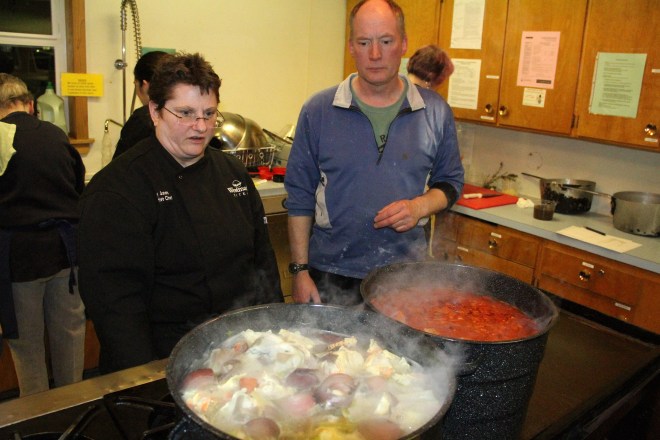
KathyAndPatWatchCrabStockAndTomatoSauceSimmer

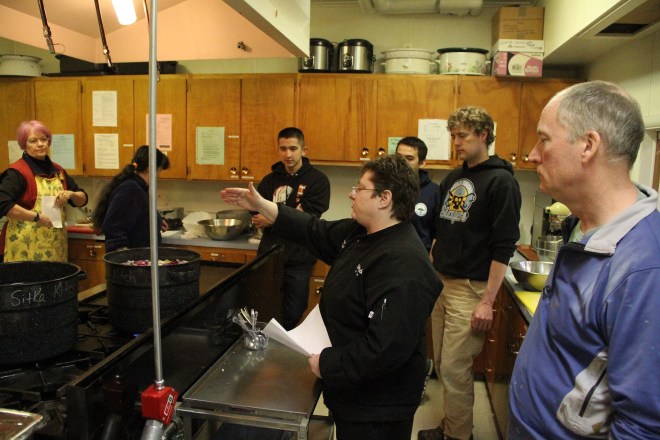
Chef Kathy Jones, left, and student Pat Hughes, watch pots boil during a recent Basic Culinary Skills class series during March 2016 at the Sitka Kitch.

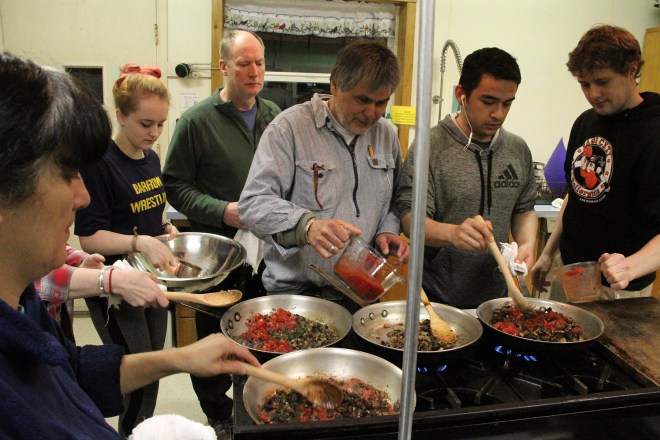
kitch_logo_mainThe Sitka Kitch community rental commercial kitchen will host a rescheduled class on cooking soups, sauces and dressings from 6-8:30 p.m. on Monday, April 18, at the Sitka Kitch, which is located at the First Presbyterian Church (505 Sawmill Creek Road). This class originally was part of the Cooking From Scratch series in February, but had to be postponed.

This class will be taught by Kathy Jones, the executive chef at the Westmark Hotel and Totem Square Inn, with assistance from her sous chef Barbara Palacios. It is focused on preparing homemade sauces and dressings to help you lower your food costs and increase flavor.

The Sitka Kitch was a project of the 2013 Sitka Health Summit, and the project is coordinated by the Sitka Conservation Society in partnership with the Sitka Local Foods Network. The Sitka Kitch can be rented to teach cooking and food preservation classes, by local cottage food industry entrepreneurs who need a commercial kitchen to make their products, and for large groups needing a large kitchen for a community dinner. To learn more about how to rent the Sitka Kitch, please go to the website at http://www.sitkawild.org/sitka_kitch.

The cost of the class is $20, plus a food fee shared among the registered participants. Registration closes at noon on Saturday, April 16, so the instructor can purchase supplies. Please register online through our EventSmart website, but you will pay at the class with cash. For more information, email sitkakitch@sitkawild.org.

Alaska Growers School provides guidance for Native-run agriculture projects

AK-Growers-School-1

The University of Alaska Fairbanks Cooperative Extension Service is offering the Alaska Growers School this summer for Alaska Native-owned farms and ranches. This training is offered by webinar and is intended for Alaska Native tribes, Alaska Native corporations, or Alaska Natives who are currently farming or ranching or hope to start.

(Photo by Jeff Fay) Meriam Karlsson provides a tour of the greenhouse and hydroponic system near Pike's Waterfront Lodge.

(Photo by Jeff Fay for the UAF Cooperative Extension Service) Meriam Karlsson provides a tour of the greenhouse and hydroponic system near Pike’s Waterfront Lodge.

A total of nine lessons will be offered by webinar and teleconference from noon to 1:30 p.m. on Wednesdays, June 8 to Aug. 10. Those interested should register for CEPD F001 UX1 Alaska Growers School (CRN 51871). The cost of the course is $50, however tuition waivers are available. To apply for a waiver, first you must register, then you can complete the waiver (the link is available on the registration page).

This training is non-credit and will be taught by University of Alaska Fairbanks Cooperative Extension Service experts as well as experts from Arizona and Washington who are knowledgeable about Native American farming and ranching policies. This training is intended for Alaska Native tribes, Alaska Native corporations, or Alaska Natives who are currently or hope to start farming or ranching. Representatives or employees of Alaska Native owned corporations (regional or village) are also welcome to participate in the course. The course will address opportunities available to socially disadvantaged farmers and ranchers.

There are lots of reasons to think about starting a farm or ranch. With persistent, low oil prices, agriculture could be a diversification strategy. Starting a farm in a remote village could provide fresher, healthier food for a community as well as improved food security. It also could improve local economies by providing job opportunities and keeping more money in a particular community.

This class will provide the nuts and bolts of getting started farming or ranching in Alaska and will specifically address opportunities available to Alaska Native-owned farms and ranches who are considered socially disadvantaged by the USDA. We will showcase successful Alaska Native- and Native American-owned farms and discuss some of the most promising enterprises for Alaska, such as Rhodiola and peonies.

In the Summer 2016 Alaska Growers School, you will:

  • Learn about important considerations for starting or expanding a farm or ranch.
  • Consider opportunities to improve food security in remote Alaska Native villages
  • Learn about business mapping and how to choose a business structure
  • Establish your vision, goals, values, and strengths.
  • Assess your resources, skills, and motivations for farming.
  • Understand and learn how to manage the risks of starting or expanding a farm in remote Alaska.
  • Learn about other training opportunities, technical assistance, and resources.
  • Connect and learn with other Alaska Native and Native American growers.

The course will be offered using, Blackboard Collaborate.

Please contact the UAF Cooperative Extension Service for any questions about the Alaska Growers School.

This material is based upon work supported by the Office of Advocacy and Outreach, U.S. Department of Agriculture, under award # 59-2501-15-045. Any opinions, findings, conclusions, or recommendations expressed in this publication are those of the author(s) and do not necessarily reflect the views of the U.S. Department of Agriculture.

UAF Cooperative Extension Service to offer statewide online Alaska Master Gardener class

master_gardener

Are you interested in earning an Alaska Master Gardener certification? The University of Alaska Fairbanks Cooperative Extension Service is offering a statewide summer online Master Gardener class from May 23 through Aug. 12.

The Alaska Master Gardener online course is an intensive, sustainable gardening class specific to Alaska growing conditions. This is a non-credit, self-paced, online course offered through UAF eLearning using Blackboard Learn. The course fee is $375. Register here for the Summer 2016 Alaska Master Gardener online course — Course Number: ED F595P (50942) or NRM F595P (51014), choose either one when registering.

This curriculum for this online course includes lessons on botany, starting plants, soil, composting, season extension, greenhouses, landscaping, house plants, entomology, pest management, plant disease diagnostics and sustainable gardening. The course also covers growing vegetables, fruits, berries and flowers. The text for the course is Sustainable Gardening: Alaska Master Gardener Manual, which can be purchased for $50 a copy from this link. The text is optional for the course, but it is a good resource for any Alaska gardener even if you’re not taking the course.

Students complete 12 self-paced lessons and quizzes, a book report, participate in ongoing discussions, and complete a final exam. On average, the course takes students approximately three hours per week to complete. The course is pass/fail and the summer course is not for credit.

In addition to the coursework, students also pledge to volunteer at least 40 hours teaching what they’ve learned in their communities. Examples of how students can volunteer include helping with local school garden programs or 4H clubs, working with local foods groups, writing gardening blogs, and more.

The classroom-based Alaska Master Gardener course hasn’t been offered in Sitka for about three years, so the statewide online course is the only way Sitka gardeners can obtain the training until a new Cooperative Extension Service agent is hired in Sitka. Gardeners from Sitka can contact Jasmine Shaw at the Sitka District Office of the UAF Cooperative Extension Service (jdshaw2@alaska.edu or 747-9440) to see if there will be a local classroom at the University of Alaska Southeast Sitka Campus for the online course, otherwise they will need to take it from home.

For more information about the statewide online Alaska Master Gardener course, contact instructor Heidi Rader in Fairbanks at 907-452-8251, Ext. 3477, or by email at master.gardener@alaska.edu

Sitka Local Foods Network seeks two coordinators for our garden mentoring education program

KubackiFamilyVertical
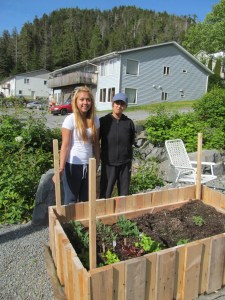
IMG_0004The Sitka Local Foods Network is looking to contract with two Sitka residents to coordinate our garden mentoring education program. This year we’re splitting up the duties, so one of the coordinators will work with our returning families and the other will work with our new families (and be paid slightly more).

These contracts run from spring through fall 2016, and the coordinators will be in charge of developing curricula, teaching classes, obtaining supplies, and providing evaluation of the program. A full list of job duties and expectations can be found in the linked document at the bottom of this article.

Applicants should have at least 3-5 years of varied vegetable gardening experience, preferably in Southeast Alaska. They also should have 3-5 years of project coordination experience, as well as demonstrated communication, organizational, and teaching/mentoring skills.

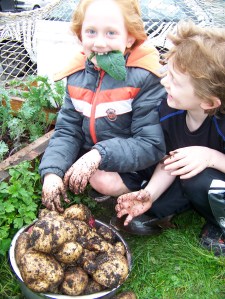
100_8734BastianKidsThe garden mentoring project began in 2014 when two families of first-time gardeners were chosen to receive help planning and building a simple garden to grow four relatively easy plants for Sitka (kale, rhubarb, potatoes, lettuce). In 2015, the program was expanded to provide mentoring service to four new first-time gardening families, plus the two families from 2014 will receive a second year of mentoring as they learn to grow plants that are a bit more difficult for Sitka (carrots, peas, chard, green onions).

There are six classes with each family, and they usually are open to the public. In 2016, we expect three returning families and three new families (one of our first-year families from last year asked to repeat as a first-year family this year).

Applicants should submit a letter of interest and resume by 5 p.m. on Friday, April 8, to sitkalocalfoodsnetwork@gmail.com. Please put “Garden Mentor Coordinator” in your email subject line. The contracts pay in three installments over the summer. Questions about the contracts can be directed to sitkalocalfoodsnetwork@gmail.com.

• 2016 SLFN garden mentoring coordinator contract information

Scenes from the fourth Basic Culinary Skills class at the Sitka Kitch

GroupPhotoWithoutFlash

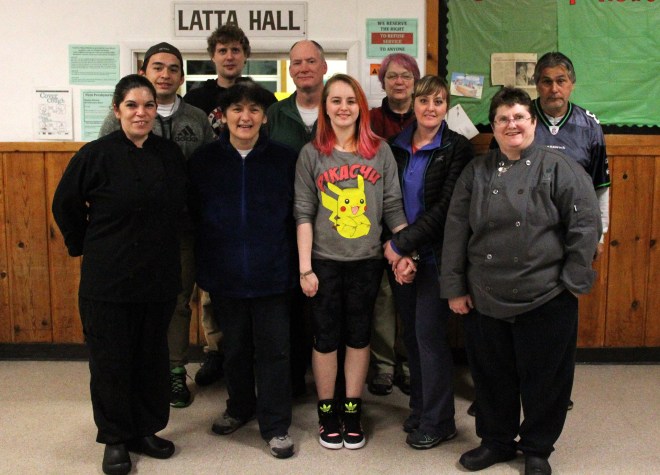
kitch_logo_mainStudents made rockfish in parchment paper, chicken piccata and fettucine with a Thai peanut sauce March 28 during the fourth of four Basic Culinary Skills classes offered on Mondays in March at the Sitka Kitch community rental commercial kitchen.

The class series is designed to help people gain the kitchen skills they need for restaurant jobs, but many of the students are taking the series to improve their home kitchen chops.

These classes are taught by Kathy Jones, executive chef at the Westmark Sitka Hotel and the Totem Square Inn, with assistance by her sous chef, Barbara Palacios. The classes are modeled after a similar basic culinary skills program Chef Kathy knows from Indianapolis offered by a food relief nonprofit called Second Helpings.

KathyMarksYvonnesRockfishInParchmentIn the first class (March 7) the students worked on chopping skills, and also learned about basic kitchen sanitation and a variety of kitchen tools. The second class (March 14) featured basic cooking techniques, basic nutrition, and sauces, soups and stocks Part 1 (making a cucumber raita, mushroom ragout, and a Caesar dressing).

The third class on March 21 focused on sauces, soups and stocks Part 2, salads, and measurements. The fourth class on March 28 focused on poultry, meats, and the Alaska Department of Environmental Conservation (DEC) safe food handler’s card.

KathyDiscussesHowToCookChickenThe Basic Culinary Skills class series is supported by a grant from the Northwest Farm Credit Services rural community grant program.

The Sitka Kitch was a project of the 2013 Sitka Health Summit, and the project is coordinated by the Sitka Conservation Society in partnership with the Sitka Local Foods Network. The Sitka Kitch can be rented to teach cooking and food preservation classes, by local cottage food industry entrepreneurs who need a commercial kitchen to make their products, and for large groups needing a large kitchen for a community dinner. To learn more about how to rent the Sitka Kitch, please go to the website at http://www.sitkawild.org/sitka_kitch.

For more information about the Sitka Kitch and the classes, please email sitkakitch@sitkawild.org. You also can go to our class registration page at https://sitkakitch.eventsmart.com/ to see all of the available classes (click on the class titles to register). We should announce some new classes in the next week or two, so watch the site.
A slideshow of scenes from the fourth class of the series can be found below.

This slideshow requires JavaScript.

Check out the April 2016 edition of the Sitka Local Foods Network newsletter

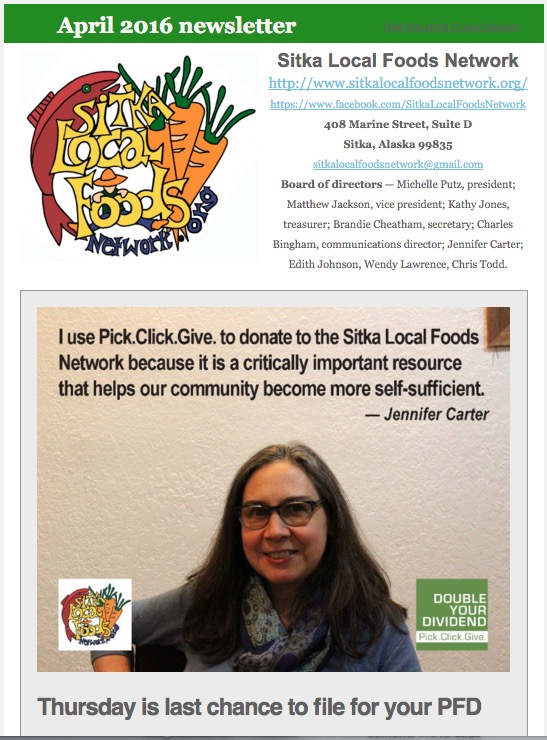
April2016SLFNNewsletterScreenshot

The Sitka Local Foods Network just sent out the April 2016 edition of its newly launched monthly newsletter. Feel free to click this link to get a copy.

This edition of the newsletter has brief stories about how you can donate to the Sitka Local Foods Network through the 2016 Pick.Click.Give. donation program through the Alaska Permanent Fund Dividend application (don’t forget the PFD filing deadline is March 31), a March 29 meeting to discuss changes to the Sitka Farmers Market, and an abundance of education opportunities this spring. Each story has links to our website for more information.

You can sign up for future editions of our newsletter by clicking on the registration form image in the right column of our website and filling in the information. If you received a copy but didn’t want one, there is a link at the bottom of the newsletter so you can unsubscribe. Our intention is to get the word out about upcoming events and not to spam people. We will protect your privacy by not sharing our email list with others.

Chuck Miller to discuss traditional Tlingít herring roe and intertidal food harvesting on Saturday

DD - Special Event, StoryTelling

In a special Discovery Day event for the Sitka Herring Festival, Chuck Miller will lead the program, “Storytelling and Sharing: Traditional Tlingít Herring Roe and Intertidal Food Harvesting,” from 10 a.m. to noon on Saturday, March 26, at the Sitka Sound Science Center.

Miller is the youth program coordinator for the Sitka Tribe of Alaska, and he will captivate you with his personable way of sharing Tlingít wisdom through stories and conversation. He will share two different one-hour interactive programs about the important animals in Tlingít culture, such as ravens and salmon.

At 10 a.m., Miller will share a story followed by an activity about the bounty of food that can be found right out our back door. At 11 a.m., he will tell another story and share about the traditional method of harvesting herring eggs (roe).

The free Discovery Days education program is for Sitka Sound Science Center annual pass holders and takes place on various Saturdays (usually alternate Saturdays). This is a family event and open to learners of all ages. Annual passes are sold at the door and run $90 for families and $30 for individuals for the full year.

For more information, contact Kristina Tirman at the Sitka Sound Science Center at 747-8878, Ext. 1.

Scenes from the third Basic Culinary Skills class at the Sitka Kitch

KathyDiscussesMakingItalianTomatoSauce

kitch_logo_mainStudents made crab stock, Italian tomato sauce, a balsamic vinaigrette, and an alfredo sauce March 21 during the third of four Basic Culinary Skills classes offered on Mondays in March at the Sitka Kitch community rental commercial kitchen.

The class series is designed to help people gain the kitchen skills they need for restaurant jobs, but many of the students are taking the series to improve their home kitchen chops.

These classes are taught by Kathy Jones, executive chef at the Westmark Sitka Hotel and the Totem Square Inn, with assistance by her sous chef, Barbara Palacios. The classes are modeled after a similar basic culinary skills program Chef Kathy knows from Indianapolis offered by a food relief nonprofit called Second Helpings.

In the first class (March 7) the students worked on chopping skills, and also learned about basic kitchen sanitation and a variety of kitchen tools. The second class (March 14) featured basic cooking techniques, basic nutrition, and sauces, soups and stocks Part 1 (making a cucumber raita, mushroom ragout, and a Caesar dressing).

KeetAddsTomatoPasteToSauceThe third class on March 21 focused on sauces, soups and stocks Part 2, salads, and measurements. The fourth class on March 28 will focus on poultry, meats, and the Alaska Department of Environmental Conservation (DEC) safe food handler’s card.

The classes take place from 6-8:30 p.m. on each Monday in March (March 7, 14, 21, and 28) at the Sitka Kitch, which is located inside the First Presbyterian Church (505 Sawmill Creek Road). The classes are full, with only wait-list spots available.

KathyUsesBigPaddleToStirTomatoSauceThe Basic Culinary Skills class series is supported by a grant from the Northwest Farm Credit Services rural community grant program.

The Sitka Kitch was a project of the 2013 Sitka Health Summit, and the project is coordinated by the Sitka Conservation Society in partnership with the Sitka Local Foods Network. The Sitka Kitch can be rented to teach cooking and food preservation classes, by local cottage food industry entrepreneurs who need a commercial kitchen to make their products, and for large groups needing a large kitchen for a community dinner. To learn more about how to rent the Sitka Kitch, please go to the website at http://www.sitkawild.org/sitka_kitch.

For more information about the Sitka Kitch and the classes, please email sitkakitch@sitkawild.org. You also can go to our class registration page at https://sitkakitch.eventsmart.com/ to see all of the available classes (click on the class titles to register).

A slideshow of scenes from the third class of the series can be found below.

This slideshow requires JavaScript.

Second Annual Food Security Awareness Week includes free showing of ‘Just Eat It’ movie

Food Security Week Flyer(FINAL)

11x17-Just-EatIt-posterThe Second Annual Food Security Awareness Week is March 21-25, and Sitka is joining other Alaska communities to provide a free showing of the movie, “Just Eat It,” that week to discuss the need to reduce food waste in Alaska.

The movie will be shown at 7 p.m. on Thursday, March 24, at the Sitka Unitarian Universalist Fellowship Hall (408 Marine Street, parking off Spruce Street). The Sitka Local Foods Network is coordinating the showing of the movie in Sitka. The movie also is being shown in Anchorage, Fairbanks and Juneau during the week.

In Alaska, roughly one in seven people (105,000 people) live in food insecure households. About one in six people in Sitka (1,500 of 9,000) are on food assistance programs, such as SNAP (food stamps) or WIC. The Food Bank of Alaska is able to recover and distribute about 5 million pounds of food that might otherwise be wasted each year, but the need is growing and that isn’t enough food to take care of Alaska’s hungry. Even food that’s gone bad can be recycled into compost for school gardens.

Statewide, the Second Annual Food Security Awareness Week is sponsored by Rep. Geran Tarr (D-Anchorage) and Rep. Scott Kawasaki (D-Fairbanks) in support of HCR 18, sponsored by Rep. Tarr, which will encourages schools and businesses to reduce, recover and recycle food waste in Alaska. In addition, Rep. Tarr, Rep. Kawasaki, and Rep. Chris Tuck (D-Anchorage) co-sponsored HB 92, requiring labeling of genetically modified food (including salmon).

A trailer for the movie is posted below.

• HCR 18 regarding the reduction of food waste in Alaska

• HB 92 regarding labeling of genetically modified food (including salmon) in Alaska

Scenes from the second Basic Culinary Skills class at the Sitka Kitch

StudentsAddTomatoesToMushrooms

kitch_logo_mainStudents made cucumber raita, mushroom ragout, and a Caesar dressing during the second of four Basic Culinary Skills classes offered on Mondays in March at the Sitka Kitch community rental commercial kitchen.

The class series is designed to help people gain the kitchen skills they need for restaurant jobs, but many of the students are taking the series to improve their home kitchen chops.

These classes are taught by Kathy Jones, executive chef at the Westmark Sitka Hotel and the Totem Square Inn, with assistance by her sous chef, Barbara Palacios. The classes are modeled after a similar basic culinary skills program Chef Kathy knows from Indianapolis offered by a food relief nonprofit called Second Helpings.

In the first class the students worked on chopping skills, and also learned about basic kitchen sanitation and a variety of kitchen tools. The second class featured basic cooking techniques, basic nutrition, and sauces, soups and stocks Part 1. The cucumber raita is a sauce used in Indian dishes to cool spicy dishes, and it goes well with fish, vegetables and can be used as a dip. The mushroom ragout goes well with game meat (venison, goat, lamb, etc.).

The third class on March 21 will focus on sauces, soups and stocks Part 2, salads, and measurements. The fourth class on March 28 will focus on poultry, meats, and the Alaska Department of Environmental Conservation (DEC) safe food handler’s card.

KathyShowsPatHowToDiceGarlicThe classes take place from 6-8:30 p.m. on each Monday in March (March 7, 14, 21, and 28) at the Sitka Kitch, which is located inside the First Presbyterian Church (505 Sawmill Creek Road). The classes are full, with only wait-list spots available.

The Basic Culinary Skills class series is supported by a grant from the Northwest Farm Credit Services rural community grant program.

The Sitka Kitch was a project of the 2013 Sitka Health Summit, and the project is coordinated by the Sitka Conservation Society in partnership with the Sitka Local Foods Network. The Sitka Kitch can be rented to teach cooking and food preservation classes, by local cottage food industry entrepreneurs who need a commercial kitchen to make their products, and for large groups needing a large kitchen for a community dinner. To learn more about how to rent the Sitka Kitch, please go to the website at http://www.sitkawild.org/sitka_kitch.

For more information about the Sitka Kitch and the classes, please email sitkakitch@sitkawild.org. You also can go to our class registration page at https://sitkakitch.eventsmart.com/ to see all of the available classes (click on the class titles to register).
A slideshow of scenes from the second class of the series can be found below.

This slideshow requires JavaScript.