• Sitka Health Summit presents seed money check to Community Food Assessment for a Food Resilient Sitka project

FOOD ASSESSMENT DOUGH: From left, Sitka Health Summit Steering Committee members Ellen Daly, Elisabeth Crane and Penny Lehmann present a check for project seed money to representatives from the Community Food Assessment for a Food Resilient Sitka community wellness project, Renae Mathson (fourth from left), Sabrina Cimerol, Garrett Bauer and Courtney Bobsin.

FOOD ASSESSMENT DOUGH: From left, Sitka Health Summit Steering Committee members Ellen Daly, Elisabeth Crane and Penny Lehmann present a check for project seed money to representatives from the Community Food Assessment for a Food Resilient Sitka community wellness project, Renae Mathson (fourth from left), Sabrina Cimerol, Garrett Bauer and Courtney Bobsin.

Representatives from the Sitka Health Summit recently presented a check for seed money to the Community Food Assessment for a Food Resilient Sitka project. The project is one of three community wellness projects that came out of the 2012 Sitka Health Summit in October, and the food assessment will help Sitka improve its food security.

The food assessment will take various forms, from polling local grocery stores and shipping companies to try and gauge how much food comes into the community to developing a survey for community members and families about how much food they consume. The project will look at the food needs in our community, as well as what’s available. It also will include a survey about how much fish and game is used in Sitka, as well as how many people gather seaweed and berries or raise food in gardens.

The community food assessment recognizes that everybody in Sitka has access to affordable, quality food from stable food systems. The group meets on the second Wednesday each month, and the next meeting is from 5:30-7 p.m. on Wednesday, Feb. 13, at the Sitka Sound Science Center.

For more information, contact Renae Mathson at 966-8797 or renae.mathson@searhc.org, or contact Andrianna Natsoulas at 747-3477 or anatsoulas@thealaskatrust.org. Sitka residents can ask to join the Google Groups e-mail list for the project to keep up to date with what’s happening.

• Help wanted: Sitka Community Food Assessment seeks project coordinator

The Sitka Community Food Assessment project is looking to hire a quarter-time project coordinator to oversee the collection of and analysis of data about Sitka’s food supply and demand.

The Sitka Community Food Assessment project is one of this year’s three Sitka Health Summit community wellness projects, which were decided by local residents back in October. The project already has applied for and received a sub-award grant from the SEARHC Community Transformation Grant program to help facilitate the gathering of data about where Sitkans get their food and how much they need.

The project coordinator will work about 10 hours a week at $23 an hour for one year. Depending on other funding and job requirements, there is a possibility the job may expand from quarter-time to half-time.

This new and exciting position will create and support the Community Food Assessment for a Food Resilient Sitka. In order to understand Sitka’s food security, we need to first conduct an assessment. The assessment will be used to develop a Strategic Action Plan to ensure the resiliency of Sitka’s food future. The successful candidate will report to the Sitka Community Food Assessment committee co-chairs.

A copy of the job description is linked below. To apply, please submit a resumé and cover letter. Applications are due by Friday, Nov. 30, and the job starts on Jan. 7. To learn more or to submit your application, please contact Kerry MacLane at maclanekerry@yahoo.com or Andrianna Natsoulas at anatsoulas@thealaskatrust.org.

• Sitka Community Food Assessment project coodinator job description

• Sitka community food assessment project to hold kick-off meeting on Monday, Oct. 29

At the 2012 Sitka Health Summit, “Developing a Community Food Assessment for a Food Resilient Sitka” was selected as one of the top three goals for 2012-2013. All members of the public who are interested in this initiative are cordially invited to a kick-off gathering from 5-7 p.m. on Monday, Oct. 29, in Room 108 at the Rasmuson Building located on the Sheldon Jackson campus.

Are you concerned about where your food comes from and how it gets to Sitka? Have you ever wondered what happens if the barge doesn’t arrive? Are you worried about rising food prices and do you worry about the future of Sitka’s food needs? What percentage of Sitka’s food is locally harvested? Do you feel the fish and game food resources you harvest are adequately protected?

Those and other questions will be asked as part of the community food assessment. All members of Sitka’s community have a need for and a right to healthy, stable, affordable food. We are interested in finding community groups and individuals who can help us in the planning stages of this assessment.

Snacks and refreshments will be provided. For more information, contact Renae Mathson at 966-8797 or renae.mathson@searhc.org.

• Tour de Coop, a chicken tour of Sitka takes place on Oct. 27 in honor of National Food Day

Have you always been curious about what it takes to raise chickens in Sitka? Several of Sitka’s chicken coop owners will host the Tour de Coop — a guided walking tour of chicken coops at four homes in the Biorka neighborhood in honor of Food Day. This event features two tours starting at 11 and 11:45 a.m. on Saturday, Oct. 27, from the Baranof Elementary School playground parking lot (from the Market Center side).

During the guided walking tour, participants will learn chicken how-to basics from Sitka residents who are raising chickens for eggs and meat. Participants will learn the basics of raising chickens from chicks, what types of chickens do best in Sitka’s climate, what types of feed to use, how to build a coop, and how to protect the coop from bears and dogs. This tour is family friendly and interactive, fun guaranteed.

The Tour de Coop is brought to you by the Sitka Local Foods Network, Sitka Conservation Society, Sitka Food Co-op, and Food Day. Food Day, which is Oct. 24 each year, is a national celebration and movement promoting healthy, affordable and sustainable food. For more information, contact Jud Kirkness at judkirkness@yahoo.com or call the Sitka Conservation Society at 747-7509. (Editor’s note: The KCAW-Raven Radio Morning Interview on Friday, Oct. 26, featured Jud Kirkness and Ellen Frankenstein being interviewed by Holly Keen about the Tour de Coop and other food issues in Sitka.)

• Sitka residents pick three Sitka Health Summit wellness projects for 2012-13; including a community food assessment

Sitka residents gather for a group photo during the Sitka Health Summit planning day on Friday, Oct. 12, 2012, at Sweetland Hall on the Sheldon Jackson Campus.

Sitka residents gather for a group photo during the Sitka Health Summit planning day on Friday, Oct. 12, 2012, at Sweetland Hall on the Sheldon Jackson Campus.

Sitka residents want to revitalize the downtown core area, perform a community food assessment for food resiliency, and apply for a Walk Friendly Community award to show how walkable Sitka is as a community.

Those were the three community health priorities Sitka residents chose to work on this next year when they met during the Sitka Health Summit’s community planning meeting on Friday, Oct. 12, at Sweetland Hall on the Sheldon Jackson Campus. Sitka residents chose these three projects out of dozens of brain-stormed ideas. Each project will receive assistance with facilitation and $750 of seed money from the summit’s Health Initiatives Fund to start working on meeting the health goals.

The groups working on each project are setting up their first meetings and getting their contact lists together, and Sitka residents who want to participate are welcome to contact the interim group leaders (through the group’s first meetings, group leaders may change after the first meetings) listed below to find out more information.

  • Sitka downtown revitalization project, Angela McGraw, 747-1737, angelam@sitkahospital.org, first meeting at 5:30 p.m. on Tuesday, Oct. 30, at Harrigan Centennial Hall.
  • Sitka community food assessment, Renae Mathson, 966-8797, renae.mathson@searhc.org, first meeting at 5 p.m. on Monday, Oct. 29, in Room 108 at Rasmuson Hall on the Sheldon Jackson Campus.
  • Walk Friendly Community, Charles Bingham, 738-8875, charleswbingham3@gmail.com, first meeting at 7 p.m. on Wednesday, Nov. 7, at Swan Lake Senior Center.
Sitka Mayor Mim McConnell speaks to Sitka residents at the Sitka Health Summit planning day on Friday, Oct. 12, 2012, at Sweetland Hall on the Sheldon Jackson Campus.

Sitka Mayor Mim McConnell speaks to Sitka residents at the Sitka Health Summit planning day on Friday, Oct. 12, 2012, at Sweetland Hall on the Sheldon Jackson Campus.

The sixth annual Sitka Health Summit took place on Saturday, Oct. 6; Monday, Oct. 8; Wednesday, Oct. 10; and Friday, Oct. 12, at various locations around Sitka. In addition to Friday’s community planning meeting, the Sitka Health Summit opened the Sitka Community Health Fair and Neighborhood Block Party on Saturday at Sweetland Hall. It also featured a lunch-and-learn on Monday at Kettleson Memorial Library where Don Lehmann, MD, discussed “Exercise as Medicine;” and it featured the Sitka Health Summit Community Wellness Champion Awards Celebration on Wednesday night at the Sheet’ká Kwáan Naa Kahidi.

The Sitka Health Summit is brought to you by Sitka Community Hospital, the SouthEast Alaska Regional Health Consortium (SEARHC), Alaska Communications and the University of Alaska Southeast-Sitka Campus. Additional financial help and in-kind donations were provided by the City and Borough of Sitka, Guardian Flight Inc., Premera Blue Cross Blue Shield of Alaska, Scott Insurance Services, Shee Atiká Inc., AC Value Center/Lakeside, Sitka Vision Clinic, Wells Fargo, White’s Inc. (Harry Race Pharmacy, White’s Pharmacy, Seasons), Spenard Builders Supply, Don and Penny Lehmann, Alaska Health Fair Inc., and the State of Alaska Division of Public Health Nursing. The Sitka Health Summit’s vision is “to serve our great state as a model for community wellness by creating a healthy community where all Sitkans strive for and enjoy a high quality of life.”

For more information about the Sitka Health Summit, call Doug Osborne at 966-8734 or Alyssa Sexton at 747-0388, or go to our website at http://www.sitkahealthsummit.com/.

• Quest cards and debit cards will be accepted starting with the Aug. 18 Sitka Farmers Market

The Sitka Local Foods Network will begin accepting Quest and debit cards for the purchase of locally grown and made products during its fourth Sitka Farmers Market of the summer, from 10 a.m. to 2 p.m. on Saturday, Aug. 18, at Alaska Native Brotherhood Hall (235 Katlian St.).

The Sitka Farmers Market received funding from the Alaska Farmers Market-Quest Card Program to purchase a wireless card reader, also known as an EBT (electronic benefit transfer) machine. The EBT machine allows Quest customers to use their food stamps and TANF (Temporary Assistance for Needy Families) benefits to purchase fresh, local food at the market. The EBT machine allows customers to use their regular debit and credit cards to purchase food and other items, such as locally made crafts.

Many farmers markets have accepted food stamps, TANF benefits and WIC coupons for produce for several years, but in recent years all 50 states stopped using paper coupons and started using electronic transfers for their benefits (putting them on plastic cards that work like debit/credit cards). Since most farmers markets do not have access to electricity and phone lines during the market, they now required a wireless machine to handle these benefits. This system is expensive and difficult for most farmers markets to offer, so the use of food stamps and other benefits dropped dramatically. The goal of the Alaska Farmers Market-Quest Card Program is to help the markets be able to purchase a machine so they can continue to offer fresh, local food to low-income Alaskans and offering another payment option for other residents. The Sitka Local Foods Network will match dollar-for-dollar up to $20 of Quest card benefits so people using Quest cards have access to double the produce at the market.

“Providing appropriate EBT technology at farmers markets can improve the diets and subsequently the health of Sitkans who rely on food stamps by increasing access to fresh, local and affordable vegetables and fruits,” said Sitka Local Foods Network Board Treasurer Lisa Sadleir-Hart, a registered dietitian. “Shopping at farmers markets has been shown in several studies to increase fruit and vegetable purchases and consumption among nutrition assistance participants, and fruits and vegetables sold at farmers markets often are equal in price to or less expensive than seasonal produce at grocery stores.”

To use the Quest cards or your debit card at the Sitka Farmers Market, look for the Information Booth inside ANB Hall and let the staff person know you’d like to use your card at the market and how much you plan to spend. The staff person will swipe your card through the EBT machine, have you enter your PIN, then provide you with Quest and Debit tokens in the amount you requested (there is a $2 service charge for debit card transactions). Look for vendors with signs saying “Quest and Debit Tokens Accepted Here” (some vendors only accept Debit tokens). Quest customers can purchase foods allowed on food stamps, such as fruits and vegetables, bread, meat, seafood, honey and jam. Food and beverages meant to be eaten right away, such as sandwiches and hot coffee, cannot be purchased with Quest tokens. Debit card tokens can be used to purchase anything offered at the market. If you do not spend all of your tokens, you can save the remaining tokens for the next market or take them back to the Information Booth to be credited back to your card (credit can only be given for tokens purchased that day, and for no more than the amount purchased that day). Debit card users can return their unused tokens, but another $2 service fee will apply for the transaction.

This project is a collaboration of the Alaska Department of Health and Social Services Divisions of Public Health and Public Assistance, the Department of Natural Resources Division of Agriculture, the SouthEast Alaska Regional Health Consortium (SEARHC) Health Promotion Division, and the Sitka Local Foods Network. For more info about the Alaska Farmers Market-Quest Card Program, go to http://www.hss.state.ak.us/dph/chronic/nutrition/farmersmarket-quest/default.htm. For information about the Alaska Quest Program, visit http://www.akquest.alaska.gov/. For info about the Sitka Farmers Market, go to http://www.sitkalocalfoodsnetwork.org/. Vendors wanting to sign up to accept Quest card and debit card tokens can contact Sitka Farmers Market Manager Johanna Willingham at johanna.willingham@gmail.com or 738-8336.

• Sitka Farmers Market vendor agreement to accept EBT/Quest tokens (2012)

• Alaska Food Policy Council seeks people to join its five priority strategies action plan work groups

The Alaska Food Policy Council  is seeking Alaska residents to participate in five workgroups to help develop action plans for certain key food issues in the state.

A group of 30 council members met on April 4-5 to develop basic action plans geared toward five priority strategies to improve food security in the state. Now they need people to begin implementing the individual action plans. The five priority strategies are part of the Alaska Food Policy Council’s three-year strategic plan developed at its Jan. 12 meeting.

The five priority strategies include:

  • Improving school-based programs such as Farm to Schools and Fish to Schools;
  • Strengthening enforcement of the state’s 7-percent bidding preference for Alaska Grown food;
  • Improving emergency food preparedness plans throughout the state;
  • Serving as a research aggregator/resource to help people get a better handle on Alaska’s food situation and supply chain; and
  • Supporting local food efforts throughout the state.

The Alaska Food Policy Council got its start during a May 18-19, 2010, meeting in Anchorage. Sitka Local Foods Network treasurer Lisa Sadleir-Hart, a registered dietitian and SEARHC Health Educator, is one of the 30 members of the council.

These five work groups are open to anybody who has a special interest in the various topics. To learn more about the work groups, contact Lisa Sadleir-Hart at 966-8735 or lisa.sadleir-hart@searhc.org, or contact Alaska Food Policy Council Coordinator Diane Peck with the Alaska Department of Health and Social Services Obesity Prevention and Control Program at 269-8447 or diane.peck@alaska.gov.

• Alaska Food Policy Council School Programs Action Plan (Strategy 1)

• Alaska Food Policy Council Local Grown Action Plan (Strategy 2)

• Alaska Food Policy Council Disaster Preparedness Action Plan (Strategy 3)

• Alaska Food Policy Council Research and Information Action Plan (Strategy 4)

• Alaska Food Policy Council Public Engagement Action Plan (Strategy 5)

• New high tunnels at Judy Johnstone’s Sprucecot Garden get media attention

Sitka Local Foods Network President Kerry MacLane, left, and Sprucecot Garden Owner Judy Johnstone pose in front of one of the high tunnels recently erected on Judy's land on Peterson Street. (Photo Courtesy of KCAW-Raven Radio)

Sitka Local Foods Network President Kerry MacLane, left, and Sprucecot Garden Owner Judy Johnstone pose in front of one of the high tunnels recently erected on Judy’s land on Peterson Street. (Photo Courtesy of KCAW-Raven Radio)

Longtime Sitka gardener Judy Johnstone will be able to extend the growing season at her Sprucecot Garden on Peterson Street after a crew erected two new high tunnels on her land.

The high tunnels, which basically are temporary greenhouses with a large frame holding a transparent plastic cover and without a built-in power supply, already have raised the temperatures inside by about 15-20 degrees over the low-50s we’ve had in Sitka so far this summer. They will enable Judy to start her plants earlier in the spring and keep producing food later into the fall.

The high tunnels were funded through a cost-sharing program run by the USDA National Resources Conservation Service, which is accepting applications for new high tunnel projects through June 15.

These are the first high tunnels to go up in Sitka, but there have been several built in other parts of the state (the lower Kenai Peninsula near Homer has about 90 of them). Since these are the first high tunnels in Sitka, they’ve received lots of coverage in the local media. The Daily Sitka Sentinel featured an article on Page 1 of its Friday, June 8, 2012, edition (password required), and KCAW-Raven Radio featured Judy and Sitka Local Foods Network President Kerry MacLane in its Monday, June 11, 2012, Morning Edition show interview and in a story on its Tuesday, June 12, 2012, newscasts.

• Sitka herring researcher Heather Meuret-Woody makes her case for better management

(EDITOR’S NOTE: On Tuesday, May 15, the Sitka Tribe of Alaska hosted the Sitka Herring Summit to discuss issues regarding the management, or mismanagement, of herring stocks in Southeast Alaska. Sitka herring researcher Heather Meuret-Woody made this presentation, which also appeared as a shorter letter to the editor in the Daily Sitka Sentinel on May 18. The opinions expressed are Heather’s alone, though the Sitka Local Foods Network has written letters supporting the Sitka Tribe of Alaska in its bid to get the Alaska Department of Fish and Game to reduce the commercial quota for herring in Sitka Sound.)

Sitka Sound Herring Summit

May 15, 2012

Heather Meuret-Woody

Sitka Sound Herring Researcher

I have been a Sitka Sound herring researcher for about 10 years. I have decided to share my few thoughts on the Sitka Sound herring population. With this said, in my opinion there was not 144,143 tons of the predicted mature herring biomass returning to Sitka Sound. An overestimate of the biomass seems to be the suspect.

Managers of forage fish know that traditional stock management techniques do not work well with forage fish. The reason for the failure of traditional stock assessment techniques is that the “catchability” of forage fish increases as the stock declines. However, due to the schooling nature of forage fish and their vulnerability to modern acoustics and fishing gear, catch rates remain constant, even when the stock is rapidly falling in size (Beverton, 1990). Thus declines in stock size will not be apparent to managers or to the fishing industry, based on catch per unit effort statistics. Management of forage fish stocks requires direct measurement of stock size. This can be accomplished by surveying fish abundance during the spawning season, or by conducting scientifically designed acoustic surveys of schools of forage fish. Failure to monitor the stock directly will result in the inability to determine changes, even severe declines, in forage fish abundance. With that said, ADF&G does not measure the Sitka Sound herring stock directly. They may do acoustic surveys and aerial surveys but the data is not used for determining stock size in the ASA model. ADF&G relies almost entirely upon spawn deposition estimates to determine the spawning biomass. Hebert, 2010 states, “Estimates of total egg deposition on Macrocystis kelp may be highly variable, and transects that cross Macrocystis kelp beds could result in very high egg deposition estimates, resulting in high uncertainty around total estimates of egg deposition.” ADF&G also notes in this report that they have issues with diver calibration. One diver may visually estimate more or less eggs compared to another diver. Individual calibration factors can have a potentially large impact on spawn deposition estimates of biomass.
Accurate and regular estimates of fecundity are important for “ground-truthing” assumptions used by ADF&G. Fecundity estimates are used to convert estimates of herring egg deposition into mature biomass, and is used quite commonly among world-wide herring managers. ADF&G has only measured fecundity 4 times since the 1970s (Hulson et al., 2008). Since then, they just estimate fecundity based on weights, so large female herring lay approximately 40,000 eggs and small female herring lay approximately 20,000 eggs. Using un-validated parameters is extremely risky. For example, a 10% change in the egg per gram measurement used to convert spawn to fish, can result in a 20% change in the number of fish estimated.

In 2007, 2008, and 2009, spawning herring were sampled for Ichthyophonus prevalences in Sitka Sound. The results showed that 27% – 40% were positive for Ichthyophonus. All of this data is provided by Hershberger, Winton, and Purcell, from USGS Marrowstone Marine Field Station. The results of the 2010 and 2011 data from this ongoing research were not available at the time of this letter. Sitka Sound herring have had the Ichthyophonus disease for years and ADF&G has not incorporated this data into their current management. The ASA model does not account for disease, just “natural mortality.” However, this “natural mortality” is not based on observed data, but has been estimated by picking a random, but “conservative” number and applying it to the herring stock.

Sitka Sound herring follow the Pacific Decadal Oscillation (PDO) which is a 14-year oscillatory cycle and is highly correlated with an annual index of zooplankton biomass. Strong negative values of the PDO were observed in autumn 2011: “If these values persist through winter and early spring 2011-2012, they could result in the best ocean conditions observed in decades,” according to the 2011 annual update for the Ocean Ecosystem Indicators of Salmon Marine Survival in the Northern California Current research project, which has been ongoing since 1998. Additionally, “These negative values are expected to continue into spring 2012, which suggests that the northern North Pacific Ocean will also remain cold through spring 2012, giving rise to continuation of good ocean conditions.” So it is hard to imagine with this optimal ocean condition that Sitka Sound herring experienced mass mortality since last year. This winter we experienced the Arctic Oscillation which is essentially a pressure pattern that drives the jet stream, and controls how strong its winds are and where the jet stream position is. This winter, the jet stream trough, which tends to push the jet stream far to the north, helped drive storms into Alaska.

From 2006-2010, ADF&G has been trying to convince the public that the Sitka Sound herring had changed their maturation rates. They claimed that the herring were maturing later. Instead of herring reaching maturity at age-3 and age-4 they were not maturing until age-5, age-6, and age-7. Of course this was not actual observed data. ADF&G did not base this on ovarian histology or anything concrete, instead the changes were based on a number estimate to make the ASA model fit the data rather than using field data to fix the model. No other herring stocks along the Pacific Coast have herring delaying maturation, so it shouldn’t surprise anyone that Sitka’s herring are maturing at their usual rate. Additionally, ADF&G claimed that the herring were surviving longer, and the survivability rate they have been using is 87%. Again this was not based on anything managers actually observed, but was again a random number forced to make the ASA model fit the data. Even Hebert, 2010 states “External estimates of age-specific survival would improve the ASA model and provide more accurate forecasts of spawning biomasses.” If the Sitka Sound herring actually had 87% survivability rate, then the only way herring could have died was to be eaten by a predator or get caught in a purse seine net.

In 2008, I did a co-study with the ADF&G Age Determination Laboratory in Juneau. ADF&G collected 50 herring from the winter bait fishery and aged the herring via scale reading. I then received those 50 herring and aged them via otolith aging – and this is not the break and burn method, this is the thin-sectioning method that is widely recognized world-wide and even used by the California Department of Fish and Game on herring stocks. The herring aged via otolith actually aged 2 years younger on the average than the scale aging methodology. If you recall, ADF&G announced 12/16/2010 that their aging assessments were wrong for the period of 1999-2010. Once they re-aged all of the archived samples, they too came up with an average of 2 years difference. Additionally, because the ASA model used by ADF&G to forecast the mature biomass requires a long time series of reliable age estimates, the department chose not to use the ASA model, but instead relied on a biomass accounting model to forecast the 2011 Sitka Sound mature herring population.

Significant fisheries-induced evolutionary change has been researched in Norway in Baltic herring and has lead to the entrainment hypothesis: an explanation for the persistence and innovation in spawning herring migrations and life cycle spatial patterns (Petitgas et al. 2006). This research is quite intriguing and deserves more consideration. In 2008, the commercial fishery occurred along the entire Kruzof Island shore line in very shallow water. While the herring schools were being fished upon, a large percentage of the spawning biomass seemed to avoid the purse seiners and hit the first shoreline available, Kruzof, and spawned. Now if you review ADF&G spawn maps that go back to 1964 you will know that there has been less than 15 times that the herring biomass used the Kruzof shoreline as spawning habitat. The Kruzof Island shoreline is not very suitable spawning habitat as newly hatched larvae would be swept up in the currents and advected out of Sitka Sound, causing low survivability (Sundberg, 1981). However, if herring spawn on the islands, i.e. Middle Island, Kasiana, or along the road system, the currents in Sitka Sound keep the hatched larvae in the inner bays and water ways which are excellent for retention and increases survivability. Keeping in mind that herring recruit into a mature cohort at around age-4, the 2008 commercial sac roe fishery may have reduced the amount of recruits that we would have seen this year in 2012. Unfortunately we will never know because ADF&G does not measure immature herring. I have researched juvenile herring populations in Sitka Sound for several years and found that one of the most important rearing areas is along the Halibut Point Road shoreline from Katlian Bay and Nakwasina in the north to Halibut Point Marine and Cove Marina in the south (Meuret-Woody and Bickford, 2009). Unfortunately, the new dock at Halibut Point Marine will soon become a place for net pen-rearing of hatchery salmon smolts – with no consideration on the impacts it could have on juvenile herring populations.

Finally I’d like to point out that ADF&G staff has been quoted saying that herring only seem to spawn in Salisbury Sound when there is such a large biomass that extra spawning habitat is needed. So basically they claim Salisbury Sound is a spill-over spawning habitat, although they have no data to support this assertion. If this were actually true, based on biomass size, then where was the huge spill-over of spawning biomass in Salisbury Sound in 2011 and 2012 – both of which were huge forecast biomass years? In my published paper, Identifying Essential Habitat (Source vs. Sink Habitat) for Pacific Herring in Sitka Sound Using Otolith Microchemistry (Meuret-Woody and Bickford, 2009) it appears that Salisbury Sound actually supports a small discrete population of herring (10%), separate from Sitka Sound herring. Salisbury Sound may also be a source population for Hoonah Sound, supplying approximately 14% of the population for Hoonah Sound. Why doesn’t ADF&G rely on published data instead of relying on guesses made by their managers?

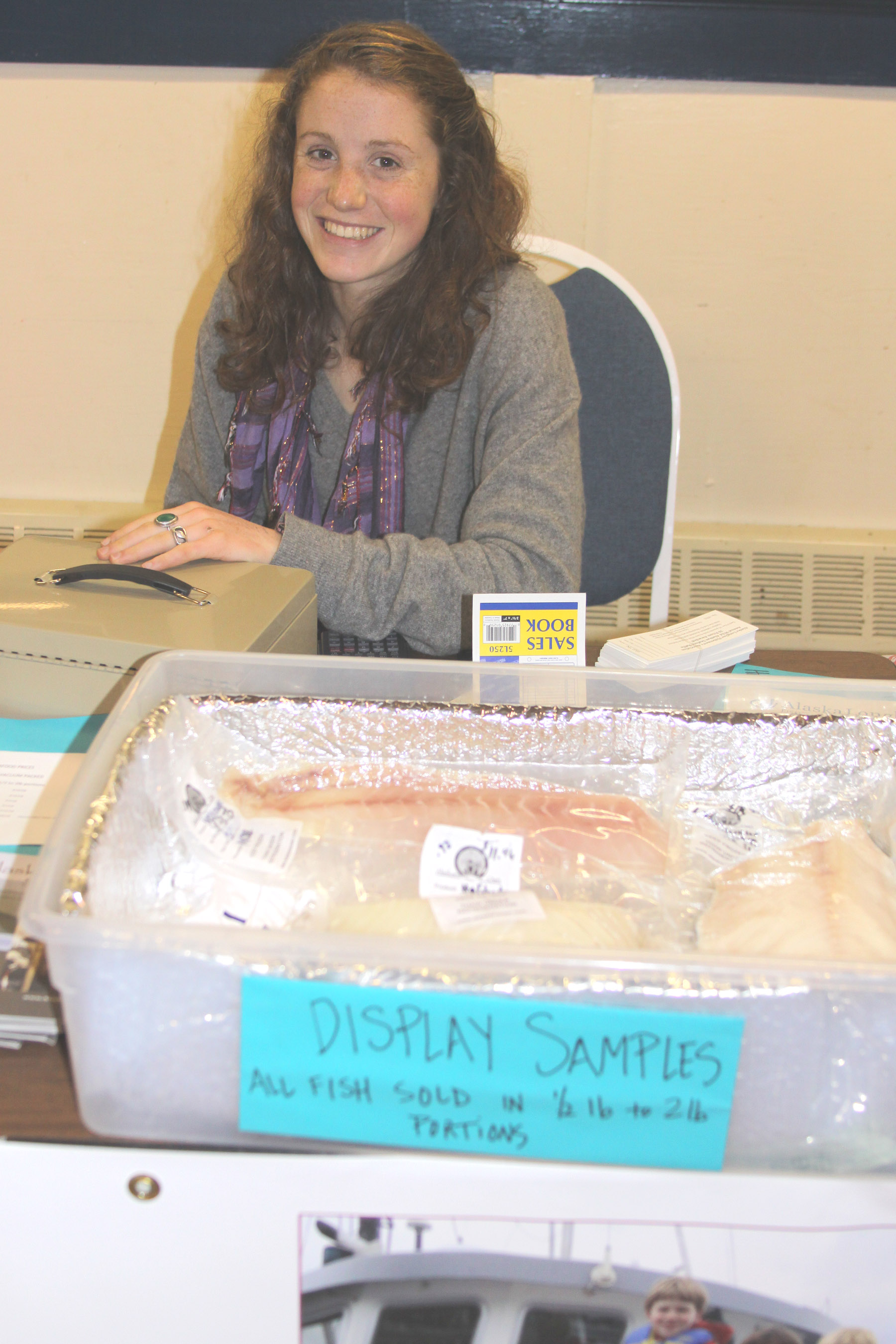
• Alaskans Own™ community supported fisheries program announces season subscriptions for Sitka and Juneau

Sitka-based Alaskans Own seafood recently announced its subscription prices for its 2012 Community Supported Fisheries (CSF) program in Sitka and Juneau. Alaskans Own was the first CSF program in the state, modeling its program after the successful Community Supported Agriculture (CSA) programs that let customers deal directly with harvesters so they can buy subscription shares to the year’s crop/catch.

This is the third year of the Alaskans Own CSF program, and this year there are four-month and six-month subscriptions. The six-month subscriptions are new this year, and they will allow people to keep receiving freshly caught seafood through October instead of August. Half-subscriptions also are available. Subscriptions include a mix of locally caught black cod (sablefish), halibut, king salmon, coho salmon, lingcod and miscellaneous rockfish, depending on the commercial fishing season.

In Sitka, pick-ups take place on the fourth Wednesday of the month (May through August for four-month subscriptions, May through October for six-month subscriptions) at the Mill Building at the Sitka Sound Science Center. A pick-up location for Juneau will be announced at a later date. Registration for 2012 subscriptions opened on April 13, and the first pick-up is scheduled for Wednesday, May 23. Subscriptions are limited, so sign up early. For those who miss out on subscriptions, Alaskans Own frequently has a booth at the Sitka Farmers Markets.

The four-month summer subscription price (May through August) is $430 plus tax for 40 pounds of seafood total, while the half-subscription price is $230 plus tax for 20 pounds. The four-month share will have two pounds of blackcod and 10 pounds of miscellaneous rockfish in May, eight pounds of lingcod and four pounds of halibut in June, six pounds of king salmon in July and 10 pounds of coho salmon in August. The half-subscription has half shares of each fish species.

The six-month summer subscription price (May through October) is $635 plus tax for 60 pounds of seafood, while the half-subscription price is $335 plus tax for 30 pounds of seafood. The six-month share will be the same as the four-month share for May through August, with September adding one pound of blackcod, five pounds of miscellaneous rockfish and four pounds of lingcod, and October including two pounds of halibut, three pounds of king salmon and five pounds of coho salmon. The half-subscription matches the four-month half-subscription through August, then adds one pound of black cod, three pounds of miscellaneous rockfish and two pounds of lingcod in September, and one pound of halibut, one pound of king salmon and two pounds of coho salmon in October.

The mix outlined is subject to change, as Alaskans Own bases its costs on estimated dock prices that can fluctuate throughout the season. For example, if July king salmon prices are higher than expected, you’ll receive a little bit less of that species and get additional pounds of coho salmon. The bottom line is you get the best mix of seafood possible for the subscription price.

For more information, go to the CSF page on the Alaskans Own website, or call 738-3360 in Sitka. You can contact Alaskans Own by e-mail in Sitka at info@alaskansown.com or in Juneau at alaskansown@gmail.com.