• Sitka Local Foods Network board of directors to meet on Thursday, April 7

The Sitka Local Foods Network board of directors will hold its monthly meeting from 7-8:30 p.m. on Thursday, April 7, at the Sitka Local Foods Network’s new office in the Sitka Unitarian Universalist Fellowship Building, 408 Marine St. This is a change from the board’s regular meeting schedule.

Key topics for the meeting include an update on the Sitka Community Greenhouse and Education Center project, a recap of the Let’s Grow Sitka event on March 20, an update on St. Peter’s Fellowship Farm and Blatchley Community Garden plans for the spring and summer, an update on the Sitka Farmers Markets that start in July, an update on the Alaska Food Policy Council, an update on the two new food projects from the Sitka Health Summit (planting 200 apple or other fruit trees in Sitka and getting more locally caught fish served at Sitka schools), and more.

Board meetings are free and open to the general public. We always welcome new volunteers interested in helping out with our various projects. For more information, contact Kerry MacLane at 752-0654.

• Alaskans Own™ community supported fisheries program expands from Sitka to Juneau

The Juneau Empire on Sunday, Jan. 23, featured an article that Sitka-based Alaskans Own™ seafood cooperative is expanding its Community Supported Fisheries program into Juneau this summer.

Last summer, Alaskans Own™ became the first community supported fisheries (CSF) program in Alaska, using a model popular with farmers called Community Supported Agriculture (CSA) where customers buy a subscription and share in the harvest. In recent weeks there has been news that the Anchorage-based Alaska Marine Conservation Council is going to offer a CSF this year for Kodiak tanner crab, making it the second Alaska program to offer a CSF. With renewed emphasis on local foods, CSFs and CSAs are becoming very popular around the country since they help the customers connect directly with the harvesters.

Alaskans Own™ still is finalizing its plan for this year’s programs in Juneau and Sitka, with prices being set once the long-lining season opens in February and they see what the seafood market price ranges are for the year. Fish quantities may be limited, so Alaskans Own™ suggests signing up for subscriptions early. Full- and half-shares are available, with each share featuring a variety of salmon, halibut, black cod (sablefish), yellow-eye rockfish and other species. Alaskans Own™ also sells some fish during the Sitka Farmers Markets.

For more information, go to the Alaskans Own™ website, e-mail alaskansown@gmail.com, or call 738-3360 (Sitka) or 209-1187 (Juneau).

• UAF Cooperative Extension Service conducts Southeast Alaska Food Security Survey

A display shows the typical mileages food needs to travel to get to Sitka stores. The mileages are for several vegetables that are easy to grow right here in Sitka.

A display shows the typical mileages food needs to travel to get to Sitka stores. The mileages are for several vegetables that are easy to grow right here in Sitka.

Bob Gorman, the Sitka-based Natural Resource and Community Development faculty member for the University of Alaska Fairbanks Cooperative Extension Service, sent this e-mail out last week to local food people, health professionals and others interested in food security issues.

Please feel free to send this survey request around to other Southeast residents so they can complete it, too.

Subject: Southeast Alaska Food Security Survey

Dear Southeasterners,

Does everyone in your community have access to good, healthy food?  Will this always be true?  Do you have questions or concerns about your personal or community’s food security?

Southeast extension agents of the University of Alaska Fairbanks Cooperative Extension Service (CES) and Marine Advisory Program (MAP) are looking to engage university resources in addressing research based questions about Southeast Alaska’s food security situation.  Before CES and MAP can initiate this work, we need to determine if there is a real need and interest.

Please take a moment to fill out the online survey at http://www.surveymonkey.com/s/foodsecurity

If you have any questions about filling out the survey or need a hard copy sent to you, please call Linda Watson at 796-6221 or email ljwatson@alaska.edu.

If you know others interested in this issue and would care to forward this email, it appreciated.  We will wrap up this survey by the end of December, so please don’t delay.

Thank you for helping on this effort.

• Sitka Health Summit project to plant 200 fruit trees gains momentum

A cluster of Parkland apples (photo from the Alaska Pioneer Fruit Growers Association gallery, http://www.apfga.org/)

A cluster of Parkland apples (photo from the Alaska Pioneer Fruit Growers Association gallery, http://www.apfga.org/)

The work group formed during the 2010 Sitka Health Summit to plant 200 fruit trees in Sitka met on Monday, Nov. 8, and the project is gaining momentum.

The group plans to plant 200 apple, crabapple or cherry trees in Sitka before the next Sitka Health Summit on Sept. 30-Oct. 1, 2011. The work group has been researching which trees grow best in Sitka’s climate, researching possible funding sources, and researching possible locations to plant 200 fruit trees around the community. The work group also might plant some berry bushes around town to complement the fruit trees.

The group will go public with some of its plans during the Sitka Conservation Society‘s wild foods potluck and annual meeting from at 5-8 p.m. on Saturday, Nov. 13, at Harrigan Centennial Hall.

A couple of members in the work group attended the city’s Tree and Landscape Committee’s meeting later in the week and presented a list of about 3-4 dozen locations around Sitka they think might make good locations for fruit trees.

Notes from both meetings are posted below as PDF files. The next meeting for the 200 fruit trees in Sitka work group is from 7-8:30 p.m. on Monday, Dec. 13, at Harrigan Centennial Hall. For more information, contact Kari Lundgren at kari.lundgren@searhc.org or 738-2089.

• Notes from the Sitka Fruit Tree Planting Work Group meeting held on Nov. 8, 2010

• List of possible fruit tree locations presented at the Sitka Tree and Landscape Committee

• New ‘Field Guide to Seaweeds of Alaska’ will help Sitka residents identify various types of seaweeds

Alaska Natives have been gathering seaweeds and other sea vegetables for centuries, with the seaweeds providing an excellent source of vitamins and minerals. There are dozens of types of seaweeds available in Alaska, and most of them are edible.

The Alaska Sea Grant program from the University of Alaska Fairbanks recently released a new book by Mandy R. Lindeberg and Sandra C. Lindstrom called “Field Guide to Seaweeds of Alaska.” This book is billed as the first and only field guide to more than 100 common seaweeds, seagrasses and marine lichens of Alaska. The book features color photos, written descriptions and it is printed on water-resistant paper.

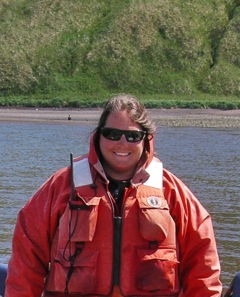
As part of the Sitka WhaleFest Maritime Market this weekend, one of the authors (Lindeberg) will be in Sitka signing copies of the new guide at 2:45 p.m. on Saturday, Nov. 6, at the Old Harbor Books booth at Harrigan Centennial Hall. Lindeberg is a self-proclaimed “nerdy” Juneau biologist who works for the National Oceanic and Atmospheric Administration/National Marine Fisheries Service Auke Bay Laboratory.

Mandy Lindeberg

Mandy Lindeberg

Lindeberg spent nearly 15 years working on the book with the help of Lindstrom, a professor and researcher in botany and marine ecology at the University of British Columbia who was born and raised in Juneau. Lindeberg took about 80 percent of the photos in the book, hoping to come up with enough decent images so scientists and naturalists had more than the sometimes-hard-to-decipher drawings found in most previous books, while Lindstrom helped with the taxonomic work and reviewed the scientific descriptions.

Lindeberg said the new guidebook will help people be able to better identify the types of seaweeds when they are out gathering (Editor’s note, federal and state subsistence laws prohibit the gathering of seaweed in urban nonsubsistence areas such as Juneau/Douglas and Ketchikan/Saxman, but seaweed gathering is legal in rural areas of Alaska including Sitka and most other Southeast Alaska communities, including areas just outside Juneau/Douglas and Ketchikan/Saxman).

Lindeberg said her guidebook will help people identify the various types of seaweeds, but it does not discuss which seaweeds are edible and how to prepare them, so people might want to use it with another Alaska Sea Grant book, “Common Edible Seaweeds in the Gulf of Alaska,” by Dolly Garza. The new “Field Guide to Seaweeds In Alaska” costs $30 and is available at Old Harbor Books or through the Alaska Sea Grant program’s online bookstore.

• Fruit tree planting group to meet on Nov. 8

A cluster of Parkland apples (photo from the Alaska Pioneer Fruit Growers Association gallery, http://www.apfga.org/)

A cluster of Parkland apples (photo from the Alaska Pioneer Fruit Growers Association gallery, http://www.apfga.org/)

The Sitka fruit tree planting work group will meet from 7-8:30 p.m. on Monday, Nov. 8, in the Rousseau Room at Harrigan Centennial Hall.

The location sub-committee meets from 7-7:30 p.m. and the general meeting starts at 7:30 p.m. All members of the public are welcome to attend. Sitka residents with experience growing fruit trees, especially growing fruit trees in Southeast conditions, are encouraged to attend.

This new group formed in response to the Sitka Health Summit health priority of planting 200 fruit trees in Sitka by the next Sitka Health Summit (Sept. 30-Oct. 1, 2011). Planting 200 fruit trees is one of four health priority projects chosen for 2010-11 by Sitka residents, with the others to get more locally caught wild fish served in school meals, getting more people (especially kids and families) outdoors for recreation, and getting a “Choose Respect” mural placed in Sitka to help prevent domestic violence.

For more information on the fruit tree project, call Kari Lundgren at 738-2089 or go to http://www.sitkalocalfoodsnetwork.org/.

• Planting fruit trees in Sitka and getting more seafood into local school meals are 2010 Sitka Health Summit projects

Cherry blossoms at Blatchley Community Garden

Cherry blossoms at Blatchley Community Garden

When Sitka residents met for the community planning day during the Sitka Health Summit earlier this month, two of the four health priority projects they chose to work on this year centered around local food issues.

One of the projects is to plant 200 fruit trees — apples, crabapples or cherry trees — in Sitka by the next Sitka Health Summit on Sept. 30-Oct. 1, 2011. The other food-related project is to get more locally caught wild fish into school lunch menus.

Both groups already are making progress toward their goals, and public meetings have been organized so Sitka residents can participate.

The fruit tree planting group meets from 7-8:30 p.m. on Monday, Oct. 25, at The Loft (408 Oja Way, Suite A, located across the residential street and a couple of buildings over from the Sitka Police Department’s side entry door on Oja Way). Apple cider and an apple dish will be offered.

All Sitka residents are welcome, especially those who have grown fruit trees in Sitka or Southeast Alaska and can share their experiences. Group member Lisa Sadleir-Hart created a brief survey about fruit trees in Sitka, and you can answer it by clicking this link, http://www.surveymonkey.com/s/QPWMJ3N. Please complete the survey, even if you can’t attend the meeting. The group temporarily is being facilitated by Kari Lundgren, who can be reached at 738-2089 for more information.
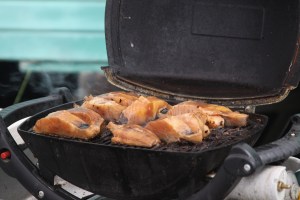
Black cod (aka sablefish) on the grill from the Alaska Longline Fisherman's Association booth at the Sitka Farmers Market

Black cod (aka sablefish) on the grill from the Alaska Longline Fisherman's Association booth at the Sitka Farmers Market

The wild fish for school lunches group has been meeting with officials with the Sitka School District and Mt. Edgecumbe High School, local fish vendors, catchers and processors, to see what they can do to get more locally caught wild fish — salmon, halibut, cod, sablefish, rockfish, etc. — served in Sitka schools.

The wild fish group’s first meeting will be for a fish lunch at noon on Friday, Nov. 19, at Pacific High School. Some people will show up at 11 a.m. to help cook the fish, which will be served at noon, and the actual meeting will be from 12:30-1:30 p.m. at the Southeast Alaska Career Center (located right behind Pacific High School). To learn more about the group, contact Kerry MacLane at 752-0654 or maclanekerry@yahoo.com.

• Two FDA committees hear testimony about genetically modified salmon

Size comparison of an AquAdvantage® Salmon (background) vs. a non-transgenic Atlantic salmon sibling (foreground) of the same age. (CREDIT AquaBounty)

Size comparison of an AquAdvantage® Salmon (background) vs. a non-transgenic Atlantic salmon sibling (foreground) of the same age. (CREDIT AquaBounty)

This week, two different U.S. Food and Drug Administration committees have been taking testimony about the future of genetically modified salmon. On Monday, one committee — the FDA’s Center for Veterinary Medicine — heard testimony about whether genetically modified salmon is safe to eat and if it should be approved. Tuesday, the other committee — the FDA’s Center for Food Safety and Applied Nutrition — heard testimony about whether or not genetically modified salmon should have special labeling.

The issue is over a genetically modified Atlantic salmon produced by the Massachusetts firm AquaBounty Technologies, known as AquAdvantage®. The AquAdvantage® fish not only includes a growth gene from a chinook salmon, which makes it reach market size in 16-18 months instead of the usual three years, plus there is a gene from an eel-like fish known as an ocean pout. According to AquaBounty, all of the commercialized fish will be female and sterile, and the fish are designed to be raised in fresh-water pens or tanks on land instead of the usual salt-water pens where most farmed Atlantic salmon are raised.

Many in the biotech, food and other industries are pushing for the FDA to quickly approve the commercial production of this fish. But some consumer groups, food safety experts and others want the FDA to slow or end the approval process until more is known about the fish.

On Tuesday’s Alaska News Nightly show, the Alaska Public Radio Network reported that it may be some time before genetically modified salmon reach the market. However, the Los Angeles Times reported that the FDA seemed to give preliminary approval to the fish’s safety and the main issue was who is responsible for telling the consumer the fish has been genetically altered.

AquAdvantage salmon eggs are grown in incubator jars in a laboratory. (CREDIT AquaBounty)

AquAdvantage salmon eggs are grown in incubator jars in a laboratory. (CREDIT AquaBounty)

The idea of a genetically modified Atlantic salmon is of special concern to Alaska’s fishermen. Many fish farms in British Columbia raise Atlantic salmon, and there have been times when Atlantic salmon have escaped from the fish farm pens and mixed with wild Pacific salmon, including in Alaska. The Alaska Department of Fish and Game considers Atlantic salmon an invasive species, and already requests fishermen turn any Atlantic salmon caught in Alaska in to the nearest ADF&G office without being cleaned. According to ADF&G, there are concerns that Atlantic salmon might bring diseases to the five species of Pacific salmon and compete for food.

In addition to more recent cases of diseases among farmed fish and a high use of antibiotics, farmed Atlantic salmon also harmed the markets for Alaska fishermen trying to sell wild salmon (fish farming is banned in Alaska), and prices for Alaska fish dropped substantially when fish farms became more popular in the late 1980s and early 1990s. It’s only been in recent years that Alaska fishermen have started to regain some of their lost market share.

Sitka Conservation Society intern Molly Andrews has been keeping a blog this summer on the genetically modified salmon issue and what the fish could mean to Sitka. Molly’s blog has links to several stories about genetically modified salmon (recently called “Frankenfish” by U.S. Sen. Mark Begich, D-Alaska). The blog also has contact information if people want to contact the FDA or other officials to make comments about genetically modified salmon.

• Iris Klingler wins Table of the Day Award for her bread, honey and jelly during fifth Sitka Farmers Market of the summer

Sitka Local Foods Network board members Maybelle Filler, left, and Suzan Brawnlyn, right, present home baker and honey/jelly maker Iris Klingler with the Table of the Day Award for the fifth Sitka Farmers Market of the summer on Sept. 11, 2010.

Sitka Local Foods Network board members Maybelle Filler, left, and Suzan Brawnlyn, right, present home baker and honey/jelly maker Iris Klingler with the Table of the Day Award for the fifth Sitka Farmers Market of the summer on Sept. 11, 2010.

Iris Klingler won the Table of the Day award at the fifth and final Sitka Farmers Market of the summer on Saturday, Sept. 11, at Alaska Native Brotherhood Hall.

The local home baker and honey/jelly maker was presented with a certificate, $25 cash and a farmers market cookbook by Sitka Local Foods Network board members Maybelle Filler and Suzan Brawnlyn. Iris is one of the market’s newest vendors, but her table was a big hit. She sold out of her bread before the market was much more than an hour old, and her honey and jelly also sold well.

One vendor at each of the five Sitka Farmers Markets this season received similar prizes as the Table of the Day. This was the last big market of the summer, so Sitka residents will have to wait for next summer for the next opportunity to buy locally grown produce, locally caught fish, locally baked bread and locally made crafts at the Sitka Farmers Market.

Also, don’t forget the 16th annual Running of the Boots fundraiser for the Sitka

Runners hit the trail during the 14th Annual Running of the Boots race on Sept. 27, 2008, in Sitka.

Local Foods Network takes place at 11 a.m. (registration opens at 10 a.m.) on Saturday, Sept. 25, as part of the third annual Summer’s End Celebration hosted by the Greater Sitka Chamber of Commerce and the Alaska Cruise Association. This fun run for people sporting XtraTufs rubber boots features a run from the Crescent Harbor shelter through downtown Sitka and around St. Michael’s Russian Orthodox Cathedral.

Since St. Peter’s Fellowship Farm and several other local gardeners have late produce, the Sitka Local Foods Network will have a table or two of produce for sale at the Running of the Boots, with all proceeds going to the non-profit Sitka Local Foods Network to help us with our various projects. The produce tables won’t be as big as a typical Sitka Farmers Market, but WIC clients will be able to use their farmers market produce coupons. More details on the Running of the Boots are posted elsewhere on this site.

A slideshow of photos from the fifth Sitka Farmers Market is posted below, and a similar slideshow can be found on our Shutterfly site.

This slideshow requires JavaScript.

• Sitka Local Foods Network to host board meeting on Monday, Sept. 6

The 2009-10 Sitka Local Foods Network board of directors. Back row, from left, Doug Osborne, Linda Wilson, Lisa Sadleir-Hart, Natalie Sattler, Peggy Reeve (no longer on board) and Maybelle Filler. Front row, from left, Lynnda Strong, Kerry MacLane and Suzan Brawnlyn. Not pictured, Tom Crane, Johanna Willingham (added to board in May 2010).

The 2009-10 Sitka Local Foods Network board of directors. Back row, from left, Doug Osborne, Linda Wilson, Lisa Sadleir-Hart, Natalie Sattler, Peggy Reeve (no longer on board) and Maybelle Filler. Front row, from left, Lynnda Strong, Kerry MacLane and Suzan Brawnlyn. Not pictured, Tom Crane, Johanna Willingham (added to board in May 2010).

The Sitka Local Foods Network board of directors will meet at 4:30 p.m. on Monday, Sept. 6 (Labor Day) at the See House behind St. Peter’s By The Sea Episcopal Church.

This is the board’s first monthly meeting since June, and the meeting is expected to last until 6 p.m. An agenda is posted below, and board president Kerry MacLane expects to stick to the assigned times on each topic. Key topics include the Sitka Farmers Market, St. Peter’s Fellowship Farm, Blatchley Community Gardens, the Sitka Community Greenhouse and Education Center, the Alaska Food Policy Council, the Running of the Boots fundraiser on Sept. 25 and more.

Board meetings are free and open to the general public. We always welcome new volunteers interested in helping out with our various projects.

• Sitka Local Foods Network board meeting agenda for Sept. 6, 2010