• Fruit tree planting group to meet on Nov. 8

A cluster of Parkland apples (photo from the Alaska Pioneer Fruit Growers Association gallery, http://www.apfga.org/)

A cluster of Parkland apples (photo from the Alaska Pioneer Fruit Growers Association gallery, http://www.apfga.org/)

The Sitka fruit tree planting work group will meet from 7-8:30 p.m. on Monday, Nov. 8, in the Rousseau Room at Harrigan Centennial Hall.

The location sub-committee meets from 7-7:30 p.m. and the general meeting starts at 7:30 p.m. All members of the public are welcome to attend. Sitka residents with experience growing fruit trees, especially growing fruit trees in Southeast conditions, are encouraged to attend.

This new group formed in response to the Sitka Health Summit health priority of planting 200 fruit trees in Sitka by the next Sitka Health Summit (Sept. 30-Oct. 1, 2011). Planting 200 fruit trees is one of four health priority projects chosen for 2010-11 by Sitka residents, with the others to get more locally caught wild fish served in school meals, getting more people (especially kids and families) outdoors for recreation, and getting a “Choose Respect” mural placed in Sitka to help prevent domestic violence.

For more information on the fruit tree project, call Kari Lundgren at 738-2089 or go to http://www.sitkalocalfoodsnetwork.org/.

• Planting fruit trees in Sitka and getting more seafood into local school meals are 2010 Sitka Health Summit projects

Cherry blossoms at Blatchley Community Garden

Cherry blossoms at Blatchley Community Garden

When Sitka residents met for the community planning day during the Sitka Health Summit earlier this month, two of the four health priority projects they chose to work on this year centered around local food issues.

One of the projects is to plant 200 fruit trees — apples, crabapples or cherry trees — in Sitka by the next Sitka Health Summit on Sept. 30-Oct. 1, 2011. The other food-related project is to get more locally caught wild fish into school lunch menus.

Both groups already are making progress toward their goals, and public meetings have been organized so Sitka residents can participate.

The fruit tree planting group meets from 7-8:30 p.m. on Monday, Oct. 25, at The Loft (408 Oja Way, Suite A, located across the residential street and a couple of buildings over from the Sitka Police Department’s side entry door on Oja Way). Apple cider and an apple dish will be offered.

All Sitka residents are welcome, especially those who have grown fruit trees in Sitka or Southeast Alaska and can share their experiences. Group member Lisa Sadleir-Hart created a brief survey about fruit trees in Sitka, and you can answer it by clicking this link, http://www.surveymonkey.com/s/QPWMJ3N. Please complete the survey, even if you can’t attend the meeting. The group temporarily is being facilitated by Kari Lundgren, who can be reached at 738-2089 for more information.

Black cod (aka sablefish) on the grill from the Alaska Longline Fisherman's Association booth at the Sitka Farmers Market

Black cod (aka sablefish) on the grill from the Alaska Longline Fisherman's Association booth at the Sitka Farmers Market

The wild fish for school lunches group has been meeting with officials with the Sitka School District and Mt. Edgecumbe High School, local fish vendors, catchers and processors, to see what they can do to get more locally caught wild fish — salmon, halibut, cod, sablefish, rockfish, etc. — served in Sitka schools.

The wild fish group’s first meeting will be for a fish lunch at noon on Friday, Nov. 19, at Pacific High School. Some people will show up at 11 a.m. to help cook the fish, which will be served at noon, and the actual meeting will be from 12:30-1:30 p.m. at the Southeast Alaska Career Center (located right behind Pacific High School). To learn more about the group, contact Kerry MacLane at 752-0654 or maclanekerry@yahoo.com.

• Fourth annual Sitka Health Summit takes place on Monday-Tuesday, Oct. 4-5

Sitka residents are invited to join their community in honoring our local wellness champions and planning our health priorities for the next year during the fourth annual Sitka Health Summit, “Working Together for a Healthier Sitka,” on Monday and Tuesday, Oct. 4-5, at Harrigan Centennial Hall.

The Sitka Local Foods Network got its start as two community food security projects from the 2008 Sitka Health Summit — to create a local foods market and to create a community greenhouse/expand local community gardens. In 2009 the Sitka Local Foods Network received a community wellness champion award for nutrition.

There are two main community events during the Sitka Health Summit — the Sitka Community Dessert and Awards Ceremony on Monday, Oct. 4, and the Planning Day: Real Ideas Into Action on Tuesday, Oct. 5.

Julien Naylor, MD, MPH

Julien Naylor, MD, MPH

Doors open for Monday’s program at 6 p.m., with the program starting at 6:30 p.m. The event features a selection of free local and organic desserts provided by Sitka Spuce Catering for the first 200 people. The keynote presentation will be by Dr. Julien Naylor, an internal medicine/diabetes specialist at SEARHC Mt. Edgecumbe Hospital who will speak about the importance of creating a healthy community in Sitka and how to help people move toward a more healthful life. Following the presentation will be an awards ceremony honoring our community wellness champions. This event is free, but donations will be accepted for the Sitka Health Summit’s new Health Initiatives Fund. Also, raffle tickets for a watercolor by local artist Pat Kehoe and other prizes are being sold for $5 each to raise money for the Health Initiatives Fund.

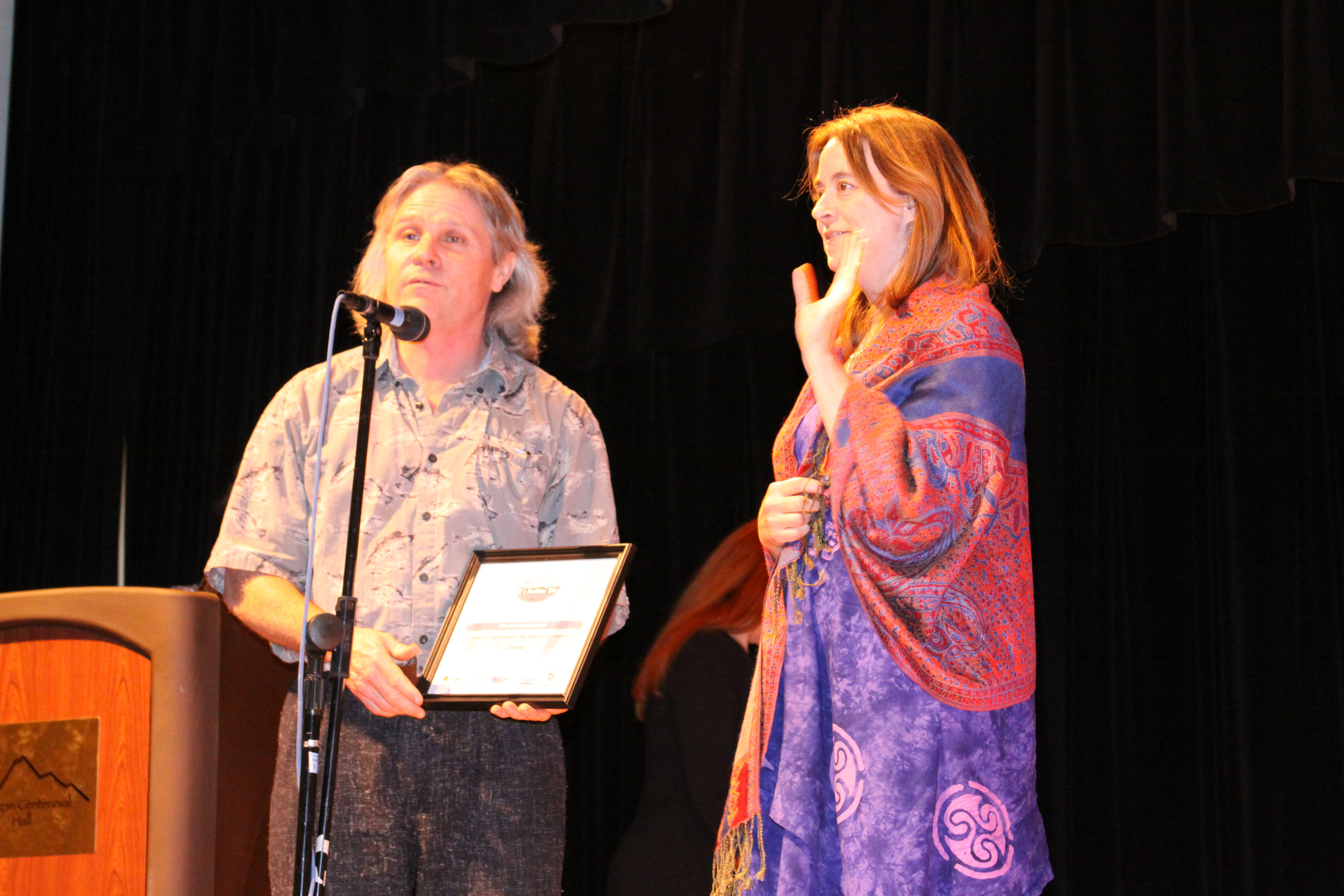
Sitka Local Foods Network president Kerry MacLane, left, and secretary/treasurer Linda Wilson say a few words after the Sitka Local Foods Network received a Community Wellness Champion award for nutrition at the 2009 Sitka Health Summit

Sitka Local Foods Network president Kerry MacLane, left, and secretary/treasurer Linda Wilson say a few words after the Sitka Local Foods Network received a Community Wellness Champion award for nutrition at the 2009 Sitka Health Summit

Tuesday’s program from 9 a.m. to 4 p.m. will allow Sitka residents to set the community’s health and wellness goals for 2010-11. Some of our recent past goals were to make Sitka more bicycle friendly and to start a market for local foods, and they resulted in Sitka becoming Alaska’s first official Bicycle Friendly Community in 2008 and the creation of the Sitka Farmers Market. This year’s top goals and priorities will receive seed money from the new Health Initiatives Fund. There also will be a community health and wellness resource room open to the public from 10 a.m. to 5 p.m. in the Exhibit Room. Snacks and lunch will be available.

The Sitka Health Summit is brought to you by Sitka Community Hospital and the SouthEast Alaska Regional Health Consortium (SEARHC), with major financial help from Premera Blue Cross Blue Shield of Alaska, the City and Borough of Sitka, Scott Insurance Services, White’s Inc./Harry Race Pharmacy/White’s Pharmacy and the University of Alaska Southeast-Sitka Campus. The Sitka Health Summit’s vision is “to serve our great state as a model for community wellness by creating a healthy community where all Sitkans strive for and enjoy a high quality of life.”

For more information about the Sitka Health Summit, contact Holly Keen at 738-2707 or sitkahealthsummit@gmail.com, or go to our Web site at http://www.sitkahealthsummit.org/.

• Sitka Health Summit poster (PDF file, feel free to print out and post around town)

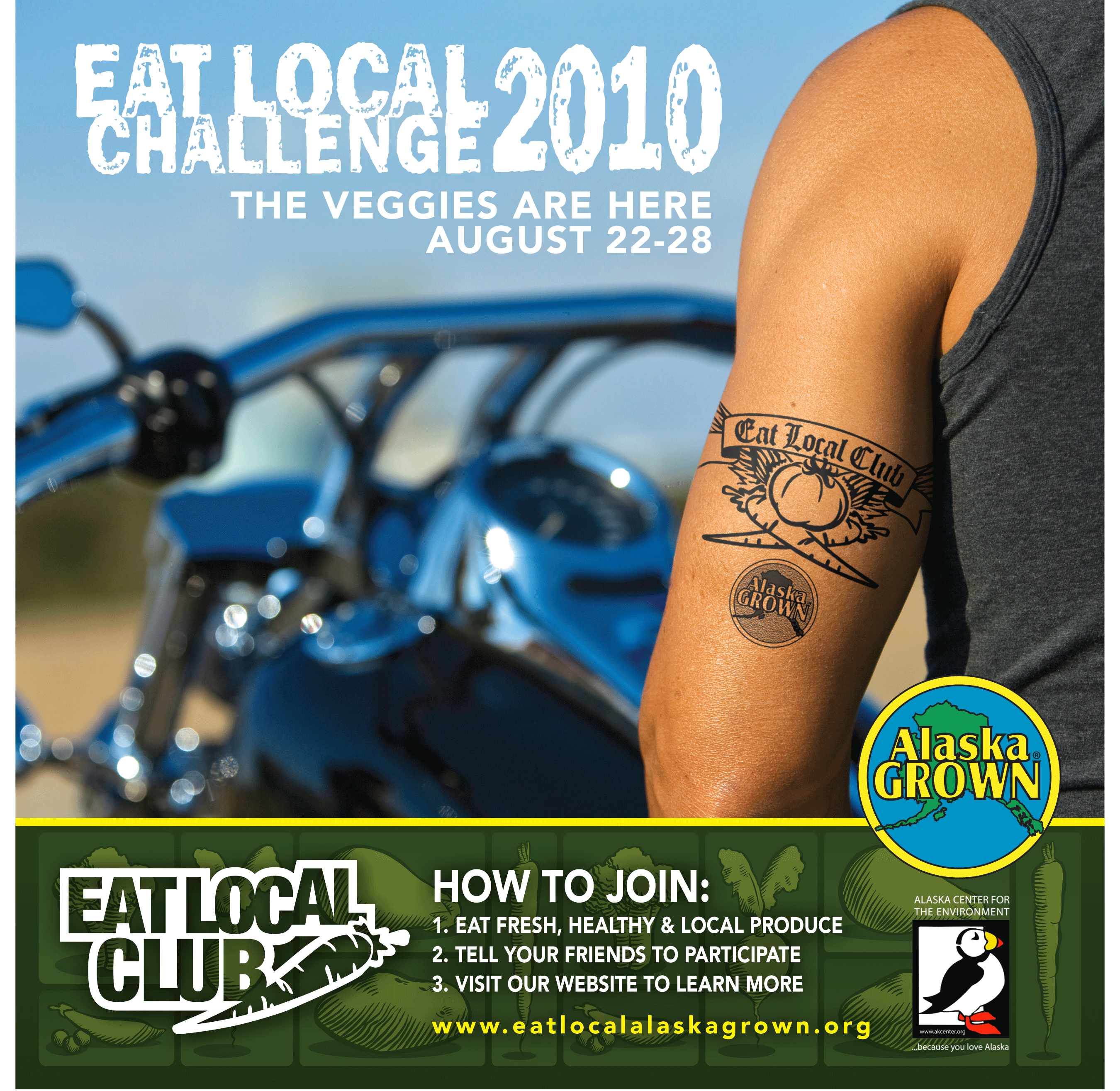
• Alaska Grown, Alaska Center For The Environment team up to host the Eat Local Challenge 2010 on Aug. 22-28

The state’s Alaska Grown program will host its “Eat Local Challenge 2010” on Sunday through Saturday, Aug. 22-28 (click here to read more). This year, the Alaska Center for the Environment, has joined Alaska Grown as a sponsor as part of the center’s local foods and sustainable communities program.

Alaskans have many ways to eat local, from veggies they grow in their own gardens or buy from Alaska farmers, berries they pick, fish they catch, game meat they hunt, seaweed and other beach greens they gather, etc. The benefit of eating local food is it’s fresher so it tastes better and has more nutrients, and you cut out the thousands of miles of transportation costs needed to ship food from the Lower 48 and other countries to Alaska. Growing local food makes a community more sustainable.

During the week of Aug. 22-28, Alaska residents are encouraged to:

  • Try eating at least one home-cooked meal this week, made of mostly local ingredients.
  • Try to incorporate at least one never-before-used local ingredient into a meal.
  • Try “brown-bagging” at least one meal this week made primarily of local ingredients.
  • Try talking to at least one local food retailer and one food producer about local food options.
  • Try to choose local food products whenever possible.

By the way, a good time to buy local food for the Eat Local Challenge is during the third Sitka Farmers Market of the summer on Saturday, Aug. 14, and during the fourth market on Saturday, Aug. 28. The Sitka Farmers Markets take place from 10 a.m. to 2 p.m. on alternate Saturdays (through Sept. 11) at historic Alaska Native Brotherhood Hall, 235 Katlian St. We’ll see you there.

• Deadline nears for getting food and other entries to the Southeast Alaska State Fair in Haines

The deadline for getting your local entries ready for the Southeast Alaska State Fair is this week if you want to take advantage of free shipping from Sitka.

Jeanette Berry, the Sitka town representative for the fair, needs to have all non-perishable entries packed and delivered to the Alaska Marine Lines office in Sitka by the afternoon of Thursday, July 8, so they can be loaded onto the Tuesday, July 13, barge to Haines. She can provide assistance and free shipping on the entries that will be barged to Haines. Perishable items will be flown to Haines, but free shipping may not available on those items (Jeanette is researching to see what shipping rates might be for perishable items).

The Southeast Alaska State Fair takes place from July 29 through Aug. 1 at the Haines Fairgrounds, just outside Haines. The fair provides a regional showcase for agricultural and domestic arts, creative arts and crafts, and the opportunity for educational, cross-cultural and social exchange.

There are exhibits for a wide variety of food items, from big veggies to jams and jellies, even homemade beer and wine. There are hundreds of categories to enter, so click this link and download the 59-page exhibitor’s guide book for information about what types of items can be entered and how the entries should be prepared.

To learn more about how Jeanette can help you ship your entries to Haines, call her at 747-3222 (home) or 1-360-271-8197 (cell). It’s not too late to share your talents with other residents of Southeast Alaska.

2010 Southeast Alaska State Fair exhibitor’s guide book (PDF file)

• Paralytic shellfish poisoning (PSP) warning issued for Southeast Alaska

The enclosed copy is courtesy of the SouthEast Alaska Regional Health Consortium (SEARHC) website.
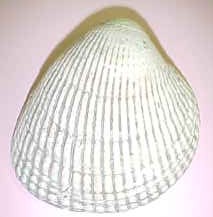
A cockle has deep ridges similar to a Ruffles potato chip (Photo courtesy of Alaska Department of Environmental Conservation)

A cockle has deep ridges similar to a Ruffles potato chip (Photo courtesy of Alaska Department of Environmental Conservation)

This past week has seen five cases of paralytic shellfish poisoning (PSP) in Alaska, including two cases in Southeast Alaska that resulted in the June 17 death of a Juneau woman who ate a cockle and the June 22 death of a Haines man who ate a Dungeness crab. The other three cases were in Kodiak and they resulted in illness from eating butter clams.

The two Southeast deaths, if confirmed by autopsy, will be the first paralytic shellfish poisoning deaths in Alaska since 1997. In 2009 there was just one reported case of PSP in Alaska, and there were no cases of PSP in 2008 and one in 2007. There have been periodic outbreaks of PSP over the years, with the most deadly instance coming when clams and mussels gathered from Peril Straits near Sitka killed more than 100 Russians and Aleuts in 1799.

According to the Alaska Department of Health and Social Services, the 57-year-old Juneau woman reportedly ate cockles she gathered on June 14 from the Point Louisa end of Auke Bay. She died June 17 after being hospitalized at Bartlett Regional Hospital in Juneau. The Alaska Department of Environmental Conservation tested cockles from Auke Bay after the woman was hospitalized and DEC found the Auke Bay cockles had much higher levels of PSP than acceptable (they should not have more than 80 parts per million, and the cockles had 2,044 parts per million).

The 57-year-old Haines man reportedly ate Dungeness crab on June 18 that he caught off Jenkins Rock near the Chilkat Inlet of Lynn Canal. He was hospitalized at Bartlett Regional Hospital on June 18 and released from the hospital on June 21. He died in his Haines home early on June 22. Dungeness crab meat does not contain PSP, but the viscera (guts) can have the toxin, health officials said. People should not eat crab viscera. The Department of Environmental Conservation plans to test crabs from Southeast for PSP.

What is paralytic shellfish poisoning (PSP)?

Paralytic shellfish poisoning, or PSP, is a potentially lethal toxin that can lead to fatal respiratory paralysis, according to the Alaska Department of Environmental Conservation. The toxin comes from algae, which is a food source for clams, mussels, crabs and other shellfish found across Alaska. This toxin can be found in shellfish every month of the year, and butter clams have been known to store the toxin for up to two years. The toxin cannot be seen with the naked eye, and there is no simple test a person can do before they harvest. One of the highest concentrations of PSP in the world was reported in shellfish from Southeast Alaska.
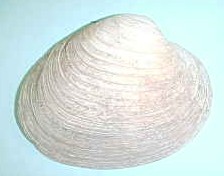
The butter clam has one set of rings that go one direction only, around the same center point (Photo courtesy of Alaska Department of Environmental Conservation)

The butter clam has one set of rings that go one direction only, around the same center point (Photo courtesy of Alaska Department of Environmental Conservation)

Symptoms of PSP can begin almost immediately, or they can take several hours after eating the affected shellfish before they appear. Symptoms include shortness of breath, tingling, dizziness and numbness. If you suspect someone has symptoms of PSP, get that person to a medical facility fast (an Alaska Sea Grant link below has first aid for PSP). Death is rare from PSP, but some people have died after eating just one clam or mussel with the PSP toxin, while in other cases it took eating many clams or mussels to get enough of the poison to cause death.

Are Southeast beaches safe for subsistence or recreational shellfish harvesting?

The Department of Environmental Conservation recommends harvesting of shellfish only from DEC-certified beaches, and the only certified beaches in the state are located in the Cook Inlet and Kachemak Bay areas of Southcentral Alaska. According to DEC, there are no certified beaches in populated areas of Southeast Alaska, Kodiak or the Aleutian Islands. The only beaches DEC can certify as safe for shellfish collecting are those where state-certified testing of clams and mussels is done regularly.

The littleneck clam has two sets of rings that cross each other at 90 degree angles (Photo courtesy of Alaska Department of Environmental Conservation)

The littleneck clam has two sets of rings that cross each other at 90 degree angles (Photo courtesy of Alaska Department of Environmental Conservation)

“Do not eat shellfish from uncertified beaches,” DEC Program Specialist George Scanlan said. “Anyone who eats PSP-contaminated shellfish is at risk for illness or death.”

The DEC warning does not apply to commercially grown and harvested shellfish available in grocery stores and restaurants. Commercially grown and harvested shellfish goes through a regular testing program before it goes to market.

Paralytic shellfish poisoning (PSP) resources

DEC page about paralytic shellfish poisoning (PSP) and how it works, http://www.dec.state.ak.us/eh/fss/seafood/psp/psp.htm

DEC links page with more info about PSP,
http://www.dec.state.ak.us/eh/fss/seafood/psphome.htm

DEC page about identifying butter clams, littleneck clams and cockles (has photos),
http://www.dec.state.ak.us/eh/fss/seafood/psp/shellfish.htm

Current DEC warning about PSP in Alaska (dated June 16, 2010),
http://dec.alaska.gov/press_releases/2010/2010_06_16_psp%20final.pdf

Joint DH&SS/DEC press release about Haines case of PSP (dated June 21, 2010),
http://www.hss.state.ak.us/press/2010/Additional_case_of_PSP_reported_062110.pdf

DH&SS  fact sheet about paralytic shellfish poisoning, http://www.hss.state.ak.us/pdf/201006_shellfish.pdf

Twitter feed for the Alaska Department of Health and Social Services,
http://twitter.com/alaska_DHSS

Alaska Sea Grant page with links about paralytic shellfish poisoning,
http://seagrant.uaf.edu/features/PSP/psp_page.html

Alaska Sea Grant page with first aid for PSP victims (get victim to medical facility fast),
http://seagrant.uaf.edu/features/PSP/PSP_aid.html

Centers of Disease Control and Prevention page on marine toxins (including PSP),
http://www.cdc.gov/nczved/divisions/dfbmd/diseases/marine_toxins/

• Alaska Permaculture Guild to host state’s first permaculture design certification course

The Alaska Permaculture Guild will host Alaska’s first permaculture design certification course on Aug. 9-22, at the Ageya Wilderness School in Homer.

This complete, 72-hour course (two weeks) lays the foundation for understanding and using natural principles to design abundant, sustainable systems that provide for basic human needs of healthy foods, housing, energy and meaningful work and relationships, while also contributing to the regeneration of the earth.

For those not familiar with permaculture, it is a holistic design system used in more than 140 countries. According to the Alaska Permaculture Community site, permaculture is a holistic design process, using ecology as a basis for designing integrated systems: food production, community, economics, housing, with an embued ethic of caring for the earth, caring for people and sharing the surplus. That’s asking us to limit our consumption and design for abundance and then share that abundance with each other.

This course will cover all aspects of permaculture, including:

  • design processes and methodologies and tools
  • water storage, flow, and runoff
  • soil fertility, food web, testing, improvements
  • tree crops, agro-foresty, and forest gardens
  • integrating animals from intensive grazing to micro livestock
  • urban permaculture, ecology, village design
  • natural building, energy systems
  • economics, alternative currency and bartering systems.

This course includes a design practicum, where participants will work in groups to create designs using what they are learning. There will be many hands-on activities and local field trips so you can see theory in action. Optional evening workshops are offered with Alaskans experienced in applying permaculture in our challenging climate. There will be one day off in the middle of the course.

There is a long list of people who should consider taking this course, which includes homeowners and renters, planners and managers, government employees, building design and construction professionals, landscape architects, designers, gardeners, social workers, non-profit and community leaders, entrepreneurs, and students and educators.

Click here to find an application and fee schedule for the course, and to register. There are camping and heated yurt accommodations available for the course. Successful completion of this course will allow the participants to earn a Certificate in Permaculture Design, allowing them to use permaculture in their line of work.

• Juneau Farmers Market to host weekly booths with Juneau Artists Market

The Juneau Farmers Market will start hosting weekly booths this Saturday as part of the Juneau Artists Market. The Juneau Farmers Market booths will be open from 10 a.m. to noon starting on Saturday, June 12, at the Juneau Arts and Culture Center, and running through the annual Juneau Farmers Market and Local Food Festival on Aug. 28.

A companion event to the Juneau Artists Market, which offers local arts and crafts, the Juneau Farmers Market will feature locally grown produce, cut flowers, homemade jams and jellies and baked goods. Plant starts also are welcome, so don’t toss your thinnings and starts. Instead, share them with another gardener. Juneau Farmers Market booth space is limited, so advance reservation required.

The season culminates in Juneau with the third annual Juneau Farmers Market and Local Food Festival from 9 a.m. to 2 p.m. on Saturday, Aug. 28, at the Juneau Arts and Culture Center. In past years, this was the only farmers market event in Juneau, so it’s nice to see weekly markets this year. Click the link above for more details on this larger annual event, which includes produce, fish, jams and jellies, baked breads and demonstrations about how to harvest and preserve local foods, or click this link for information from the Sustainable Juneau blog.

The Juneau Farmers Market would not be possible without its sponsors and partners: the Juneau Arts and Humanities Council, the Juneau Economic Development Council, the Juneau Commission on Sustainability, the Alaska State Division of Agriculture and the UAF Cooperative Extension Service.

• Fast Food Nation author encourages Alaskans to grow their own local food

Fast Food Nation author Eric Schlosser, second from left, visits with University of Alaska Fairbanks School of Natural Resources and Agricultural Sciences associate professor Joshua Greenberg, left, student Charles Caster, third from left, and professor Milan Shipka, right, during a May 27 visit to speak at UAF. (Photo courtesy of the UAF School of Natural Resources and Agricultural Sciences blog)

Fast Food Nation author Eric Schlosser, second from left, visits with University of Alaska Fairbanks School of Natural Resources and Agricultural Sciences associate professor Joshua Greenberg, left, student Charles Caster, third from left, and professor Milan Shipka, right, during a May 27 visit to speak at UAF. (Photo courtesy of the UAF School of Natural Resources and Agricultural Sciences blog)

Eric Schlosser, the author of “Fast Food Nation” and “Chew On This,” encouraged Alaskans to grow their own local foods during a May 27 lunch of Alaska-grown food with University of Alaska Fairbanks (UAF) School of Natural Resources and Agricultural Sciences (SNRAS) students, faculty and staff involved with food security and food production.

Schlosser, who also co-produced the films “Food, Inc.” and “There Will Be Blood,” was in Fairbanks to give a lecture that night as part of UAF’s Summer Sessions. Stories about his lecture can be found on the SNRAS blog and in the UAF Sun Star student newspaper, and a preview story was in the Fairbanks Daily News-Miner.

During his free lecture, Schlosser discussed the recent changes to how our food is grown and prepared, and about how we are losing contact with how our food gets to our plates. He focused on many of the industrial agriculture themes highlighted in his more popular book, “Fast Food Nation,” and some of the resulting problems, such as the low wages and vulnerable workforce in fast food production and the use of hormones in feedlot cattle and issues with antibiotics given feedlot animals.

He also delved into some of the resulting health issues from eating too much fast food, a topic he discussed in his book “Chew On This,” which was written for older children. (Editor’s note: “Chew On This” has a section about the Stop The Pop movement by schools in rural Alaska to eliminate soda pop from their school vending machines.) According to the SNRAS blog, Schlosser discussed the connections between our highly processed, industrial food and diseases such as diabetes.

The people most at risk are children and the elderly. Fast food, which is high in fat, sugar, starch, and salt, compromises the health of these vulnerable citizens. “These are ideal foods to make you unhealthy,” Schlosser said. “And they sell tons of soda because it is the most profitable thing they sell.”

While people in the US used to be some of the most fit people now they are terribly unfit. The obesity rate has nearly doubled for toddlers and tripled for children ages 6 to 11. “Alaska has one of the highest obesity rates in the US,” Schlosser said. “Alaska has more in common with Alabama and Mississippi than western states when it comes to obesity.”

Diabetes is another concern, with one in three children born in 2000 destined to develop diabetes. Among poor people the number is one in two.

“What is to be done?” Schlosser asked. “That all sounds really grim but an entirely different system is possible and necessary.” He stressed organic foods, buying local food, and reconnecting people with where food comes from. He said he is encouraged by the interest in sustainability found on college campuses.

“The fast food system exploits the weak and the poor and threatens our entire democratic system,” he said. “We need an agricultural system based on social policies and access to healthy, nutritional food for every member of society.”

Schlosser also noted how dependent Alaska has become on imported food, and how that impacts food security.

“Hey, you guys in Alaska gotta grow your own. You need to remember where food comes from. Alaska is the most food insecure state; that is not good.” He said Alaska has 15 million acres suitable for agriculture, yet only 30,000 acres are cultivated. (See addendum below.) “Rhode Island has twice as many farms as you and their value of agricultural products is twice as big. Now come on, you guys need to grow food in your back yards, have school gardens, and buy food grown in this state.”

(Addendum — From SNRAS Dean and AFES Director Carol Lewis, June 1, 2010: The 15 million acres is a wonderful quote, but if you look at Roeger (1958), you’ll see the rest of the story. Only 500,000 are accessible by road or rail. There are opportunities to use non-agricultural lands if we use controlled environments and composting, however. There are more than 30,000 acres actually cleared and in Delta alone there are about 100,000 acres.)

• Sitka Seafood Festival steering committee to meet on April 1

Salmon ready for canning in jars (Photo courtesy of University of Alaska Fairbanks Cooperative Extension Service)

Salmon ready for canning in jars (Photo courtesy of University of Alaska Fairbanks Cooperative Extension Service)

The Sitka Seafood Festival steering committee will meet at 6 p.m. on Thursday, April 1, at the Sitka Economic Development Association (SEDA)/Greater Sitka Chamber of Commerce office on the second floor of the Troutte Center Building on Lincoln Street (above Seasons card store).

The meeting agenda will finalize the event’s mission statement and the vision for the festival, set committee members and leads, and take care of other business related to creating a new festival of this nature. The Sitka Seafood Festival tentatively is scheduled for Friday through Sunday, Aug. 6-8, at various locations in Sitka.

Notes from the March 24 meeting and an initial breakdown of committees are attached as PDF documents. For more information about the festival, contact Alicia Peavey at alaska_al33@hotmail.com or 1-928-607-4845. (Editor’s note: The next meeting will be at 7:30 p.m. on Monday, April 5, at Harrigan Centennial Hall.)

Notes from March 24, 2010, Sitka Seafood Festival steering committee meeting and vision session

Sitka Seafood Festival committees

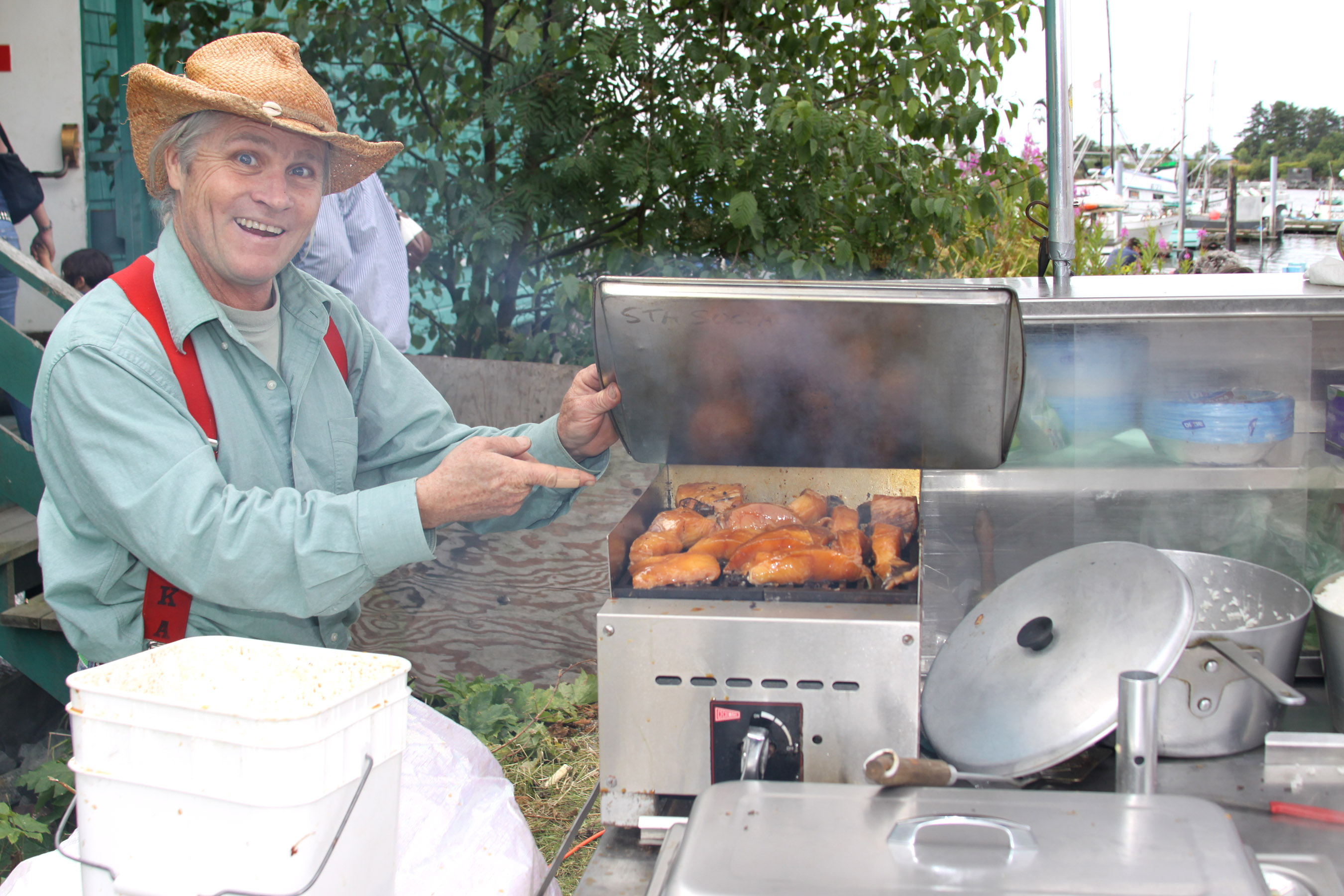
Kerry MacLane grills black cod for the Alaska Longline Fisherman's Association booth at the Sitka Farmers Market

Kerry MacLane grills black cod for the Alaska Longline Fisherman's Association booth at the Sitka Farmers Market