• ‘Building Food Security in Alaska’ report released during Alaska Food Festival and Conference

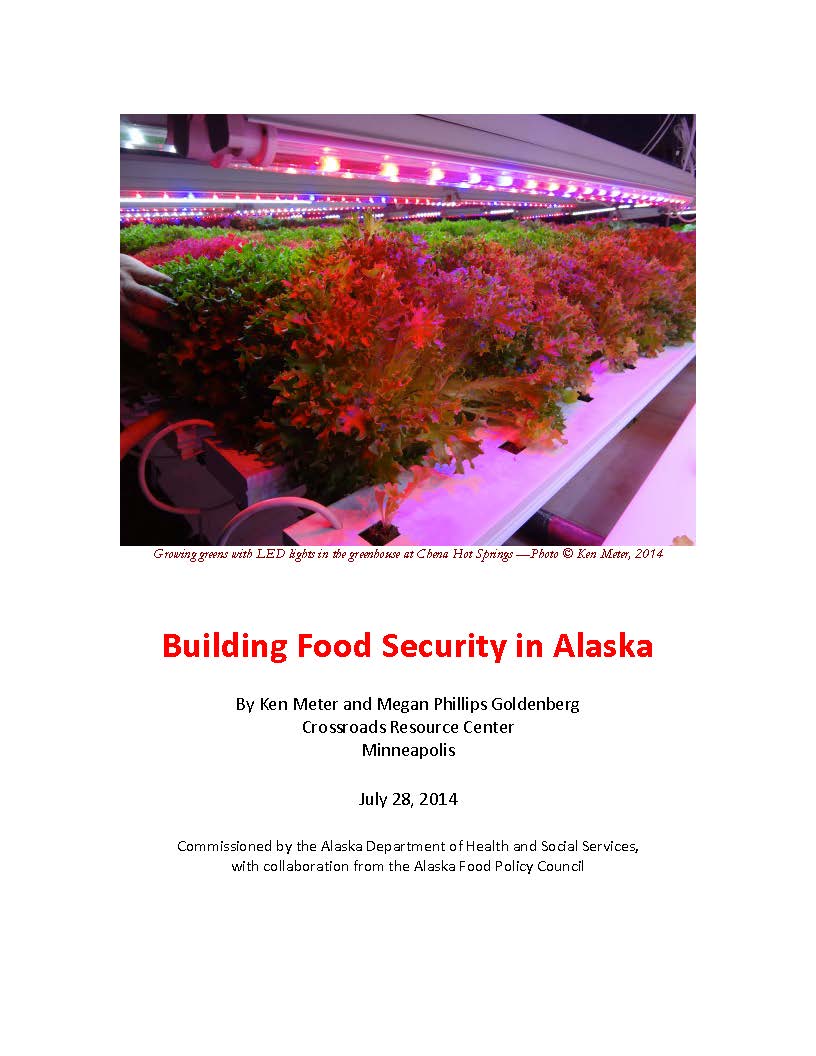
14-09-17_building-food-security-in-ak_exec-summary-recommendations_Page_01

The release of a new report, “Building Food Security in Alaska,” was one of the highlights of the recent Alaska Food Festival and Conference (Nov. 7-9 at the University of Alaska Lucy Anchorage Cuddy Center). This is one of the first comprehensive statewide food security reports compiled for Alaska.

The report was written by Ken Meter and Megan Phillips Goldenberg of the Crossroads Resource Center in Minneapolis, which has done six in-depth statewide food assessments over the past five years and 14 statewide food assessments overall. The report was commissioned by the Alaska Department of Health and Social Services, with collaboration from the Alaska Food Policy Council.

The Crossroads Resource Center website provides this summary of the report:

Like most other states, Alaska imports about 95 percent of the food it purchases. Yet this state is more distant from prevailing food production regions than other states. Alaskans feel a special sense of vulnerability. Despite a rich history in dairy and cattle production, most of these foods are now imported. Much of the arable farmland has been paved over by development. Moreover, Alaskans who wish to purchase some of the $3 billion of seafood harvested from its ocean waters typically have no choice but to buy through Seattle vendors.

Still, farms produce a rich variety of crops and livestock. Direct sales from farmers to household consumers run at 13 times the national average, amounting to one of every six dollars farmers earn selling food to humans. Lettuce, peppers, and cucumbers are available year-round from indoor farms. Chickens are grown inside greenhouses that rely upon surplus heat from nearby buildings.

In no other state is harvesting wild foods as important. Subsistence and personal use hunters bring in an estimated $900 million worth of salmon, caribou, moose, foraged greens and berries, and other foods. Yet even here, hunters and gatherers face special challenges: a decline of hunting skills, weakening ice, changing migrations, and radioactive fallout.

Our study, written by Ken Meter and Megan Phillips Goldenberg, offers practical steps for building a more reliable food supply by growing, storing, and marketing more Alaska-grown food to Alaskans. Commissioned by the Alaska Department of Health and Social Services.

Copies of the full 180-page report and a shorter executive summary and recommendations are linked below. In addition, most of the presentations and panel discussions from the Alaska Food Festival and Conference can be found here. This link includes a keynote presentation by Sitka Local Foods Network Board President Lisa Sadleir-Hart about the experience of compiling the Sitka Community Food Assessment, plus Sitka residents Keith Nyitray of the Sitka Food Co-op and Gordon Blue of the Alaska Sustainable Fisheries Trust participated in panel discussions about food cooperatives and community-based fisheries, respectively.

In addition, earlier this year two locally focussed food assessments were released. Copies of the Sitka Community Food Assessment Indicators Report (released in April 2014) and the Southeast Alaska Food System Assessment (released in February 2014) can be found in the Documents section of our website.

• Building Food Security in Alaska, Executive Summary and Recommendations, by Ken Meter and Megan Phillips Goldenberg (released November 2014)

• Building Food Security in Alaska, by Ken Meter and Megan Phillips Goldenberg (released November 2014)

• Sitka Local Foods Network launches crowd-funding project for St. Peter’s Fellowship Farm

GreensInHoopHouseStPeters

StPetersSignWithToDoListSignOne of the key elements of the Sitka Local Foods Network’s efforts to bring more locally grown food to Sitka each year is the crops we grow at St. Peter’s Fellowship Farm, a communal garden behind St. Peter’s By The Sea Episcopal Church that produces food for the Sitka Farmers Market, local school lunch programs, and other venues. This month, the Sitka Local Foods Network is hosting a special projects fundraiser on the website Razoo.com to try and raise $1,200 to be used for improvements at St. Peter’s Fellowship Farm.

“The SLFN is excited to launch our first foray into crowd sourcing,” Sitka Local Foods Network board president Lisa Sadleir-Hart said. “We can’t think of a better way to raise funds for our successful St.Peter’s Fellowship Farm and our extension garden at Pat Arvin’s. Our lead gardener, Laura Schmidt, together with our local food interns, have continued to guide us towards increased food production which we’ve then moved into the community. Please help us support this deliciously nourishing project with a donation of $10 to $100 to $1,000 and keep food production growing in Sitka.”

St. Peter’s Fellowship Farm was the brainchild Bonnie Elsensohn, the wife of the church’s former rector. The church had recently removed a large tree behind the See House, and Bonnie thought the open space would be the perfect spot for a communal garden. In the spring of 2008 she contacted Lisa Sadleir-Hart and Doug Osborne, who were board members of what became the Sitka Local Foods Network, suggesting they make a presentation to the church vestry asking that the site become a place to grow vegetables for the new Sitka Farmers Market.

Wood from the felled tree was used to make the first five garden beds, and enough crops were grown to support three Sitka Farmers Markets later that summer. Now St. Peter’s Fellowship Farm is 1,600 square feet, and it produces enough produce for six Sitka Farmers Markets,a garden stand at the Chelan Produce events during summer, a garden stand at the annual Running of the Boots fundraiser, sales to school lunch programs, and more.

This is the first crowd-funding event hosted by the Sitka Local Foods Network, and we chose to use Razoo.com because it has tailored its program for nonprofit organizations. It is similar to other crowd-funding sites, such as Kickstarter.com, Indiegogo.com, or GoFundMe.com, but the service charges are lower on Razoo.com for organizations that have an official 501(c)(3) nonprofit status.

The Sitka Local Foods Network is hoping to raise $1,200 in this campaign, which ends on Monday, Dec. 8. To learn more about the project and to contribute, click this link and follow the prompts on the page. You also can click on the St. Peter’s Fellowship Farm photo in the right column of our main website page and it will take you directly to the fundraiser link.

All money raised by the Sitka Local Foods Network is used to fund Sitka Local Foods Network programs, such as the Sitka Farmers Market, St. Peter’s Fellowship Farm, education programs, etc. All funds raised by the Sitka Local Foods Network is used according to our mission statement, which is to promote the growing, harvesting and eating of local food in Sitka and SE Alaska.

WhereOurFoodIsGrown

• Sitka Local Foods Network one of five Alaska organizations in the Food Tank and James Beard Foundation’s 2014 Good Food Org Guide

good_food_org_guide_james_beard_foundation_food_tank

The Sitka Local Foods Network is one of five Alaska food organizations included in the Food Tank and James Beard Foundation‘s 2014 Good Food Org Guide, released on Oct. 26.

According to the Food Tank website, ‘This definitive guide highlights nonprofit organizations that are doing exemplary work in the United States in the areas of food and agriculture, nutrition and health, hunger and obesity, and food justice. Only nonprofit, scholarly, and municipal initiatives have been selected in order to spotlight efforts that are focused on community building and engagement, advocacy, and service.”

The guide is meant to be a definitive resource that highlights the exemplary work non-profit organizations in the United States are doing on food and agriculture, nutrition and health, hunger and obesity, and food justice.

In addition to the Sitka Local Foods Network, the other Alaska groups included in the guide are the Alaska Food Coalition, the Alaska Food Policy Council, the Kenai Peninsula Food Bank, and Kids’ Kitchen, Inc. You can download a copy of the 2014 Food Org Guide by clicking the link below.

• Food Tank and James Beard Foundation’s 2014 Good Food Org Guide

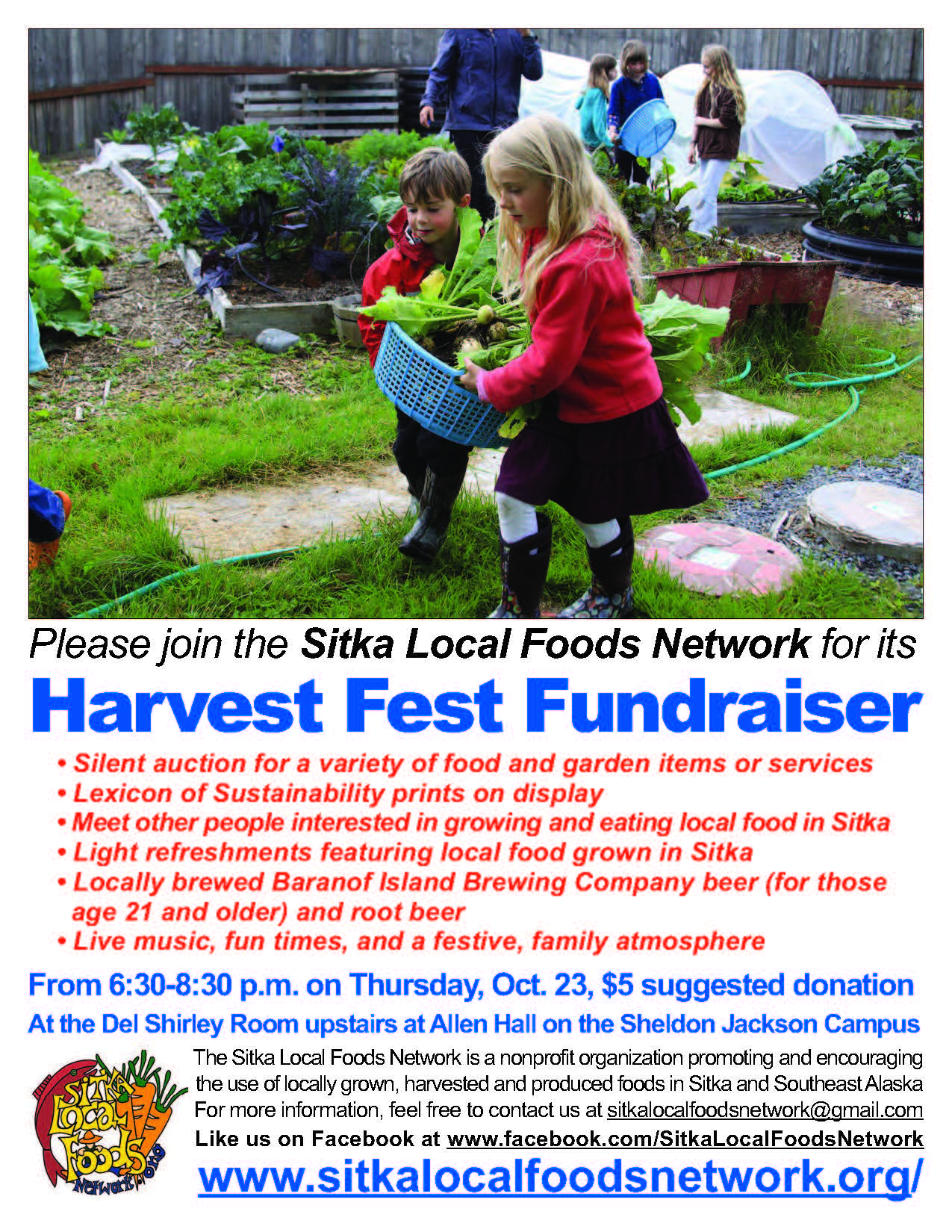
• Sitka Local Foods Network to host Harvest Fest Fundraiser on Thursday, Oct. 23

SLFNHarvestFestFundraiser2014Turnips2LowRez

Help celebrate Food Day by joining the Sitka Local Foods Network as it hosts its inaugural Harvest Fest Fundraiser from 6:30-8:30 p.m. on Thursday, Oct. 23, at the Del Shirley Room upstairs in Allen Hall on the Sheldon Jackson Campus.

This event will feature a silent auction for a variety of local food- and garden-related items and services, including:

  • An apple tree and planting/pruning service,
  • Canning lessons,
  • 4-6 hours of work in your garden,
  • Flats of “Finn Island Farm” vegetable starts for 2015,
  • Customized local foods packages,
  • Chef services,
  • Wine-making supplies/materials/lesson,
  • Edible landscaping consultation,
  • Home-made desserts and other homegrown goodies,
  • Compost,
  • Alaska gardening books, and
  • A tour of and overnight stay at Finn Island Farm for 1-2 people, includes transportation, gourmet dinner and breakfast.

In addition, the Lexicon of Sustainability photos will be on display, we will give a short update on the state of local food in Sitka, there will be live music, light refreshments featuring local food will be served, and we will pour locally brewed beer (for those age 21 and older) and root beer from Baranof Island Brewing Company. This is a family oriented event, and there is a suggested donation of $5.

“The Sitka Local Foods Network board is excited to share the Lexicon of Sustainability photos again with the Sitka community in the context with our Harvest Fest Fundraiser,” said Lisa Sadleir-Hart, president of the Sitka Local Foods Network board of directors. “We’ve received a delicious array of donations from board members and friends for food-focused items and services for a silent auction, plus we will serve light refreshments focused on locally grown foods and hear about the state of Sitka’s foodscape. It’ll be a festive, informative event.”

The Sitka Local Foods Network is a nonprofit organization that promotes and encourages the use of locally grown, harvested and produced foods in Sitka and Southeast Alaska. Money raised at this fundraiser will support the Sitka Farmers Market, community gardens, a community greenhouse, sustainable uses of traditional subsistence foods and education for Sitka gardeners.

For more information, contact the Sitka Local Foods Network at sitkalocalfoodsnetwork@gmail.org.

• Sitka Tribe of Alaska, six other tribes partner to build lab to monitor shellfish biotoxins such as PSP

Cockles-Alaska-Department-of-Health-and-Social-Services

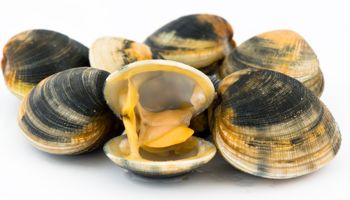
The Sitka Tribe of Alaska (STA) has formed the Southeast Alaska Tribal Toxins (SEATT) partnership with six other Southeast tribes to monitor harmful algal blooms (HABs) in Southeast Alaska. In addition, STA has been awarded a grant to build a lab to monitor biotoxins, which frequently impact clams, mussels, cockles, and other shellfish harvested in the region.

raw-clams-350SEATT will unify Southeast Alaska tribes in monitoring HAB events that pose a human health risk to the subsistence shellfish harvester, such as paralytic shellfish poisoning (PSP). This monitoring effort will provide weekly data on the timing and distribution of HABs, along with measurements of environmental conditions, indicators, and potential mechanisms that trigger HAB events.

In addition to STA, SEATT partners include the Klawock Cooperative Association, Craig Tribal Association, Yakutat Tlingít Tribe, Petersburg Indian Association, Organized Village of Kasaan, and the Central Council of Tlingít and Haida Indian Tribes of Alaska (CCTHITA).

The National Oceanic and Atmospheric Administration (NOAA) Marine Biotoxin Programs from Seattle, Wash., and Charleston, S.C., have committed to provide training through workshops to help develop the SEATT program. The Sitka Tribe of Alaska is hosting a workshop in November for SEATT to provide training on sample collection techniques and data entry. NOAA staff will help facilitate the trainings using previously established protocols used by other HAB monitoring groups throughout nation.

Each SEATT tribe received funding through the Environmental Protection Agency (EPA) Indian General Assistance Program (IGAP) totaling $210,000 for fiscal year 2015, with plans to continue through 2017. The Sitka Tribe of Alaska also received an additional $150,000 to support SEATT with the bi-annual technical workshops and conduct cellular toxin analysis.

Ipe-fig1n addition, the Sitka Tribe of Alaska received $527,000 for the development of a marine biotoxin lab in Sitka from the Administration for Native Americans’ Environmental Regulatory Enhancement program. The lab will provide the SEATT partners the ability to assess their communities’ vulnerability for human health risks following with the same regulatory standards used by other state and federal agencies.

The STA lab will conduct toxin analysis on shellfish using the new Receptor Binding Assay (RBA) technique developed at the NOAA Charleston laboratory. The RBA was just recently accepted as a regulatory method used to determine toxin levels in shellfish by the Interstate Shellfish Sanitation Conference (ISSC) and has been adopted into the National Shellfish Sanitation Program (NSSP).

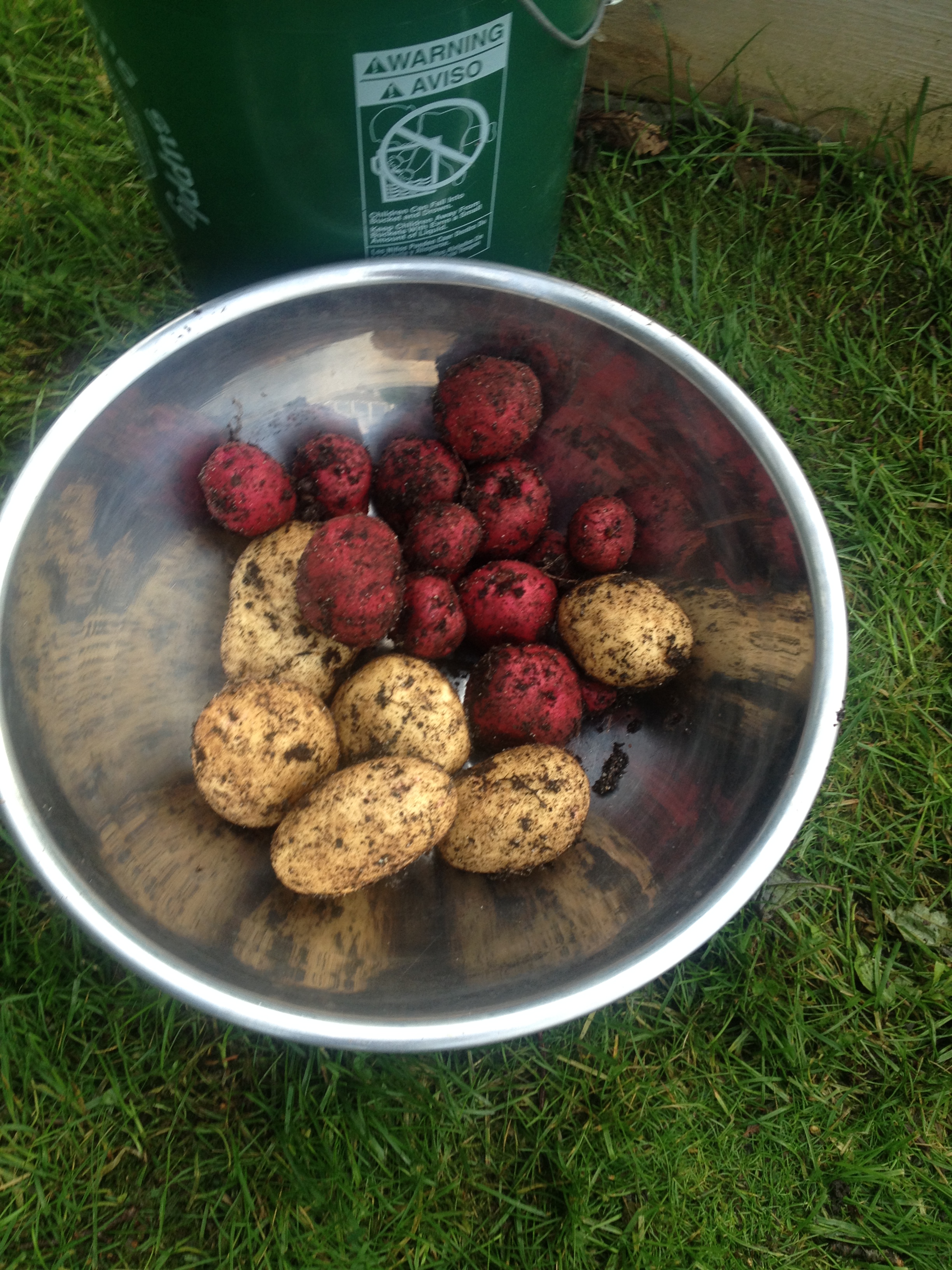
• It’s time to … harvest and store your potatoes

tamispotatoes

Your Sitka Local Foods Network reminds you that it’s time to get out in the garden and harvest and store your potatoes.

The Sitka Local Foods Network education committee encourages people to come and get their hands dirty as you learn how to harvest potatoes. Participants will also learn what they need to do to keep those potatoes fresh and ready to eat from now until May.

Michelle Putz will present a free, short, hands-on potato harvesting and storage workshop at 9 a.m. on Saturday, Oct. 11, at 131 Shelikof Way. The class is open to everyone.

The Sitka Local Foods Network education committee has been hosting a series of “It’s time to …” workshops this year designed to help local residents learn about various aspects of vegetable gardening and fruit growing. Many of these classes will be informal get-togethers at various gardens around town. Please watch our website, Facebook pageFacebook group, and local news media for information about upcoming classes. If you have an “It’s time to …” workshop you’d like to teach, contact Michelle Putz at 747-2708.

• Sitka Local Foods Network to host another free late-harvest/winter-garden-preparation class


IMG_0751

Late harvests and preparing your vegetable garden for winter is the subject of the fifth class in the 2014 Sitka Local Foods Network education committee’s garden mentoring program.

The public is invited to join one of our current garden-mentoring families to learn about harvesting and storing potatoes, harvesting lettuce and kale into fall and winter, and preparing vegetable gardens for winter (and spring).

This free class will be held at 4:30 p.m. on Monday, Oct. 6, at Tami O’Neill’s house, 2309 Merganser Dr. The class is open to all first-time gardeners in Sitka.

Families that might be interested in participating in the garden mentor program are encouraged to come and learn about 2015 garden mentoring opportunities.

For more information, contact Michelle Putz at 747-2708 ormichelleputzfood@yahoo.com.

• Sitka Local Foods Network board thanks everyone for their Pick.Click.Give. donations

Lovalaska FB Square PhotoGrid Tag (1)

Today (Thursday, Oct. 2) Alaskans began receiving their Alaska Permanent Fund Dividend checks, which are $1,884 this year. Recently, many Alaskans have chosen to share that wealth with state and local nonprofits through the Pick.Click.Give. program.

Your Sitka Local Foods Network joined the Pick.Click.Give. program this year, and we’d like to thank the 56 donors who pledged $2,900 to help us promote and encourage the use of locally grown, harvested and produced foods in Sitka and Southeast Alaska. We thank you for supporting the Sitka Farmers Market, community gardens, a community greenhouse, sustainable uses of traditional subsistence foods and education for Sitka gardeners. You can learn more about your Sitka Local Foods Network at http://www.sitkalocalfoodsnetwork.org/.

You also can support us by attending the Sitka Local Foods Network Harvest Fest fundraiser from 6:30-8:30 p.m. on Thursday, Oct. 23, at the Del Shirley Room upstairs in Allen Hall on the Sheldon Jackson Campus. This event will feature a silent auction for a variety of food- and garden-related items and services. In addition, the Lexicon of Sustainability photos will be on display, we will give a short update on the state of local food in Sitka, there will be live music, light refreshments featuring local food will be served, and we will pour locally brewed beer (for those age 21 and older) and root beer from Baranof Island Brewing Company. This is a family oriented event, and there is a suggested donation of $5.

Again, we thank you for your support,


The Sitka Local Foods Network board of directors

President Lisa Sadleir-Hart, Vice President Michelle Putz, Secretary Beth Kindig, Treasurer Maybelle Filler, Webmaster Charles Bingham, Milt Fusselman, Matthew Jackson (and two vacant seats)

• UAF Cooperative Extension Service to give presentation on preparing food in an emergency

OWL Happy Health Hour Sept. 29

Thursday’s 6.2-magnitude earthquake just north of Anchorage was a good reminder about the need to be prepared, especially in Alaska when we’re so isolated from the rest of the country. In honor of September being National Preparedness Month, the University of Alaska Fairbanks Cooperative Extension Service‘s Happy Health Hour talk this month will be about how to prepare food during a power failure.

The talk takes place from 5:30-6:30 p.m. on Monday, Sept. 29 (Happy Health Hour talks are the fourth Monday of every month) and is available at libraries statewide on the OWL Network. In Sitka, these talks are accessed at Kettleson Memorial Library, which right now is temporarily located in the old Stratton Library building on the Sheldon Jackson Campus.

UAF Cooperative Extension Service agent Linda Tannehill of Kenai will explain what to consider when storing food for emergencies and what food preparation options are available during a power failure. During a power failure, cooking and eating habits must change to fit the situation. We’ll cover what to consider when storing food for emergencies and what food preparation options are available during a power failure.

During an emergency — such as an earthquake, tsunami, or winter weather — the power can go out for hours, if not days or weeks. We also might lose our transportation infrastructure, meaning it could take some time to get a barge or airplane to town with emergency supplies. Individuals, families, and businesses should have spare food, medicine, portable stove and fuel, extra blankets, etc., to weather the emergency. Click this link to learn how to pack a home emergency kit. More emergency preparedness resources are available on the UAF Cooperative Extension Service website.

To learn more about the Happy Health Hour and this presentation, contact the UAF Cooperative Extension Service at 1-877-520-5211 or go to http://www.uaf.edu/ces/. You also can call Jasmine Shaw at the UAF Cooperative Extension Service Sitka District Office at 747-9440 for more information.

• It’s time to … get out and plant your fall garlic crop

A group of kids harvests garlic during an Aug. 12, 2011, work party at St. Peter's Fellowship Farm.

A group of kids harvests garlic during an Aug. 12, 2011, work party at St. Peter’s Fellowship Farm.

GarlicScapes

Garlic scapes for sale at the Sitka Farmers Market

This is the time when most people are thinking about making their final harvests and then preparing the garden for the winter. This also is the perfect time to plant garlic in Alaska, which does best when it is planted in late September to early October and has a chance to be in the ground over the winter.

Sitka gardener Linda Wilson of Sea View Garden and the Sitka Local Foods Network education committee will host a garlic planting class at 1 p.m. on Sunday, Oct. 5, at 3509 Halibut Point Road. Please note this is an updated date, time, and location for a previously announced class that needed to be rescheduled.

During the class you’ll learn about the two main types of garlic — hard-neck garlic, which grows a flower stalk during the summer, and soft-neck garlic, which doesn’t flower — and common varieties grown in Alaska (German white, Nootka rose, elephant, etc.). You also will learn why even if you don’t plant your garlic in the fall you still need to order your garlic bulbs now and store them in a cool place over the winter.

The Sitka Local Foods Network education committee has been hosting a series of “It’s time to …” workshops this year designed to help local residents learn about various aspects of vegetable gardening and fruit growing. Many of these classes will be informal get-togethers at various gardens around town. Please watch our website, Facebook pageFacebook group, and local news media for information about upcoming classes. If you have an “It’s time to …” workshop you’d like to teach, contact Michelle Putz at 747-2708.