• Sitka Local Foods Network to host Let’s Grow Sitka garden education event and Shane Smith presentation

2013 LGS Flier-Feb 11-13CBEDITMark your calendars as the Sitka Local Foods Network will host two big garden events Saturday and Sunday, March 9-10, in Sitka.

The first event is a presentation by Shane Smith of the Cheyenne (Wyo.) Botanic Gardens from 11 a.m. until 12:30 p.m. on Saturday, March 9,  in Room 229 of the University of Alaska Southeast Sitka Campus. The second event is the fifth annual Let’s Grow Sitka garden education event from noon until 3 p.m. on Sunday, March 10, at the Alaska Native Brotherhood Founders Hall, 235 Katlian (don’t forget to set your clocks ahead an hour Saturday night).

Shane-SmithThe Sitka Local Foods Network is excited to bring Shane Smith to town to discuss gardens and greenhouses. Shane is the founder of the Cheyenne (Wyo.) Botanic Gardens and has been its director since 1977. Shane is the author of the Greenhouse Gardener’s Companion, and he will be signing copies of his book. Shane received the American Horticulture Society’s 2012 Great American Gardener Award.

Shane also will have a booth at Sunday’s Let’s Grow Sitka event, which is an annual event designed to get Sitka residents excited about the upcoming garden season. This annual event brings together local garden supply stores, local gardeners, landscapers and anybody who is interested in learning how to grow food and/or flowers.

There will be a wide variety of individuals and businesses with booths for the event, with some booths providing gardening information geared toward and others selling gardening supplies. Lunch will be available for purchase. There also will be a chance to learn from certified Master Gardeners, a chance to learn about greenhouses and high tunnels, an opportunity to buy seeds and seed potatoes, and there’s a scavenger hunt for the kids.

For more information, contact Linda Wilson at 747-3096 (evenings and weekends) or Cathy Lieser at 1-907-978-2572. Table space still may be available for people wanting to provide information about different types of gardening or gardening products/services available in Sitka.

The Sitka Local Foods Network thanks the City and Borough of Sitka, Shee Atika Corp., and the SouthEast Alaska Regional Health Consortium (SEARHC) Diabetes Programs for their help in making these events possible.

• Sitka office of UAF Cooperative Extension Service to host Master Gardener class

Bob Gorman, Extension Agent of the Sitka office of the University of Alaska Fairbanks Cooperative Extension Service, shows some germinating seed starts during a free garden workshop on March 11, 2009.

Bob Gorman, Extension Agent of the Sitka office of the University of Alaska Fairbanks Cooperative Extension Service, shows some germinating seed starts during a free garden workshop on March 11, 2009.

The Sitka office of the University of Alaska Fairbanks Cooperative Extension Service will host a Master Gardener class in Sitka starting on Thursday, March 7. This will be the last Master Gardener certification course offered in Sitka until at least 2015.

The course is a basic horticulture class covering such topics as soil and pest management, food gardening, greenhouses and season extenders, and plant propagation.

The purpose of the service learning class is to train community people who will provide 40 hours of Master Gardener-related community service in Sitka.

MG March 2013 SitkaThe class costs $150 including the manual, handouts, supplies, and instruction. The class consists of lectures, demonstrations, reading, laboratory exercises, videos and DVD’s. The instructor is Sitka-based UAF Cooperative Extension Service Agent Bob Gorman.

Preregistration is necessary. To register for the class go to http://bit.ly/ces-workshops or call 907-747-9440.

The class begins at 6:30 p.m. on Thursday, March 7,  and finishes April 18 with a final exam. Instruction is on six Saturdays and four Thursdays. Part of the Alaska Master Gardener and Southeast Alaska Master Gardener programs include public service, where Master Gardener students help with community gardening projects.

Students should be high school graduates, GED or similar education level. Home school and high school students are welcome.

For questions about the class or course content, contact the instructor at 907-747-9440.

• Sitka Master Gardener Class Syllabus, Spring 2013

• Sitka Master Gardener class press release

• UAF Cooperative Extension Service flier for Master Gardener class in Sitka

• Sitka residents say ‘No’ to genetically modified salmon during Feb. 9 rally

ProtestersOutside

Size comparison of an AquAdvantage® Salmon (background) vs. a non-transgenic Atlantic salmon sibling (foreground) of the same age. (CREDIT AquaBounty)

Size comparison of an AquAdvantage® Salmon (background) vs. a non-transgenic Atlantic salmon sibling (foreground) of the same age. (CREDIT AquaBounty)

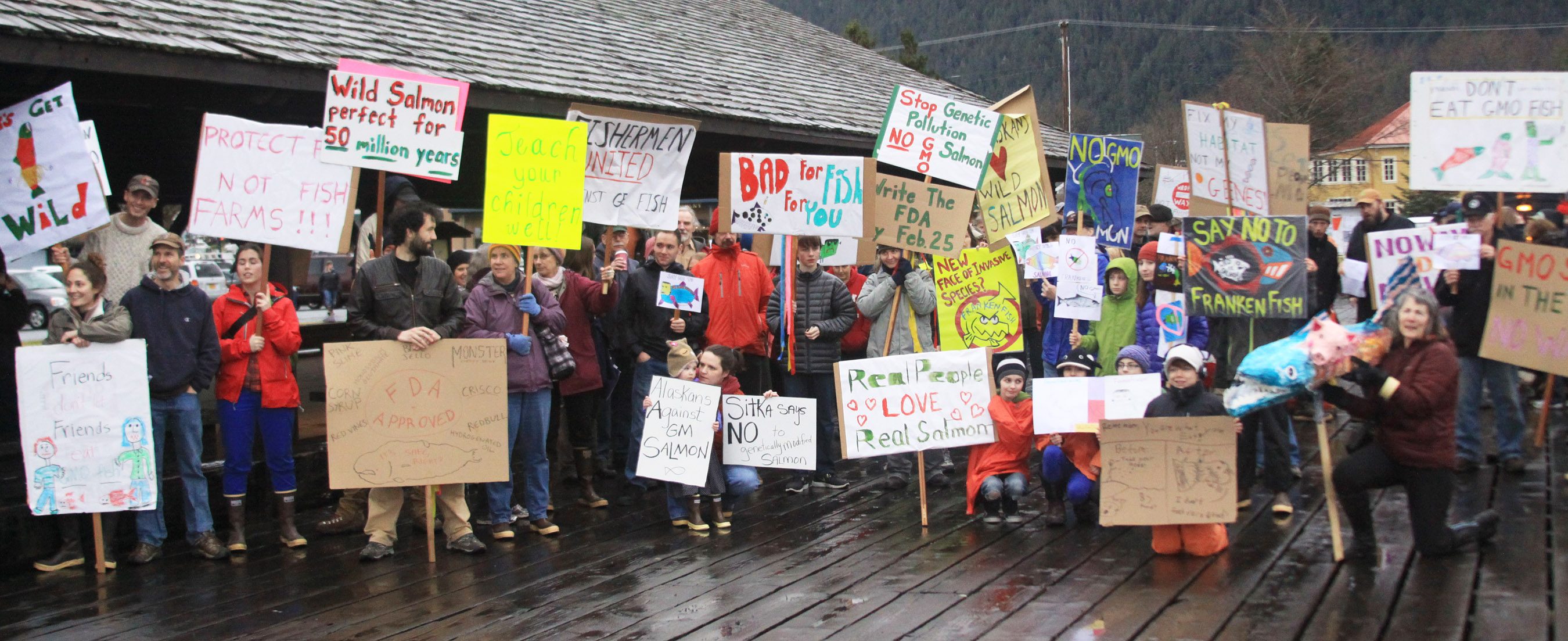
Between 100 and 150 Sitka residents braved the wind and rain on Saturday, Feb. 9, at the Crescent Harbor Shelter to protest the possible U.S. Food and Drug Administration (FDA) approval of genetically modified salmon (aka, GMO or GE salmon, or Frankenfish).

The rally (click here to listen to rally coverage from KCAW-Raven Radio) was in protest of a genetically engineered salmon from the Massachusetts company AquaBounty Technologies, called the AquAdvantage® Salmon. The GMO salmon starts with an Atlantic salmon commonly used in fish farms, but adds genes from a Pacific king (chinook) salmon to promote growth and genes from an eel-like fish called an ocean pout that grows all year round instead of seasonally. According to AquaBounty, all of the commercialized fish will be female and sterile, and the fish are designed to be raised in fresh-water pens or tanks on land instead of the usual salt-water pens where most farmed Atlantic salmon are raised. AquaBounty promotes the fish as a faster-growing farmed salmon that takes half the time to reach maturity and be sent to market. To learn more about GMO salmon, read our post from 2010.

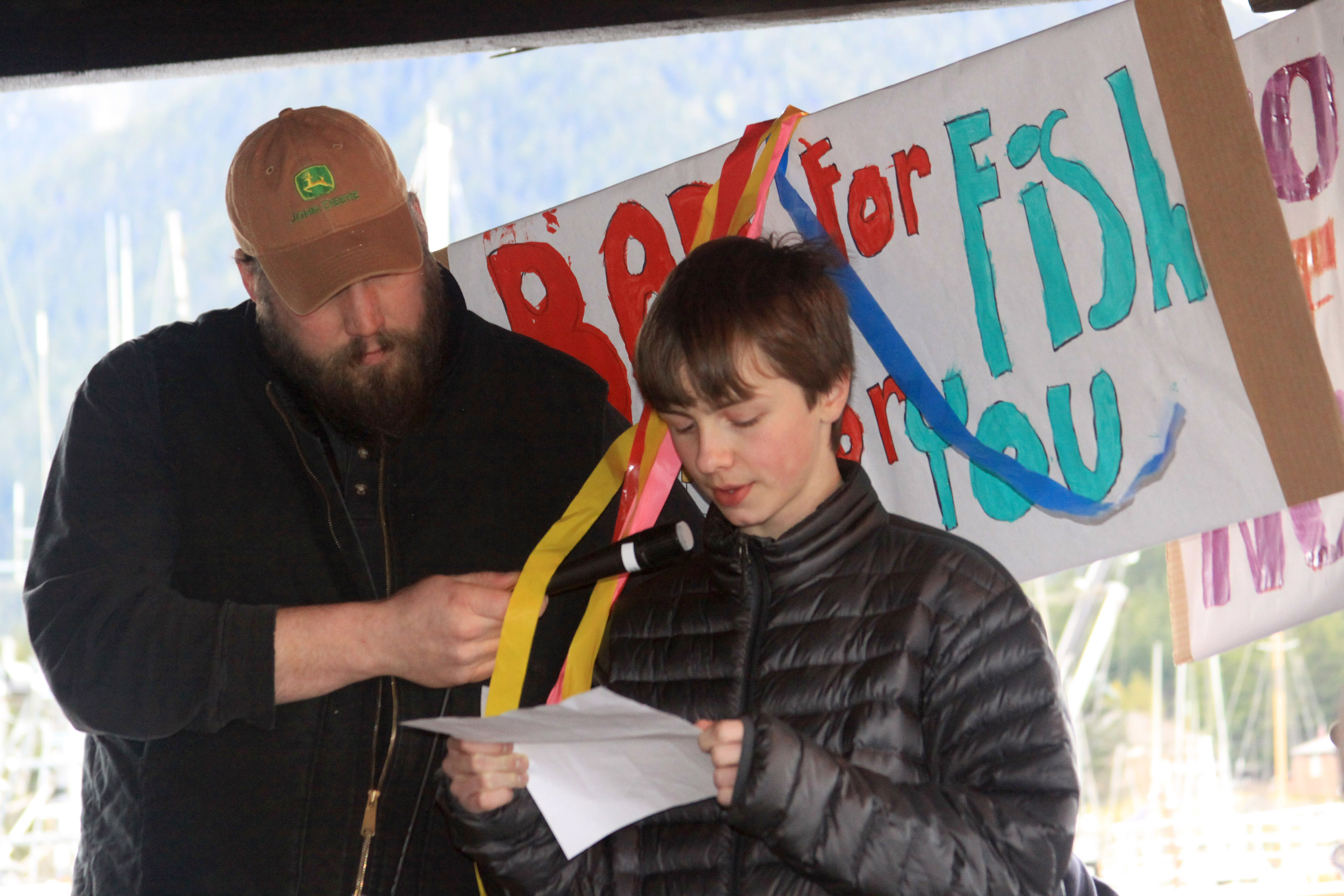
PaulRiouxSignsPaul Rioux — the Sitka resident who organized the rally with the help of local fishing groups, the Sitka Conservation Society, and others — said fishermen are concerned about what happens if these GMO salmon escape from pens. He noted that while AquaBounty said the fish will be sterile, other scientists said as many as 5 percent could be fertile, and that’s enough so that the GMO salmon as an invasive species could replace wild Pacific salmon within 40 salmon generations. DavidWilcoxSpeaksSignsDavid Wilcox, a 14-year-old Sitka resident who plans to run across the country to protest GMO foods, spoke for the other residents who said they were concerned with genetically engineered fish in general, and they worried this fish might go to market without being labeled as GMO salmon. (Click here to listen to Rioux, Wilcox and Ray Friedlander of the Sitka Conservation Society discuss why they held the rally during a Feb. 8 Morning Edition interview on KCAW-Raven Radio.)

SayNoToFrankenfishThe FDA, which has been looking at GMO salmon for more than a decade (AquaBounty started work on the fish in 1989), announced in December it planned to approve the genetically engineered fish, just in time for the holidays. At the same time, the FDA finally released environmental impact research papers it was supposed to have released in May. The FDA announcement also started a 60-day public comment period that was supposed to end on Feb. 25. On Feb. 13, the FDA extended the comment period until April 26. Sitka residents are encouraged to go to Regulations.gov and search for “GE salmon” (not “GMO”) to comment on the regulations before the April 26 deadline.

PatKehoeFrankenfishAlaska’s Congressional delegation agrees on few items, but Sen. Mark Begich, Sen. Lisa Murkowski and Rep. Don Young have been united for a couple of years in their efforts to stop Frankenfish. Sen. Begich this week introduced two bills banning GMO salmon. Last May, Sen. Murkowski introduced an amendment (that failed 50-46) requiring more study of GMO salmon by the National Oceanic and Atmospheric Agency (NOAA). In the House, Rep. Young has been one of the most vocal opponents of Frankenfish and in February he introduced a bill requiring GMO salmon be labeled. In the Alaska House of Representatives, Rep. Geran Tarr (D-Anchorage) and Rep. Scott Kawasaki (D-Fairbanks) introduced an anti-Frankenfish bill that passed out of the House Fisheries Committee this week.

This slideshow requires JavaScript.

• Sitka Local Foods Network seeks manager and co-manager for 2013 Sitka Farmers Markets

SitkaFarmersMarketSignThe Sitka Local Foods Network is looking for a manager and co-manager to coordinate the 2013 Sitka Farmers Markets this summer. These are contract positions, and the manager and co-manager (who reports to the manager) receive small stipends for their work organizing the six scheduled farmers markets this summer.

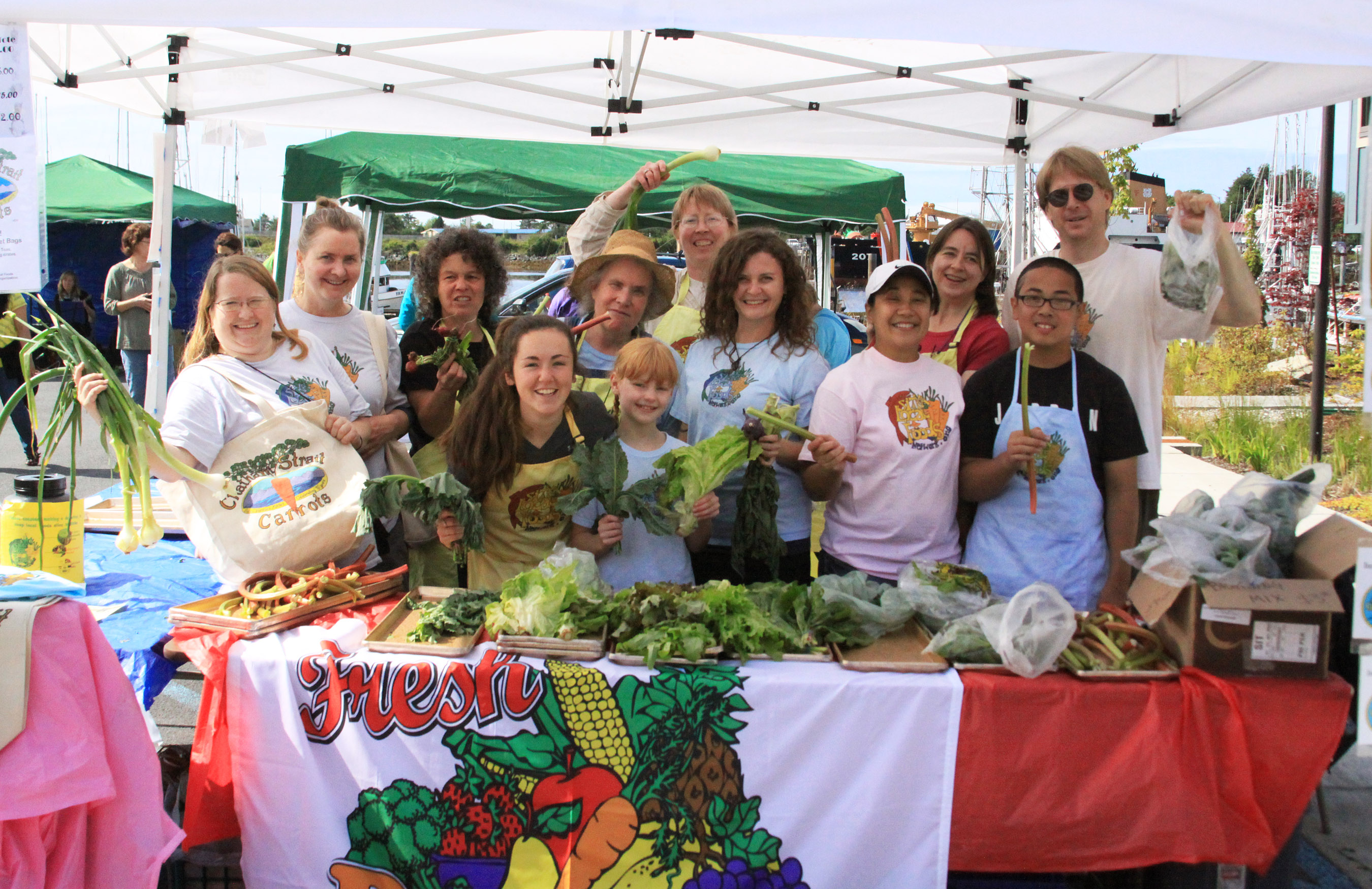
SLFNGroupwLindaThis is the sixth year of operation for the Sitka Farmers Market, which features six markets from 10 a.m. to 2 p.m. every other Saturday from July through September at the Alaska Native Brotherhood Hall (this year’s dates are TBA pending the release of the Chelan Produce Co. schedule for when its van is in Sitka, the Sitka Farmers Market alternates weekends with Chelan during the summer). The farmers markets feature booths from local farmers/gardeners, local fishermen, and artisans and craftspeople. These events are great Sitka gathering places, and we promote local foods and other local goods at them.

A detailed description of the market manager duties can be found at the link below. For more information or to submit applications, contact Maybelle Filler at 747-2761 or 738-2761, or e-mail the Sitka Local Foods Network Board of Directors at sitkalocalfoodsnetwork@gmail.com. The market manager of the Sitka Farmers Market reports to the Sitka Local Foods Network Board of Directors.

• Description of duties for market manager of the Sitka Farmers Market Manager (2013)

• Sitka Local Foods Network recruiting two new board members and other volunteers

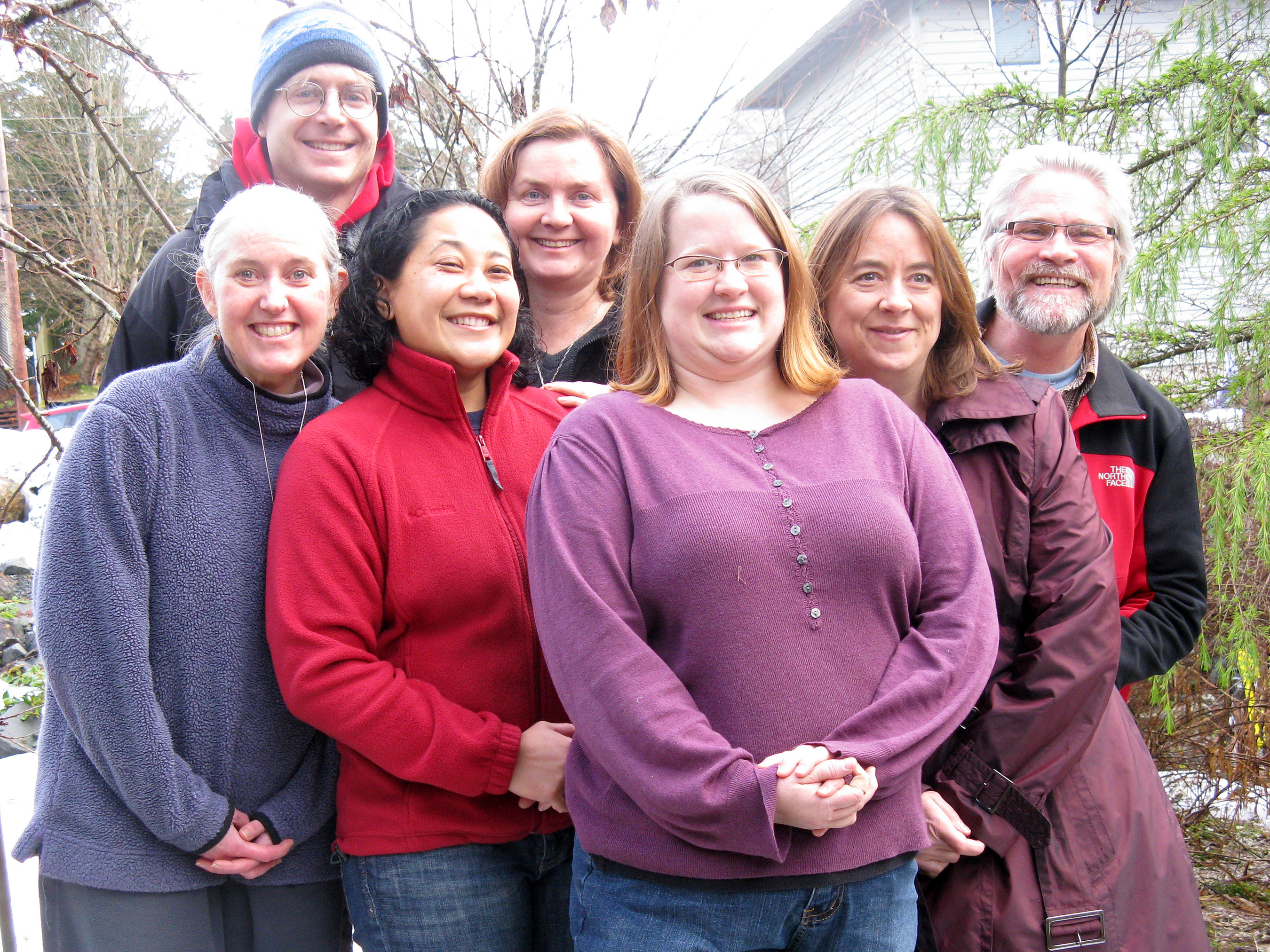
The 2011-12 Sitka Local Foods Network Board of Directors at its winter board retreat on Dec. 3, 2011. From left are Lisa Sadleir-Hart, Doug Osborne, Maybelle Filler, Cathy Lieser, Robin Grewe, Linda Wilson and Kerry MacLane. Not pictured is Tom Crane.

The 2011-12 Sitka Local Foods Network Board of Directors at its winter board retreat on Dec. 3, 2011. From left are Lisa Sadleir-Hart, Doug Osborne, Maybelle Filler, Cathy Lieser, Robin Grewe, Linda Wilson and Kerry MacLane. Not pictured is Tom Crane.

Are you concerned about increasing access to local food for all Sitka residents? Are you concerned about rising food prices in Sitka, or do you want to advocate for more community gardens in Sitka?

Then consider joining the board of directors for the Sitka Local Foods Network for the 2012-13 fiscal year. Two board members are needed — one to start immediately and the other to start in March when one of the current board members moves out of town.

Board members help direct the Sitka Local Foods Network, a non-profit that promotes the harvest and use of local food in Sitka. In addition to setting the focus of the group, board members also help on a wide variety of projects such as the Sitka Farmers Market, St. Peter’s Fellowship Farm, Blatchley Community Garden, Let’s Grow Sitka, the Sick-A-Waste compost project, the Sitka Community Food Assessment project, Sitka Fish-To-Schools, other school education projects and more.

To apply for a spot on the board, please fill out the attached application and submit it to sitkalocalfoodsnetwork@gmail.org. For more information, contact Lisa Sadleir-Hart at 747-5985.

We also are looking to increase our pool of volunteers who will help out during the various projects hosted by the network each year (no formal application needed, just send us your name/contact info and what types of projects you enjoy).

The next Sitka Local Foods Network board meeting is at 6:30 p.m. on Tuesday, Feb. 5, at the Sitka Unitarian Universalists Fellowship Hall (408 Marine St.). The board meets from 6:30-8 p.m. on the first Tuesday of each month, except during the summer when board members are busy working with the Sitka Farmers Market and St. Peter’s Fellowship Farm communal garden.

• Sitka Local Foods Network board of directors application

• Sitka Food Co-op hosts 2013 membership drive in January

SFC_membership_flyerThe Sitka Food Co-op is hosting a 2013 membership drive in January. The group, which helps Sitka residents pool their resources to order organic and bulk food not readily available in Sitka, has a new website, http://sitkafoodcoop.org/ (note, no www at the start of the link) where people can learn more about the co-operative, which also supports buying local and regionally produced foods.

By joining the co-op, Sitka residents can buy at discounted rates. Non-members also can order, but pay a higher rate. Click here to learn more about how the co-op orders food and what the costs are.

The co-op typically sends in an order to United Natural Foods Inc. (UNFI) on the second Sunday of each month (there will be no February order, so the next order is due by March 10, order page requires free log-in/password), and the food arrives a week later and is distributed at Grace Harbor Church the next Monday (from 4-6 p.m. on March 18 for the next order). The group also orders from Blue Valley Meats (next order deadline is March 10).

Co-op memberships are available for individuals, families and businesses in Sitka. The fee is $20 for one calendar year (all memberships expire on Dec. 31, regardless of when in the year they are purchased). Members also can vote for the board of directors and attend board meetings.

For more information, send an e-mail to sitkafoodcoop@gmail.com.

• Lori Adams discusses ‘The End’ in her last Daily Sitka Sentinel garden column

LoriAdamsDownToEarthUPickGarden(Lori Adams, who owns Down-To-Earth U-Pick Garden and is a frequent vendor at the Sitka Farmers Market, will be wrote a regular garden column in the Daily Sitka Sentinel this summer and fall. The Sentinel is allowing us to reprint the columns on this site after they first appear in the newspaper. This column appeared on Page 4 of the Wednesday, Dec. 5, 2012, edition of the Daily Sitka Sentinel.)

GARDENING IN SITKA

By Lori Adams

THE END

The ground is frozen now, but at times throughout the winter and spring things will thaw out. So there is still time to tinker in the garden before planting time.  Once it thaws you can gather and apply seaweed, pull weeds, remove rocks and salmonberry bushes, sterilize your greenhouse or sun room, etc. It can be hard to make yourself get out there, but once you do it’s not so bad.

Those delightful seed catalogs should start showing up in the mail pretty soon, so now is a good time to plan for next year. Try to connect with a gardening friend some time before spring arrives and have them help you come up with a realistic plan and suggestions for reliable seed varieties to invest in. I try to get together with my gardening friends at least once a year and it is SO helpful.  Networking is important.

I think I pretty much covered the basics with the “Gardening In Sitka” column, so the time has come to put away my pen.  You now have enough information to get started growing a successful vegetable garden.

Quite a few people have suggested that I compile all of the printed columns into a book and I think it is a good idea, so I’m in the planning stages of that project right now.  My goal is to have the books ready to purchase by March 2013 in time for the annual “Let’s Grow Sitka” event. They will be edited and revised, with room for your own notes, and a yearly planner calendar will be included.

The “Let’s Grow Sitka” event, usually held on a Sunday in mid-March, is a fantastic resource for new and old gardeners.  There are informational booths, presentations and demonstrations, things to purchase and experienced gardeners are available to give you answers to any questions you might have.  It’s a MUST-ATTEND event for anyone interested in gardening in Sitka.

Another great resource you should check out is the Sitka Local Foods Network’s website at http://www.sitkalocalfoodsnetwork.org.  It has notices for upcoming gardening events and many, many links to other informative websites.

Thank you for all of the positive feedback you’ve given me on the column.  You made it so rewarding.  And to be truthful, I learned so much by doing it.  I had to research the “why” and “how” to get my tips into readable form and ended up learning more myself.

Feel free to give me a call if you have questions and be sure to come out to the Down-To-Earth U-Pick Garden next summer to get a tour.  Happy gardening and be sure to BUY LOCAL!

Brought to you by Down-To-Earth U-Pick Garden

2103 Sawmill Creek Road

Open June-August / Monday to Saturday, 11 a.m. to 6 p.m.

747-6108 or 738-2241

http://downtoearthupick.blogspot.com/

• Lori Adams says a word about growing beans in her latest Daily Sitka Sentinel garden column

LoriAdamsDownToEarthUPickGarden(Lori Adams, who owns Down-To-Earth U-Pick Garden and is a frequent vendor at the Sitka Farmers Market, will be writing a regular garden column in the Daily Sitka Sentinel this summer. The Sentinel is allowing us to reprint the columns on this site after they first appear in the newspaper. This column appeared on Page 4 of the Wednesday, Nov. 28, 2012, edition of the Daily Sitka Sentinel.)

GARDENING IN SITKA

By Lori Adams

A WORD ABOUT GROWING BEANS

In general, Sitka is just not bean-growing country, but there is one bean that actually does really well here — the fava bean (also called the broad bean).  Up until a few years ago I had never even heard of fava beans, but had read that they’re grown in England so I figured they would grow here too and gave them a try.  The results were excellent.

Fava beans are from the legume family. As a rule the members of this family grow pods with seeds in them; peas, beans, alfalfa, clover and peanuts are the most commonly known legumes.  Legumes can do something that other plants can do — by working in a cooperative partnership with the Rhizobia bacteria found in the soil they can pull nitrogen right out of the air.

Nodules form on the roots in this nitrogen-fixing process and the plants store nitrogen for pod formation. When you plant beans in a garden bed for the first time there is a good chance that the proper strain of this bacteria will not be present in the soil, so it is important to “inoculate” the seeds.  Inoculant bacteria can be purchased in powder form and sprinkled onto the seeds at planting time.

Before planting fava beans prep the soil with plenty of organic material that is not too rich with nitrogen (cured compost or beach mulch) and lime (seashell sand) and prepare some type of support to put in place to keep mature plants off of the ground.  I used wire tomato cages. Fava bean plants get about five feet tall and although they are fairly sturdy they can eventually get knocked down by the wind and rain.

You can start seeds indoors mid-March and transplant them outdoors mid-April or just sow them directly outdoors mid-April. Either way it’s best to dampen the seeds and sprinkle them with inoculant before planting.  The seeds are quite large and should be planted an inch deep. Final spacing in the garden should be at least 12 inches apart.  Floating row cover is not necessary but can speed up maturity.

Fava beans bloom just like peas do with beautiful blooms similar to lupine flowers.  These flowers are self pollinating. Pods soon appear and can be picked while very small and cooked and eaten whole like snap peas. Once the pods get a little size to them they are wooly and fibrous and unpleasant to eat whole, so let them get to be full sized before harvesting them for the beans. Full-sized pods contain anywhere from 1-5 beans in them.

Cooking fava beans is rather labor intensive but worth it.  Shuck the beans and discard the pods, blanch the beans and then “pop” each inner bean out of its waxy covering.  The inner bean will fall out in two halves and can be eaten cold or hot. As with other vegetables, it is good to harvest the mature pods regularly so the plant will continue to produce more pods. Besides, the longer pods are left on the vine the tougher the beans will be.

I think any attempt to leave beans on the vine in hopes of harvesting them as shelling beans is futile as they will probably just mold.  I have read that the tips of the plants themselves are also edible as a leafy green but I have never tried them. A word of warning: some people of Mediterranean descent are allergic to fava beans.

I used to grow Fava Beans in the u-pick garden but very few of my customers were familiar with them so I had trouble selling them.  Rather than taking up valuable garden space growing something my customers don’t want I decided to concentrate on growing vegetables that they do want.

It is possible to grow green beans here but very, very difficult.  The plants simply do not like to get wet and slugs just love, love, love them. If grown outside they MUST be protected from the rain, but if enclosed with a covering they are very likely to rot, so any cover needs to have the sides open for ventilation.  I have had very little success growing green beans, but they are so delicious fresh from the vine that I just keep beating my head against the wall trying.

Brought to you by Down-To-Earth U-Pick Garden

2103 Sawmill Creek Road

Open June-August / Monday to Saturday, 11 a.m. to 6 p.m.

747-6108 or 738-2241

http://downtoearthupick.blogspot.com/

• Lori Adams discusses everything she’s learned about growing strawberries in her latest Daily Sitka Sentinel garden column

LoriAdamsDownToEarthUPickGarden(Lori Adams, who owns Down-To-Earth U-Pick Garden and is a frequent vendor at the Sitka Farmers Market, will be writing a regular garden column in the Daily Sitka Sentinel this summer. The Sentinel is allowing us to reprint the columns on this site after they first appear in the newspaper. This column appeared on Page 9 of the Friday, Nov. 23, 2012, edition of the Daily Sitka Sentinel.)

GARDENING IN SITKA

By Lori Adams

EVERYTHING I’VE LEARNED ABOUT GROWING STRAWBERRIES

Strawberries do well here in Sitka, but they come with some challenges.  I think one of the key secrets to success is location, location, location.

Strawberries are a perennial crop that come in two basic types:

  • JUNE BEARING/SHORT-DAY cultivars that produce a heavy crop over a short period in the summer, or
  • EVER BEARING/DAY NEUTRAL cultivars that produce a smaller crop that is stretched over a longer season.

Within these two types there are many different varieties.  Most strawberries that are grown here in Sitka have been passed down generation after generation and originated from early breeding work at the USDA Sitka Experimental Station during the 1920s.  The berries from these plants are small, pale in color and not very sweet, but they make up for it by being very hearty and producing large crops. In Sitka it is very difficult to grow large, beautiful red berries with the “true strawberry” flavor.  Besides the two basic types there are also alpine and specialty varieties.

Strawberries can be grown in containers, rows or patches.  Most Sitkans have patches because of the way the plants grow and multiply, but your production will go up if you have rows and take the effort to control plant growth.  Containers can be helpful in keeping the fruit off the ground where it will rot or be eaten by slugs.

The best strawberries I have tasted here in Sitka were grown in rock walls. I believe this is because of the heat retention of the stones, the lack of slugs and soil, and the excellent drainage a rock wall provides.  The worst place to grow strawberries is in the shade, next to brushy slug-infested areas or areas with poor drainage.

Strawberry plants can be grown from seeds or “runners.”  Runners look like a stem/root that grows from the mother plant.  This runner grows about a foot long and then produces a baby strawberry plant that will take root and start to grow on its own.  To harvest runners simply cut rooting baby plants free from the mother plant and plant on their own.

The life expectancy of any one plant is about six years with only the first third years being highly productive, so the best plan is to grow a row of plants and consistently remove every single runner for two years.  On the third year allow no more than five runners to grow on each plan,t then harvest the runners mid-summer and plant them in a different bed being sure to diligently remove any runners that they themselves might produce.  At the end of the season just tear out the old bed.  Repeat.

Strawberries like soil that is full of organic material that is low in nitrogen.  If the nitrogen level is too high then you will end up with fabulous greens that will make your neighbors jealous but very few berries, and the berries you do get will not be able to ripen because of the shade of the foliage.

Berries require lots of potassium (seaweed) and only a trace of lime (seashell sand) to thrive.  The best way to apply seaweed is to mulch monthly with a thin layer around plants being sure not to cover up the growing center, or the “crown” of the plant.  To prepare a new bed just load it up with seaweed in the Spring, let it break down and then till it into the soil before planting time.

A strawberry plant has tough gnarly roots that grow from the crown.  When planting, it is critical that the crown is right at ground level — if it is buried it will definitely rot and die and if it is planted too high it will dry out and die.  Dig a shallow hole with a cone of soil in the middle, set the crown on top of the cone, spread the roots out like a spider in the hole and then cover with dirt.  Firm the soil around the plant being sure to position the crown properly.

Floating row cover can be helpful but it is critical that you remove it when the plants start to flower.  In order for pollination to occur the blooms must be accessible to bees and other natural pollinators.

Once strawberries start to ripen it is important to pick them almost every day because they are very perishable and easily susceptible to rot and slugs.  Try to leave their “caps” on, lay them in a shallow container rather than stacking them in a deep bowl, and do not wash them until right before it’s time to eat them.

In the fall you can mulch the bed heavily with seaweed being sure not to bury the plants themselves and then spread straw over the entire bed, plants and all, to protect them from frost heaves.

On a final note, there doesn’t seem to be anyone growing a large enough volume of strawberries to sell them.  If you have some extra garden space or an empty greenhouse, please consider growing strawberries and selling them at the Sitka Farmers Market. We’d all love you for it.

Brought to you by Down-To-Earth U-Pick Garden

2103 Sawmill Creek Road

Open June-August / Monday to Saturday, 11 a.m. to 6 p.m.

747-6108 or 738-2241

http://downtoearthupick.blogspot.com/

• Sitka Conservation Society to host annual wild foods potluck on Nov. 29

The Sitka Conservation Society will host its annual wild foods potluck from 5-7:30 p.m. on Thursday, Nov. 29, at Harrigan Centennial Hall. Doors open at 5 p.m. so people can bring in their dishes, and food will be served at 5:30 p.m.

This free, family friendly, alcohol-free event allows Sitka residents to share their favorite locally foraged or harvested dishes with their neighbors. Residents bring in dishes featuring fish, wild game, seaweed, berries and other tasty treats highlighting wild food from around Sitka. Everybody is encouraed to bring in your favorite dishes featuring wild food, and if you can’t bring in a dish with wild food you can use wild plants to garnish dishes made from store-bought food.

The theme of this year’s wild foods potluck is “Restoration in the Sitka Community Use Area.” There will be live music, prizes awarded to the best wild food dishes (with categories such as “most wild”), and all kinds of other fun, stories and community.

For more information, go to http://www.sitkawild.org/events/ for a full schedule and list of contest categories. You also can call Ray Friedlander with the Sitka Conservation Society at 747-7509.