• As you build your garden, don’t forget to plant a row for the hungry

As you start to plan your garden for this spring and summer, don’t forget to Plant A Row For The Hungry. The Plant A Row For The Hungry program (also known as Plant A Row or PAR) is a national campaign by the Garden Writers Association of America that got its start in Alaska.

In the cold winter of 1994, Anchorage Daily News garden columnist and former Garden Writers Association of America President Jeff Lowenfels was returning to his hotel after a Washington, D.C., event when he was approached by a homeless person who asked for some money to buy food. Lowenfels said Washington, D.C., had signs saying, “Don’t give money to panhandlers,” so he shook his head and kept on walking. But the man’s reply, “I really am homeless and I really am hungry. You can come with me and watch me eat,” stayed with Lowenfels for the rest of his trip.

Jeff Lowenfels

Jeff Lowenfels

The encounter continued to bother Lowenfels, even as he was flying back to Anchorage. During the flight, Lowenfels came up with an idea when he started writing his weekly garden column (the longest continuously running garden column in the country, with no missed weeks since it started on Nov. 13, 1976). He asked his readers to plant one extra row in their gardens to grow food to donate to Bean’s Café, an Anchorage soup kitchen. The idea took off.

When Anchorage hosted the Garden Writers Association of America convention in 1995, Lowenfels took the GWAA members to Bean’s Café to learn about the Plant A Row For Bean’s Café program. The Garden Writers Association of America liked the idea, and it became the national Plant A Row For The Hungry campaign. In 2002, the Garden Writers Association Foundation was created as a national 501(c)(3) nonprofit to manage the Plant A Row For The Hungry program.

“I am not surprised by the growth of PAR,” Lowenfels wrote in an e-mail to the Sitka Local Foods Network. “It is now in all 50 states and across Canada and there are thousands of variations of the original program — from prison gardens for the hungry to botanical gardens donating their produce from public display gardens. This is because gardeners always share information and extra food, so the idea was a natural.”

It took five years for the program to reach its first million pounds of donated food, but the second million only took two years and the next eight years saw a million pounds of donated food (or more) each year. Since 1995, more than 14 million pounds of food have been donated. Not only that, the program is getting ready to expand overseas to Australia, England and other countries with avid gardeners.

“We have supplied something in the vicinity of enough food for 50 million meals,” Lowenfels wrote in his e-mail. “Gardeners can solve this hunger problem without the government. And we don’t need a tea party to do it! Or chemicals, I might add, as author of a book on organic gardening (Teaming With Microbes, written with Wayne Lewis)!”

According to the U.S. Department of Agriculture, one out of every eight U.S. households experiences hunger or the risk of hunger. Many people skip meals or eat too little, sometimes going an entire day or more without food. About 33 million Americans, including 13 million children, have substandard diets or must resort to seeking emergency food because they can’t always afford to buy the food they need. In recent years the demand for hunger assistance has increased 70 percent, and research shows that hundreds of children and adults are turned away from food banks each year because of lack of resources.

While many people credit Lowenfels for creating the Plant A Row For The Hungry program, Lowenfels says the real heroes are the gardeners growing the extra food and donating it to local soup kitchens, senior programs, schools, homeless shelters and neighbors. You can hear him pass along the credit to all gardeners at the end of this interview last year with an Oklahoma television station (video also embedded below).

“One row. That’s all it takes. No rules other than the food goes to the hungry. You pick the drop-off spot or just give it to a needy friend or neighbor. Nothing slips between the lip and the cup, I say,” Lowenfels wrote in his e-mail.

For people wanting to Plant A Row For The Hungry in Sitka, there are several places that would love to help distribute some fresh locally grown veggies or berries to those who are less fortunate, such as the Salvation Army (note, the current officers are Capts. Kevin and Tina Bottjen), Sitkans Against Family Violence (SAFV), local churches, Sitka Tribe of Alaska and other organizations. The food the Sitka Local Foods Network grows at St. Peter’s Fellowship Farm communal garden goes to the Sitka Farmers Market, where people who are in the WIC (Women, Infants, Children) supplemental food program can use special farmers market vouchers to buy fresh vegetables.

The Sitka Local Foods Network also takes donations of local produce to sell at the Sitka Farmers Markets, and all proceeds from the Sitka Farmers Markets are used to help pay for Sitka Local Foods Network projects geared toward helping more people in Sitka grow and harvest local food. For more information, contact Sitka Farmers Market coordinators Linda Wilson (lawilson87@hotmail.com) or Kerry MacLane (maclanekerry@yahoo.com).

2010 Plant A Row For The Hungry marketing brochure

2009 Start a local Plant A Row For The Hungry campaign brochure
• Photo album from the 2010 ‘Let’s Grow Sitka!’ available

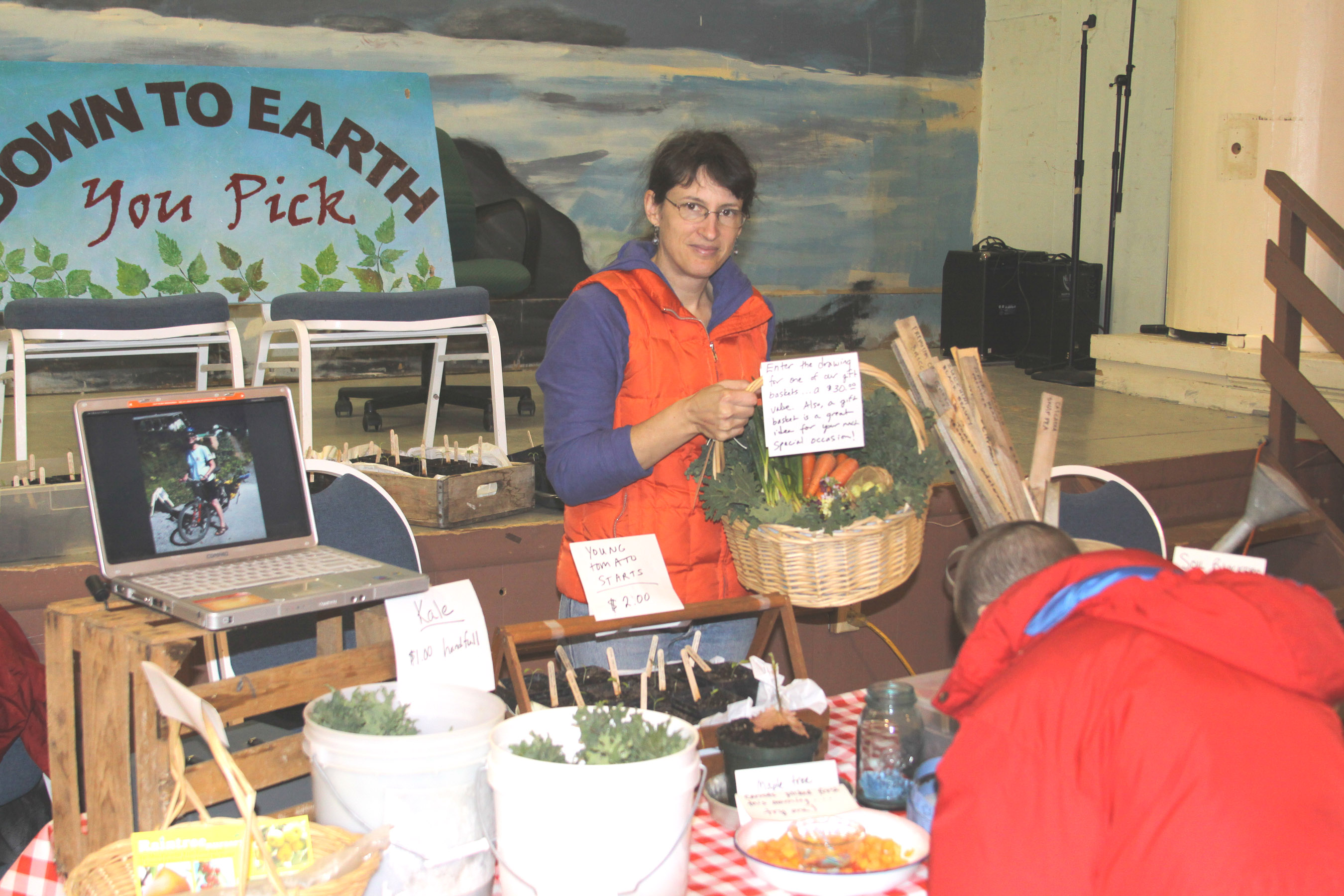
Lori Adams of Down To Earth U-Pick Gardens shows off a basket of produce she was giving away

Lori Adams of Down To Earth U-Pick Gardens shows off a basket of produce she was giving away

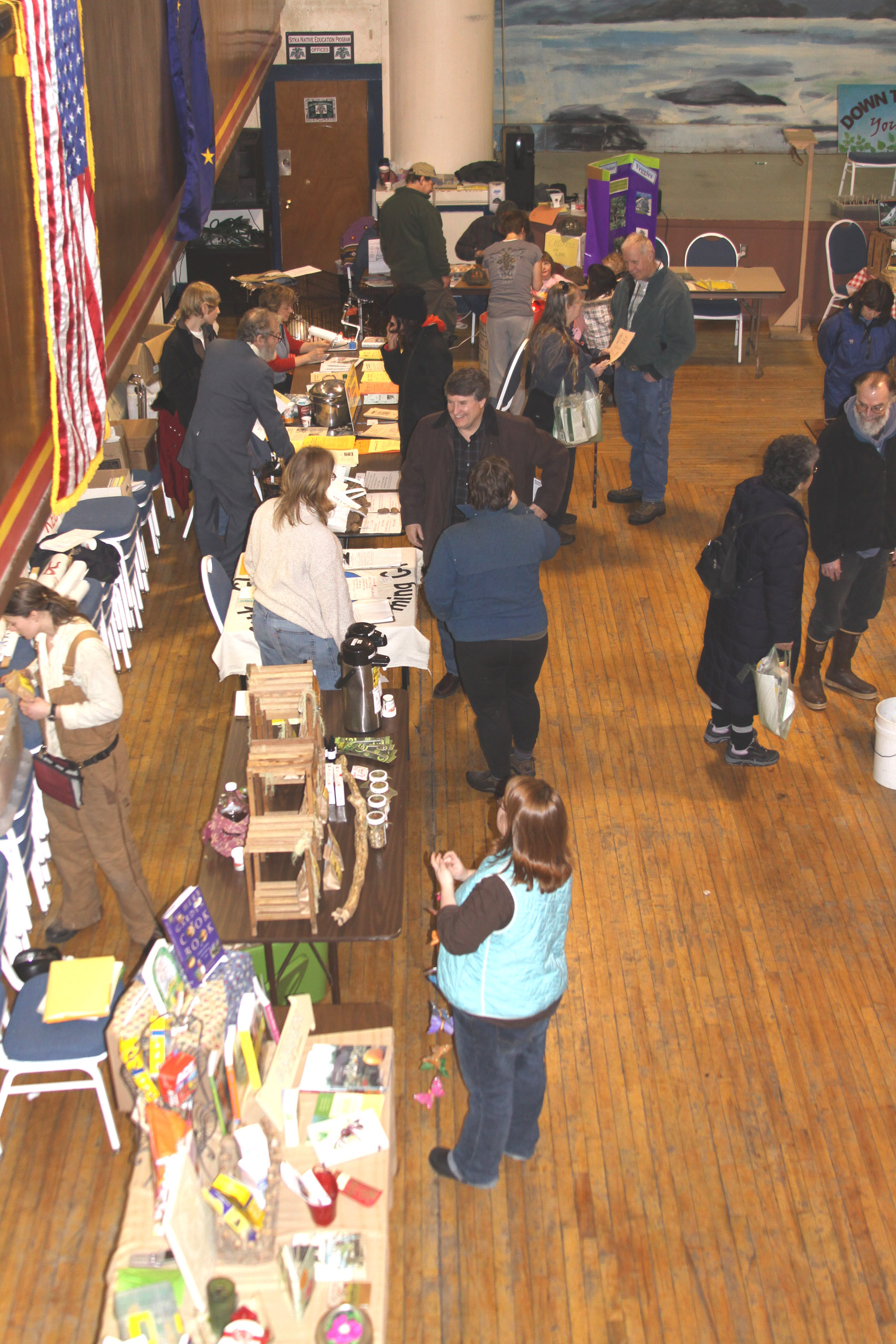
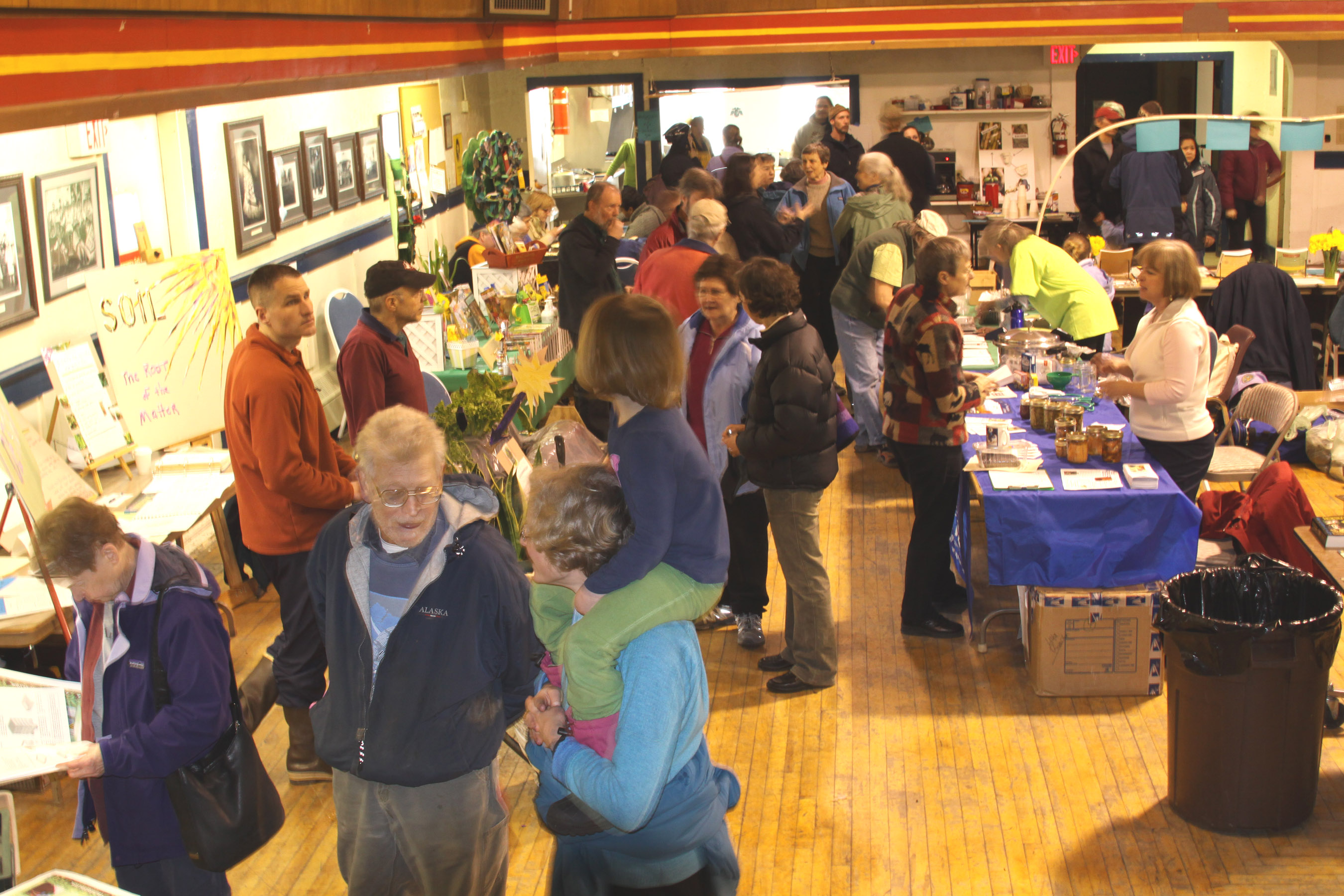
The Sitka Local Foods Network extends a big thank you to the more than 200 people who stopped by Sunday, March 14, for the “Let’s Grow Sitka!” garden show at Alaska Native Brotherhood Hall.

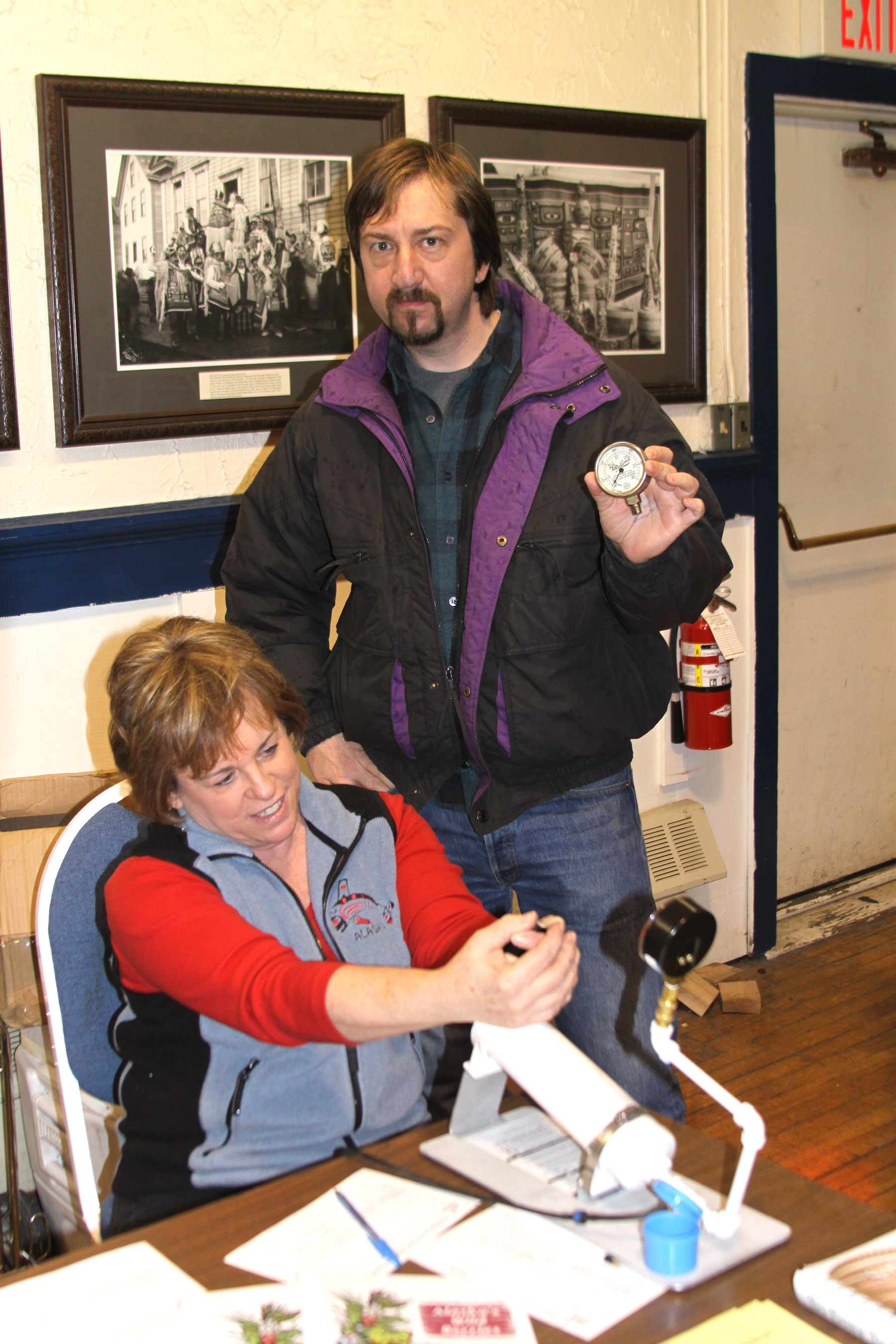
If you stopped by, you were able to check out booths from local gardeners who sell their surplus veggies, learn about Sitka’s first CSA (Community Supported Agriculture) venture, buy a new Sitka gardening handbook from Florence Welsh, pet some baby chicks, get your pressure canner gauge checked, start some seeds for the St. Peter’s Fellowship Farm, eat some Sisterhood Stew sold by the Alaska Native Sisterhood Camp No. 4, register for a master gardener certification course, learn about composting and slug control, and buy seeds for your own garden. Over the next few weeks, more details will be posted about some of the individual projects.

For now, click here to see a photo gallery from Let’s Grow Sitka! (look for the album with the Let’s Grow Sitka name). Keep an eye open, because there may be video links posted later, depending on how things turned out.

Sonja Koukel of the UAF Cooperative Extension Service's Juneau office checks pressure gauges for Perry Edwards of Sitka

Sonja Koukel of the UAF Cooperative Extension Service's Juneau office checks pressure gauges for Perry Edwards of Sitka

Let's Grow Sitka booths are still busy after closing time

Let's Grow Sitka booths are still busy after closing time

Lina and her mom hold one of several baby chicks owned by Andrew Thoms

Lina and her mom hold one of several baby chicks owned by Andrew Thoms

• ‘Let’s Grow Sitka!’ garden show takes place Sunday, March 14

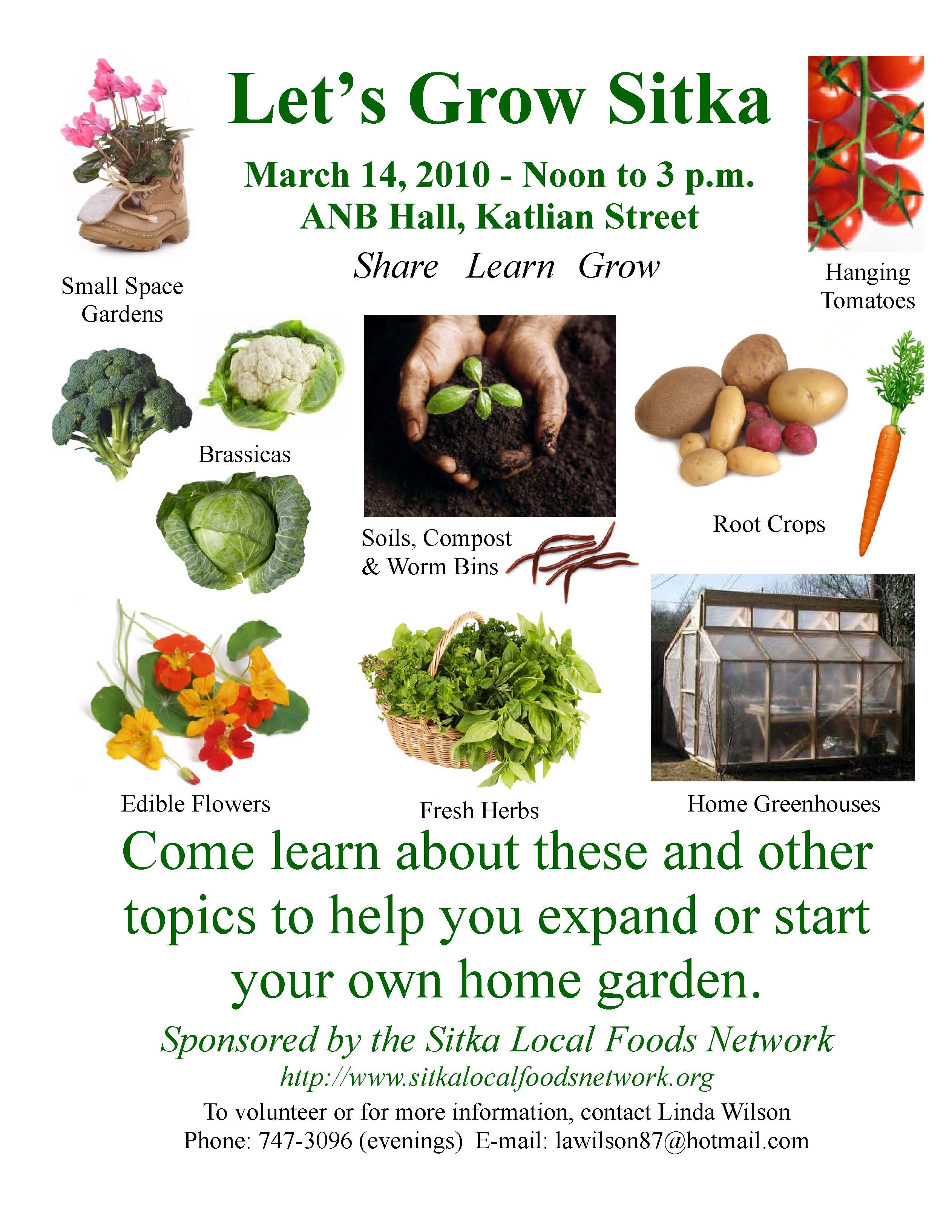
All gardeners and would-be gardeners are encouraged to attend the second annual “Let’s Grow Sitka!” educational and social event for Sitka gardeners. Let’s Grow Sitka! takes place from noon until 3 p.m. on Sunday, March 14, at the Alaska Native Brotherhood Hall on Katlian Street.

Learn about home greenhouses, how to prepare your soil, and what to do with all those slugs. Buy seeds and plant starts. Swap ideas and tips. Come learn, share, and get ready to grow your garden. Learn about plans for the Sitka Farmers Markets this summer. Let’s Grow Sitka is organized by the Sitka Local Foods Network and is part of the 10-day Arti Gras Sitka Music and Arts Festival, which takes place March 5-14.

Master gardeners are encouraged to sign up to share their personal experience on how to create a successful garden in Sitka. Also, anyone with a garden-related product or service to sell is invited to participate. Some of the expected booths are from the University of Alaska Cooperative Extension Service, St. Peter’s Fellowship Farm, Garden Ventures, Solexx Greenhouses, Harry Race, Down To Earth U-Pick Garden, Sitka Global Warming Group (garden-matching program) and many others.

There still are a few FREE tables available for vendors, education and demonstrations. For more information or to reserve table space, contact Linda Wilson in the evenings at 747-3096.

Doug Osborne answers questions at the Sitka Farmers Market table during the 2009 Let's Grow Sitka garden show

Doug Osborne answers questions at the Sitka Farmers Market table during the 2009 Let's Grow Sitka garden show

Sitka residents wander the booths during the 2009 Let's Grow Sitka garden show

Sitka residents wander the booths during the 2009 Let's Grow Sitka garden show

Mike and Robin run the White's Inc./Harry Race table during the 2009 Let's Grow Sitka garden show

Mike and Robin run the White's Inc./Harry Race table during the 2009 Let's Grow Sitka garden show

• Sitka office of UAF Cooperative Extension Service to host Master Gardener class

Master gardener Bob Gorman shows off seed starts in wet paper towels during a March garden workshop

The Sitka office of the University of Alaska Fairbanks Cooperative Extension Service will host a 40-hour Master Gardener class from 6-9 p.m. every Wednesday night from March 3 through May 12 in Sitka.

The class also will involve two 9 a.m. to 3 p.m. Saturday sessions, on March 20 and May. All classes take place at the University of Alaska Southeast Sitka Campus. Local field trips and growing projects are part of the class.

The non-credit course costs $50 for materials and a student agreement to provide 40 hours of gardening-related service to the community within 12 months of completing the course. UAF Cooperative Extension Service Resource Development Agent Bob Gorman will be the course’s instructor. Guest presenters will assist during the classes.

The class includes topics such as plant propagation, soil management, pest identification and control, extending the growing season, vegetable and fruit gardening, greenhouse and indoor gardening, and ornamental gardening.

The purpose of the program is to train volunteers to assist the UAF Cooperative Extension Service by providing the public with gardening-related information. Volunteer service includes help with the Sitka native plants and demonstration garden, youth and in-school gardening, community gardening events, helping with plant pest identification, and assisting with the Sitka Local Foods Network.

Class size is limited and students are encouraged to register early. Those people interested in the class are encouraged to leave their names, contact information and a phone message on the Sitka office of the UAF Cooperative Extension Service at 747-9440. Registration packets are available at the UAS Sitka Campus front desk. The course is offered by the UAF Cooperative Extension Service and the UAS Sitka Campus.

For more information about master gardeners, here are links to the Alaska Master Gardeners and the Southeast Alaska Master Gardeners pages.

• Sitka Local Foods Network contracting for 2010 St. Peter’s Fellowship Farm lead gardener

Darby Osborne, Doug Osborne, Kerry MacLane and Maybelle Filler pick radishes at St. Peter's Fellowship Farm before the first Sitka Farmers Market in 2008

Darby Osborne, Doug Osborne, Kerry MacLane and Maybelle Filler pick radishes at St. Peter's Fellowship Farm before the first Sitka Farmers Market in 2008

The Sitka Local Foods Network is contracting for a lead gardener to help manage our activities at the St. Peter’s Fellowship Farm community garden this summer. St. Peter’s Fellowship Farm (SPFF) is growing, and we’re adding new garden beds so we can grow more crops. The vegetables grown at SPFF are sold at the Sitka Farmers Market to help support the efforts of the Sitka Local Foods Network, with some crops also going to local church and charity groups. Here is the lead gardener contract description.

St. Peter’s Fellowship Farm 2010 Lead Gardener Contract Description

Work Experience: 2-3 years of varied vegetable gardening experience, preferably with at least one year in Southeast Alaska. This includes planning, cultivating, harvesting, composting and preparing vegetables for sale or preservation, as well as putting the garden to rest for the season.

Contract Requirements:

  • Develop a garden plan that includes succession planting in conjunction with the SPFF tri-coordinators (board members Lisa Sadleir-Hart, Doug Osborne and Maybelle Filler)
  • Conduct soil testing and amend the soil to improve soil quality using available resources (i.e., seaweed, bone meal, etc) in conjunction with the SPFF tri-coordinators and volunteer work parties
  • Cultivate plant starts using seeds provided by the SLFN and make recommendations for SPFF seed start kits to be distributed at the Let’s Grow Sitka event on March 14, 2010
  • Use organic gardening practices
  • Host 3 initial planting parties (from 2-4:30 p.m. on three Saturdays, May 15, May 22 and May 29) i.e., coordinate with the SPFF tri-coordinators to plan and direct work
  • Direct 75 percent of the garden work parties, i.e., these are tentatively scheduled for Wednesdays 4:30-6 p.m. and Saturdays 2-3:30 p.m. (on non-Sitka Farmers Market Saturdays) during the months of June, July and August, plus the first half of September, but can be negotiated.
  • Plan and oversee the harvest of the garden for the first five 2010 Sitka Farmers Markets (harvest usually takes place early on market-day mornings, July 17, July 31, August 14, August 28 and September 4)
  • Develop a method for quantifying the amount of vegetables harvested from SPFF and implement it
  • Maintain the composting and watering systems
  • Direct any questions or concerns to the SPFF tri-coordinators

Compensation: A total of $1,500 paid in three installments (May 15, July 15 and September 15) plus 5 percent of the SPFF harvest – this compensation schedule is open for negotiation.

If interested in the SPFF lead gardener contract, e-mail a resume that includes two local references that can speak to your gardening ability and a letter of interest by February 20th to 3akharts@acsalaska.net. Direct questions to Lisa Sadleir-Hart at 747-5985 or Doug Osborne at 747-3752.

• Sitka Local Foods Network board meetings

Just a reminder that the Sitka Local Foods Network board of directors meets for lunch, from noon to 1 p.m., on the first Monday of each month (except the summer months of June, July and August). The meetings now take place at the See House, located behind St. Peter’s By The Sea Episcopal Church on Lincoln Street. This also is where the St. Peter’s Fellowship Farm community garden is located. The Sitka Local Foods Network board meetings are open to the public and we welcome new volunteers who want to help with our projects.

• New Sitka Local Foods Network events calendar added to site

We now have an events calendar. This link goes to a calendar for Sitka Local Foods Network and other related events in the Sitka area. You will be able to find the link under “Pages” in the right column.

This calendar will feature events such as Sitka Local Foods Network board meetings, Sitka Farmers Markets, Let’s Grow Sitka, work parties for St. Peter’s Fellowship Farm and other events sponsored by the Sitka Local Foods Network. It also will feature community events related our mission, such as UAF Cooperative Extension Service classes, Sitka Gardeners Club meetings, traditional foods classes, etc.

If you have any events you feel should be included on this calendar, please e-mail the details to charles(at)sitkalocalfoodsnetwork.org — replace the (at) with a @ symbol. Please be aware this is a work in progress, so it may take a few days to get most of our events transferred to the calendar.

• The new Sitka Local Foods Network e-newsletter (Jan. 10)

Click here to read the current Sitka Local Foods Network e-newsletter courtesy of Linda Wilson. Don’t forget, you can sign up for the e-newsletter by typing your e-mail address in the “Join Our Mailing List” box on bottom of the left side of the page.

• Special board meeting on Tuesday, Jan. 12, for the Sitka Local Foods Network

There was too much business to get through during the regular board meeting of the Sitka Local Foods Network on Monday, Jan. 4, so a special board meeting will be held from 5-7 p.m. on Tuesday, Jan. 12, at the Sitka Economic Development Association (SEDA) conference room upstairs in the Troutte Center building on Lincoln Street. Here is the suggested agenda.

Sitka Local Foods Network
January 12, 2010, Board Meeting Agenda
5-7 p.m.  SEDA Meeting Room

* Approve Minutes of Last Meeting
* Review Mission Statement and Goals
* President’s Report: Turning Point; from volunteers to staff
* Standing reports
___o 501(c)(3) and financial update (Kerry)
___o Education/Let’s Grow Sitka update (Linda W.)
___o Sitka Farmers Market update/Educational Programs (Linda & Kerry)
___o St. Peter’s Fellowship farm update (Doug & Lisa)
___o Sitka Community Greenhouse update (workgroup – see minutes)
* Old Business
___o t-shirt update (Natalie & Peggy)
___o Ed Hume fundraiser (Maybelle – Lisa will bring her report; need approval of board to go ahead)
___o Earth day/Shane Smith
* New Business
___o Turning Point (Kerry);
___o Motion to support a CSA by inviting Hope and Florence to sign people up at the ‘Let’s Grow Sitka’ event.
___o  Island Institute Humanities project focused on sustainability
___o Other?

• Sitka Local Foods Network gets mentions in Juneau Empire, Daily Sitka Sentinel, Capital City Weekly and on APRN’s Talk of Alaska show

The Sunday edition of the Juneau Empire and Monday edition of the Daily Sitka Sentinel (Page 4) both featured a press release about a Sitka Local Foods Network-hosted presentation about “Growing in Sitka and Southeast Alaska: The Food of Today, Tomorrow and 200 Years Ago” that takes place at 5 p.m. this Friday, Oct. 16, at the Kettleson Memorial Library. The presentation is by UAS anthropology student Elizabeth Kunibe of Juneau, who has spent the last six years researching traditional gardens in Southeast Alaska. The presentation also received a write-up in this week’s issue of Capital City Weekly that came out on Wednesday.

Monday’s issue of the Daily Sitka Sentinel also featured a press release about a put-the-garden-to-bed work party the Sitka Local Foods network is hosting from 10 a.m. to 1 p.m. on Saturday, Oct. 17, at the St. Peter’s Fellowship Farm.

On Tuesday, the Alaska Public Radio Network’s statewide call-in show “Talk of Alaska” was about food security and during the show the work of the Sitka Local Foods Network was mentioned. The Talk of Alaska topic on food security was a preview of the Bioneers In Alaska conference this weekend (Oct. 16-18) in Anchorage where food security will be one of the topics. Kerry MacLane, president of the Sitka Local Foods Network, is supposed to travel to Anchorage to participate in the conference.

In addition to the Sitka Local Foods Network mentions, there has been a lot of other local foods news around Alaska this week.

In Sunday’s Juneau Empire, Ginny Mahar (a chef at Rainbow Foods) wrote a column featuring a mac and cheese recipe with king crab. Ginny also writes the Food-G blog, which features a lot of local foods recipes for Southeast Alaska.

Also in Sunday’s Juneau Empire was an article about the Alaska Native Brotherhood/Alaska Native Sisterhood Grand Camp meeting in Juneau and discussion about subsistence fishing rights following the recent arrest of Sen. Albert Kookesh.

In this week’s Capital City Weekly, there is an article from Carla Peterson about the chocolate lily and how to prepare this edible plant for food.

In the Alaska Newsreader blog Wednesday on the Anchorage Daily News Web site was a link to a feature from TheDailyGreen.com, which listed Anchorage ninth among U.S. cities in per capita space given to community gardens. The list (opens as PDF document) was compiled by the Trust for Public Land, and it had a distinct Northwest feel with Seattle ranked No. 1 and Portland, Ore., was No. 2. Click here to learn more about Anchorage’s community gardens program.

In his Anchorage Daily News garden column last week, Jeff Lowenfels wrote about planting garlic now for spring flowers and an August crop.

The Mat-Su Frontiersman recently ran an article about a sustainability project at the University of Alaska Fairbanks Mat-Su College where students were gathering organic spuds.

Finally, while this isn’t about Alaska, you might want to read an article about efforts to preserve our biodiversity so we don’t lose more food plant varieties and why these efforts are important.