• Sitka groups band together to host the movie ‘Vanishing of the Bees’

The Sitka Film Society, Sitka Global Warming Group/Sustainable Sitka and the Sitka Local Foods Network are teaming up to present the movie “Vanishing of the Bees” at 5:30 p.m. on Thursday, April 21, at the Coliseum Theatre.

This is a special Earth Week presentation (Earth Week is April 17-23, and Earth Day is Friday, April 22). Tickets are $8 and available from Old Harbor Books.

The movie, narrated by Ellen Page, describes a recent phenomenon known as Colony Collapse Disorder, where entire hives of bees die off, leaving hives full of honey other bees won’t touch (normally when a hive dies off, other bees will raid the hive and take the honey). The loss of the bees is of critical concern for farmers and gardeners because honey bees are one of the major ways crops are pollinated. Without these bees pollinating the crops, we lose our ability to grow much of our food.

Here is the synopsis posted on the movie’s website:

Honeybees have been mysteriously disappearing across the planet, literally vanishing from their hives.

Known as Colony Collapse Disorder, this phenomenon has brought beekeepers to crisis in an industry responsible for producing apples, broccoli, watermelon, onions, cherries and a hundred other fruits and vegetables. Commercial honeybee operations pollinate crops that make up one out of every three bites of food on our tables.

Vanishing of the Bees follows commercial beekeepers David Hackenberg and Dave Mendes as they strive to keep their bees healthy and fulfill pollination contracts across the U.S. The film explores the struggles they face as the two friends plead their case on Capital Hill and travel across the Pacific Ocean in the quest to protect their honeybees.

Filming across the US, in Europe, Australia and Asia, this documentary examines the alarming disappearance of honeybees and the greater meaning it holds about the relationship between mankind and mother earth. As scientists puzzle over the cause, organic beekeepers indicate alternative reasons for this tragic loss.

Conflicting options abound and after years of research, a definitive answer has not been found to this harrowing mystery.

• Let’s Grow Sitka garden education event is Sunday, March 20

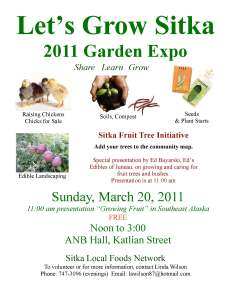
Mark your calendars, because the 2011 “Let’s Grow Sitka” gardening education event opens at noon and runs until 3 p.m. on Sunday, March 20, at the Alaska Native Brotherhood Hall on Katlian Street. Celebrate the first day of spring and get ready to garden.

This annual event brings together local garden supply stores, local gardeners, landscapers and anybody who is interested in learning how to grow food and/or flowers. This year’s theme is “Adding edibles to your landscape — focus on fruit trees and berry bushes.”

Master Gardener Ed Buyarski of Ed’s Edible Landscaping in Juneau will be on hand to provide expertise during the show. Buyarski will give a special presentation on “Growing Fruit in Southeast Alaska” at 11 a.m. on March 20 at ANB Hall (just before the show opens).

Buyarski also will lead some free hands-on tree pruning workshops on Saturday, March 19, with the first tree pruning workshop at 10:30 a.m. at the trees outside Patty Bickar’s house, 310 Cascade (at the top of the hill). The tree pruning workshops will continue Saturday afternoon at the trees outside the home of Tory O’Connell, 608 Etolin Way (off Baranof Street downtown). Buyarski will provide instruction on how to properly prune the trees and bushes to encourage fruit production and maintain healthy growth. Pruning needs to be done before the trees bud, so NOW is the time to get it done. The tree pruning workshops are hosted by the Sitka Fruit Tree Initiative.

The Sitka Local Foods Network encourages people to share their knowledge by hosting a booth or posting an educational display about a specific garden topic. We especially want people with experience growing fruit trees to share their knowledge about growing apple, cherry or crabapple trees in Sitka; growing strawberries; growing rhubarb; growing unusual berry varieties that do well in our climate such as aronia, sea buckthorn, honeysuckle (fruiting), gooseberry, currant and elderberry; and how to legally transplant and cultivate wild berry bushes to your property.

In addition, you can learn about home greenhouses, how to prepare your soil, how to raise chickens and what to do with all those slugs. Buy seeds and plant starts. Swap ideas and tips. Come learn, share, and get ready to grow your garden. Learn about plans for the Sitka Farmers Markets this summer. Let’s Grow Sitka is organized by the Sitka Local Foods Network and is part of the Arti Gras Sitka Music and Arts Festival, which takes place March 6-20.

There still are a few FREE tables available for vendors, education and demonstrations. For more information about Let’s Grow Sitka or to reserve table space, contact Linda Wilson at lawilson87@hotmail.com or call her at 747-3096 (in the evenings or on weekends only). She also has information about the tree pruning workshops.

Master gardeners are encouraged to sign up to share their personal experience on how to create a successful garden in Sitka. Also, anyone with a garden-related product or service to sell is invited to participate. Some of the expected booths are from:

  • True Value Garden Center (type Sitka or 99835 into the store locator search bar) — garden supplies
  • White’s, Inc/Harry Race Pharmacy — garden books, magazines, accessories
  • Garden Ventures — lots of lovely primroses for sale along with garden supplies
  • Lori Adams — Down-To-Earth U-Pick garden promotion
  • Andrew Thoms — raising chickens and chicks for sale (Andrew suggests anybody wanting to buy chicks contact him as soon as possible so he can start incubating the eggs. He can be reached at 747-3747 or andrew@sitkawild.org.)
  • Eve Grutter — jams for sale, garden and raising chickens expertise to share
  • Sitka Local Foods Network — garden information and volunteer sign up
  • Sitka Farmers Market — tomato plant starts for sale, Farmers Market information
  • St. Peter’s Fellowship Farm — seed starter kits
  • Sitka Fruit Tree Initiative — information on growing your own fruit trees and berry bushes in Sitka
  • Sitka Fruit Tree Initiative — community fruit tree mapping project
  • Sitka Seed Savers — information on how to save your own garden seed, and a sign up to participate in an educational workshop on how to save vegetable seed and start a seed savers group in Sitka
  • Display and information handouts on growing rhubarb and its nutritional benefits
  • UAF Cooperative Extension Service — lots of free garden handouts
  • Ed Buyarski of Ed’s Edible Landscaping in Juneau — edible landscaping

• Let’s Grow Sitka event flier for March 20, 2011, at ANB Hall (please print and post around town)

• Kayaaní Commission to meet on Thursday, March 24

The Kayaaní Commission is regrouping and it will hold an organizational meeting at 6:30 p.m. on Thursday, March 24, in the upstairs conference room at the Sitka Tribe of Alaska administration building, 456 Katlian St.

The Kayaaní Commission was created by an ordinance from the Sitka Tribe of Alaska as a way preserve and protect plants and the traditional ways they are used in Sitka. The group looks at medicinal, ceremonial and food uses of local plants.

To learn more, contact Leighanne McGough (747-7167 or leighanne.mcgough@sitkatribe-nsn.gov) or Kristin Rothblum (kristin.rothblum@sitkatribe-nsn.gov) at the Sitka Tribe of Alaska.

• UAF Cooperative Extension Service’s Bob Gorman to teach series of free classes on gardening in Sitka

Bob Gorman of the Sitka office of the University of Alaska Fairbanks Cooperative Extension Service shows some germinating seed starts during a free garden workshop on March 11, 2009.

Bob Gorman of the Sitka office of the University of Alaska Fairbanks Cooperative Extension Service shows some germinating seed starts during a free garden workshop on March 11, 2009.

Bob Gorman of the Sitka office of the University of Alaska Fairbanks Cooperative Extension Service will lead several free gardening classes starting this week and running through April.

Gorman will lead two classes this week — Wednesday night (March 2) on fruit trees and berry bushes and Thursday night (March 3) on basic food gardening. He also will lead four more classes about fruit trees and berry bushes on March 16, April 6, April 8 and April 27 (this last date may be rescheduled). All classes take place in Room 106 at the University of Alaska Southeast-Sitka Campus.

The “Tree Fruits and Berry Bushes for Sitka” class at 6:30-8:30 p.m. on Wednesday, March 2, will cover recommended fruit trees and berries for Sitka, site selection and site preparation considerations. Basic tree fruit and berry bush cultivation will be discussed. An update on spruce needle aphid detection and control will be included.

The “Basic Food Gardening” class at 6:30-8:30 p.m. on Thursday, March 3, covers making soil from locally available products, container gardening, establishing and tilling a garden plot, variety and seed selection, starting transplants indoors, direct seeding, frost-free dates, extending the growing season and garden pest prevention. UAF Cooperative Extension Service publications will be available.

The topics for the final four classes are:

  • Wednesday, March 16 (6:30-8:30 p.m.) — Growing Berry Bushes in Sitka
  • Wednesday, April 6 (6:30-8:30 p.m.) — Managing Garden Soils
  • Friday, April 8 (6-8 p.m.) — Prune It Now
  • Wednesday, April 27 (6:30-8:30 p.m.) — Planting Trees, Shrubs and Transplants (class may be rescheduled).

Bob Gorman is the Sitka District Extension Agent for the UAF Cooperative Extension Service and teaches the Alaska Master Gardener certification course to garden volunteers in Sitka (the course features 40 hours of horticulture classes and 40 hours of volunteer work in local garden projects). Before moving to Alaska in 1991, Gorman worked three years in berry crop research and four years in commercial fruit tree production.

To learn more about these classes, call the UAF Cooperative Extension Service office in Sitka at 747-9440 or 747-9413, or just show up since the classes are free.

• Mark your calendar for several upcoming meetings about local food projects

As we near spring, it’s time to start marking your calendar with meetings, workshops and garden preparation events. Here is a list of some of the upcoming events, so you can add them to your calendar. All of these events are open to the public and new volunteers are more than welcome to join each project.

  • The Sitka Seafood Festival planning committee meets at 7 p.m. on Tuesday, March 1, at the Baranof Island Brewing Company, 212 Smith St. The Sitka Seafood Festival is May 20-21 this year, and there are several fundraising events (such as the Sitka Culinary Tour Passport event on March 10-13) in the months leading up to the festival. For more info, contact Alicia Olson at 1-928-607-4845 or sitkaseafoodfestival@gmail.com.
  • The Sitka Fruit Tree Initiative work group will meet at 7 p.m. on Thursday, March 3, at Harrigan Centennial Hall. For more info, contact Lisa Sadleir-Hart at 747-5985 or Doug Osborne at 747-3752.
  • The Sitka Local Foods Network Board of Directors will meet at 5:30 p.m. on Monday, March 7, at the Sitka Unitarian Universalist Fellowship building, 408 Marine St. For more info, contact Kerry MacLane at 752-0654.
  • The Sitka Farmers Market planning group meets at 7 p.m. on Thursday, March 10, at the Sitka Unitarian Universalist Fellowship building, 408 Marine St. For more info, contact Linda Wilson at 747-3096 (nights, weekends).
  • The Let’s Grow Sitka garden education event starts at noon and runs until 3 p.m. on Sunday, March 20, at the Alaska Native Brotherhood Hall, 456 Katlian St. Master Gardener Ed Buyarski of Ed’s Edible Landscaping in Juneau will be at the Let’s Grow Sitka event to discuss fruit trees. Buyarski also will give a pruning workshop at a time and location TBA on Saturday, March 19; and he will give a talk about fruit trees at 11 a.m. on Sunday, March 20, at ANB Hall. For more info, contact Linda Wilson at 747-3096 (nights, weekends).

• Save the date — ‘Let’s Grow Sitka’ gardening education event is Sunday, March 20, at ANB Hall

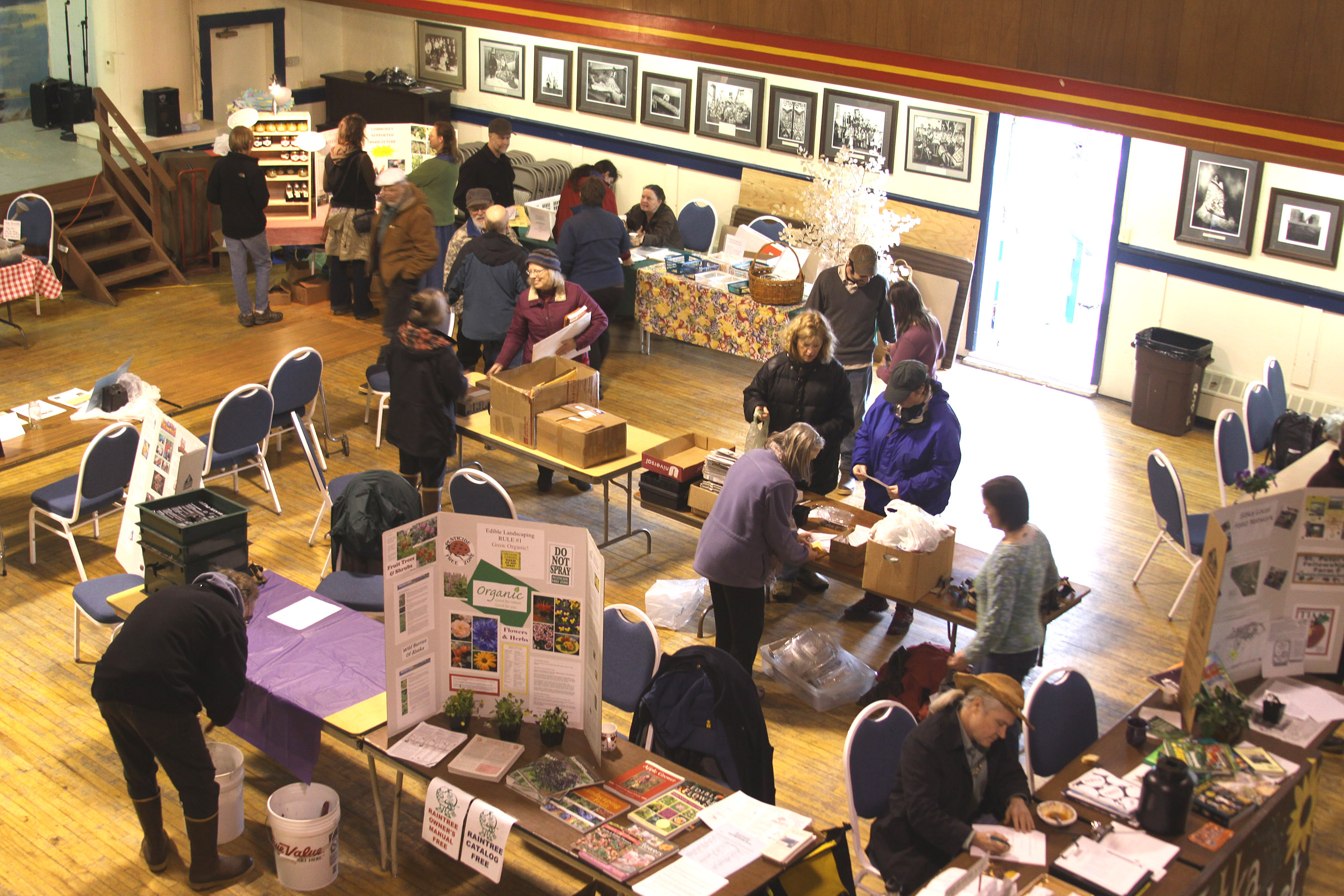
The view from above at closing time of the 2010 Let's Grow Sitka garden education event.

The view from above at closing time of the 2010 Let's Grow Sitka garden education event.

Mark your calendars, because the 2011 “Let’s Grow Sitka” gardening education event opens at noon and runs until 3 p.m. on Sunday, March 20, at the Alaska Native Brotherhood Hall on Katlian Street. Celebrate the first day of spring and get ready to garden.

This annual event brings together local garden supply stores, local gardeners, landscapers and anybody who is interested in learning how to grow food and/or flowers. This year’s theme is “Adding edibles to your landscape — focus on fruit trees and berry bushes.”

The Sitka Local Foods Network encourages people to share their knowledge by hosting a booth or posting an educational display about a specific garden topic. We especially want people with experience growing fruit trees to share their knowledge about growing apple, cherry or crabapple trees in Sitka; growing strawberries; growing rhubarb; growing unusual berry varieties that do well in our climate such as aronia, sea buckthorn, honeysuckle (fruiting), gooseberry, currant and elderberry; and how to legally transplant and cultivate wild berry bushes to your property.

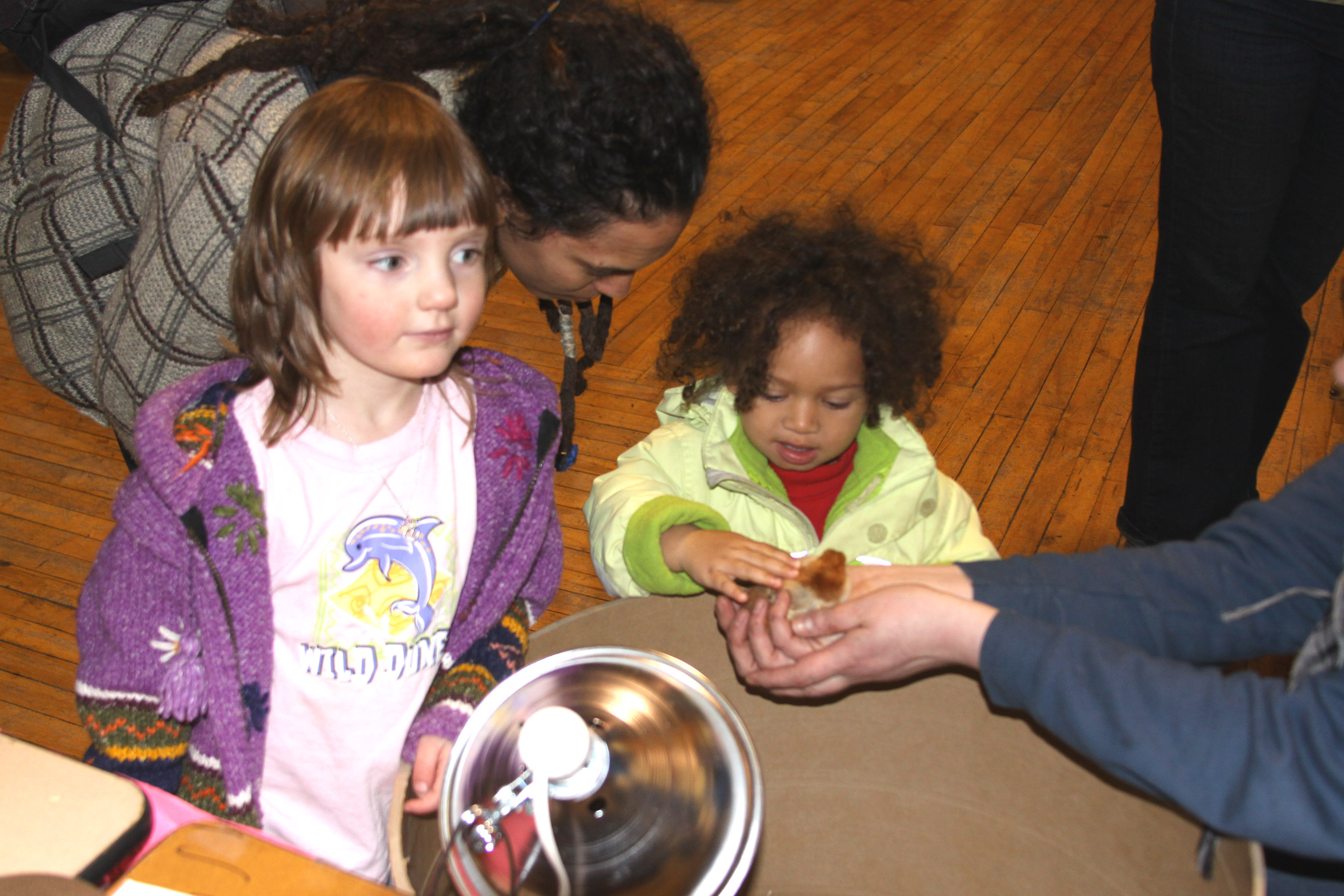
Young girls check out a baby chick at the 2010 Let's Grow Sitka event. Andrew Thoms will have egg-producing chicks and information about how to raise them available this year, but he suggests anybody wanting to buy chicks contact him as soon as possible so he can start incubating the eggs. He can be reached at 747-3747 or andrew@sitkawild.org.

Young girls check out a baby chick at the 2010 Let's Grow Sitka event. Andrew Thoms will have egg-producing chicks and information about how to raise them available this year, but he suggests anybody wanting to buy chicks contact him as soon as possible so he can start incubating the eggs. He can be reached at 747-3747 or andrew@sitkawild.org.

In addition, you can learn about home greenhouses, how to prepare your soil, how to raise chickens and what to do with all those slugs. Buy seeds and plant starts. Swap ideas and tips. Come learn, share, and get ready to grow your garden. Learn about plans for the Sitka Farmers Markets this summer. Let’s Grow Sitka is organized by the Sitka Local Foods Network and is part of the Arti Gras Sitka Music and Arts Festival, which takes place March 6-20.

Master gardeners are encouraged to sign up to share their personal experience on how to create a successful garden in Sitka. Also, anyone with a garden-related product or service to sell is invited to participate. Some of the expected booths are from the True Value Garden Center (type Sitka or 99835 into store locator box), Andrew Thoms (chickens, see note with photo above), White’s Inc./Harry Race Pharmacy, St. Peters Fellowship Farm (seed starter kits), Sitka Local Foods Network, University of Alaska Fairbanks Cooperative Extension Service, the Sitka Fruit Tree Planting Initiative and many others. Master Gardener Ed Buyarski of Ed’s Edible Landscaping in Juneau also will be on hand to provide expertise.

There still are a few FREE tables available for vendors, education and demonstrations. For more information or to reserve table space, contact Linda Wilson at lawilson87@hotmail.com or call her at 747-3096 (in the evenings or on weekends only).

• New ‘Field Guide to Seaweeds of Alaska’ will help Sitka residents identify various types of seaweeds

Alaska Natives have been gathering seaweeds and other sea vegetables for centuries, with the seaweeds providing an excellent source of vitamins and minerals. There are dozens of types of seaweeds available in Alaska, and most of them are edible.

The Alaska Sea Grant program from the University of Alaska Fairbanks recently released a new book by Mandy R. Lindeberg and Sandra C. Lindstrom called “Field Guide to Seaweeds of Alaska.” This book is billed as the first and only field guide to more than 100 common seaweeds, seagrasses and marine lichens of Alaska. The book features color photos, written descriptions and it is printed on water-resistant paper.

As part of the Sitka WhaleFest Maritime Market this weekend, one of the authors (Lindeberg) will be in Sitka signing copies of the new guide at 2:45 p.m. on Saturday, Nov. 6, at the Old Harbor Books booth at Harrigan Centennial Hall. Lindeberg is a self-proclaimed “nerdy” Juneau biologist who works for the National Oceanic and Atmospheric Administration/National Marine Fisheries Service Auke Bay Laboratory.

Mandy Lindeberg

Mandy Lindeberg

Lindeberg spent nearly 15 years working on the book with the help of Lindstrom, a professor and researcher in botany and marine ecology at the University of British Columbia who was born and raised in Juneau. Lindeberg took about 80 percent of the photos in the book, hoping to come up with enough decent images so scientists and naturalists had more than the sometimes-hard-to-decipher drawings found in most previous books, while Lindstrom helped with the taxonomic work and reviewed the scientific descriptions.

Lindeberg said the new guidebook will help people be able to better identify the types of seaweeds when they are out gathering (Editor’s note, federal and state subsistence laws prohibit the gathering of seaweed in urban nonsubsistence areas such as Juneau/Douglas and Ketchikan/Saxman, but seaweed gathering is legal in rural areas of Alaska including Sitka and most other Southeast Alaska communities, including areas just outside Juneau/Douglas and Ketchikan/Saxman).

Lindeberg said her guidebook will help people identify the various types of seaweeds, but it does not discuss which seaweeds are edible and how to prepare them, so people might want to use it with another Alaska Sea Grant book, “Common Edible Seaweeds in the Gulf of Alaska,” by Dolly Garza. The new “Field Guide to Seaweeds In Alaska” costs $30 and is available at Old Harbor Books or through the Alaska Sea Grant program’s online bookstore.

• Planting fruit trees in Sitka and getting more seafood into local school meals are 2010 Sitka Health Summit projects

Cherry blossoms at Blatchley Community Garden

Cherry blossoms at Blatchley Community Garden

When Sitka residents met for the community planning day during the Sitka Health Summit earlier this month, two of the four health priority projects they chose to work on this year centered around local food issues.

One of the projects is to plant 200 fruit trees — apples, crabapples or cherry trees — in Sitka by the next Sitka Health Summit on Sept. 30-Oct. 1, 2011. The other food-related project is to get more locally caught wild fish into school lunch menus.

Both groups already are making progress toward their goals, and public meetings have been organized so Sitka residents can participate.

The fruit tree planting group meets from 7-8:30 p.m. on Monday, Oct. 25, at The Loft (408 Oja Way, Suite A, located across the residential street and a couple of buildings over from the Sitka Police Department’s side entry door on Oja Way). Apple cider and an apple dish will be offered.

All Sitka residents are welcome, especially those who have grown fruit trees in Sitka or Southeast Alaska and can share their experiences. Group member Lisa Sadleir-Hart created a brief survey about fruit trees in Sitka, and you can answer it by clicking this link, http://www.surveymonkey.com/s/QPWMJ3N. Please complete the survey, even if you can’t attend the meeting. The group temporarily is being facilitated by Kari Lundgren, who can be reached at 738-2089 for more information.

Black cod (aka sablefish) on the grill from the Alaska Longline Fisherman's Association booth at the Sitka Farmers Market

Black cod (aka sablefish) on the grill from the Alaska Longline Fisherman's Association booth at the Sitka Farmers Market

The wild fish for school lunches group has been meeting with officials with the Sitka School District and Mt. Edgecumbe High School, local fish vendors, catchers and processors, to see what they can do to get more locally caught wild fish — salmon, halibut, cod, sablefish, rockfish, etc. — served in Sitka schools.

The wild fish group’s first meeting will be for a fish lunch at noon on Friday, Nov. 19, at Pacific High School. Some people will show up at 11 a.m. to help cook the fish, which will be served at noon, and the actual meeting will be from 12:30-1:30 p.m. at the Southeast Alaska Career Center (located right behind Pacific High School). To learn more about the group, contact Kerry MacLane at 752-0654 or maclanekerry@yahoo.com.

• Fourth annual Sitka Health Summit takes place on Monday-Tuesday, Oct. 4-5

Sitka residents are invited to join their community in honoring our local wellness champions and planning our health priorities for the next year during the fourth annual Sitka Health Summit, “Working Together for a Healthier Sitka,” on Monday and Tuesday, Oct. 4-5, at Harrigan Centennial Hall.

The Sitka Local Foods Network got its start as two community food security projects from the 2008 Sitka Health Summit — to create a local foods market and to create a community greenhouse/expand local community gardens. In 2009 the Sitka Local Foods Network received a community wellness champion award for nutrition.

There are two main community events during the Sitka Health Summit — the Sitka Community Dessert and Awards Ceremony on Monday, Oct. 4, and the Planning Day: Real Ideas Into Action on Tuesday, Oct. 5.

Julien Naylor, MD, MPH

Julien Naylor, MD, MPH

Doors open for Monday’s program at 6 p.m., with the program starting at 6:30 p.m. The event features a selection of free local and organic desserts provided by Sitka Spuce Catering for the first 200 people. The keynote presentation will be by Dr. Julien Naylor, an internal medicine/diabetes specialist at SEARHC Mt. Edgecumbe Hospital who will speak about the importance of creating a healthy community in Sitka and how to help people move toward a more healthful life. Following the presentation will be an awards ceremony honoring our community wellness champions. This event is free, but donations will be accepted for the Sitka Health Summit’s new Health Initiatives Fund. Also, raffle tickets for a watercolor by local artist Pat Kehoe and other prizes are being sold for $5 each to raise money for the Health Initiatives Fund.

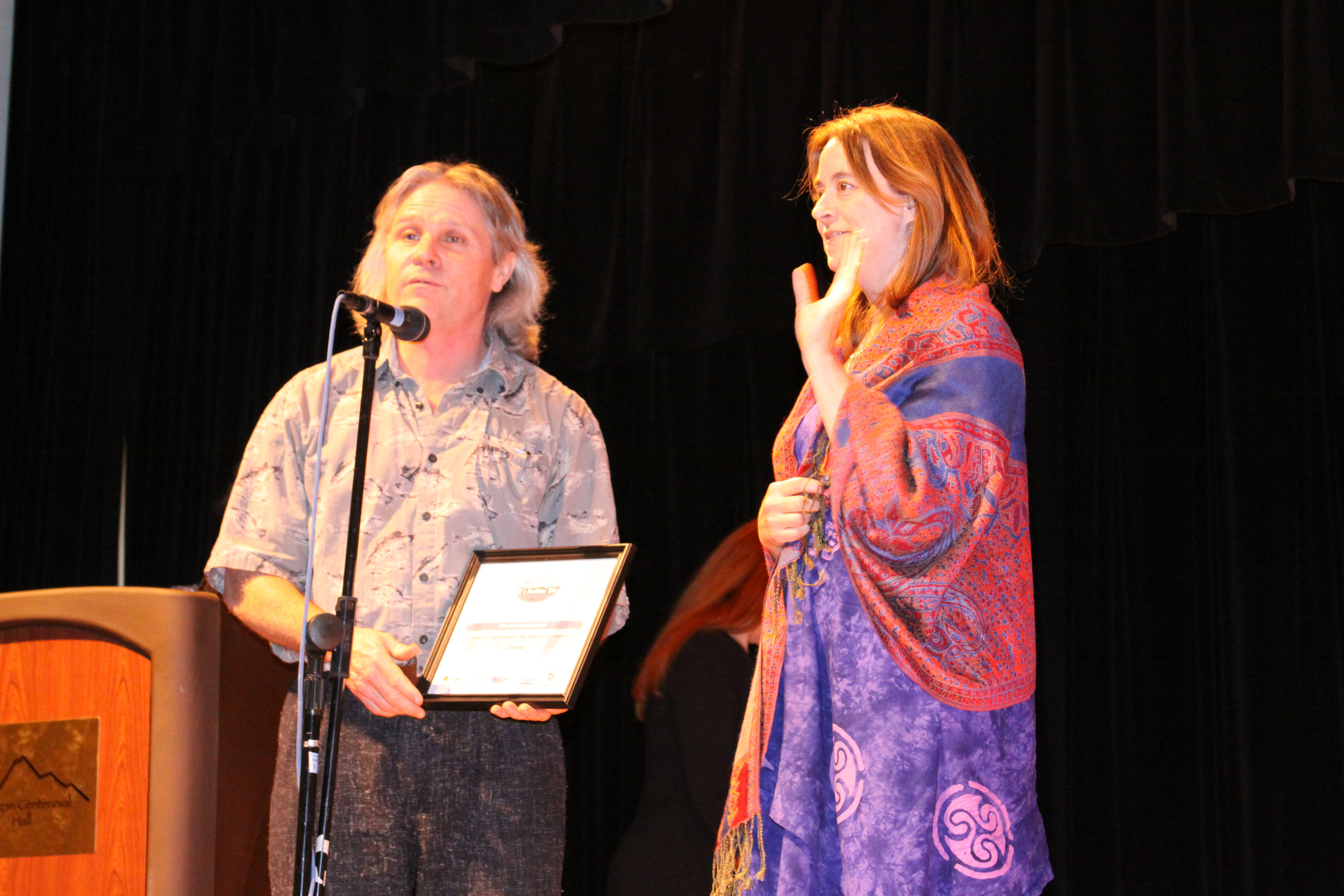
Sitka Local Foods Network president Kerry MacLane, left, and secretary/treasurer Linda Wilson say a few words after the Sitka Local Foods Network received a Community Wellness Champion award for nutrition at the 2009 Sitka Health Summit

Sitka Local Foods Network president Kerry MacLane, left, and secretary/treasurer Linda Wilson say a few words after the Sitka Local Foods Network received a Community Wellness Champion award for nutrition at the 2009 Sitka Health Summit

Tuesday’s program from 9 a.m. to 4 p.m. will allow Sitka residents to set the community’s health and wellness goals for 2010-11. Some of our recent past goals were to make Sitka more bicycle friendly and to start a market for local foods, and they resulted in Sitka becoming Alaska’s first official Bicycle Friendly Community in 2008 and the creation of the Sitka Farmers Market. This year’s top goals and priorities will receive seed money from the new Health Initiatives Fund. There also will be a community health and wellness resource room open to the public from 10 a.m. to 5 p.m. in the Exhibit Room. Snacks and lunch will be available.

The Sitka Health Summit is brought to you by Sitka Community Hospital and the SouthEast Alaska Regional Health Consortium (SEARHC), with major financial help from Premera Blue Cross Blue Shield of Alaska, the City and Borough of Sitka, Scott Insurance Services, White’s Inc./Harry Race Pharmacy/White’s Pharmacy and the University of Alaska Southeast-Sitka Campus. The Sitka Health Summit’s vision is “to serve our great state as a model for community wellness by creating a healthy community where all Sitkans strive for and enjoy a high quality of life.”

For more information about the Sitka Health Summit, contact Holly Keen at 738-2707 or sitkahealthsummit@gmail.com, or go to our Web site at http://www.sitkahealthsummit.org/.

• Sitka Health Summit poster (PDF file, feel free to print out and post around town)

• Two FDA committees hear testimony about genetically modified salmon

Size comparison of an AquAdvantage® Salmon (background) vs. a non-transgenic Atlantic salmon sibling (foreground) of the same age. (CREDIT AquaBounty)

Size comparison of an AquAdvantage® Salmon (background) vs. a non-transgenic Atlantic salmon sibling (foreground) of the same age. (CREDIT AquaBounty)

This week, two different U.S. Food and Drug Administration committees have been taking testimony about the future of genetically modified salmon. On Monday, one committee — the FDA’s Center for Veterinary Medicine — heard testimony about whether genetically modified salmon is safe to eat and if it should be approved. Tuesday, the other committee — the FDA’s Center for Food Safety and Applied Nutrition — heard testimony about whether or not genetically modified salmon should have special labeling.

The issue is over a genetically modified Atlantic salmon produced by the Massachusetts firm AquaBounty Technologies, known as AquAdvantage®. The AquAdvantage® fish not only includes a growth gene from a chinook salmon, which makes it reach market size in 16-18 months instead of the usual three years, plus there is a gene from an eel-like fish known as an ocean pout. According to AquaBounty, all of the commercialized fish will be female and sterile, and the fish are designed to be raised in fresh-water pens or tanks on land instead of the usual salt-water pens where most farmed Atlantic salmon are raised.

Many in the biotech, food and other industries are pushing for the FDA to quickly approve the commercial production of this fish. But some consumer groups, food safety experts and others want the FDA to slow or end the approval process until more is known about the fish.

On Tuesday’s Alaska News Nightly show, the Alaska Public Radio Network reported that it may be some time before genetically modified salmon reach the market. However, the Los Angeles Times reported that the FDA seemed to give preliminary approval to the fish’s safety and the main issue was who is responsible for telling the consumer the fish has been genetically altered.

AquAdvantage salmon eggs are grown in incubator jars in a laboratory. (CREDIT AquaBounty)

AquAdvantage salmon eggs are grown in incubator jars in a laboratory. (CREDIT AquaBounty)

The idea of a genetically modified Atlantic salmon is of special concern to Alaska’s fishermen. Many fish farms in British Columbia raise Atlantic salmon, and there have been times when Atlantic salmon have escaped from the fish farm pens and mixed with wild Pacific salmon, including in Alaska. The Alaska Department of Fish and Game considers Atlantic salmon an invasive species, and already requests fishermen turn any Atlantic salmon caught in Alaska in to the nearest ADF&G office without being cleaned. According to ADF&G, there are concerns that Atlantic salmon might bring diseases to the five species of Pacific salmon and compete for food.

In addition to more recent cases of diseases among farmed fish and a high use of antibiotics, farmed Atlantic salmon also harmed the markets for Alaska fishermen trying to sell wild salmon (fish farming is banned in Alaska), and prices for Alaska fish dropped substantially when fish farms became more popular in the late 1980s and early 1990s. It’s only been in recent years that Alaska fishermen have started to regain some of their lost market share.

Sitka Conservation Society intern Molly Andrews has been keeping a blog this summer on the genetically modified salmon issue and what the fish could mean to Sitka. Molly’s blog has links to several stories about genetically modified salmon (recently called “Frankenfish” by U.S. Sen. Mark Begich, D-Alaska). The blog also has contact information if people want to contact the FDA or other officials to make comments about genetically modified salmon.