Last Friday (June 28, 2013), at the Palmer Farmers Market, Gov. Sean Parnell signed Administrative Order No. 265 (http://gov.state.ak.us/admin-orders/265.html) to establish the Alaska Food Resource Working Group (AFRWG) to recommend policies and measures to increase the purchase and consumption of local wild seafood and farm products. This is a bit different than HCR 01. The AFRWG is composed of eight state agency commissioners or their designee. “The AFRWG shall collaborate with the Alaska Food Policy Council . . . and shall invite a member of the AFPC governing board to represent the AFPC at scheduled meetings.”
The goals of the group are:
Develop a mission statement that promotes increased use of locally grown and harvested foods within state and local agencies, institutions, and schools;
Identify factors that might discourage or prevent locally harvested and produced food from being purchased by federal, state and local agencies, institutions, and schools;
Review existing or proposed programs, policies, statutes, and regulations that impact the state’s food system and recommend to policymakers methods to improve coordination and implementation;
Identify research needed to support and encourage increased consumption and production of local foods within the state; and
Engage with the public to seek additional input on ways to promote the above-listed goals.
Lots of legislators and several commissioners were at the signing. The governor said this elevates the group to “sub-cabinet” status.
To learn more about the Alaska Food Policy Council, go to its website or like its Facebook page. Sitka Local Foods Network board president Lisa Sadleir-Hart represents Sitka on the Alaska Food Policy Council.
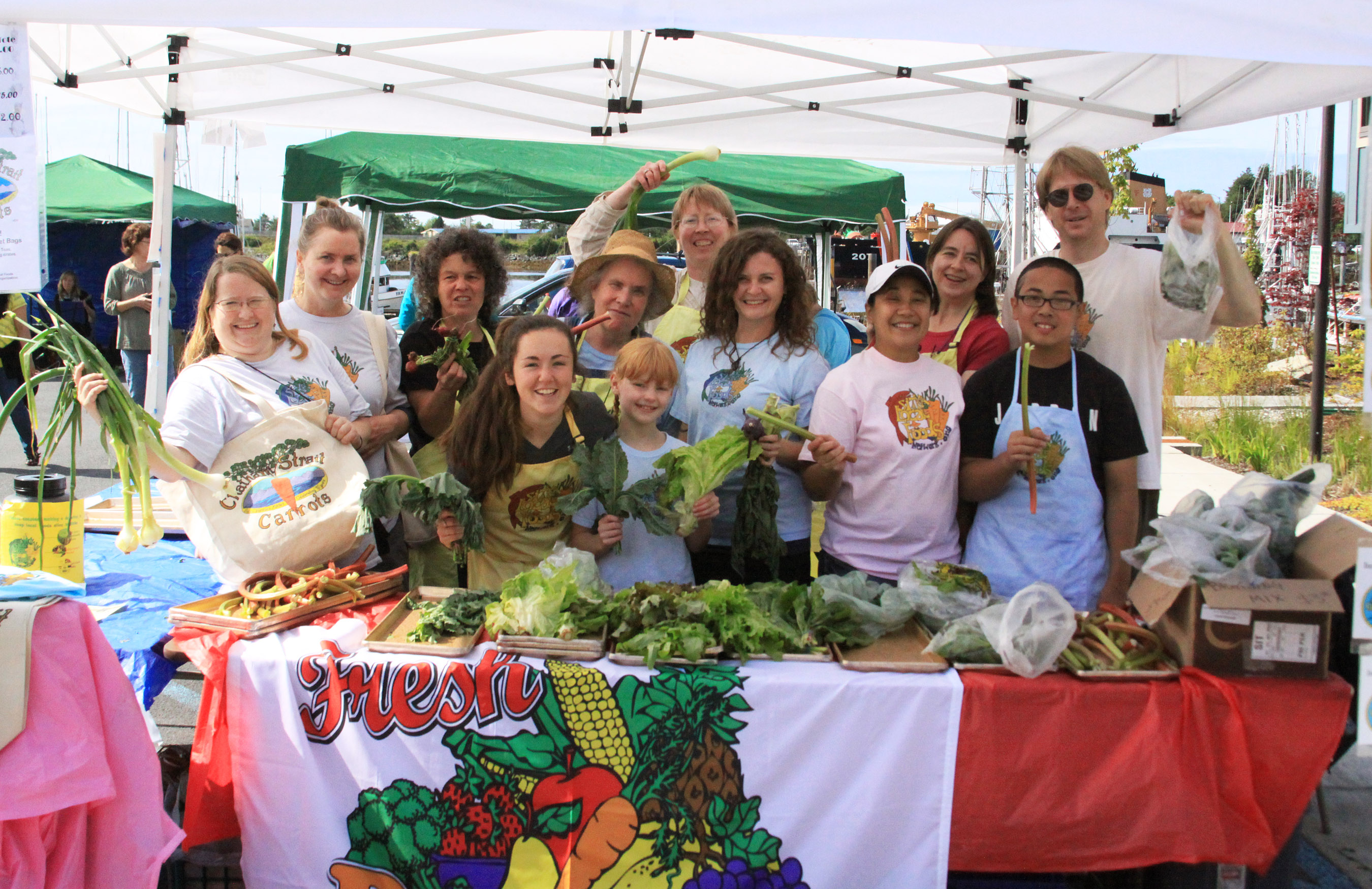
The Sitka Local Foods Network will host its sixth summer of Sitka Farmers Markets with six markets this year starting on July 6 and taking place on alternate Saturdays through Sept. 14. The Sitka Farmers Markets give Sitka residents a chance to buy and sell locally produced food and crafts.
The Sitka Farmers Markets take place from 10 a.m. to 1 p.m. on Saturday, July 6, 20, Aug. 3, 17, 31, and Sept. 14 at the Alaska Native Brotherhood Founders Hall (235 Katlian St.). The markets feature local seafood (fresh, frozen, and cooked, ready to eat), locally grown and harvested fruits and vegetables, baked goods, locally made jams and jellies, live entertainment, locally brewed and roasted coffee, music, local arts and crafts, and a variety of other items gathered or made in Sitka. We emphasize local products and lots of fun. We are the first farmers market in Southeast Alaska to accept WIC coupons and Quest EBT for Food Stamps. You also can vote for the Sitka Farmers Market in the America’s Favorite Farmers Markets contest by following the links at http://www.sitkalocalfoodsnetwork.org/.
“The Sitka Farmers Market is a great way to connect with community members and support local entrepreneurs,” Sitka Local Foods Network Board President Lisa Sadleir-Hart said. “Circulating your dollars locally also has a multiplying effect and helps your neighbors.”
The Sitka Farmers Market started as a community wellness project that came out of a health priority planning meeting at the 2008 Sitka Health Summit. These events are sponsored by the Sitka Local Foods Network, Alaska Native Brotherhood Camp No. 1, Alaska Native Sisterhood Camp No. 4, Baranof Island Housing Authority, the Alaska Farmers Market Association and the SEARHC Health Promotion and Diabetes Prevention programs.
“We are excited to have Bridget Kaufmann, bread-baker extraordinaire and former vendor, as our new market manager,” Sadleir-Hart said. “Bridget brings loads of enthusiasm and some new ideas to the market and is focused on creating a sustainable market that can be in Sitka for the duration.” AmeriCorps volunteers Sabrina Cimerol and Garrett Bauer will assist Bridget and share co-market managing duties. “As always the market will be a place to support the growing local food movement in Sitka and learn more about how to eat more sustainably.”
Vendor fees are $30 for a 6-foot table, $40 for an 8-foot table and $20 for a 4-foot table. Vendors with their own tents pay $5 per foot. As always, we offer cost incentives for vendors growing locally produced food. The fees will help us cover the costs of renting ANB Founders Hall and its kitchen, hiring musicians and other expenses. To learn more about being a vendor or to sign up for a table, contact Sitka Farmers Market Coordinator, Bridget Kauffman at 738-8683 or by e-mail sitkafarmersmarket@gmail.com. Vendor rules, registration forms and other information for potential vendors can be found on the Documents page at http://www.sitkalocalfoodsnetwork.org/.
(The following is from a press release from the Alaska Department of Natural Resources Division of Agriculture)
PALMER, Alaska – Eleven farmers markets throughout Alaska, including the Sitka Farmers Market, are now accepting Quest Cards, enhancing the state’s efforts to make healthy, locally-grown food available to Alaska households. Six markets (including Sitka) accepted the cards in 2012, and two markets accepted them in 2011, according to the Division of Agriculture.
The Alaska Quest Card is used by households qualified through the Alaska Food Stamp Program to purchase food from farmers markets and grocery stores.
“This program improves access to fresh, local foods to community members who are struggling financially. Additionally, the program helps increase understanding of food insecurity issues in our community and how produce and other food vendors can be part of the solution,” said Lisa Sadlier-Hart, manager of the Sitka Farmers Market (Editor’s note: A correction, Sadleir-Hart is president of the Sitka Local Foods Network board of directors, which hosts the Sitka Farmers Markets; Bridget Kauffman is the market manager).
Quest cards are accepted in the following locations:
Anchorage
Spenard Farmers Market; the Anchorage Farmers Market; and the South Anchorage Farmers Markets (Saturday and Wednesday)
Kenai Peninsula
Anchor Point Saturday Farmers Market & Swap Meet, and the Homer Farmers Market
Western Alaska
The Bethel Farm Stand and the Dillingham Farmers Market
Fairbanks
Downtown Fairbanks Market and Calypso School Garden Farm Stands
Southeast Alaska
Sitka Farmers Market
These markets will also host Match Days, when Quest card holders can get twice the amount of fresh, local food for the first $20 spent with their cards. Match Days are listed below:
Anchorage and Kenai Peninsula
First market of the month (markets happening twice a week will have matching both days);
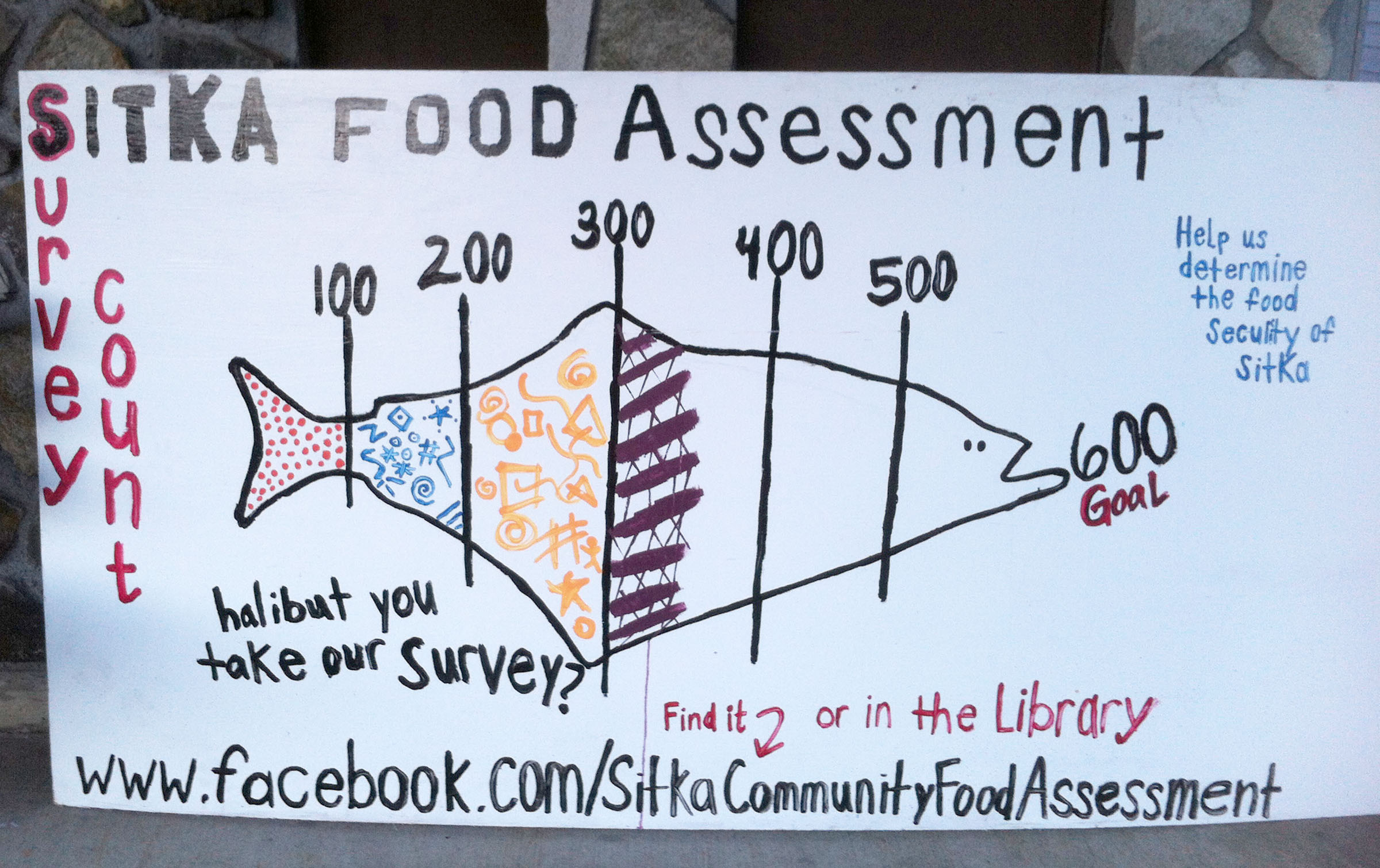
The deadline for surveys to be completed in the Sitka Community Food Assessment has been extended to the end of the month. Our goal is 600 completed surveys and as of Tuesday, May 21, we had 392 that had been recorded.
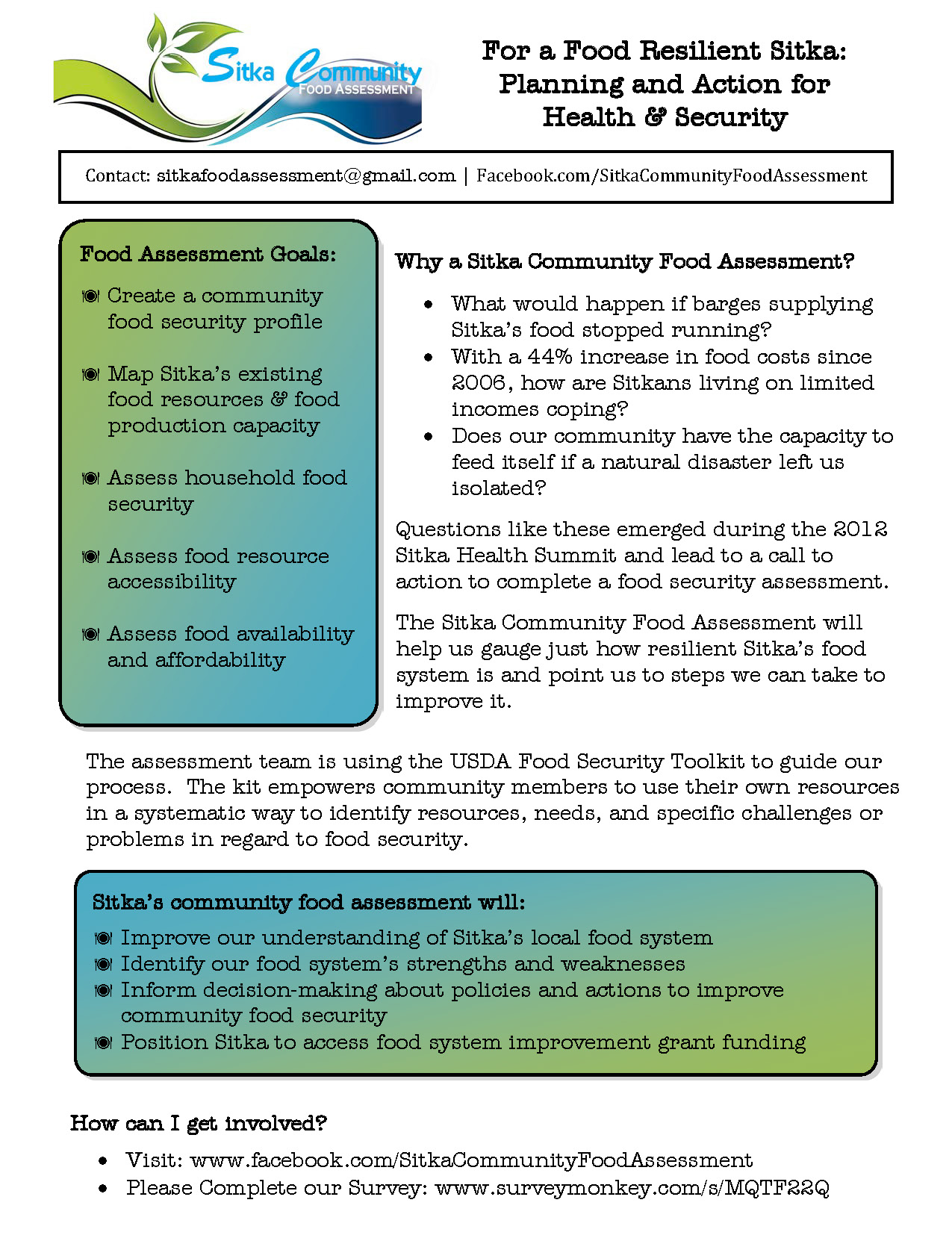
The Sitka Community Food Assessment is a 2012 Sitka Health Summit project designed to help shape food policy and improve Sitka’s food security. To learn more about the project, KCAW-Raven Radio hosted an interview with project coordinator Lisa Sadleir-Hart that aired on Monday, May 20.
Surveys are available online at https://www.surveymonkey.com/s/MQTF22Q, or click the Sitka Community Food Assessment logo in the right column of this webpage. Printed copies are available at Kettleson Memorial Library. A sign has been posted at the corner of Lincoln and Lake streets to update people on the progress of the project.
Millions of people around the world, including several in Sitka, will take a stand by hosting a local March Against Monsanto. The Sitka march takes place at 2 p.m. on Saturday, May 25, at Castle Hill. So far, more than 370 marches around the world are planned on May 25.
The Sitka March Against Monsanto is being organized by Brett Wilcox, who has created a Facebook page with more details. Brett and his 14-year-old son, David, will take things a step (OK, many steps) further when they start a transcontinental run across the country in January to raise awareness about some of the ethically challenged practices of the agri-business Monsanto. These include creating GMO (genetically modified) foods that are unlabeled and untested, putting patents on crop seed so farmers have to pay high fees to plant food, and more.
In addition to the march, various Sitka residents will speak on a variety of topics, such as how GMO-food causes health problems, the number of former Monsanto executives who now work for our government, farmer suicides in India due to Monsanto practices, the Monsanto Protection Act slipped into the recently passed US Farm Bill, etc.
This month, Brett hosted free Monsanto Movie Nights at 7 p.m. on Fridays, May 10, 17 and 24, at Harrigan Centennial Hall.
According to a press release about the event:
Sitka’s March Against Monsanto will be held on Castle Hill, the location where Russia sold the vast territory of Alaska—land it did not own—to the U.S.A.
March organizer, Brett Wilcox, chose Castle Hill for Sitka’s March Against Monsanto for its symbolic significance. “There are many similarities between the original ‘Land Grab’ that took place with the first European expansion and Monsanto’s current global ‘Seed Grab,'” Wilcox states. “Both involve the privatization of Nature, a concept that was largely foreign to Native Americans and Alaska Natives. And both have resulted in loss of freedom and loss of life. The difference is that Monsanto’s seed grab not only further disenfranchises Native Americans; it disenfranchises all nations and all people. The citizens of the world are, as it were, sitting in our canoes in Sitka Sound, watching powerful people and corporations claim and repackage life as their own, thereby stealing our seed sovereignty and seed freedom.”
Chuck Miller, a Tlingit “Elder in Training”, will preside at the event. “My grandmother used to teach my family that we need to treat our food with respect or it will not provide for us,” Miller states. “My ancestors’ teachings are still a very big part of my life and I want to be able to pass that on to my children, grandchildren and those yet to come. GMOs are not the way to treat Mother Earth and the generations yet to come. I urge all the Native people of Alaska and our non-Native brothers and sisters to come and support this cause.”
“Sitka’s March Against Monsanto will not be a traditional march,” says Wilcox. “Sitka’s event will be a ceremony to honor nature as well as the indigenous people of Alaska and the Americas. We will stand on Castle Hill united with the people of the world in defense and protection of life and nature.”
For more information about the Sitka March Against Monsanto, contact Brett Wilcox at 747-7437 or brett@runningthecountry.com, or contact Chuck Miller at 752-9955 or cohomojo25@yahoo.com. KCAW-Raven Radio aired a story on Tuesday, May 21, about Brett’s and David’s plans to run across the country and to host this march. Brett also recorded a commentary for KCAW-Raven Radio.
(EDITOR’S NOTE: The following article first appeared on this site in April 2010. It is repeated because much of the information remains current and newsworthy.)
As you start to plan your garden for this spring and summer, don’t forget to Plant A Row For The Hungry. The Plant A Row For The Hungry program (also known as Plant A Row or PAR) is a national campaign by the Garden Writers Association of America that got its start in Alaska.
In the cold winter of 1994, Anchorage Daily News garden columnist and former Garden Writers Association of America President Jeff Lowenfels was returning to his hotel after a Washington, D.C., event when he was approached by a homeless person who asked for some money to buy food. Lowenfels said Washington, D.C., had signs saying, “Don’t give money to panhandlers,” so he shook his head and kept on walking. But the man’s reply, “I really am homeless and I really am hungry. You can come with me and watch me eat,” stayed with Lowenfels for the rest of his trip.
Jeff Lowenfels
The encounter continued to bother Lowenfels, even as he was flying back to Anchorage. During the flight, Lowenfels came up with an idea when he started writing his weekly garden column (the longest continuously running garden column in the country, with no missed weeks since it started on Nov. 13, 1976). He asked his readers to plant one extra row in their gardens to grow food to donate to Bean’s Café, an Anchorage soup kitchen. The idea took off.
When Anchorage hosted the Garden Writers Association of America convention in 1995, Lowenfels took the GWAA members to Bean’s Café to learn about the Plant A Row For Bean’s Café program. The Garden Writers Association of America liked the idea, and it became the national Plant A Row For The Hungry campaign (also known as Plant A Row or PAR). In 2002, the Garden Writers Association Foundation was created as a national 501(c)(3) nonprofit to manage the Plant A Row For The Hungry program.
“I am not surprised by the growth of PAR,” Lowenfels wrote in an e-mail to the Sitka Local Foods Network. “It is now in all 50 states and across Canada and there are thousands of variations of the original program — from prison gardens for the hungry to botanical gardens donating their produce from public display gardens. This is because gardeners always share information and extra food, so the idea was a natural.”
It took five years for the program to reach its first million pounds of donated food, but the second million only took two years and the next eight years saw a million pounds of donated food (or more) each year. Since 1995, more than 14 million pounds of food have been donated. Not only that, the program is getting ready to expand overseas to Australia, England and other countries with avid gardeners.
“We have supplied something in the vicinity of enough food for 50 million meals,” Lowenfels wrote in his e-mail. “Gardeners can solve this hunger problem without the government. And we don’t need a tea party to do it! Or chemicals, I might add, as author of a book on organic gardening (Teaming With Microbes, written with Wayne Lewis)!” (Lowenfels recently released a second book, Teaming With Nutrients, which is a follow-up to his first book).
According to the U.S. Department of Agriculture, one out of every eight U.S. households experiences hunger or the risk of hunger. Many people skip meals or eat too little, sometimes going an entire day or more without food. About 33 million Americans, including 13 million children, have substandard diets or must resort to seeking emergency food because they can’t always afford to buy the food they need. In recent years the demand for hunger assistance has increased 70 percent, and research shows that hundreds of children and adults are turned away from food banks each year because of lack of resources.
While many people credit Lowenfels for creating the Plant A Row For The Hungry program, Lowenfels says the real heroes are the gardeners growing the extra food and donating it to local soup kitchens, senior programs, schools, homeless shelters and neighbors. You can hear him pass along the credit to all gardeners at the end of this interview last year with an Oklahoma television station (video also embedded below).
“One row. That’s all it takes. No rules other than the food goes to the hungry. You pick the drop-off spot or just give it to a needy friend or neighbor. Nothing slips between the lip and the cup, I say,” Lowenfels wrote in his e-mail.
For people wanting to Plant A Row For The Hungry in Sitka, there are several places that would love to help distribute some fresh locally grown veggies or berries to those who are less fortunate, such as the Salvation Army, Sitkans Against Family Violence (SAFV), local churches, Sitka Tribe of Alaska and other organizations. The food the Sitka Local Foods Network grows at St. Peter’s Fellowship Farm communal garden goes to the Sitka Farmers Market.
The Sitka Local Foods Network also takes donations of local produce to sell at the Sitka Farmers Markets, and all proceeds are used to help pay for SLFN projects geared toward helping more people in Sitka grow and harvest local food. For more information, contact SLFN President Lisa Sadleir-Hart or one of the other board members at sitkalocalfoodsnetwork@gmail.com.
(The following editorial about protecting forage fish, such as Pacific herring, was submitted to local media on April 11 by Sitka Tribe of Alaska tribal chairman Michael Baines.)
State of Alaska Denies Herring Forage Fish Status
Currently Pacific herring are acknowledged as a keystone forage fish species that is responsible for maintaining the health of the marine ecosystem in the waters of California, Oregon, Washington and British Columbia (BC). As you cross the maritime boundary between BC and Alaska herring lose their forage fish status and become just another commercially harvested finfish. At a recent Board of Fish meeting in Anchorage, the Board heard testimony from fishery managers, the herring industry and the public on a proposal that would have acknowledged herring as a forage fish by adding them to the State’s Forage Fish Management Plan (FFMP).
The FFMP became effective in 1999 and was intended to prevent the development of new fisheries on forage fish while allowing existing commercial forage fisheries to continue. The Plan states that forage fish perform a critical role in the marine ecosystem by transferring energy from primary (zooplankton) and secondary (phytoplankton) producers to upper trophic level shellfish, finfish, marine mammals and sea birds. The Plan also recognizes that, “abundant populations of forage fish are necessary to sustain healthy populations of commercially important species of salmon, groundfish, halibut, and shellfish.”
The Alaska Department of Fish and Game commented that adding herring the FFMP would not affect the way it currently manages herring fisheries in the State. When asked by the Board if herring met the definition and fulfilled the role of a forage fish as described in the Plan, the ADF&G Southeast Regional Commercial Fisheries Coordinator responded that he felt they did.
Supporters of the plan stressed that herring are an ecological keystone species that are recognized around the world as a forage fish. The Federal government holds herring to a higher standard that other forage fish by having no directed fisheries on herring in federal waters and by listing them as a prohibited species that is not allowed to be retained as by-catch.
Herring industry representatives testified that they felt herring stocks are healthy, well managed and did not need to be acknowledged as a forage fish. Concerns were also expressed that listing herring as a forage fish would lead to changes in the way herring are managed. This would have required the State to look at herring in a different light. It may have paved the way for more conservative forage fish friendly management plans to be brought forth through the Board of Fisheries process in the future.
Unfortunately for Alaskans, this proposal was voted down on a 4-3 vote. Three of the opposing Board members are commercial fishermen or have ties to the commercial fishing industry. These Board members reiterated comments made by the industry that herring stocks are healthy, well managed and did not need to be listed in the plan.
The arguments put forth by the industry representatives and members of the Board in opposition to the proposal were not germane to the issue of adding herring to the FFMP. The health of a population has nothing to do with its definition as a forage fish. If this were the case the Lynn Canal and Prince William Sound herring stocks would be considered forage fish while the apparently healthy Togiak stock would not have the same status. Likewise, if acknowledging herring as a forage fish by adding them to the FFMP eventually changes the way stocks are managed, it should tell us something about their current management.
The acknowledgement of herring as a forage fish would have allowed managers to look at herring in a different light and might have paved the way for more conservative forage fish friendly management plans to be brought forth through the Board of Fisheries process in the future. Refusal by the State of Alaska to acknowledge herring as a forage fish sends a message to the world about Alaska’s biased Board of Fish process and the State’s priorities when it comes to managing its marine resources. Alaska boasts having the best managed fisheries in the world, but that reputation is now tarnished. It’s a sad day for Alaskans when greed and political influence win out over the common good of all who live in this great State.
If you feel the Board of Fisheries erred in their decision to deny herring forage fish status, you are encouraged to contact Alaska Governor Sean Parnell and the Board of Fisheries and request that the State reconsider adding herring to the State’s FFMP. This is an Alaskan resource that needs to be managed for the benefit of all Alaskans.
(Sent to)
Governor Sean Parnell, P.O. Box 110001, Juneau, AK 99811-0001, Phone (907) 465-3500, governor@alaska.gov
and
Alaska Department of Fish and Game, Board of Fisheries, P.O. Box 115526, 1255 W. 8th Street, Juneau, AK 99811-5526
The Sitka Community Food Assessment work group is encouraging Sitkans to complete a 36-question survey that explores questions about local, wild food, seafood, game and plants (i.e., how do you fish, hunt, gather and/or grow). It also explores issues of food security, as well as where folks shop and how much food they store.
The data collected will augment data coming from our secondary data collection efforts, which focuses on sport and subsistence harvest data for fish and game, as well as data on food assistance programs, food producers and food costs. It also will include focus group data that we will be gathering over the next 4-6 weeks.
Collectively, the work group hopes to present the findings at a Sitka Food Summit that will take place in November 2013. Then the group will begin strategic planning to address our issues and improve food access for all Sitkans.
Paper copies of the survey are available at the Kettleson Memorial Library. The survey is open through the end of April. For more information, email sitkafoodassessment@gmail.com. This is one of three community wellness projects voted on for this year by Sitka residents attending the 2012 Sitka Health Summit.
In addition to the dozen films, the festival will feature an appearance by Tlingít chef Robert Kinneen about the Store Outside Your Door (a project with the Alaska Native Tribal Health Consortium (ANTHC) promoting healthy traditional foods). There also will be a roundtable discussion about Sitka’s food resiliency (food security).
The festival opens with a feature film TBA at 8:30 p.m. on Friday night at the Larkspur Cafe.
On Saturday at Harrigan Centennial Hall, the schedule includes Ratatouille (a family friendly movie) at 10 a.m., Ingredients at 12:30 p.m., End of the Line at 2:30 p.m., Two Angry Moms at 3:45 p.m., followed by a roundtable discussion about Sitka’s food resiliency from 5:30-6:30 p.m. Saturday’s schedule concludes with another feature film TBA at 8:30 p.m. at the Larkspur Cafe.
Besides the Sitka Conservation Society, the film festival is sponsored by the Alaska Sustainable Fisheries Trust, SEARHC, Sitka Food Co-op, ArtChange Inc., Sitka Film Society, Alaska Pure Sea Salt Co., and the Larkspur Cafe. On Tuesday, Feb. 19, Tracy Gagnon with the Sitka Conservation Society and Andrianna Natsoulas with the Alaska Sustainable Fisheries Trust were interviewed on KCAW-Raven Radio’s Morning Edition program about the film festival, and you can click here to listen to the interview.
Size comparison of an AquAdvantage® Salmon (background) vs. a non-transgenic Atlantic salmon sibling (foreground) of the same age. (CREDIT AquaBounty)
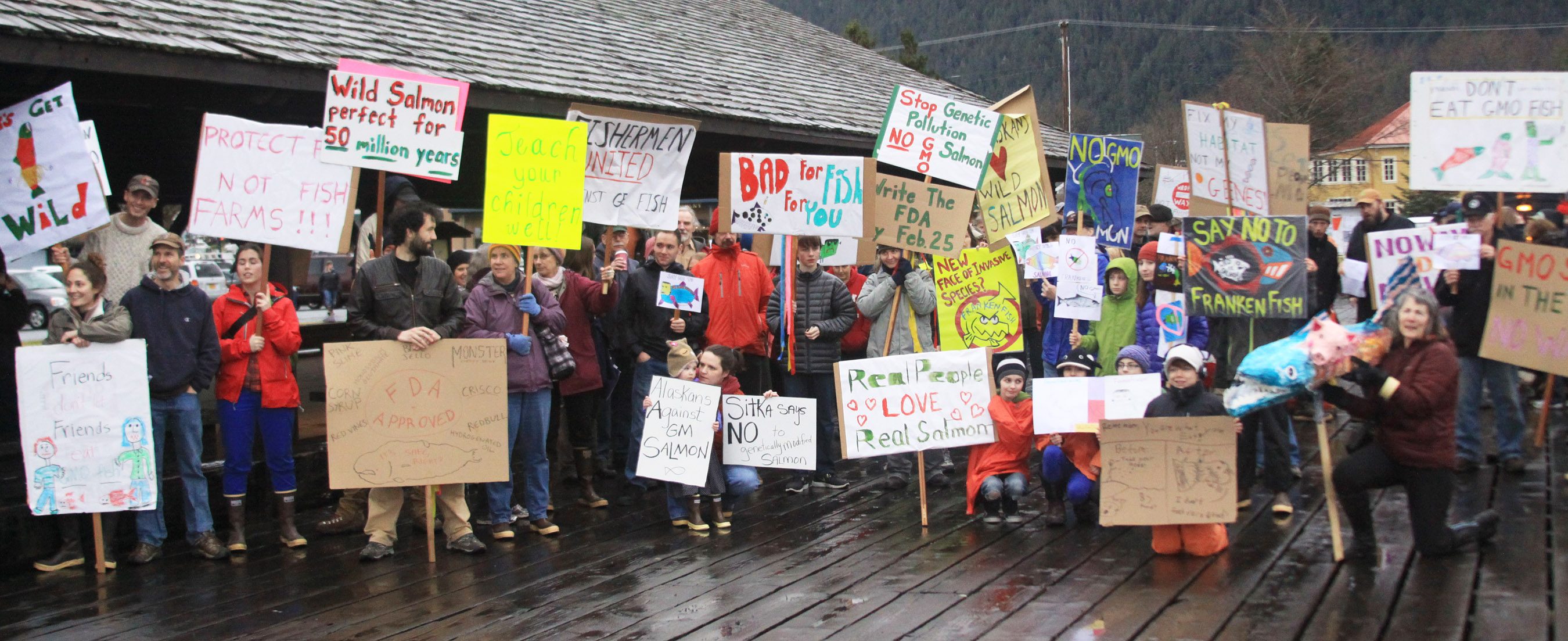
Between 100 and 150 Sitka residents braved the wind and rain on Saturday, Feb. 9, at the Crescent Harbor Shelter to protest the possible U.S. Food and Drug Administration (FDA) approval of genetically modified salmon (aka, GMO or GE salmon, or Frankenfish).
The rally (click here to listen to rally coverage from KCAW-Raven Radio) was in protest of a genetically engineered salmon from the Massachusetts company AquaBounty Technologies, called the AquAdvantage® Salmon. The GMO salmon starts with an Atlantic salmon commonly used in fish farms, but adds genes from a Pacific king (chinook) salmon to promote growth and genes from an eel-like fish called an ocean pout that grows all year round instead of seasonally. According to AquaBounty, all of the commercialized fish will be female and sterile, and the fish are designed to be raised in fresh-water pens or tanks on land instead of the usual salt-water pens where most farmed Atlantic salmon are raised. AquaBounty promotes the fish as a faster-growing farmed salmon that takes half the time to reach maturity and be sent to market. To learn more about GMO salmon, read our post from 2010.
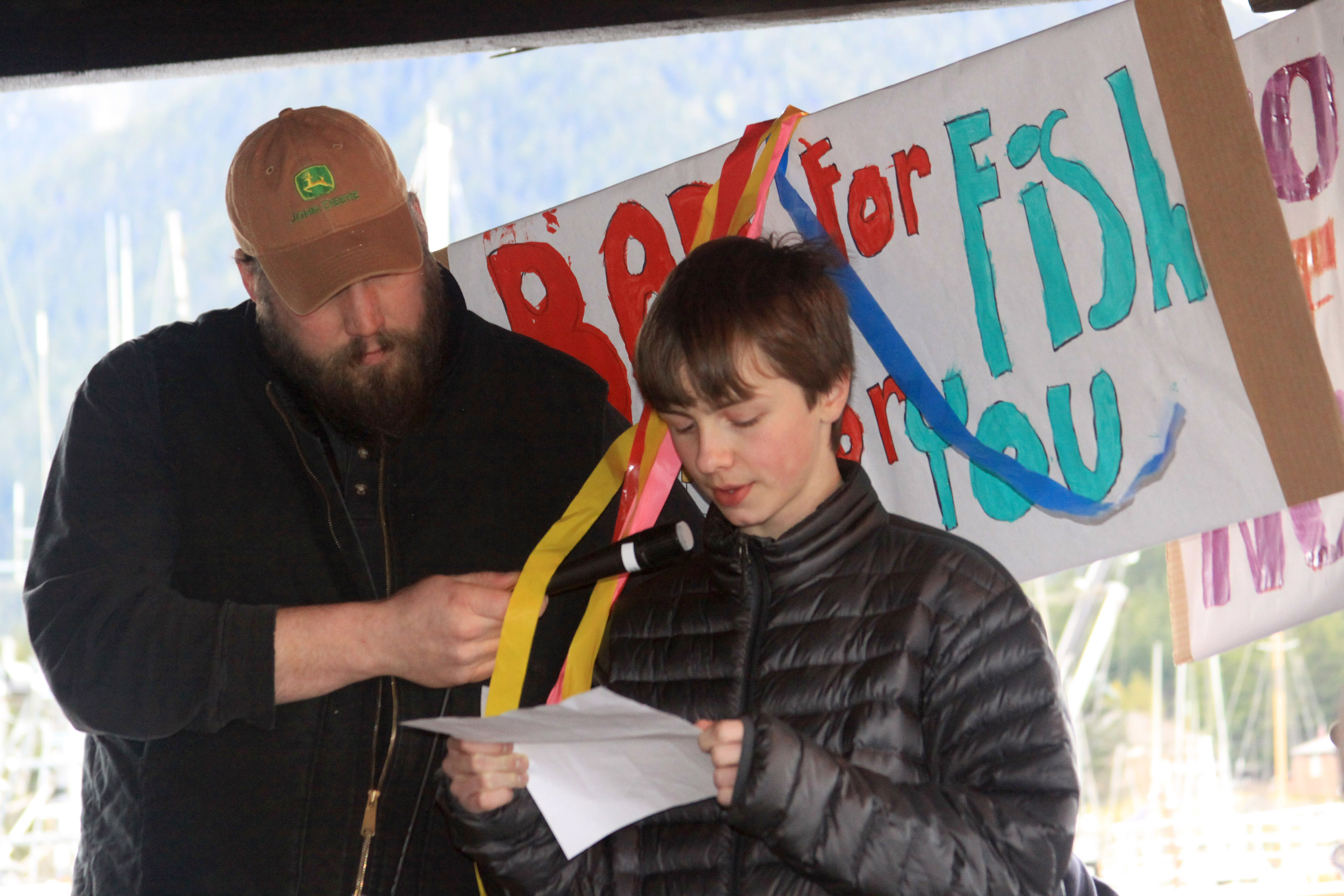
Paul Rioux — the Sitka resident who organized the rally with the help of local fishing groups, the Sitka Conservation Society, and others — said fishermen are concerned about what happens if these GMO salmon escape from pens. He noted that while AquaBounty said the fish will be sterile, other scientists said as many as 5 percent could be fertile, and that’s enough so that the GMO salmon as an invasive species could replace wild Pacific salmon within 40 salmon generations. David Wilcox, a 14-year-old Sitka resident who plans to run across the country to protest GMO foods, spoke for the other residents who said they were concerned with genetically engineered fish in general, and they worried this fish might go to market without being labeled as GMO salmon. (Click here to listen to Rioux, Wilcox and Ray Friedlander of the Sitka Conservation Society discuss why they held the rally during a Feb. 8 Morning Edition interview on KCAW-Raven Radio.)
The FDA, which has been looking at GMO salmon for more than a decade (AquaBounty started work on the fish in 1989), announced in December it planned to approve the genetically engineered fish, just in time for the holidays. At the same time, the FDA finally released environmental impact research papers it was supposed to have released in May. The FDA announcement also started a 60-day public comment period that was supposed to end on Feb. 25. On Feb. 13, the FDA extended the comment period until April 26. Sitka residents are encouraged to go to Regulations.gov and search for “GE salmon” (not “GMO”) to comment on the regulations before the April 26 deadline.
Alaska’s Congressional delegation agrees on few items, but Sen. Mark Begich, Sen. Lisa Murkowski and Rep. Don Young have been united for a couple of years in their efforts to stop Frankenfish. Sen. Begich this week introduced two bills banning GMO salmon. Last May, Sen. Murkowski introduced an amendment (that failed 50-46) requiring more study of GMO salmon by the National Oceanic and Atmospheric Agency (NOAA). In the House, Rep. Young has been one of the most vocal opponents of Frankenfish and in February he introduced a bill requiring GMO salmon be labeled. In the Alaska House of Representatives, Rep. Geran Tarr (D-Anchorage) and Rep. Scott Kawasaki (D-Fairbanks) introduced an anti-Frankenfish bill that passed out of the House Fisheries Committee this week.

 The following is a note sent to members of the Alaska Food Policy Council listserv by Diane Peck, MPH, RD, a public health nutritionist with the Alaska Department of Health and Social Services Obesity Prevention and Control Program. Diane also is one of the lead contacts for the Alaska Food Policy Council.











 Sitka Local Foods Network
You must be logged in to post a comment.