• Hoonah Healing Community Garden helps Hoonah improve health and prevent diabetes

End of May 114

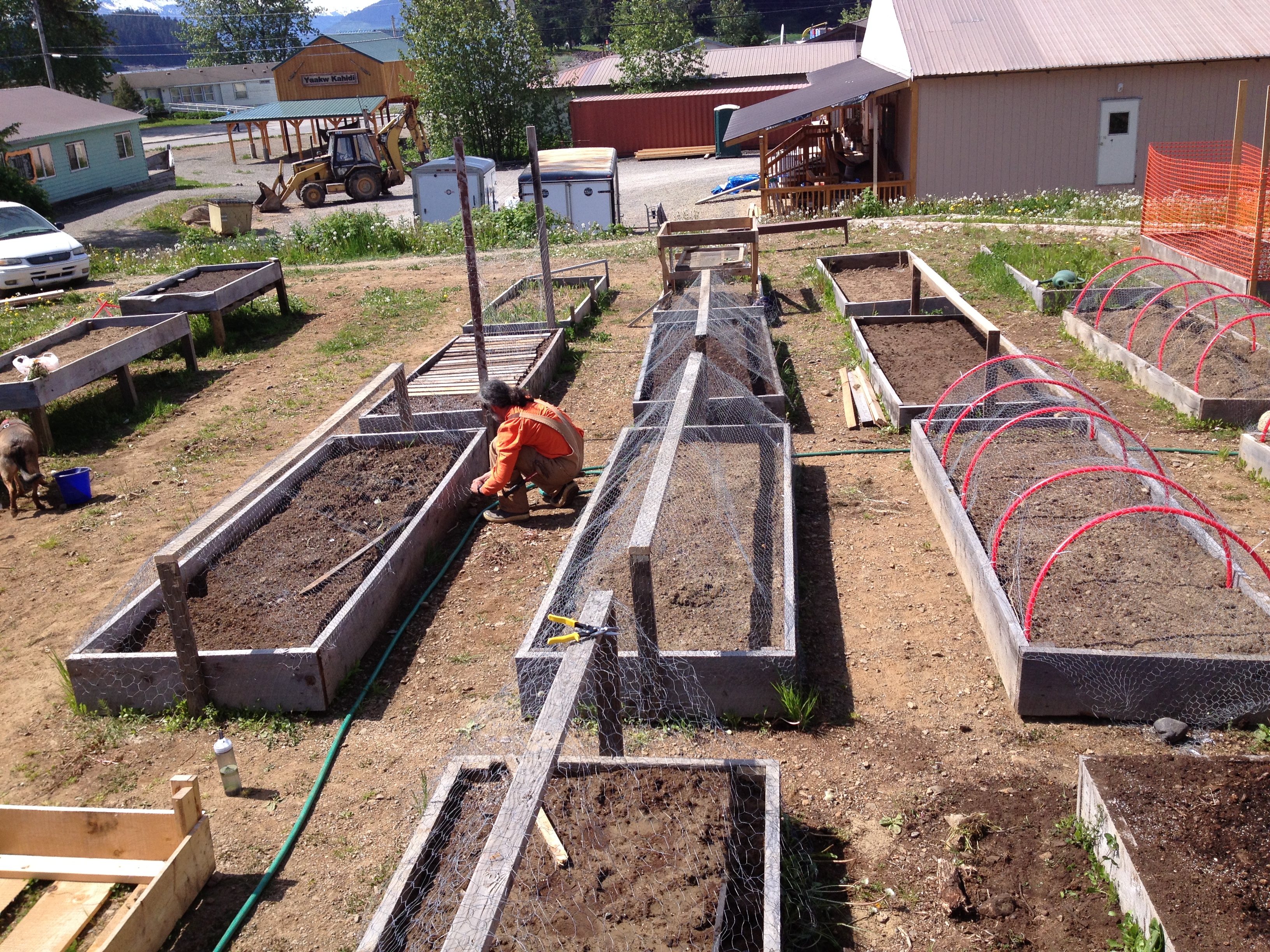
Terrence McCrobie builds three Hoonah Healing Community Garden plots for the Hoonah Senior Center in May 2015. (Photo by Kathy McCrobie)

By Kathy McCrobie
SEARHC Traditional Foods Project Assistant

Creating the Hoonah Healing Community Garden was Bob Starbard’s idea. He is the Hoonah Indian Association‘s (HIA) Tribal Administrator. He worked with Bob Christensen from Southeast Alaska Conservation Council (SEACC), and by 2012 our first plots had been built.

I was hired by SouthEast Alaska Regional Health Consortium (SEARHC) as the Traditional Foods Project Assistant. When I took over for the 2013 growing season, I really had no gardening experience. I posted notices for the community to let them know the garden was available. We had 22 plots available for growing, and that summer half were in production.

Many community members made important contributions; our gravel business donated two large loads of fine sand and the time and skills shared made building the garden easier. Soon there was a dirt sifter to screen out the many rocks in the local dirt and heavy equipment leveled the ground. The Southeast Soil and Water Conservation District in Juneau sold us 14 berry plants at a discounted price. A community member donated 30 strawberry plants. Our space was soon coming together.

Most of our gardeners have prior gardening experience. Some used their own soil. Last year the zucchini, broccoli, potatoes, beets, bush beans and snap peas did well. The biggest challenge came from the ravens. After putting in starts, out of their curiosity, they would fly down when everyone left and pull them up.

We ask that our gardeners not use fish in their compost so the bears won’t come by to check us out and so far the deer have left the plots alone. Lia Heifetz from the Sustainable Southeast Partnership was a big help with our garden last year; she acquired some fence to protect our plots from critters. We hope to get the fence up this year. Lia also came to the William and Mary Johnson Youth Center to teach the Big Brothers Big Sisters of Hoonah about composting with her worm bin and then we gathered seaweed for the garden.

For 2015 we are off to a great start with six returning and four new gardeners. Community members donated 20 raspberry plants and 20 gooseberry plants. Through the program, I purchased and planted a Nadine plum tree and a Terry Berry apple tree. My husband volunteers at the Hoonah Senior Center and is helping me with the traditional foods plot, as well as planting three plots for the seniors.

I just received an email from Lauren Hughey, a Community Health Educator based out of SEARHC Sitka. What exciting news! They just received a diabetes grant carry-forward. With the approval of this grant, Hoonah will receive $1,650 with the main goal of reducing the financial barriers to gardening for American Indian/Alaska Native diabetic patients. This grant will pay for plot fees and gardening supplies in the community garden: soil, seeds, raised-bed repair supplies, shovels, pots, gloves, buckets, and cold frames.

If you are ever in Hoonah please stop by to see us.   The garden is in town next to the Sacred Heart Catholic Church. Sharing about the Hoonah Healing Community Garden lets our and other communities be informed that food security starts with us. Also that it really does work! For additional information, feel free to contact me at kathymc@searhc.org.

A slideshow of Hoonah community garden photos from former Sitka Local Foods Network board member Cathy Lieser is posted below.
This slideshow requires JavaScript.

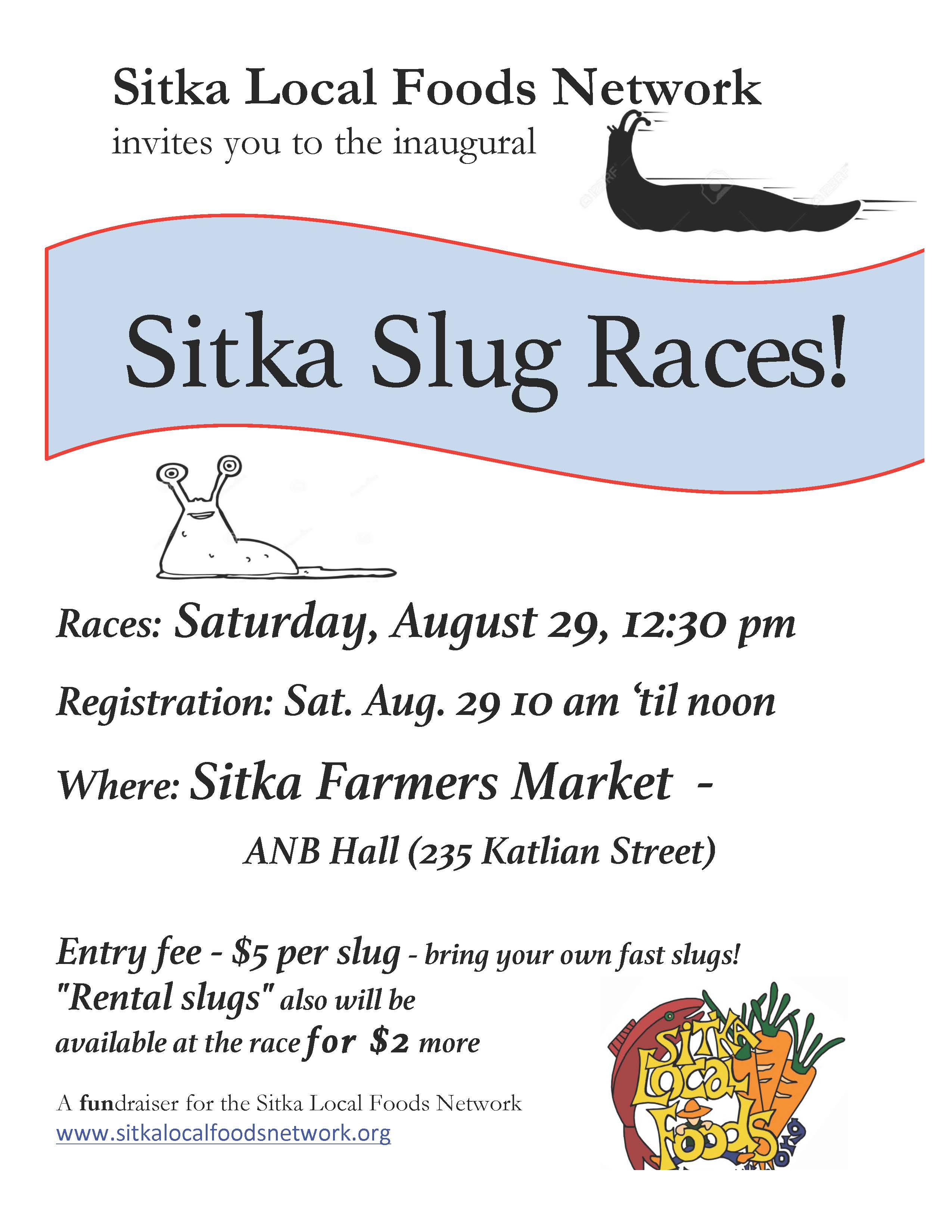
• Sitka Local Foods Network education committee announces the inaugural Sitka Slug Races

Slug Races Sign

The Sitka Local Foods Network education committee invites Sitkans to take part in Sitka’s first slug races.

“Do slugs move into your garden faster than a speeding bullet? Are you sure your slugs are breeding with Olympic runners and pole vaulters? Could you have the next winner of the Triple Crown? The Sitka Local Foods Network invites you to come and put your fastest slug to the test against Sitka’s best!” race organizer and SLFN board member Michelle Putz said.

The SLFN education committee will hold its inaugural Sitka Slug Races at 12:30 p.m. on Saturday, Aug. 29, at the fifth Sitka Farmers Market of the summer at the Alaska Native Brotherhood Founders Hall (235 Katlian St.). Registration for the race is from 10 a.m. until noon.

Those interested in participating  will pay $5 per slug entered into the race. Participants are encouraged to bring their own fast slugs, but “rental slugs” will also be available at the race. The participants with the three fastest slugs in Sitka will be crowned and awarded a certificate and commemorative pin.

“Slug races help to support Sitka Local Foods Network’s mission to increase the amount of locally produced and harvested food in the diets of Southeast Alaskans,” Michelle said. “By getting slugs out of our gardens and into the race arena, we are saving valuable cabbage, kale, onions, and other foods from their hungry mouths. And we’ll find out which slugs were tromping to and through our gardens the quickest!”

We ask those who bring slugs to only bring black slugs, which are not native to Sitka, and not the California banana slugs which are native (can grow to three inches or longer, usually yellow or shades of green). Also, please don’t release your slugs in new places. We don’t want to introduce any invasive species, and the black slugs (sometimes brown or gray) are pretty destructive to Sitka gardens.

Funds raised will be used to support the network’s projects and activities including family garden mentoring, garden education classes, the Sitka Farmers Market, and the St. Peter’s Fellowship Farm communal garden.

For more information about helping with the race or the SLFN education committee, please contact Michelle Putz at 747-2708.

• Saving seeds helps improve your future food crops, and it can be an act of defiance


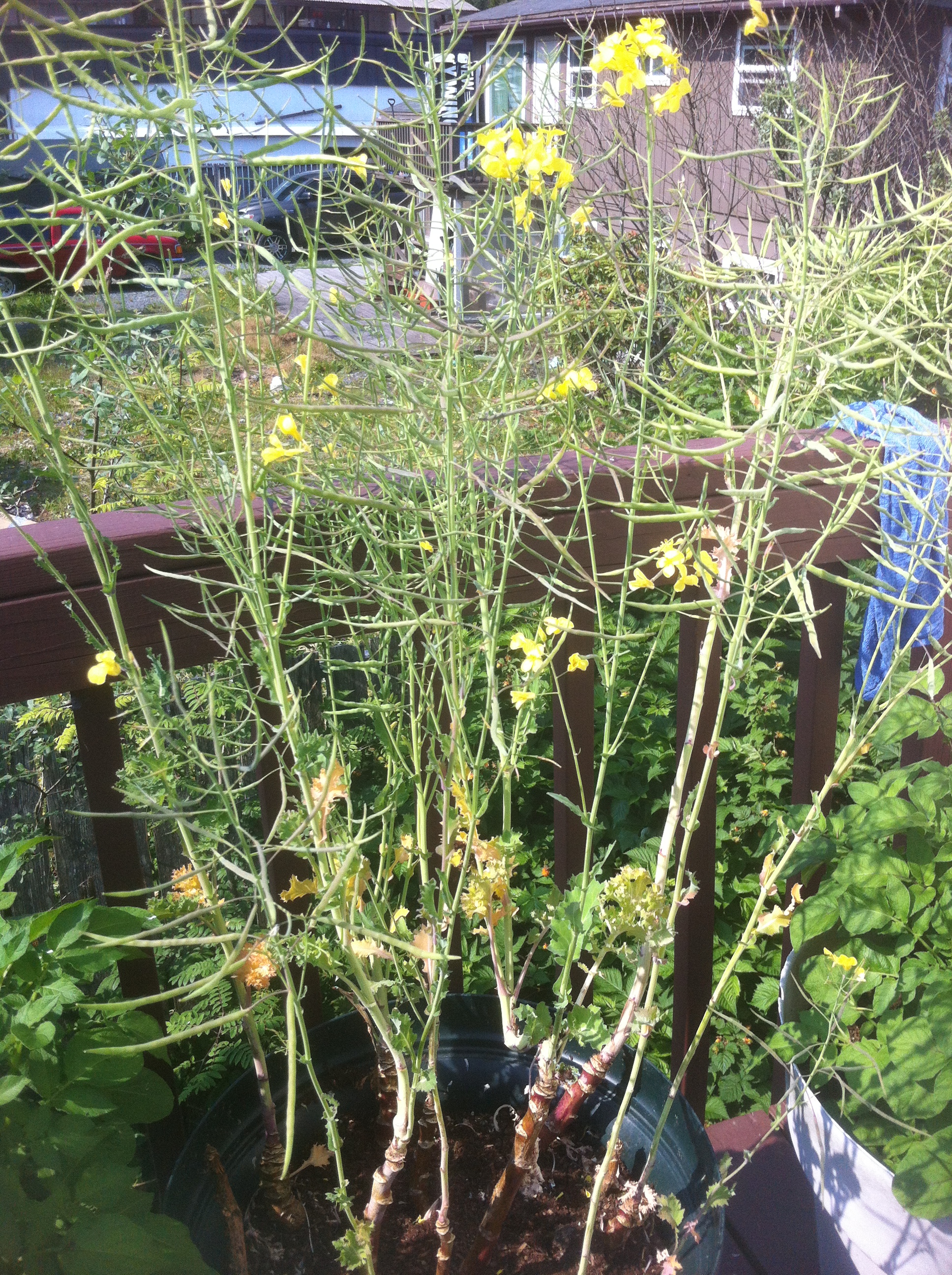
Container of kale bolting (going to seed)

Container of kale bolting (going to seed)

photo 2

Collected kale seed

Farmers have been saving seeds for thousands of years, but in recent years saving seeds also has become an act of defiance. Saving seeds is a way to preserve and improve the biodiversity of your crops, while also thumbing your nose at agribusiness giants such as Monsanto who have made it difficult and even illegal for small farmers to save their own seeds.

In Sitka, saving seeds means preserving the best crops that grow in our rainy climate. You also can share seeds among friends to help them get the best varieties of a particular crop.

photo 1

Kale seed pods ready to be split so the seeds can be extracted and saved

So how do you do it? Saving seeds isn’t that difficult and there are many resources available online that can give you the basics. Here is a primer on saving seeds from the Colorado State University Cooperative Extension Service, and the Seed Savers Exchange provides these resources.

The John Trigg Ester Library, located in the town of Ester just outside Fairbanks, provides a list of Alaska resources for saving seeds. The Growing Ester’s Biodiversity program is believed to be the state’s only official seed library, where saved seeds are collected with the intention of sharing them with other gardeners and farmers. That’s different from a seed bank, where seeds are collected and stored, but not for sharing. Here is a FAQ page about how people can borrow seeds from the Ester seed library, and here is a tutorial from the seed library about saving tomato seeds.

Deirdre Helfferich, who also is the managing editor for the University of Alaska Fairbanks Agricultural & Forestry Experiment Station, coordinates the Growing Ester’s Biodiversity seed library at the John Trigg Ester Library. This is how she explains the difference between a seed library and a seed bank, and this is why she says we need to save seeds:

A seed bank is a depository for the owners of its seeds or germplasm. So, the Svalbard Global Seed Vault (in Norway) is a seed bank. Until recently, Native Seeds/SEARCH  (in Tucson, Ariz.) was a seed bank with limited availability for growing. It now has a seed library program.

The basic difference is the mode of preservation and distribution: the bank holds the seeds for its depositors, and as though the seeds are in a museum, to be regenerated only every so often to keep the line going. Seed banks won’t just share the seed with anyone, and will store their seed in deep dormancy as long as possible.

A seed library, on the other hand, preserves through distribution and growth each year. This means that the plants tend to adapt to the local where they are grown over time, of course, and don’t remain unchanged.

Seed libraries are also usually focused on the traditions and human context associated with the seed: what it means, the stories associated, the uses, the histories, etc. Seed libraries have to do with the cultures in which their charges were domesticated, preserved, passed down, donated. This can be as simple as “We traditionally use this tomato in grandma’s lasagne recipe so we call it Grandma’s Lasagne Tomato,” to “This tomato has been in our family for generations back when we were living in a little village in Italy and tomatoes were first introduced from the New World.”

The other thing about seed libraries is that they are libraries, and a library is grounded in sharing, in the abundance mentality. One gives away, trusting that good things will come back. And that network of relationships builds a community of trust. Contrast this to a bank, which holds its contents at bay from a hostile world.

Of course, we need things like Svalbard because there ARE nuts out there running our regulatory agencies and monocropping everything to the point where we simply may not have the variety we need. Seed libraries and seed banks offer two kinds of bulwarks to the crazies.

In an earlier conversation, Deirdre said part of the mission of the Ester seed library is “to inspire other seed library programs or variations on the theme.” With that in mind, I decided to see if I could save some seed.

HangingKaleSeedPodBagphoto

My bag of kale seed pods hanging in my living room to dry

I’m not the most experienced gardener, but this year I had a container of second-year kale that bolted after growing all winter (see photo at top of article), providing me with a nice crop of seed pods instead of leafy kale this summer. So, rather than toss the kale, I decided to collect the seed pods and see if I could save some seed.

Since it’s so rainy in Sitka, I couldn’t dry the seed pods outdoors. So I threw them into a plastic shopping bag and hung them in my living room for a month or two (out of the reach of my cats).

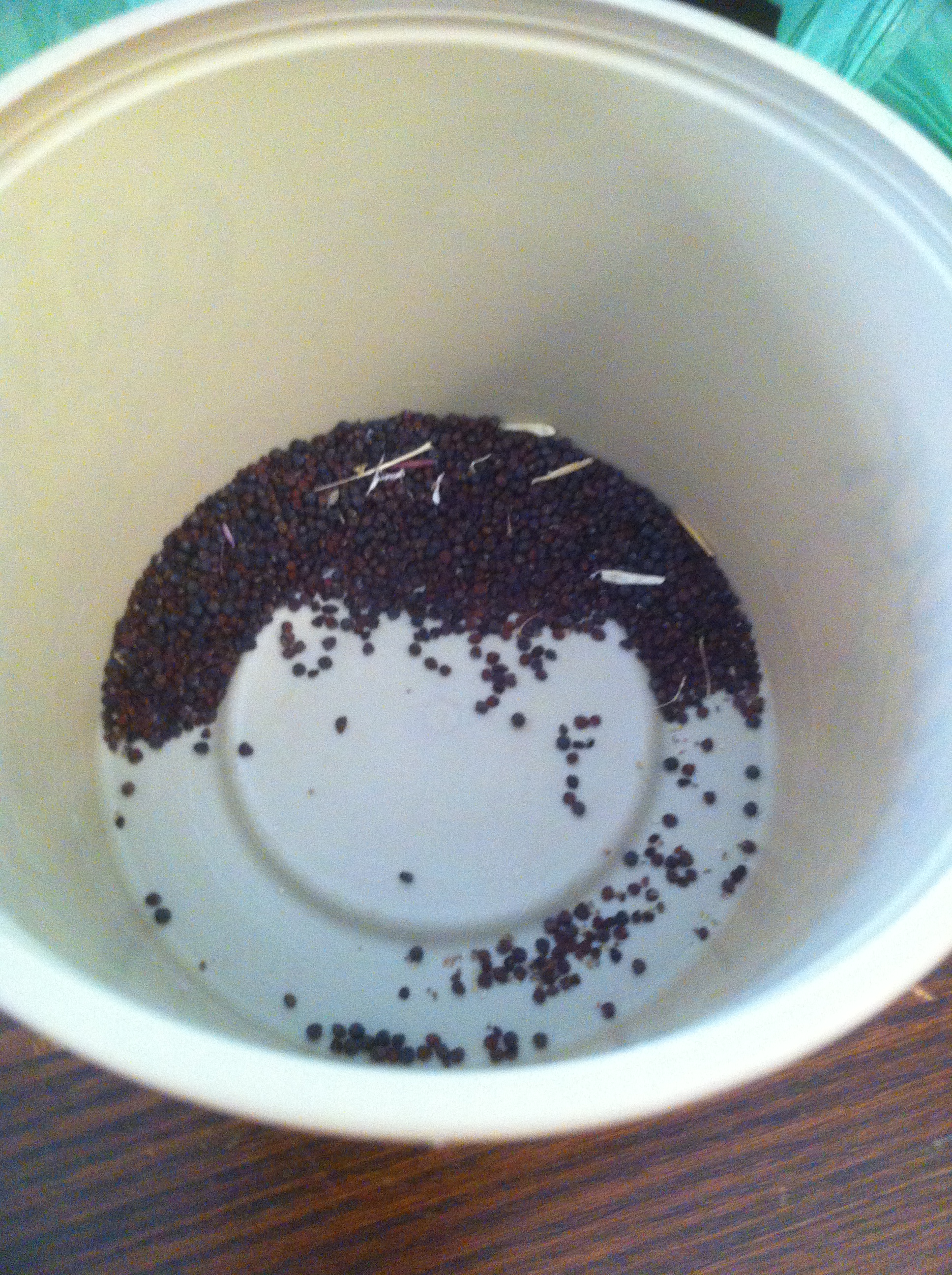
When the seed pods were finally dry enough so you could split them like shelling peanuts, I took the bag down and started collecting the seeds in a plastic margarine tub (see third photo). It can be somewhat tedious work, splitting all the seed pods to get the seeds loose, but it also can be meditative. Once you have all of the seeds separated from the seed pods, you should store them in a cool, dry place until you are ready to germinate them. Hopefully, these kale seeds will sprout next spring.


• USDA Natural Resources Conservation Service offers funding support program for high tunnels

picture8

The deadline is coming up for the next round of applications for the U.S. Department of Agriculture’s Natural Resources Conservation Service (NRCA) cost-sharing program. This program enables qualifying landowners who produce food to build high tunnels with financial assistance from the USDA.

The next NRCA Alaska program deadline is June 15. However, the program usually sets two applications deadlines a year so applications can be batched and ranked. Applications that miss the June 15 deadline will be held for the next deadline (usually Sept. 15, but it hasn’t yet been posted online).

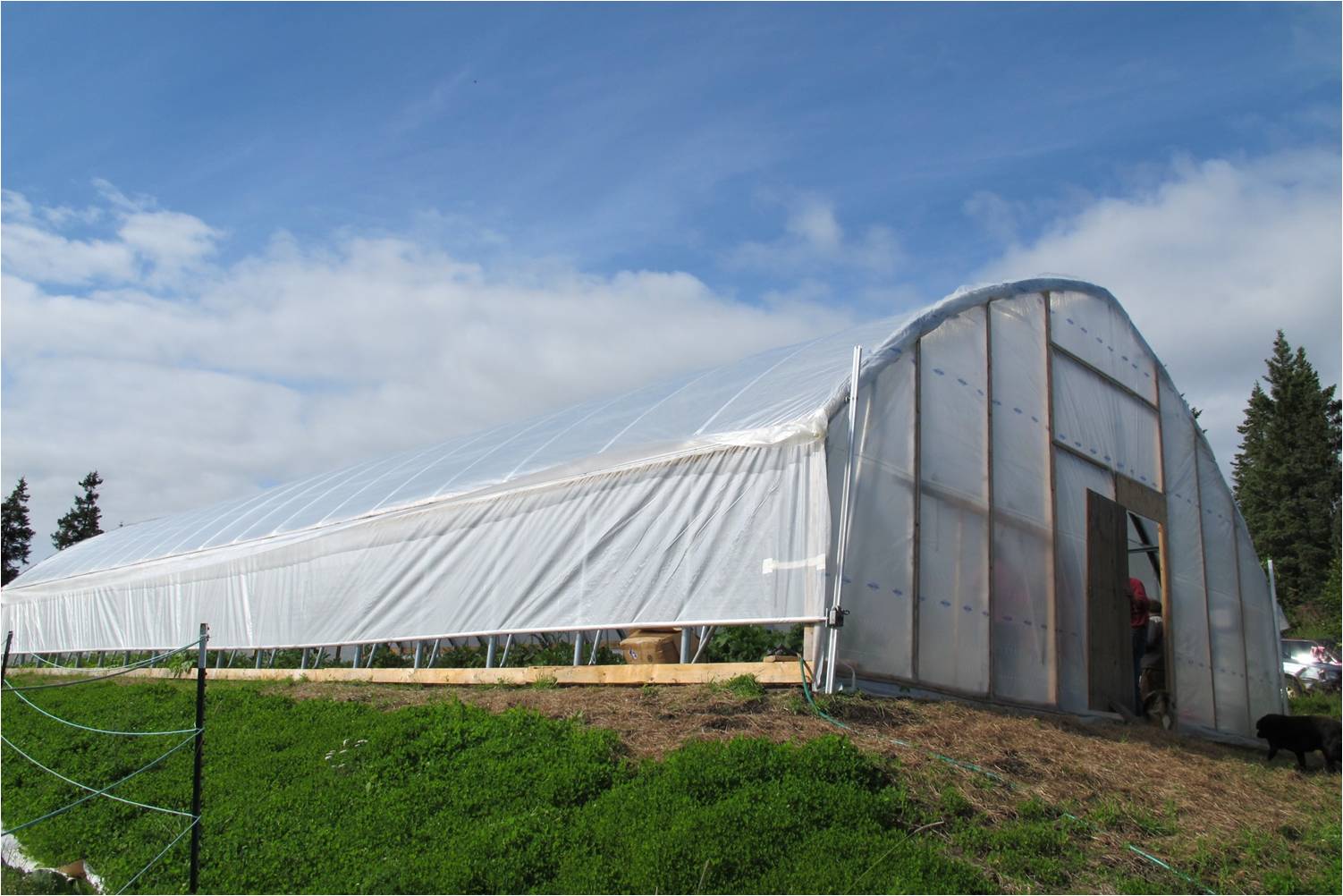
High tunnels, also known as hoop houses or temporary greenhouses, extend the growing season so more food is produced before and after the traditional weather dates for growing stuff outdoors. They also can help with irrigation and drainage, and with pest control.

High tunnels are different than greenhouses in that they are passively heated by the sun, so they have lower energy costs than greenhouses. High tunnels are at least six-feet tall, so people can walk upright in them. Low tunnels, which usually involve some PVC pipe bent over a garden bed and covered with row cover, aren’t eligible in this program. Food in high tunnels is planted either directly into the ground or in raised beds. To learn more about the USDA’s high tunnel program, click here, and click here to get information about the application procedure. This link has frequently asked questions and answers about seasonal high tunnel systems for crops.

Picture10This program started a couple of years ago as a pilot program, but now is a permanent part of of the NRCS EQIP (Environmental Quality Incentive Programs). The program recently was revamped, and one major change is there now is no size restriction on the structures NRCS provides cost-sharing funds (previously it was limited to up to 2,178 square feet, or 5 percent of one acre). Also, geodesic domes are now eligible. Both the land owner and land must meet certain eligibility requirements.

Funding is provided on a reimbursable status once the high tunnel is installed and certified to meet NRCS standards. In 2012 there was just one high tunnel in Sitka, but in 2013 there were six. Other areas of the state, such as Homer, have built dozens of high tunnels through the program.

For information regarding the NRCS technical service or program participation in Southeast Alaska, please contact Samia Savell or Will Murray at the Juneau field office at (907) 586-7220 or 586-7208, or send email to samia.savell@ak.usda.gov or william.murray@ak.usda.gov. The June 15 deadline is the first deadline for the Fiscal Year 2016 funding cycle. Click here for a link to the Alaska NRCS page. Click here for an interview with Samia Savell on KRBD-FM (Ketchikan) about the program.

• High Tunnel In Alaska Fact Sheet (March 2014)

• Flier about Southeast Alaska cost-sharing program for FY2016 (March 2015)

• As you build your garden this spring, don’t forget to Plant A Row For The Hungry

(EDITOR’S NOTE: The following article first appeared on this site in April 2010. It is repeated because much of the information remains current and newsworthy.)

As you start to plan your garden for this spring and summer, don’t forget to Plant A Row For The Hungry. The Plant A Row For The Hungry program (also known as Plant A Row or PAR) is a national campaign by the Garden Writers Association of America that has its roots in Alaska.

In the cold winter of 1994, Anchorage Daily News (now called the Alaska Dispatch News) garden columnist and former Garden Writers Association of America President Jeff Lowenfels was returning to his hotel after a Washington, D.C., event when he was approached by a homeless person who asked for some money to buy food. Lowenfels said Washington, D.C., had signs saying, “Don’t give money to panhandlers,” so he shook his head and kept on walking. But the man’s reply, “I really am homeless and I really am hungry. You can come with me and watch me eat,” stayed with Lowenfels for the rest of his trip.

Jeff Lowenfels

Jeff Lowenfels

The encounter continued to bother Lowenfels, even as he was flying back to Anchorage. During the flight, Lowenfels came up with an idea when he started writing his weekly garden column (the longest continuously running garden column in the country, with no missed weeks since it started on Nov. 13, 1976). He asked his readers to plant one extra row in their gardens to grow food to donate to Bean’s Café, an Anchorage soup kitchen. The idea took off.

When Anchorage hosted the Garden Writers Association of America convention in 1995, Lowenfels took the GWAA members to Bean’s Café to learn about the Plant A Row For Bean’s Café program. The Garden Writers Association of America liked the idea, and it became the national Plant A Row For The Hungry campaign (also known as Plant A Row or PAR). In 2002, the Garden Writers Association Foundation was created as a national 501(c)(3) nonprofit to manage the Plant A Row For The Hungry program.

“I am not surprised by the growth of PAR,” Lowenfels wrote in an e-mail to the Sitka Local Foods Network. “It is now in all 50 states and across Canada and there are thousands of variations of the original program — from prison gardens for the hungry to botanical gardens donating their produce from public display gardens. This is because gardeners always share information and extra food, so the idea was a natural.”

It took five years for the program to reach its first million pounds of donated food, but the second million only took two years and the next eight years saw a million pounds of donated food (or more) each year. Since 1995, more than 14 million pounds of food have been donated. Not only that, the program is getting ready to expand overseas to Australia, England and other countries with avid gardeners.

“We have supplied something in the vicinity of enough food for 50 million meals,” Lowenfels wrote in his e-mail. “Gardeners can solve this hunger problem without the government. And we don’t need a tea party to do it! Or chemicals, I might add, as author of a book on organic gardening (Teaming With Microbes, written with Wayne Lewis)!” (Lowenfels recently released a second book, Teaming With Nutrients, which is a follow-up to his first book).

According to the U.S. Department of Agriculture, one out of every eight U.S. households experiences hunger or the risk of hunger. Many people skip meals or eat too little, sometimes going an entire day or more without food. About 33 million Americans, including 13 million children, have substandard diets or must resort to seeking emergency food because they can’t always afford to buy the food they need. In recent years the demand for hunger assistance has increased 70 percent, and research shows that hundreds of children and adults are turned away from food banks each year because of lack of resources.

While many people credit Lowenfels for creating the Plant A Row For The Hungry program, Lowenfels says the real heroes are the gardeners growing the extra food and donating it to local soup kitchens, senior programs, schools, homeless shelters and neighbors. You can hear him pass along the credit to all gardeners at the end of this 2009 interview with an Oklahoma television station (video also embedded below).

“One row. That’s all it takes. No rules other than the food goes to the hungry. You pick the drop-off spot or just give it to a needy friend or neighbor. Nothing slips between the lip and the cup, I say,” Lowenfels wrote in his e-mail.

For people wanting to Plant A Row For The Hungry in Sitka, there are several places that would love to help distribute some fresh locally grown veggies or berries to those who are less fortunate, such as the Salvation Army, Sitkans Against Family Violence (SAFV), local churches, Sitka Tribe of Alaska and other organizations. The food the Sitka Local Foods Network grows at St. Peter’s Fellowship Farm communal garden goes to the Sitka Farmers Market, school lunches and other programs.

People who participate in the Alaska Food Stamp program can use their Alaska Quest Cards to purchase produce and fish at the Sitka Farmers Market and other farmers markets around the state. People who participate in the  WIC (Women, Infants, Children) supplemental food program (operated in Southeast Alaska by the SouthEast Alaska Regional Health Consortium or SEARHC) also can use special farmers market vouchers to buy fresh vegetables at the Sitka Farmers Market and other farmers markets in Alaska (this is part of the national WIC Farmers Market Nutrition Program).

The Sitka Local Foods Network also takes donations of local produce to sell at the Sitka Farmers Markets, and all proceeds are used to help pay for SLFN projects geared toward helping more people in Sitka grow and harvest local food. For more information, contact SLFN President Lisa Sadleir-Hart or one of the other board members at sitkalocalfoodsnetwork@gmail.com.

• 2012 Plant A Row For The Hungry marketing brochure

• 2009 Brochure on how to start a local Plant A Row For The Hungry campaign

• Sitka Health Summit planning day is Oct. 3 at Harrigan Centennial Hall

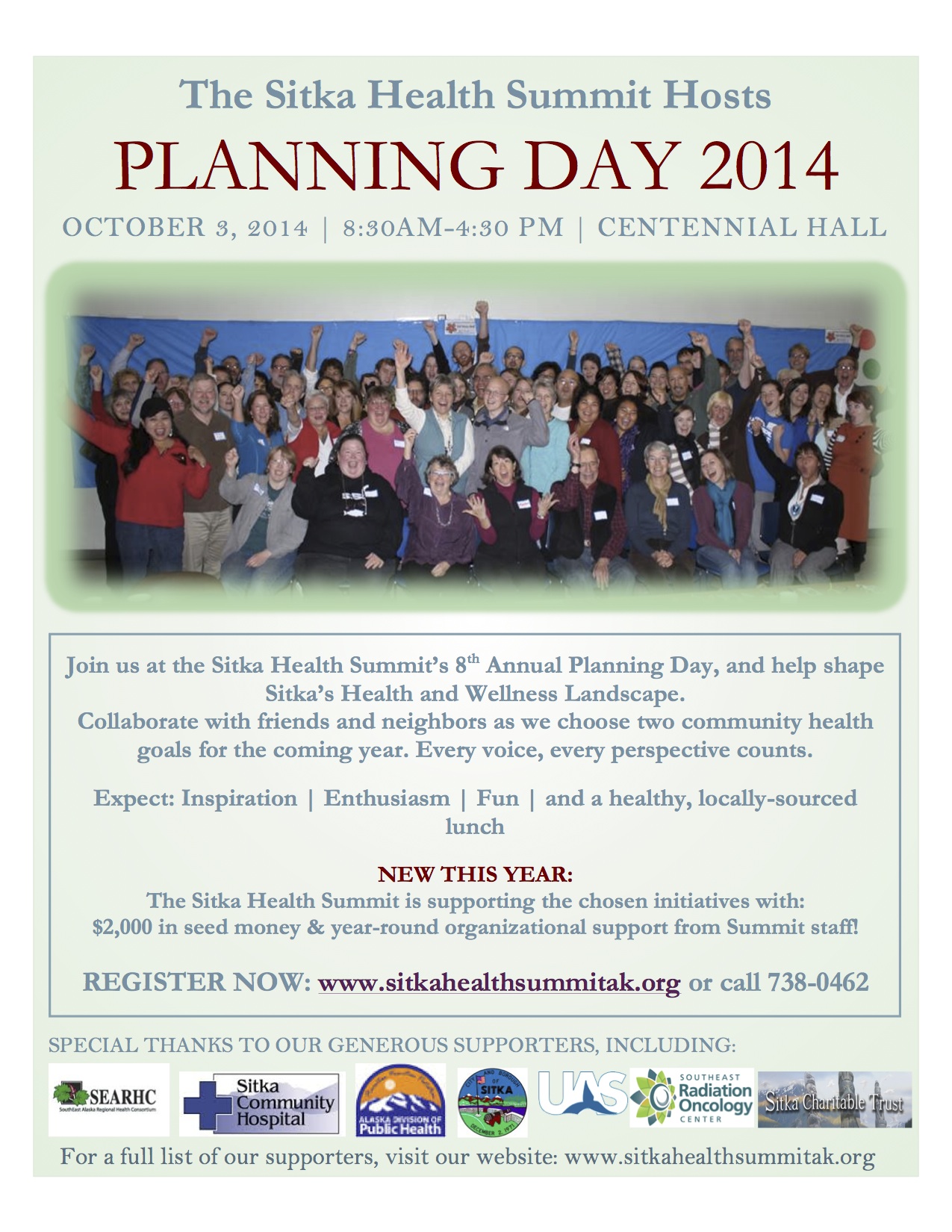
Planning Day Flyer 1 - 2014NewSitkaHealthSummitLogoJoin us for the eighth annual Sitka Health Summit planning day, which takes place from 8:30 a.m. to 4:30 p.m. on Friday, Oct. 3, at Harrigan Centennial Hall.

The Sitka Health Summit got its start in 2007 when then-Sitka Community Hospital CEO Moe Chaudry and then-SouthEast Alaska Regional Health Consortium (SEARHC) Vice President of Hospital Services Frank Sutton decided they needed to bridge the gaps between Sitka’s largest two health services. They launched the Sitka Health Summit, with the help of other supporters in Sitka, as a way to improve community wellness, honor local wellness champions, and more.

One of the highlights of the Sitka Health Summit has been the annual community wellness planning day. During planning day, Sitka residents get together to discuss the health needs of the community and create community wellness projects to address these needs.

Over the years there have been a variety of Sitka Health Summit projects — create a local market for local fish and produce, build a Sitka community greenhouse, become a Bicycle Friendly Community, become a Walk Friendly Community, encourage more kids and families to get outdoors for recreation, support a community health and wellness center (Hames), plant fruit trees around town, get more local fish into school lunches, build a Choose Respect mural, Revitalize Sitka, the Sick-a-Waste compost project, the Sitka Community Food Assessment, and Park Prescriptions. The 2013 Sitka Health Summit projects were Together for a Meth-Free Sitka and Sitka Kitch (a project to create a community rental kitchen and improve Sitka’s emergency food storage capacity). The 2014 Sitka Health Summit will choose two new projects, which will receive $2,000 in seed money to get started.

To register for the Sitka Heath Summit planning day, go to http://www.sitkahealthsummitak.org/ or call 738-0468. A free lunch with locally sourced food will be provided.


• USDA Natural Resources Conservation Service offers funding support program for high tunnels

picture8

The deadline is coming up for the next round of applications for the U.S. Department of Agriculture’s Natural Resources Conservation Service (NRCA) cost-sharing program that enables qualifying landowners who produce food to build high tunnels.

The NRCA Alaska program sets two applications deadlines a year (Sept. 15 and June 15) so applications can be batched and ranked. Applications that miss the Sept. 15 deadline will be held for the June 15 deadline.

High tunnels, also known as hoop houses or temporary greenhouses, extend the growing season so more food is produced before and after the traditional dates for growing stuff outdoors.

High tunnels are different than greenhouses in that they are passively heated by the sun, so they have lower energy costs than greenhouses. High tunnels are at least six-feet tall, and low tunnels aren’t eligible in this program. Food in high tunnels is planted either directly into the ground or in raised beds. To learn more about the USDA’s high tunnel program, click here (note, link is to FY2014 program information, there have been updates for FY2015 but no link was available). This link has frequently asked questions and answers about seasonal high tunnel systems for crops.

Picture10This program started a couple of years ago as a pilot program, but now is a permanent part of of the NRCS EQIP (Environmental Quality Incentive Programs). The program recently was revamped, and one major change is there now is no size restriction on the size of structures NRCS will provide cost-sharing funds (previously it was limited to up to 2,178 square feet, or 5 percent of one acre). Also, geodesic domes are now eligible. Both the land owner and land must meet certain eligibility requirements.

Funding is provided on a reimbursable status once the high tunnel is installed and certified to meet NRCS standards. In 2012 there was just one high tunnel in Sitka, but in 2013 there were six. Other areas of the state, such as Homer, have built dozens of high tunnels through the program.

For information regarding the NRCS technical service or program participation in Southeast Alaska, please contact Samia Savella at the Juneau field office at (907) 586-7220 or samia.savell@ak.usda.gov. Applications currently are being accepted for the 2015 fiscal year (Oct. 1, 2014, to Sept. 30, 2015) and applications must be received at the Juneau field office on or before Sept. 15, 2014. Click here for a link to the Alaska NRCS page.

• High Tunnel Fact Sheet March 2014

• Flier about Southeast Alaska cost-sharing program March 2014

• Samia Savell of USDA Natural Resources Conservation Service to give presentation in Sitka on high tunnels

picture8

Picture10Want to learn how to extend your growing season with high tunnels and find out how Sitka growers can receive help from the USDA to purchase a high tunnel? Samia Savell of the Juneau office of the U.S. Department of Agriculture’s Natural Resources Conservation Service will give a presentation from 5-6 p.m. on Thursday, July 10, at Harrigan Centennial Hall.

In recent years, the USDA Natural Resources Conservation Service (NRCS) has offered a cost-sharing program that enables qualifying landowners who produce food to build high tunnels. Samia has overseen that program for Southeast Alaska, and several gardeners in Sitka have taken advantage of the program.

High tunnels, also known as hoop houses or temporary greenhouses, extend the growing season so more food is produced before and after the traditional dates for growing stuff outdoors. High tunnels are different than greenhouses in that they are passively heated by the sun, so they have lower energy costs than greenhouses. High tunnels are at least six-feet tall, and low tunnels aren’t eligible in this program. Food in high tunnels is planted either directly into the ground or in raised beds.

For more information about the presentation, contact Sitka Local Foods Network Board President Lisa Sadleir-Hart at 747-5985. To learn more about the USDA NRCS high tunnel program, contact Samia Savella at the Juneau field office at (907) 586-7220 or samia.savell@ak.usda.gov.


• Sitka Community Greenhouse and Education Center committee to present project update to Sitka Parks and Rec Committee

Community Greenhouse Turn Around_Page_1

Community Greenhouse Turn Around_Page_2Are you interested in seeing year-round produce and flower production in Sitka? The Sitka Community Greenhouse and Education Center ad-hoc committee will give a project update to the City and Borough of Sitka Parks and Recreation Committee at noon on Thursday, May 1, at the Harrigan Centennial Hall Exhibit Room.

The Sitka Community Greenhouse and Education Center idea started off as a project from the 2008 Sitka Health Summit, but problems acquiring land kept the center from advancing much beyond the concept stage. In recent months, the project gained some new momentum when city officials suggested using land at the city’s Turnaround Park (the old amphibious plane turnaround near the corner of Halibut Point Road and Katlian Street, where the Sitka Skatepark and Sitka Trail Works office are located).

The current proposal is to build a 25-foot-diameter geodesic dome in the middle of the site’s current parking lot. As the project grows, the plan is to build a 90-foot-diameter geodesic dome in the center (the smaller geodesic dome will be moved to another location), with two conventional greenhouses along the ridge by Katlian Street and by the guardrail by the Sitka Trail Works building. There also are plans for some garden landscaping around the site to help clean it up and make it a more attractive place to visit. The greenhouse project will not impede the use of the Sitka Skatepark.

The slideshow below includes several concept drawings by James Patterson. These plans are subject to change, but they help give people an idea of where the project stands right now. Another option is to start off with a high tunnel greenhouse and build around it.

Sitka residents are encouraged to attend the meeting Thursday to show their support for the project. “If we don’t make it through this committee meeting it be ‘back to the drawing board,'” project coordinator Kerry MacLane said. “Your appearance for even a few minutes from 12:10 12:30 p.m. would mean a lot.”

The project was presented to the Sitka Historic Preservation Commission in mid April (the Sitka Turnaround Park is a historic site). If the greenhouse concept is approved by the Parks and Rec Committee on Thursday, it then will be presented to the Sitka Planning Commission on May 6. After that, the proposal will go to the Sitka Assembly to approve a lease to use the property.

Linked below are some concept points and a response to some questions by Parks and Rec’s partner, the Alaska Department of Natural Resources. For more information, contact Kerry MacLane at 747-7888.

• Sitka Community Greenhouse and Education Center proposal bullet points

• Sitka Community Greenhouse and Education Center response to DNR questions

This slideshow requires JavaScript.

• As you build your garden this spring, don’t forget to Plant A Row For The Hungry

(EDITOR’S NOTE: The following article first appeared on this site in April 2010. It is repeated because much of the information remains current and newsworthy.)

As you start to plan your garden for this spring and summer, don’t forget to Plant A Row For The Hungry. The Plant A Row For The Hungry program (also known as Plant A Row or PAR) is a national campaign by the Garden Writers Association of America that got its start in Alaska.

In the cold winter of 1994, Anchorage Daily News garden columnist and former Garden Writers Association of America President Jeff Lowenfels was returning to his hotel after a Washington, D.C., event when he was approached by a homeless person who asked for some money to buy food. Lowenfels said Washington, D.C., had signs saying, “Don’t give money to panhandlers,” so he shook his head and kept on walking. But the man’s reply, “I really am homeless and I really am hungry. You can come with me and watch me eat,” stayed with Lowenfels for the rest of his trip.

Jeff Lowenfels

Jeff Lowenfels

The encounter continued to bother Lowenfels, even as he was flying back to Anchorage. During the flight, Lowenfels came up with an idea when he started writing his weekly garden column (the longest continuously running garden column in the country, with no missed weeks since it started on Nov. 13, 1976). He asked his readers to plant one extra row in their gardens to grow food to donate to Bean’s Café, an Anchorage soup kitchen. The idea took off.

When Anchorage hosted the Garden Writers Association of America convention in 1995, Lowenfels took the GWAA members to Bean’s Café to learn about the Plant A Row For Bean’s Café program. The Garden Writers Association of America liked the idea, and it became the national Plant A Row For The Hungry campaign (also known as Plant A Row or PAR). In 2002, the Garden Writers Association Foundation was created as a national 501(c)(3) nonprofit to manage the Plant A Row For The Hungry program.

“I am not surprised by the growth of PAR,” Lowenfels wrote in an e-mail to the Sitka Local Foods Network. “It is now in all 50 states and across Canada and there are thousands of variations of the original program — from prison gardens for the hungry to botanical gardens donating their produce from public display gardens. This is because gardeners always share information and extra food, so the idea was a natural.”

It took five years for the program to reach its first million pounds of donated food, but the second million only took two years and the next eight years saw a million pounds of donated food (or more) each year. Since 1995, more than 14 million pounds of food have been donated. Not only that, the program is getting ready to expand overseas to Australia, England and other countries with avid gardeners.

“We have supplied something in the vicinity of enough food for 50 million meals,” Lowenfels wrote in his e-mail. “Gardeners can solve this hunger problem without the government. And we don’t need a tea party to do it! Or chemicals, I might add, as author of a book on organic gardening (Teaming With Microbes, written with Wayne Lewis)!” (Lowenfels recently released a second book, Teaming With Nutrients, which is a follow-up to his first book).

According to the U.S. Department of Agriculture, one out of every eight U.S. households experiences hunger or the risk of hunger. Many people skip meals or eat too little, sometimes going an entire day or more without food. About 33 million Americans, including 13 million children, have substandard diets or must resort to seeking emergency food because they can’t always afford to buy the food they need. In recent years the demand for hunger assistance has increased 70 percent, and research shows that hundreds of children and adults are turned away from food banks each year because of lack of resources.

While many people credit Lowenfels for creating the Plant A Row For The Hungry program, Lowenfels says the real heroes are the gardeners growing the extra food and donating it to local soup kitchens, senior programs, schools, homeless shelters and neighbors. You can hear him pass along the credit to all gardeners at the end of this interview last year with an Oklahoma television station (video also embedded below).

“One row. That’s all it takes. No rules other than the food goes to the hungry. You pick the drop-off spot or just give it to a needy friend or neighbor. Nothing slips between the lip and the cup, I say,” Lowenfels wrote in his e-mail.

For people wanting to Plant A Row For The Hungry in Sitka, there are several places that would love to help distribute some fresh locally grown veggies or berries to those who are less fortunate, such as the Salvation Army, Sitkans Against Family Violence (SAFV), local churches, Sitka Tribe of Alaska and other organizations. The food the Sitka Local Foods Network grows at St. Peter’s Fellowship Farm communal garden goes to the Sitka Farmers Market.

People who participate in the Alaska Food Stamp program can use their Alaska Quest Cards to purchase produce and fish at the Sitka Farmers Market and other farmers markets around the state. People who participate in the  WIC (Women, Infants, Children) supplemental food program (operated in Southeast Alaska by the SouthEast Alaska Regional Health Consortium or SEARHC) also can use special farmers market vouchers to buy fresh vegetables at the Sitka Farmers Market and other farmers markets in Alaska (this is part of the national WIC Farmers Market Nutrition Program).

The Sitka Local Foods Network also takes donations of local produce to sell at the Sitka Farmers Markets, and all proceeds are used to help pay for SLFN projects geared toward helping more people in Sitka grow and harvest local food. For more information, contact SLFN President Lisa Sadleir-Hart or one of the other board members at sitkalocalfoodsnetwork@gmail.com.

• 2011 Plant A Row For The Hungry marketing brochure

• 2009 Start a Local Plant A Row For The Hungry campaign brochure