Thanks for a successful 16th season of the Sitka Farmers Market

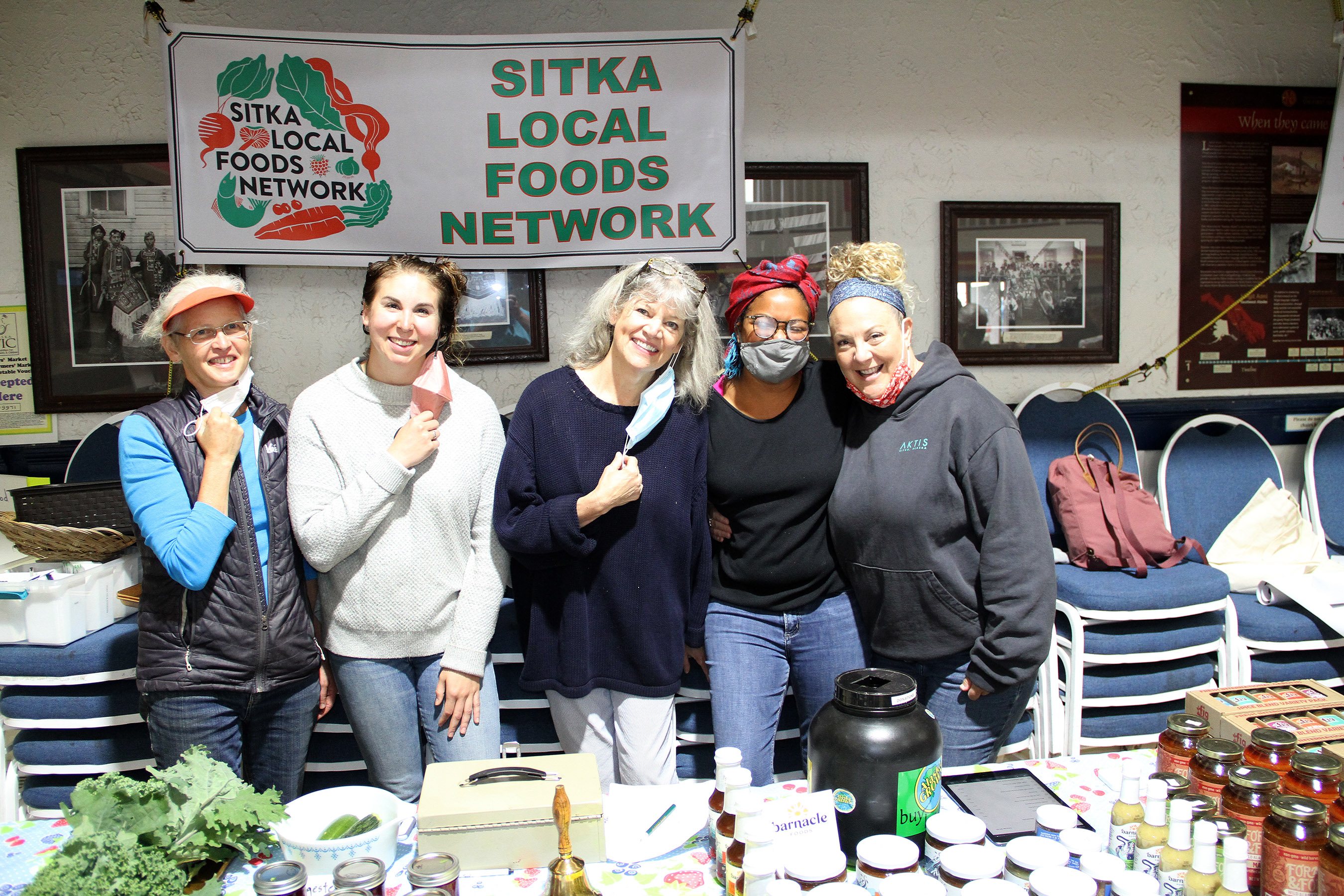
2023 Sitka Farmers Market Manager Anastasia Stefanowicz with fresh produce at the Sitka Local Foods Network farm stand

The Sitka Local Foods Network just completed its 16th season of hosting the Sitka Farmers Market. We hope Sitka residents enjoyed the market, and we plan to be back next summer for a 17th season.

Over the last couple of years, we had to make some adjustments as we dealt with this Covid-19 pandemic thing, which meant relocating our market for two years and in one of those years reformatting it to an online-purchase system. The last two years we’ve been able to return to our usual venue, the Alaska Native Brotherhood Founders Hall, even though we still had to require masks when we had markets during high-Covid risk weeks. 

But we got through it and hope to have a better season next year.

The Sitka Local Foods Network couldn’t host the market without the support of a wide range of sponsors. We have a tiered sponsorship program with four levels — Grower ($2,500-plus), Harvester ($1,000-$2,499), Planter ($250-$999) and Friend ($50-$249). These are local businesses and individuals, and even a few not from Sitka, who are supporting our programs.

Our Grower Level sponsors in 2022 and/or 2023 included the Alaska Cancer Partnership (a program of the Alaska Division of Public Health), The Alaska Community Foundation, and Alaska Food Policy Council.

Our Harvester Level sponsors were the Sitka Salmon Shares/Sitka Seafood Market 1% For The Wild Fund, The Sitka Legacy Foundation, SouthEast Alaska Regional Health Consortium (SEARHC), Sitka White Elephant Shop (White E), the GCI Gives Fund, ALPS/Tongass Federal Credit Union, the Alaska Farmers Markets Association, Northrim Bank, David and Margaret Steward, and Joel and Alice Hanson.

Our Planter Level sponsors were Harry Race Pharmacy/White’s Inc., Sea Mart, Market Center, Fish and Family Seafoods, the Sitka Employees of First National Bank Alaska, Sitka True Value/Ace Hardware, Linda Schmidt, Amanda Anjum, Colin McIntosh of Outpost Agriculture, and Charles Bingham.

Our Friend Level sponsors included Beth Short-Rhoads, Patricia Atkinson, Guillermo Espinoza, Ehsan Espinoza, Robb Garni, Jud Kirkness, Catherine Allgood-Mellema, Joe Leghorn, Pat Hanson, Beth Kindig, Lisa Sadleir-Hart, Jaime Zelhuber, Christina Kowalczewski, Traci Gale, Math Trafton, Zoe Trafton, Leah Mason, Moira McBride, Steve Paustian and Mary Beth Nelson, Aubrey Nelson, Kent Barkhau, Deborah Brincefield, and Robin Sherman. 

We thank you for your support. We also appreciate everybody who came to one of our markets this summer to support the local businesses selling local food or arts and crafts. 

This brings us to our offseason, where we plan and raise funds for 2024. The Sitka Local Foods Network is a 501c3 nonprofit whose mission is to increase the amount of locally produced and harvested food in the diets of Southeast Alaskans. In addition to the Sitka Farmers Market, we grow food at St. Peter’s Fellowship Farm, sponsor the Sitka Food Business Innovation Contest, and connect residents to education opportunities for growing, cooking, and preserving local food. 

We also are partnering this year with Transition Sitka on two food security projects — to update the data from the 2014 Sitka Community Food Assessment Indicators Report and to start a new community garden at the top of Jarvis Street.

We always need new board members and volunteers. For more information, go to our website at www.sitkalocalfoodsnetwork.org or contact SLFN Board President Charles Bingham at sitkalocalfoodsnetwork@gmail.com.

Thanks for a successful 15th season of the Sitka Farmers Market

The Sitka Local Foods Network just completed its 15th season of hosting the Sitka Farmers Market. We hope Sitka residents enjoyed the market, and we plan to be back next summer for a 16th season.

Over the last couple of years, we had to make some adjustments as we dealt with this Covid-19 pandemic thing, which meant relocating our market for two years and reformatting it in one of those years. This year we were able to return to our usual venue, the Alaska Native Brotherhood Founders Hall, even though we still had to require masks when we had markets during high-Covid risk weeks. 

But we got through it and hope to have a better season next year.

The Sitka Local Foods Network couldn’t host the market without the support of a wide range of sponsors. We have a tiered sponsorship program with four levels — Grower ($2,500-plus), Harvester ($1,000-$2,499), Planter ($250-$999) and Friend ($50-$249). These are local businesses and individuals, and even a few not from Sitka, who are supporting our programs.

Our Grower Level sponsors in 2022 included the Alaska Cancer Partnership (a program of the Alaska Division of Public Health), The Alaska Community Foundation, and Alaska Food Policy Council.

Our Harvester Level sponsors were the Sitka Salmon Shares 1% For The Wild Fund, Sitka Legacy Foundation, SouthEast Alaska Regional Health Consortium (SEARHC), Sitka White Elephant Shop (White E), the GCI Gives Fund, ALPS Federal Credit Union, and the Alaska Farmers Markets Association.

Our Planter Level sponsors were Harry Race Pharmacy/White’s Inc., Sea Mart, Market Center, Fish and Family Seafoods, the Sitka Employees of First National Bank Alaska, Sitka True Value, Linda Schmidt, Amanda Anjum, David and Margaret Steward, and Charles Bingham.

Our Friend Level sponsors included Beth Short-Rhoads, Patricia Atkinson, Guillermo Espinoza, Ehsan Espinoza, Robb Garni, Jud Kirkness, Catherine Allgood-Mellema, Joe Leghorn, Pat Hanson, Beth Kindig, Lisa Sadleir-Hart, Jaime Zelhuber, Christina Kowalczewski, Traci Gale, Math Trafton, Zoe Trafton, Leah Mason, Moira McBride, Steve Paustian and Mary Beth Nelson, Aubrey Nelson, and Robin Sherman. 

We thank you for your support. We also appreciate everybody who came to one of our markets this summer to support the local businesses selling local food or arts and crafts. 

This brings us to our offseason, where we plan and raise funds for 2023. The Sitka Local Foods Network is a 501c3 nonprofit whose mission is to increase the amount of locally produced and harvested food in the diets of Southeast Alaskans. In addition to the Sitka Farmers Market, we grow food at St. Peter’s Fellowship Farm, sponsor the Sitka Food Business Innovation Contest, and connect residents to education opportunities for growing, cooking, and preserving local food. 

We always need new board members and volunteers. For more information, go to our website at www.sitkalocalfoodsnetwork.org or contact SLFN Board President Charles Bingham at sitkalocalfoodsnetwork@gmail.com.
Beyond Leafy LLC grows fresh, local basil for Sitka market using vertical hydroponics

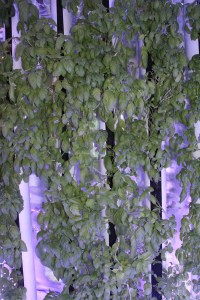
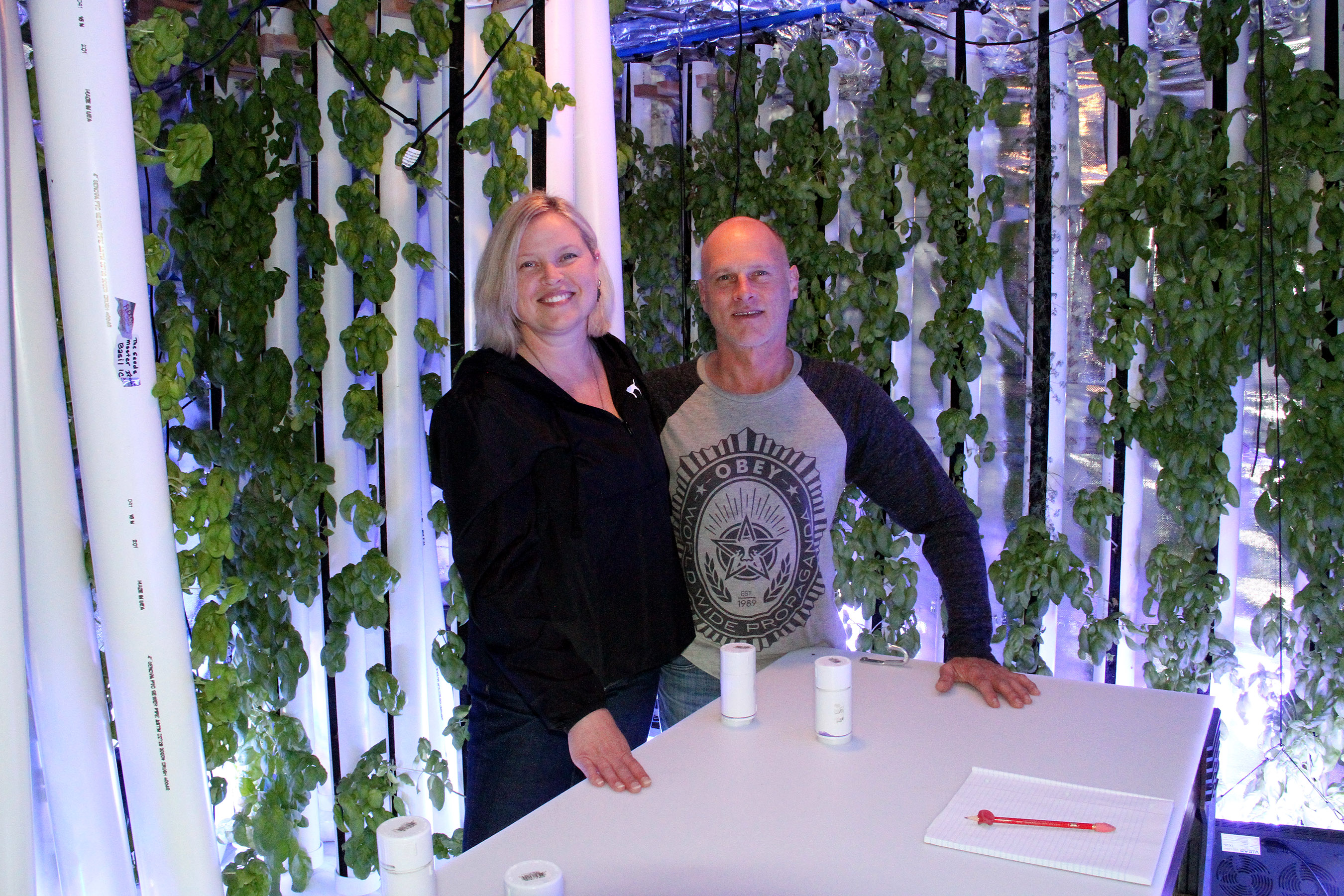
From the outside, it looks like any suburban garage. But inside there’s a 2,000-cubic-foot box where Jimmie and Leslie Kranz are growing fresh, local basil for the Sitka market using a vertical hydroponic greenhouse system.

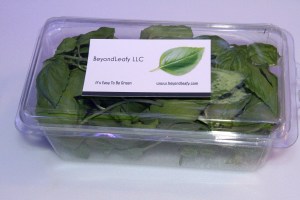
Their company, called Beyond Leafy LLC, recently started supplying basil to a few Sitka restaurants and also provides it for the Market Center grocery store. Soon, the couple hopes to expand their business so their basil is available at Sea Mart.

“We’ve been brainstorming for years to find a product or service that would serve the people and our community,” Jimmie Kranz said. “The thing about this business is we’re not selling a service or product that people question. We’re selling what most people already have in their refrigerator.”

They also wanted something they could do together, especially since until earlier this year Jimmie was working about 14 hours a day with the Alaska Marine Highway System at the ferry terminal and Leslie was working about 10 hours a day with the Transportation Security Administration at the airport. Jimmie quit his state job in February, and Leslie quit her federal gig in June.

“We like working together,” Leslie Kranz said. “We’re having fun and the reception from the community has been extraordinarily positive.”

In addition to the couple, there are five kids and all except the oldest (Kameron, 32, who runs his own business in Arizona) are involved in the company. Tray, 25, is based in Grenada, but he’s been doing the website and social media for the company and helps with finances. Jake, 22, is a commercial fisherman but spent 3 1/2 months helping Jimmie build the hydroponic towers. The younger two kids, Madi, a 17-year-old senior at Sitka High School, and Kale, an 11-year-old sixth-grader at Blatchley Middle School, both help Jimmie and Leslie trim the basil plants and prepare orders. The family also has weekly business meetings.

Beyond Leafy LLC is serving a big need in Sitka. Many restaurants and bars use basil in their food dishes and drinks, and locally grown basil tastes better and is picked at peak freshness (not a week or two early so it can be sent here by barge). When food has to travel long distances it can lose nutrients and flavor. Beyond Leafy also fills a niche found by a previous company in Sitka that provided basil to local restaurants and grocery stores, but switched to growing weed once marijuana was legalized. When the switch to weed happened last year, it left some restaurants scrambling for a new source of local basil.

“The Mean Queen is thrilled to once again have a local basil provider,” said Mary Magnuson, co-owner of the Mean Queen restaurant. “Beyond Leafy provides a very high quality product that graces both pizzas and our signature LA Preppy Martini. There is literally no comparison in the local product and what we can order from our suppliers. We are looking forward to their growth into more items.”

To grow the basil, Jimmie and Leslie take a package of rock wool (A-OK Starter Plugs) and plant seeds into each section square. The seeds grow in trays until they are a couple of weeks old, when their rock wool section squares are broken apart and the pieces of rock wool are inserted into the towers, spaced about 6-8 inches apart.

Each tower features an eight-foot-long piece of four-inch-diameter PVC pipe that has been split vertically so a felt/foam media can be inserted into each piece (the felt/foam media is purchased locally from Ben Franklin). The individual towers can be removed from their spots and moved to another spot (they move the towers every two weeks to chart the progress of their basil plants), or they can be placed on the table in the middle of the box for trimming.

Scattered throughout the box and within each tower section, there are lights connected to a roller system that moves the lights back and forth and up and down so each plant gets what it needs to grow. The light system is on a timer. The roller system helps control the temperature in the box and prevents the basil leaves from being burned by stationary lights, and also means they don’t have to use as many lights as some operations. The vertical hydroponic system also includes a recirculating watering tank and hoses that deliver water to each of the towers.

Jimmie said he designed the family’s system after taking an online university class on vertical hydroponics from Bright Agrotech, which recently was bought out by a company called Plenty that plans to develop larger-scale vertical hydroponic systems.

Jimmie and Leslie usually harvest the basil from 6-9 a.m., and it’s in the stores and restaurants by 10 a.m. From seed to harvest, it usually takes about 8-10 weeks for the basil to reach maturity. Beyond Leafy is selling its basil for $56 a pound or $3.50 an ounce (it takes a lot of basil to make an ounce), which might seem high but Jimmie noted that most restaurants only get about six ounces of usable product out of a pound of basil because of all the stems and other parts. Because they hand-trim their basil it’s all usable product, so Jimmie said the price works out to be about the same.

Right now, Beyond Leafy LLC is growing several types of basil (Genovese, Italian, sweet, purple opal, Thai and lemon), and also experimenting with dill and rosemary. They currently are growing about 10-15 pounds of basil a week, and expect to grow to about 40-50 pounds a week once Sea Mart starts carrying their product.

“Since we started the business it changed our whole mindset, and now we’re thinking more about what we can do for our community,” Jimmie said. “We also are eating more local, healthy food. I’d say basically the four of us still in the house (Jimmie, Leslie, Madi, and Kale) have lost about 100 pounds since we started the business.”

Eventually, they hope to find a warehouse unit to lease so they can expand their operation to include several types of lettuce, kale and chard. In order to help the business grow and expand, the couple set up a GoFundMe site.

“We can’t do it alone,” Jimmie said. “There is a bit of fear when you quit your jobs, cash in your retirements and take your family on a venture like this. But entrepreneurs have to take risks to move forward.”

This slideshow requires JavaScript.