• Fish to Schools seafood recipe contest seeks kid-friendly dishes at Sitka Seafood Festival

Recipe Contest FinalDo you have a favorite kid-friendly and healthy fish entree recipe that uses local seafood? The program wants you to enter your dish in its recipe contest at the .

Do you have a favorite kid-friendly and healthy fish entree recipe that uses local seafood? The Fish to Schools program wants you to enter your dish in its recipe contest at the Sitka Seafood Festival.

The contest is free, just type up your recipe and email it to Sophie Nethercut of the Sitka Conservation Society at sophie@sitkawild.org. You also will be asked to make up a batch for sampling. A panel of local residents will judge the recipes at 4:30 p.m. on Saturday, Aug. 2, at the Sitka Seafood Festival’s main tent on the Sheldon Jackson Campus, and the winners receive prizes (including a gift certificate for Ludvig’s Bistro for the grand prize).

2014SSFSchedule5The purpose of the contest is to collect kid-friendly fish entree recipes that can be made for school lunches as part of the Fish to Schools program. The dishes should be healthy and easy to make (no special appliances). Baking the fish is preferred over frying, and recipes should be low in sodium and fat. The top seafood dishes will be used in school lunches at the Sitka School District, the state-run Mount Edgecumbe High School, and the private SEER School.

Samples of the dish (enough for at least 15 people to nibble) should be brought by 4:15 p.m. on Saturday to the Sitka Seafood Festival main tent at Sheldon Jackson Campus for judging. Entrants are encouraged to print out a copy of the recipe to include with your samples, and bring a photo of you making the dish (if possible).

For more information, click this link or call Sophie at 747-7509. This is one of many events as part of this year’s Sitka Seafood Festival, which has events on July 31-Aug. 2 at various locations around Sitka. Additional info about the Sitka Seafood Festival can be found here.


• Sarah Lewis to provide free pressure canner gauge testing at Saturday’s Sitka Farmers Market

Canner

SarahLewisThis is a great time of the year to be in Sitka. The fish are running, gardens are starting to produce, and berries are ripe for the picking.

Many Sitka residents have pressure canners to preserve their harvest, and this weekend Sarah Lewis of the Juneau District Office of the University of Alaska Fairbanks Cooperative Extension Service will be in town to teach three classes about canning on Friday, Saturday and Sunday. She also provide free pressure canner gauge testing at the Sitka Farmers Market from 10 a.m. to 1 p.m. on Saturday, July 26, at the Alaska Native Brotherhood Founders Hall.

“People can bring the gauge or the lid with the gauge still attached,” Sarah said. “If they have any questions about the full canner (gaskets, damage, how to use, etc.) they can bring the whole thing.”

In addition to testing pressure canner gauges, Sarah plans to work with Jasmine Shaw of the Sitka District Office of the UAF Cooperative Extension Service to have a wide variety of publications available about home canning. In addition, the UAF Cooperative Extension Service has a series of online tutorials on its website called “Preserving Alaska’s Bounty.” Pressure canner gauges should be tested at least once a year to make sure they are hitting the right pressures for safe food preservation.

We posted earlier about Sarah’s canner classes this weekend, hosted by the Sitka Kitch project, and info can be found here. However, the location for the first two classes has been moved to the Sitka Presbyterian Church (from Sitka High School) and the topic and time have been changed for Sunday’s class (new topic is Canning Jams and Jellies, new time is noon to 3 p.m., location remains Sitka High School). The canning classes are $20 each, and preregistration is required (call Marjorie at the number below).

For more information about the Sitka Kitch project and to register for Sarah’s canning classes, contact Marjorie Hennessy of the Sitka Conservation Society at marjorie@sitkawild.org or 747-7509.

• Sitka Kitch hosts Sarah Lewis for cottage foods industry and home canning classes

kitch_flyer_july25_26

SarahLewisSitka Kitch will host Sarah Lewis, Family and Community Development Faculty from the Juneau District Office of the University of Alaska Fairbanks Cooperative Extension Service, for three classes about the cottage food industry and home canning on July 25-27 at Sitka High School. (Editor’s note: The location of the first two classes has been moved to the Sitka Presbyterian Church on Sawmill Creek Road. Sunday’s class still will take place at Sitka High School, but the topic has been changed to Canning Jams and Jellies and the time will be from noon to 3 p.m.)

The three classes cost $20 each. Space is limited, so please register in advance by calling Marjorie Hennessy of the Sitka Conservation Society at 747-7509. Students will take home the products they make. The classes are:

  • Friday, June 25, 5:30-8:30 p.m., Cottage Foods Business Workshop — Students learn about Alaska Department of Environmental Conservation cottage foods industry regulations, as well as the food preparation and food preservation techniques that qualify. Class includes hands-on water-bath canning, dehydrating and pickling instruction. Veggies and other materials will be provided. Students must bring 8-12 half-pint canning jars with lids.
  • Saturday, June 26, 3-8 p.m., Canning the Harvest — Fish, veggies and other materials provided. Students must bring 12 half-pint canning jars with lids.
  • Sunday, June 27, noon to 5 p.m., Canning Soups and Sauces — Food and materials will be provided. Students must bring 12 half-pint canning jars with lids.

In addition, Sarah will be at the Sitka Farmers Market from 10 a.m. to 1 p.m. on Saturday, July 26, at the Alaska Native Brotherhood Founders Hall, where she will be available to test canner pressure gauges and provide other resources about home canning and food preservation.

Also, Sitka Kitch will partner with Sitka Tribe of Alaska to offer a pickled salmon course in August. This class is offered free of charge, but space is extremely limited. More details on date and location will be available soon.

Sitka Kitch is a community wellness project from the 2013 Sitka Health Summit designed to improve food security in Sitka. The different parts of the project include creating a community kitchen Sitka residents can rent to prepare food for their small businesses or to preserve their family harvest of fish, game, or garden veggies; expanding Sitka’s emergency food storage capacity; and providing education about preserving food and building family emergency food pantries.

For more information about the Sitka Kitch project, contact Marjorie Hennessy at marjorie@sitkawild.org or 747-7509.


• Sitka Conservation Society adult 4-H program offers backcountry cooking classes

SCS_Backcountry Cooking Series_Summer2014

The Sitka Conservation Society is offering an adult 4-H program, with the first offering a backcountry cooking class series in June and July. We’ll be teaching you how to cook delicious meals for your next camping or backpacking trip following Leave No Trace (LNT) principles.

Classes are from 5:30-7:30 p.m. on Thursdays, June 19, June 26, July 10, and July 17. The first class is required — you’ll learn backcountry cooking basics and LNT principles. The following three classes you can pick and choose from. We’ll focus on a different meal each evening, but you can expect things like pizza, cinnamon rolls, and home-made dehydrated meals.

Space is limited and registration is required. The class location will be given when you register. Classes are $6 for Sitka Conservation Society members, and $10 for non-SCS members. For more information, call the Sitka Conservation Society at 747-7509, or contact Mary Wood at mary@sitkawild.org or Tracy Gagnon at tracy@sitkawild.org.

• Sitka Community Food Assessment Indicators Report helps define Sitka’s food culture

Food Assessment Indicator Report web version_Page_01

SitkaCommunityFoodAssessmentLogoThe Sitka Community Food Assessment Indicators Report was released on Monday, and the findings will help guide future food system planning in Sitka.

A 2012 Sitka Health Summit project, the Sitka Community Food Assessment has examined where Sitka residents get their food, what types they eat, what they grow, what they hunt and fish for, where they shop, what type of access people have to healthy food, and other questions about Sitka’s food supply. The findings of the food assessment will help Sitka improve its food security.

After Sitka residents chose the Sitka Community Food Assessment as a project at the September 2012 Sitka Health Summit, the work group received a grant to hire a coordinator and contract with a data person. A revised version of a questionnaire from a similar project on the Kenai Peninsula was posted online, available at the library, and discussed in focus groups, with more than 400 residents answering the 36 questions. In November 2013, some of the initial data was presented at the Sitka Food Summit, where about 60 residents discussed the results and noted any further research that needed to be done. Since then, the work group, in partnership with The Island Institute and others, fine-tuned the data before writing and editing the indicators report.

“We hope the Sitka Community Food Assessment Indicators Report can guide future food system planning and plant seeds for innovative responses that will strengthen Sitka’s food landscape,” project coordinator Lisa Sadleir-Hart wrote in the 26-page document’s introduction. “The Sitka Community Food Assessment Indicators Report uncovers many weaknesses in our food system as well as some incredible assets that define Sitka’s food culture — a rich ecosystem filled with nutritious gems from the land and sea plus a generous spirit of sharing with our neighbors. Now that we’ve defined the current foodscape in Sitka, let’s work together to build a more resilient food system that can deeply nourish the entire community for generations to come.”

The Sitka Community Food Assessment Indicators Report opens with Sitka’s demographics and several Sitka food facts. It then features data about how many people in Sitka hunt, fish, gather, and/or grow their own food, as well as some barriers. Next is information about where people in Sitka shop for their food, followed by how many people in Sitka are on some form of food assistance. The report also includes information about food in the schools, and local food manufacturing.

The findings will be presented to the community during an upcoming meeting of the Sitka Assembly, and the report will be posted online here (see below) and on The Island Institute’s website.

• Sitka Community Food Assessment Indicator Report (April 14, 2014, opens as PDF file)

• Earth Week activities include gardening classes, a youth eco-challenge, and the Parade of the Species

ParadeOfTheSpecies

2014+Earth+Week+posterEarth Day is on Tuesday, April 22, and Earth Week is April 20-26. Sitka will host a variety of activities for Earth Week, including some gardening classes, a youth eco-challenge, free bus rides all month, spring clean-up events, and the 13th annual Parade of the Species. Click the event names at this link for more activity details.

Giving Earth Week an early start is a presentation at 1 p.m. on Saturday, April 12, in Room 106 at the University of Alaska Southeast Sitka Campus, when Gordon Wrobel will discuss his three-year USDA project to build local food systems in Elfin Cove. Contact the Sitka Local Foods Network at sitkalocalfoodsnetwork@gmail.com for more information.

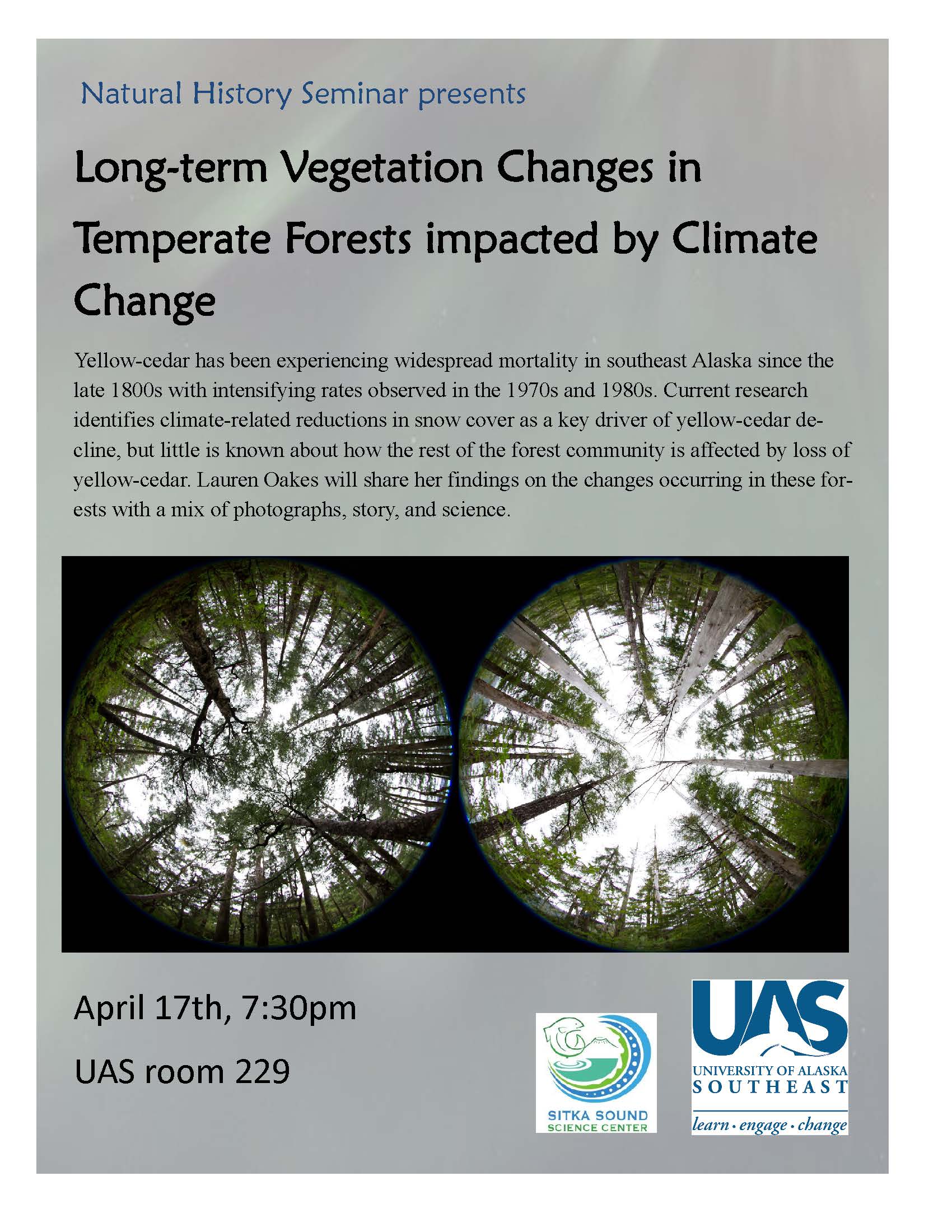
Lauren Oakes will discuss yellow cedar ecology and long-term vegetation changes in temperate forests impacted by climate change at 7:30 p.m. on Thursday, April 17, at the UAS Sitka Campus as part of the ongoing Natural History Seminar Series.

yellow_cedarb_nathistorytalkBob Gorman of the Sitka District office of the University of Alaska Fairbanks Cooperative Extension Service will give two presentations at 7 p.m. at the UAS Sitka Campus — on Monday, April 21, about extending the growing season and greenhouses, and on Tuesday, April 22, about sustainable wood heat.

There will be clean-up events from 9-11
a.m. on Saturday, April 19, for 4-H club members and other youth, and from noon to 2 p.m. on Tuesday, April 22, for Sitka Conservation Society members and other community members, both at locations TBA. There also is a community-wide spring clean-up event from April 26
through May 11, when people can bring in a variety of large items and hazardous materials to the Sawmill Cove Scrap Yard, hosted by the City and Borough of Sitka Public Works Department.

The Sitka Community Ride bus service will provide free bus rides during the entire month of April in its annual recognition of Earth Day.

The youth eco-challenge is from 9 a.m. to noon on Saturday, April 26, at Sitka National Historical Park. School-aged youth teams will test their skills of compass navigation, bear safety, and fire building while they make their way through the Sitka National Historical Park. Sign up in teams of four, or as individuals and be put on a team. Teams of multiple ages are recommended. It’s a race. Contact Mary Wood to register, 747-7509.

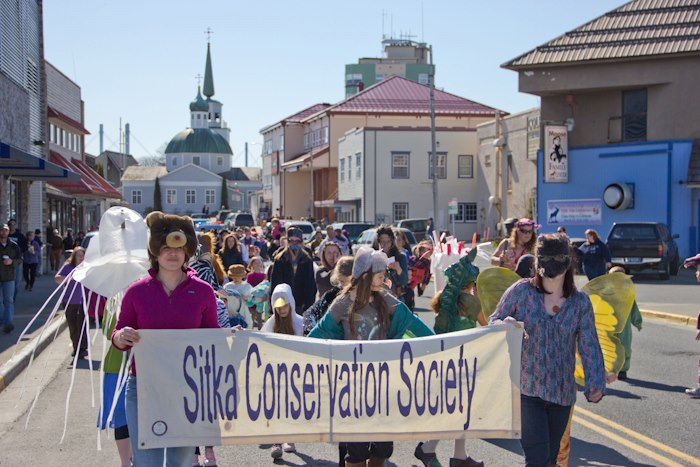
Finally, the 13th annual Parade of Species, hosted by the Sitka Conservation Society, is on Friday, April 25. Parade participants are invited to dress as their favorite animal or plant and gallop, slither, swim, or fly with us. We will meet in Totem Square at 2:30 p.m. and parade down Lincoln Street to Harrigan Centennial Hall at 3 p.m. There will be a number of community organizations with hands-on Earth Day inspired activities for the whole family from 3-4:30 p.m. Prizes will be awarded for Best Use of Recycled Material, Most Realistic, and Best Local Plant/Animal. For more information contact mary@sitkawild.org or call 747.7509. Click here for photos of 2013 Parade of Species costumes.

• Sitka Spring Clean-Up Events 2014

• Sitka Earth Week Events Schedule for 2014

• Alaska Way of Life 4-H club seeks local gardeners to serve as program mentors

The Alaska Way of Life 4-H club gardens at St. Peter's Fellowship Farm in 2013. (Photo by Matthew Dolkas, courtesy of the Sitka Conservation Society)

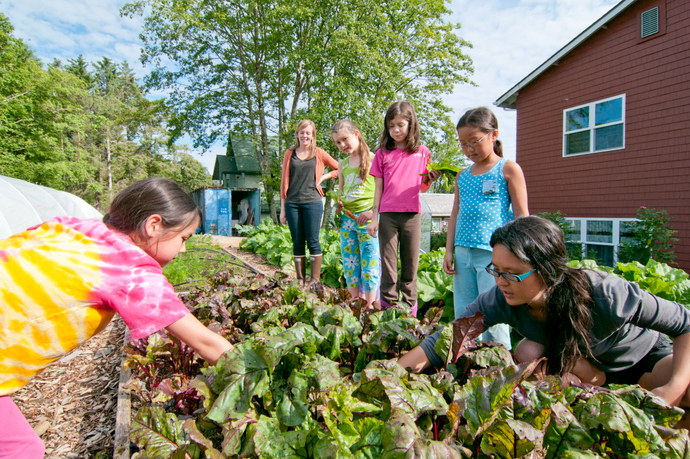
The Alaska Way of Life 4-H club gardens at St. Peter’s Fellowship Farm in 2013. (Photo by Matthew Dolkas, courtesy of the Sitka Conservation Society)

The Alaska Way of Life 4-H club would like to get its hands dirty and grow some food this summer.

We would love some mentorship and modeling to help us out and build community between our youth and gardeners. If you are interested in sharing your skills and spending a few hours with youth this summer, contact Mary Wood at the Sitka Conservation Society, 747-7509 or mary@sitkawild.org.

Mary said the 4-H club has space at St. Peter’s Fellowship Farm, so they are looking to meet with local gardeners and see what they are doing; so more like site visits. She’s hoping the gardeners also might be interested in taking volunteer leadership roles with the club and developing mentoring partnerships, which will help make the club program sustainable.

Sitka’s 4-H club is a positive youth development organization that gets youth civically engaged and physically active. Sitka has three 4-H projects: Baking, Shooting Sports, and the Alaska Way of Life outdoor education program. Sitka 4-H Community Club meetings are held at 12:30 p.m. the second Saturday of each month (April 12 is the next meeting) at the Sitka Unitarian Universalist Fellowship Hall (408 Marine St.).

  • Shooting Sports: Contact Paul Rioux for more information,
    paulg.rioux@gmail.com.
  • Baking: Contact Amy Sweeney for more information,
    a_sitka_sweeney@yahoo.com.
  • Alaska Way of Life: Get outside, explore the Tongass, and build community with 4-H. Visit the Sitka Conservation Society website for more information on current events. Summer club registration for hiking, and gardening, and other activities is coming soon. Contact Mary at the Sitka Conservation Society for more information, 747-7509 or mary@sitkawild.org.

• Sitka Conservation Society publishes resource guide for statewide Fish to Schools programs

Serving Local Fish in School Cafeteria_Page_01

The Sitka Conservation Society, which coordinates Sitka’s Fish to Schools program, has published a new resource guide, A Guide to Serving Local Fish in School Cafeterias, to help other school districts around the state implement similar programs in their communities.

F2S_Elementary2The Sitka Fish to Schools program came out of the 2010 Sitka Health Summit, when local residents chose as one of its community wellness projects to serve more local seafood in our schools. Since then the program has grown so that all students from Grades 2-12 in Sitka have a local seafood lunch option at least twice a month. This includes the Sitka School District schools, Keet Gooshi Heen Elementary School, Blatchley Middle School, Sitka High School, and Pacific High School, plus other local schools, the state-run boarding school Mount Edgecumbe High School and the private K-8 The SEER School.

Sitka is one of the first districts in the state to serve local seafood through the National School Lunch Program and has become a leader in the State of Alaska in getting local foods into schools. In the last three years, the number of schools interested in serving local seafood has increased ten-fold. Haines, Dillingham, Kodiak, Galena, and Juneau are a few of the districts that are now serving seafood in their meal programs.

In an effort to support regional and statewide efforts to serve local foods in schools, the Sitka Conservation Society developed a “how-to” guide to serving fish in schools. Using Sitka as a case study, it outlines procurement and processing strategies, legalities, tips, and recipes. Also included are case studies from around the state that offer tips and suggestions based on the success of their programs.

F2S_Elementary3The Sitka Fish to Schools program has seen an increase in meal participation on fish lunch days, likely attributed to the participation of students who typically bring a sack lunch. One student who reported never liking fish started to eat fish after a local chef came to her classroom. Others students circle fish lunch dates on their school lunch calendar, refusing home lunch that day. And why are they so excited? A middle school student put it this way, “It’s healthy and good for you and you feel good after you eat it.” Others give reasons of wanting to become a fisherman or cite the economic value to their community.

In addition to this guide is the “Stream to Plate” curriculum, a unit of seven lessons that connect salmon to the classroom. The lessons address the ecological significance and human relationship to salmon. These lessons have been tried and refined the last three years with third graders at Keet Gooshi Heen Elementary School.

Chris Bryner, teacher and collaborator on the salmon unit said, “The Fish to Schools curriculum connects my classroom to the community. Students not only learn about a resource relevant to their daily lives, but come away with an understanding that learning happens inside and outside of school.”

As the ninth largest seafood port in the country, Sitka is paving the way for locally-sourced meals. Their efforts are part of a larger national movement, Farm to School, to get local foods in schools. The Alaska Farm to School program honored Sitka’s Fish to Schools program for its innovation a couple of years ago.
celebrate fish to state“The beauty of Fish to Schools is that it provides a practical, local solution to a multitude of current global issues,” Fish to Schools Co-Founder Lexi Fish said. Local sourcing reduces the environmental impact of foods grown and raised thousands of miles away and ultimately supports a more resilient food system.

Local fish in school lunches not only tastes “delicus” (stet), as one third grader put it, but also addresses food justice, nutrition, community sustainability, and conservation. To get a free copy of the guide and curriculum, visit http://sitkawild.org/2014/03/a-guide-to-serving-local-fish-in-school-cafeterias/ or contact Sitka Conservation Society Community Sustainability Organizer Tracy Gagnon at 747.7509 or tracy@sitkawild.org.

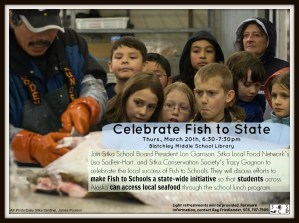
Also, don’t forget to stop by the Celebrate Fish to State event from 6:30-7:30 p.m. on Thursday, March 20, at Blatchley Middle School to learn more about the efforts to expand the Fish to Schools program statewide.


• Celebrate Fish to State takes place on March 20 to support statewide Fish to Schools program

celebrate fish to state

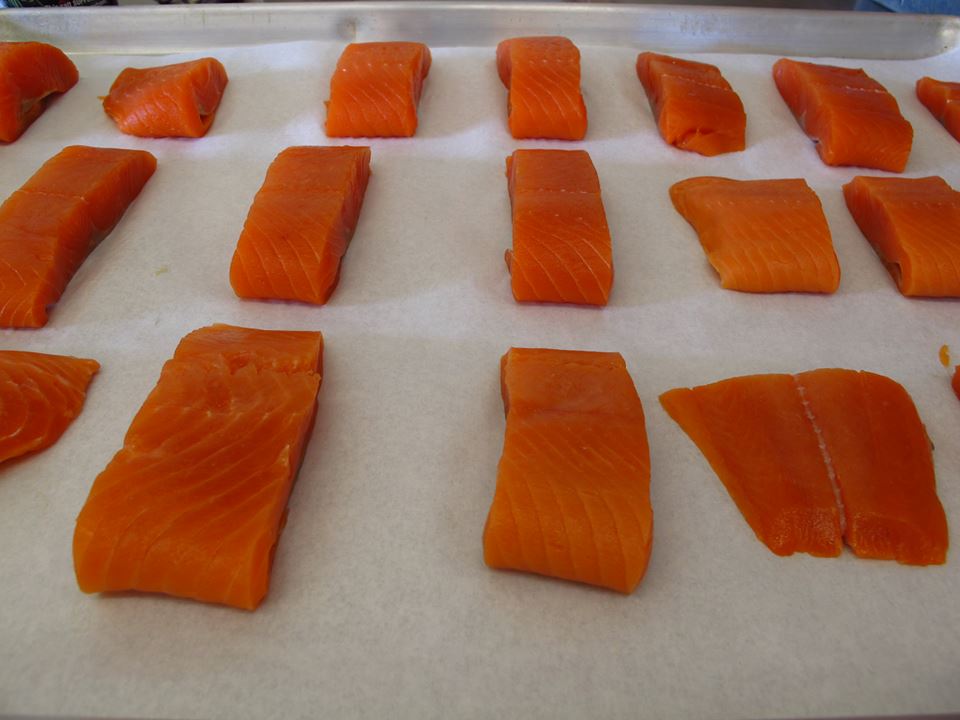
SCSCohoPortionsForCookingSitka’s Fish to Schools program has been extremely successful the past three years, and now there’s a movement to make similar programs available statewide. Join us from 6:30-7:30 p.m. on Thursday, March 20, at Blatchley Middle School as we celebrate Fish to State.

This event will celebrate the success of the Sitka Fish to Schools program, which is coordinated by the Sitka Conservation Society and other partners. The event will include short presentations from Sitka School Board President Lon Garrison, Sitka Local Foods Network President Lisa Sadleir-Hart, and Sitka Conservation Society Community Sustainability Organizer Tracy Gagnon. Light refreshments will be available.

The Sitka Fish to Schools program came out of the 2010 Sitka Health Summit, when local residents chose as one of its community wellness projects to serve more local seafood in our schools. Since then the program has grown so that all students from Grades 2-12 in Sitka have a local seafood lunch option at least twice a month. This includes the Sitka School District schools, Keet Gooshi Heen Elementary School, Blatchley Middle School, Sitka High School, and Pacific High School, plus other local schools, the state-run boarding school Mount Edgecumbe High School and the private K-8 The SEER School. The award-winning program has served as a model for a handful of other school districts in Alaska, and now there is a push to make it available statewide with a full curriculum and resource guide, plus financial support.

For more information, contact Ray Friedlander of the Sitka Conservation Society at 747-7509 or ray@sitkawild.org.


• Sitka School District touts more state investment into local foods for school lunch programs

SCSCohoPortionsForCooking

During its Feb. 4 meeting, the Sitka School Board put its weight behind an effort to increase funding for locally sourced food in schools across the state.

In a resolution to the legislature, the board cited the success of Sitka’s Fish to Schools program as justification for extending a similar statewide program beyond one year. Nutritional Alaskan Food for Schools (NAFS) was introduced by Rep. Bill Stoltze (R-Anchorage) in 2012, and piloted last year. This year the governor has included funding of $3 million dollars for the program — but only for one year. All schools in Alaska will receive funding from the program, based on student population. The Sitka School District and state-run Mount Edgecumbe High School received $39,000 from the program last year, which mostly went for seafood purchases (Mount Edgecumbe did buy some potatoes from Gustavus, and Pacific High School bought some vegetables from St. Peter’s Fellowship Farm).

In late January, Tracy Gagnon, who coordinates the Fish to Schools program for the Sitka Conservation Society, submitted the following letter to the editor to the Daily Sitka Sentinel outlining the reasons to support the program.

Nutritional Alaskan Foods for Schools

Dear Editor,

Sitka is one of the first communities in Alaska to push for local foods in schools through the Fish to Schools program; now it’s time to go state-wide. The Governor has included in his FY15 budget state funding to reimburse school districts for their purchases of Alaskan grown or caught foods through the Nutritional Alaskan Foods for Schools program (NAFS). This makes it possible for schools to serve local, nutritious foods to their students, sourcing from farmers, fishermen, and processors in or around their communities. NAFS improves Alaska’s food security and helps us create a more sustainable local food system.

Representative Stoltze proposed NAFS in 2011, and more than 100 vendors and 48 school districts benefited from this legislation in the 2012-2013 school year. Nearly 90 percent of those 48 school districts purchased local seafood.

Every year food producers and school food service providers wait anxiously every spring for NAFS to pass. And usually it’s too late for farmers to meet the extra demand because they’ve already planted their crops and food service has already purchased other foods. Making this funding permanent would provide both food service and food producers the consistency necessary for advanced planning and coordination of harvest to ensure supply meets demand.

The Sitka Conservation Society thanks both the leadership of Representative Stoltze and Governor Parnell for including NAFS in his proposed budget. We urge Alaska Legislators to support the permanent funding of a program that increases Alaska’s food security, catalyzes Alaska’s food production, supports local communities, and improves the health of our students.

Tracy Gagnon
Community Sustainability Organizer
Sitka Conservation Society