• Gardening work party set for Earth Week at St. Peter’s Fellowship Farm

StPetersSignWithToDoListSign

A group of kids harvests garlic during an Aug. 12, 2011, work party at St. Peter's Fellowship Farm.

A group of kids harvests garlic during an Aug. 12, 2011, work party at St. Peter’s Fellowship Farm.

Are you interested in meeting other Sitka gardeners and learning about how to grow food in Sitka’s rainy climate? Then join us for an Earth Week garden party from 2-4 p.m. on Saturday, April 25, at St. Peter’s Fellowship Farm.

St. Peter’s Fellowship Farm is located behind St. Peter’s By The Sea Episcopal Church on Katlian Street (the brown church with the steeple above Crescent Harbor). It is a communal garden that grows food to be sold at the Sitka Farmers Markets, at a table when Chelan Produce is in town, and used for various school lunch and hunger programs around town. This year’s Sitka Farmers Markets are from 10 a.m. to 1 p.m. on Saturdays, July 4, July 18, Aug. 1, Aug. 15, Aug. 29, and Sept. 12, at the Alaska Native Brotherhood Founders Hall (235 Katlian St.).

“We will be putting starts in the ground, weeding and prepping beds for planting,” St. Peter’s Fellowship Farm lead gardener Laura Schmidt said.

The garden work parties are kid-friendly, so feel free to bring the munchkins to help.

To learn more, call St. Peter’s Fellowship Farm lead gardener Laura Schmidt at 738-7009 or 623-7003, or contact Sitka Local Foods Network board president Lisa Sadleir-Hart at 747-5985 or sitkalocalfoodsnetwork@gmail.com.

• Alaskans Own community-supported fisheries program announces 2015 season subscription prices

AOFlyer2015Sitka

Sitka-based Alaskans Own seafood recently announced its subscription prices for its 2015 community-supported fisheries (CSF) program in Sitka, Juneau, Anchorage, and, new this year, Seattle.

Alaskans Own was the first CSF program in the state, modeling its program after the successful community-supported agriculture (CSA) programs that let customers deal directly with harvesters so they can buy subscription shares to the year’s crop/catch. In addition to the CSF program, Alaskans Own usually has a table at the Sitka Farmers Markets during the summer.

AO flier no tagsThis is the sixth year of the Alaskans Own CSF program, and there are four-month and six-month subscriptions available starting in May. The six-month subscriptions allow people to keep receiving freshly caught seafood through October instead of August, when the traditional four-month subscriptions end. Half-subscriptions also are available. Subscriptions include a mix of locally caught black cod (sablefish), halibut, king salmon, coho salmon, lingcod and miscellaneous rockfish, depending on the commercial fishing season and prices.

According to newly hired director Caroline Lester, this year’s price for a six-month full subscription (about 60 pounds, or 10 pounds a month) in Sitka is $886.16 (includes sales tax) and $446.40 for a half subscription (about 30 pounds). The price for a four-month full subscription (about 40 pounds) is $606.32 and $326.46 for a half subscription (about 20 pounds). Prices are slightly higher for the other communities participating in the program. People can use the Alaskans Own online store site to purchase their CSF shares. Deliveries in Sitka will be either the last or second-to-last Thursday of the month at the old mill building next to the Sitka Sound Science Center.

The Alaskans Own program is associated with the Alaska Sustainable Fisheries Trust. The Alaska Sustainable Fisheries Trust’s mission is to strengthen Alaskan fishing communities and marine resources through scientific research, education, and economic opportunity.

For more information, contact Caroline Lester at info@alaskansown.com or 738-2275.

• In the 19th and early 20th Centuries, Sitka was Alaska’s original garden city

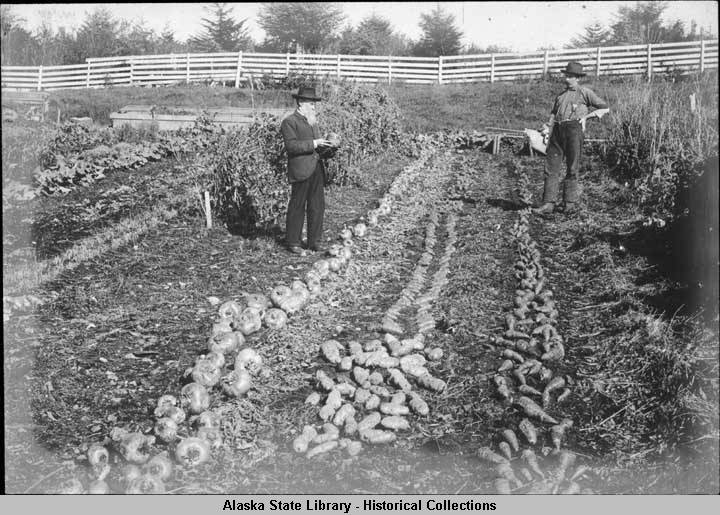
The 1900 potato harvest in the Sitka garden of Gov. John G. Brady. (Photo courtesy of Alaska State Library Historical Collections)

The 1900 harvest of potatoes and other vegetables from the Sitka garden of Gov. John G. Brady. (Photo courtesy of Alaska State Library Historical Collections)

Sitka cattle on the beach in 1887 (Photo courtesy of Alaska State Library Historical Collections)

Sitka cattle on the beach in 1887 (Photo courtesy of Alaska State Library Historical Collections)

Even though Sitka doesn’t have much in the way of commercial agriculture and gardening these days, at one point in the 19th Century and early 20th Century Sitka was Alaska’s original garden city.

Sitka has a unique history that includes the Tlingít, Russian and American cultures. Even before the first Russians arrived in the 1700s and made Sitka (or New Archangel, as the Russians called it) the capital of Russian America in 1803, the Tlingíts had simple gardens for potatoes and other crops they’d received from Spanish and other explorers. The Tlingíts would plant potatoes and other root vegetables before they headed out to their fish camps, then they’d harvest the gardens as they made their way to their hunting and winter camps. In addition, the Tlingíts in Shee Atiká (Sitka) were constantly gathering roots, berries, and other food and medicinal plants that grew in the area. The Tlingíts also created an early form of mariculture, creating clam gardens by creating rock-walled beach terraces at low tide to keep clams and other shellfish in certain areas for easy growth and harvest.

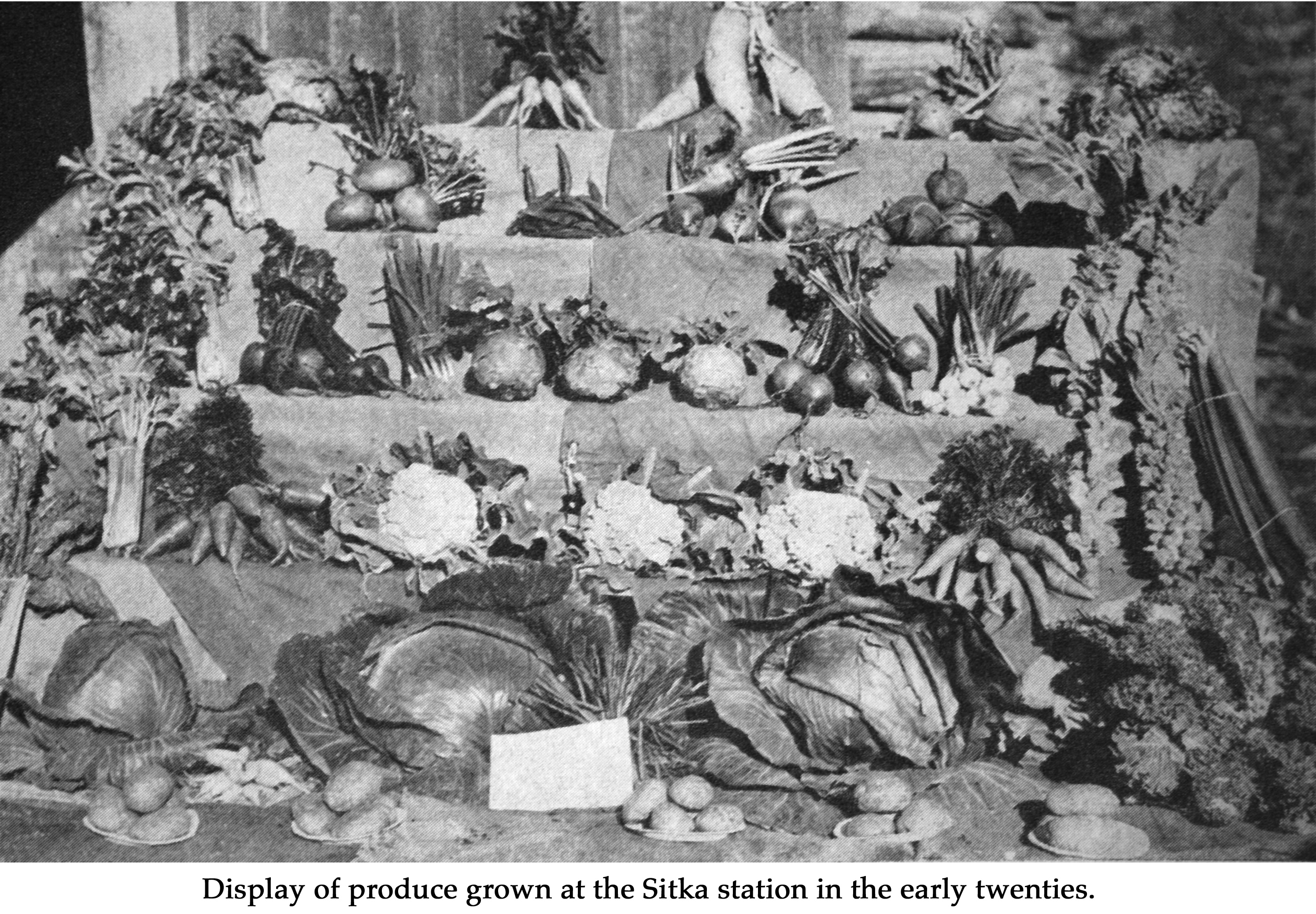
produceWhen the Russians arrived in Sitka, they were fur trappers and not colonists. However, the Russian czar required all land patents to have gardens, and that established the first formal vegetable and fruit production in Sitka. The Russians (along with the Finns and Swedes who served as indentured servants to the Russians) maintained several large gardens until 1867, when Russian America was sold to the United States.

Among the first Americans to arrive in Alaska were missionaries, including Dr. Sheldon Jackson who established a school for Native Americans in Sitka that eventually became Sheldon Jackson College and also served as Alaska’s Superintendent for Indian Education with the U.S. Department of Interior. In 1891, Dr. Jackson lobbied Congress to create a U.S. Department of Agriculture experimental farm in Sitka to see if agriculture had any potential in Alaska. It wasn’t until 1897, when Congress acted, passing a bill that in 1898 created USDA experimental farms in Sitka and Kodiak. Over the next few years, more USDA experimental farms would be established in Kenai, Rampart, Fairbanks, Copper Center, and Matanuska (Palmer).

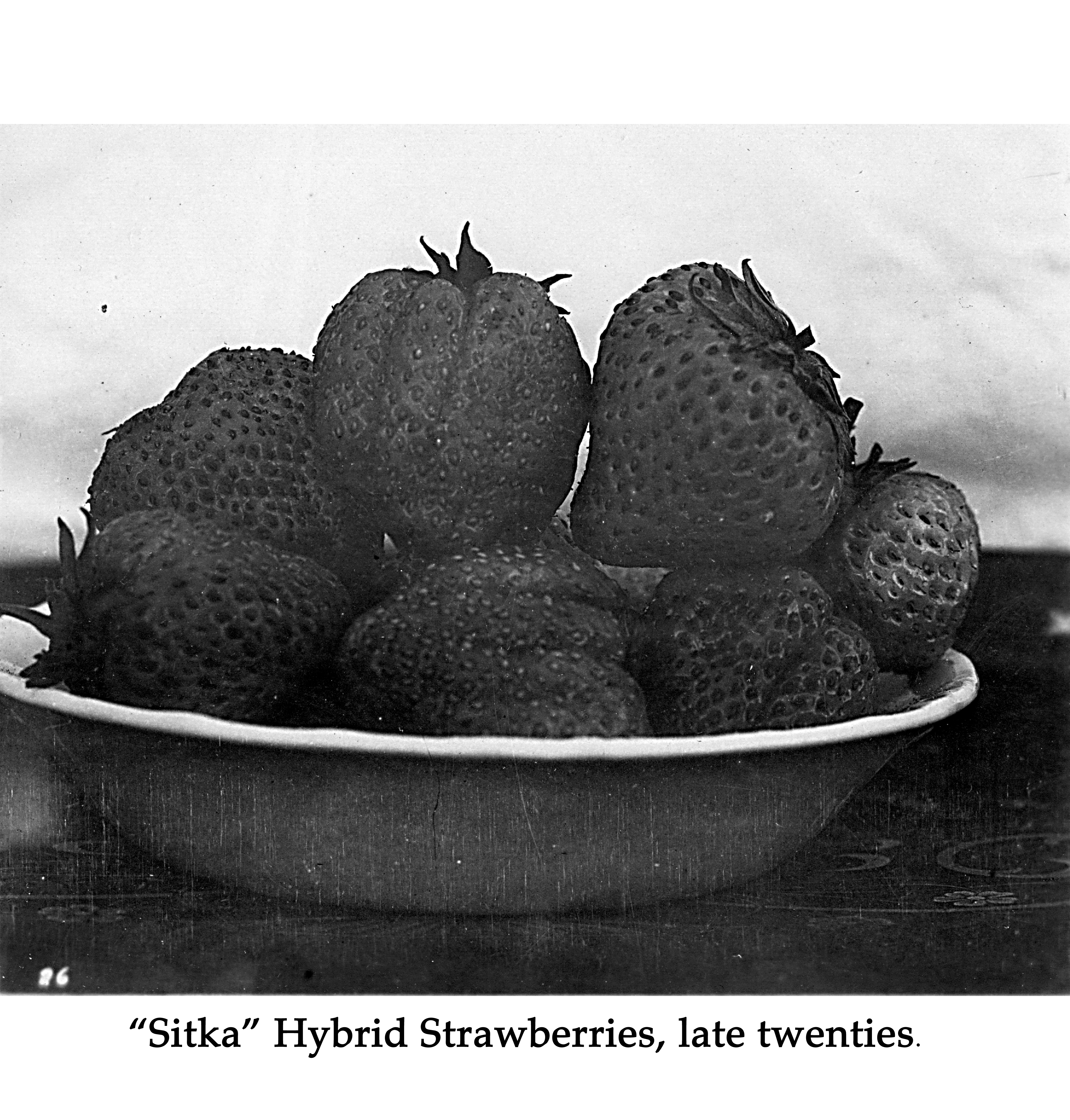
ccg2Many details about the USDA experimental farm in Sitka can be found in an article in the Spring 1998 issue of Agroborealis (Pages 7-11), celebrating 100 years of agriculture research in Alaska. The article includes information about some of the experiments run by lead horticulturist Charles Christian Georgeson, who later moved to the Fairbanks experimental station and now has a botanical garden named for him at the University of Alaska Fairbanks. One of Georgeson’s first experiments involved growing potatoes, and he noted how well the local seaweed worked as a fertilizer. He also developed the Sitka hybrid strawberry in 1905, combining a wild beach strawberry from Yakutat with a commercial variety of unknown origin (see Pages 30-32).

Ph 2824Unfortunately, many of the experimental farms were closed, except the two in Fairbanks and Palmer. The Sitka experimental station closed in 1931, and much of the land was converted to other uses. Until he retired in 2014, Bob Gorman, a longtime University of Alaska Fairbanks Cooperative Extension Service employee, maintained a few small garden plots on the former Sitka experimental farm site where he conducted a few experiments (including growing corn in a high tunnel). Some of the fruit trees planted by Georgeson more than 100 years ago still produce fruit.

A photo gallery of historic Sitka gardening photos is below, followed by a photo gallery of more recent photos of the former Sitka experimental farm taken during a September 2013 tour for the International Master Gardeners Conference Cruise when it visited town. The historical photos were provided to the Sitka Local Foods network in 2008 by then-Sitka Historical Society and Museum curator Ashley Kircher (now Ashley Oliphant) and intern Amy Thompson.

This slideshow requires JavaScript.

This slideshow requires JavaScript.

• Rep. Jonathan Kreiss-Tomkins of Sitka introduces bill to allow donations of fish and game to nonprofit meal programs

041614_JKT_house-floor

Rep. Jonathan Kreiss-Tomkins (D-Sitka) is the prime sponsor of a tripartisan bill that will allow nonprofit meal programs — such as those found at schools, hospitals and senior centers — to serve donated fish and game from sport and subsistence harvesters.

The bill, HB 179, is co-sponsored by seven other legislators — four Republicans (Cathy Muñoz of Juneau, Charisse Millett of Anchorage, Louise Stutes of Kodiak and Tammie Wilson of North Pole), two Democrats (Neal Foster of Nome and Sam Kito III of Juneau), and an Independent (Dan Ortiz of Ketchikan). The was introduced on April 1 and already has hearings set for next week in the resources (Monday, April 6) and fisheries (Tuesday, April 7) committees. If those committees pass the bill, it could go before the House floor for a vote as early as late next week.

“Because of that broad support, this bill is in not just the fast lane, but in the Autobahn-style fast lane,” Kreiss-Tomkins told the Daily Sitka Sentinel. “This bill could go from being introduced to a vote on the floor in eight or nine days.”

Kreiss-Tomkins said the bill was inspired in part by Sitka’s Fish to Schools program, which allows commercial fishermen to donate locally caught seafood to local schools so it can be served in student lunches. However, many parts of the state don’t have commercial fisheries, and Alaska law currently bars food service organizations funded by state or federal meal programs from serving subsistence- and sport-harvested fish and game, even if it is donated.

In the sponsor statement for the bill, Kreiss-Tomkins writes:

Hunting and fishing is at the heart of our shared heritage as Alaskans. Every Alaskan looks forward to the season he or she can again fill the freezer with salmon, moose, caribou, seal, or berries. Alaskans happily share this food with family, children, and elders.

This sharing is not possible in our public institutions, however. Well-meaning state laws intended to prevent the commercialization of wild game have also largely prevented children in schools and elders in hospitals and senior centers from eating the traditional Alaska foods that we treasure. As a result, even though we are surrounded by some of the best food in the world, our children eat corndogs rather than caribou at school lunch; our elders are served spaghetti rather than seal.

This action follows a 2013 amendment U.S. Rep. Don Young (R-Alaska) included in an agriculture bill that removed barriers that previously prohibited American Indians and Alaska Natives from serving traditional foods in hospitals, elder care facilities and schools. The amendment authorized the U.S. Department of Agriculture to allow for the donation and serving of traditional foods, which meet specific safety standards, in public facilities that primarily serve American Indians and Alaska Natives.

In his sponsor statement, Kreiss-Tomkins writes:

The bill also ensures traditional wild foods donated to and served by food service programs are safe to eat. The Department of Environmental Conservation already has regulations in place providing for the safe handling and processing of many traditional wild foods. HB 179 affirms the Department’s authority to oversee the safety of these foods.

HB 179 will nourish Alaska’s children and elders, both physically and spiritually. It will limit the amount of expensive and unhealthy processed food shipped to communities that have incredible food available just a short boat or snowmachine ride away. Children will develop an appreciation where their food comes from and elders will be able to keep eating the foods they love.

• HB 179 — Traditional Foods Bill

• HB 179 — Traditional Foods Bill Sponsor Statement

• Check out the April 2015 edition of the Sitka Local Foods Network newsletter

SLFN April 2015 newsletter screenshot

The Sitka Local Foods Network just sent out the April 2015 edition of its newly launched monthly newsletter. Feel free to click this link to get a copy.

This edition of the newsletter has brief stories about how to build a simple raised garden bed, the Plant a Row for the Hungry program, our open manager and assistant manager positions for the Sitka Farmers Market, some upcoming garden mentor program and other free garden classes, and the 2015 Pick.Click.Give. fundraising campaign. Each story has links to our website for more information.

You can sign up for future editions of our newsletter by clicking on the registration form image in the right column of our website and filling in the information. If you received a copy but didn’t want one, there is a link at the bottom of the newsletter so you can unsubscribe. Our intention is to get the word out about upcoming events and not to spam people. We will not share our email list with others to protect your privacy.

• Sitka Farmers Market vendor forms, information sheets and regulations for 2015 now available

SitkaFarmersMarketSign

Vendors looking to sell local food, arts and crafts, and other items at the 2015 Sitka Farmers Markets can find all the vendor forms, information sheets and regulations for this year by going to the Documents page on this site, or look at the bottom of this post for the documents. The forms are in downloadable Adobe Acrobat PDF or Microsoft Word DOC files. In addition, potential vendors should note two upcoming meetings to go over rules and regulations, fees, and other information they’ll need for this summer’s markets.

The 2015 Sitka Farmers Market manager and assistant manager will be hired soon, and they can be reached at sitkafarmersmarket@gmail.com or 738-8683 during the market season. Our 2015 Sitka Farmers Markets will be from 10 a.m. to 1 p.m. on six alternating Saturdays starting in late June (July 4, July 18, Aug. 1, 15, 29, and Sept. 12) at the Alaska Native Brotherhood Founders Hall at 235 Katlian Street.

The Sitka Local Foods Network will host two pre-market meetings for potential market vendors, and all potential vendors are encouraged to attend at least one of the two meetings. The first meeting will be from 5:45-7:45 p.m. on Monday, March 30, at Harrigan Centennial Hall, and the second meeting is 5:45-7:45 p.m. on Tuesday, April 7, at Harrigan Centennial Hall. (NOTE: The Monday, March 30, meeting has been postponed to a date TBA.)

Sitka Local Foods Network board members will be available to answer questions and to make suggestions that will help new and returning vendors adjust to any food regulation changes from the Alaska Department of Environmental Conservation, updates to the Alaska Quest electronic benefits program, and any other changes. For more information, contact Maybelle Filler at 738-1982 or mocampo25@hotmail.com, Brandie Cheatham at vista_brandie@yahoo.com, or you can email the Sitka Local Foods Network Board of Directors at sitkalocalfoodsnetwork@gmail.com.

Sitka Farmers Market vendor forms

• Link to 2015 Farmers Market Resource Fact Sheets from Alaska Division of Agriculture

• 2015 City and Borough of Sitka Sales Tax Form for Sitka Farmers Market Vendors

• 2015 Sitka Farmers Market Vendor Rules And Responsibilities Packet

• 2015 Sitka Farmers Market Vendor Registration Packet

• 2015 Sitka Farmers Market Vendor Guidelines Signature Page (this must be on file for all vendors)

• Cottage Food Fact Sheet — “Understanding Alaska’s Cottage Food Exemptions”

• Cottage Food Exemptions

• Washington Farmers Market Vendor Marketing Guide (March 2014)

• Guide to Operating a Successful Home-Based Food Business (March 2014 document from UAF Cooperative Extension Service and Alaska Department of Environmental Conservation includes Alaska food safety information and regulations for farmers markets and other food sales)

• Check out the special PFD edition of the Sitka Local Foods Network newsletter

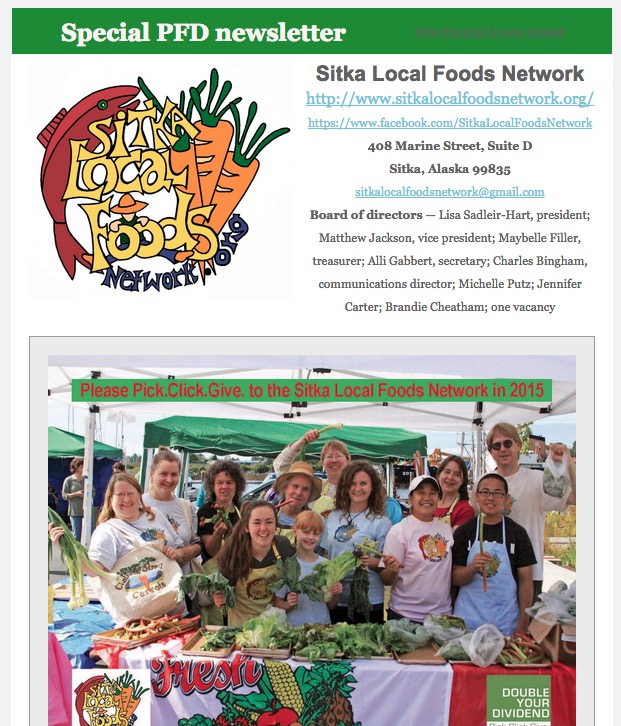
SnapshotPFDNewsletter

The Sitka Local Foods Network just sent out a special PFD application edition of its newly launched newsletter. Feel free to click this link to get a copy.

This special edition of the newsletter has just one story in it, a reminder that the Alaska Permanent Fund Dividend application deadline is one week away (March 31). We encourage Alaskans to participate in the 2015 Pick.Click.Give. charitable giving program that’s part of the PFD application, and we appreciate your support of the Sitka Local Foods Network through the program. A regular monthly newsletter will come out on or near April 1.

You can sign up for future editions of our newsletter by clicking on the registration form image in the right column of our website and filling in the information. If you received a copy but didn’t want one, there is a link at the bottom of the newsletter so you can unsubscribe. Our intention is to get the word out about upcoming events and not to spam people. We will not share our email list with others to protect your privacy.

• Scenes from the March 9 ribbon-cutting celebration for the Sitka Kitch community commercial kitchen

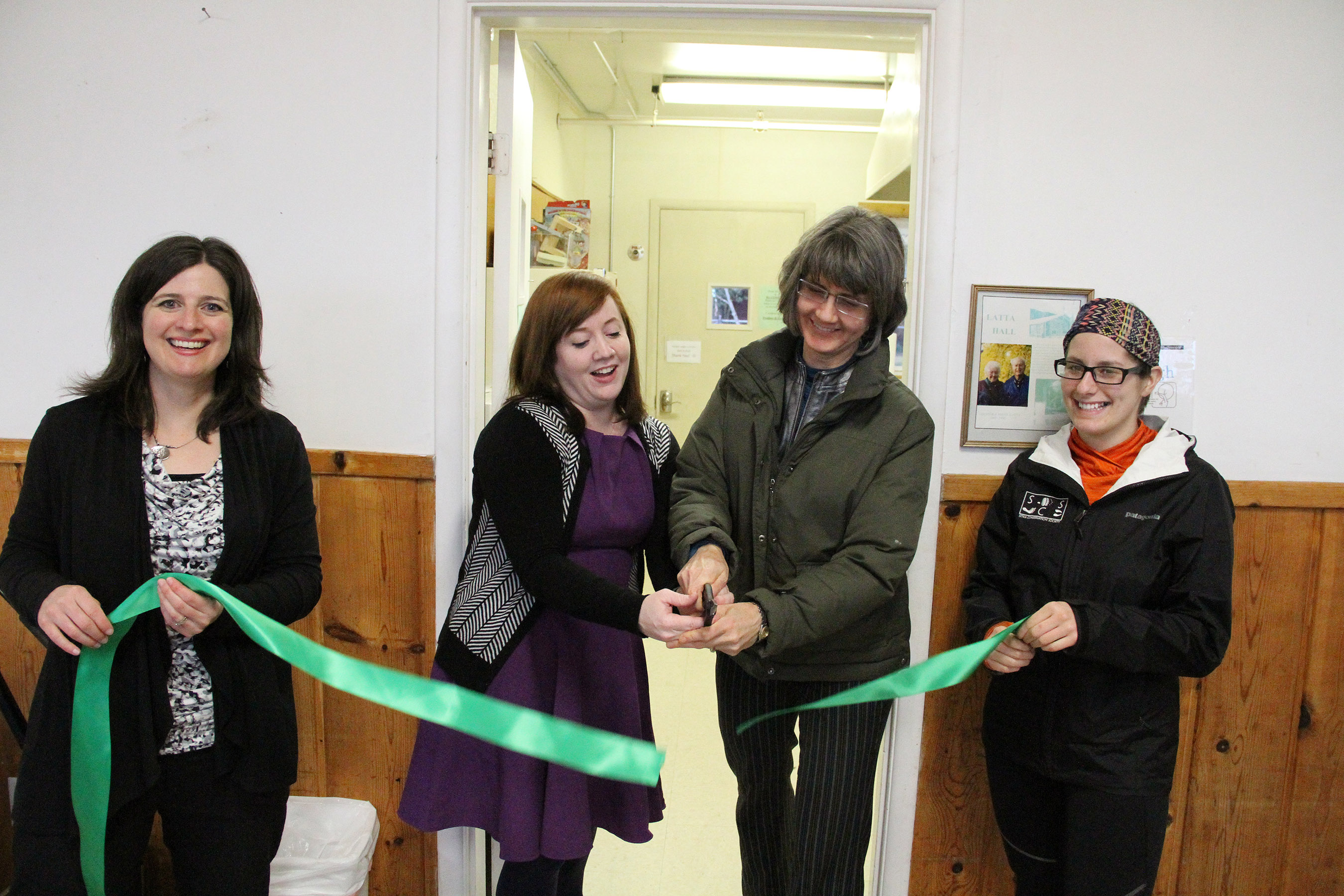
MarjorieHennessyAndCyndyGibsonCutRibbon

kitch_logo_mainOn Monday, March 9, a couple of dozen people attended a ribbon-cutting ceremony for the new Sitka Kitch community commercial kitchen, located at Sitka First Presbyterian Church (505 Sawmill Creek Road).

The new community commercial kitchen came out of a food security project from the 2013 Sitka Health Summit. Sitka residents decided a community kitchen would serve several functions as a place to teach cooking and nutrition classes, a place to teach food preservation classes, a place for small cottage food businesses to have access to a rental commercial kitchen, etc. It is a place for education, business incubation, and community cultivation about food in Sitka.

The Sitka Kitch project (note, new website for scheduling) is a partnership between the Sitka Conservation Society, Sitka First Presbyterian Church, Sitka Local Foods Network, Sitka Food Co-op, Sitka Health Summit, Sustainable Southeast Partnership, and the University of Alaska Fairbanks Cooperative Extension Service (Sitka District Office). The kitchen recently was renovated after the church received a $13,000 community blessings grant from the Northwest Coast Presbytery.

sikta_kitch_sheet-791x1024During the ribbon-cutting ceremony, Marjorie Hennessy of the Sitka Conservation Society and Sustainable Southeast Partnership discussed the history of the project and some of its goals. Then she and Cyndy Gibson, representing Sitka First Presbyterian Church, cut the ribbon.

Please check out the linked brochure for the current rental rates, which are tiered depending upon the planned use of the facility. This kitchen does meet Alaska Department of Environmental Conservation commercial kitchen food safety standards, but renters are required to get all of their other required permits (business license, food-handling permits, etc.) before renting the kitchen. Groups that already regularly use the facility for deliveries, such as the Sitka Food Co-op and Everything Organic Sitka, will continue to use the facility.

For more information about Sitka Kitch rentals, check the website, contact sitkakitch@sitkawild.org or call the Sitka Conservation Society at 747-7509. Eventually the management will switch over to the church.

A slideshow is posted below the brochure with photos from the ribbon-cutting ceremony.

• Sitka Kitch informational brochure

This slideshow requires JavaScript.

• Just two weeks left to file, so don’t forget to choose the Sitka Local Foods Network when you Pick.Click.Give. on your PFD app

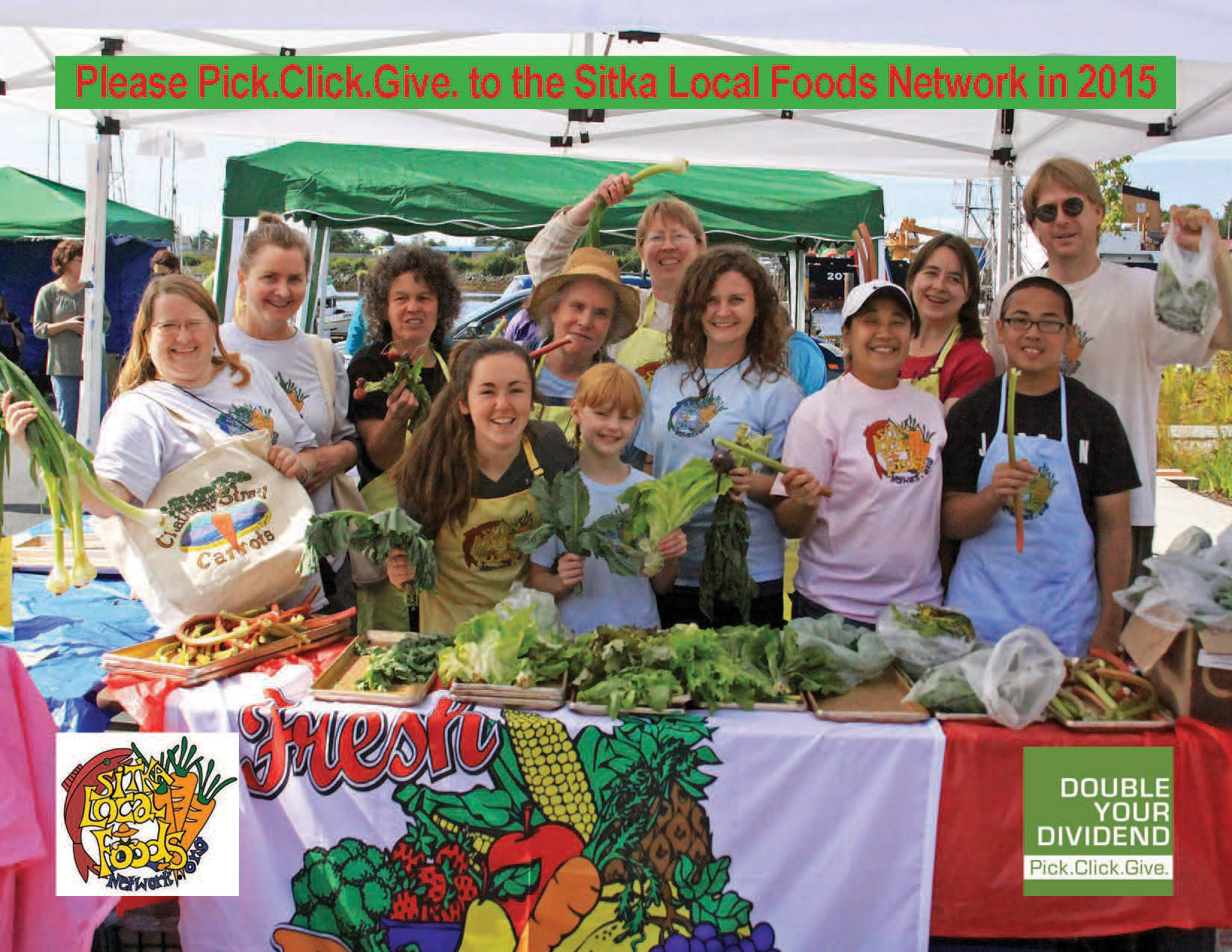
PCGFarmersMarket2015

We’re halfway through March, which means there’s just over two weeks left for Alaskans to file for their 2015 Alaska Permanent Fund Dividend check (the PFD application deadline is March 31). As usual, Alaskans can share their wealth with a variety of Alaska nonprofits, including the Sitka Local Foods Network, through the PFD’s Pick.Click.Give. program.

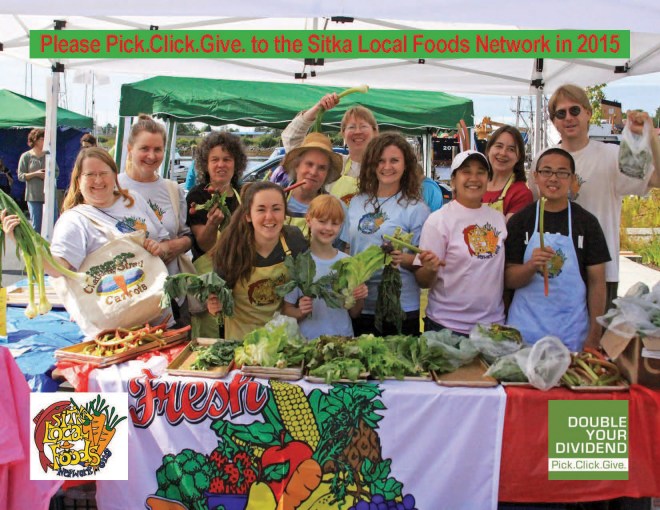
PickClickGiveFlier3DYDPRINTThis is the second year the Sitka Local Foods Network will participate in the Pick.Click.Give. program, which allows people to donate in $25 increments to their favorite statewide and local 501(c)(3) nonprofit organizations when they file their PFD applications from Jan. 1 through March 31. We thank the 56 donors who pledged $2,900 to the Sitka Local Foods Network in 2014, and we appreciate your support again in 2015.

When you choose to donate part of your PFD to the Sitka Local Foods Network, you support the Sitka Farmers Market, St. Peter’s Fellowship Farm, Blatchley Community Gardens, education programs about growing and preserving food, the sustainable use of traditional foods, the Sitka Community Food Assessment, the Sitka Food Summit, and a variety of other projects designed to increase access to healthy local foods in Sitka.

Lovalaska FB Square PhotoGrid Tag (1)In 2014 a record 26,773 Alaskans gave $2.77 million to their favorite nonprofit organizations, up from $545,000 donated by 5,175 people in the program’s first year of 2009. Some Alaskans choose to donate to just one group, while others may spread several donations around to many groups. There now are more than 500 total 501(c)(3) nonprofit organizations participating in Pick.Click.Give. for 2015, including 22 from Sitka.

To encourage more Alaskans to donate through the Pick.Click.Give. program, this will be the second year of the Double Your Dividend contest. Anybody who makes a non-anonymous Pick.Click.Give. donation of $25 or more to at least one of the registered nonprofits will be entered into a contest where 10 lucky Alaskans will win a second PFD check. The winners will be announced in October, about the time the PFDs start hitting bank accounts.

PCGKidsHarvest2015So how do you make a donation to the Sitka Local Foods Network through the Pick.Click.Give. program? First, go to http://pfd.alaska.gov/ and fill out your PFD application. When you get to the section of the application asking if you want to participate in Pick.Click.Give. Charitable Contributions program, click on the PCG link and search for the Sitka Local Foods Network. You also can look for us by using the town search for Sitka.

The Pick.Click.Give. program is available only to people who file their PFD applications online, and not to those who file by mail. Even though you can’t file a new PFD application after March 31, you can go back into your application and update your Pick.Click.Give. donations through Aug. 31 each year.

You still can donate to the Sitka Local Foods Network if you aren’t from Alaska or aren’t eligible for a 2015 PFD. To donate, send your check to the Sitka Local Foods Network, 408D Marine St., Sitka, Alaska, 99835, or go to our page on Razoo.com, http://www.razoo.com/story/Sitka-Local-Foods-Network, and click the Donate button to make an online contribution. Please let us know if you need a receipt for tax purposes. For more information about donating, you can send an email to sitkalocalfoodsnetwork@gmail.com.

Thank you for supporting our mission of promoting and encouraging the growing, harvesting and eating of local foods in Sitka and Southeast Alaska.

• It’s time to … learn about how to raise chickens (March 25) and rabbits (April 8)

BobbiDanielsWithRabbit

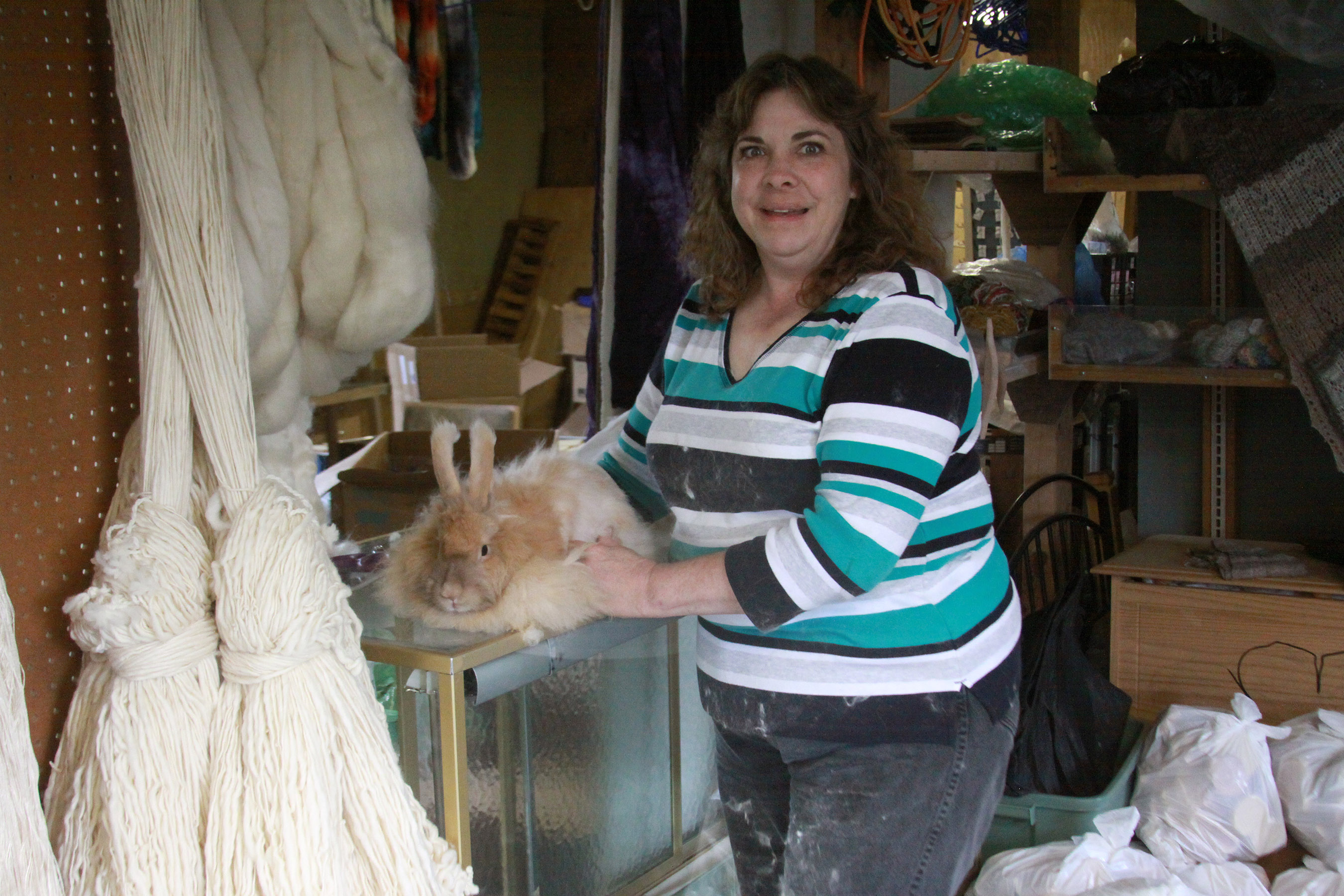
Bobbi Daniels of The Sawmill Farm grooms one of the rabbits she raises for yarn.


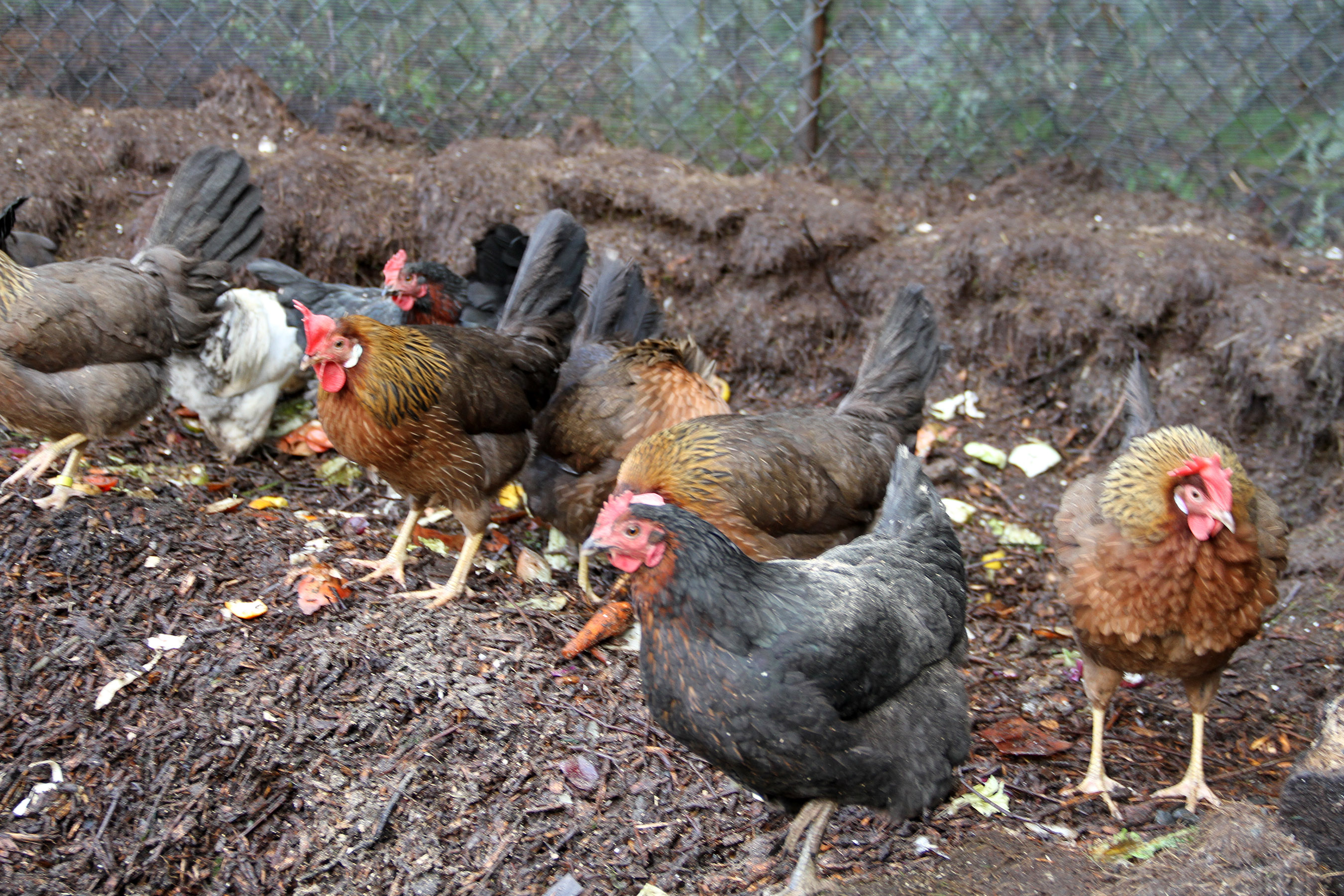
ChickensInCompostFor more than a year, the Sitka Local Foods Network has offered a variety of free garden education classes. Now we’re adding livestock classes as Bobbi Daniels of The Sawmill Farm has offered to teach Raising Chickens 101 and Raising Rabbits 101.

The Raising Chickens 101 class is from 6:30-8 p.m. on Wednesday, March 25, at the Sitka Unitarian Universalist Fellowship Hall (408 Marine Street, parking on Spruce Street). The Raising Rabbits 101 class is 6:30-8 p.m. on Wednesday, April 8, at the Sitka Unitarian Universalist Fellowship Hall. Click here to check out the radio PSA.

“I am planning on tailoring the classes to who shows up (new chicken owners vs. those considering chickens) so it will go according to who is there and what they need to know, taking questions and sharing resources,” Bobbi said. “If people have something specific they want me to cover, they can message me on Facebook or call me 738-4481.”

The chicken class will cover a range of topics, including what breeds are best for eggs or meat, basic chicken coop info, how to prevent predators from getting into your flock, what types of feed you need, the advantages of chicken coop co-ops, the best time to get your chicks, etc. The rabbit class will cover topics such as what breeds are best for meat or yarn, rabbit feed types, how long it takes rabbits to reach maturity, how much cage space you need, etc.

These classes are free and open to all Sitka residents wanting to learn about chickens and rabbits. For more information about Sitka Local Foods Network education classes, contact Jennifer Carter at 747-0520 or 1-850-491-2666 (cell), or Michelle Putz at 747-2708. These are two of the many free classes being offered this year by the Sitka Local Foods Network education committee. Click here to get a full list of our upcoming spring classes.