Sitka Tribe/SEATOR join new Alaska Ocean Acidification Network tribal research working group

Esther Kennedy at the SEATOR lab in Sitka.

While most people don’t know much about ocean acidification, it has become a major concern of Alaska fishing communities. Higher rates of CO2 means the ocean is 30 percent more acidic than it was three centuries ago, and that has impacted everything from how shellfish build their shells to causing harmful algal blooms that result in paralytic shellfish poisoning and other issues.

In order to monitor ocean acidification and its impact in Alaska coastal communities, the Sitka Tribe of Alaska (STA) and its partners in the Southeast Alaska Tribal Ocean Research (SEATOR) have joined the new Alaska Ocean Acidification Network (AOAN) tribal research working group.

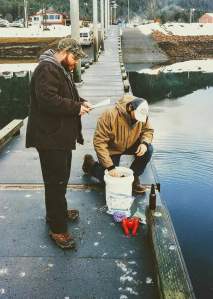
Jeromy Grant, left, and Sean Williams of Hoonah Indian Association take water samples for SEATOR.

“Global warming increases the risk of shellfish toxins, while its partner ocean acidification directly threatens shellfish survival,” STA Environmental Specialist Esther Kennedy said. “We monitor ocean acidification and shellfish toxins at local beaches to ensure that shellfish remain a sustainable and safe wild food source despite ongoing environmental changes.”

The tribal working group was formed to coordinate ocean acidification research and monitoring activities, as well as local community outreach activities, between tribal organizations across Alaska. So far discussions have been on creating consistency in data collection, and expanding data collection to sites in the Arctic that are not currently adequately sampled.  This effort is about expanding tribal capacity for research and monitoring, and having tribes take the lead in some areas in Alaska which are under sampled by university and agency researchers, as well as partnering with those researchers to build local capacity.

In addition to Sitka Tribe of Alaska (STA), other members of the AOAN tribal working group include Alutiiq Pride Shellfish Hatchery in Seward, Sun’aq Tribe of Kodiak, the Native Village of Kotzebue, and Yakutat Tlingít Tribe. SEATOR includes 16 Southeast tribal partners, plus Sun’aq Tribe in Kodiak, with its lab located in Sitka. The Sitka Sound Science Center recently posted an online survey about ocean acidification for the AOAN.

“Over the past few years the Sitka Tribe of Alaska (STA) has become a leader in Alaska in monitoring for shellfish toxicity for communities,” said Davin Holen, who is coordinating the tribal working group for AOAN. “This includes working closely with communities throughout Southeast Alaska to monitor stocks important for subsistence harvests. This effort has lead to the establishment of the Southeast Alaska Tribal Ocean Research (SEATOR), which is housed in the environmental department of STA. Recently the STA lab installed equipment to monitor for ocean acidification. STA worked collaboratively with the Alutiiq Pride Shellfish Hatchery in Seward to set up monitoring protocols for ocean acidification. Using their existing SEATOR network for testing shellfish, STA is beginning to monitor ocean acidification levels throughout Southeast Alaska. Additional monitoring will occur in collaboration with the Sun’aq Tribe of Kodiak for Kodiak Archipelago communities, along with two sites under development in the Arctic. Tribal monitoring of environmental conditions in Southeast Alaska by STA through the SEATOR network has become a model for other areas of Alaska, making STA a vital partner for marine science in Alaska.”

The Sitka Tribe of Alaska continuously monitors the carbonate chemistry of Sitka Harbor and is beginning a discrete sample collection program modeled after the Alutiiq Pride Shellfish Hatchery’s existing program. The Sitka Tribe coordinates discrete sample collection and analysis with the SEATOR partnership’s existing weekly phytoplankton and shellfish biotoxin monitoring programs, including with the Hoonah Indian Association and other Southeast Alaska tribal partners.

Kennedy said SEATOR’s participation in the Alaska Ocean Acidification Network tribal working group is a natural extension of its shellfish testing work.

“We installed a Burke-o-Lator (BoL) in early June, which is an instrument that can continuously monitor the chemistry of water pumped through it and can measure individual preserved water samples,” Kennedy said. “While we’re still working to fully calibrate the individual water sample analysis portion of the instrument, we have started shipping kits of bottles and preservative to our partners. Since our partners are already collecting a phytoplankton sample every week and shellfish samples every two weeks, our goal is for partners to add OA-sample collection to their phytoplankton sampling routine and to ship us preserved samples with their clams every two weeks. Ocean acidification’s specific effects on nearshore ecosystems are still not well known, so we’re hoping that by pairing OA samples with phytoplankton assemblages and shellfish toxins, we’ll get a clearer picture of each community’s vulnerability. We are also interested in seeing whether the chemistry in our OA samples helps us to predict phytoplankton toxins, as work in California has suggested that domoic acid production is higher in more acidic waters.”

Sitka Kitch to host Cooking With Hank Moore class on Tuesday, Jan. 16

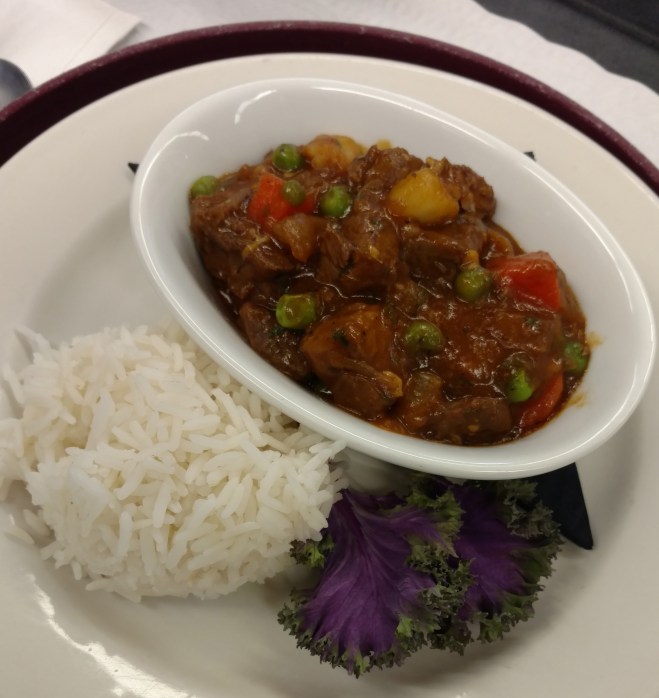
Local cab driver, fisherman, teacher and musician Hank Moore will teach a class in the new Sitka Kitch Seasonal Cooking class series from 6-8:30 p.m. on Tuesday, Jan. 16, at the Sitka Kitch community rental commercial kitchen. Hank said students will cook collard greens or mustard greens, black-eyed peas, brown rice, black cod, lemon water and caramelized onion.

Hank grew up in the south, so his dishes have a soul food base. But he’s been in Sitka for many years, so he’s Alaskanized this dish with black cod (sablefish).

Class space is limited, so register early. This class costs $27.50 per person, plus a food/supply fee split between the registered students. The registration deadline is 4 p.m. on Monday, Jan. 15.

Register online at http://sitkakitch.eventsmart.com (click on class title) and pre-pay using credit/debit cards or PayPal. To pre-pay with cash or check, contact Chandler, Claire, or Clarice at 747-7509 to arrange payment.

UAF Cooperative Extension Service offers Certified Food Protection Manager class by videoconference Feb. 22 in Sitka

Thursday, Feb. 8, is the registration deadline for a certified food protection manager workshop being taught on Thursday, Feb. 22, by University of Alaska Fairbanks Cooperative Extension Service. This is an all-day statewide class that will be offered by videoconferencing to Delta Junction, Fairbanks, Juneau, Palmer and Sitka.

A certified food protection manager (CFPM) is responsible for monitoring and managing all food establishment operations to ensure that the facility is operating in compliance with food establishment regulations.

A CFPM is knowledgeable about food safety practices and uses this knowledge to provide consumers with safe food, protect public health and prevent food-borne illnesses. Alaska regulations require food establishments to have at least one CFPM on staff.

This course takes place from 8:30 a.m. to 5:30 p.m. (with a half-hour lunch), and participants will take a computer-based exam at the end of the class. The reason the deadline is two weeks before the class is to guarantee course materials reach all the students in time for the class. The cost is $200, and the course will be taught by Julie Cascio of Palmer. Students can register here.

The Sitka videoconference for the class will take place in Room 106 at the University of Alaska Southeast Sitka Campus. To learn more, contact Jasmine Shaw at the Sitka District Office of the UAF Cooperative Extension Service at 747-9440, or contact Julie Cascio at (907) 745-3677 (Palmer number) or jmcascio@alaska.edu, or Melissa Clampitt at (907) 745-3551 or mrclampitt@alaska.edu. Note, this class is taught in English but textbooks are available in Korean, Chinese and Spanish, just contact Julie or Melissa at least three weeks before the class.

Also, the ServSafe book ($70) and certification exam ($75) now are available online, if people want to order the book and study independently without taking the class. Just go to this website and purchase the book and exam items.

Alaska Longline Fishermen’s Association wins $142,500 for deckhand apprenticeship program

Sophie Nethercut is one of about 25 greenhorns who has served a short stint as a crew member on Eric Jordan’s troller, the I Gotta, in recent years. (PHOTOS COURTESY OF ERIC JORDAN)

Over the last couple of years, Sitka’s Eric Jordan has taken about two dozen young people commercial fishing on his troller, the I Gotta. Now, the Sitka-based Alaska Longline Fishermen’s Association (ALFA) has adopted this program and expanded it to other boats in an effort to counter the graying of the commercial fishing fleet.

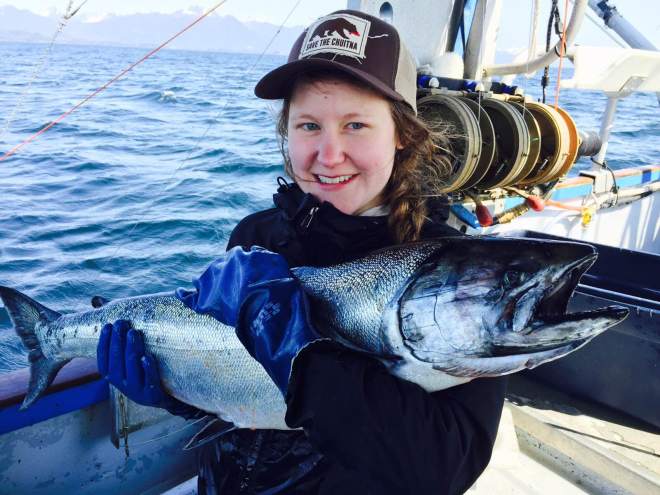
Eric Jordan, back center, poses with crew members (l-r) Alyssa Russell, Sarah Jordan (his wife) and Anya Grenier in front of his troller, the I Gotta.

Last month, ALFA’s Supporting the Next Generation of Alaskan Fishermen through the Deckhand Apprentice Program received a $142,496 award ($69,996 grant and $72,500 matching funds) from the National Fish and Wildlife Foundation as part of its Sustainable Fisheries in the United States grant program. The ALFA grant was one of seven grants totaling $766,871 (with $840,887 in matching funds), for a total conservation impact of more than $1.6 million.

“The generous support from the National Fish and Wildlife Foundation will allow us to offer more young people an an entry level commercial fishing opportunity,” ALFA Executive Director Linda Behnken said. “Young fishermen face a host of challenges these days, and ALFA is doing what we can to support the next generation of commercial fishermen by supporting entry level opportunities and policy that safeguards the health of our ocean, fisheries and fishing communities.”

According to the report, “The Graying of the Alaskan Fishing Fleet,” in 2014, the average age of a limited entry permit holder was 50 years old, 10 years older than it was in the 1980s. In 2013, only 17 percent of current permits are held by fishermen younger than 40 years old, a decrease from 38 percent in 1980. This has raised concerns there won’t be enough young people to replace the older fishermen when they retire. Deckhand apprenticeships are one way ALFA and other groups are countering the graying of the fleet.

“With support from NFWF, we plan to expand the program to include more boats, crew, and communities,” Behnken said.”Giving young people the opportunity to participate in our commercial fisheries can help us to sustain our fishing communities and create the next generation of resource stewards.”

Cathryn Klusmeier, left, and Jacob Metzger are among the greenhorns who crewed on Eric Jordan’s troller, the I Gotta.

According to the grant profile, “Alaska Longline Fishermen’s Association will coordinate and expand a state-wide apprentice program to promote resource stewardship, community viability, and opportunity in Alaska’s commercial fisheries. The project will develop curriculum and resources to guide the program expansion, include additional vessels and fisheries, and promote entry level job opportunities.”

“Finding crew with some experience, who loves fishing in Alaska, is so critical to the future of our individual businesses in the industry as a whole,” Jordan said. “This program gives them the taste of it. Deckhands know they like it, and skippers can recommend them for future employment. It is a win-win for everyone.”

“We are currently developing the curriculum — one for skippers, and one for crew,” said ALFA Communications Coordinator Alyssa Russell, who has crewed on the I Gotta. “We want to give skippers the tools they need to mentor someone, and crew the skills they need to have a successful experience and continued employment.”

Southeast Alaska Garden Conference set for Feb. 16-18 in Haines

The 2018 Southeast Alaska Garden Conference is coming soon. Space is limited, so sign up now to pay a lower early registration fee until Jan 15.

Join  gardeners of Southeast Alaska for a three-day conference, Feb. 16-18, in Haines, on growing local produce in our short challenging growing season. The conference will focus on home use and small-scale farms, topics will include soil health, gardening practices, storage and preservation, composting, and food security.

Acclaimed long-time Alaska garden author and writer Jeff Lowenfels will be the keynote speaker (his Anchorage Daily News garden column is the longest-running garden column in the country at more than 40 years). The conference format will include breakout sessions with local experienced growers, community extension personnel and sharing forums. There will be many opportunities to network and share knowledge.

To register online or to check out the event schedule, click on the conference’s EventBrite link. The conference costs $100, with those paying before Jan. 15 paying $75 and those paying between Jan. 16 to Feb. 1 paying $90. For info about scholarships, registration, accommodations, transportation, payment by check, or other requests, contact Leslie Evenden at (907) 314-0608 or email leslieevenden@gmail.com.

Check out the January 2018 edition of the Sitka Local Foods Network newsletter

The Sitka Local Foods Network just sent out the January 2018 edition of its monthly newsletter. Feel free to click this link to get a copy.

This month’s newsletter includes brief items about how you can support the SLFN through the Pick.Click.Give. program, an invitation to join us at our annual meeting and potluck dinner on Jan. 28, info about the 2018 sponsorship program for businesses and individuals, and an invitation to join our board of directors. Each story has links to our website for more information.

You can sign up for future editions of our newsletter by clicking on the newsletter image in the right column of our website and filling in the information. If you received a copy but didn’t want one, there is a link at the bottom of the newsletter so you can unsubscribe. Our intention is to get the word out about upcoming events and not to spam people. We will protect your privacy by not sharing our email list with others. Don’t forget to like us on Facebooklike our new Sitka Farmers Market page on Facebook and follow us on Twitter.

Sitka Local Foods Network to host annual meeting and potluck on Sunday, Jan. 28

The Sitka Local Foods Network will host its annual meeting and potluck dinner from 5-7 p.m. on Sunday, Jan. 28, at the Sitka Unitarian Universalist Fellowship Hall (408 Marine St., parking off of Spruce Street).

Participants are encouraged to bring a dish featuring local foods to share, and please bring your own utensils (note, this is a non-alcoholic event). This event is a good event to attend for people who want to learn more about the Sitka Local Foods Network and what we do around town. We also hope to have a silent auction, where people can bid on various gardening and food items (donations are welcome).

Attendees will hear about project updates, plus the current board will vote on by-law changes. We will introduce our new board members for 2017, and we will confirm the election of our officers. We also have a couple of openings on our board, and people wanting to learn more about joining can click this link for info and applications.

Individuals interested in learning more about the Sitka Local Foods Network can email sitkalocalfoodsnetwork@gmail.com to learn about our projects and volunteer opportunities.

Monday’s the day to start filing your PFD applications with Pick.Click.Give. donations

As 2017 winds to a close, many Alaskans already are thinking about applying for their 2018 Alaska Permanent Fund Dividend check in January. As usual, Alaskans can share their wealth with a variety of Alaska nonprofits, including the Sitka Local Foods Network, through the PFD’s Pick.Click.Give. program.

This is the fourth year the Sitka Local Foods Network will participate in the Pick.Click.Give. program, which allows people to donate in $25 increments to their favorite statewide and local 501(c)(3) nonprofit organizations when they file their PFD applications from Jan. 1 through March 31. We missed 2017 due to a clerical snafu, but we’re back in the program for 2018.

When you choose to donate part of your PFD to the Sitka Local Foods Network, you support the Sitka Farmers Market, St. Peter’s Fellowship Farm, education programs about growing and preserving food, the Sitka Kitch community rental commercial kitchen, Sitka Community Gardens, matching dollars at the Sitka Farmers Market for SNAP/WIC beneficiaries, the sustainable use of traditional foods, the Sitka Community Food Assessment, the Sitka Food Summit, and a variety of other projects designed to increase access to healthy local foods in Sitka.

In 2017 Alaskans contributed $2.7 million to 668 Alaska nonprofit organizations, and more than $18.5 million has been donated since the program started in 2009. Some Alaskans choose to donate to just one group, while others may spread several donations around to many groups. There now are more than 600 total 501(c)(3) nonprofit organizations participating in Pick.Click.Give. for 2017 (including multi-location nonprofits), including 23 from Sitka. In 2017, Alaskans donated $100,500 to Sitka-based nonprofits.

To encourage more Alaskans to donate through the Pick.Click.Give. program, the Double Your Dividend contest has been revised to encourage philanthropy. Anybody who makes a non-anonymous Pick.Click.Give. donation to at least one of the registered nonprofits will be entered into a contest where five lucky Alaskans will win a second PFD check for their favorite participating Pick.Click.Give. nonprofit (or couple of nonprofits). The winners no longer receive a second PFD for themselves, just one to donate to an organization. The winners will be announced in October, about the time the PFDs start hitting bank accounts.

So how do you make a donation to the Sitka Local Foods Network through the Pick.Click.Give. program? First, go fill out your Alaska Permanent Fund Dividend application at http://pfd.alaska.gov/. When you get to the section of the application asking if you want to participate in Pick.Click.Give. Charitable Contributions program, click on the PCG link and search for the Sitka Local Foods Network. You also can look for us by using the town search for Sitka.

The Pick.Click.Give. program is available only to people who file their PFD applications online, and not to those who file by mail. Even though you can’t file a new PFD application after March 31, you can go back into your application and update your Pick.Click.Give. donations through Aug. 31 each year.

You still can donate to the Sitka Local Foods Network if you aren’t from Alaska or aren’t eligible for a 2018 PFD. To donate, send your check to the Sitka Local Foods Network, 408D Marine St., Sitka, Alaska, 99835. You also can donate online by going to our online fundraising page on Razoo.com, and clicking the Donate button to make an online contribution. You also can send in a check or make an online donation if you are trying to make nonprofit donations before the end of the 2017 tax year. Please let us know if you need a receipt for tax purposes. For more information about donating, you can send an email to sitkalocalfoodsnetwork@gmail.com.

Thank you for supporting our mission of promoting and encouraging the growing, harvesting and eating of local foods in Sitka and Southeast Alaska.

UAS Sitka Campus offers ‘Flora of Southeast Alaska’ course as a hybrid class

Salmonberries await picking near the entrance to Sitka National Historical Park

Flora of Southeastern Alaska, a biology class taught by University of Alaska Southeast Sitka Campus associate professor Kitty LaBounty, is back for its fourth year.

The DNA of most traditional botany classes is to gather students around a table of samples and look at them in a face-to-face classroom setting. By offering Flora of Southeast Alaska as both a hybrid local and distance-delivery (eLearning) class, students from anywhere can get up to speed on how to identify the common native trees, shrubs and herbs of southeast and south central Alaska. Local students can participate in the lectures on campus, while students across Alaska can see the imagery online and hear the lectures either live or via digital recording.

Flora of Southeast Alaska is a one-credit, 11-week workshop. The focus will be on identification of common species and attaining an understanding of their place in the ecosystem of Southeast Alaska. Students will discover how these plants interact with other plants and animals, and how humans use these plants for food, fuel, medicine, or simply enjoyment.

In addition to illustrated weekly lectures, there will be written exercises and “check for understanding” activities. The class is available to any student without prerequisites. It does not count as credit toward a biology major or as a science elective at UAS.

Professor LaBounty brings her lifelong passion as a gardener and scientist to this topic, along with more than 25 years experience working on plant identification for state, federal and nonprofit agencies in Alaska.

The class will meet from 5:30-7 p.m. on Thursdays from Feb. 15 to May 5 — with time off for spring break. The cost is $202 for the class, plus $32 in registration fees. Students will need to buy a copy of Native Plants of Southeast Alaska, by Judy Kathryn Hall, or a copy of Plants of the Pacific Northwest Coast, by Jim Pojar and Andy MacKinnon, or both.

For more information, contact Kitty LaBounty at UAS Sitka Campus. 747-9432. To register, call 747-7700. or toll-free, 800-478-6653.

Check out the December 2017 edition of the Sitka Local Foods Network newsletter

The Sitka Local Foods Network just sent out the December 2017 edition of its monthly newsletter. Feel free to click this link to get a copy.

This month’s newsletter includes brief items about our #GivingTuesday fundraising campaigns on Nov. 28, info about the 2018 sponsorship program for businesses and individuals, and an invitation to join our board of directors. Each story has links to our website for more information.

You can sign up for future editions of our newsletter by clicking on the newsletter image in the right column of our website and filling in the information. If you received a copy but didn’t want one, there is a link at the bottom of the newsletter so you can unsubscribe. Our intention is to get the word out about upcoming events and not to spam people. We will protect your privacy by not sharing our email list with others. Don’t forget to like us on Facebooklike our new Sitka Farmers Market page on Facebook and follow us on Twitter.