• Recent paralytic shellfish poisoning (PSP) serve as reminder to not eat certain types of locally harvested shellfish

The butter clam has one set of rings that go one direction only, around the same center point (Photo courtesy of Alaska Department of Environmental Conservation)

The butter clam has one set of rings that go one direction only, around the same center point (Photo courtesy of Alaska Department of Environmental Conservation)

This past week, there were four suspected cases of paralytic shellfish poisoning (PSP) reported in Juneau. These four cases, combined with a couple of PSP cases in the Ketchikan/Metlakatla areas this winter and record-high levels of the PSP toxin found in shellfish last summer should serve as reminders that the state discourages eating recreationally and subsistence-harvested shellfish on most beaches in Alaska.

The first three PSP cases reported to the Alaska Section on Epidemiology last week involved clams harvested over the Easter weekend near Juneau — the first case reported April 10 involved razor clams from Admiralty Island and the next two cases reported April 12 involved butter clams from either Lincoln Island or Ralston Island. On April 13, another case was reported where a person ate pink neck clams (also known as surf clams) harvested from Shelter Island.

The littleneck clam has two sets of rings that cross each other at 90 degree angles (Photo courtesy of Alaska Department of Environmental Conservation)

The littleneck clam has two sets of rings that cross each other at 90 degree angles (Photo courtesy of Alaska Department of Environmental Conservation)

In each case, the people who ate the clams experienced classic PSP toxin symptoms — tingling and numbness of the mouth and tongue that eventually can extend into the extremities and then the rest of the body. Once the toxin moves into the body, it can paralyze the heart and lungs, causing them to stop and leading to intensive care treatment and possibly death (PSP deaths were reported in Juneau and Haines in 2010). If people experience these symptoms, they should get to the hospital immediately because sometimes a hospital respirator can save a life.

PSP can cause severe health problems and even death, and there is no antidote. The toxin is not visible, and requires special testing to be detected. It can occur during any month of the year, and the toxin can remain in affected shellfish for as long as two years. There is no antidote to the toxin. PSP generally affects bivalves that filter food when they eat, such as clams, cockles, mussels, oysters or scallops. Crab meat does not carry the PSP toxin, but crab guts can have the toxin since crab eat bivalves.

A cockle has deep ridges similar to a Ruffles potato chip (Photo courtesy of Alaska Department of Environmental Conservation)

A cockle has deep ridges similar to a Ruffles potato chip (Photo courtesy of Alaska Department of Environmental Conservation)

Southeast Alaska beaches, like most beaches in the state frequented by recreational and subsistence harvesters, are not tested by the state for the PSP toxin. The state does check commercially harvested shellfish for the toxin, but in recent months at least one commercial geoduck season was closed because of the toxin’s presence.

To learn more about PSP, here is an informational page created by the SouthEast Alaska Regional Health Consortium (SEARHC) after last year’s extremely high levels of PSP toxin were discovered. This page features information about how PSP is formed, what types of shellfish can carry the PSP toxin, basic first aid for PSP symptoms and more.

• Paralytic Shellfish Poisoning Fact Sheet from the State of Alaska
• Easing concerns about possible radiation in gathered seaweed this year

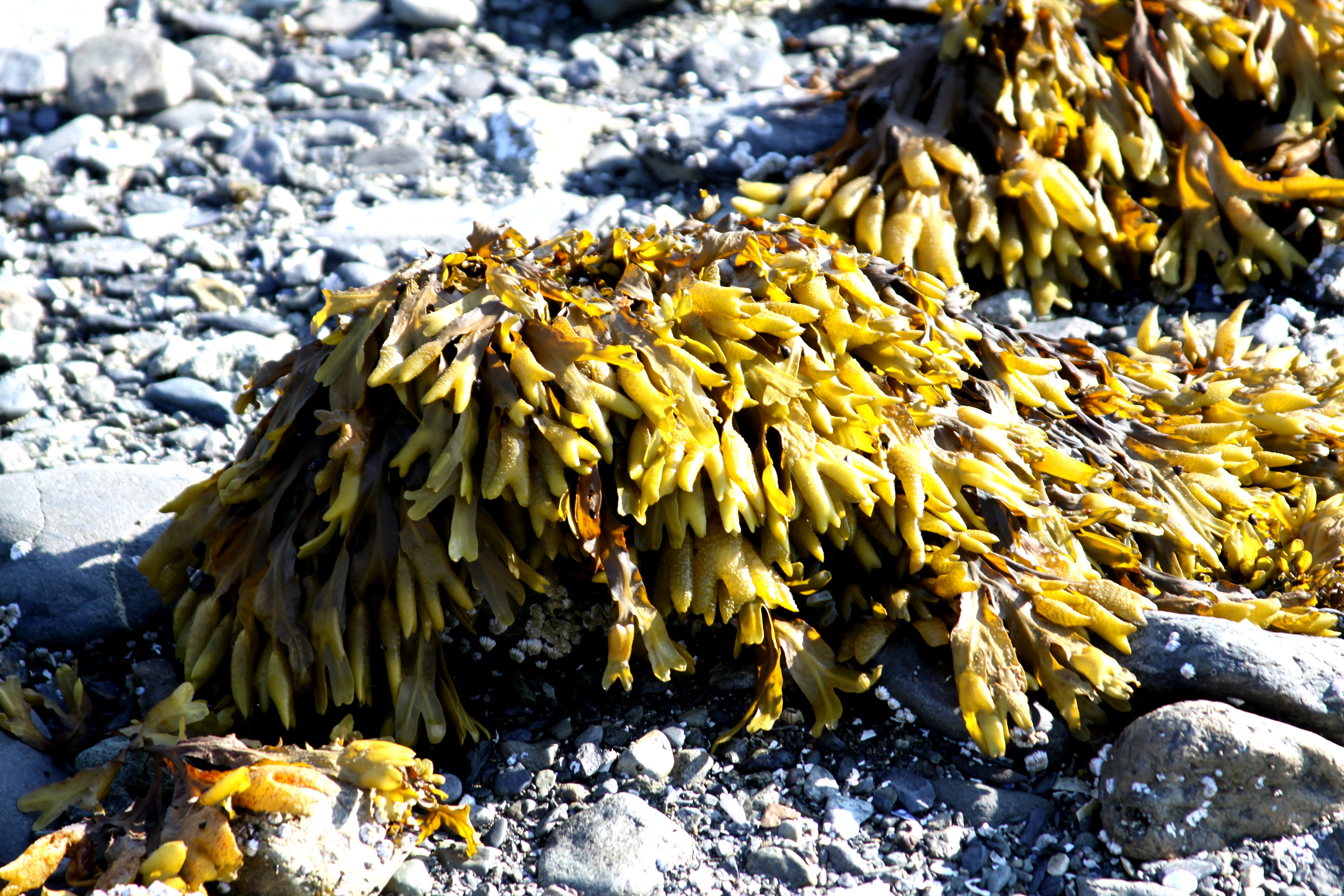
One of the prime springtime activities around Sitka is for people to gather seaweed, either for subsistence/traditional food purposes or to use it to fertilize local gardens. Seaweed is loaded with lots of healthy vitamins and minerals so it’s eaten by many in Sitka, and it also makes great fertilizer for the garden.

But this spring members of the Sitka Local Foods Network board have been hearing concerns from local gardeners and farmers about the seaweed this year possibly being contaminated by radiation (or iodine 131) from the March 2011 earthquake, tsunami and nuclear accident in Japan. Some of these concerns came after several local residents in recent weeks found Japanese fishing buoys and other debris on beaches around Sitka, and they were fueled by other stories about Japanese debris washing up on Alaska beaches.

Many people have had reservations about harvesting seaweed, either to eat or use in their gardens, and some people were skeptical about official reports that said there was no or limited radiation exposure to debris headed toward Alaska. For those people who want to test their seaweed or soil, the Plant Science Library in Anchorage is not equipped to test seaweed. But there are facilities in Washington State that are willing to test for a fee of between $50 to $200.

For those people who want to track the effects of the Fukushima Dai-ichi on U.S. marine environments, you can track the effects on Alaska coastlines at this congressional site. Other reliable websites for current information include  http://www.fda.gov/newsevents/publichealthfocus/ucm247403.htm  and http://www.srrb.noaa.gov/.

Greg Wilkinson, a public information officer with the Alaska Department of Health and Social Services, provided this link to a three-page handout about the effects of radiation on wild foods in Alaska. The State of Alaska has teamed up with the states of Hawai’i, California, Oregon and Washington, the province of British Columbia, the National Oceanographic and Atmospheric Association (NOAA) and the Environmental Protection Agency (EPA) to provide the Japan Tsunami Marine Debris Joint Information Center.

“Hopefully, disseminating this information to you all will alleviate some concerns about seaweed harvesting this year,” Sitka Local Foods Network board member Johanna Willingham said.

• Sitka Maritime Heritage Society to host a presentation on the importance of herring in Southeast Alaska

Herring is an important food source in Sitka and the rest of Southeast Alaska. Not only are there huge commercial and subsistence harvests of the fish, and it is an important food source for salmon, halibut, whales, sea lions and other animals in the region.

The Sitka Maritime Heritage Society will host the presentation “Herring: Rakes, Reduction Plants and the Fisheries: A Night of History” during its annual meeting at 7 p.m. on Sunday, Feb. 12, at Harrigan Centennial Hall.

The program features a panel discussion about the importance of herring in Southeast Alaska, from the booming commercial sac roe herring fishery to traditional gathering of herring eggs on hemlock branches. Another panel topic includes the herring reduction plants that once were scattered throughout Southeast Alaska. There also have been recent community discussions about possibly starting a whole-fish herring fishery that won’t target roe. Members of the public will be invited to share their memories of herring fishing and roe harvests. Photos and artifacts will be on hand.

For more information, contact sitkamaritime@gmail.com.

• Sitka Local Foods Network board of directors to meet on Monday, Feb. 6

The 2011-12 Sitka Local Foods Network Board of Directors at its winter board retreat on Dec. 3, 2011. From left are Lisa Sadleir-Hart, Doug Osborne, Maybelle Filler, Cathy Lieser, Robin Grewe, Linda Wilson and Kerry MacLane. Not pictured are Johanna Willingham-Guevin and Tom Crane.

The 2011-12 Sitka Local Foods Network Board of Directors at its winter board retreat on Dec. 3, 2011. From left are Lisa Sadleir-Hart, Doug Osborne, Maybelle Filler, Cathy Lieser, Robin Grewe, Linda Wilson and Kerry MacLane. Not pictured are Johanna Willingham-Guevin and Tom Crane.

The Sitka Local Foods Network board of directors will hold its monthly meeting from 6:30-8 p.m. on Monday, Feb. 6, at the Sitka Unitarian Universalist Fellowship Building, 408 Marine St. (parking lot is off Spruce Street).

Key topics for the meeting include planning for the Let’s Grow Sitka on March 11, a recap of the Jan. 21 Sitka Local Foods Network annual meeting and potluck, an update on the Sitka Community Greenhouse and Education Center, an update on the Sitka Food Co-op, an update on recent work by the Alaska Food Policy Council, an update on the Sitka Composting Project (Sick-a-Waste), our new logo and t-shirts, planning for spring planting at St. Peter’s Fellowship Farm and other community gardens, planning for upcoming events such as the Sitka Farmers Markets on alternating Saturdays from July 7-Sept. 15, and more.

Board meetings are free and open to the general public, usually once a month (except summer). We always welcome new volunteers interested in helping out with our various projects. For more information, contact Kerry MacLane at 752-0654 or 747-7888.

• Sitka Local Foods Network hosts annual meeting and potluck dinner on Saturday, Jan. 21

Please join the Sitka Local Foods Network for its annual meeting and potluck dinner at 6 p.m. on Saturday, Jan. 21, at the Sitka Unitarian Universalist Fellowship Hall (408 Marine St., parking lot is off Spruce Street).

Join us as we honor our four years of existence and prepare for our fifth year. During this time, the Sitka Local Foods Network has worked on several initiatives — creating the Sitka Farmers Market, building St. Peter’s Fellowship Farm, hosting the Let’s Grow Sitka! garden education event, and more. We supported projects to plant more fruit trees around Sitka, get more local fish served in school lunches and increase Sitka’s ability to compost, and we are working toward starting the Sitka Community Greenhouse and Education Center. We also received a 501(c)(3) non-profit status from the IRS, so people can make tax-deductible gifts to help fund our work.

Our annual meeting and potluck is open to the public, and all Sitka residents are welcome to attend. We will feature local and slow foods, but we really value your attendance. This is our opportunity to say thank you to those who have helped us grow, and it is your chance to learn more about what we’re doing and how you can help.

As we enter 2012, Sitka and the rest of Alaska face some serious food security issues. According to a recent survey by the University of Alaska Fairbanks Cooperative Extension Service, the weekly cost for food for a family of four in Sitka has gone up 44 percent over the past five years. With rising fuel prices, this trend does not figure to change in the near future. Sitka still imports about 90-95 percent of its food from the Lower 48 or other countries, which means transportation is a big part of our food cost. The Sitka Local Foods Network is looking for input from Sitka residents about how we can work to improve Sitka’s food security. We also are working with the Alaska Food Policy Council, which is a statewide organization working on food security issues.

So mark your calendar to attend our annual meeting and potluck dinner at 6 p.m. on Saturday, Jan. 21, at the Unitarian Universalist Fellowship Hall, 408 Marine St. For more information, contact Kerry MacLane at 752-0654.

• Alaska chef Robert Kinneen creates webinar series about cooking with traditional foods

Local food from Sitka is featured prominently in the new Fresh49.com webisode series about using traditional foods created by Alaska chef Robert Kinneen of Anchorage and Dr. Gary Ferguson, ND, the director of the Wellness and Prevention program at the Alaska Native Tribal Health Consortium (ANTHC).

Guest chef Robert Kinneen of Anchorage demonstrates a dish using scallops during the first Sitka Seafood Festival in 2010.

Guest chef Robert Kinneen of Anchorage demonstrates a dish using scallops during the first Sitka Seafood Festival in 2010.

The first webisodes in the series are about the Store Outside Your Door, and they feature traditional foods Kinneen gathered around Sitka with Steve Johnson, a Tlingít elder-in-training from Sitka. Some of the webisodes featuring Sitka include a foraged salad, Alaskan fresh rolls, venison skewers and rockfish fumet. There is a Store Outside Your Door page on Facebook, as well as a channel on YouTubewhere people can find the webisodes.

Even though he currently lives and works in Anchorage, Kinneen is no stranger to Southeast Alaska. He is Tlingít and was born in Petersburg. Kinneen is a graduate of the Culinary School of America and has been a chef at several of Anchorage’s top restaurants over the years. He also has been a guest chef at the first two Sitka Seafood Festivals.

Dr. Ferguson, who is Aleut originally from Sand Point, is a Doctor of Naturopathy who earned his degree from the National College of Naturopathic Medicine. He has a special interest in diabetes treatment and prevention, which is one of the reasons Dr. Ferguson and Kinneen got together to do the series. Research has shown that traditional diets can play a big role in diabetes prevention.

In the first webisodes, they also worked with health educator Renae Mathson of Sitka (Tlingít), who works with the SouthEast Alaska Regional Health Consortium (SEARHC) Diabetes and Health Promotion programs, and registered dietitian Desirée Simeon (Tlingít/Haida), who works with ANTHC. They currently are filming webisodes from other parts of Alaska, featuring traditional foods from those areas.

• Sitka Local Foods Network board of directors to meet on Wednesday, Dec. 7

The Sitka Local Foods Network Board of Directors at its winter board retreat on Dec. 3, 2011. From left are Lisa Sadleir-Hart, Doug Osborne, Maybelle Filler, Cathy Lieser, Robin Grewe, Linda Wilson and Kerry MacLane. Not pictured is Tom Crane.

The Sitka Local Foods Network Board of Directors at its winter board retreat on Dec. 3, 2011. From left are Lisa Sadleir-Hart, Doug Osborne, Maybelle Filler, Cathy Lieser, Robin Grewe, Linda Wilson and Kerry MacLane. Not pictured is Tom Crane.

The Sitka Local Foods Network board of directors will hold its monthly meeting from 6:30-8 p.m. on Wednesday, Dec. 7, at the upstairs offices at the Sitka Unitarian Universalist Fellowship Building, 408 Marine St.

Key topics for the meeting include a recap of the recent SLFN board retreat, an update on the Sitka Community Greenhouse and Education Center, an update on the Sitka Food Co-op, an update on recent work by the Alaska Food Policy Council, an update on the Sitka Composting Project, our new logo and t-shirts, planning for upcoming educational events such as Let’s Grow Sitka in March, and more.

Board meetings are free and open to the general public, usually once a month (except summer). We always welcome new volunteers interested in helping out with our various projects. For more information, contact Kerry MacLane at 752-0654 or 747-3475.

• Sitka Local Foods Network board meeting agenda for Dec. 7, 2011

• Sitka Conservation Society hosts wild foods potluck on Wednesday, Nov. 2

The Sitka Conservation Society will host its second annual wild foods potluck on Wednesday, Nov. 2, at Harrigan Centennial Hall. Doors open at 5:30 p.m., with food served at 6 p.m.

Come celebrate Alaska’s bounty with friends and family. Bring a dish featuring food fished, foraged, hunted or cultivated in Southeast. If you don’t have any wild foods to share, just garnish your dish with a local plant. After dinner is served there will be a short presentation by SCS Community Sustainability Coordinator Tracy Gagnon about the Fish To Schools program.

There also will be presentation by Sitka High School musicians and booths from the Sitka Local Foods Network, the Slow Food Southeast Alaska group, the Sitka Sound Science Center, Sitka Trail Works, Recycle Sitka, Sitka Bicycle Friendly Community Coalition, Sitka 4H Club, Sitka Maritime Heritage Society, Southeast Alaska Conservation Council, Mt. Edgecumbe High School Youth for Environmental Action, Sitka Seafood Festival and more.

Prizes will be given for first place in the following categories: Best Entree, Best Side, Best Dessert, Most Creative, and Incorporation of the Most Local Ingredients. Entries should include a wild/local food. Pick up an entry form at the front table when you arrive at the potluck.

This event is open to the entire community; you do not need to be a Sitka Conservation Society member to attend. Non-alcoholic hot drinks will be provided.

For more information, contact Ashley Bolwerk at the Sitka Conservation Society office at 747-7509.

• Wild Foods Potluck flier (opens as PDF file)

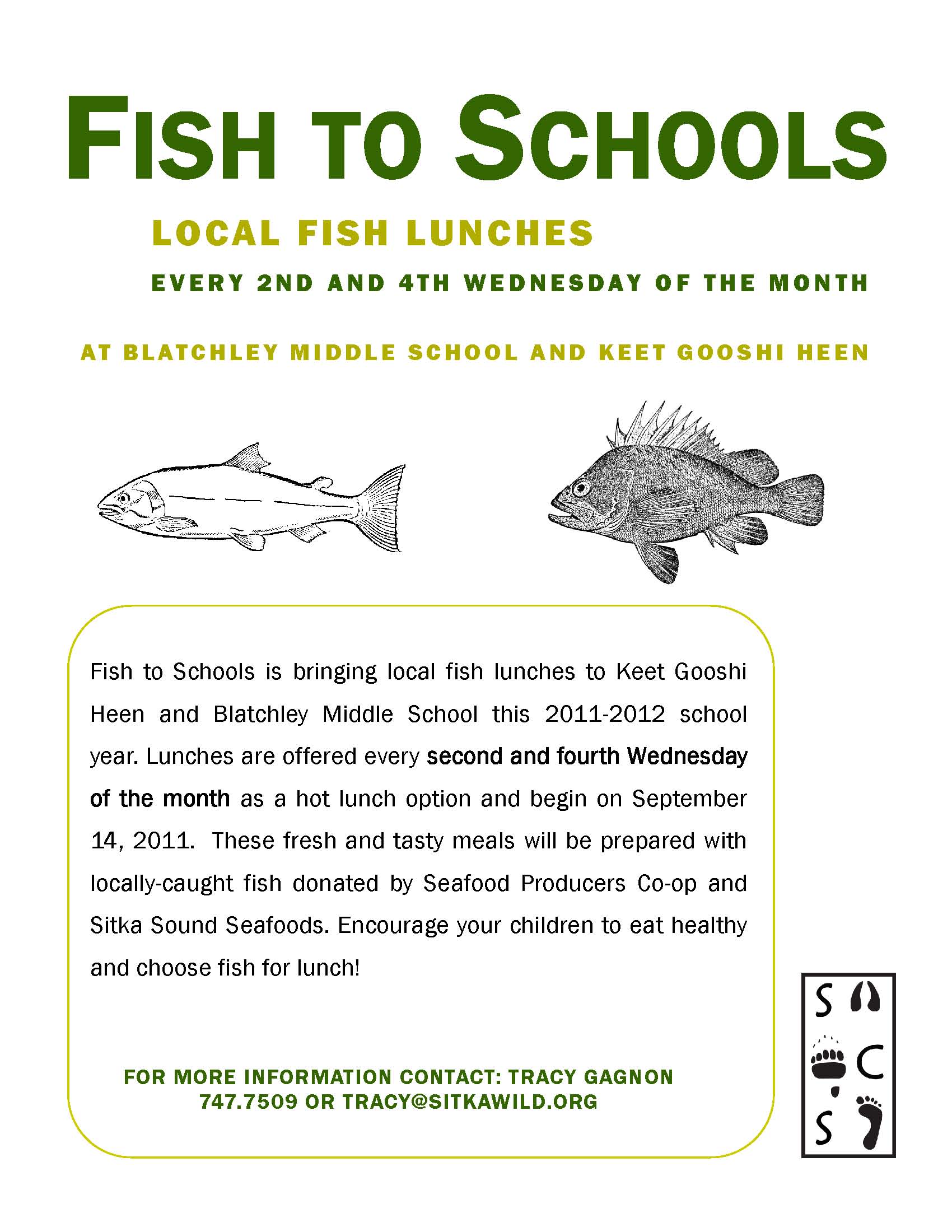
• Fish to Schools program to serve fish lunches at two schools twice a month

The Fish to Schools program will kick off this year’s schedule of serving fish lunches at school on Wednesday, Sept. 14.

Local fish lunches will be served every second and fourth Wednesday of the month at Keet Gooshi Heen Elementary and Blatchley Middle School as a hot lunch option. This is a Sitka Health Summit project that got started last year with once-a-month fish meals at Blatchley, so this is a major expansion of the program. The goal is to get more wild, local fish into school lunches.

These fresh and tasty meals will be prepared with locally caught fish donated by Seafood Producers Cooperative and Sitka Sound Seafoods. Encourage your children to eat healthy and choose fish for lunch. It’s yummy and good for you.

Sitka Conservation Society Community Sustainability Organizer Tracy Gagnon was interviewed about the program on Aug. 22 on KCAW-Raven Radio, and you can listen to the interview at this link. For more information about the project, contact Tracy at 747-7509 or tracy@sitkawild.org.

• Sitka Seafood Festival steering committee to meet Aug. 23 to plan 2012 festival

The Sitka Seafood Festival will host a planning (or “see if we can make this festival happen again”) meeting at 7 p.m. on Tuesday, Aug. 23, in the fireplace pit at the Westmark Sitka Hotel (330 Seward St.).

The third annual Sitka Seafood Festival is tentatively planned for Aug 3-4, 2012, but there is a lot we need to figure out to make sure this can actually happen. If you are interested in any capacity, please either attend the meeting, or get ahold of Alicia Olson prior to the meeting.

Alicia will have specific job descriptions and tasks to try and delegate, and the steering committee will discuss the possibility of merging or piggybacking so this event can be sustainable in the future. If your organization would like to be involved, please send a rep or contact Alicia as well.

“I have heard nothing but positive, amazing comments regarding this festival, and I know we would all like to see it continue to grow, so spread the word,” Alicia said. “Thanks again to everyone for so much hard work and effort … and see you on Tuesday.”

For more information about the Sitka Seafood Festival, contact Alicia Olson at Alicia Olson at 1-928-607-4845 or sitkaseafoodfestival@gmail.com.