• Aug. 1 entry deadline approaches in the search for a signature Sitka seafood dish

In an effort to support and promote the position of Alaska’s wild seafoods in the global marketplace, the Sitka Seafood Festival organizers and the Sitka Convention and Visitors Bureau have partnered to help inspire the creation of a signature seafood dish for Sitka.

Both professional and amateur chefs are encouraged to enter this contest, which will have judging take place from noon to 2 p.m. on Saturday, Aug. 11, at Harrigan Centennial Hall. The entry deadline is Wednesday, Aug. 1.

It is our sincere hope that this contest inspires locals to create an exciting seafood entrée that would become synonymous with Sitka. We also hope that the majority, if not all, local restaurants will offer their own version of the winning entry and eventually adopted by restaurants nationwide.

Guidelines:

  • Main Ingredient — Any locally available wild Alaskan seafood (eg, salmon, halibut, ling cod, black cod/sablefish, crab, shrimp, scallops, snapper/rockfish, etc.)
  • Quantity — Minimum of 12 servings of approximately 2 ounces each. The more the merrier!!
  • Categories — Versatile recipe/economical version, mid-priced version and, of course, gourmet.
  • Entries must be pre-made/ready-to-serve, no kitchen access will be available on-site.
  • Recipes for entries must be provided and will become public domain.
  • Deadline to enter is Wednesday, Aug. 1. There is no cost to enter
  • Set-up available at 11 a.m. and judging will begin at noon on Saturday, Aug. 11, at Harrigan Centennial Hall.
  • Judging — An anonymous panel of judges will determine the winner based on various criteria (taste, recipe flexibility, potential retail price, marketability, availability, etc.)

The winning entry will receive a cash prize, a certificate acknowledging their accomplishment, local promotion and, of course, bragging rights as Sitka’s signature dish. The winner will be announced during the Sitka Seafood Festival’s evening events at the Alaska Arts SE Campus at Sheldon Jackson.

Entry forms can picked up at Old Harbor Books or e-mailed to you. Contact Philip Rupell at 747-5940 or send e-mail to sitkaseafoodfestival@gmail.com.

• Contest information for Sitka Signature Seafood Dish competition 2012

• Alaskans Own Seafood wins Table of the Day at first Sitka Farmers Market of 2012

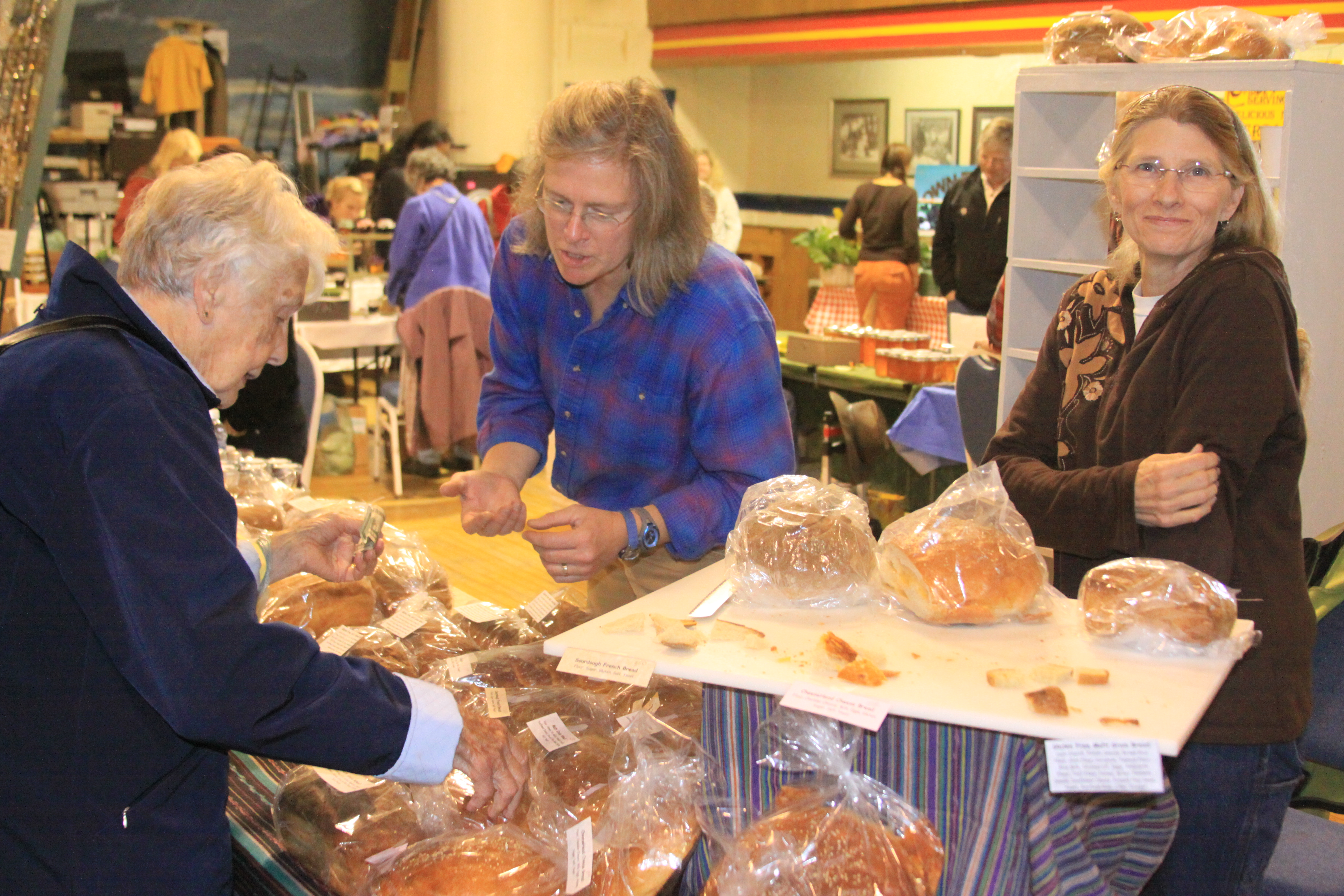
Table of the Day: Natalie Sattler of Alaskans Own Seafood, center, receives the Table of the Day award from Sitka Farmers Market Manager/Sitka Local Foods Network Board Member Johanna Willingham, left, and Sitka Local Foods Network Board Member Doug Osborne during the first Sitka Farmers Market of the season on Saturday, July 7, 2012, at the Alaska Native Brotherhood Hall in Sitka. At each market a vendor is honored by the Sitka Local Foods Network, which sponsors the Sitka Farmers Market. The next market is from 10 a.m. to 2 p.m. on Saturday, July 21, 2012, at ANB Hall, 235 Katlian St.

• Sitka Conservation Society to host Sitka Community Salmon Bake on Thursday, July 19

The Sitka Conservation Society and other partners will host the Sitka Community Salmon Bake from 6-8 p.m. on Thursday, July 19, at Harrigan Centennial Hall. The cost is $20 per person, or $15 for children ages 12 or younger.

This event will feature coho salmon from Seafood Producers Cooperative, delicious side dishes and rhubarb sundaes featuring rhubarb from the Sitka Local Foods Network and ice cream from the Harry Race Soda Shop. Doors open at 6 p.m. and food is served at 6:30 p.m.

The evening will highlight the work done throughout the community by Sitka Conservation Society, and salmon-based door prizes will be given away to lucky winners who attend. Tickets are available at Old Harbor Books, and a limited number may be available at the door. For more information, contact the Sitka Conservation Society at 747-7509.

• Sitka Conservation Society presents another year of Sitka Salmon Tours

Sitka Salmon Tours, presented by the Sitka Conservation Society, returns this summer for its second year, guiding visitors through the journey salmon take from forest to plate. The two-hour tour begins at 1 p.m. on Mondays through Saturdays outside the Sitka Sound Science Center and progresses through Sitka National Historical Park, Sheldon Jackson Hatchery, and ends at Crescent Harbor. Tickets cost $20 per person.

The tours mainly draw from tourists visiting Sitka, but also found interest last summer from local residents with family in town, as something fun and unique to do for an afternoon. Personalized and private tours are available upon request.

“People really respond to how we bring the salmon in nature together with the science of the hatchery and the economic and cultural roles salmon play here,” Helen Schnoes, Salmon Tours staff says. “It helps them understand the significance of salmon — and the need to protect, restore, and enhance their habitat — in a new way.”

Tour guests this year and last immensely enjoy this unique perspective on salmon and life in Sitka, as demonstrated by these Trip Advisor reviews — “Great tour: got to see the real life Alaska … really informative and fun,” “Beautiful, Informative, and Entertaining,” and “The most delightful, interesting walking tour … a breath of fresh air.”

In addition to the daily walking tour, Sitka Salmon Tours also organizes events throughout the summer tailored to Sitkans, such as occasional tours of the Seafood Producers Cooperative, specialty community tours, and a salmon bake fundraiser.

We will be sending more details as the summer progresses, but here’s a heads up, too, about some future events:

  • July 15, “The Rise and Fall of Canned Salmon,” Talk by Nic Mink, 5-6 p.m. at Kettleson Memorial Library. Free and open to the public.
  • July 19, Community Salmon Bake Fundraiser, $20 per person ($15 for children age 12-younger), 6=8 p.m. at Harrigan Centennial Hall.
  • Aug. 5, “Fishing for Change,” Talk by Elizabeth Cockrell, 5-6 p.m. at Kettleson Memorial Library. Free and open to the public.
  • Aug. 7, Seafood Trivia at the Bayview Pub. Sitka Salmon Tours takes over this weekly trivia night with questions about seafood, salmon, and everything fishy. Teams must be entered by 8:45 p.m., trivia begins 9 p.m.
  • Aug. 9-13, Sitka Seafood Festival walks, including regular Salmon Tour, local seafood tour (includes tastings at some of Sitka’s best restaurants), and SPC processor tour; Events include a processor tour (11 a.m. on Aug. 9, $35 with light meal included, meet at location TBA), at least two Sitka Salmon Tours (one at 1 p.m. on Aug. 10, a second at 9 a.m. on Aug. 11, $20, meet at Sitka Sound Science Center), and a Seafood Walk (11 a.m. on Aug. 12, $45, includes processor tour and tastings at local restaurants)

Contact Helen Schnoes for questions, reservations, or for further information about events planned in Sitka this summer. Helen can be reached at the Sitka Conservation Society office at 747-7509, or by cell at (612) 741-1591 or e-mail at helen@sitkawild.org.


• Sitka Local Foods Network to host six Sitka Farmers Markets in 2012

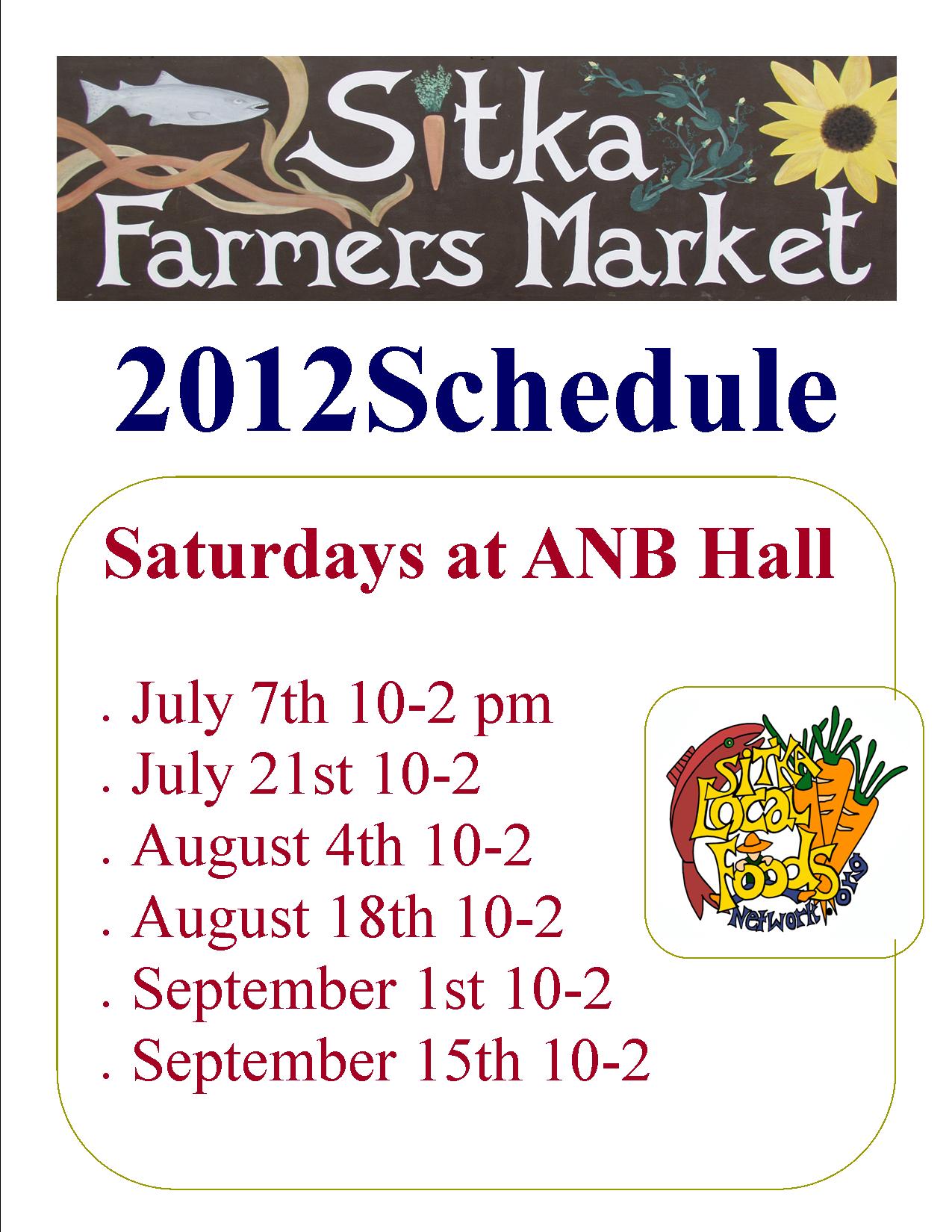
The Sitka Local Foods Network will host its fifth summer of Sitka Farmers Markets with six markets that start on July 7 and take place on alternate Saturdays through Sept. 15. The Sitka Farmers Markets give Sitka residents a chance to buy and sell locally produced food and crafts.

The Sitka Farmers Markets take place from 10 a.m. to 2 p.m. on Saturday, July 7, 21, Aug. 4, 18, Sept. 1 and Sept. 15 at the Alaska Native Brotherhood Hall (235 Katlian St.). The markets feature local seafood (fresh, frozen, and cooked, ready to eat), locally grown and harvested fruits and vegetables, baked bread, locally made jams and jellies, cooking demonstrations, live entertainment, locally brewed and roasted coffee, music, local arts and crafts, and a variety of other items gathered or made in Sitka. We emphasize local products and lots of fun. We are the first farmers market in Southeast Alaska to accept WIC coupons. You also can vote for the Sitka Farmers Market in the America’s Favorite Farmers Markets contest by following the links at http://www.sitkalocalfoodsnetwork.org/.

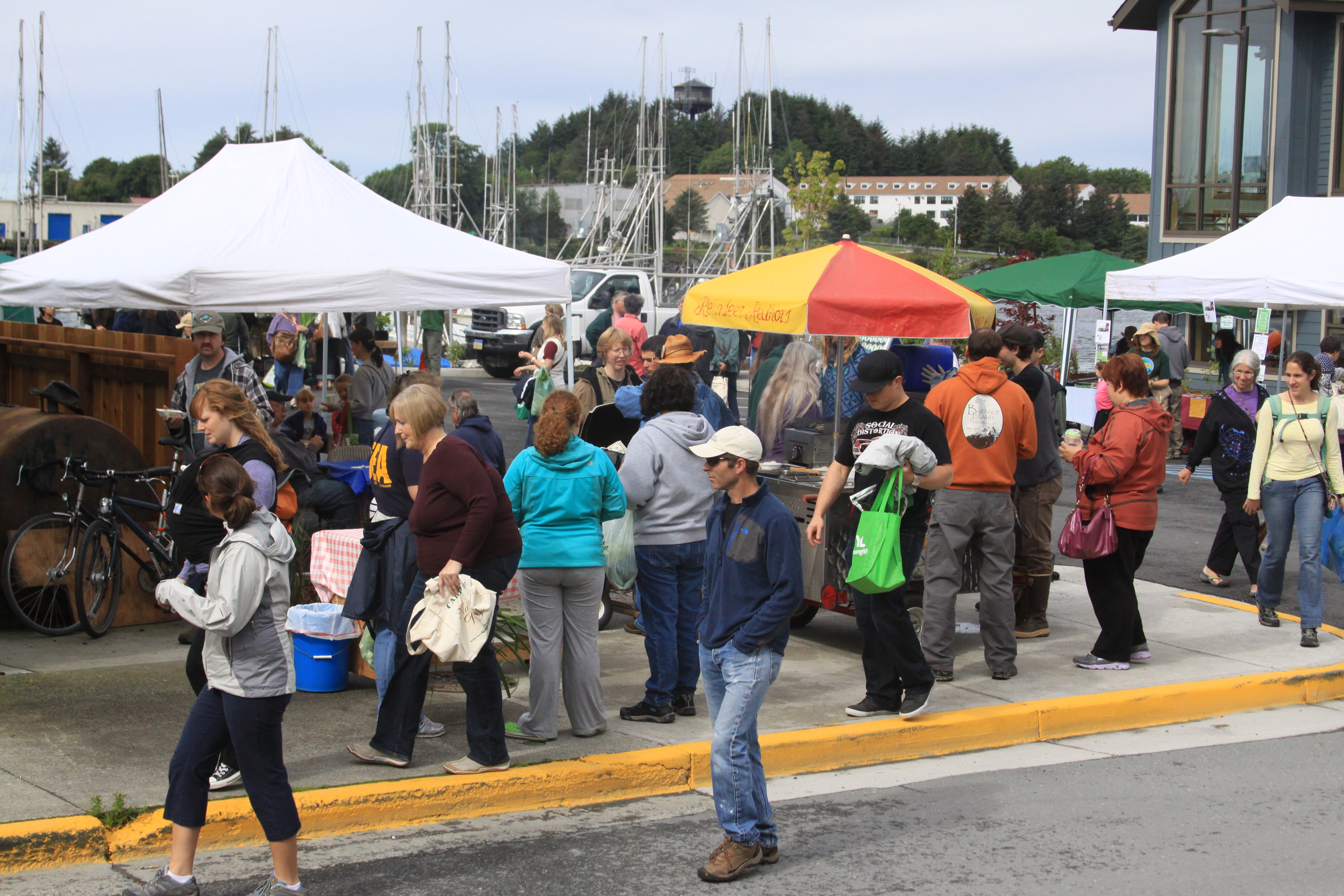
“The Sitka Farmers Market is like a carnival every other Saturday,” Sitka Local Foods Network Board President Kerry MacLane said. “It’s a fun community space to enjoy with your family or to meet your friends for fresh coffee and baked goods. There is live music, cooking demonstrations, art, and, of course, fresh veggies, fruit and seafood.”

The Sitka Farmers Market started as a community project that came out of a health priority planning meeting at the 2008 Sitka Health Summit. This event is sponsored by the Sitka Local Foods Network, Alaska Native Brotherhood Camp No. 1, Alaska Native Sisterhood Camp No. 4, Baranof Island Housing Authority, Sitka Conservation Society, the Alaska Farmers Market Association and the SEARHC Health Promotion and Diabetes Prevention programs.

“Thanks to our creative and enthusiastic vendors, the Sitka Farmers Market will be celebrating its fifth successful year.” said Johanna Willingham, Sitka Local Foods Network Board Member and Sitka Farmers Market Coordinator. “We have delighted in watching our market grow over the years and due to popular demand we are beginning our market two weeks earlier this year. Outdoor vendors and musicians will still be able to enjoy the newly paved parking lot with landscaping, thanks to BIHA. A tent will be set up for outdoor dining where you can listen to live music and enjoy some great food. Some new items will be added to some familiar vendors’ tables — dried sea veggies, sea asparagus and sea salt. Look forward to fresh snap and snow peas for snacking, ready-to-eat salads, handmade tamales and, as always, fresh black cod tips.”

Vendor fees are $20 for a 6-foot table, $30 for an 8-foot table and $15 for a 4-foot table. Vendors with their own tents pay $2 per foot. As always, we offer cost incentives for vendors growing locally produced food. The fees will help us cover the costs of renting ANB Hall and its kitchen, hiring musicians and other expenses. To learn more about being a vendor or to sign up for a table, contact Sitka Farmers Market Coordinator Johanna Willingham at 738-8336 or by e-mail johanna.willingham@gmail.com. Vendor rules, registration forms and other information for potential vendors can be found at http://www.sitkalocalfoodsnetwork.org/.

• Don’t forget to vote for the Sitka Farmers Market in this year’s America’s Favorite Farmers Markets contest

The fifth season for the Sitka Farmers Market doesn’t open until July 7, but you can vote for us now in the fourth annual America’s Favorite Farmers Markets contest. The contest is sponsored by the American Farmland Trust, a non-profit organization dedicated to preserving America’s agricultural resources.

To vote, click here and then search for the Sitka Farmers Market by typing in the Sitka Farmers Market name or by using the zip code or state directories. You also can vote by clicking the contest logo at the top of this site’s right column or the contest logo at the bottom of this post. Voting opened on June 22, and the deadline to vote is midnight EST on Monday, Sept. 3 (8 p.m. Alaska time on Sunday, Sept. 2). The online voting form asks what you like best about the market, so be prepared to type something in the box. The top boutique, small, medium and large markets win a large quantity of “No Farms, No Food” totebags to distribute at a market in September, in addition to other prizes to help organizers run a better market. Click here for more information about the contest, and click here for a FAQ page with more details.

By the way, the summer’s first Sitka Farmers Market is from 10 a.m. to 2 p.m. on Saturday, July 7, at Alaska Native Brotherhood Hall (235 Katlian St.). Other markets are scheduled for alternate Saturdays — July 21 Aug. 4, Aug. 18, Sept. 1 and Sept. 15. There also will be a small Sitka Farmers Market produce booth at the Running of the Boots fundraiser for the Sitka Local Foods Network on Sept. 29 at the Crescent Harbor covered shelter. We’re looking forward to seeing you at the markets.

Our markets feature a variety of vendors with locally grown produce, locally caught fish, baked bread, prepared foods and arts and crafts. We usually have musicians on stage and a table with children’s activities. After construction two summers ago kept us from being outside, this summer we will be able to host many of our usual booths outdoors in the ANB Hall/Baranof Island Housing Authority parking lot. To learn more about reserving booths for the Sitka Farmers Market, contact Johanna Willingham at 738-8336 or by e-mail at johanna.willingham@gmail.com. Vendor rules and other information can be found at this link.

If you have extra produce from your garden, the Sitka Local Foods Network table (outside ANB Hall by the Sitka Farmers Market sign) gladly accepts donations and will buy some produce to sell at its booth. The Sitka Local Foods Network sells produce grown at the St. Peter’s Fellowship Farm communal garden and a few other local gardens at its Sitka Farmers Market booth. All money raised by the Sitka Local Foods Network booth goes into various projects sponsored by the network — a 501(c)(3) non-profit group — including the Sitka Farmers Market, community gardens, the proposed Sitka Community Greenhouse and Education Center and other projects.

Local Food and Local Farms

• Alaska Department of Health issues PSP warning for Southeast Alaska shellfish

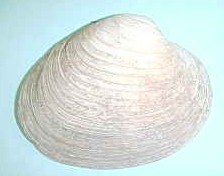
The butter clam has one set of rings that go one direction only, around the same center point (Photo courtesy of Alaska Department of Environmental Conservation)

The butter clam has one set of rings that go one direction only, around the same center point (Photo courtesy of Alaska Department of Environmental Conservation)

On Friday, June 22, the Alaska Department of Health and Social Services issued a paralytic shellfish poisoning (PSP) warning for Southeast Alaska shellfish. Please be aware that there have been several PSP blooms in recent years, and the PSP toxin has sent several people to the hospital and even resulted in a couple of deaths.

The state in general does not recommend the recreational or subsistence harvest of shellfish (in particular filter-feeding bi-valves such as clams, cockles, oysters, mussels and others) from Alaska beaches because they are not checked for the PSP toxin. Commercial shellfish is tested for PSP and safe to eat. In addition to the links in the press release below, here is a link to more information about PSP from the SouthEast Alaska Regional Health Consortium (SEARHC), http://searhc.org/publications/featured_stories/2011_06_psp.php. Now here is the text of the release:


Scientists advise against harvesting shellfish due to large “red tide” in Southeast Alaska

State health officials remind public about risks


ANCHORAGE — Warm weather combined with an increasingly large algae bloom in Southeast Alaska has scientists advising extra caution to would-be recreational shellfish harvesters. Water samples taken from around Etolin Island show increasing levels of Alexandrium algae, which produces paralytic shellfish poisoning (PSP) in shellfish. Tests have also shown a slight increase in Alexandrium levels on the west coast of Prince of Wales Island as well as extremely high levels around Juneau.

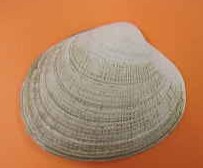
The littleneck clam has two sets of rings that cross each other at 90 degree angles (Photo courtesy of Alaska Department of Environmental Conservation)

The littleneck clam has two sets of rings that cross each other at 90 degree angles (Photo courtesy of Alaska Department of Environmental Conservation)

Scientists have also identified unsafe levels of three different species of Dinophysis algae, which produces diarrhetic shellfish poisoning (DSP), in samples from around Ketchikan. DSP can cause diarrhea, PSP can cause paralysis.

“These Alexandrium levels are similar to what we saw last year when we had such high levels of PSP toxins in shellfish,” said Kate Sullivan, with the University of Alaska Southeast and co-founder of the Alaska Harmful Algal Bloom Partnership (AHAB). “Last summer we had a number of cases, including four people who needed to be hospitalized. We want people to be extra cautious and remember that the only safe shellfish is the kind you buy at the store.”

A cockle has deep ridges similar to a Ruffles potato chip (Photo courtesy of Alaska Department of Environmental Conservation)

A cockle has deep ridges similar to a Ruffles potato chip (Photo courtesy of Alaska Department of Environmental Conservation)

Early signs of paralytic shellfish poisoning often include tingling of the lips and tongue. Symptoms may progress to tingling of fingers and toes, then loss of control of arms and legs, followed by difficulty breathing. Death can result in as little as two hours.

All locally harvested shellfish — including clams, mussels, oysters, geoducks and scallops — can contain paralytic shellfish poison. Crabmeat is not known to contain the PSP toxin, but crab guts can contain unsafe levels of toxin and should be discarded. There is no way to tell if a beach is safe for harvesting by looking at it. Toxins can be present in large amounts even if the water looks clear. Also, the toxin can remain in shellfish long after the algae bloom is over. PSP cannot be cooked, cleaned or frozen out of shellfish. Commercially grown shellfish is tested and considered safe.

Paralytic shellfish poisoning is considered a public health emergency. Suspected cases must be reported immediately to the Section of Epidemiology by health care providers at 907-269-8000 during work hours or 800-478-0084 after hours.

For more information on PSP go to:

http://www.cdc.gov/nczved/divisions/dfbmd/diseases/marine_toxins/, or

http://www.epi.alaska.gov/id/dod/psp/ParalyticShellfishPoisoningFactSheet.pdf

• Sitka Farmers Market vendor forms ready for 2012

The vendor forms for the 2012 Sitka Farmers Markets are finally ready so prospective vendors can review them and familiarize themselves with the food safety, market and sales tax rules.

This year the Sitka Farmers Markets take place from 10 a.m. to 2 p.m. on alternate Saturdays starting on July 7 and running through Sept. 15 (July 7, 21, Aug. 4, 18, Sept. 1 and 15) at the historic Alaska Native Brotherhood Hall located at 235 Katlian St. This year we have a new market manager, Johanna Willingham-Guevin, and she will be assisted by Jasmine Shaw. Please remember that our focus is on locally grown or produced items at the market (no goods produced outside Alaska allowed, except for certain food items that are to be consumed at the market).

Prospective vendors can send their completed forms to Johanna Willingham, P.O. Box 6235, Sitka, Alaska 99835. Johanna’s e-mail address is johanna.willingham@gmail.com, and her cell number is 738-8336. All forms can be downloaded as Adobe Acrobat (PDF) files. These forms also are posted on our Forms page.

• 2012 Sitka Farmers Market Vendor Registration Packet

• 2012 Sitka Farmers Market Food Rules Vendor Packet

• 2012 Sitka Farmers Market Home Baker Guidelines Packet

• 2012 Sitka Farmers Market Home Baker Vendor Application Packet (Required By Alaska Department Of Environmental Conservation)

• 2012 Sitka Farmers Market Home Baker Ingredient Inventory Forms (Required By Alaska Department Of Environmental Conservation).

• 2012 “Do I Need A Permit?” List For Food Vendors

• 2012 “Safe, Small, Local” Brochure About Preparing Food For Farmers Markets, Bazaars And Other Events From Alaska Department of Environmental Conservation

• 2012 Sitka Farmers Market Sales Tax Form For City And Borough Of Sitka

• 2012 Sitka Farmers Market Vendor Rules And Responsibilities Packet (Has Table/Tent Fee Information)

• Alaska Food Policy Council seeks people to join its five priority strategies action plan work groups

The Alaska Food Policy Council  is seeking Alaska residents to participate in five workgroups to help develop action plans for certain key food issues in the state.

A group of 30 council members met on April 4-5 to develop basic action plans geared toward five priority strategies to improve food security in the state. Now they need people to begin implementing the individual action plans. The five priority strategies are part of the Alaska Food Policy Council’s three-year strategic plan developed at its Jan. 12 meeting.

The five priority strategies include:

  • Improving school-based programs such as Farm to Schools and Fish to Schools;
  • Strengthening enforcement of the state’s 7-percent bidding preference for Alaska Grown food;
  • Improving emergency food preparedness plans throughout the state;
  • Serving as a research aggregator/resource to help people get a better handle on Alaska’s food situation and supply chain; and
  • Supporting local food efforts throughout the state.

The Alaska Food Policy Council got its start during a May 18-19, 2010, meeting in Anchorage. Sitka Local Foods Network treasurer Lisa Sadleir-Hart, a registered dietitian and SEARHC Health Educator, is one of the 30 members of the council.

These five work groups are open to anybody who has a special interest in the various topics. To learn more about the work groups, contact Lisa Sadleir-Hart at 966-8735 or lisa.sadleir-hart@searhc.org, or contact Alaska Food Policy Council Coordinator Diane Peck with the Alaska Department of Health and Social Services Obesity Prevention and Control Program at 269-8447 or diane.peck@alaska.gov.

• Alaska Food Policy Council School Programs Action Plan (Strategy 1)

• Alaska Food Policy Council Local Grown Action Plan (Strategy 2)

• Alaska Food Policy Council Disaster Preparedness Action Plan (Strategy 3)

• Alaska Food Policy Council Research and Information Action Plan (Strategy 4)

• Alaska Food Policy Council Public Engagement Action Plan (Strategy 5)

• Sitka herring researcher Heather Meuret-Woody makes her case for better management

(EDITOR’S NOTE: On Tuesday, May 15, the Sitka Tribe of Alaska hosted the Sitka Herring Summit to discuss issues regarding the management, or mismanagement, of herring stocks in Southeast Alaska. Sitka herring researcher Heather Meuret-Woody made this presentation, which also appeared as a shorter letter to the editor in the Daily Sitka Sentinel on May 18. The opinions expressed are Heather’s alone, though the Sitka Local Foods Network has written letters supporting the Sitka Tribe of Alaska in its bid to get the Alaska Department of Fish and Game to reduce the commercial quota for herring in Sitka Sound.)

Sitka Sound Herring Summit

May 15, 2012

Heather Meuret-Woody

Sitka Sound Herring Researcher

I have been a Sitka Sound herring researcher for about 10 years. I have decided to share my few thoughts on the Sitka Sound herring population. With this said, in my opinion there was not 144,143 tons of the predicted mature herring biomass returning to Sitka Sound. An overestimate of the biomass seems to be the suspect.

Managers of forage fish know that traditional stock management techniques do not work well with forage fish. The reason for the failure of traditional stock assessment techniques is that the “catchability” of forage fish increases as the stock declines. However, due to the schooling nature of forage fish and their vulnerability to modern acoustics and fishing gear, catch rates remain constant, even when the stock is rapidly falling in size (Beverton, 1990). Thus declines in stock size will not be apparent to managers or to the fishing industry, based on catch per unit effort statistics. Management of forage fish stocks requires direct measurement of stock size. This can be accomplished by surveying fish abundance during the spawning season, or by conducting scientifically designed acoustic surveys of schools of forage fish. Failure to monitor the stock directly will result in the inability to determine changes, even severe declines, in forage fish abundance. With that said, ADF&G does not measure the Sitka Sound herring stock directly. They may do acoustic surveys and aerial surveys but the data is not used for determining stock size in the ASA model. ADF&G relies almost entirely upon spawn deposition estimates to determine the spawning biomass. Hebert, 2010 states, “Estimates of total egg deposition on Macrocystis kelp may be highly variable, and transects that cross Macrocystis kelp beds could result in very high egg deposition estimates, resulting in high uncertainty around total estimates of egg deposition.” ADF&G also notes in this report that they have issues with diver calibration. One diver may visually estimate more or less eggs compared to another diver. Individual calibration factors can have a potentially large impact on spawn deposition estimates of biomass.
Accurate and regular estimates of fecundity are important for “ground-truthing” assumptions used by ADF&G. Fecundity estimates are used to convert estimates of herring egg deposition into mature biomass, and is used quite commonly among world-wide herring managers. ADF&G has only measured fecundity 4 times since the 1970s (Hulson et al., 2008). Since then, they just estimate fecundity based on weights, so large female herring lay approximately 40,000 eggs and small female herring lay approximately 20,000 eggs. Using un-validated parameters is extremely risky. For example, a 10% change in the egg per gram measurement used to convert spawn to fish, can result in a 20% change in the number of fish estimated.

In 2007, 2008, and 2009, spawning herring were sampled for Ichthyophonus prevalences in Sitka Sound. The results showed that 27% – 40% were positive for Ichthyophonus. All of this data is provided by Hershberger, Winton, and Purcell, from USGS Marrowstone Marine Field Station. The results of the 2010 and 2011 data from this ongoing research were not available at the time of this letter. Sitka Sound herring have had the Ichthyophonus disease for years and ADF&G has not incorporated this data into their current management. The ASA model does not account for disease, just “natural mortality.” However, this “natural mortality” is not based on observed data, but has been estimated by picking a random, but “conservative” number and applying it to the herring stock.

Sitka Sound herring follow the Pacific Decadal Oscillation (PDO) which is a 14-year oscillatory cycle and is highly correlated with an annual index of zooplankton biomass. Strong negative values of the PDO were observed in autumn 2011: “If these values persist through winter and early spring 2011-2012, they could result in the best ocean conditions observed in decades,” according to the 2011 annual update for the Ocean Ecosystem Indicators of Salmon Marine Survival in the Northern California Current research project, which has been ongoing since 1998. Additionally, “These negative values are expected to continue into spring 2012, which suggests that the northern North Pacific Ocean will also remain cold through spring 2012, giving rise to continuation of good ocean conditions.” So it is hard to imagine with this optimal ocean condition that Sitka Sound herring experienced mass mortality since last year. This winter we experienced the Arctic Oscillation which is essentially a pressure pattern that drives the jet stream, and controls how strong its winds are and where the jet stream position is. This winter, the jet stream trough, which tends to push the jet stream far to the north, helped drive storms into Alaska.

From 2006-2010, ADF&G has been trying to convince the public that the Sitka Sound herring had changed their maturation rates. They claimed that the herring were maturing later. Instead of herring reaching maturity at age-3 and age-4 they were not maturing until age-5, age-6, and age-7. Of course this was not actual observed data. ADF&G did not base this on ovarian histology or anything concrete, instead the changes were based on a number estimate to make the ASA model fit the data rather than using field data to fix the model. No other herring stocks along the Pacific Coast have herring delaying maturation, so it shouldn’t surprise anyone that Sitka’s herring are maturing at their usual rate. Additionally, ADF&G claimed that the herring were surviving longer, and the survivability rate they have been using is 87%. Again this was not based on anything managers actually observed, but was again a random number forced to make the ASA model fit the data. Even Hebert, 2010 states “External estimates of age-specific survival would improve the ASA model and provide more accurate forecasts of spawning biomasses.” If the Sitka Sound herring actually had 87% survivability rate, then the only way herring could have died was to be eaten by a predator or get caught in a purse seine net.

In 2008, I did a co-study with the ADF&G Age Determination Laboratory in Juneau. ADF&G collected 50 herring from the winter bait fishery and aged the herring via scale reading. I then received those 50 herring and aged them via otolith aging – and this is not the break and burn method, this is the thin-sectioning method that is widely recognized world-wide and even used by the California Department of Fish and Game on herring stocks. The herring aged via otolith actually aged 2 years younger on the average than the scale aging methodology. If you recall, ADF&G announced 12/16/2010 that their aging assessments were wrong for the period of 1999-2010. Once they re-aged all of the archived samples, they too came up with an average of 2 years difference. Additionally, because the ASA model used by ADF&G to forecast the mature biomass requires a long time series of reliable age estimates, the department chose not to use the ASA model, but instead relied on a biomass accounting model to forecast the 2011 Sitka Sound mature herring population.

Significant fisheries-induced evolutionary change has been researched in Norway in Baltic herring and has lead to the entrainment hypothesis: an explanation for the persistence and innovation in spawning herring migrations and life cycle spatial patterns (Petitgas et al. 2006). This research is quite intriguing and deserves more consideration. In 2008, the commercial fishery occurred along the entire Kruzof Island shore line in very shallow water. While the herring schools were being fished upon, a large percentage of the spawning biomass seemed to avoid the purse seiners and hit the first shoreline available, Kruzof, and spawned. Now if you review ADF&G spawn maps that go back to 1964 you will know that there has been less than 15 times that the herring biomass used the Kruzof shoreline as spawning habitat. The Kruzof Island shoreline is not very suitable spawning habitat as newly hatched larvae would be swept up in the currents and advected out of Sitka Sound, causing low survivability (Sundberg, 1981). However, if herring spawn on the islands, i.e. Middle Island, Kasiana, or along the road system, the currents in Sitka Sound keep the hatched larvae in the inner bays and water ways which are excellent for retention and increases survivability. Keeping in mind that herring recruit into a mature cohort at around age-4, the 2008 commercial sac roe fishery may have reduced the amount of recruits that we would have seen this year in 2012. Unfortunately we will never know because ADF&G does not measure immature herring. I have researched juvenile herring populations in Sitka Sound for several years and found that one of the most important rearing areas is along the Halibut Point Road shoreline from Katlian Bay and Nakwasina in the north to Halibut Point Marine and Cove Marina in the south (Meuret-Woody and Bickford, 2009). Unfortunately, the new dock at Halibut Point Marine will soon become a place for net pen-rearing of hatchery salmon smolts – with no consideration on the impacts it could have on juvenile herring populations.

Finally I’d like to point out that ADF&G staff has been quoted saying that herring only seem to spawn in Salisbury Sound when there is such a large biomass that extra spawning habitat is needed. So basically they claim Salisbury Sound is a spill-over spawning habitat, although they have no data to support this assertion. If this were actually true, based on biomass size, then where was the huge spill-over of spawning biomass in Salisbury Sound in 2011 and 2012 – both of which were huge forecast biomass years? In my published paper, Identifying Essential Habitat (Source vs. Sink Habitat) for Pacific Herring in Sitka Sound Using Otolith Microchemistry (Meuret-Woody and Bickford, 2009) it appears that Salisbury Sound actually supports a small discrete population of herring (10%), separate from Sitka Sound herring. Salisbury Sound may also be a source population for Hoonah Sound, supplying approximately 14% of the population for Hoonah Sound. Why doesn’t ADF&G rely on published data instead of relying on guesses made by their managers?