• Alaska Food Policy Council seeks people to join its five priority strategies action plan work groups

The Alaska Food Policy Council  is seeking Alaska residents to participate in five workgroups to help develop action plans for certain key food issues in the state.

A group of 30 council members met on April 4-5 to develop basic action plans geared toward five priority strategies to improve food security in the state. Now they need people to begin implementing the individual action plans. The five priority strategies are part of the Alaska Food Policy Council’s three-year strategic plan developed at its Jan. 12 meeting.

The five priority strategies include:

  • Improving school-based programs such as Farm to Schools and Fish to Schools;
  • Strengthening enforcement of the state’s 7-percent bidding preference for Alaska Grown food;
  • Improving emergency food preparedness plans throughout the state;
  • Serving as a research aggregator/resource to help people get a better handle on Alaska’s food situation and supply chain; and
  • Supporting local food efforts throughout the state.

The Alaska Food Policy Council got its start during a May 18-19, 2010, meeting in Anchorage. Sitka Local Foods Network treasurer Lisa Sadleir-Hart, a registered dietitian and SEARHC Health Educator, is one of the 30 members of the council.

These five work groups are open to anybody who has a special interest in the various topics. To learn more about the work groups, contact Lisa Sadleir-Hart at 966-8735 or lisa.sadleir-hart@searhc.org, or contact Alaska Food Policy Council Coordinator Diane Peck with the Alaska Department of Health and Social Services Obesity Prevention and Control Program at 269-8447 or diane.peck@alaska.gov.

• Alaska Food Policy Council School Programs Action Plan (Strategy 1)

• Alaska Food Policy Council Local Grown Action Plan (Strategy 2)

• Alaska Food Policy Council Disaster Preparedness Action Plan (Strategy 3)

• Alaska Food Policy Council Research and Information Action Plan (Strategy 4)

• Alaska Food Policy Council Public Engagement Action Plan (Strategy 5)

• Sitka herring researcher Heather Meuret-Woody makes her case for better management

(EDITOR’S NOTE: On Tuesday, May 15, the Sitka Tribe of Alaska hosted the Sitka Herring Summit to discuss issues regarding the management, or mismanagement, of herring stocks in Southeast Alaska. Sitka herring researcher Heather Meuret-Woody made this presentation, which also appeared as a shorter letter to the editor in the Daily Sitka Sentinel on May 18. The opinions expressed are Heather’s alone, though the Sitka Local Foods Network has written letters supporting the Sitka Tribe of Alaska in its bid to get the Alaska Department of Fish and Game to reduce the commercial quota for herring in Sitka Sound.)

Sitka Sound Herring Summit

May 15, 2012

Heather Meuret-Woody

Sitka Sound Herring Researcher

I have been a Sitka Sound herring researcher for about 10 years. I have decided to share my few thoughts on the Sitka Sound herring population. With this said, in my opinion there was not 144,143 tons of the predicted mature herring biomass returning to Sitka Sound. An overestimate of the biomass seems to be the suspect.

Managers of forage fish know that traditional stock management techniques do not work well with forage fish. The reason for the failure of traditional stock assessment techniques is that the “catchability” of forage fish increases as the stock declines. However, due to the schooling nature of forage fish and their vulnerability to modern acoustics and fishing gear, catch rates remain constant, even when the stock is rapidly falling in size (Beverton, 1990). Thus declines in stock size will not be apparent to managers or to the fishing industry, based on catch per unit effort statistics. Management of forage fish stocks requires direct measurement of stock size. This can be accomplished by surveying fish abundance during the spawning season, or by conducting scientifically designed acoustic surveys of schools of forage fish. Failure to monitor the stock directly will result in the inability to determine changes, even severe declines, in forage fish abundance. With that said, ADF&G does not measure the Sitka Sound herring stock directly. They may do acoustic surveys and aerial surveys but the data is not used for determining stock size in the ASA model. ADF&G relies almost entirely upon spawn deposition estimates to determine the spawning biomass. Hebert, 2010 states, “Estimates of total egg deposition on Macrocystis kelp may be highly variable, and transects that cross Macrocystis kelp beds could result in very high egg deposition estimates, resulting in high uncertainty around total estimates of egg deposition.” ADF&G also notes in this report that they have issues with diver calibration. One diver may visually estimate more or less eggs compared to another diver. Individual calibration factors can have a potentially large impact on spawn deposition estimates of biomass.
Accurate and regular estimates of fecundity are important for “ground-truthing” assumptions used by ADF&G. Fecundity estimates are used to convert estimates of herring egg deposition into mature biomass, and is used quite commonly among world-wide herring managers. ADF&G has only measured fecundity 4 times since the 1970s (Hulson et al., 2008). Since then, they just estimate fecundity based on weights, so large female herring lay approximately 40,000 eggs and small female herring lay approximately 20,000 eggs. Using un-validated parameters is extremely risky. For example, a 10% change in the egg per gram measurement used to convert spawn to fish, can result in a 20% change in the number of fish estimated.

In 2007, 2008, and 2009, spawning herring were sampled for Ichthyophonus prevalences in Sitka Sound. The results showed that 27% – 40% were positive for Ichthyophonus. All of this data is provided by Hershberger, Winton, and Purcell, from USGS Marrowstone Marine Field Station. The results of the 2010 and 2011 data from this ongoing research were not available at the time of this letter. Sitka Sound herring have had the Ichthyophonus disease for years and ADF&G has not incorporated this data into their current management. The ASA model does not account for disease, just “natural mortality.” However, this “natural mortality” is not based on observed data, but has been estimated by picking a random, but “conservative” number and applying it to the herring stock.

Sitka Sound herring follow the Pacific Decadal Oscillation (PDO) which is a 14-year oscillatory cycle and is highly correlated with an annual index of zooplankton biomass. Strong negative values of the PDO were observed in autumn 2011: “If these values persist through winter and early spring 2011-2012, they could result in the best ocean conditions observed in decades,” according to the 2011 annual update for the Ocean Ecosystem Indicators of Salmon Marine Survival in the Northern California Current research project, which has been ongoing since 1998. Additionally, “These negative values are expected to continue into spring 2012, which suggests that the northern North Pacific Ocean will also remain cold through spring 2012, giving rise to continuation of good ocean conditions.” So it is hard to imagine with this optimal ocean condition that Sitka Sound herring experienced mass mortality since last year. This winter we experienced the Arctic Oscillation which is essentially a pressure pattern that drives the jet stream, and controls how strong its winds are and where the jet stream position is. This winter, the jet stream trough, which tends to push the jet stream far to the north, helped drive storms into Alaska.

From 2006-2010, ADF&G has been trying to convince the public that the Sitka Sound herring had changed their maturation rates. They claimed that the herring were maturing later. Instead of herring reaching maturity at age-3 and age-4 they were not maturing until age-5, age-6, and age-7. Of course this was not actual observed data. ADF&G did not base this on ovarian histology or anything concrete, instead the changes were based on a number estimate to make the ASA model fit the data rather than using field data to fix the model. No other herring stocks along the Pacific Coast have herring delaying maturation, so it shouldn’t surprise anyone that Sitka’s herring are maturing at their usual rate. Additionally, ADF&G claimed that the herring were surviving longer, and the survivability rate they have been using is 87%. Again this was not based on anything managers actually observed, but was again a random number forced to make the ASA model fit the data. Even Hebert, 2010 states “External estimates of age-specific survival would improve the ASA model and provide more accurate forecasts of spawning biomasses.” If the Sitka Sound herring actually had 87% survivability rate, then the only way herring could have died was to be eaten by a predator or get caught in a purse seine net.

In 2008, I did a co-study with the ADF&G Age Determination Laboratory in Juneau. ADF&G collected 50 herring from the winter bait fishery and aged the herring via scale reading. I then received those 50 herring and aged them via otolith aging – and this is not the break and burn method, this is the thin-sectioning method that is widely recognized world-wide and even used by the California Department of Fish and Game on herring stocks. The herring aged via otolith actually aged 2 years younger on the average than the scale aging methodology. If you recall, ADF&G announced 12/16/2010 that their aging assessments were wrong for the period of 1999-2010. Once they re-aged all of the archived samples, they too came up with an average of 2 years difference. Additionally, because the ASA model used by ADF&G to forecast the mature biomass requires a long time series of reliable age estimates, the department chose not to use the ASA model, but instead relied on a biomass accounting model to forecast the 2011 Sitka Sound mature herring population.

Significant fisheries-induced evolutionary change has been researched in Norway in Baltic herring and has lead to the entrainment hypothesis: an explanation for the persistence and innovation in spawning herring migrations and life cycle spatial patterns (Petitgas et al. 2006). This research is quite intriguing and deserves more consideration. In 2008, the commercial fishery occurred along the entire Kruzof Island shore line in very shallow water. While the herring schools were being fished upon, a large percentage of the spawning biomass seemed to avoid the purse seiners and hit the first shoreline available, Kruzof, and spawned. Now if you review ADF&G spawn maps that go back to 1964 you will know that there has been less than 15 times that the herring biomass used the Kruzof shoreline as spawning habitat. The Kruzof Island shoreline is not very suitable spawning habitat as newly hatched larvae would be swept up in the currents and advected out of Sitka Sound, causing low survivability (Sundberg, 1981). However, if herring spawn on the islands, i.e. Middle Island, Kasiana, or along the road system, the currents in Sitka Sound keep the hatched larvae in the inner bays and water ways which are excellent for retention and increases survivability. Keeping in mind that herring recruit into a mature cohort at around age-4, the 2008 commercial sac roe fishery may have reduced the amount of recruits that we would have seen this year in 2012. Unfortunately we will never know because ADF&G does not measure immature herring. I have researched juvenile herring populations in Sitka Sound for several years and found that one of the most important rearing areas is along the Halibut Point Road shoreline from Katlian Bay and Nakwasina in the north to Halibut Point Marine and Cove Marina in the south (Meuret-Woody and Bickford, 2009). Unfortunately, the new dock at Halibut Point Marine will soon become a place for net pen-rearing of hatchery salmon smolts – with no consideration on the impacts it could have on juvenile herring populations.

Finally I’d like to point out that ADF&G staff has been quoted saying that herring only seem to spawn in Salisbury Sound when there is such a large biomass that extra spawning habitat is needed. So basically they claim Salisbury Sound is a spill-over spawning habitat, although they have no data to support this assertion. If this were actually true, based on biomass size, then where was the huge spill-over of spawning biomass in Salisbury Sound in 2011 and 2012 – both of which were huge forecast biomass years? In my published paper, Identifying Essential Habitat (Source vs. Sink Habitat) for Pacific Herring in Sitka Sound Using Otolith Microchemistry (Meuret-Woody and Bickford, 2009) it appears that Salisbury Sound actually supports a small discrete population of herring (10%), separate from Sitka Sound herring. Salisbury Sound may also be a source population for Hoonah Sound, supplying approximately 14% of the population for Hoonah Sound. Why doesn’t ADF&G rely on published data instead of relying on guesses made by their managers?

• Recent paralytic shellfish poisoning (PSP) serve as reminder to not eat certain types of locally harvested shellfish

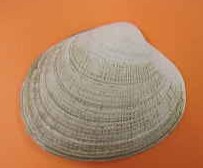
The butter clam has one set of rings that go one direction only, around the same center point (Photo courtesy of Alaska Department of Environmental Conservation)

The butter clam has one set of rings that go one direction only, around the same center point (Photo courtesy of Alaska Department of Environmental Conservation)

This past week, there were four suspected cases of paralytic shellfish poisoning (PSP) reported in Juneau. These four cases, combined with a couple of PSP cases in the Ketchikan/Metlakatla areas this winter and record-high levels of the PSP toxin found in shellfish last summer should serve as reminders that the state discourages eating recreationally and subsistence-harvested shellfish on most beaches in Alaska.

The first three PSP cases reported to the Alaska Section on Epidemiology last week involved clams harvested over the Easter weekend near Juneau — the first case reported April 10 involved razor clams from Admiralty Island and the next two cases reported April 12 involved butter clams from either Lincoln Island or Ralston Island. On April 13, another case was reported where a person ate pink neck clams (also known as surf clams) harvested from Shelter Island.

The littleneck clam has two sets of rings that cross each other at 90 degree angles (Photo courtesy of Alaska Department of Environmental Conservation)

The littleneck clam has two sets of rings that cross each other at 90 degree angles (Photo courtesy of Alaska Department of Environmental Conservation)

In each case, the people who ate the clams experienced classic PSP toxin symptoms — tingling and numbness of the mouth and tongue that eventually can extend into the extremities and then the rest of the body. Once the toxin moves into the body, it can paralyze the heart and lungs, causing them to stop and leading to intensive care treatment and possibly death (PSP deaths were reported in Juneau and Haines in 2010). If people experience these symptoms, they should get to the hospital immediately because sometimes a hospital respirator can save a life.

PSP can cause severe health problems and even death, and there is no antidote. The toxin is not visible, and requires special testing to be detected. It can occur during any month of the year, and the toxin can remain in affected shellfish for as long as two years. There is no antidote to the toxin. PSP generally affects bivalves that filter food when they eat, such as clams, cockles, mussels, oysters or scallops. Crab meat does not carry the PSP toxin, but crab guts can have the toxin since crab eat bivalves.

A cockle has deep ridges similar to a Ruffles potato chip (Photo courtesy of Alaska Department of Environmental Conservation)

A cockle has deep ridges similar to a Ruffles potato chip (Photo courtesy of Alaska Department of Environmental Conservation)

Southeast Alaska beaches, like most beaches in the state frequented by recreational and subsistence harvesters, are not tested by the state for the PSP toxin. The state does check commercially harvested shellfish for the toxin, but in recent months at least one commercial geoduck season was closed because of the toxin’s presence.

To learn more about PSP, here is an informational page created by the SouthEast Alaska Regional Health Consortium (SEARHC) after last year’s extremely high levels of PSP toxin were discovered. This page features information about how PSP is formed, what types of shellfish can carry the PSP toxin, basic first aid for PSP symptoms and more.

• Paralytic Shellfish Poisoning Fact Sheet from the State of Alaska

• Easing concerns about possible radiation in gathered seaweed this year

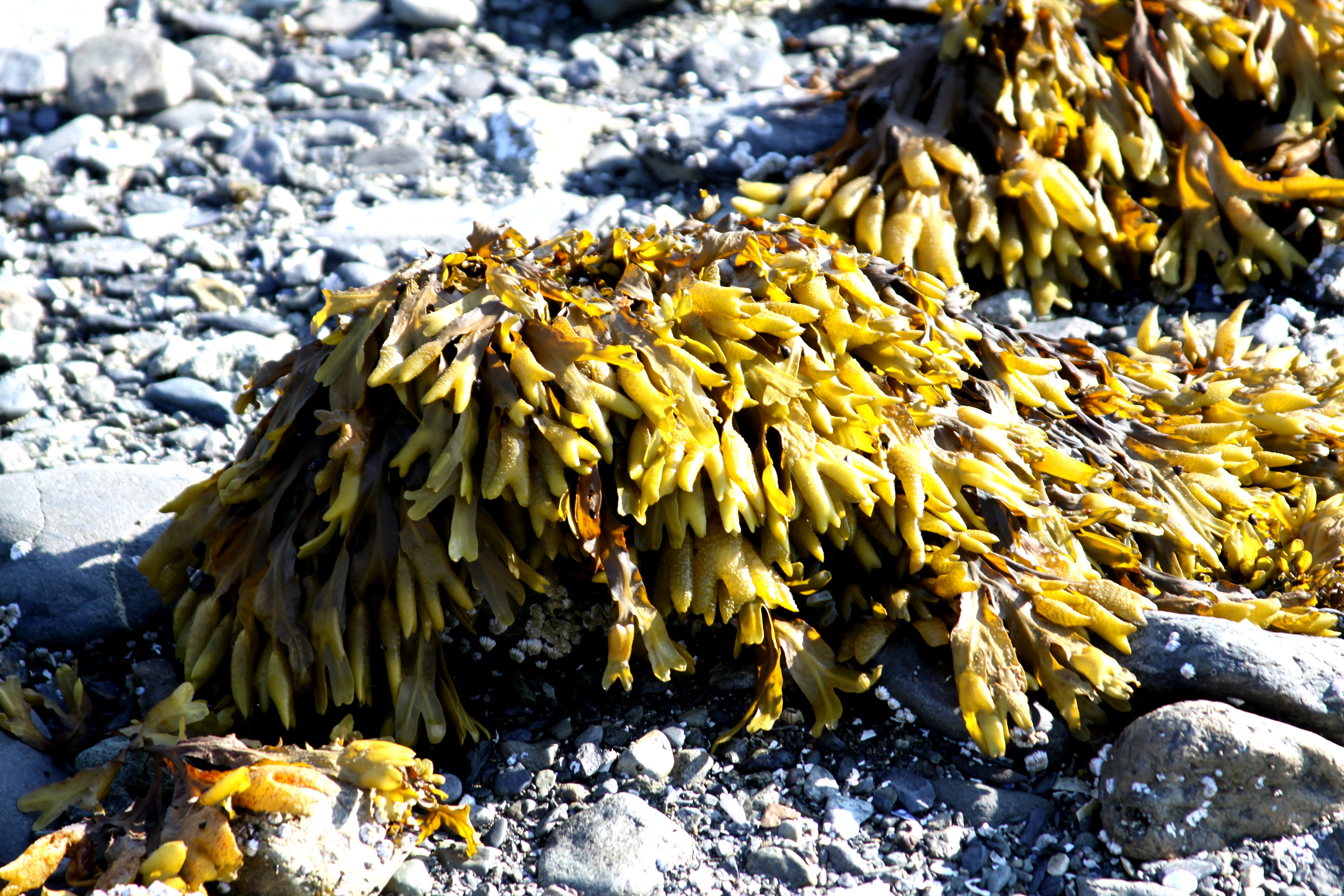
One of the prime springtime activities around Sitka is for people to gather seaweed, either for subsistence/traditional food purposes or to use it to fertilize local gardens. Seaweed is loaded with lots of healthy vitamins and minerals so it’s eaten by many in Sitka, and it also makes great fertilizer for the garden.

But this spring members of the Sitka Local Foods Network board have been hearing concerns from local gardeners and farmers about the seaweed this year possibly being contaminated by radiation (or iodine 131) from the March 2011 earthquake, tsunami and nuclear accident in Japan. Some of these concerns came after several local residents in recent weeks found Japanese fishing buoys and other debris on beaches around Sitka, and they were fueled by other stories about Japanese debris washing up on Alaska beaches.

Many people have had reservations about harvesting seaweed, either to eat or use in their gardens, and some people were skeptical about official reports that said there was no or limited radiation exposure to debris headed toward Alaska. For those people who want to test their seaweed or soil, the Plant Science Library in Anchorage is not equipped to test seaweed. But there are facilities in Washington State that are willing to test for a fee of between $50 to $200.

For those people who want to track the effects of the Fukushima Dai-ichi on U.S. marine environments, you can track the effects on Alaska coastlines at this congressional site. Other reliable websites for current information include  http://www.fda.gov/newsevents/publichealthfocus/ucm247403.htm  and http://www.srrb.noaa.gov/.

Greg Wilkinson, a public information officer with the Alaska Department of Health and Social Services, provided this link to a three-page handout about the effects of radiation on wild foods in Alaska. The State of Alaska has teamed up with the states of Hawai’i, California, Oregon and Washington, the province of British Columbia, the National Oceanographic and Atmospheric Association (NOAA) and the Environmental Protection Agency (EPA) to provide the Japan Tsunami Marine Debris Joint Information Center.

“Hopefully, disseminating this information to you all will alleviate some concerns about seaweed harvesting this year,” Sitka Local Foods Network board member Johanna Willingham said.

• Food advocate Andrianna Natsoulas to discuss the food sovereignty movement on Sunday, March 18

Food advocate Andrianna Natsoulas will give a free presentation about the food sovereignty movement at 5 p.m. on Sunday, March 18, at the Kettleson Memorial Library in Sitka.

Andrianna is a longtime advocate for food and environmental issues. She operates the Food Voices website, which features people from around the world (including Sitka) discussing the importance of developing a sustainable and sovereign food system. She also is writing the book, “Food Voices: Stories of the Food Sovereignty Movement.”

The food sovereignty movement is based on community-based agriculture and fishing, rather than industrial food production. More people are becoming concerned about where their food comes from and how it was produced. They are starting to recognize how local food is fresher, tastes better, puts more money back into the local economy, uses less fuel for transportation, and has fewer chemicals and pesticides.

To learn more about the food sovereignty movement, go to Andrianna’s Food Voices website or e-mail her at andrianna@foodvoices.org.

• Sitka Maritime Heritage Society to host a presentation on the importance of herring in Southeast Alaska

Herring is an important food source in Sitka and the rest of Southeast Alaska. Not only are there huge commercial and subsistence harvests of the fish, and it is an important food source for salmon, halibut, whales, sea lions and other animals in the region.

The Sitka Maritime Heritage Society will host the presentation “Herring: Rakes, Reduction Plants and the Fisheries: A Night of History” during its annual meeting at 7 p.m. on Sunday, Feb. 12, at Harrigan Centennial Hall.

The program features a panel discussion about the importance of herring in Southeast Alaska, from the booming commercial sac roe herring fishery to traditional gathering of herring eggs on hemlock branches. Another panel topic includes the herring reduction plants that once were scattered throughout Southeast Alaska. There also have been recent community discussions about possibly starting a whole-fish herring fishery that won’t target roe. Members of the public will be invited to share their memories of herring fishing and roe harvests. Photos and artifacts will be on hand.

For more information, contact sitkamaritime@gmail.com.

• Booths and vendors needed for the Let’s Grow Sitka! garden education event in March

Sitka residents wander the booths during the 2009 Let's Grow Sitka garden show

Sitka residents wander the booths during the 2009 Let's Grow Sitka garden show

It is time to start planning for the 2012 Let’s Grow Sitka Garden Expo. This year’s event will be from noon to 3 p.m. on Sunday, March 11, at the Alaska Native Brotherhood Hall.

Linda Wilson is coordinating the event, and she is looking for anyone interested in participating. Table spaces are FREE. The only restriction is that your products, services, information, displays, demonstrations, etc., must be related to gardening or food production in Sitka.

Linda is looking for:

  • Vendors selling garden-related products, including seeds, supplies, tools, books, accessories, …
  • Vendors promoting/selling their garden-related services, such as greenhouse and cold frame construction, yard maintenance, …
  • Vendors promoting/selling products and services related to small animal husbandry, such as chickens, ducks, rabbits, pigs, etc., …
  • Someone to host a table, do a display or presentation/demonstration on the following topics:
    • Growing root crops in Sitka (potatoes, carrots, etc…)
    • Root cellars and other methods for storage of vegetables
    • Fruit trees and berry bushes
    • Raising chickens and ducks
    • Composting and using compost
    • Soils and soil amendments
    • Edible flowers and ornamentals
    • Cold frames and other small garden structures that extend the growing season
    • Greenhouses
    • Seed swap and share table
    • Hosting a children’s activity such as decorating a pot and planting pansy, violet, viola seeds to take home.  Or ???
    • Garden pests — slugs, root maggots, etc., …
    • Proper garden drainage – how to construct garden beds to drain properly
    • Anything else you can think of that relates to growing food in Sitka, …

Please consider volunteering to host a table or to be a vendor. We want to make this a bigger and better event for this year,  and to get more people inspired to start or expand a garden. Last year we were unfortunate to be scheduled during the same week as Spring break, but NOT this year!

Please let Linda know, at your earliest convenience, if you would like to reserve a table or booth space. Linda can be reached at lawilson87@hotmail.com or 747-3096 (evenings and weekends).

• Sitka Local Foods Network hosts annual meeting and potluck dinner on Saturday, Jan. 21

Please join the Sitka Local Foods Network for its annual meeting and potluck dinner at 6 p.m. on Saturday, Jan. 21, at the Sitka Unitarian Universalist Fellowship Hall (408 Marine St., parking lot is off Spruce Street).

Join us as we honor our four years of existence and prepare for our fifth year. During this time, the Sitka Local Foods Network has worked on several initiatives — creating the Sitka Farmers Market, building St. Peter’s Fellowship Farm, hosting the Let’s Grow Sitka! garden education event, and more. We supported projects to plant more fruit trees around Sitka, get more local fish served in school lunches and increase Sitka’s ability to compost, and we are working toward starting the Sitka Community Greenhouse and Education Center. We also received a 501(c)(3) non-profit status from the IRS, so people can make tax-deductible gifts to help fund our work.

Our annual meeting and potluck is open to the public, and all Sitka residents are welcome to attend. We will feature local and slow foods, but we really value your attendance. This is our opportunity to say thank you to those who have helped us grow, and it is your chance to learn more about what we’re doing and how you can help.

As we enter 2012, Sitka and the rest of Alaska face some serious food security issues. According to a recent survey by the University of Alaska Fairbanks Cooperative Extension Service, the weekly cost for food for a family of four in Sitka has gone up 44 percent over the past five years. With rising fuel prices, this trend does not figure to change in the near future. Sitka still imports about 90-95 percent of its food from the Lower 48 or other countries, which means transportation is a big part of our food cost. The Sitka Local Foods Network is looking for input from Sitka residents about how we can work to improve Sitka’s food security. We also are working with the Alaska Food Policy Council, which is a statewide organization working on food security issues.

So mark your calendar to attend our annual meeting and potluck dinner at 6 p.m. on Saturday, Jan. 21, at the Unitarian Universalist Fellowship Hall, 408 Marine St. For more information, contact Kerry MacLane at 752-0654.

• Alaska chef Robert Kinneen creates webinar series about cooking with traditional foods

Local food from Sitka is featured prominently in the new Fresh49.com webisode series about using traditional foods created by Alaska chef Robert Kinneen of Anchorage and Dr. Gary Ferguson, ND, the director of the Wellness and Prevention program at the Alaska Native Tribal Health Consortium (ANTHC).

Guest chef Robert Kinneen of Anchorage demonstrates a dish using scallops during the first Sitka Seafood Festival in 2010.

Guest chef Robert Kinneen of Anchorage demonstrates a dish using scallops during the first Sitka Seafood Festival in 2010.

The first webisodes in the series are about the Store Outside Your Door, and they feature traditional foods Kinneen gathered around Sitka with Steve Johnson, a Tlingít elder-in-training from Sitka. Some of the webisodes featuring Sitka include a foraged salad, Alaskan fresh rolls, venison skewers and rockfish fumet. There is a Store Outside Your Door page on Facebook, as well as a channel on YouTubewhere people can find the webisodes.

Even though he currently lives and works in Anchorage, Kinneen is no stranger to Southeast Alaska. He is Tlingít and was born in Petersburg. Kinneen is a graduate of the Culinary School of America and has been a chef at several of Anchorage’s top restaurants over the years. He also has been a guest chef at the first two Sitka Seafood Festivals.

Dr. Ferguson, who is Aleut originally from Sand Point, is a Doctor of Naturopathy who earned his degree from the National College of Naturopathic Medicine. He has a special interest in diabetes treatment and prevention, which is one of the reasons Dr. Ferguson and Kinneen got together to do the series. Research has shown that traditional diets can play a big role in diabetes prevention.

In the first webisodes, they also worked with health educator Renae Mathson of Sitka (Tlingít), who works with the SouthEast Alaska Regional Health Consortium (SEARHC) Diabetes and Health Promotion programs, and registered dietitian Desirée Simeon (Tlingít/Haida), who works with ANTHC. They currently are filming webisodes from other parts of Alaska, featuring traditional foods from those areas.

• Rising grocery prices raise food insecurity concerns in Sitka

(NOTE: The following letter to the editor appeared in the Friday, Dec. 9, 2011, edition of the Daily Sitka Sentinel.)

Dear Editor,

Many in Sitka are feeling squeezed not only by rising fuel costs, but also by escalating food costs. The September 2011 Alaska Food Cost Survey, conducted by University of Alaska Fairbanks Cooperative Extension Service, calculated Sitka’s weekly food cost for a family of four as $198.41. This is a 44-percent increase since 2006, when the same market basket cost was $138.14. Sitka’s food costs are 57 percent higher than in Portland, Ore., 37 percent more than in Anchorage and 30 percent more than in Juneau.

Feeding America 2011 statistics report that 11.7 percent of Sitka’s borough is “food insecure.”  This translates to 1,030 Sitkans and other Baranof Islanders who sometimes are completely without a source of food on a regular basis.

Kids Count Alaska 2009-2010 reports that 46 percent of Sitka’s school age children and youth live in families receiving some form of public assistance i.e., Denali KidCare, food stamps, or Alaska Temporary Assistance. This is a 10-percent increase since 2007.

Alaska behavioral risk factor data from 2009 show that only 23 percent of Alaskans consume the recommended five fruits and vegetables each day and only 17 percent of adolescents eat five daily servings of fruits and vegetables. One of the primary reasons for this low intake is inadequate access to affordable, quality produce.

These combined statistics paint a picture of increasing vulnerability when it comes to securing nutritious food on a regular basis. In the nutrition and public health world, this tenuous access to healthy food is known as food insecurity. So, how can Sitka, collectively and creatively, respond to food insecurity? Sitka can respond by INCREASING ACCESS TO AFFORDABLE LOCAL FOOD.

The Sitka Local Foods Network is working towards improving access to nutritious, local foods through five interconnected strategies. Together, these five strategies can move Sitka toward a more food-secure future. They are:

  1. Promoting traditional and customary food gathering and preservation.
  2. Developing the Let’s Grow Sitka gardening campaign to assist Sitkans in learning to grow some of their own food.
  3. Growing the number of community gardens to augment the garden behind Blatchley Middle School. The 4-year-old St. Peter’s Fellowship Farm is a recent example.
  4. Coordinating regular Sitka Farmers Markets during the summer growing and gathering seasons.
  5. Creating a community greenhouse and promoting commercial greenhouses to increase year-round access to local fruits and vegetables.

If you are interested in supporting this effort, please commit to one of the following actions:

  • Attend the Let’s Grow Sitka extravaganza as part of Artigras from noon-3pm on March 11, 2012, at the ANB Hall to learn how to grow your own food
  • Volunteer to work at St. Peter’s Fellowship Farm this spring or the Sitka Farmers Market this summer
  • Support the Sitka Farmers Market which begins July 7, 2012, and runs every other Saturday morning through Sept. 15, 2012.
  • Mail a tax-deductible, year-end contribution to the Sitka Local Food Network at 408-D Marine Street, Sitka, AK 99835.

Together, we can make food security a reality in Sitka.

Sincerely,

Sitka Local Foods Network Board and Friends
(Lisa Sadleir-Hart, Charles Bingham, Kerry MacLane, Doug Osborne, Ellen Frankenstein, Maybelle Filler, Robin Grewe)