• Did you file for your PFD yet? Add a Pick.Click.Give. donation to the Sitka Local Foods Network

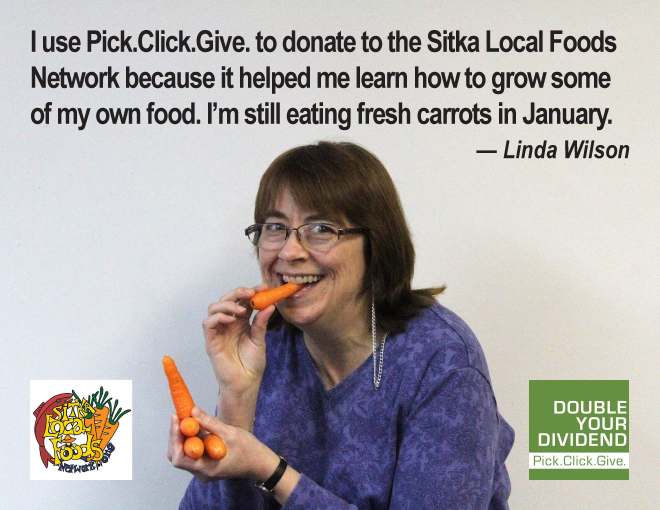
PCGTestemonialLindaWilson2016

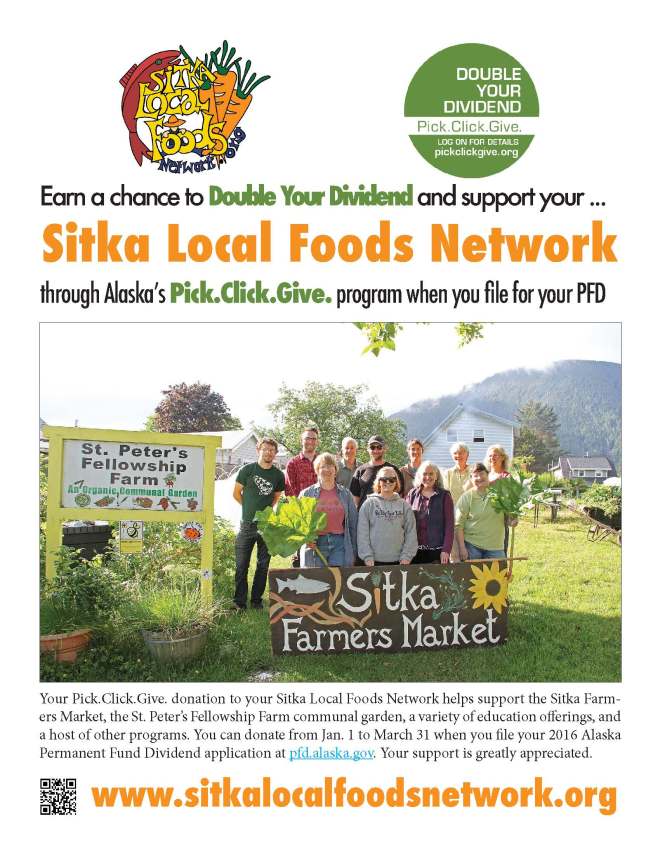
Now that it’s February, many Alaskans already are applying for their 2016 Alaska Permanent Fund Dividends. As usual, Alaskans can share their wealth with a variety of Alaska nonprofits, including the Sitka Local Foods Network, through the PFD’s Pick.Click.Give. charitable giving program.

PCGTestemonialLisaAndMurielSadleirHart2016This is the third year the Sitka Local Foods Network is participating in the Pick.Click.Give. program, which allows people to donate in $25 increments to their favorite statewide and local 501(c)(3) nonprofit organizations when they file their PFD applications from Jan. 1 through March 31. We thank the 64 donors who pledged $3,350 to the Sitka Local Foods Network in 2015, and we appreciate your support again in 2016.

When you choose to donate part of your PFD to the Sitka Local Foods Network, you support the Sitka Farmers Market, St. Peter’s Fellowship Farm, education programs about growing and preserving food, the Sitka Kitch community rental commercial kitchen, Blatchley Community Gardens, the sustainable use of traditional foods, the Sitka Community Food Assessment, the Sitka Food Summit, and a variety of other projects designed to increase access to healthy local foods in Sitka.

PCGTestemonialEllenFrankenstein2016In 2015 a record 33,421 Alaskans made 53,851 pledges of $3,329,575 to their favorite nonprofit organizations, up from $545,000 donated by 5,175 people in the program’s first year of 2009. Some Alaskans choose to donate to just one group, while others may spread several donations around to many groups. There now are more than 500 total 501(c)(3) nonprofit organizations participating in Pick.Click.Give. for 2016 (including multi-location nonprofits), including 24 from Sitka.

To encourage more Alaskans to donate through the Pick.Click.Give. program, this will be the second year of the Double Your Dividend contest. Anybody who makes a non-anonymous Pick.Click.Give. donation to at least one of the registered nonprofits will be entered into a contest where 10 lucky Alaskans will win a second PFD check. The winners will be announced in October, about the time the PFDs start hitting bank accounts.

PCGTestemonialCharlesBingham2016So how do you make a donation to the Sitka Local Foods Network through the Pick.Click.Give. program? First, go fill out your Alaska Permanent Fund Dividend application at http://pfd.alaska.gov/. When you get to the section of the application asking if you want to participate in Pick.Click.Give. Charitable Contributions program, click on the PCG link and search for the Sitka Local Foods Network. You also can look for us by using the town search for Sitka.

The Pick.Click.Give. program is available only to people who file their PFD applications online, and not to those who file by mail. Even though you can’t file a new PFD application after March 31, you can go back into your application and update your Pick.Click.Give. donations through Aug. 31 each year.

PCGTestemonialCathyLieser2016You still can donate to the Sitka Local Foods Network if you aren’t from Alaska or aren’t eligible for a 2016 PFD. To donate, send your check to the Sitka Local Foods Network, 408D Marine St., Sitka, Alaska, 99835. You also can donate online by going to our online fundraising page on Razoo.com, and clicking the Donate button to make an online contribution. Please let us know if you need a receipt for tax purposes. For more information about donating, you can send an email to sitkalocalfoodsnetwork@gmail.com.

Thank you for supporting our mission of promoting and encouraging the growing, harvesting and eating of local foods in Sitka and Southeast Alaska.

2016PickClickGiveFlier

• UAS Sitka Campus offers ‘Flora of Southeast Alaska’ course as a hybrid

Salmonberries await picking near the entrance to Sitka National Historical Park

Salmonberries await picking near the entrance to Sitka National Historical Park

A newish biology class by University of Alaska Southeast Sitka Campus associate professor Kitty LaBounty will itself be a “hybrid”, and it’s back for its second year.

FloraOfSEAK_Poster11x17_2016The DNA of most traditional botany classes is to gather students around a table of samples and look at them in a face-to-face classroom setting. By offering Flora of Southeast Alaska as both a local and distance-delivery (eLearning) class, students from anywhere can get up to speed on how to identify the common native trees, shrubs and herbs of southeast and south central Alaska. Local students can participate in the lectures on campus, while students across Alaska can see the imagery online and hear the lectures either live or via digital recording.

Flora of Southeast Alaska is a one-credit, seven-week workshop. The focus will be on identification of common species and attaining an understanding of their place in the ecosystem of Southeast Alaska. Students will discover how these plants interact with other plants and animals, and how humans use these plants for food, fuel, medicine, or simply enjoyment.

In addition to illustrated weekly lectures, there will be written exercises and “check for understanding” activities. The class is available to any student without prerequisites. It does not count as credit toward a biology major at UAS.

Professor LaBounty brings her lifelong passion as a gardener and scientist to this topic, along with more than 25 years experience working on plant identification for state, federal and nonprofit agencies in Alaska.

The class will meet from 5:30-7 p.m. on Thursdays from Feb. 25 to April 30 — with time off for spring break. The cost is $187 for local students and $227 for eLearning (distance) students.

For more information, contact Kitty LaBounty at UAS Sitka Campus. 747-9432. To register, call 747-7700. or toll-free, 800-478-6653.

• Northwest Farm Credit Services awards grants to Alaskans Own and Sitka Kitch projects

From left, Linda Behnken of the Alaska Longline Fisherman's Association and Anya Grenier of the Alaskans Own Seafood community supported fishery project receive a check for $4,500 from Michael Wittman of Northwest Farm Credit Services to help promote local seafood for Alaskans.

From left, Linda Behnken of the Alaska Longline Fisherman’s Association and Anya Grenier of the Alaskans Own Seafood community supported fishery project receive a check for $4,500 from Michael Wittman of Northwest Farm Credit Services to help promote local seafood for Alaskans.

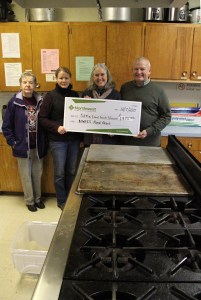
image003Northwest Farm Credit Services recently awarded two rural community grants to help fund a pair of local foods projects in Sitka. The Alaska Longline Fishermen’s Association received $4,500 for its Alaskans Own Seafood community supported fisheries program, and the Sitka Local Foods Network received $1,975 for a series of basic culinary skills classes to take place in March at the Sitka Kitch community rental commercial kitchen (which is coordinated by the Sitka Conservation Society with assistance from the Sitka Local Foods Network).

“The support of Northwest Farm Credit Services will allow ALFA to improve and expand Alaskans Own so we can provide premium seafood to more rural residents,” said Linda Behnken, ALFA’s executive director.  “We believe healthy fisheries and healthy fishing communities go together and with this grant support we will reinvest in both.”

Alaskans Own connects residents of Alaska’s rural communities with great Alaskan seafood through monthly subscriptions. Subscription sales support ALFA’s research and conservation work to promote sustainable fisheries and sustainable fishing communities. Click here for KCAW-Raven Radio’s coverage of the grant.

From left, Dorrie Farrell and Kristy Miller of the Sitka Kitch community rental commercial kitchen advisory team and Sitka Local Foods Network president Lisa Sadleir-Hart receive a check for $1,975 from Michael Wittman of Northwest Farm Credit Services to support a Sitka Kitch project to teach basic culinary skills to people wanting to get jobs in the food/restaurant industry. The classes will take place in March.

From left, Dorrie Farrell and Kristy Miller of the Sitka Kitch community rental commercial kitchen advisory team and former Sitka Local Foods Network president/interim Sitka Kitch project coordinator Lisa Sadleir-Hart receive a check for $1,975 from Michael Wittman of Northwest Farm Credit Services to support a Sitka Kitch project to teach basic culinary skills to people wanting to get jobs in the food/restaurant industry. The classes will take place in March.

“Sitka Kitch will use the resources to launch a basic culinary training series taught by Chef Kathy Jones (executive chef for the Westmark Sitka Hotel),” said Lisa Sadleir-Hart, Sitka Kitch interim coordinator and former Sitka Local Foods Network board president. “Chef Kathy will model the four-session training on a curriculum from Indianapolis. She sees it as a way to get local Sitkans trained on entry-level culinary skills that could land them jobs in one of Sitka’s many restaurants or food-related businesses.”

The Sitka Kitch basic culinary skills training series is modeled after a similar program designed to help give people work skills for the restaurant/catering industry offered by a hunger relief nonprofit called Second Helpings in Indianapolis. More details about the Sitka Kitch basic culinary skills program will be announced in the next week or so. The classes also will be open to Sitka residents wanting to improve their home culinary skills.

Sitka Kitch is a community wellness project from the 2013 Sitka Health Summit designed to improve food security in Sitka. The different parts of the project include creating a community kitchen Sitka residents can rent to prepare food for their small businesses or to preserve their family harvest of fish, game, or garden veggies; expanding Sitka’s emergency food storage capacity; and providing education about cooking and preserving food and building family emergency food pantries.

Northwest Farm Credit Services is committed to helping rural communities succeed. In 2015, Northwest FCS awarded 62 rural grants totaling more than $134,000 to projects in Alaska, Idaho, Montana, Oregon, and Washington. Since the program’s inception in 2007, the company has presented 464 rural grants totaling more than $948,000.

The next rural grant deadline is Feb. 1, with two other deadline cycles later in the year. If you think your rural project may be eligible for a grant, visit http://northwestfcs.com/Stewardship/Rural-Communities for more information and an application.

Northwest FCS is a financial cooperative providing financing and related services to farmers, ranchers, agribusinesses, commercial fishermen, timber producers, rural homeowners and crop insurance customers in Montana, Idaho, Oregon, Washington and Alaska. Northwest FCS provides approximately $13 billion in loans and is a member of the Farm Credit System, a nationwide network of borrower-owned lending institutions that provide approximately $221 billion in loans to rural America. For more information, go to http://northwestfcs.com.

• Friday’s the day to start filing your PFD applications with Pick.Click.Give. donations

2016PickClickGiveFlier

As 2015 winds to a close, many Alaskans already are thinking about applying for their 2016 Alaska Permanent Fund Dividend check in January. As usual, Alaskans can share their wealth with a variety of Alaska nonprofits, including the Sitka Local Foods Network, through the PFD’s Pick.Click.Give. program.

PCGKidsHarvest2016This is the third year the Sitka Local Foods Network will participate in the Pick.Click.Give. program, which allows people to donate in $25 increments to their favorite statewide and local 501(c)(3) nonprofit organizations when they file their PFD applications from Jan. 1 through March 31. We thank the 64 donors who pledged $3,350 to the Sitka Local Foods Network in 2015, and we appreciate your support again in 2016.

When you choose to donate part of your PFD to the Sitka Local Foods Network, you support the Sitka Farmers Market, St. Peter’s Fellowship Farm, education programs about growing and preserving food, the Sitka Kitch community rental commercial kitchen, Blatchley Community Gardens, the sustainable use of traditional foods, the Sitka Community Food Assessment, the Sitka Food Summit, and a variety of other projects designed to increase access to healthy local foods in Sitka.

Lovalaska FB Square PhotoGrid Tag (1)In 2015 a record 33,421 Alaskans made 53,851 pledges of $3,329,575 to their favorite nonprofit organizations, up from $545,000 donated by 5,175 people in the program’s first year of 2009. Some Alaskans choose to donate to just one group, while others may spread several donations around to many groups. There now are more than 500 total 501(c)(3) nonprofit organizations participating in Pick.Click.Give. for 2016 (including multi-location nonprofits), including 24 from Sitka.

To encourage more Alaskans to donate through the Pick.Click.Give. program, this will be the second year of the Double Your Dividend contest. Anybody who makes a non-anonymous Pick.Click.Give. donation to at least one of the registered nonprofits will be entered into a contest where 10 lucky Alaskans will win a second PFD check. The winners will be announced in October, about the time the PFDs start hitting bank accounts.

PCGFarmersMarket2016NEWSo how do you make a donation to the Sitka Local Foods Network through the Pick.Click.Give. program? First, go fill out your Alaska Permanent Fund Dividend application at http://pfd.alaska.gov/. When you get to the section of the application asking if you want to participate in Pick.Click.Give. Charitable Contributions program, click on the PCG link and search for the Sitka Local Foods Network. You also can look for us by using the town search for Sitka.

The Pick.Click.Give. program is available only to people who file their PFD applications online, and not to those who file by mail. Even though you can’t file a new PFD application after March 31, you can go back into your application and update your Pick.Click.Give. donations through Aug. 31 each year.

PickClickGiveFlier3DYDPRINTYou still can donate to the Sitka Local Foods Network if you aren’t from Alaska or aren’t eligible for a 2016 PFD. To donate, send your check to the Sitka Local Foods Network, 408D Marine St., Sitka, Alaska, 99835. You also can donate online by going to our online fundraising page on Razoo.com, and clicking the Donate button to make an online contribution. You also can send in a check or make an online donation if you are trying to make nonprofit donations before the end of the 2015 tax year. Please let us know if you need a receipt for tax purposes. For more information about donating, you can send an email to sitkalocalfoodsnetwork@gmail.com.

Thank you for supporting our mission of promoting and encouraging the growing, harvesting and eating of local foods in Sitka and Southeast Alaska.

• Sitka Local Foods Network to host annual meeting and potluck on Thursday, Feb. 11 (NOTE NEW DATE)

DisplayBasketOfCrops

The Sitka Local Foods Network will host its annual meeting and potluck dinner from 5:30-7:30 p.m. on Thursday, Feb. 11, at the Sitka Unitarian Universalist Fellowship Hall (408 Marine St., parking off of Spruce Street). Please note that this event has been rescheduled from its original time and date.

Participants are encouraged to bring a dish featuring local foods to share, and please bring your own utensils (note, this is a non-alcoholic event). This event is a good event to attend for people who want to learn more about the Sitka Local Foods Network and what we do around town. In addition, we will host a small fundraising auction for a variety of local-food-related items.

Attendees will hear about project updates, plus the current board will vote on by-law changes. We will introduce our new board members for 2016, and we will confirm the election of our officers.

Individuals interested in learning more about the Sitka Local Foods Network can email sitkalocalfoodsnetwork@gmail.com to learn about our projects and volunteer opportunities. For more information, call Michelle Putz at 747-2708.

• The Inuit Circumpolar Council-Alaska (ICC-AK) releases report on Inuit food security

Food Security Summary and Reccomendations Report _Page_01
Drastic changes are occurring within the Arctic and Inuit are on the forefront of these changes. In recent years food security has increasingly become a topic of conversation and is gaining more attention. But what does food security mean to those that call the Arctic home?

Through this Inuit Circumpolar Council-Alaska (ICC-AK) project led by the Alaskan Inuit (Iñupiaq, St. Lawrence Island Yupik, Central Yup’ik and Cup’ik), the Alaskan Inuit Food Security Conceptual Framework: How to Access the Arctic from an Inuit Perspective report illuminates the meaning of Alaskan Inuit food security and lay out an assessment process.

In the report it is clear that Inuit food security is more than calories, more than nutrients, as explained by a contributing author:  “We are speaking about the entire Arctic ecosystem and the relationships between all components within; we are talking about how our language teaches us when, where and how to obtain, process, store and consume food; we are talking about the importance of dancing and potlucks to share foods and how our economic system is tied to this; we are talking about our rights to govern how we obtain, process, store and consume food; about our Indigenous knowledge and how it will aid in illuminating these changes that are occurring. We are talking about what food security means to us, to our people, to our environment and how we see this environment; we are talking about our culture.” — Executive Summary

The report is the product of 146 contributing Inuit authors, a 12-member advisory committee, ICC-AK and their membership organizations. A summary and recommendations report was created for those who are looking for a quick glimpse at what food security means to Alaskan Inuit, what it means to apply a food security lens to assessments, and recommendations for strengthening food security. For a deeper understanding and more in-depth discussion, a technical report has been created. Within both reports you will find: 1) recommendations, 2) key barriers, 3) the food security conceptual framework, and 4) drivers of food security and insecurity. The technical report also lays out a food security assessment process.

“To look at environmental health through an Inuit food security lens requires one to undergo a paradigm shift. One must be willing to attempt to understand the Inuit culture to know what Inuit mean when they talk about food security.” — James Stotts

ICC-Alaska hopes that the report will be of use to a broad spectrum of people. Villages may use the report to aid in communicating with those from outside their communities. Decision-makers, academics, environmentalists, policy-makers and industry may use the reports as a tool to enhance their understanding of the Arctic. The report is accessible on the ICC-Alaska website.

The food security report also is linked below:

• Inuit Circumpolar Council-Alaska Food Security Summary and Recommendations Report

• Inuit Circumpolar Council-Alaska Food Security Technical Report

• Check out the December 2015 edition of the Sitka Local Foods Network newsletter

SLFNDecember2015NewsletterScreenshot

The Sitka Local Foods Network just sent out the December 2015 edition of its newly launched monthly newsletter. Feel free to click this link to get a copy.

This edition of the newsletter has brief stories about how one 140-character tweet won the Sitka Local Foods Network $20,000 from Tom’s of Maine, how the opening of the new Sitka Biotoxin Lab on Katlian Street will mean safer shellfish in Southeast Alaska, and an appeal for new first-year gardening families for the garden mentor program. Each story has links to our website for more information.

You can sign up for future editions of our newsletter by clicking on the registration form image in the right column of our website and filling in the information. If you received a copy but didn’t want one, there is a link at the bottom of the newsletter so you can unsubscribe. Our intention is to get the word out about upcoming events and not to spam people. We will protect your privacy by not sharing our email list with others.

• New biotoxin lab in Sitka allows for quicker, better monitoring of harmful algal blooms in Southeast Alaska

MichaelJamrosChrisWhiteheadEstherKennedyJohnDorothyOrbisonDeanOrbison

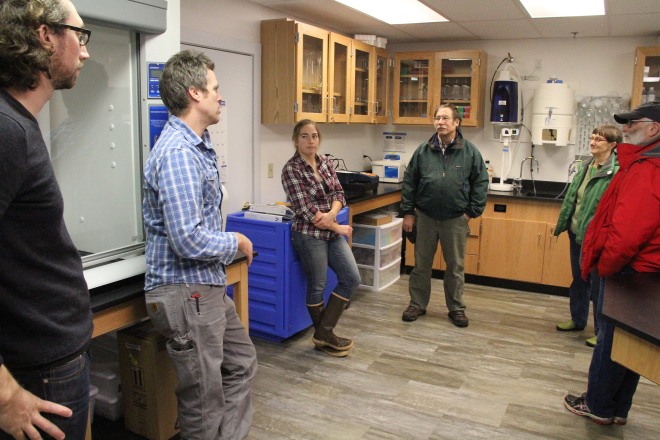
From left, Sitka Tribe of Alaska Environmental Lab Manager Michael Jamros, STA Environmental Program Manager Chris Whitehead, and STA Environmental Specialist Esther Kennedy discuss the new Sitka Biotoxin Lab with visitors to an open house on Monday, Nov. 30, 2015. The new lab will help Southeast subsistence and sport shellfish harvesters learn about harmful algal blooms in the region so they can avoid paralytic shellfish poisoning (PSP) or amnesic shellfish poisoning (ASP).

Most shellfish eaters are aware of the massive algal bloom that shut down many shellfish operations on the Pacific Coast this summer. The algal bloom even reached Sitka’s Starrigavan Beach with the June discovery of Pseudo-nitzchia, a species of plankton that sometimes produces domoic acid which can cause amnesic shellfish poisoning (ASP). ASP causes gastrointestinal issues in mild cases, such as nausea, vomiting, diarrhea, and abdominal cramps. In more severe cases there will be neurological problems, such as headaches, confusion, hallucinations, short-term memory loss, respiratory difficulty, seizures, coma, and in extreme cases, death.

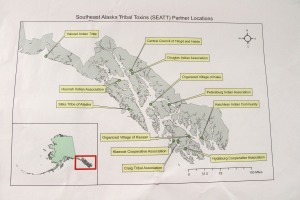
SEAKTribalToxinsSEATTPartnerLocationsUntil two years ago, Southeast Alaska beaches and subsistence- and sport-harvested shellfish weren’t tested for harmful biotoxins. That changed with the Southeast Alaska Tribal Testing (SEATT) program, a partnership of regional tribes coordinated by Sitka Tribe of Alaska, that began training technicians from six villages (now 12 villages) in the region on how to gather water samples so they could be tested. SEATT is part of a program called Southeast Alaska Tribal Ocean Research (SEATOR).

Now the project has moved to the next phase, the creation of a Sitka Biotoxin Lab, located at 429 Katlian Street, that can provide quicker and better testing results to people in the region who want to eat shellfish. Instead of sending samples to the Lower 48 for testing, which can take more than a week or two, samples from Southeast Alaska can be tested in Sitka and data can be available in less than 24 hours, Sitka Tribe of Alaska Environmental Program Manager Chris Whitehead said during an open house at the lab on Monday, Nov. 30. Before the lab opened, the program just took water samples. But now it will be able to actually test the shellfish for biotoxins.

Whitehead said one of the purposes of the lab is to give shellfish harvesters as much information as possible about possible harmful algal blooms so they can make informed decisions about if they still want to harvest and eat local shellfish. Harmful algal blooms spread a variety of biotoxins, such as domoic acid and saxitoxin, which can cause paralytic shellfish poisoning (PSP) and amnesic shellfish poisoning (ASP). PSP and ASP can be deadly, and in 2010 there were two people in Southeast Alaska who died from PSP.

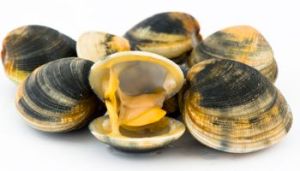
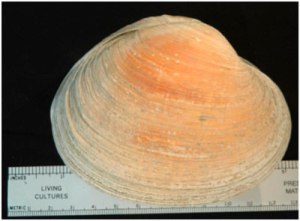
Cockles-Alaska-Department-of-Health-and-Social-Services“The toxins can stay in butter clams for 2 1/2 to three years,” Whitehead said, disproving the common local myth that shellfish is safe to eat in months with R in the name. “We’re still seeing blooms in December.”

Whitehead said he’s hoping to eventually be able to do baseline sampling of a variety of beaches in Southeast Alaska. He said they are sampling bays for cyst beds by digging cores in the beach soil, and they’ve found cysts 3-4 meters (9-13 feet) below the surface. While the beach might be safe for now, if people start building piers or docks it can stir up the cyst beds and launch a harmful algal bloom.

The lab and testing program is funded by the Environmental Protection Agency (EPA) Indian Environmental General Assistance Program, the Bureau of Indian Affairs (BIA) and Tribal Cooperative Landscape Conservation Program, and the Administration for Native Americans’Environmental Regulatory Enhancement program. The National Oceanic and Atmospheric Administration (NOAA) Marine Biotoxin Programs from Seattle, Wash., and Charleston, S.C., provided training through workshops to help develop the SEATT program.

raw-clams-350Michael Jamros, PhD, was hired in October as the STA Environmental Lab Manager, and he will be handling most of the actual testing and diagnosis of the seawater and shellfish. He said right now the lab is focused on subsistence and sports harvests, but down the road it’s hoping to become FDA-certified so it can test commercial harvests.

Esther Kennedy is the STA Environmental Specialist, and she said “every week I go plankton hunting.” This summer all of her tests were at Starrigavan State Recreation Area, but now that the lab is open she will be able to test in more areas, “wherever you think people might harvest shellfish.”

pe-fig1“I think this will help our food security,” Kennedy said. “People will be able to see this abundant resource of shellfish, and now they’ll have better information about whether it’s safe to harvest.”

In addition to the Sitka staff, the program also trains monitors from 12 partner villages to test in their areas, which range from Ketchikan on the south to Yakutat on the north. These monitors come to Sitka twice a year for training, with their most recent training in early November. A slideshow of photos from the training is posted below.

This slideshow requires JavaScript.

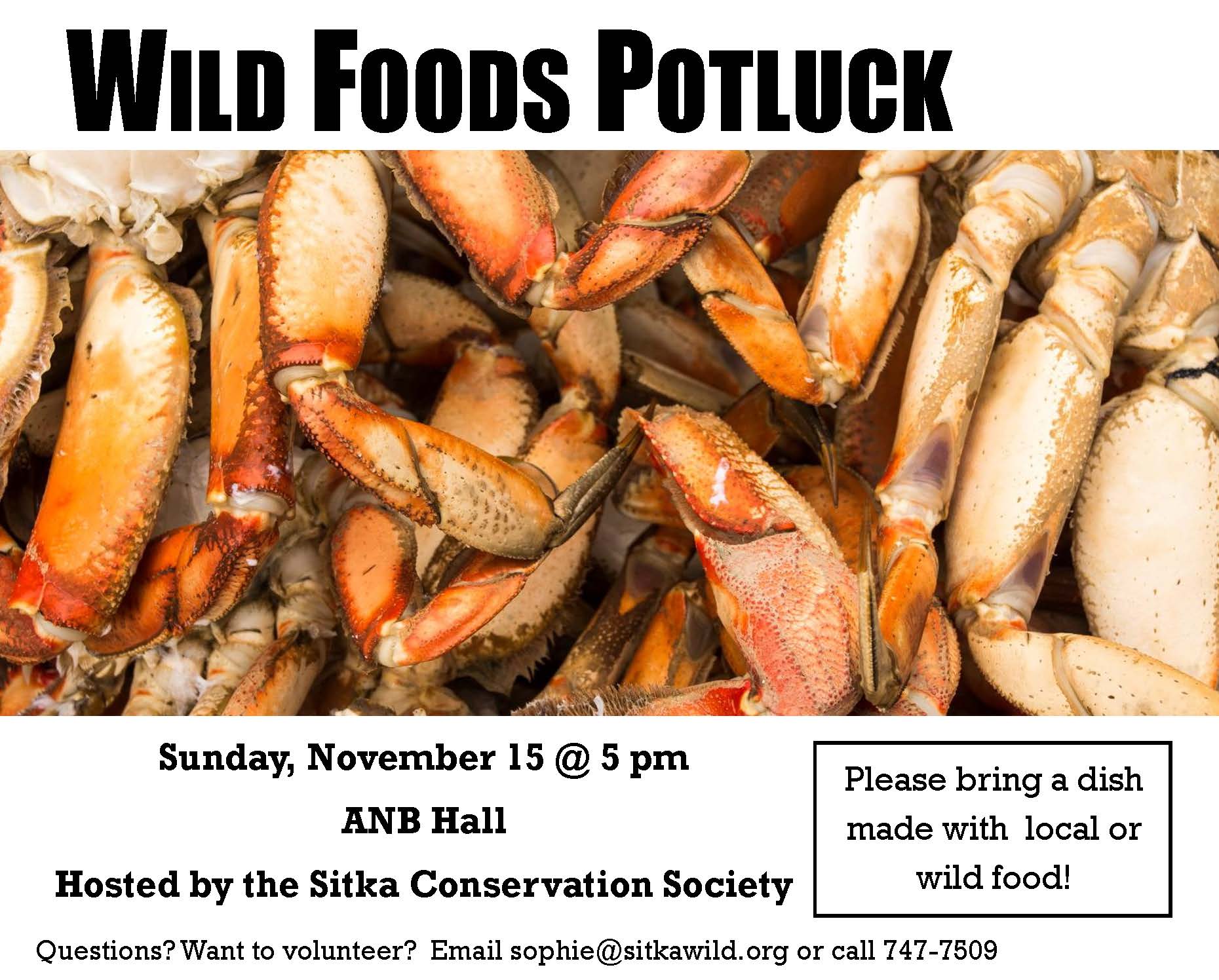
• Sitka Conservation Society to host its annual Wild Foods Potluck on Sunday, Nov. 15

Wild foods potluck poster 2015 - CRAB

The Sitka Conservation Society will host its annual Wild Foods Potluck from 5-7 p.m. on Sunday, Nov. 15, at the Alaska Native Brotherhood Founders Hall (235 Katlian St.).

Please bring a dish featuring ingredients that were fished, foraged, hunted, or cultivated in Southeast Alaska. Prizes will be awarded for first place in the following categories — Best Dish, Best Dessert, and Most Creative.

The event will highlight subsistence stories and the work performed by the Sitka Conservation Society over the last year. SCS members can pick up their 2016 SCS Calendars at the potluck.

The potluck is open to SCS members, friends, family, and anyone else interested in learning about the Sitka Conservation Society. Come celebrate Alaska’s wild food bounty.

Interested in volunteering at the potluck or want more information? Contact Sophie Nethercut at sophie@sitkawild.org or call 747-7509.

• New Silver Bay Seafoods cannery gives bonus to Sitka Sound Science Center

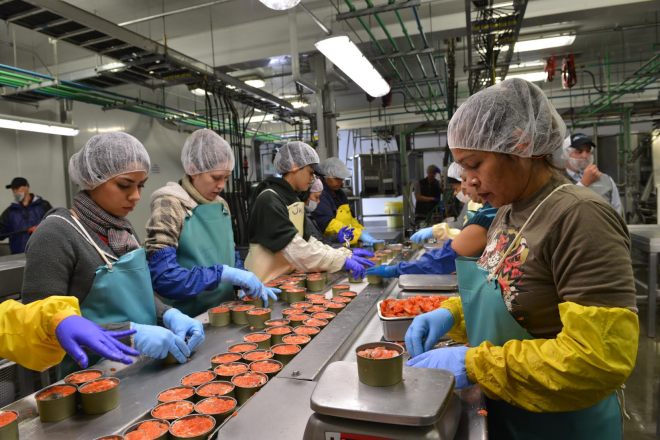
Workers pack sockeye salmon on the final day of seasonal canning operations Tuesday (Sept. 8, 2015) at Silver Bay Seafoods. (Daily Sitka Sentinel Photo by James Poulson)

Workers pack sockeye salmon on the final day of seasonal canning operations Tuesday (Sept. 8, 2015) at Silver Bay Seafoods. (Daily Sitka Sentinel Photo by James Poulson)

(Note: The following article ran on Pages 1 and 10 of the Friday, Sept. 11, 2015, edition of the Daily Sitka Sentinel. It is reprinted here with permission.)

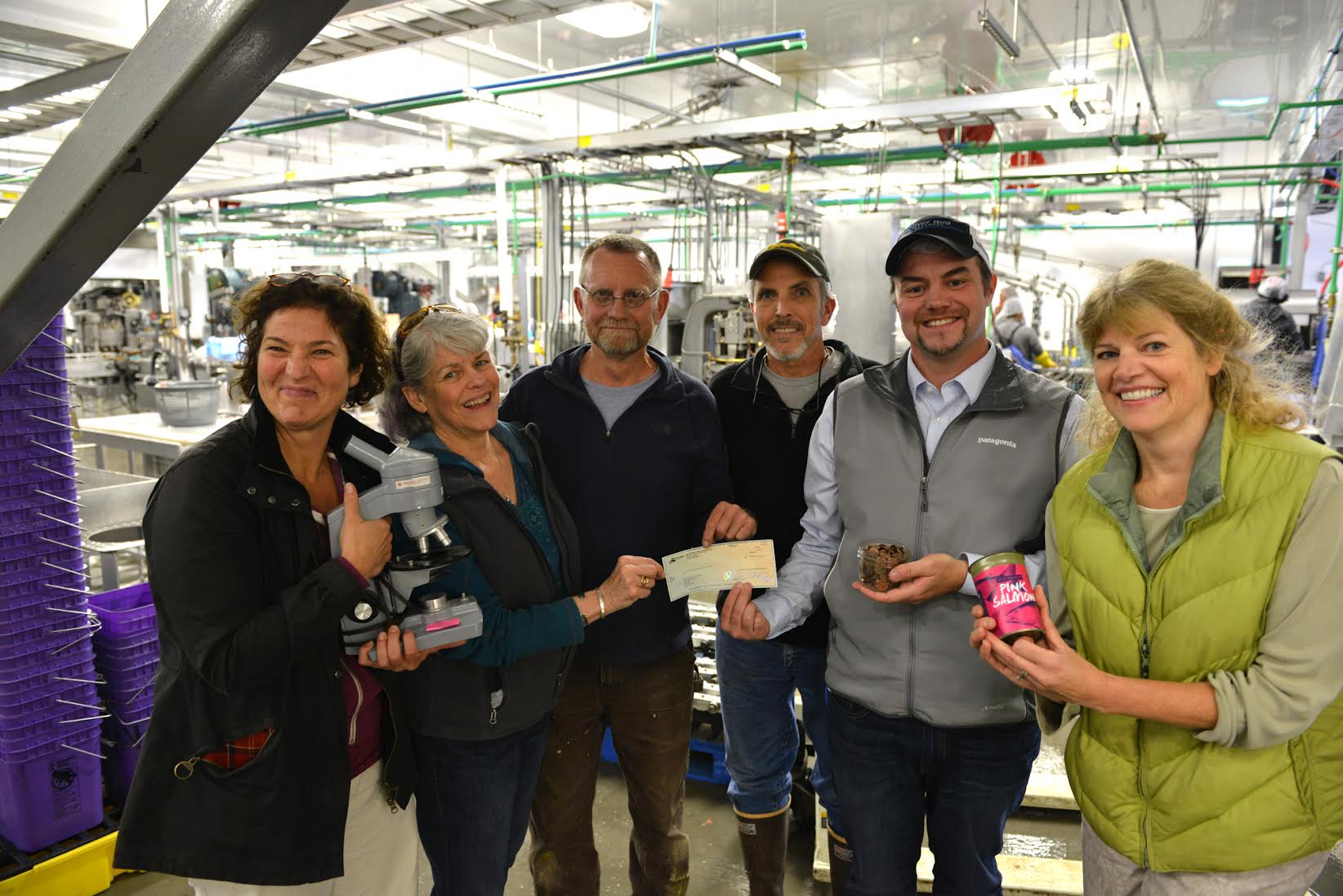
Sitka Sound Science Center Director Lisa Busch, left, and the center’s board of directors receive a $75,000 check from Silver Bay Seafoods CEO Rich Riggs and plant manager Wayne Unger recently at SBS’s new canning facility. From left are Busch, Linda Waller, Steve Clayton, Unger, Riggs, and Trish White. (Daily Sitka Sentinel Photo by James Poulson)

Sitka Sound Science Center Director Lisa Busch, left, and the center’s board of directors receive a $75,000 check from Silver Bay Seafoods CEO Rich Riggs and plant manager Wayne Unger recently at SBS’s new canning facility. From left are Busch, Linda Waller, Steve Clayton, Unger, Riggs, and Trish White. (Daily Sitka Sentinel Photo by James Poulson)

By TOM HESSE
Daily Sitka Sentinel Staff Writer

In a story that’s going to have a lot of digits, the number 12 might be the most important.

All canned goods have a coded number on the bottom that gives the location of where the food came from, when it was canned and who packaged it.

If the code on the bottom of canned salmon starts with a number 12, it means it was canned in Sitka. It also means the Sitka Sound Science Center received a one-cent donation for the production of that can of salmon.

And — if you’re Silver Bay Seafoods CEO Rich Riggs — it’s also a call-out to the fans of your favorite football team.

“So if you’re a (Seattle) Seahawks fan, that’s good news,” Riggs said.

Silver Bay has just wrapped up the inaugural year of its canning operation. The $7 million capital investment was the latest expansion of the Sitka-based company, founded in 2007 at the old Alaska Pulp Corp. mill site where it processed salmon for the fresh and frozen fish market.

Before Silver Bay Seafoods started canning fish there hadn’t been a cannery in Sitka for more than 50 years.

Earlier this week Riggs gave a tour of the canning line to the Sitka Sound Science Center board of directors. It was to celebrate a partnership between the two in which Silver Bay donated one cent for every can that rolled off the line.

Sitka Sound Science Center Director Lisa Busch said it’s one of the best examples there is of an industry supporting research in its own field of business.

“We are linked with the fishing industry and we really wanted to find some stable support, basically from the fishing industry,” Busch said. “We want to be partnered with fishermen and the fishing industry.”

Riggs said the rationale for that connection is obvious at any fish hatchery in the state. And then there’s the fact that the Sitka Sound Science Center is heir to the fishery science program pioneered by Sheldon Jackson College, which closed in 2007.

“You look and a lot of managers in the state have had some educational component at SJ. We firmly believe that sustainable fisheries are critical to Alaska’s communities and Alaska fishermen,” Riggs said.

Canning operations started in the second week of July, with three lines for three different sized cans. The largest cans run through the system at a rate of around 250 per minute, and the other sizes at around 215 cans per minute.

To the Sitka Sound Science Center, 60 minutes of canning results in a donation about equal to the hourly rate of some attorneys.

“I’m really excited that they’re so into this idea,” Busch said. “I feel like it’s really going to allow us to move forward to have somewhat stable funding from the fishing industry.”

Because of business interests, Silver Bay Seafoods won’t disclose how many cans it produced this year, but the first payment to the Sitka Sound Science Center was for $75,000.

The new canning line expands the total Silver Bay Seafoods warehouse footprint to more than 80,000 square feet, Riggs said.

The expansion was headed up by Mike Duckworth, who has 34 years of experience building and maintaining canning lines. One of the first things he had to do was acquire all the pieces, because most of the key elements for canning salmon date back to before his career even started.

“The filling machine has actually not been replicated the same,” Duckworth said. “There have been companies that’s tried to replicate them, but they found out it’s not feasible. They literally put millions of dollars into it and just couldn’t make money off of them.”

The technology dates back to the 1930s and ’40s, and Duckworth said the last major production of filling machines ended in the ’60s.

“Our equipment was probably cast in the late ’40s to the ’50s,” Duckworth said, adding that rebuilding those filling machines is a key piece of canning salmon in Alaska.

“It’s something everybody does. If you’re going to be in the industry then once every 7-10 years you completely rebuild these things,” Duckworth said. “We spent the last year (rebuilding). We had a crew of seasoned, Alaska canning machinists that were working with me in rebuilding and setting up the equipment and getting it ready for installation.”

The old equipment is then blended with new systems to create the modern canning system.

“That plant, it’s just a good blend of the old technology and the new,” Duckworth said.

A special slime line handles the salmon destined for canning, processing them in the usual manner. The fish are fed into one of the three canning lines where more than a dozen employees help monitor the process.

As salmon move along the line, they are packaged in cans that drop down a track from a room in the second story of the warehouse. A machine fills the can while employees check for bones and quality. Between the machine that affixes the lid and the track that kicks out defective cans is a printer that marks each can with a code, all of which start with the number 12.

Once sealed, the cans are loaded onto carts and taken to a separate station to cook before being stacked, wrapped and loaded into trucks to send them as far away as Australia.

Despite a low salmon year, Riggs said the canning operation was close to its projected target this season and there’s room to grow next year.

Tuesday (Sept. 8) was the last day of canning for the year, and it was frozen Bristol Bay sockeye that went through the process. The majority of the fish processed this year, however, cam from Southeast Alaska.

“The concept is the salmon season is over in Southeast, but then we can continue to operate the plant with the sockeye season in Bristol Bay going on,” Riggs said. “So we wanted to increase our capacity to process local fish as well as pick up some of those other Alaska fisheries, and the canning line allows us to do that.”

And if things continue to run as they did this year, the canning line also will allow for continued research into fisheries at the Sitka Sound Science Center.

“It funds all science center things,” Busch said. “So it goes toward research and education programs here in town and also toward our hatchery.”

Funding for independent science centers in Alaska can be tough to come by, and Busch said it can often be from unrelated industries, such as oil. Silver Bay Seafoods has worked with the Sitka Sound Science Center in the past, for example in the center’s cost-recovery fishery, and this new program is a logical continuation of their partnership, Busch said.

“We’re doing stuff that the fishermen are interested in,” Busch said. “To me this is so great that a big company, and a local company at that, are this invested in what we’re doing.”

Or, as Silver Bay Seafoods and the Sitka Sound Science Center are putting it, salmon makes cents.