• Sitka Conservation Society publishes resource guide for statewide Fish to Schools programs

Serving Local Fish in School Cafeteria_Page_01

The Sitka Conservation Society, which coordinates Sitka’s Fish to Schools program, has published a new resource guide, A Guide to Serving Local Fish in School Cafeterias, to help other school districts around the state implement similar programs in their communities.

F2S_Elementary2The Sitka Fish to Schools program came out of the 2010 Sitka Health Summit, when local residents chose as one of its community wellness projects to serve more local seafood in our schools. Since then the program has grown so that all students from Grades 2-12 in Sitka have a local seafood lunch option at least twice a month. This includes the Sitka School District schools, Keet Gooshi Heen Elementary School, Blatchley Middle School, Sitka High School, and Pacific High School, plus other local schools, the state-run boarding school Mount Edgecumbe High School and the private K-8 The SEER School.

Sitka is one of the first districts in the state to serve local seafood through the National School Lunch Program and has become a leader in the State of Alaska in getting local foods into schools. In the last three years, the number of schools interested in serving local seafood has increased ten-fold. Haines, Dillingham, Kodiak, Galena, and Juneau are a few of the districts that are now serving seafood in their meal programs.

In an effort to support regional and statewide efforts to serve local foods in schools, the Sitka Conservation Society developed a “how-to” guide to serving fish in schools. Using Sitka as a case study, it outlines procurement and processing strategies, legalities, tips, and recipes. Also included are case studies from around the state that offer tips and suggestions based on the success of their programs.

F2S_Elementary3The Sitka Fish to Schools program has seen an increase in meal participation on fish lunch days, likely attributed to the participation of students who typically bring a sack lunch. One student who reported never liking fish started to eat fish after a local chef came to her classroom. Others students circle fish lunch dates on their school lunch calendar, refusing home lunch that day. And why are they so excited? A middle school student put it this way, “It’s healthy and good for you and you feel good after you eat it.” Others give reasons of wanting to become a fisherman or cite the economic value to their community.

In addition to this guide is the “Stream to Plate” curriculum, a unit of seven lessons that connect salmon to the classroom. The lessons address the ecological significance and human relationship to salmon. These lessons have been tried and refined the last three years with third graders at Keet Gooshi Heen Elementary School.

Chris Bryner, teacher and collaborator on the salmon unit said, “The Fish to Schools curriculum connects my classroom to the community. Students not only learn about a resource relevant to their daily lives, but come away with an understanding that learning happens inside and outside of school.”

As the ninth largest seafood port in the country, Sitka is paving the way for locally-sourced meals. Their efforts are part of a larger national movement, Farm to School, to get local foods in schools. The Alaska Farm to School program honored Sitka’s Fish to Schools program for its innovation a couple of years ago.

celebrate fish to state“The beauty of Fish to Schools is that it provides a practical, local solution to a multitude of current global issues,” Fish to Schools Co-Founder Lexi Fish said. Local sourcing reduces the environmental impact of foods grown and raised thousands of miles away and ultimately supports a more resilient food system.

Local fish in school lunches not only tastes “delicus” (stet), as one third grader put it, but also addresses food justice, nutrition, community sustainability, and conservation. To get a free copy of the guide and curriculum, visit http://sitkawild.org/2014/03/a-guide-to-serving-local-fish-in-school-cafeterias/ or contact Sitka Conservation Society Community Sustainability Organizer Tracy Gagnon at 747.7509 or tracy@sitkawild.org.

Also, don’t forget to stop by the Celebrate Fish to State event from 6:30-7:30 p.m. on Thursday, March 20, at Blatchley Middle School to learn more about the efforts to expand the Fish to Schools program statewide.

• Celebrate Fish to State takes place on March 20 to support statewide Fish to Schools program

celebrate fish to state

SCSCohoPortionsForCookingSitka’s Fish to Schools program has been extremely successful the past three years, and now there’s a movement to make similar programs available statewide. Join us from 6:30-7:30 p.m. on Thursday, March 20, at Blatchley Middle School as we celebrate Fish to State.

This event will celebrate the success of the Sitka Fish to Schools program, which is coordinated by the Sitka Conservation Society and other partners. The event will include short presentations from Sitka School Board President Lon Garrison, Sitka Local Foods Network President Lisa Sadleir-Hart, and Sitka Conservation Society Community Sustainability Organizer Tracy Gagnon. Light refreshments will be available.

The Sitka Fish to Schools program came out of the 2010 Sitka Health Summit, when local residents chose as one of its community wellness projects to serve more local seafood in our schools. Since then the program has grown so that all students from Grades 2-12 in Sitka have a local seafood lunch option at least twice a month. This includes the Sitka School District schools, Keet Gooshi Heen Elementary School, Blatchley Middle School, Sitka High School, and Pacific High School, plus other local schools, the state-run boarding school Mount Edgecumbe High School and the private K-8 The SEER School. The award-winning program has served as a model for a handful of other school districts in Alaska, and now there is a push to make it available statewide with a full curriculum and resource guide, plus financial support.

For more information, contact Ray Friedlander of the Sitka Conservation Society at 747-7509 or ray@sitkawild.org.


• Sitka Food Co-op to host all-day planning workshop on Saturday, Nov. 23

SitkaFoodCoopPlanningEvent

Are you interested in helping the Sitka Food Co-op develop its short- and long-term plans? Then come join us in an all-day planning workshop from 9 a.m. to 3:30 p.m. on Saturday, Nov. 23, at the Fireside Room at the First Presbyterian Church, 505 Sawmill Creek Rd.

This workshop will be facilitated by Lisa Sadleir-Hart, board president of the Sitka Local Foods Network and project coordinator of the Sitka Community Food Assessment. Workshop participants will create an action plan for the co-op’s next five years, as well as developing the co-op’s vision and priorities.

Sitka Food Co-op Board Chair Keith Nyitray said, “Topics to be covered include whether we need a paid “general manager” position, whether and/or when to conduct a feasibility study about opening a retail store-front, starting home-deliveries, submitting paperwork to accept WIC, whether to switch incorporation to a non-profit status or not, moving toward establishing a two-tiered membership system, bulk buying and/or member equity sharing, and more.”

According to the Co-op’s website, the purposes of the Sitka Food Co-op are to:

  1. Create a community-based, member-owned buying service;
  2. Make available wholesome natural and organic foods and products as inexpensively as possible;
  3. Support and encourage local growing of fresh organic foods;
  4. Purchase and purvey, whenever feasible, the goods or services of local and regional growers and producers; and
  5. Serve as a center for activities and services which otherwise enrich the life of the community.

This workshop is open to everyone, including non-members, but please RSVP by Nov. 21 at sitkafoodcoop@gmail.com. There will be a potluck lunch, so please bring a dish to share. To learn more about the Sitka Food Co-op, go to http://sitkafoodcoop.org/.

• Sitka Community Food Assessment findings to be presented Nov. 14 at inaugural Sitka Food Summit

Sitka Food Summit Flyer

SitkaCommunityFoodAssessmentLogoThe Sitka Community Food Assessment work group will present its findings during the inaugural Sitka Food Summit, from 6-9 p.m. on Thursday, Nov. 14, at Harrigan Centennial Hall.

A 2012 Sitka Health Summit project, the Sitka Community Food Assessment has examined where Sitka residents get their food, what types they eat, what they grow, what they hunt and fish for, where they shop, what type of access people have to healthy food, and other questions about Sitka’s food supply. The findings of the food assessment will help Sitka improve its food security.

“The Sitka Community Food Assessment work group decided early on that there needed to be an opportunity for Sitka to engage with the food data and shape the writing of the food assessment indicator report,” project coordinator Lisa Sadleir-Hart said. “The inaugural Sitka Food Summit will use a format that was first tested in the late 1990s when the Island Institute was developing Sitka’s initial indicator report.  We’ll interact individually with the data, then use a conversation café model to discuss what the data brings up for us as Sitkans.  The working group wanted to create a venue that meets the needs of a wide range of citizens.”

The event sponsors include the Sitka Community Food Assessment Work Group from the Sitka Health Summit, Alaskans Own Seafood, the Sitka Food Co-op, Sitka Community Hospital, the SouthEast Alaska Regional Health Consortium (SEARHC) Community Transformation Grant and Diabetes Prevention programs, the Sitka Local Foods Network, the Southeast Soil and Water Conservation District, and Sitka Tribe of Alaska. There also will be refreshments thanks to Sitka Community Hospital’s Basement Bistro, St Peter’s Fellowship Farm and Sitka Conservation Society staff.

For more information, contact Lisa Sadleir-Hart at 747-5895 or sitkafoodassessment@gmail.com. (Editor’s note: A few photos from the Sitka Food Summit are posted below.)

This slideshow requires JavaScript.

• Sitka Local Foods Network named Alaska’s lone finalist in 50 States for Good contest

50SfG_2013__logoTHIS

The Sitka Local Foods Network has been selected as the Alaska representative in the fifth annual 50 States for Good contest, where one representative nonprofit organization from each state and the District of Columbia compete for a chance to win $10,000 from Tom’s of Maine.

Supporters of the Sitka Local Foods Network can take part in a public vote to help the organization share in $150,000 total grants from Tom’s of Maine (15 awards of $10,000 each). Voting is simple, just go to http://www.50statesforgood.com/, and follow the instructions. People can vote once per day for one nonprofit finalist during the period from 8 a.m. Alaska time (noon Eastern) on Monday, Sept. 16, through 4 p.m. Alaska time (8 p.m. Eastern) on Tuesday, Oct. 15. A free Facebook account is required for voting, and people who do not already have an account can go to https://www.facebook.com/ to create one.

The 50 States for Good program was created to help uncover local nonprofit groups that address a variety of community needs and engage volunteers to get the work done. This year’s finalists offer a diverse range of community services, such as improving access to local foods, working with people who have autism, helping street teens, supporting the needs of low-income residents, providing food and hygiene products to the homeless, building playgrounds, and more.

The Sitka Local Foods Network works on a variety of food-oriented projects in Sitka, a community of 9,000 people on Baranof Island in Southeast Alaska. Even though there is no commercial agriculture on the island, the Sitka Local Foods Network created the Sitka Farmers Market, which sells produce grown at the organization’s St. Peter’s Fellowship Farm communal garden and from family backyard gardens. The Sitka Local Foods Network also is trying to build the Sitka Community Greenhouse and Education Center, which will be a commercial greenhouse providing local produce and bedding plants for residents, and an education center teaching local students about gardening. Education is another focus of the network, which hosts the annual Let’s Grow Sitka garden exhibition in March and brings nationally known speakers to town to teach about gardening, seeds and greenhouses.

“We are honored to be chosen to represent Alaska in the 50 States for Good competition,” said Lisa Sadleir-Hart, president of the Sitka Local Foods Network board of directors. “If we are successful, we hope to further food production in Sitka using a host of strategies, such as creating an additional community garden, offering seed money to the community greenhouse and education center working group, or helping the school district jump start a school-based garden program. An award of $10,000 from Tom’s of Maine can really help Sitka make strides in improving its local food system.”

The 51 finalists (one from each state plus the District of Columbia) were selected from a pool of about 1,100 nominated nonprofit organizations by an independent panel of judges that included Huffington Post columnist Lisa M. Dietlin, Cool People Care president Sam Davidson, assistant features editor covering social good for Mashable.com Matt Petronzio, and The Vampire Diaries star and nonprofit founder Ian Somerhalder.

“A desire to do more for a favorite can often be hindered by a lack of time to volunteer or the financial means to make a donation,” said Susan Dewhirst, goodness programs manager at Tom’s of Maine. “The 50 States for Good program makes it easy for anyone to have an impact and directly help organizations that are bringing goodness to communities in a variety of creative and inspiring ways.”

For several decades, Tom’s of Maine, a natural products company focused on oral and personal care products, has donated 10 percent of its profits back to the community and encourages its employees to use 5 percent (12 days) of their paid time off to volunteer every year. For more information, visit http://www.tomsofmaine.com/ or like the Facebook page at https://www.facebook.com/TomsofMaine. Voting information will be at both links.

To learn more about the Sitka Local Foods Network and some of its community projects, go to http://www.sitkalocalfoodsnetwork.org/ or like the organization’s new Facebook page at  https://www.facebook.com/SitkaLocalFoodsNetwork.

• Sitka Local Foods Network to host board of directors meeting on Tuesday, Sept. 3 (Meeting changed to Monday, Sept. 9)

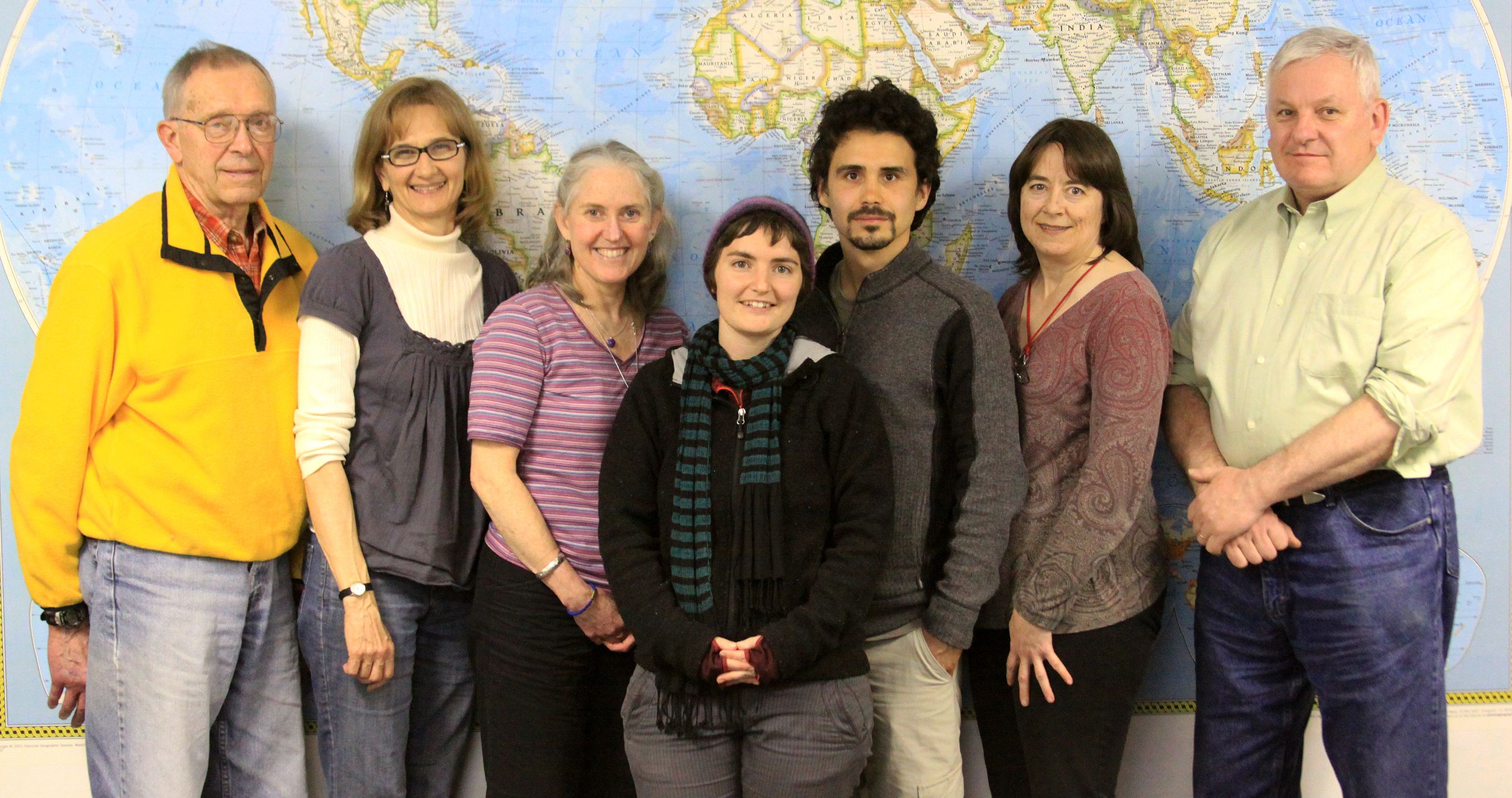
The 2013 Sitka Local Foods Network Board of Directors, from left, Jack Ozment, Beth Kindig, Lisa Sadleir-Hart, Tess Giant, William Giant, Linda Wilson, and Milt Fusselman. Not pictured are Cathy Lieser and Maybelle Filler.

The 2013 Sitka Local Foods Network Board of Directors, from left, Jack Ozment, Beth Kindig, Lisa Sadleir-Hart, Tess Giant, William Giant, Linda Wilson, and Milt Fusselman. Not pictured are Cathy Lieser and Maybelle Filler.

Now that the summer is winding down, the Sitka Local Foods Network board of directors will meet at 6:30 p.m. on Tuesday, Sept. 3, at the Sitka Economic Development Association (SEDA) conference room (329 Lincoln St., Suite 212, in the Troutt Building, enter off Lincoln Street using the stairway next to Seasons Cards and Gifts). Please note that this is a change from our normal board meeting location, now that we have an expanded board of directors. (NOTE, due to schedule conflicts and illness, this meeting was postponed until Monday, Sept. 9, at the same times and location)

This is the board’s first monthly meeting since June, and the meeting is expected to last until 8:30 p.m. A preliminary budget meeting takes place at 6:15 p.m. Board president Lisa Sadleir-Hart will lead the meeting.

Key topics include the Sitka Farmers Market, St. Peter’s Fellowship Farm, Blatchley Community Gardens, the Sitka Community Food Assessment, the Sitka Community Greenhouse and Education Center, the Alaska Food Policy Council, the Running of the Boots fundraiser on Sept. 28 and more.

Board meetings are free and open to the general public. We always welcome new volunteers interested in helping out with our various projects.

• KCAW-Raven Radio reports on how Sitka residents can double down on EBT benefits at the Sitka Farmers Market

Mira Vale staffs the EBT Quest Card table at the Aug. 3, 2013, Sitka Farmers Market

Mira Vale staffs the Alaska Quest Card/EBT benefits table at the Aug. 3, 2013, Sitka Farmers Market

The Friday, Aug. 9, 2013, newscast on KCAW-Raven Radio featured a story about how Sitka residents on food stamps can double their Alaska Quest Card/EBT benefits at the Sitka Farmers Market.

The Alaska Quest Card is an EBT, or Electronic Benefits Transfer, program that helps people on food stamps pay for food at local grocery stores. Their monthly EBT benefits are loaded onto their Alaska Quest Card, and an amount is deducted from the card each time they buy food.

Starting last year, the Sitka Farmers Market joined several Alaska farmers markets in accepting Alaska Quest Cards/EBT benefits, and this year the number of markets accepting EBT has grown to 11 markets in Alaska. Since many farmers market vendors aren’t set up to accept charge cards, people on EBT benefits can use their cards to buy tokens (wooden nickels) at a booth at the Sitka Farmers Market, and they then can use the tokens to purchase fresh food from participating vendors.

The Alaska Quest Card/EBT booth also sells a second type of token that people not on EBT benefits can use to purchase food and other items (including arts and crafts) from participating vendors. This second token allows vendors who aren’t set up for credit/debit cards to still make sales.

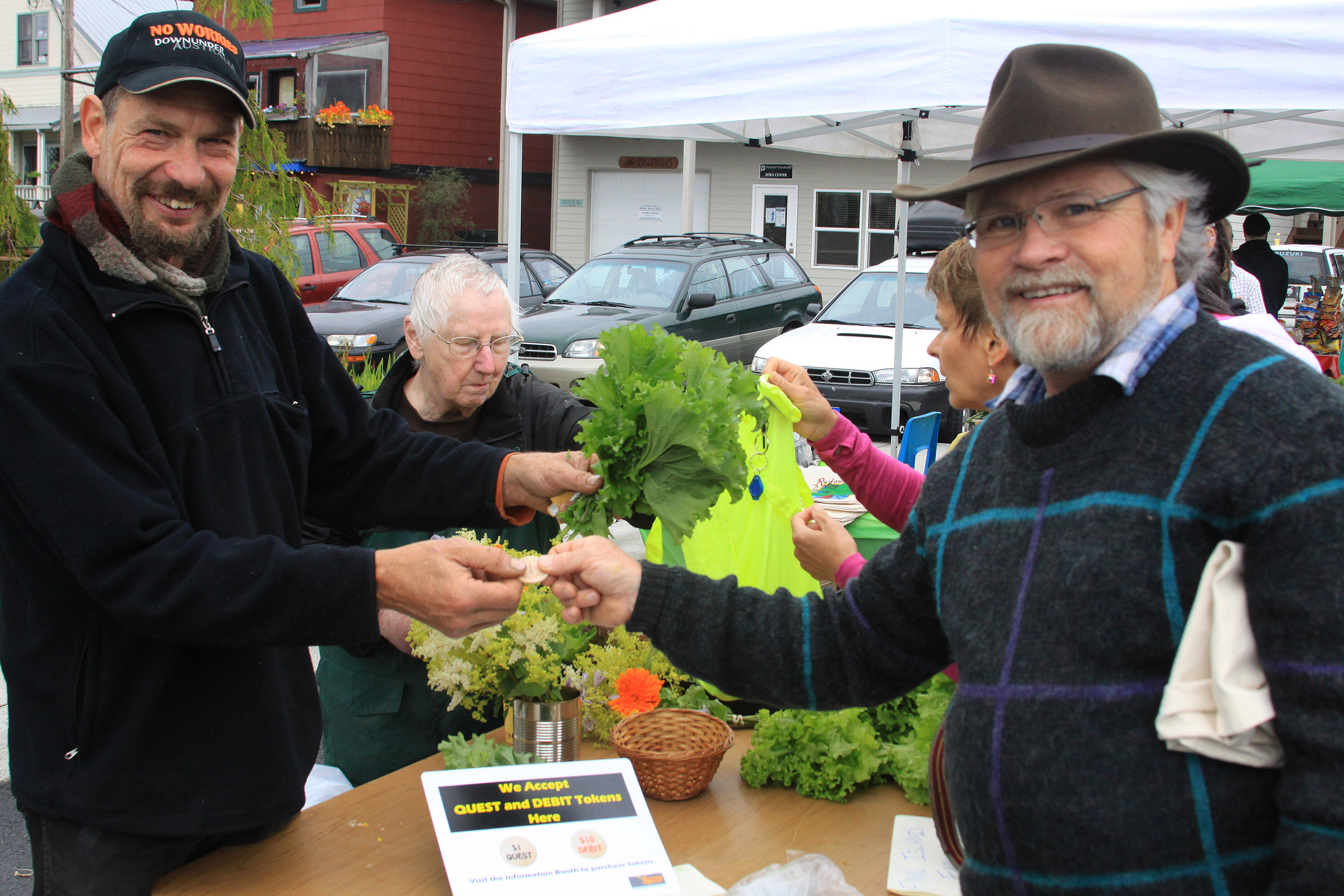
Kerry MacLane uses a token to purchase produce from Sitka Farmers Market vendor Keith Nyitray during the Aug. 3, 2013, Sitka Farmers Market.

Kerry MacLane uses a token to purchase produce from Sitka Farmers Market vendor Keith Nyitray during the Aug. 3, 2013, Sitka Farmers Market.

The KCAW story focused on Sitka resident Stacie Joseph, who uses EBT benefits to help pay for her food for her four kids while she attends school. Because of a grant from the state, various Alaska farmers markets are able to provide double the benefits for people using EBT benefits. For example, if someone wants to use $20 of their EBT benefits, they’ll receive $40 worth of tokens. Joseph said the doubled benefits mean that in addition to providing healthy fresh produce for her family, she can have more money available to use on her health management classes at the University of Alaska Southeast-Sitka Campus, helping her improve her earning potential.

“This program improves access to fresh, local foods to community members who are struggling financially.  Additionally, the program helps increase understanding of food insecurity issues in our community and how produce and other food vendors can be part of the solution,” said Lisa Sadlier-Hart, president of the Sitka Local Foods Network board of directors, which hosts the Sitka Farmers Markets.

• Gardening work parties continue at St. Peter’s Fellowship Farm

SLFN_DigDeeper

StPetersSignWithToDoListSignAre you interested in meeting other Sitka gardeners and learning about how to grow food in Sitka’s rainy climate? Then join us for garden work parties at St. Peter’s Fellowship Farm.

St. Peter’s Fellowship Farm is located behind St. Peter’s By The Sea Episcopal Church on Katlian Street (the brown church with the steeple above Crescent Harbor). It is a communal garden that grows food to be sold at the Sitka Farmers Markets and used for various hunger programs around town.

Garden work parties take place from 2-4 p.m. on the Saturdays when we don’t have a Sitka Farmers Market, and from 4:30-6 p.m. on the Wednesdays right after our markets. The remaining Sitka Farmers Markets this year are from 10 a.m. to 1 p.m. on Saturdays, Aug. 17, Aug. 31, and Sept. 14, at the Alaska Native Brotherhood Founders Hall.

That means there will be garden work parties at St. Peter’s Fellowship Farm from 2-4 p.m. on Saturdays, Aug. 10, Aug. 24, Sept. 7, and Sept. 21. In addition, there are a few Wednesday afternoon work parties from 4:30-6 p.m. on Aug. 7, Aug. 21, and Sept. 4.

Garden work party duties include weeding, trimming plants, picking slugs, planting late-summer and fall crops, and harvesting. During the work parties, people are able to purchase ripe crops, and Alaska Quest electronic benefit transfer cards are accepted for people on food stamps. The work parties are kid-friendly, so feel free to bring the munchkins to help.

To learn more, call St. Peter’s Fellowship Farm lead gardener Laura Schmidt at 738-7009 or 623-7003, or contact Sitka Local Foods Network board president Lisa Sadleir-Hart at 747-5985 or sitkalocalfoodsnetwork@gmail.com.

• Alaska Division of Agriculture to host four On-Farm Food Safety Workshops in Southeast communities

Southeast Workshops flyer2

The Alaska Division of Agriculture is planning a series of four On-Farm Food Safety Workshops in Southeast Alaska communities the week of July 21-25. The workshops will be in Skagway, Haines, Juneau and Sitka.

These workshops are geared toward farmers both large and small, farmers market vendors, gardeners, and anyone who is interested in learning more about food safety in the production of fruits and vegetables.

The Sitka workshop will be from 6-9 p.m. on Thursday, July 25, in the upstairs classroom of the See House at the St. Peter’s By The Sea Episcopal Church (on Lincoln Street, the brown church with the steeple above Crescent Harbor). This is a voluntary educational event for farmers and gardeners who want to learn more about agricultural practices that help reduce the risk of food-borne illness, especially if they plan to sell or donate produce to the Sitka Farmers Market or other programs. For more information about the Sitka workshop, contact Lisa Sadleir-Hart at 747-5985.

The workshops are free, informal, and run for about three hours. The workshops consist of two powerpoint presentations – one on food safety, and introduction to both USDA GAP/GHP food safety audits and the FDA’s new Food Safety Modernization Act, and a second presentation that assists growers who are interested in marketing their produce to schools and local institutions.

The workshops include a site visit to a local farm or garden where we will conduct a mock food-safety audit and answer growers’ questions. We will also provide a wealth of food safety reference materials, and an introduction to online tools that can assist growers in creating a food safety plan, which is the first step in providing food safety assurance to their buyers.  All attendees will receive a copy of FamilyFarmed.org’s “Wholesale Success” reference manual, and a certificate for 3 hours of continuing education in farm food safety.

To learn about the Skagway, Haines and Juneau workshops, check out the flier posted above.

• Gov. Parnell signs executive order creating the Alaska Food Resource Working Group

AlaskaFoodPolicyCouncilLogoThe following is a note sent to members of the Alaska Food Policy Council listserv by Diane Peck, MPH, RD, a public health nutritionist with the Alaska Department of Health and Social Services Obesity Prevention and Control Program. Diane also is one of the lead contacts for the Alaska Food Policy Council.

Last Friday (June 28, 2013), at the Palmer Farmers Market, Gov. Sean Parnell signed Administrative Order No. 265 (http://gov.state.ak.us/admin-orders/265.html) to establish the Alaska Food Resource Working Group (AFRWG) to recommend policies and measures to increase the purchase and consumption of local wild seafood and farm products. This is a bit different than HCR 01. The AFRWG is composed of eight state agency commissioners or their designee. “The AFRWG shall collaborate with the Alaska Food Policy Council . . . and shall invite a member of the AFPC governing board to represent the AFPC at scheduled meetings.”

The goals of the group are:

  • Develop a mission statement that promotes increased use of locally grown and harvested foods within state and local agencies, institutions, and schools;
  • Identify factors that might discourage or prevent locally harvested and produced food from being purchased by federal, state and local agencies, institutions, and schools;
  • Review existing or proposed programs, policies, statutes, and regulations that impact the state’s food system and recommend to policymakers methods to improve coordination and implementation;
  • Identify research needed to support and encourage increased consumption and production of local foods within the state; and
  • Engage with the public to seek additional input on ways to promote the above-listed goals.

Lots of legislators and several commissioners were at the signing.  The governor said this elevates the group to “sub-cabinet” status.

To learn more about the Alaska Food Policy Council, go to its website or like its Facebook page. Sitka Local Foods Network board president Lisa Sadleir-Hart represents Sitka on the Alaska Food Policy Council.

• Alaska Food Policy Council press release about the executive order