In addition to the dozen films, the festival will feature an appearance by Tlingít chef Robert Kinneen about the Store Outside Your Door (a project with the Alaska Native Tribal Health Consortium (ANTHC) promoting healthy traditional foods). There also will be a roundtable discussion about Sitka’s food resiliency (food security).
The festival opens with a feature film TBA at 8:30 p.m. on Friday night at the Larkspur Cafe.
On Saturday at Harrigan Centennial Hall, the schedule includes Ratatouille (a family friendly movie) at 10 a.m., Ingredients at 12:30 p.m., End of the Line at 2:30 p.m., Two Angry Moms at 3:45 p.m., followed by a roundtable discussion about Sitka’s food resiliency from 5:30-6:30 p.m. Saturday’s schedule concludes with another feature film TBA at 8:30 p.m. at the Larkspur Cafe.
Besides the Sitka Conservation Society, the film festival is sponsored by the Alaska Sustainable Fisheries Trust, SEARHC, Sitka Food Co-op, ArtChange Inc., Sitka Film Society, Alaska Pure Sea Salt Co., and the Larkspur Cafe. On Tuesday, Feb. 19, Tracy Gagnon with the Sitka Conservation Society and Andrianna Natsoulas with the Alaska Sustainable Fisheries Trust were interviewed on KCAW-Raven Radio’s Morning Edition program about the film festival, and you can click here to listen to the interview.
The Sitka Community Food Assessment project is looking to hire a quarter-time project coordinator to oversee the collection of and analysis of data about Sitka’s food supply and demand.
The Sitka Community Food Assessment project is one of this year’s three Sitka Health Summit community wellness projects, which were decided by local residents back in October. The project already has applied for and received a sub-award grant from the SEARHC Community Transformation Grant program to help facilitate the gathering of data about where Sitkans get their food and how much they need.
The project coordinator will work about 10 hours a week at $23 an hour for one year. Depending on other funding and job requirements, there is a possibility the job may expand from quarter-time to half-time.
This new and exciting position will create and support the Community Food Assessment for a Food Resilient Sitka. In order to understand Sitka’s food security, we need to first conduct an assessment. The assessment will be used to develop a Strategic Action Plan to ensure the resiliency of Sitka’s food future. The successful candidate will report to the Sitka Community Food Assessment committee co-chairs.
A copy of the job description is linked below. To apply, please submit a resumé and cover letter. Applications are due by Friday, Nov. 30, and the job starts on Jan. 7. To learn more or to submit your application, please contact Kerry MacLane at maclanekerry@yahoo.com or Andrianna Natsoulas at anatsoulas@thealaskatrust.org.
Sitka residents gather for a group photo during the Sitka Health Summit planning day on Friday, Oct. 12, 2012, at Sweetland Hall on the Sheldon Jackson Campus.
Sitka residents want to revitalize the downtown core area, perform a community food assessment for food resiliency, and apply for a Walk Friendly Community award to show how walkable Sitka is as a community.
Those were the three community health priorities Sitka residents chose to work on this next year when they met during the Sitka Health Summit’s community planning meeting on Friday, Oct. 12, at Sweetland Hall on the Sheldon Jackson Campus. Sitka residents chose these three projects out of dozens of brain-stormed ideas. Each project will receive assistance with facilitation and $750 of seed money from the summit’s Health Initiatives Fund to start working on meeting the health goals.
The groups working on each project are setting up their first meetings and getting their contact lists together, and Sitka residents who want to participate are welcome to contact the interim group leaders (through the group’s first meetings, group leaders may change after the first meetings) listed below to find out more information.
Sitka downtown revitalization project, Angela McGraw, 747-1737, angelam@sitkahospital.org, first meeting at 5:30 p.m. on Tuesday, Oct. 30, at Harrigan Centennial Hall.
Sitka community food assessment, Renae Mathson, 966-8797, renae.mathson@searhc.org, first meeting at 5 p.m. on Monday, Oct. 29, in Room 108 at Rasmuson Hall on the Sheldon Jackson Campus.
Walk Friendly Community, Charles Bingham, 738-8875, charleswbingham3@gmail.com, first meeting at 7 p.m. on Wednesday, Nov. 7, at Swan Lake Senior Center.
Sitka Mayor Mim McConnell speaks to Sitka residents at the Sitka Health Summit planning day on Friday, Oct. 12, 2012, at Sweetland Hall on the Sheldon Jackson Campus.
The sixth annual Sitka Health Summit took place on Saturday, Oct. 6; Monday, Oct. 8; Wednesday, Oct. 10; and Friday, Oct. 12, at various locations around Sitka. In addition to Friday’s community planning meeting, the Sitka Health Summit opened the Sitka Community Health Fair and Neighborhood Block Party on Saturday at Sweetland Hall. It also featured a lunch-and-learn on Monday at Kettleson Memorial Library where Don Lehmann, MD, discussed “Exercise as Medicine;” and it featured the Sitka Health Summit Community Wellness Champion Awards Celebration on Wednesday night at the Sheet’ká Kwáan Naa Kahidi.
The Sitka Health Summit is brought to you by Sitka Community Hospital, the SouthEast Alaska Regional Health Consortium (SEARHC), Alaska Communications and the University of Alaska Southeast-Sitka Campus. Additional financial help and in-kind donations were provided by the City and Borough of Sitka, Guardian Flight Inc., Premera Blue Cross Blue Shield of Alaska, Scott Insurance Services, Shee Atiká Inc., AC Value Center/Lakeside, Sitka Vision Clinic, Wells Fargo, White’s Inc. (Harry Race Pharmacy, White’s Pharmacy, Seasons), Spenard Builders Supply, Don and Penny Lehmann, Alaska Health Fair Inc., and the State of Alaska Division of Public Health Nursing. The Sitka Health Summit’s vision is “to serve our great state as a model for community wellness by creating a healthy community where all Sitkans strive for and enjoy a high quality of life.”
For more information about the Sitka Health Summit, call Doug Osborne at 966-8734 or Alyssa Sexton at 747-0388, or go to our website at http://www.sitkahealthsummit.com/.
The Sitka Local Foods Network will begin accepting Quest and debit cards for the purchase of locally grown and made products during its fourth Sitka Farmers Market of the summer, from 10 a.m. to 2 p.m. on Saturday, Aug. 18, at Alaska Native Brotherhood Hall (235 Katlian St.).
The Sitka Farmers Market received funding from the Alaska Farmers Market-Quest Card Program to purchase a wireless card reader, also known as an EBT (electronic benefit transfer) machine. The EBT machine allows Quest customers to use their food stamps and TANF (Temporary Assistance for Needy Families) benefits to purchase fresh, local food at the market. The EBT machine allows customers to use their regular debit and credit cards to purchase food and other items, such as locally made crafts.
Many farmers markets have accepted food stamps, TANF benefits and WIC coupons for produce for several years, but in recent years all 50 states stopped using paper coupons and started using electronic transfers for their benefits (putting them on plastic cards that work like debit/credit cards). Since most farmers markets do not have access to electricity and phone lines during the market, they now required a wireless machine to handle these benefits. This system is expensive and difficult for most farmers markets to offer, so the use of food stamps and other benefits dropped dramatically. The goal of the Alaska Farmers Market-Quest Card Program is to help the markets be able to purchase a machine so they can continue to offer fresh, local food to low-income Alaskans and offering another payment option for other residents. The Sitka Local Foods Network will match dollar-for-dollar up to $20 of Quest card benefits so people using Quest cards have access to double the produce at the market.
“Providing appropriate EBT technology at farmers markets can improve the diets and subsequently the health of Sitkans who rely on food stamps by increasing access to fresh, local and affordable vegetables and fruits,” said Sitka Local Foods Network Board Treasurer Lisa Sadleir-Hart, a registered dietitian. “Shopping at farmers markets has been shown in several studies to increase fruit and vegetable purchases and consumption among nutrition assistance participants, and fruits and vegetables sold at farmers markets often are equal in price to or less expensive than seasonal produce at grocery stores.”
To use the Quest cards or your debit card at the Sitka Farmers Market, look for the Information Booth inside ANB Hall and let the staff person know you’d like to use your card at the market and how much you plan to spend. The staff person will swipe your card through the EBT machine, have you enter your PIN, then provide you with Quest and Debit tokens in the amount you requested (there is a $2 service charge for debit card transactions). Look for vendors with signs saying “Quest and Debit Tokens Accepted Here” (some vendors only accept Debit tokens). Quest customers can purchase foods allowed on food stamps, such as fruits and vegetables, bread, meat, seafood, honey and jam. Food and beverages meant to be eaten right away, such as sandwiches and hot coffee, cannot be purchased with Quest tokens. Debit card tokens can be used to purchase anything offered at the market. If you do not spend all of your tokens, you can save the remaining tokens for the next market or take them back to the Information Booth to be credited back to your card (credit can only be given for tokens purchased that day, and for no more than the amount purchased that day). Debit card users can return their unused tokens, but another $2 service fee will apply for the transaction.
This project is a collaboration of the Alaska Department of Health and Social Services Divisions of Public Health and Public Assistance, the Department of Natural Resources Division of Agriculture, the SouthEast Alaska Regional Health Consortium (SEARHC) Health Promotion Division, and the Sitka Local Foods Network. For more info about the Alaska Farmers Market-Quest Card Program, go to http://www.hss.state.ak.us/dph/chronic/nutrition/farmersmarket-quest/default.htm. For information about the Alaska Quest Program, visit http://www.akquest.alaska.gov/. For info about the Sitka Farmers Market, go to http://www.sitkalocalfoodsnetwork.org/. Vendors wanting to sign up to accept Quest card and debit card tokens can contact Sitka Farmers Market Manager Johanna Willingham at johanna.willingham@gmail.com or 738-8336.
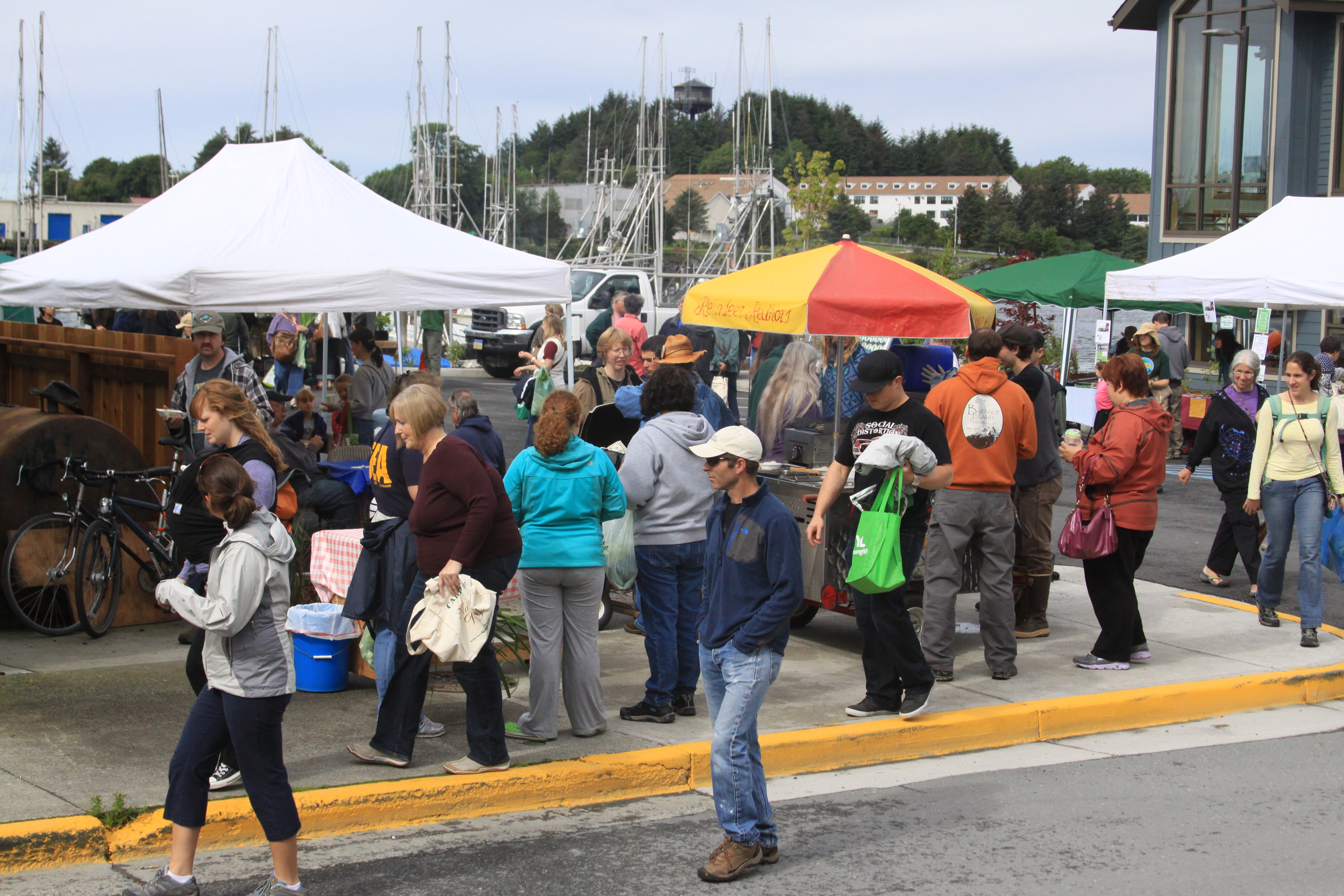
The Sitka Local Foods Network will host its fifth summer of Sitka Farmers Markets with six markets that start on July 7 and take place on alternate Saturdays through Sept. 15. The Sitka Farmers Markets give Sitka residents a chance to buy and sell locally produced food and crafts.
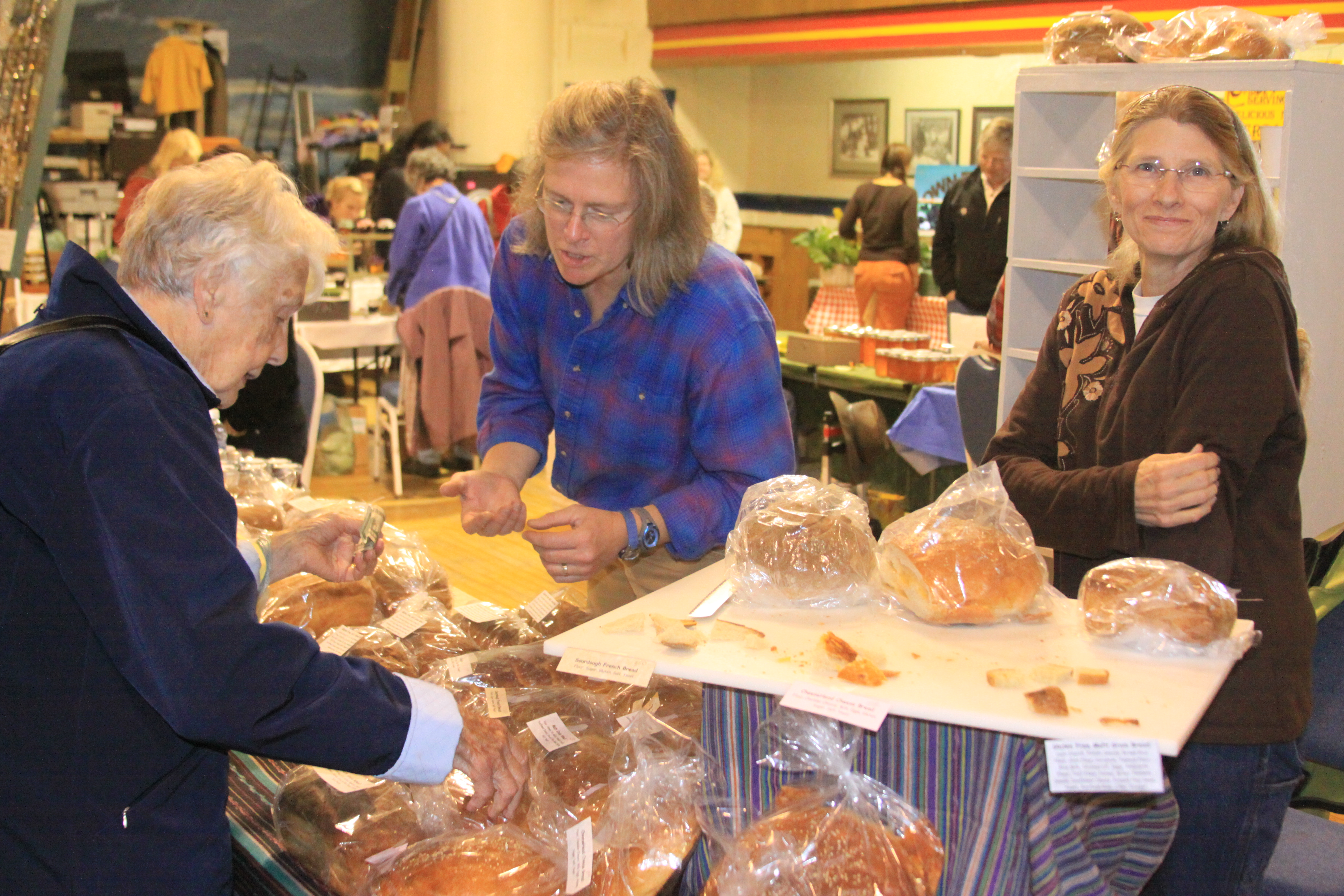
The Sitka Farmers Markets take place from 10 a.m. to 2 p.m. on Saturday, July 7, 21, Aug. 4, 18, Sept. 1 and Sept. 15 at the Alaska Native Brotherhood Hall (235 Katlian St.). The markets feature local seafood (fresh, frozen, and cooked, ready to eat), locally grown and harvested fruits and vegetables, baked bread, locally made jams and jellies, cooking demonstrations, live entertainment, locally brewed and roasted coffee, music, local arts and crafts, and a variety of other items gathered or made in Sitka. We emphasize local products and lots of fun. We are the first farmers market in Southeast Alaska to accept WIC coupons. You also can vote for the Sitka Farmers Market in the America’s Favorite Farmers Markets contest by following the links at http://www.sitkalocalfoodsnetwork.org/.
“The Sitka Farmers Market is like a carnival every other Saturday,” Sitka Local Foods Network Board President Kerry MacLane said. “It’s a fun community space to enjoy with your family or to meet your friends for fresh coffee and baked goods. There is live music, cooking demonstrations, art, and, of course, fresh veggies, fruit and seafood.”
The Sitka Farmers Market started as a community project that came out of a health priority planning meeting at the 2008 Sitka Health Summit. This event is sponsored by the Sitka Local Foods Network, Alaska Native Brotherhood Camp No. 1, Alaska Native Sisterhood Camp No. 4, Baranof Island Housing Authority, Sitka Conservation Society, the Alaska Farmers Market Association and the SEARHC Health Promotion and Diabetes Prevention programs.
“Thanks to our creative and enthusiastic vendors, the Sitka Farmers Market will be celebrating its fifth successful year.” said Johanna Willingham, Sitka Local Foods Network Board Member and Sitka Farmers Market Coordinator. “We have delighted in watching our market grow over the years and due to popular demand we are beginning our market two weeks earlier this year. Outdoor vendors and musicians will still be able to enjoy the newly paved parking lot with landscaping, thanks to BIHA. A tent will be set up for outdoor dining where you can listen to live music and enjoy some great food. Some new items will be added to some familiar vendors’ tables — dried sea veggies, sea asparagus and sea salt. Look forward to fresh snap and snow peas for snacking, ready-to-eat salads, handmade tamales and, as always, fresh black cod tips.”
Vendor fees are $20 for a 6-foot table, $30 for an 8-foot table and $15 for a 4-foot table. Vendors with their own tents pay $2 per foot. As always, we offer cost incentives for vendors growing locally produced food. The fees will help us cover the costs of renting ANB Hall and its kitchen, hiring musicians and other expenses. To learn more about being a vendor or to sign up for a table, contact Sitka Farmers Market Coordinator Johanna Willingham at 738-8336 or by e-mail johanna.willingham@gmail.com. Vendor rules, registration forms and other information for potential vendors can be found at http://www.sitkalocalfoodsnetwork.org/.
The butter clam has one set of rings that go one direction only, around the same center point (Photo courtesy of Alaska Department of Environmental Conservation)
On Friday, June 22, the Alaska Department of Health and Social Services issued a paralytic shellfish poisoning (PSP) warning for Southeast Alaska shellfish. Please be aware that there have been several PSP blooms in recent years, and the PSP toxin has sent several people to the hospital and even resulted in a couple of deaths.
The state in general does not recommend the recreational or subsistence harvest of shellfish (in particular filter-feeding bi-valves such as clams, cockles, oysters, mussels and others) from Alaska beaches because they are not checked for the PSP toxin. Commercial shellfish is tested for PSP and safe to eat. In addition to the links in the press release below, here is a link to more information about PSP from the SouthEast Alaska Regional Health Consortium (SEARHC), http://searhc.org/publications/featured_stories/2011_06_psp.php. Now here is the text of the release:
Scientists advise against harvesting shellfish due to large “red tide” in Southeast Alaska
State health officials remind public about risks
ANCHORAGE — Warm weather combined with an increasingly large algae bloom in Southeast Alaska has scientists advising extra caution to would-be recreational shellfish harvesters. Water samples taken from around Etolin Island show increasing levels of Alexandrium algae, which produces paralytic shellfish poisoning (PSP) in shellfish. Tests have also shown a slight increase in Alexandrium levels on the west coast of Prince of Wales Island as well as extremely high levels around Juneau.
The littleneck clam has two sets of rings that cross each other at 90 degree angles (Photo courtesy of Alaska Department of Environmental Conservation)
Scientists have also identified unsafe levels of three different species of Dinophysis algae, which produces diarrhetic shellfish poisoning (DSP), in samples from around Ketchikan. DSP can cause diarrhea, PSP can cause paralysis.
“These Alexandrium levels are similar to what we saw last year when we had such high levels of PSP toxins in shellfish,” said Kate Sullivan, with the University of Alaska Southeast and co-founder of the Alaska Harmful Algal Bloom Partnership (AHAB). “Last summer we had a number of cases, including four people who needed to be hospitalized. We want people to be extra cautious and remember that the only safe shellfish is the kind you buy at the store.”
A cockle has deep ridges similar to a Ruffles potato chip (Photo courtesy of Alaska Department of Environmental Conservation)
Early signs of paralytic shellfish poisoning often include tingling of the lips and tongue. Symptoms may progress to tingling of fingers and toes, then loss of control of arms and legs, followed by difficulty breathing. Death can result in as little as two hours.
All locally harvested shellfish — including clams, mussels, oysters, geoducks and scallops — can contain paralytic shellfish poison. Crabmeat is not known to contain the PSP toxin, but crab guts can contain unsafe levels of toxin and should be discarded. There is no way to tell if a beach is safe for harvesting by looking at it. Toxins can be present in large amounts even if the water looks clear. Also, the toxin can remain in shellfish long after the algae bloom is over. PSP cannot be cooked, cleaned or frozen out of shellfish. Commercially grown shellfish is tested and considered safe.
Paralytic shellfish poisoning is considered a public health emergency. Suspected cases must be reported immediately to the Section of Epidemiology by health care providers at 907-269-8000 during work hours or 800-478-0084 after hours.
The butter clam has one set of rings that go one direction only, around the same center point (Photo courtesy of Alaska Department of Environmental Conservation)
This past week, there were four suspected cases of paralytic shellfish poisoning (PSP) reported in Juneau. These four cases, combined with a couple of PSP cases in the Ketchikan/Metlakatla areas this winter and record-high levels of the PSP toxin found in shellfish last summer should serve as reminders that the state discourages eating recreationally and subsistence-harvested shellfish on most beaches in Alaska.
The first three PSP cases reported to the Alaska Section on Epidemiology last week involved clams harvested over the Easter weekend near Juneau — the first case reported April 10 involved razor clams from Admiralty Island and the next two cases reported April 12 involved butter clams from either Lincoln Island or Ralston Island. On April 13, another case was reported where a person ate pink neck clams (also known as surf clams) harvested from Shelter Island.
The littleneck clam has two sets of rings that cross each other at 90 degree angles (Photo courtesy of Alaska Department of Environmental Conservation)
In each case, the people who ate the clams experienced classic PSP toxin symptoms — tingling and numbness of the mouth and tongue that eventually can extend into the extremities and then the rest of the body. Once the toxin moves into the body, it can paralyze the heart and lungs, causing them to stop and leading to intensive care treatment and possibly death (PSP deaths were reported in Juneau and Haines in 2010). If people experience these symptoms, they should get to the hospital immediately because sometimes a hospital respirator can save a life.
PSP can cause severe health problems and even death, and there is no antidote. The toxin is not visible, and requires special testing to be detected. It can occur during any month of the year, and the toxin can remain in affected shellfish for as long as two years. There is no antidote to the toxin. PSP generally affects bivalves that filter food when they eat, such as clams, cockles, mussels, oysters or scallops. Crab meat does not carry the PSP toxin, but crab guts can have the toxin since crab eat bivalves.
A cockle has deep ridges similar to a Ruffles potato chip (Photo courtesy of Alaska Department of Environmental Conservation)
Southeast Alaska beaches, like most beaches in the state frequented by recreational and subsistence harvesters, are not tested by the state for the PSP toxin. The state does check commercially harvested shellfish for the toxin, but in recent months at least one commercial geoduck season was closed because of the toxin’s presence.
To learn more about PSP, here is an informational page created by the SouthEast Alaska Regional Health Consortium (SEARHC) after last year’s extremely high levels of PSP toxin were discovered. This page features information about how PSP is formed, what types of shellfish can carry the PSP toxin, basic first aid for PSP symptoms and more.
(EDITOR’S NOTE: The following article first appeared on this site in April 2010. It is repeated because much of the information remains current and newsworthy.)
As you start to plan your garden for this spring and summer, don’t forget to Plant A Row For The Hungry. The Plant A Row For The Hungry program (also known as Plant A Row or PAR) is a national campaign by the Garden Writers Association of America that got its start in Alaska.
In the cold winter of 1994, Anchorage Daily News garden columnist and former Garden Writers Association of America President Jeff Lowenfels was returning to his hotel after a Washington, D.C., event when he was approached by a homeless person who asked for some money to buy food. Lowenfels said Washington, D.C., had signs saying, “Don’t give money to panhandlers,” so he shook his head and kept on walking. But the man’s reply, “I really am homeless and I really am hungry. You can come with me and watch me eat,” stayed with Lowenfels for the rest of his trip.
Jeff Lowenfels
The encounter continued to bother Lowenfels, even as he was flying back to Anchorage. During the flight, Lowenfels came up with an idea when he started writing his weekly garden column (the longest continuously running garden column in the country, with no missed weeks since it started on Nov. 13, 1976). He asked his readers to plant one extra row in their gardens to grow food to donate to Bean’s Café, an Anchorage soup kitchen. The idea took off.
When Anchorage hosted the Garden Writers Association of America convention in 1995, Lowenfels took the GWAA members to Bean’s Café to learn about the Plant A Row For Bean’s Café program. The Garden Writers Association of America liked the idea, and it became the national Plant A Row For The Hungry campaign (also known as Plant A Row or PAR). In 2002, the Garden Writers Association Foundation was created as a national 501(c)(3) nonprofit to manage the Plant A Row For The Hungry program.
“I am not surprised by the growth of PAR,” Lowenfels wrote in an e-mail to the Sitka Local Foods Network. “It is now in all 50 states and across Canada and there are thousands of variations of the original program — from prison gardens for the hungry to botanical gardens donating their produce from public display gardens. This is because gardeners always share information and extra food, so the idea was a natural.”
It took five years for the program to reach its first million pounds of donated food, but the second million only took two years and the next eight years saw a million pounds of donated food (or more) each year. Since 1995, more than 14 million pounds of food have been donated. Not only that, the program is getting ready to expand overseas to Australia, England and other countries with avid gardeners.
“We have supplied something in the vicinity of enough food for 50 million meals,” Lowenfels wrote in his e-mail. “Gardeners can solve this hunger problem without the government. And we don’t need a tea party to do it! Or chemicals, I might add, as author of a book on organic gardening (Teaming With Microbes, written with Wayne Lewis)!”
According to the U.S. Department of Agriculture, one out of every eight U.S. households experiences hunger or the risk of hunger. Many people skip meals or eat too little, sometimes going an entire day or more without food. About 33 million Americans, including 13 million children, have substandard diets or must resort to seeking emergency food because they can’t always afford to buy the food they need. In recent years the demand for hunger assistance has increased 70 percent, and research shows that hundreds of children and adults are turned away from food banks each year because of lack of resources.
While many people credit Lowenfels for creating the Plant A Row For The Hungry program, Lowenfels says the real heroes are the gardeners growing the extra food and donating it to local soup kitchens, senior programs, schools, homeless shelters and neighbors. You can hear him pass along the credit to all gardeners at the end of this interview last year with an Oklahoma television station (video also embedded below).
“One row. That’s all it takes. No rules other than the food goes to the hungry. You pick the drop-off spot or just give it to a needy friend or neighbor. Nothing slips between the lip and the cup, I say,” Lowenfels wrote in his e-mail.
The Sitka Local Foods Network also takes donations of local produce to sell at the Sitka Farmers Markets, and all proceeds from the Sitka Farmers Markets are used to help pay for Sitka Local Foods Network projects geared toward helping more people in Sitka grow and harvest local food. For more information, contact Sitka Local Foods Network President Kerry MacLane (maclanekerry@yahoo.com), Sitka Local Foods Network Vice President Linda Wilson (lawilson87@hotmail.com) or Sitka Farmers Market Coordinator Johanna Willingham-Guevin (johanna.willingham@gmail.com).
Guest chef Robert Kinneen of Anchorage demonstrates a dish using scallops during the first Sitka Seafood Festival in 2010.
The first webisodes in the series are about the Store Outside Your Door, and they feature traditional foods Kinneen gathered around Sitka with Steve Johnson, a Tlingít elder-in-training from Sitka. Some of the webisodes featuring Sitka include a foraged salad, Alaskan fresh rolls, venison skewers and rockfish fumet. There is a Store Outside Your Door page on Facebook, as well as a channel on YouTubewhere people can find the webisodes.
Even though he currently lives and works in Anchorage, Kinneen is no stranger to Southeast Alaska. He is Tlingít and was born in Petersburg. Kinneen is a graduate of the Culinary School of America and has been a chef at several of Anchorage’s top restaurants over the years. He also has been a guest chef at the first two Sitka Seafood Festivals.
Dr. Ferguson, who is Aleut originally from Sand Point, is a Doctor of Naturopathy who earned his degree from the National College of Naturopathic Medicine. He has a special interest in diabetes treatment and prevention, which is one of the reasons Dr. Ferguson and Kinneen got together to do the series. Research has shown that traditional diets can play a big role in diabetes prevention.
In the first webisodes, they also worked with health educator Renae Mathson of Sitka (Tlingít), who works with the SouthEast Alaska Regional Health Consortium (SEARHC) Diabetes and Health Promotion programs, and registered dietitian Desirée Simeon (Tlingít/Haida), who works with ANTHC. They currently are filming webisodes from other parts of Alaska, featuring traditional foods from those areas.
The vegetable garden is located on an unused patch of land on the lower part of SEARHC’s Sitka campus, between the employee fitness center and daycare facilities and across the street from the SEARHC Behavioral Health residential substance abuse treatment centers. The garden is being built with the blessings of the SEARHC Employee Wellness Team, SEARHC Green Team and SEARHC Facilities Management Department. The garden was initiated by SEARHC Grant Writer Kerry MacLane, who also is president of the Sitka Local Foods Network.
SEARHC employees are holding regular lunchtime work parties on Fridays, and employees who work in the garden will be eligible to share in the bounty when the produce is ready to harvest. The garden will be used to grow potatoes, onions, greens, herbs and edible flowers, among other items.
In his note about this Friday’s work party (May 7), MacLane wrote, “This will be a great opportunity to work out and get out any angst that you might be harboring. Come go crazy on the weeds. Aggressive behavior is encouraged. We are going to be digging up weeds, chopping down salmonberries, mixing in sand and compost, and forming two big raised beds.”
SEARHC Employee Wellness Team leaders Lisa Sadleir-Hart and Doug Osborne said a community garden for employees is something a lot of businesses in Sitka can build. A workplace community garden allows employees a chance to get physical activity and gives them the opportunity to add more locally grown vegetables to their diets. Other benefits of an employee garden include reduced stress and improved employee morale. Also, some employees may live in small apartments where they don’t have room for a garden.
To learn more about how you can start a similar employee garden project at your business, contact Kerry MacLane at 966-8839, Lisa Sadleir-Hart at 966-8735 or Doug Osborne at 966-8734.

 The Sitka Conservation Society and several other partners will host the Sitka Food Film Festival on Friday through Sunday, Feb. 22-24, at Harrigan Centennial Hall and the Larkspur Cafe. The films are free, but donations will be accepted to help cover costs.









 Sitka Local Foods Network
You must be logged in to post a comment.