Sitka Kitch to host rescheduled Cooking From Scratch class on soups, sauces and dressings

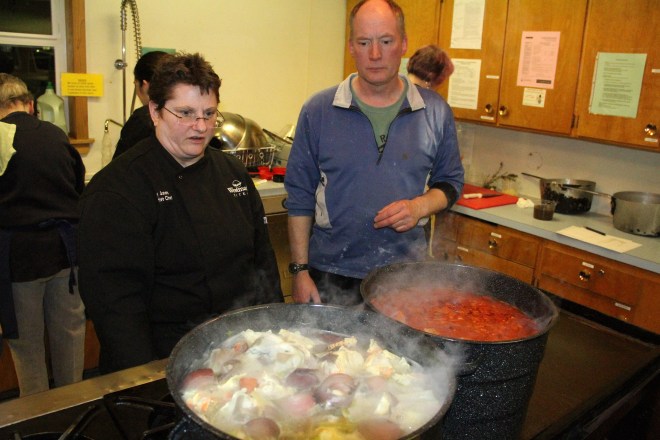
KathyAndPatWatchCrabStockAndTomatoSauceSimmer

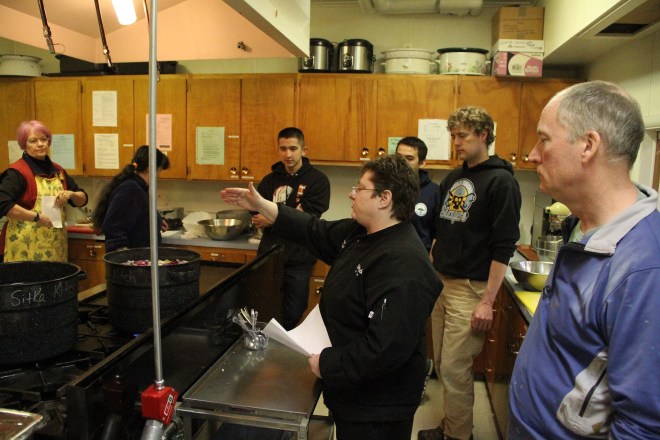
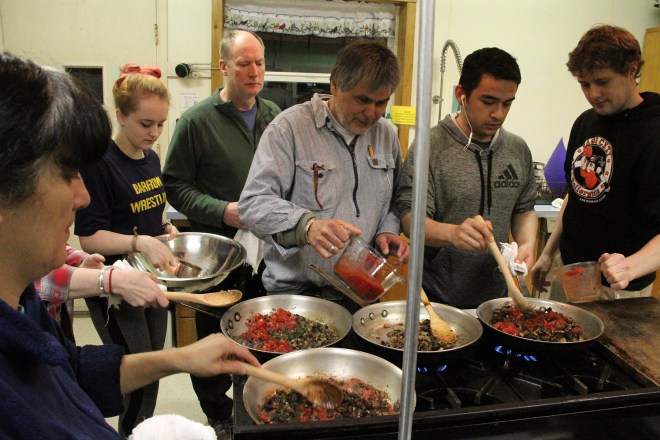
Chef Kathy Jones, left, and student Pat Hughes, watch pots boil during a recent Basic Culinary Skills class series during March 2016 at the Sitka Kitch.

kitch_logo_mainThe Sitka Kitch community rental commercial kitchen will host a rescheduled class on cooking soups, sauces and dressings from 6-8:30 p.m. on Monday, April 18, at the Sitka Kitch, which is located at the First Presbyterian Church (505 Sawmill Creek Road). This class originally was part of the Cooking From Scratch series in February, but had to be postponed.

This class will be taught by Kathy Jones, the executive chef at the Westmark Hotel and Totem Square Inn, with assistance from her sous chef Barbara Palacios. It is focused on preparing homemade sauces and dressings to help you lower your food costs and increase flavor.

The Sitka Kitch was a project of the 2013 Sitka Health Summit, and the project is coordinated by the Sitka Conservation Society in partnership with the Sitka Local Foods Network. The Sitka Kitch can be rented to teach cooking and food preservation classes, by local cottage food industry entrepreneurs who need a commercial kitchen to make their products, and for large groups needing a large kitchen for a community dinner. To learn more about how to rent the Sitka Kitch, please go to the website at http://www.sitkawild.org/sitka_kitch.

The cost of the class is $20, plus a food fee shared among the registered participants. Registration closes at noon on Saturday, April 16, so the instructor can purchase supplies. Please register online through our EventSmart website, but you will pay at the class with cash. For more information, email sitkakitch@sitkawild.org.

Alaska Growers School provides guidance for Native-run agriculture projects

AK-Growers-School-1

The University of Alaska Fairbanks Cooperative Extension Service is offering the Alaska Growers School this summer for Alaska Native-owned farms and ranches. This training is offered by webinar and is intended for Alaska Native tribes, Alaska Native corporations, or Alaska Natives who are currently farming or ranching or hope to start.

(Photo by Jeff Fay) Meriam Karlsson provides a tour of the greenhouse and hydroponic system near Pike's Waterfront Lodge.

(Photo by Jeff Fay for the UAF Cooperative Extension Service) Meriam Karlsson provides a tour of the greenhouse and hydroponic system near Pike’s Waterfront Lodge.

A total of nine lessons will be offered by webinar and teleconference from noon to 1:30 p.m. on Wednesdays, June 8 to Aug. 10. Those interested should register for CEPD F001 UX1 Alaska Growers School (CRN 51871). The cost of the course is $50, however tuition waivers are available. To apply for a waiver, first you must register, then you can complete the waiver (the link is available on the registration page).

This training is non-credit and will be taught by University of Alaska Fairbanks Cooperative Extension Service experts as well as experts from Arizona and Washington who are knowledgeable about Native American farming and ranching policies. This training is intended for Alaska Native tribes, Alaska Native corporations, or Alaska Natives who are currently or hope to start farming or ranching. Representatives or employees of Alaska Native owned corporations (regional or village) are also welcome to participate in the course. The course will address opportunities available to socially disadvantaged farmers and ranchers.

There are lots of reasons to think about starting a farm or ranch. With persistent, low oil prices, agriculture could be a diversification strategy. Starting a farm in a remote village could provide fresher, healthier food for a community as well as improved food security. It also could improve local economies by providing job opportunities and keeping more money in a particular community.

This class will provide the nuts and bolts of getting started farming or ranching in Alaska and will specifically address opportunities available to Alaska Native-owned farms and ranches who are considered socially disadvantaged by the USDA. We will showcase successful Alaska Native- and Native American-owned farms and discuss some of the most promising enterprises for Alaska, such as Rhodiola and peonies.

In the Summer 2016 Alaska Growers School, you will:

  • Learn about important considerations for starting or expanding a farm or ranch.
  • Consider opportunities to improve food security in remote Alaska Native villages
  • Learn about business mapping and how to choose a business structure
  • Establish your vision, goals, values, and strengths.
  • Assess your resources, skills, and motivations for farming.
  • Understand and learn how to manage the risks of starting or expanding a farm in remote Alaska.
  • Learn about other training opportunities, technical assistance, and resources.
  • Connect and learn with other Alaska Native and Native American growers.

The course will be offered using, Blackboard Collaborate.

Please contact the UAF Cooperative Extension Service for any questions about the Alaska Growers School.

This material is based upon work supported by the Office of Advocacy and Outreach, U.S. Department of Agriculture, under award # 59-2501-15-045. Any opinions, findings, conclusions, or recommendations expressed in this publication are those of the author(s) and do not necessarily reflect the views of the U.S. Department of Agriculture.

UAF Cooperative Extension Service to offer statewide online Alaska Master Gardener class

master_gardener

Are you interested in earning an Alaska Master Gardener certification? The University of Alaska Fairbanks Cooperative Extension Service is offering a statewide summer online Master Gardener class from May 23 through Aug. 12.

The Alaska Master Gardener online course is an intensive, sustainable gardening class specific to Alaska growing conditions. This is a non-credit, self-paced, online course offered through UAF eLearning using Blackboard Learn. The course fee is $375. Register here for the Summer 2016 Alaska Master Gardener online course — Course Number: ED F595P (50942) or NRM F595P (51014), choose either one when registering.

This curriculum for this online course includes lessons on botany, starting plants, soil, composting, season extension, greenhouses, landscaping, house plants, entomology, pest management, plant disease diagnostics and sustainable gardening. The course also covers growing vegetables, fruits, berries and flowers. The text for the course is Sustainable Gardening: Alaska Master Gardener Manual, which can be purchased for $50 a copy from this link. The text is optional for the course, but it is a good resource for any Alaska gardener even if you’re not taking the course.

Students complete 12 self-paced lessons and quizzes, a book report, participate in ongoing discussions, and complete a final exam. On average, the course takes students approximately three hours per week to complete. The course is pass/fail and the summer course is not for credit.

In addition to the coursework, students also pledge to volunteer at least 40 hours teaching what they’ve learned in their communities. Examples of how students can volunteer include helping with local school garden programs or 4H clubs, working with local foods groups, writing gardening blogs, and more.

The classroom-based Alaska Master Gardener course hasn’t been offered in Sitka for about three years, so the statewide online course is the only way Sitka gardeners can obtain the training until a new Cooperative Extension Service agent is hired in Sitka. Gardeners from Sitka can contact Jasmine Shaw at the Sitka District Office of the UAF Cooperative Extension Service (jdshaw2@alaska.edu or 747-9440) to see if there will be a local classroom at the University of Alaska Southeast Sitka Campus for the online course, otherwise they will need to take it from home.

For more information about the statewide online Alaska Master Gardener course, contact instructor Heidi Rader in Fairbanks at 907-452-8251, Ext. 3477, or by email at master.gardener@alaska.edu

Scenes from the fourth Basic Culinary Skills class at the Sitka Kitch

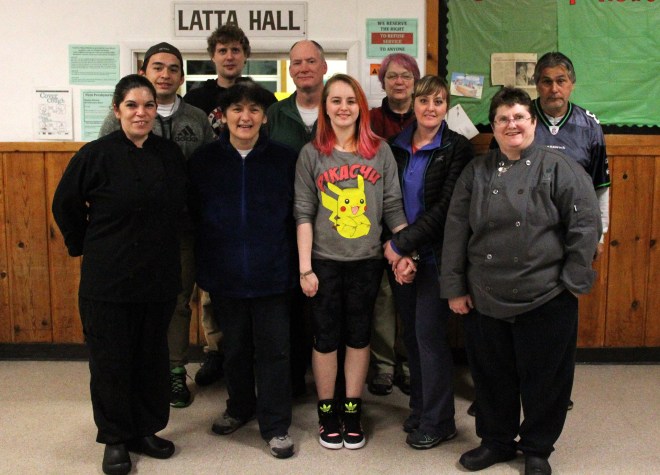
GroupPhotoWithoutFlash

kitch_logo_mainStudents made rockfish in parchment paper, chicken piccata and fettucine with a Thai peanut sauce March 28 during the fourth of four Basic Culinary Skills classes offered on Mondays in March at the Sitka Kitch community rental commercial kitchen.

The class series is designed to help people gain the kitchen skills they need for restaurant jobs, but many of the students are taking the series to improve their home kitchen chops.

These classes are taught by Kathy Jones, executive chef at the Westmark Sitka Hotel and the Totem Square Inn, with assistance by her sous chef, Barbara Palacios. The classes are modeled after a similar basic culinary skills program Chef Kathy knows from Indianapolis offered by a food relief nonprofit called Second Helpings.

KathyMarksYvonnesRockfishInParchmentIn the first class (March 7) the students worked on chopping skills, and also learned about basic kitchen sanitation and a variety of kitchen tools. The second class (March 14) featured basic cooking techniques, basic nutrition, and sauces, soups and stocks Part 1 (making a cucumber raita, mushroom ragout, and a Caesar dressing).

The third class on March 21 focused on sauces, soups and stocks Part 2, salads, and measurements. The fourth class on March 28 focused on poultry, meats, and the Alaska Department of Environmental Conservation (DEC) safe food handler’s card.

KathyDiscussesHowToCookChickenThe Basic Culinary Skills class series is supported by a grant from the Northwest Farm Credit Services rural community grant program.

The Sitka Kitch was a project of the 2013 Sitka Health Summit, and the project is coordinated by the Sitka Conservation Society in partnership with the Sitka Local Foods Network. The Sitka Kitch can be rented to teach cooking and food preservation classes, by local cottage food industry entrepreneurs who need a commercial kitchen to make their products, and for large groups needing a large kitchen for a community dinner. To learn more about how to rent the Sitka Kitch, please go to the website at http://www.sitkawild.org/sitka_kitch.

For more information about the Sitka Kitch and the classes, please email sitkakitch@sitkawild.org. You also can go to our class registration page at https://sitkakitch.eventsmart.com/ to see all of the available classes (click on the class titles to register). We should announce some new classes in the next week or two, so watch the site.

A slideshow of scenes from the fourth class of the series can be found below.

This slideshow requires JavaScript.

Check out the April 2016 edition of the Sitka Local Foods Network newsletter

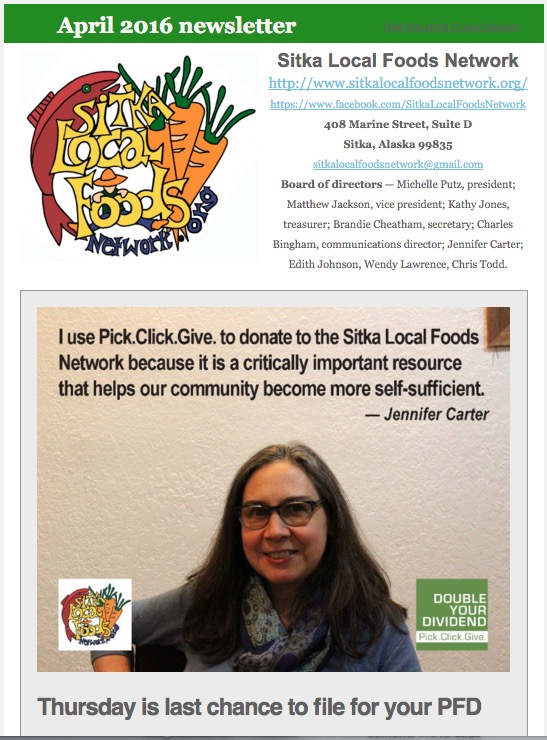
April2016SLFNNewsletterScreenshot

The Sitka Local Foods Network just sent out the April 2016 edition of its newly launched monthly newsletter. Feel free to click this link to get a copy.

This edition of the newsletter has brief stories about how you can donate to the Sitka Local Foods Network through the 2016 Pick.Click.Give. donation program through the Alaska Permanent Fund Dividend application (don’t forget the PFD filing deadline is March 31), a March 29 meeting to discuss changes to the Sitka Farmers Market, and an abundance of education opportunities this spring. Each story has links to our website for more information.

You can sign up for future editions of our newsletter by clicking on the registration form image in the right column of our website and filling in the information. If you received a copy but didn’t want one, there is a link at the bottom of the newsletter so you can unsubscribe. Our intention is to get the word out about upcoming events and not to spam people. We will protect your privacy by not sharing our email list with others.

Chuck Miller to discuss traditional Tlingít herring roe and intertidal food harvesting on Saturday

DD - Special Event, StoryTelling

In a special Discovery Day event for the Sitka Herring Festival, Chuck Miller will lead the program, “Storytelling and Sharing: Traditional Tlingít Herring Roe and Intertidal Food Harvesting,” from 10 a.m. to noon on Saturday, March 26, at the Sitka Sound Science Center.

Miller is the youth program coordinator for the Sitka Tribe of Alaska, and he will captivate you with his personable way of sharing Tlingít wisdom through stories and conversation. He will share two different one-hour interactive programs about the important animals in Tlingít culture, such as ravens and salmon.

At 10 a.m., Miller will share a story followed by an activity about the bounty of food that can be found right out our back door. At 11 a.m., he will tell another story and share about the traditional method of harvesting herring eggs (roe).

The free Discovery Days education program is for Sitka Sound Science Center annual pass holders and takes place on various Saturdays (usually alternate Saturdays). This is a family event and open to learners of all ages. Annual passes are sold at the door and run $90 for families and $30 for individuals for the full year.

For more information, contact Kristina Tirman at the Sitka Sound Science Center at 747-8878, Ext. 1.

Scenes from the third Basic Culinary Skills class at the Sitka Kitch

KathyDiscussesMakingItalianTomatoSauce

kitch_logo_mainStudents made crab stock, Italian tomato sauce, a balsamic vinaigrette, and an alfredo sauce March 21 during the third of four Basic Culinary Skills classes offered on Mondays in March at the Sitka Kitch community rental commercial kitchen.

The class series is designed to help people gain the kitchen skills they need for restaurant jobs, but many of the students are taking the series to improve their home kitchen chops.

These classes are taught by Kathy Jones, executive chef at the Westmark Sitka Hotel and the Totem Square Inn, with assistance by her sous chef, Barbara Palacios. The classes are modeled after a similar basic culinary skills program Chef Kathy knows from Indianapolis offered by a food relief nonprofit called Second Helpings.

In the first class (March 7) the students worked on chopping skills, and also learned about basic kitchen sanitation and a variety of kitchen tools. The second class (March 14) featured basic cooking techniques, basic nutrition, and sauces, soups and stocks Part 1 (making a cucumber raita, mushroom ragout, and a Caesar dressing).

KeetAddsTomatoPasteToSauceThe third class on March 21 focused on sauces, soups and stocks Part 2, salads, and measurements. The fourth class on March 28 will focus on poultry, meats, and the Alaska Department of Environmental Conservation (DEC) safe food handler’s card.

The classes take place from 6-8:30 p.m. on each Monday in March (March 7, 14, 21, and 28) at the Sitka Kitch, which is located inside the First Presbyterian Church (505 Sawmill Creek Road). The classes are full, with only wait-list spots available.

KathyUsesBigPaddleToStirTomatoSauceThe Basic Culinary Skills class series is supported by a grant from the Northwest Farm Credit Services rural community grant program.

The Sitka Kitch was a project of the 2013 Sitka Health Summit, and the project is coordinated by the Sitka Conservation Society in partnership with the Sitka Local Foods Network. The Sitka Kitch can be rented to teach cooking and food preservation classes, by local cottage food industry entrepreneurs who need a commercial kitchen to make their products, and for large groups needing a large kitchen for a community dinner. To learn more about how to rent the Sitka Kitch, please go to the website at http://www.sitkawild.org/sitka_kitch.

For more information about the Sitka Kitch and the classes, please email sitkakitch@sitkawild.org. You also can go to our class registration page at https://sitkakitch.eventsmart.com/ to see all of the available classes (click on the class titles to register).

A slideshow of scenes from the third class of the series can be found below.

This slideshow requires JavaScript.

Scenes from the second Basic Culinary Skills class at the Sitka Kitch

StudentsAddTomatoesToMushrooms

kitch_logo_mainStudents made cucumber raita, mushroom ragout, and a Caesar dressing during the second of four Basic Culinary Skills classes offered on Mondays in March at the Sitka Kitch community rental commercial kitchen.

The class series is designed to help people gain the kitchen skills they need for restaurant jobs, but many of the students are taking the series to improve their home kitchen chops.

These classes are taught by Kathy Jones, executive chef at the Westmark Sitka Hotel and the Totem Square Inn, with assistance by her sous chef, Barbara Palacios. The classes are modeled after a similar basic culinary skills program Chef Kathy knows from Indianapolis offered by a food relief nonprofit called Second Helpings.

In the first class the students worked on chopping skills, and also learned about basic kitchen sanitation and a variety of kitchen tools. The second class featured basic cooking techniques, basic nutrition, and sauces, soups and stocks Part 1. The cucumber raita is a sauce used in Indian dishes to cool spicy dishes, and it goes well with fish, vegetables and can be used as a dip. The mushroom ragout goes well with game meat (venison, goat, lamb, etc.).

The third class on March 21 will focus on sauces, soups and stocks Part 2, salads, and measurements. The fourth class on March 28 will focus on poultry, meats, and the Alaska Department of Environmental Conservation (DEC) safe food handler’s card.

KathyShowsPatHowToDiceGarlicThe classes take place from 6-8:30 p.m. on each Monday in March (March 7, 14, 21, and 28) at the Sitka Kitch, which is located inside the First Presbyterian Church (505 Sawmill Creek Road). The classes are full, with only wait-list spots available.

The Basic Culinary Skills class series is supported by a grant from the Northwest Farm Credit Services rural community grant program.

The Sitka Kitch was a project of the 2013 Sitka Health Summit, and the project is coordinated by the Sitka Conservation Society in partnership with the Sitka Local Foods Network. The Sitka Kitch can be rented to teach cooking and food preservation classes, by local cottage food industry entrepreneurs who need a commercial kitchen to make their products, and for large groups needing a large kitchen for a community dinner. To learn more about how to rent the Sitka Kitch, please go to the website at http://www.sitkawild.org/sitka_kitch.

For more information about the Sitka Kitch and the classes, please email sitkakitch@sitkawild.org. You also can go to our class registration page at https://sitkakitch.eventsmart.com/ to see all of the available classes (click on the class titles to register).

A slideshow of scenes from the second class of the series can be found below.

This slideshow requires JavaScript.


Did you file for your PFD yet? Add a Pick.Click.Give. donation to the Sitka Local Foods Network

PCGTestemonialJenniferCarter2016

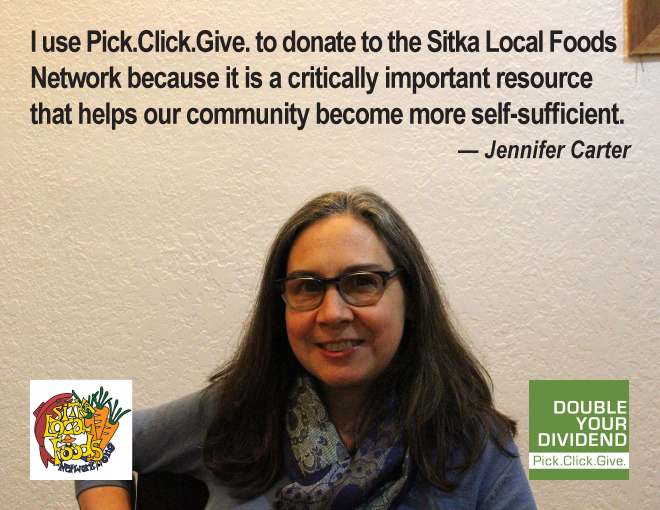
It’s mid-March, which means the deadline is rapidly approaching to file for Alaskans to apply for their 2016 Alaska Permanent Fund Dividends. As usual, Alaskans can share their wealth with a variety of Alaska nonprofits, including the Sitka Local Foods Network, through the PFD’s Pick.Click.Give. charitable giving program.

PCGTestemonialLisaAndMurielSadleirHart2016This is the third year the Sitka Local Foods Network is participating in the Pick.Click.Give. program, which allows people to donate in $25 increments to their favorite statewide and local 501(c)(3) nonprofit organizations when they file their PFD applications from Jan. 1 through March 31. We thank the 64 donors who pledged $3,350 to the Sitka Local Foods Network in 2015, and we appreciate your support again in 2016.

When you choose to donate part of your PFD to the Sitka Local Foods Network, you support the Sitka Farmers Market, St. Peter’s Fellowship Farm, education programs about growing and preserving food, the Sitka Kitch community rental commercial kitchen, Blatchley Community Gardens, the sustainable use of traditional foods, the Sitka Community Food Assessment, the Sitka Food Summit, and a variety of other projects designed to increase access to healthy local foods in Sitka.

PCGTestemonialEllenFrankenstein2016In 2015 a record 33,421 Alaskans made 53,851 pledges of $3,329,575 to their favorite nonprofit organizations, up from $545,000 donated by 5,175 people in the program’s first year of 2009. Some Alaskans choose to donate to just one group, while others may spread several donations around to many groups. There now are more than 500 total 501(c)(3) nonprofit organizations participating in Pick.Click.Give. for 2016 (including multi-location nonprofits), including 24 from Sitka.

PCGTestemonialLindaWilson2016To encourage more Alaskans to donate through the Pick.Click.Give. program, this will be the second year of the Double Your Dividend contest. Anybody who makes a non-anonymous Pick.Click.Give. donation to at least one of the registered nonprofits will be entered into a contest where 10 lucky Alaskans will win a second PFD check. The winners will be announced in October, about the time the PFDs start hitting bank accounts.

PCGTestemonialCharlesBingham2016So how do you make a donation to the Sitka Local Foods Network through the Pick.Click.Give. program? First, go fill out your Alaska Permanent Fund Dividend application at http://pfd.alaska.gov/. When you get to the section of the application asking if you want to participate in Pick.Click.Give. Charitable Contributions program, click on the PCG link and search for the Sitka Local Foods Network. You also can look for us by using the town search for Sitka.

The Pick.Click.Give. program is available only to people who file their PFD applications online, and not to those who file by mail. Even though you can’t file a new PFD application after March 31, you can go back into your application and update your Pick.Click.Give. donations through Aug. 31 each year.
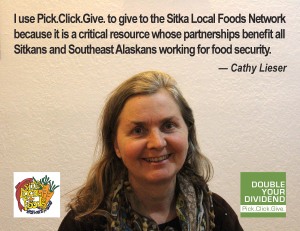
PCGTestemonialCathyLieser2016You still can donate to the Sitka Local Foods Network if you aren’t from Alaska or aren’t eligible for a 2016 PFD. To donate, send your check to the Sitka Local Foods Network, 408D Marine St., Sitka, Alaska, 99835. You also can donate online by going to our online fundraising page on Razoo.com, and clicking the Donate button to make an online contribution. Please let us know if you need a receipt for tax purposes. For more information about donating, you can send an email to sitkalocalfoodsnetwork@gmail.com.

Thank you for supporting our mission of promoting and encouraging the growing, harvesting and eating of local foods in Sitka and Southeast Alaska.

2016PickClickGiveFlier

UAF Cooperative Extension Service offers Certified Food Protection Manager class by videoconference May 5 in Sitka

CFPM flyer 5-5-16

Monday, April 18, is the registration deadline for a certified food protection manager workshop being taught on Thursday, May 5, by University of Alaska Fairbanks Cooperative Extension Service. This is an all-day statewide class that will be offered by videoconferencing to Fairbanks, Palmer, Haines, King Salmon and Sitka. The next class available for Sitka participation won’t be until this fall or winter.

A certified food protection manager (CFPM) is responsible for monitoring and managing all food establishment operations to ensure that the facility is operating in compliance with food establishment regulations.

A CFPM is knowledgeable about food safety practices and uses this knowledge to provide consumers with safe food, protect public health and prevent food-borne illnesses. Alaska regulations require food establishments to have at least one CFPM on staff.

This course takes place from 8:30 a.m. to 5 p.m. (with a half-hour lunch), and participants will take a computer-based exam at the end of the class. The reason the deadline is two weeks before the class is to guarantee course materials reach all the students in time for the class. The cost is $200, and the course will be taught by Julie Cascio of Palmer. Students can register here.

The Sitka videoconference for the class will take place in Room 110 at the University of Alaska Southeast Sitka Campus. To learn more, contact Jasmine Shaw at the Sitka District Office of the UAF Cooperative Extension Service at 747-9440, or contact Kathy McDougall at (907) 474-2420 (Fairbanks number) or kmmcdougall@alaska.edu. Note, this class is taught in English but textbooks are available in Korean, Chinese and Spanish, just contact Kathy at least three weeks before the class.

Also, the ServSafe book ($70) and certification exam ($75) now are available online, if people want to order the book and study independently without taking the class. Just go to this website and purchase the book and exam items.