• USDA Natural Resources Conservation Service offers funding support program for high tunnels

picture8

The U.S. Department of Agriculture’s Natural Resources Conservation Service (NRCA) has revamped its cost-sharing program that enables qualifying landowners who produce food to build high tunnels.

High tunnels, also known as hoop houses or temporary greenhouses, extend the growing season so more food is produced before and after the traditional dates for growing stuff outdoors.

High tunnels are different than greenhouses in that they are passively heated by the sun, so they have lower energy costs than greenhouses. High tunnels are at least six-feet tall, and low tunnels aren’t eligible in this program. Food in high tunnels is planted either directly into the ground or in raised beds. To learn more about the USDA’s high tunnel program, click here (note, link is to FY2013 program information, there have been updates for FY2015 but no link was available). This link has frequently asked questions and answers about seasonal high tunnel systems for crops.
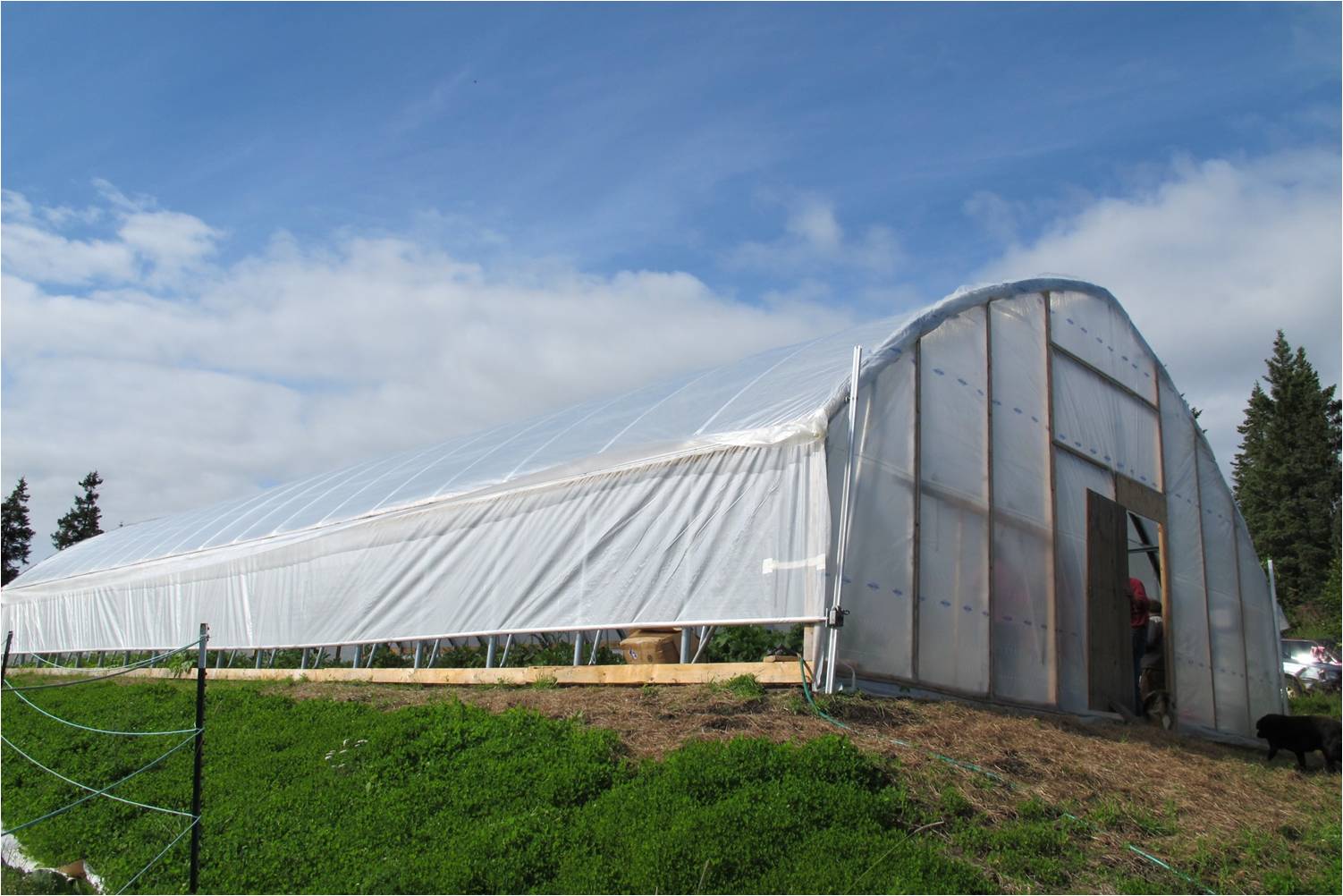
Picture10This program started a couple of years ago as a pilot program, but now is a permanent part of of the NRCS EQIP (Environmental Quality Incentive Programs). One major change is there now is no size restriction on the size of structures NRCS will provide cost-sharing funds (previously it was limited to up to 2,178 square feet, or 5 percent of one acre). Also, geodesic domes are now eligible. Both the land owner and land must meet certain eligibility requirements. Funding is provided on a reimbursable status once the high tunnel is installed and certified to meet NRCS standards. In previous years only a couple of Sitka residents have taken advantage of the program, but other areas of the state, such as Homer, have built dozens of high tunnels through the program.

For information regarding the NRCS technical service or program participation in Southeast Alaska, please contact Samia Savella at the Juneau field office at (907) 586-7220 or samia.savell@ak.usda.gov. Applications currently are being accepted for the 2015 fiscal year (Oct. 1, 2014, to Sept. 30, 2015) and applications must be received at the Juneau field office on or before June 15, 2014. Click here for a link to the Alaska NRCS page.

• High Tunnel Fact Sheet March 2014

• Flier about Southeast Alaska cost-sharing program March 2014
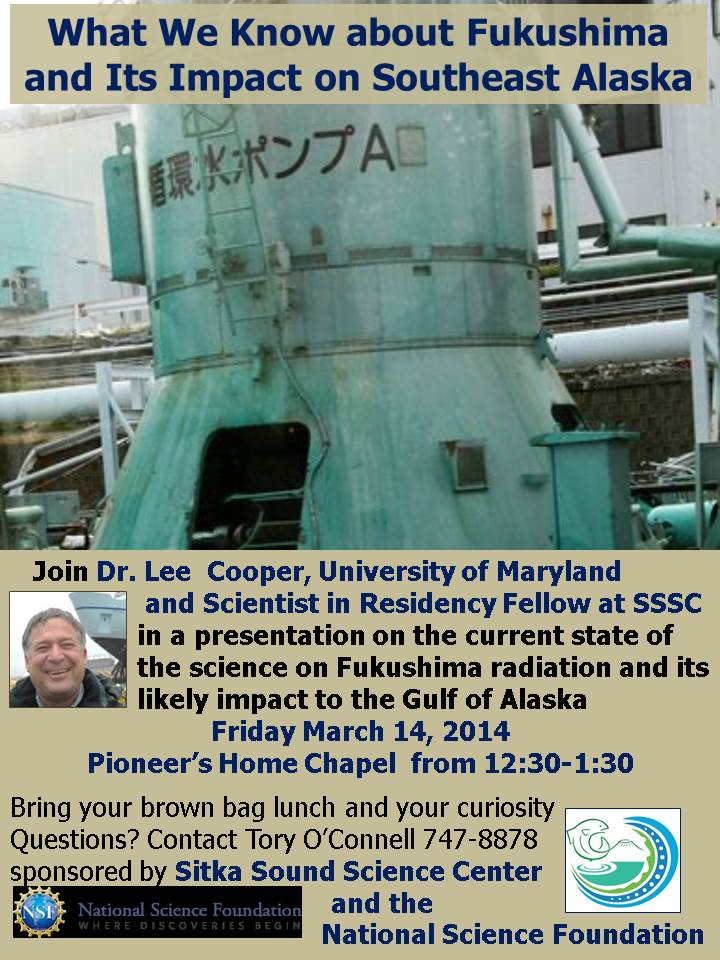
• Sitka Sound Science Center presentation will shed light on impacts of Fukushima radiation in the Pacific Ocean

cooperFukushima

People living along the Pacific Coast, including in Sitka and Southeast Alaska, have been wondering about the impacts of radiation in the food supply ever since the March 2011 earthquake in Japan and Fukushima Dai-ichi nuclear power plant meltdown.

Dr. Lee Cooper of the University of Maryland, a Scientist in Residency Fellow at the Sitka Sound Science Center, will discuss the current state of the science on Fukushima radiation and its likely impact on the Gulf of Alaska during a brown-bag lunch presentation from 12:30-1:30 p.m. on Friday, March 14, at the Sitka Pioneer Home Chapel. Bring your lunch and questions to the presentation, which is sponsored by the Sitka Sound Science Center and the National Science Foundation.

According to the Sitka Sound Science Center:

It is projected that dissolved contaminants, particularly the radioactive isotopes of cesium, 137Cs and 134Cs from the Fukushima Dai-ichi Nuclear Power in Japan, will reach Southeast Alaska this year.  Because the amount of radiation released is uncertain and the accident site is still leaking to some extent, it is difficult to know exactly what the peak concentrations of radioactive cesium will be in local waters, but it is not likely to exceed levels that were observed during the bomb fallout era 40 to 50 years ago. Cesium is chemically very similar to potassium, which is a common ionic salt in seawater, so fortunately the concentration of cesium into the foodweb and into seafood harvested for food is comparatively modest.

Nevertheless, it is important to put into perspective the potential risks involved and communicate this to the public. This talk will summarize the newest scientific information that is available on the impacts of the accident, based upon a special session held in late February at the Ocean Science Meeting in Honolulu and attended by scientists studying Fukushima impacts, ranging from Japan and East Asia to the Woods Hole Oceanographic Institution.

For more information, contact Tory O’Connell at 747-8878.


• Sitka Local Foods Network building a pool of volunteers who can teach gardening

GreensInHoopHouseStPeters

Are you an experienced Sitka gardener willing to share some of your knowledge? The Sitka Local Foods Network needs you. The Sitka Local Foods Network is building a pool of volunteers who can teach gardening to local residents who might be new to growing local food.

We’re looking for people who can teach all aspects of gardening, such as how to build a raised garden bed, how to amend soil, how to choose seeds and plant starts for our climate, how to manage your garden once it’s planted, and more. To learn more about our education plans and our efforts to build a pool of teaching volunteers, please join us for a Sitka Local Foods Network education committee meeting from 5:30-7 p.m. on Monday, March 3, at Harrigan Centennial Hall.

While we encourage people who have completed the Master Gardener program to apply, you don’t have to be a Master Gardener for our list of teaching volunteers. Just send us a a note expressing your interest in teaching or helping with a class, what types of classes you’re comfortable teaching, and the best dates and times for teaching that class. Please list your prior experience with these skills (such as I’ve been growing my own garden in Sitka for 12 years).

In addition to skilled gardeners willing to teach basic gardening, we’re also looking for people who can teach Sitka residents how to gather seaweed and other beach greens, how to go berry picking, how to preserve and can food, how to field dress a deer, how to cook with some of the lesser-known veggies that grow in Sitka, and other local food skills. Also, please let us know if you can teach specialized classes, such as permaculture, hydroponics, square-foot gardening, container gardening, how to raise chickens, etc.

This spring our local University of Alaska Fairbanks Cooperative Extension Service agent is retiring, so we’re trying to build a pool of volunteers who can provide gardening education until the UAF Cooperative Extension Service can hire a replacement. We might be without a Sitka agent for a period of time, and when they hire a new agent they may rewrite the job description.

To join our pool of teaching volunteers, send your information to charleswbingham3@gmail.com. Please put SLFN Education in the subject line of your email. Please send us a note if you’re willing to teach at a later date and not just this spring or summer. We thank you for your support.

• How to weed through the conflicting information about Fukushima radiation and its impacts on Alaska waters

SalmonImage

Alaskans have been worried about their seafood ever since the March 2011 Fukushima earthquake and Japanese nuclear plant problems. It’s understandable that Alaskans are concerned about the safety of the seafood, seaweed and marine mammals in the area. But Alaskans also should note that most of the information posted on social marketing sites just isn’t true.

This NOAA map has been showing up on social media posts with a note that it shows the path of 300 tons of radioactive material entering the ocean each day. This map really shows the probable tsunami paths from the 2011 Tohoku earthquake.

FALSE IMAGE: TSUNAMI WAVES, NOT RADIATION: Many people have posted on social media that this NOAA map shows the path of 300 tons of radioactive material entering the ocean each day. This map really shows the probable tsunami wave heights from the 2011 Tohoku earthquake.

One of the biggest examples of false information usually is accompanied by an official-looking map from the National Oceanic and Atmospheric Administration (NOAA) and a note that each day the map shows 300 tons of radioactive material entering the water each day. The map is an official NOAA map, but it doesn’t show radiation. It actually shows the probable tsunami paths from the 2011 Tohoku earthquake. When in doubt, or even if not, don’t be afraid to consult one of the myth-debunker sites such as Snopes.com, which has the details on the real story behind this map.

The Sitka Local Foods Network has been following the situation since it happened, and we even posted an update in March 2012 in hopes of easing people’s worries (many of the links on this page have been updated). The Alaska Department of Health and Social Services also has a site with updates.

In recent weeks, Rep. Jonathan Kreiss-Tomkins (D-Sitka) did some research, interviewing Dr. Ken Buesseler of the Woods Hole Oceanographic Institution and one of the country’s top researchers on oceanographic radiation. Rep. Kreiss-Tomkins posted his findings in his Jan. 8 constituent newsletter, and that write-up also appeared in several Alaska publications such as the Alaska Dispatch.

010714_Fukushima-Radiation-GraphAlso in January, Alaska Department of Environmental Conservation Commissioner Larry Hartig gave an update to the Alaska Senate’s Natural Resources Committee about what it’s doing to track the radiation, and he said so far the DEC hasn’t seen anything to cause concern. The Ketchikan website Stories In The News also had a follow-up story that included information from Hartic’s testimony and an update from Buesseler, who announced the launch of a new “How Radioactive Is Our Ocean?” website to help crowd-source information about what’s happening along the 5,000-mile Pacific coastline.

Taking things a step further, in January a couple of Seattle media organizations — KPLU and the Seattle Times — ran stories about Seattle fish-broker Loki Fish Co. ran its own tests on Alaska seafood. After the testing, the folks at Loki Fish Co. decided Pacific salmon is safe to eat.

• Pacific High School receives national recognition for locally sourced school lunches

Pacific High freshman Oleana Valley makes lunch for her classmates as AmeriCorps volunteer Abby Long plans future recipes. (KCAW photo/Emily Forman)

Pacific High freshman Oleana Valley makes lunch for her classmates as AmeriCorps volunteer Abby Long plans future recipes. (KCAW photo/Emily Forman)

The Pacific High School lunch program, which recently received statewide recognition in the 2013 Alaska Farm To School Challenge, now is receiving national attention for its locally sourced school lunches.

The student lunches from the Sitka alternative high school recently were featured in an article in USA Today about what America’s school lunches look like.

They also were featured in a KCAW-Raven Radio story about the recent recognition. The KCAW article touched on how much the students gained by picking locally sourced ingredients from Sitka over box-packaged items to make their food.

• Seventh annual Sitka Health Summit helps celebrate a culture of wellness in Sitka

Layout 1

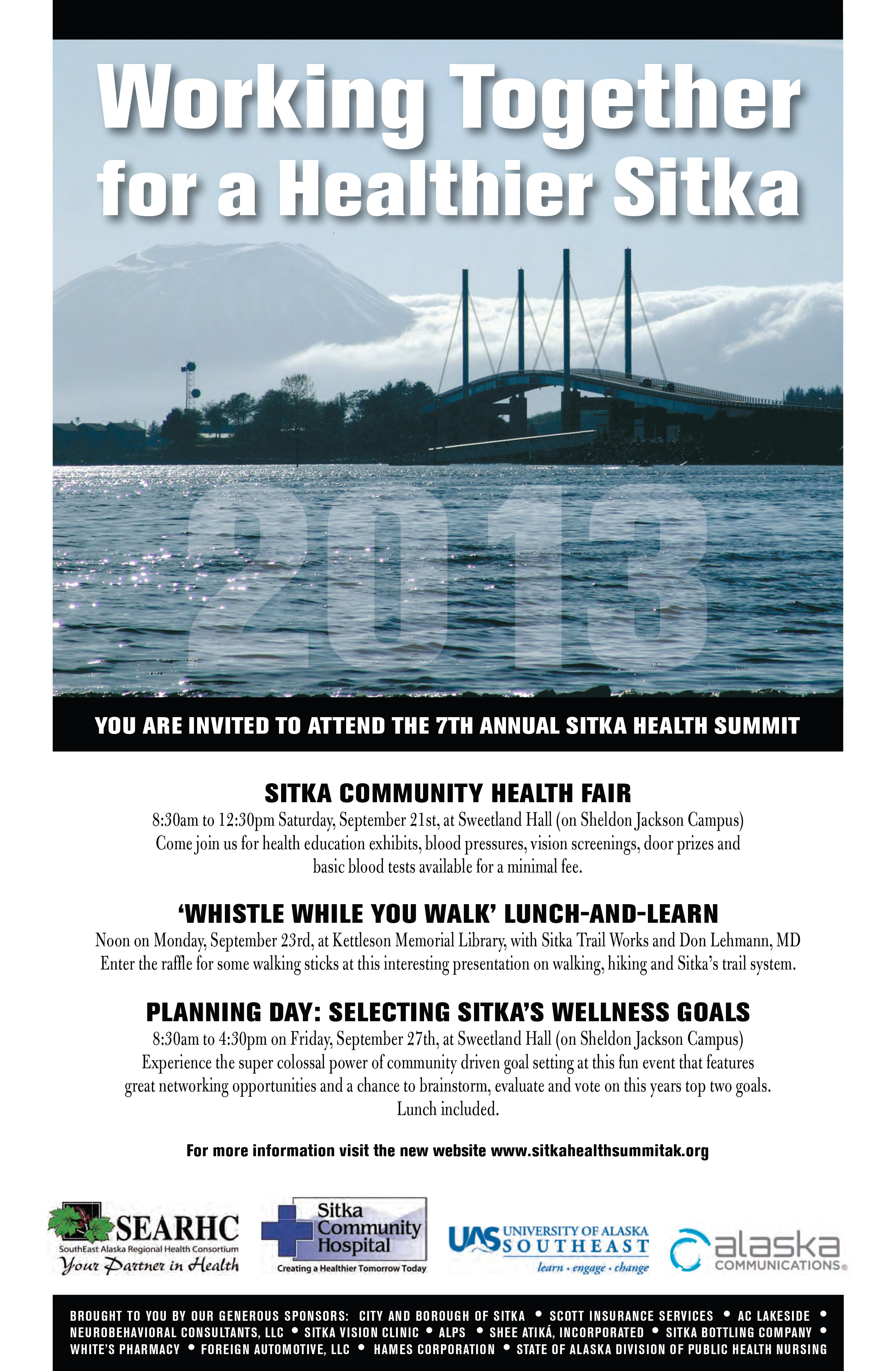
The seventh annual Sitka Health Summit is coming up, and this year’s event features health fair, lunch-and-learn, community planning day and community wellness awards.

This annual event got its start in 2007, when leaders from Sitka Community Hospital and the SouthEast Alaska Regional Health Consortium (SEARHC) got together to try and build bridges between their health organizations. Working with other partners, they created the Sitka Health Summit as a way to help improve the health culture in Sitka.

Summit_LogoThis year’s summit opens with the Sitka Community Health Fair, which takes place from 8:30 a.m. to 12:30 p.m. on Saturday, Sept. 21, at Sweetland Hall on the Sheldon Jackson Campus. This event features workers from the Alaska Health Fair Inc., who will provide a variety of medical tests such as cholesterol checks, glucose tests, vision screenings, flu shots, and more. It also includes informational booths from a variety of health-related programs in Sitka.

At noon on Monday, Sept. 23, at Kettleson Memorial Library will be a lunch-and-learn with Dr. Don Lehmann, a local physician and sports medicine specialist. He will give a brief talk called “Whistle While You Walk,” which will feature highlights about Sitka’s trail system. Participants can enter for a chance to win a set of walking sticks.

The “Community Planning Day: Selecting Sitka’s Wellness Goals” is from 8:30 a.m. to 4:30 p.m. on Friday, Sept. 27, at Sweetland Hall. This all-day event is when members of the community get together and select two community wellness projects to work on this year. The two projects will receive $1,500 in seed money, plus facilitation to help get the project going. Last year’s three winning projects included the Sitka Downtown Revitalization project, Walk Sitka‘s work in applying for a Walk Friendly Communities award, and the Sitka Community Food Assessment. Some of the top projects from previous years include the Sitka Bicycle Friendly Community award applications in 2008 and 2012, the Choose Respect mural at Blatchley Middle School to raise awareness about sexual and domestic violence, the Sitka Outdoor Recreation Coalition’s Get Out, Sitka! project to get more families and kids outdoors, supporting the Hames Athletic and Wellness Center as a community resource, etc. There also have been several projects related to local foods, such as creating a Sitka Farmers Market, expanding community gardens and building a community greenhouse, planting dozens of fruit trees around town, promoting more local fish in school lunches, community composting,, and more. The first 65 people to RSVP will receive a free lunch (contact Clara Gray at clara.gray@searhc.org).

Finally, this year’s Sitka Community Wellness Champion Awards will be presented as part of the Monthly Grind at 7 p.m. on Friday, Oct. 5, at the Sheet’ká Kwáan Naa Kahídi on Katlian Street. The awards are made in a variety of categories, such as physical fitness, nutrition, tobacco control and policy, holistic health, injury prevention, and general wellness.

For more information, call Doug Osborne at 966-8734 or go to the Sitka Health Summit’s website at http://www.sitkahealthsummitak.org/.

• Sitka Local Foods Network named Alaska’s lone finalist in 50 States for Good contest

50SfG_2013__logoTHIS

The Sitka Local Foods Network has been selected as the Alaska representative in the fifth annual 50 States for Good contest, where one representative nonprofit organization from each state and the District of Columbia compete for a chance to win $10,000 from Tom’s of Maine.

Supporters of the Sitka Local Foods Network can take part in a public vote to help the organization share in $150,000 total grants from Tom’s of Maine (15 awards of $10,000 each). Voting is simple, just go to http://www.50statesforgood.com/, and follow the instructions. People can vote once per day for one nonprofit finalist during the period from 8 a.m. Alaska time (noon Eastern) on Monday, Sept. 16, through 4 p.m. Alaska time (8 p.m. Eastern) on Tuesday, Oct. 15. A free Facebook account is required for voting, and people who do not already have an account can go to https://www.facebook.com/ to create one.

The 50 States for Good program was created to help uncover local nonprofit groups that address a variety of community needs and engage volunteers to get the work done. This year’s finalists offer a diverse range of community services, such as improving access to local foods, working with people who have autism, helping street teens, supporting the needs of low-income residents, providing food and hygiene products to the homeless, building playgrounds, and more.

The Sitka Local Foods Network works on a variety of food-oriented projects in Sitka, a community of 9,000 people on Baranof Island in Southeast Alaska. Even though there is no commercial agriculture on the island, the Sitka Local Foods Network created the Sitka Farmers Market, which sells produce grown at the organization’s St. Peter’s Fellowship Farm communal garden and from family backyard gardens. The Sitka Local Foods Network also is trying to build the Sitka Community Greenhouse and Education Center, which will be a commercial greenhouse providing local produce and bedding plants for residents, and an education center teaching local students about gardening. Education is another focus of the network, which hosts the annual Let’s Grow Sitka garden exhibition in March and brings nationally known speakers to town to teach about gardening, seeds and greenhouses.

“We are honored to be chosen to represent Alaska in the 50 States for Good competition,” said Lisa Sadleir-Hart, president of the Sitka Local Foods Network board of directors. “If we are successful, we hope to further food production in Sitka using a host of strategies, such as creating an additional community garden, offering seed money to the community greenhouse and education center working group, or helping the school district jump start a school-based garden program. An award of $10,000 from Tom’s of Maine can really help Sitka make strides in improving its local food system.”

The 51 finalists (one from each state plus the District of Columbia) were selected from a pool of about 1,100 nominated nonprofit organizations by an independent panel of judges that included Huffington Post columnist Lisa M. Dietlin, Cool People Care president Sam Davidson, assistant features editor covering social good for Mashable.com Matt Petronzio, and The Vampire Diaries star and nonprofit founder Ian Somerhalder.

“A desire to do more for a favorite can often be hindered by a lack of time to volunteer or the financial means to make a donation,” said Susan Dewhirst, goodness programs manager at Tom’s of Maine. “The 50 States for Good program makes it easy for anyone to have an impact and directly help organizations that are bringing goodness to communities in a variety of creative and inspiring ways.”

For several decades, Tom’s of Maine, a natural products company focused on oral and personal care products, has donated 10 percent of its profits back to the community and encourages its employees to use 5 percent (12 days) of their paid time off to volunteer every year. For more information, visit http://www.tomsofmaine.com/ or like the Facebook page at https://www.facebook.com/TomsofMaine. Voting information will be at both links.

To learn more about the Sitka Local Foods Network and some of its community projects, go to http://www.sitkalocalfoodsnetwork.org/ or like the organization’s new Facebook page at  https://www.facebook.com/SitkaLocalFoodsNetwork.

• Sitka shows off its gardens to International Master Garden Conference cruise

StartingGroupHike

InternationalMasterGardenersConferenceLogoSome 1,100 participants in the 2013 International Master Gardeners Conference were in Sitka on Wednesday, Sept. 11, when the Holland America Lines cruise ship Westerdam docked in town.

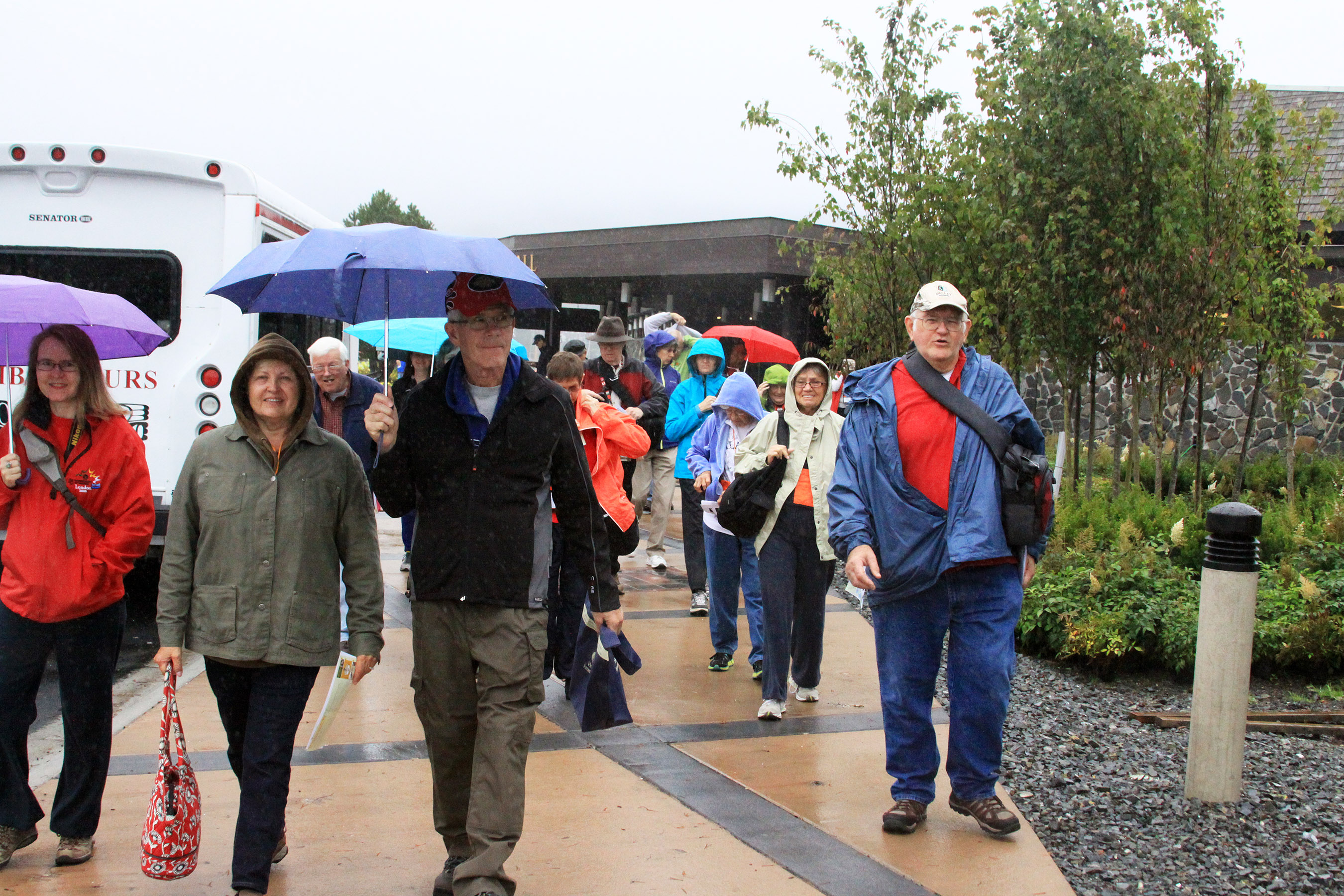
As part of the visit, the Sitka District office of the University of Alaska Fairbanks Cooperative Extension Service prepared a walking tour for the conference participants to show off local gardens and other highlights. The walking tour was a unique opportunity to showcase the challenges and methods used to garden in Sitka as well as interact with Master Gardeners from various locales. In addition to visiting Sitka, the Sept. 7-14 cruise took the conference from Seattle to Juneau, Glacier Bay, Sitka, Ketchikan, Victoria (British Columbia) and back to Seattle.

The Sitka walking tour started at Harrigan Centennial Hall and included a stop to look at apple trees by KCAW-Raven Radio, a stop at the Sitka Pioneer Home to look at the roses and other gardens, a stop at the Russian Bishop’s House (where kindergarten students from nearby Baranof Elementary School plant vegetables in the spring and harvest them in the fall when they return as first-graders). From there the walking tour went to St. Peter’s Fellowship Farm (where the Sitka Local Foods Network grows veggies to sell at the Sitka Farmers Markets), then it was on to the Sheldon Jackson Museum and on to Sitka National Historical Park. The final two stops were at a garden on the Sheldon Jackson Campus (between the Yaw Art Center and Hames Athletic and Wellness Center), and on to the US Geological Survey Geomagnetic Station and UAF Cooperative Extension Service demonstration plots (at the site of the original USDA Sitka Experimental Farm (Page 7), which was the first in Alaska and had more than 100 acres of crops from 1898-1931).

Also at Harrigan Centennial Hall, Sitka filmmaker Ellen Frankenstein hosted a couple of showings of her movie “Eating Alaska,” which examines the food choices one makes, especially when they live in Alaska where produce can be marginal but fish and game are widely available.

UAFMasterGardenerProgramLogoThe Master Gardener (MG) program started in Seattle in the 1970s as a way to extend the horticulture resources of Washington State’s land grant university  to the urban horticulture public in Seattle. The Master Gardeners receive 40 hours of training, similar to a basic three-credit-semester-hour, college-level horticulture class.

In return for this low-cost education the MG participants provide 40 hours of service to their community using Cooperative Extension information resources from their home states. The MG service may be in food gardening, pest management, youth gardening, tree and landscape care, public gardens, etc. Since the initial Seattle project, Master Gardener programs now exist in every state in the U.S., as well as Canada, Australia, New Zealand, and other countries. A Master Gardener course was taught in Sitka in April at the University of Alaska Southeast Sitka Campus.

• Sitka garden walking tour map for 2013 International Master Gardeners Conference

This slideshow requires JavaScript.

• Sitka gears up for cruise visit from International Master Gardeners Conference on Wednesday, Sept. 11

InternationalMasterGardenersConferenceLogoSitka will be host to 1,100 participants in the International Master Gardeners Conference when the Holland cruise ship Westerdam arrives in port on Wednesday, Sept. 11. The ship is due in port from 7 a.m. to 3 p.m.

Volunteers are needed to assist with local, non-commercial activities related to the conference‘s Sitka stop. Those who have completed a Master Gardener course are especially encouraged to participate. This is a unique opportunity to showcase the challenges and methods used to garden in Sitka as well as interact with Master Gardeners from various locales.

The Master Gardener (MG) program started in Seattle in the 1970s as a way to extend the horticulture resources of Washington State’s land grant university  to the urban horticulture public in Seattle. The Master Gardeners receive 40 hours of training, similar to a basic three-credit-semester-hour, college-level horticulture class.

In return for this low-cost education the MG participants provide 40 hours of service to their community using Cooperative Extension information resources. The MG service may be in food gardening, pest management, youth gardening, tree and landscape care, public gardens, etc. Since the initial Seattle project, Master Gardener programs now exist in every state in the U.S., as well as Canada, Australia, New Zealand, and other countries. A Master Gardener course was taught in Sitka in April

For more information or to sign up for a volunteer time slot, please contact the University of Alaska Fairbanks Cooperative Extension Service Sitka District office at 747-9440 .

• Scenes from the fifth Sitka Farmers Market of the 2013 summer

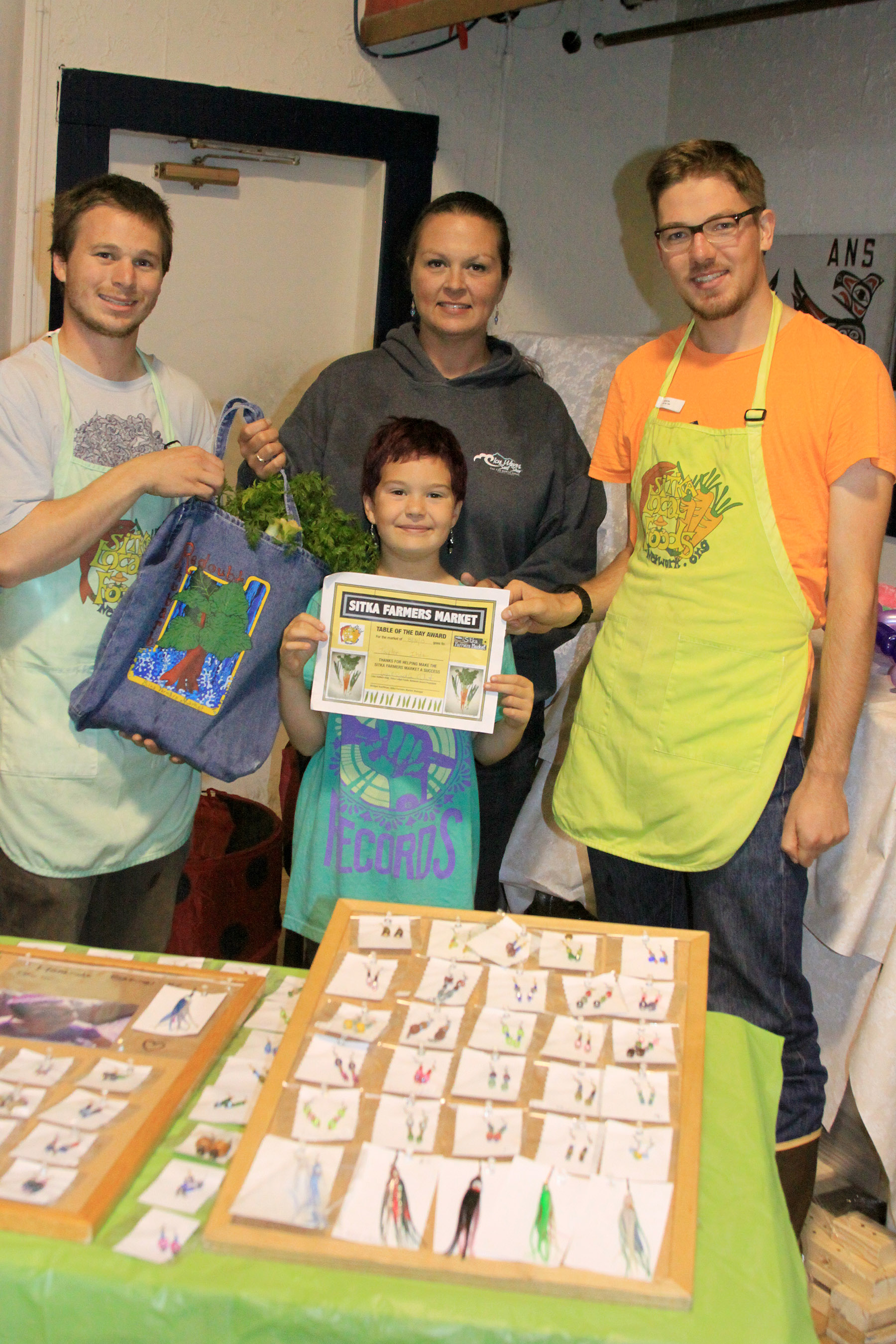
PHOTO COURTESY OF SITKA LOCAL FOODS NETWORK Sitka Farmers Market Interim Manager Garrett Bauer, left, and Co-Manager Francis Wegman-Lawless, right, present the Table Of The Day Award to Taylor Ihde, center front, (with Taylor's mother, Jennifer Ihde, center back), at the fifth market of the season on Saturday, Aug. 31, at the Alaska Native Brotherhood Founders Hall in Sitka. Taylor makes homemade earrings and other jewelry, which she has been selling at the Sitka Farmers Markets for a couple of years. She received a gift bag with fresh produce, fand a certificate and a copy of the Alaska Farmers Market Cookbook. This is the sixth year of Sitka Farmers Markets, hosted by the Sitka Local Foods Network. The sixth and final market of the season is from 10 a.m. to 1 p.m. on Saturday, Sept. 14, at the Alaska Native Brotherhood Founders Hall, 235 Katlian St. For more information about the Sitka Farmers Markets and Sitka Local Foods Network, go to http://www.sitkalocalfoodsnetwork.org/. Also, don't forget the Sitka Local Foods Network will host the annual Running of the Boots costumed fun run at 11 a.m. on Saturday, Sept. 28 (registration at 10 a.m. and costume contest at 10:30 a.m.), at Crescent Harbor Shelter. The Running of the Boots is a fundraiser for the Sitka Local Foods Network. Some late-season vegetables and other items will be for sale at this event.

PHOTO COURTESY OF SITKA LOCAL FOODS NETWORK
Sitka Farmers Market Interim Manager Garrett Bauer, left, and Co-Manager Francis Wegman-Lawless, right, present the Table Of The Day Award to Taylor Ihde, center front, (with Taylor’s mother, Jennifer Ihde, center back), at the fifth market of the season on Saturday, Aug. 31, at the Alaska Native Brotherhood Founders Hall in Sitka. Taylor makes homemade earrings and other jewelry, which she has been selling at the Sitka Farmers Markets for a couple of years. She received a gift bag with fresh produce, fand a certificate and a copy of the Alaska Farmers Market Cookbook. This is the sixth year of Sitka Farmers Markets, hosted by the Sitka Local Foods Network. The sixth and final market of the season is from 10 a.m. to 1 p.m. on Saturday, Sept. 14, at the Alaska Native Brotherhood Founders Hall, 235 Katlian St. For more information about the Sitka Farmers Markets and Sitka Local Foods Network, go to http://www.sitkalocalfoodsnetwork.org/. Also, don’t forget the Sitka Local Foods Network will host the annual Running of the Boots costumed fun run at 11 a.m. on Saturday, Sept. 28 (registration at 10 a.m. and costume contest at 10:30 a.m.), at Crescent Harbor Shelter. The Running of the Boots is a fundraiser for the Sitka Local Foods Network. Some late-season vegetables and other items will be for sale at this event.

SitkaFarmersMarketSignRain was the reality of the fifth Sitka Farmers Market of the summer, on Saturday, Aug. 31, at the Alaska Native Brotherhood Founders Hall (235 Katlian St.).

We had a decent crowd, despite the rain, though most people spent their time indoors sampling the wares of those booths.

The sixth and final Sitka Farmers Market of the season takes place from 10 a.m. to 1 p.m. on Saturday, Sept. 14, at ANB Founders Hall. A slideshow with scenes from the fifth market is below.

Also, don’t forget to mark your calendars for the 19th annual Running of the Boots, a costumed fun run that serves as a fundraiser for the Sitka Local Food Network. The Running of the Boots will be at 11 a.m. (registration at 10 a.m., costume contest about 10:30 a.m.) on Saturday, Sept. 28, at Crescent Harbor Shelter (there is an entry fee). Some late-season vegetables will be available for sale at this event. To learn more, watch this site for updates.

This slideshow requires JavaScript.