Building a Local Food System: Florence Welsh of Welsh Family Forget Me Not Gardens

IMG_0604 - Version 2

Florence Welsh and her Welsh Family Forget Me Not Gardens occasionally host a booth at the Sitka Farmers Market.

(Editor’s Note: The Sitka Local Foods Network’s Bulldog on Baranof intern this summer, Claire Chang, is writing the Building a Local Food System series of articles about Sitkans working to improve food security. This is the second article of the series.)

FlorenceWelshGoing on a tour of Florence Welsh’s Welsh Family Forget Me Not Garden is a magical experience. Raspberry bushes teem with succulent, red berries. Flowers of many shapes, sizes, and colors draw the eye in all directions. Sea kale yields abundant, hearty leaves, and the squash plants have begun to fruit. A cascade of pink roses hangs over the fence that surrounds fennel and artichoke beds. Rubbing one’s hand through the copious lemon balm or mint is a wonderful, sensory experience. The branches of elegant trees near the border of the garden abound with small, round apples. With a dehydrator, pressure cooker stand, and freezers literally overflowing with frozen berries, her garage indicates that her household makes use of the growing season’s bounty throughout the year

Raised in Weymouth, Mass., Welsh grew up exploring the seashore, swamp, and woods with her large family. She came to Sitka in 1965 and immediately fell in love with the unspoiled nature that she could experience here. For many years, she worked for the Sitka School District as a guidance counselor and as an administrator. During her summers off, she and her family hunted, fished, foraged, and spent lots of time in the garden. Welsh explained that though her family did not have a garden when she was growing up, she has “felt compelled to have at least a little bit of a vegetable garden” wherever she has lived since college.

Florence Welsh with copies of her Sitka gardening book

Florence Welsh with copies of the first edition of her Sitka gardening book

The prolific space that is now Florence Welsh’s garden did not emerge overnight. Her success as a gardener required years of trial and error. Gardening, Welsh explained, “is always place-specific, and the maritime Northwest is rainier and cooler than elsewhere.” Even compared to conditions in Seattle, gardeners in Sitka must adapt to a cooler, wetter climate. As she honed her gardening skills over the years, Welsh developed her place-specific gardening knowledge. For example, she came to understand how to improve soil fertility with seaweed and herring eggs and when to start and transplant various plants.

Forget-Me-Not-Gardens_Page_01Welsh’s desire to share her gardening knowledge inspired her to try to write a book for children and others in the Sitka community. She quickly realized, however, that the highly visual nature of gardening made it difficult for her to share her knowledge in a book. About a year and a half ago, Welsh decided to start a blog, SitkaVores, which allows her to incorporate photographs and format the gardening and foraging information. At sitkavores.blogspot.com, one can read about growing a wide variety of vegetables and flowers here in Sitka, as well as about foraged items like beach asparagus and berries. The blog also includes photos at various stages of the gardening process and recipe ideas. Welsh hopes to continue to add to the blog so she can share as much of her knowledge as she can. “I don’t want people to have to reinvent the wheel when it comes to gardening here,” she says.

SitkaVoresBlogScreenshotAs much as she enjoys working in the garden, what Welsh really loves is “getting out there” and experiencing the surroundings. She fondly remembers her and her family’s many hunting, scuba diving, fishing, and snorkeling adventures. The weather in Sitka, especially in fall and winter, can make it difficult to “get out there”, but Welsh explained that creativity helps people get through the periods spent indoors. In addition to working on her blog, Welsh personally enjoys reading and making artwork, such as drawings on bracket fungus, also called bear bread.
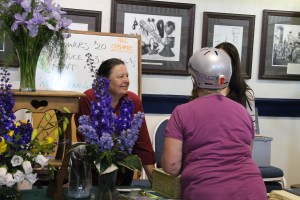
FlorenceWelshNow that she is getting older, Welsh explained that she is in the process of downsizing her garden. She will grow more perennial plants and cultivate fewer beds of vegetables. When her kids lived at home, they both helped out in the garden and ate a lot of the produce. Now, they are all grown, and Welsh “does not have the energy or endurance that she once had.” Still, her years of hard work have most certainly paid off. Not only does Florence Welsh have a beautiful, productive garden, but she has also helped many other gardeners get started her in Sitka. Without her commitment to sharing her hard-earned knowledge, many local gardeners would not have achieved the success that they have.

To learn more about Florence Welsh and the Welsh Family Forget Me Not Gardens, go to http://sitkavores.blogspot.com/.
Scenes from the second Sitka Farmers Market of the 2016 summer

HeatherAndAllisGardenAnnaWaneTamieParkerSongHeatherHanson

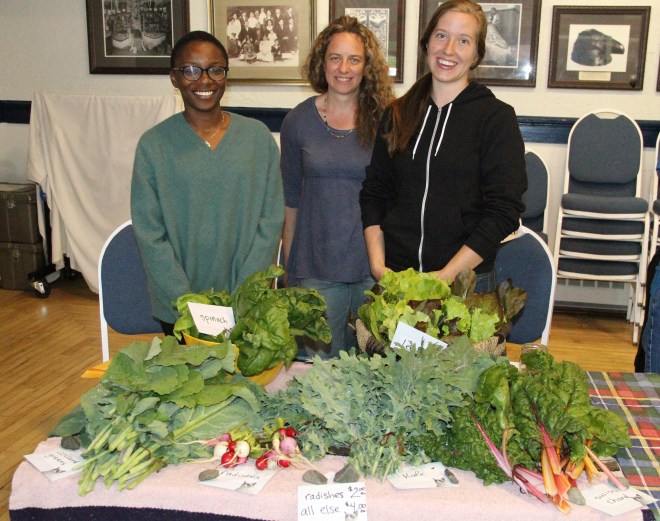
Anna Wane, Tamie Parker-Song and Heather Hanson pose with some of the produce from Heather’s and Alli’s Garden. This was one of the new booths at the market this week.

The wind was blustery, but it didn’t rain when we held the second of the seven Sitka Farmers Markets of the 2016 summer on Saturday, July 16, at the Alaska Native Brotherhood Founders Hall.

MiddleIslandOrganicProduceAndreaFragaKalebAldred

Andrea Fraga and Kaleb Aldred of Middle Island Organic Produce, another of the new booths at the market this week.

We had several new vendors at this market, but not as many customers as usual. We had four booths selling produce, two selling beach greens, another selling homemade bread, another with homemade tamales, and even some frybread.

We always welcome new vendors who want to sell produce they’ve grown, fish they’ve caught, and local cottage food products they’ve made. To learn more about how to be a vendor, contact Matthew Jackson at (907) 821-1412 or jackson.mw08@gmail.com or Brandie Cheatham at (907) 687-9927 or vista_brandie@yahoo.com.

SitkaSpruceCateringJerenSchmidtDishesUpHomemadeTamaleWithCrystal

Jeren Schmidt of Sitka Spruce Catering dishes up a homemade tamale for a customer.

The next Sitka Farmers Market will be from 10 a.m. to 1 p.m. on Saturday, July 30, at the ANB Founders Hall. The other markets this summer are on Saturdays, Aug. 13, Aug. 20, Sept. 3, and Sept. 10. The Sitka Farmers Markets receive sponsorship funding from the SouthEast Alaska Regional Health Consortium (SEARHC). Don’t forget to vote for the Sitka Farmers Market in the American Farmland Trust’s eighth annual Farmers Market Celebration.

A slideshow of scenes from the second Sitka Farmers Market of the 2016 summer is below.

This slideshow requires JavaScript.

Building a Local Food System: Keith Nyitray of Finn Island Farm and the Sitka Food Co-Op

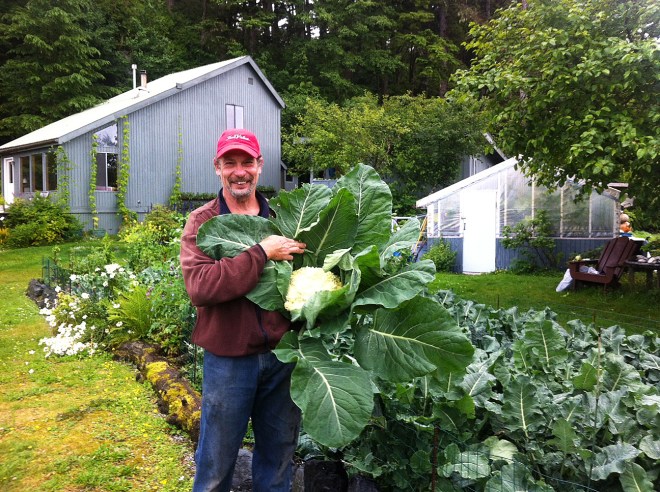
KeithNyitrayWithCabbage

(Editor’s Note: The Sitka Local Foods Network’s Bulldog on Baranof intern this summer, Claire Chang, is writing the Building a Local Food System series of articles about Sitkans working to improve food security. This is the first article of the series.)

As owner of Finn Island Farm and general manager of the Sitka Food Co-Op, Keith Nyitray is committed to improving access to quality, affordable food on a local level.

DSCN0863Born in the Bronx and raised on Long Island, Nyitray arrived in Alaska after college in 1979 to pursue mountaineering. He has had his fair share of rugged adventures, including a 10-month, 1,500 mile solo expedition across the Arctic Brooks Range that he wrote about for National Geographic in 1993. When he arrived in Sitka for the first time 17 years ago, the town’s “wonderful community” inspired him to stay.

Nyitray says he learned to garden “at his grandfather’s knees.” He operates his farm and lives on Finn Island, located three miles from Sitka in the Kasiana Islands. On about 2,000 square feet of garden space, he produces plant starts and vegetables, and he also maintains a greenhouse and raises chickens.

Compared to other gardens in Sitka, one of the biggest advantages of the farm’s location on an island is what Nyitray calls the “270 degrees of sun” his garden receives. Annually, he sells 5,000 to 6,000 plant starts to True Value, to private individuals, and through the Sitka Food Co-Op. He sells most of his mature vegetables — such as green beans, zucchini, lettuce, beets, broccoli, English cucumbers, and peppers — through private trades and through the co-op.

KeithNyitrayRobertBainesExplainSitkaFoodCoOpNyitray helped establish the Sitka Food Co-Op in 2011 to help meet the needs of the community. “A lot of people were struggling financially at the time,” Nyitray said, “and food prices were going up and down.”

According to Nyitray, the co-op provides Sitkans access to organic, healthy food at lower prices than local markets. Co-op members make purchases through food distributors online, and the bulk orders are shipped to Sitka as freight on barges. Organic apples purchased through the co-op, for example, cost half as much as organic apples at the grocery stores in Sitka. In addition, the co-op provides individuals with unique dietary needs, especially families with children who have allergies, with access to a wider variety of foods than local markets.

What started as a cooperative of 13 families now has more than 220 members, and sales are projected to exceed $260,000 this year. Nyitray explained that the “slow growth approach” has allowed the organization to keep membership fees at affordable levels while including as many community members as possible.

SitkaFoodCoOpKeithNyitrayMany co-ops, often in big cities or areas with large universities nearby, raise significant capital to open a retail storefront before going into operation. In contrast, the Sitka Food Co-Op does not yet have a retail store, and Nyitray describes the Sitka co-op as a “hybrid between a non-profit buyers club and a for-profit co-op.” This model, which prioritizes the co-op’s connection with the community, is consistent with Nyitray’s belief in “food for people, not for profit.”

The success of the Sitka Food Co-Op has even inspired other rural Alaskan communities, such as Petersburg and Kodiak, to ask Nyitray about starting their own co-ops. Nyitray is excited about supporting these new co-ops, as one of the “seven cooperative principles,” a set of ideals for the operation of cooperatives, is “cooperation between cooperatives.”

Nyitray describes his roles on Finn Island Farm and with the Sitka Food Co-Op as “the most rewarding jobs or positions he has ever had.” He views his work as an embodiment of the saying, “think globally, act locally.” In working toward food security in Sitka, Nyitray has been able to see “definite, positive, immediate results.”

IMG_9866For instance, Nyitray says the competition from the co-op has already led some local grocery stores to reduce some of their prices. Having previously been involved in politics, he finds these results especially gratifying. “In politics, the work was very challenging, but not always very rewarding. You could work really hard, but rarely see results.”

He also enjoys the relationships with community members that he forms through his work. “When people purchase stuff from you they are actually saying thank you,” he explains. “They appreciate the service and the quality of food and the savings. It’s very social. I know everyone by name.”

In the future, Nyitray hopes the Sitka Food Co-Op will be able to include even more members and eventually open a retail store. A retail store helps reach more people in the community who are not members of the co-op and allows shoppers to use food stamps and other forms of food assistance as payment. As he works to serve community, Nyitray will continue to enjoy some of the smaller perks of his job. “I like the organic oranges that I get,” he says, “because I like the juice.”

To learn more about Finn Island Farm, contact Keith Nyitray at knyitray@yahoo.com. To learn more about the Sitka Food Co-Op, contact Nyitray at sitkafoodcoop@gmail.com, or visit the co-op website at http://sitkafoodcoop.org.

Scenes from the first Sitka Farmers Market of the 2016 summer

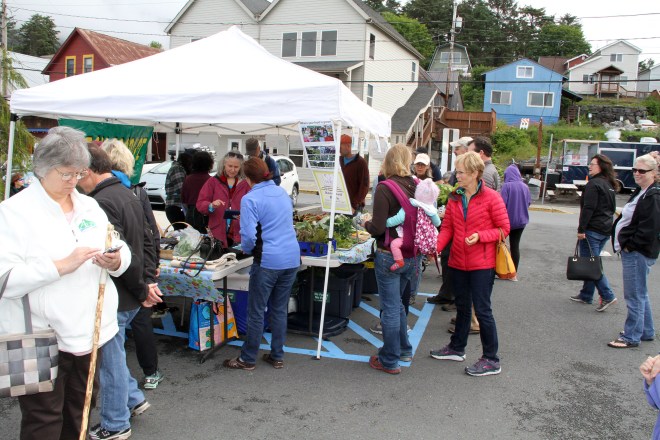
SLFNBoothCrowdInFrontOfBooth

SitkaFarmersMarketSignAfter raining the night before, we ended up with some sun when we held the first of the seven Sitka Farmers Markets of the 2016 summer on Saturday, July 2, at the Alaska Native Brotherhood Founders Hall.

The market was a bit smaller than usual, partially because of competition with the Fourth of July booths at Baranof Elementary School and because of our attempts to refocus the market to put more of an emphasis on local food. We did have some new vendors at the market, and there were a couple of discussions from potential vendors asking about space at the next market.

JessicaGillMarcosMunchiesDogTreats

Jessica Gill was one of our new vendors this market with Marco’s Munchies dog treats.

We always welcome new vendors who want to sell produce they’ve grown, fish they’ve caught, and local cottage food products they’ve made. To learn more about how to be a vendor, contact Matthew Jackson at (907) 821-1412 or jackson.mw08@gmail.com or Brandie Cheatham at (907) 687-9927 or vista_brandie@yahoo.com.

The next Sitka Farmers Market will be from 10 a.m. to 1 p.m. on Saturday, July 16, at the ANB Founders Hall. The other markets this summer are on Saturdays, July 30, Aug. 13, Aug. 20, Sept. 3, and Sept. 10. The Sitka Farmers Markets receive sponsorship funding from the SouthEast Alaska Regional Health Consortium (SEARHC). Don’t forget to vote for the Sitka Farmers Market in the American Farmland Trust’s eighth annual Farmers Market Celebration.

A slideshow of scenes from the first Sitka Farmers Market of the 2016 summer is below.

This slideshow requires JavaScript.

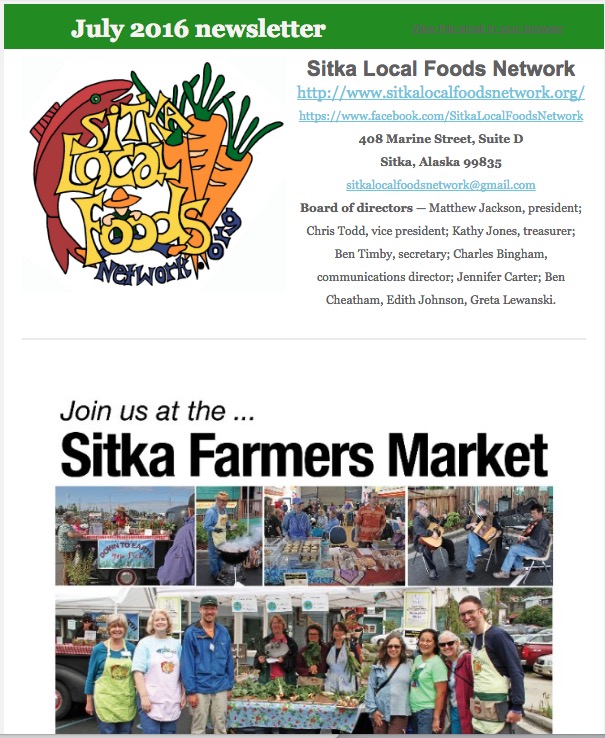
Check out the July 2016 edition of the Sitka Local Foods Network newsletter

July2016SLFNNewsletterScreenshot

The Sitka Local Foods Network just sent out the July 2016 edition of its newly launched monthly newsletter. Feel free to click this link to get a copy.

This edition of the newsletter has brief stories about the Sitka Farmers Market opening on Saturday, changes to the Sitka Local Foods Network board of directors, a student-built school garden at Keet Gooshi Heen Elementary School, and info about several sh. Each story has links to our website for more information.

You can sign up for future editions of our newsletter by clicking on the registration form image in the right column of our website and filling in the information. If you received a copy but didn’t want one, there is a link at the bottom of the newsletter so you can unsubscribe. Our intention is to get the word out about upcoming events and not to spam people. We will protect your privacy by not sharing our email list with others.


What you put #OnMyFork matters during eighth annual Farmers Market Celebration

FARMMARKETCELEB_LOGO_D

What you put #OnMyFork matters. That’s the message behind American Farmland Trust’s eighth annual Farmers Market Celebration. The celebration calls on shoppers to help identify the cream of the crop — the best of America’s farmers markets — and in Alaska we think that’s the Sitka Farmers Market.

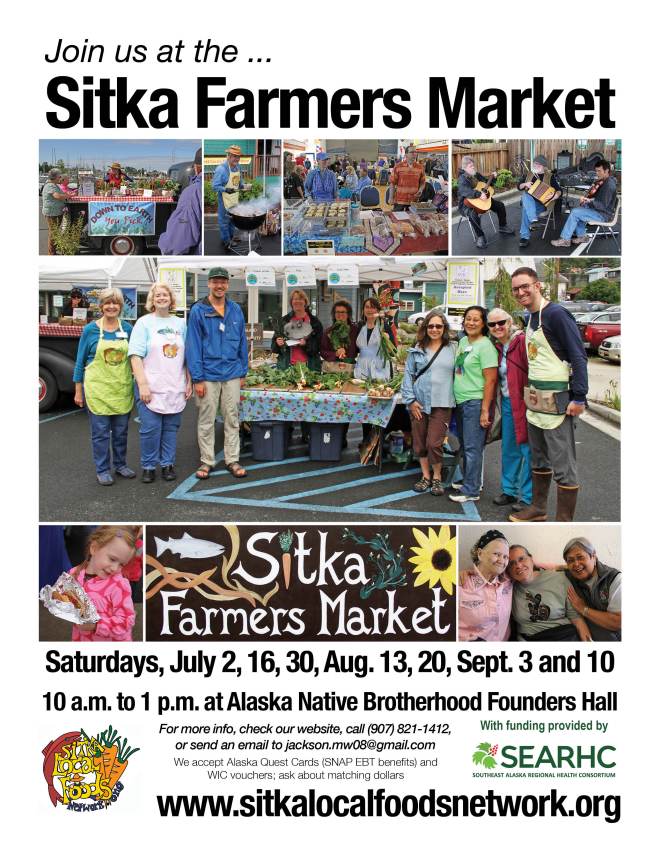
2016SitkaFarmersMarketFlier2The celebration calls on shoppers to help identify the best of America’s farmers markets. The summer-long event launched June 20 and runs through Sept. 21. The first Sitka Farmers Market of the 2016 summer is from 10 a.m. to 1 p.m. on Saturday, July 2, at the Alaska Native Brotherhood Founders Hall. The other six Sitka Farmers Markets this summer are on Saturdays, July 16, July 30, Aug. 13, Aug. 20, Sept. 3, and Sept. 10.

“The Celebration encourages market customers, family farmers, community activists – anyone who believes they’ve got the best farmers market in the country – to endorse their market in four special areas: Focus on Farmers, Healthy Food for All, Pillar of the Community, and Champion for the Environment,” said Susan Sink, American Farmland Trust vice president of development and external relations.

Shoppers are encouraged to use Instagram and join the local food community in saving farmland with their forks, as part of AFT’s “#OnMyFork” social media campaign. Supporters are encouraged to post pictures or videos of their farmers market to Instagram using the hashtag #OnMyFork. If you do post something about the Sitka Farmers Market, please tag our Sitka Local Foods Network page on Facebook, https://www.facebook.com/SitkaLocalFoodsNetwork or share it on our Twitter page, https://www.twitter.com/SitkaLocalFoods. Please use the hashtags #SitkaLocalFoodsNetwork and #SitkaFarmersMarket if you share a photo.

“While farmers markets have been growing in popularity, keeping family farmers on farmland remains a nationwide challenge,” Sink says. “Many family farmers are struggling to stay financially afloat and face daily pressure from development to sell their land. Farmers markets provide a wonderful opportunity for family farmers to sell directly to consumers and to help make a living on their land.”

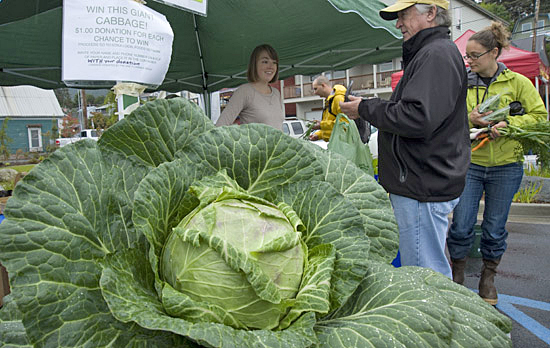
bigcabbagewsFarmers markets have a lot to offer. Beyond the beautiful array of fresh and local food, farmers markets help family farmers thrive, connect us as a community and can be catalysts for both environmental and social good. That is why American Farmland Trust is giving away awards to farmers markets who are the Best in Class in four special areas — Focus on Farmers, Healthy Food for All, Pillar of the Community, and Champion for the Environment.

If you have ever been to the Sitka Farmers Market, you may already know that they are the gold standard for farmers markets in these areas. If you haven’t been to the market before, here are a few reasons why the Sitka Farmers Market deserves to be named one of America’s top markets:

  • Focus on Farmers — The Sitka Local Foods Network, which sponsors the Sitka Farmers Market, has been working with local gardeners and small farmers to increase the amount of locally grown fruits and veggies in Sitka. Not only is locally grown food fresher and better tasting, but it’s better on the environment because it doesn’t have to travel thousands of miles to get to Alaska.
  • Healthy Food for All — The Sitka Farmers Market was the first farmers market in Southeast Alaska to accept SNAP (food stamps/Alaska Quest cards) and WIC vouchers for people benefitting from those programs. In addition, we have matching dollars of up to $20 per person per market available for SNAP-eligible foods (produce, fish, baked goods, barley products, etc.).
  • Pillar of the Community — The Sitka Farmers Market not only serves as a community gathering place, but it also is a business incubator. It’s a good place for budding entrepreneurs to test ideas and products before going into full production. The Sitka Farmers Market emphasizes local, local, local, which helps put the focus on products from Sitka.
  • Champion for the Environment — It’s estimated that Alaska residents import about 90-95 percent of their food from the Lower 48 or foreign countries. By encouraging people to grow or harvest food locally, we’re cutting down on thousands of miles of transportation costs. That means less fuel is used, and fewer pollutants in the air.

To help shine a light on the Sitka Farmers Market, just go to http://markets.farmland.org/market/sitka-farmers-market/ and recommend our market. In past Farmers Market Celebrations, sponsored by the American Farmland Trust, the Sitka Farmers Market has been at or near the top among the Alaska rankings. In 2015, the Sitka Farmers Market was the top Alaska market in this contest.

Sitka Local Foods Network to host seven Sitka Farmers Markets this summer


2016SitkaFarmersMarketFlier2

Sitka residents might notice a few changes when the Sitka Local Foods Network opens its ninth season of Sitka Farmers Markets this Saturday. For one, there will be more markets — seven instead of the six markets hosted in recent years. Another change is a more compact market, with a revised vendor price structure and fewer special programs that put the emphasis back on local foods.

SLFNBoothAlliGabbertHelpsGuyBuyingLocalIngredientsForHalibutChowder“The Sitka Farmers Market is a community gathering as much as it is a market,” said Matthew Jackson, newly installed president of the Sitka Local Foods Network and co-manager of the Sitka Farmers Market this year with Brandie Cheatham. “It’s a great way to connect with your neighbors and support local entrepreneurs. In Alaska we know all about the leaky bucket effect, so shopping at the Sitka Farmers Market is a way to keep money circulating in our community.”

The first Sitka Farmers Market of the season takes place from 10 a.m. to 1 p.m. on Saturday, July 2, at the Alaska Native Brotherhood Founders Hall (235 Katlian St.). The other markets this summer take place from 10 a.m. to 1 p.m. on Saturdays, July 16, July 30, Aug. 13, Aug. 20, Sept. 3, and Sept. 10, at ANB Founders Hall.

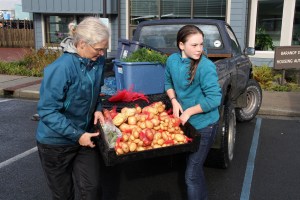
SLFNBoothLauraSchmidtAndDaughterWithPotatoesThe markets feature a variety of locally grown produce, locally harvested seafood, locally manufactured cottage foods, locally made arts and crafts, music and fun. The Sitka Farmers Market was the first market in Southeast Alaska to accept Alaska Quest (SNAP) electronic benefits transfers (EBT) and WIC coupons.

“For the last four seasons we’ve been proud to welcome Alaska Quest EBT and WIC shoppers at the market,” Jackson said. “It is so important to make sure local food is accessible to everyone.”

SLFNBoothLisaSadleirHartHelpsCustomersThe second Sitka Health Summit in April 2008 planted the seeds for the Sitka Farmers Market, as Sitka residents chose starting a local foods market as one of their community wellness initiatives for the year. About the same time, St. Peter’s By The Sea Episcopal Church was looking for a way to put some recently cleared land behind the church’s See House into use for a community project. St. Peter’s offered to lease the land to the group that became the Sitka Local Foods Network for $1 a year, and in May 2008 a group of Sitka residents built raised garden beds and planted a variety of crops. Later that summer, there was enough produce grown at St. Peter’s to supply our first three Sitka Farmers Markets starting in August 2008.

2016SitkaFarmersMarketSponsorsWe grew to five markets in 2009, followed by six markets each year from 2010-15 and now seven markets in 2016. Led by lead gardener Laura Schmidt, the production of local produce at St. Peter’s has grown each year, and there now are satellite gardens, such as the one on land owned by Pat Arvin. Most of the food grown at St. Peter’s and the satellite gardens is sold at the Sitka Farmers Market, but there has been enough for the Sitka Local Foods Network to also have a table when Chelan Produce is in town and to sell to local school lunch programs and restaurants. The money raised helps support the Sitka Local Foods Network, a 501(c)(3) nonprofit, in its mission “to increase the amount of locally produced and harvested food in the diets of Southeast Alaskans.”

To learn more about the Sitka Farmers Market and how you can become a vendor, contact Matthew Jackson at (907) 821-1412 or jackson.mw08@gmail.com. The Sitka Local Foods Network website, http://www.sitkalocalfoodsnetwork.org/, also has more info on the markets and links to vendor forms. The Sitka Farmers Market is sponsored by the SouthEast Alaska Regional Health Consortium (SEARHC).

Fifth-grade students start their own garden at Keet Gooshi Heen Elementary School

IMG_7248

Five fifth-grade boys are growing a variety of crops this year after starting their own garden at Keet Gooshi Heen Elementary School.

The five boys who started the garden — Kyan Scudero, Bridger Bird, Takeshi Handy, Samuel Jones, and Camden Young — were assisted by their classmates, teacher Jennifer Tulloh said. They will be in sixth grade at Blatchley Middle School this fall.

The boys let student-teacher Julie Jordan know they wanted to start a garden and, with Tulloh’s blessing, Jordan contacted Sitka Local Foods Network board member Jennifer Carter for technical assistance. Jordan designed the garden beds, and her husband, Karl Jordan, had the students in his Blatchley Middle School shop class build the raised garden beds.

“You know, this started as a project for my kids that weren’t interested in band but my whole class got involved in the project,” Tulloh said. “The boys got really into the planting and enjoyed meeting with Jennifer (Carter), who was so giving of her time and resources. They started and followed the garden from beginning to end and took great pride in it.”

“The young men wanted to start a vegetable garden for their school and leave it as a parting legacy before they moved on to middle school,” Carter said. “They learned how to prepare the soil, measure for proper spacing and start their own seedlings. They have planted rhubarb, strawberries, potatoes, peas, lettuce, carrots, kale, onions, and radishes.”

A slideshow of photos of the boys and their garden (taken by Jennifer Carter) can be found below.

This slideshow requires JavaScript.

Do you need to test your soil for a better garden? Sometimes you do

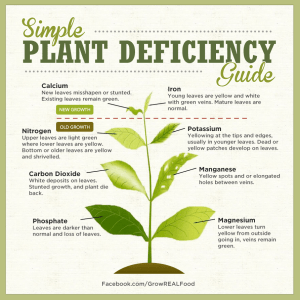
simple-plant-deficiency-guideHave you ever planted your garden and even though you’ve had plenty of sunny weather it just doesn’t seem to be growing the way it should? You might need to test your soil to see if you need to replenish some nutrients.

The University of Alaska Fairbanks Cooperative Extension Service has several publications and a video that can help you decide if you need to test your soil, and if yes, teach you how. Many gardeners test their soil at the end of the season, so they can amend their soil as needed to prepare for the next spring’s planting. But sometimes you might need to test during the growing season, which is what Sitka Local Foods Network Garden Mentor Program Coordinator Michelle Putz did last year when one of her student’s gardens wasn’t doing very well.

Soil testing is not always necessary,” Michelle said. “If you have several hours of direct sun and your garden is growing beautifully, then you may not need to test your soil. If you have sun but your garden is not doing so well, or if you have brand new soil, it might be worth testing the soil.

“One of our Garden Mentor families in 2015 grew beautiful but tiny plants that were struggling to get bigger, she added. “A simple soil test showed that their soil was low in nitrogen and needed a little acid. Once we added coffee grounds (for acid) and blood meal (for nitrogen), the plants grew substantially. Had we realized that our starting soil was so basic (not acidic enough) and nutrient poor, we could have made adjustments before the growing season and had a much more productive garden.”

In Southeast Alaska, our rain tends to wash a lot of the nutrients out of the soil. This is why it’s almost a requirement for gardeners to amend their soil with seaweed, compost, coffee grounds and other items to replenish the missing nutrients. It also helps to rotate your crops from one garden plot to the next, since different plants draw different nutrients as they grow (for example, potatoes use a lot of nitrogen while tomatoes use a lot of potassium).

To learn more about soil-testing, watch the video at the top of this story and read the three attached files below. The attached files and video will show you how to take a soil sample and how to send it to a lab for testing.

• Soil and Fertilizer Management for Healthy Gardens (UAF Cooperative Extension Service publication, HGA-0338)

• Factors to Consider in Selecting a Soil-Testing Laboratory (UAF Cooperative Extension Service publication, FGV-00045)

• Soil Sampling (UAF Cooperative Extension Service publication, FGV-00044)

Harmful algal bloom expands PSP advisory to several Southeast Alaska beaches

SEATORDataUpdate06102016

Seator-Logo-Best-June-30-2015-7pm-215x215The SouthEast Alaska Tribal Ocean Research (SEATOR) project, SouthEast Alaska Tribal Toxins (SEATT) partnership and the Sitka Tribe of Alaska Environmental Research Lab (STAERL) have expanded a recent paralytic shellfish poisoning (PSP) advisory to include more beaches in Southeast Alaska.

The advisory, initially announced on May 26, now includes multiple beaches in Sitka, Juneau, Craig, Petersburg, and Klawock. The PSP advisory is for bivalve shellfish — such as clams, mussels, oysters, cockles, scallops, geoducks, etc. — that have been recreationally or subsistence harvested. It does not apply to commercially harvested shellfish, which are tested before they enter the market. The advisory does not apply to other shellfish, such as crabs or shrimp, which do not carry PSP (unless you eat the crab butter/viscera).

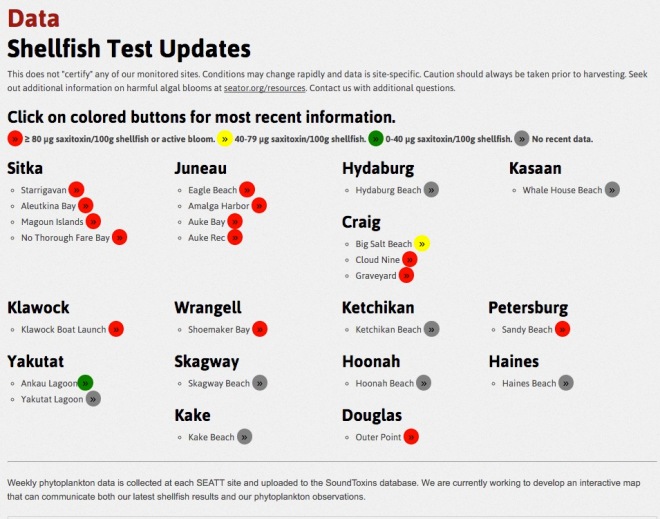
According to a SEATOR press release, “Recent samples on June 6 confirmed elevated levels of Alexandrium, the phytoplankton species that produces saxtoxins causing PSP, have been observed at the following locations and shellfish from these sites should not be harvested at this time.” The affected beaches from June 6 are Auke Bay, Amalga Harbor, Eagle Beach, and Auke Rec beaches in Juneau; Cloud 9 and Graveyard beaches in Craig; Starrigavan beach in Sitka; and the Boat Ramp beach in Klawock.

The butter clam has one set of rings that go one direction only, around the same center point (Photo courtesy of Alaska Department of Environmental Conservation)

The butter clam has one set of rings that go one direction only, around the same center point (Photo courtesy of Alaska Department of Environmental Conservation)

In addition, the press release said, “On June 9 shellfish from the following sites tested above the regulatory limit of 80µg/100g for saxitoxins and should not be harvested at this time.” The June 9 list of beaches includes Sandy Beach in Petersburg (butter clams only); Auke Bay, Amalga Harbor, Eagle Beach, and Auke Rec beaches in Juneau; Aleutkina Bay, No Through Fare Bay, Magoun Islands, and Starrigavan (butter clams only) beaches in Sitka; and the Boat Ramp beach in Klawock. The advisory is for all shellfish on all beaches, except where noted.

According to SEATOR, “This does not ‘certify’ any of our monitored sites. Conditions may change rapidly and data is site-specific. Caution should always be taken prior to harvesting.”

SEATOR posts updates and information to its website at seator.org/data, which can help provide Southeast Alaska residents with reliable information so they can choose whether or not to harvest shellfish. In addition to testing water samples weekly from certain Southeast beaches, STAERL also tests samples of butter clams, littleneck clams, and blue mussels (which is STAERL’s indicator species because of how quickly blue mussels absorb saxotoxins).

Since most beaches in Alaska aren’t tested for harmful algal blooms, SEATOR and the SEATT partnership were formed in October 2014 to train people to test beaches in Southeast Alaska. In April 2015, the Sitka Tribe of Alaska opened a regional lab on Katlian Street, so samples could be tested in Sitka without having to be sent to the Lower 48, which delayed results. By testing for harmful algal blooms, SEATOR and the SEATT partnership hope to be able to provide information so people can make informed choices whether or not to harvest or eat shellfish.

Harmful algal blooms, such as paralytic shellfish poisoning (PSP), typically have not been monitored in Southeast Alaska for subsistence and recreational harvesters of clams, mussels, oysters, cockles, and other bivalves (commercial harvests are tested). Even though many people in Southeast Alaska love to harvest shellfish, eating it comes with some risks. There have been several PSP outbreaks in recent years that sent people to the hospital, and in 2010 two deaths were attributed to PSP and other HABs, such as Alexandrium, Pseudo-nitzchia and Dinophysis.

To learn more about harmful algal blooms and how they can raise the risk for PSP and ASP (amnesic shellfish poisoning, which also can be fatal), go to SEATOR’s resources page. If you have shellfish you recently harvested and want to test it, click this link to learn what you need to do to have it tested by STAERL. Please contact STAERL at 747-7395 with any additional questions.

• June 10, 2016, press release about PSP advisory for Southeast Alaska