• Food preservation classes to be offered in conjunction with Sitka Seafood Festival

Sitka food preservation classes

ssflogo2Leslie Shallcross from the University of Alaska Fairbanks Cooperative Extension Service‘s Anchorage District Office will be in Sitka to offer a series of food preservation classes on Aug. 6-8 as part of the Sitka Seafood Festival.

The classes on Thursday and Friday, Aug. 6-7, will take place at the Sitka Kitch community rental commercial kitchen (inside First Presbyterian Church, 505 Sawmill Creek Road), while the Saturday, Aug. 8, classes will be at Sweetland Hall on the Sheldon Jackson Campus. Each of the classes will cost $15, but jars and other materials will be provided by the Sitka Seafood Festival.

The class schedule is:

  • Thursday, Aug. 6, 2-4:30 p.m., at Sitka Kitch — Low-sugar jams and jellies — Learn how to use a boiling water bath canner for preserving fruit by making low-sugar jams and jellies.
  • Thursday, Aug. 6, 6-8 p.m., at Sitka Kitch — Local garden greens — Learn how to cook with and preserve your garden greens.
  • Friday, Aug. 7, 10 a.m. to noon, at Sitka Kitch — Kelp pickles and sauerkraut — Learn how to make kelp pickles. You will “start” some sauerkraut as well as learn some of the science of fermentation.
  • Friday, Aug. 7, 3-5 p.m., at Sitka Kitch — Canning salmon — Learn how to use a pressure canner for preserving fresh, frozen or smoked fish.
  • Saturday, Aug. 8, 10 a.m. to noon, at Sweetland Hall — Canning salmon — Learn how to use a pressure canner for preserving fresh, frozen or smoked fish.
  • Saturday, Aug. 8, 1-2:30 p.m., at Sweetland Hall — Process of smoking salmon — Learn the steps in smoking fish.

kitch_logo_mainFor those who might miss the classes but still want to learn more about home canning, the UAF Cooperative Extension Service has a series of online tutorials on its website called “Preserving Alaska’s Bounty.” Also, don’t forget to make sure your pressure canner gauge is tested at least once a year. Jasmine Shaw from the Sitka District Office of the UAF Cooperative Extension Service has a tester in her office and you can call her at 747-9440 to schedule a test.

To register for the classes, please contact Jasmine Shaw at 747-9440 or jdshaw2@alaska.edu.


• Scenes from a series of home canning and cottage foods classes July 16-18 at Sitka Kitch

SarahLewisPlacesLidOnAllAmericanCanner kitch_logo_mainOn July 16-18, the Sitka Kitch project hosted Sarah Lewis of the Juneau District Office of the University of Alaska Fairbanks Cooperative Extension Service to host four classes in Sitka on the cottage food industry and home canning. These classes were free and paid for by a grant from the SouthEast Alaska Regional Health Consortium (SEARHC) WISEFAMILIES Traditional Foods program. In addition, Sarah had a table at the Sitka Farmers Market on July 18 where she tested pressure canner gauges.

For those who missed the classes and want to learn more about home canning, the UAF Cooperative Extension Service has a series of online tutorials on its website called “Preserving Alaska’s Bounty.” In addition, Leslie Shallcross from the Anchorage District Office of the UAF Cooperative Extension Service will be in town during the Sitka Seafood Festival to teach canning classes on Thursday and Friday, Aug. 6-7, at Sitka Kitch, and on Saturday, Aug. 8, at Sweetland Hall on the Sheldon Jackson Campus. Watch for a class schedule to be posted soon (note, these classes will cost $15 each).

A reminder, pressure canner gauges should be tested at least once a year to make sure they are hitting the right pressures for safe food preservation. For those who couldn’t get to the July 18 Sitka Farmers Market for pressure canner gauge testing, the Sitka District Office of the UAF Cooperative Extension Service has a tester in its office and you can call Jasmine Shaw at 747-9440 to set up an appointment for testing. The office also has a variety of resources — many of them free — on home canning, gardening and other topics.

Sitka Kitch is a community wellness project from the 2013 Sitka Health Summit designed to improve food security in Sitka. The different parts of the project include creating a community kitchen Sitka residents can rent to prepare food for their small businesses or to preserve their family harvest of fish, game, or garden veggies; expanding Sitka’s emergency food storage capacity; and providing education about preserving food and building family emergency food pantries.

For more information about the Sitka Kitch project, go to the Sitka Kitch website or Facebook page. For rental information, contact Kristy Miller at sitkakitch@sitkawild.org. Click this link to take a quick tour of the facility.

Slideshows featuring scenes from Friday’s class on canning salmon and berries and Saturday’s class on canning soups and sauces are below. Also, KCAW-Raven Radio attended the pickling and fermenting class and filed this story (which also includes a slideshow at the bottom). The Alaska Dispatch News recently posted this link on how to can salmon.

This slideshow requires JavaScript.


Slideshow from the Friday, July 17, class about canning salmon and berries (above).


This slideshow requires JavaScript.


Slideshow from the Saturday, July 18, class about canning soups and sauces (above).

• Free pressure canner gauge testing offered at the Sitka Farmers Market on Saturday, July 18

Canner

SarahLewisTestsCannerGaugeThis is a great time of the year to be in Sitka. The fish are running, gardens are starting to produce, and berries are ripe for the picking.

Many Sitka residents have pressure canners to preserve their harvest, and this weekend Sarah Lewis of the Juneau District Office of the University of Alaska Fairbanks Cooperative Extension Service is in town to teach four classes about canning on Thursday, Friday and Saturday at the Sitka Kitch (a rental community commercial kitchen at First Presbyterian Church, 505 Sawmill Creek Road, note, all classes are full). She also provide free pressure canner gauge testing at the Sitka Farmers Market from 10 a.m. to 1 p.m. on Saturday, July 18, at the Alaska Native Brotherhood Founders Hall.

“People can bring the gauge or the lid with the gauge still attached,” Sarah said about the pressure canner gauge testing. “If they have any questions about the full canner (gaskets, damage, how to use, etc.) they can bring the whole thing.”

In addition to testing pressure canner gauges, Sarah plans to work with Jasmine Shaw of the Sitka District Office of the UAF Cooperative Extension Service to have a wide variety of publications available about home canning. In addition, the UAF Cooperative Extension Service has a series of online tutorials on its website called “Preserving Alaska’s Bounty.” Pressure canner gauges should be tested at least once a year to make sure they are hitting the right pressures for safe food preservation.

A reminder about the Sitka Farmers Market, due to health codes we can’t allow any pets other than licensed service dogs in the ANB Hall or the parking lot. We also don’t allow smoking at the Sitka Farmers Market (in ANB Hall or the parking lot) because this is a health event.

Also, if you are in Sitka and you can’t make the pressure canner gauge testing event at the Sitka Farmers Market, you can call Jasmine Shaw at 747-9440 at the Sitka office of the UAF Cooperative Extension Service to set up a time when you can stop by and have her test your gauge in the office. She now has a gauge and is trained on using it.

• Schedule firming up for 2015 Sitka Seafood Festival on Aug. 7-8

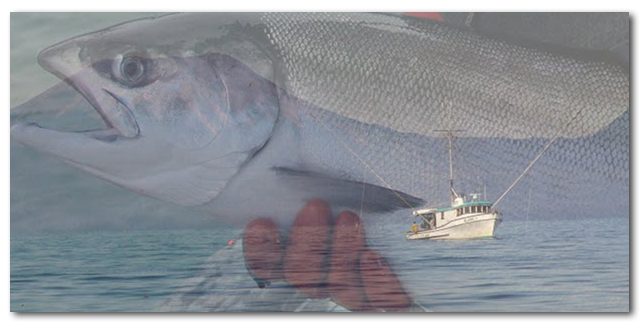
salmon boat header

ssflogo2While the official schedule for the 2015 Sitka Seafood Festival still hasn’t been posted on the event’s website at the Sheldon Jackson Campus, the schedule is firming up.

The Friday night, Aug. 7, Sitka Seafood Festival Extravaganza banquet is close to selling out, so if you haven’t gone online to reserve your tickets you better do it now. Tickets are $65 each for this special seafood dinner event (cooked by guest chefs) at Allen Hall on the Sheldon Jackson Campus, but there are only a handful left. This event starts at 6:30 p.m. and will feature a variety of seafood dishes prepared by guest chefs Caleb France of Indianapolis, Dave Thorne of Anchorage, Rob Kinneen of Anchorage, Jeren Schmidt of Sitka, and SSF culinary scholarship winner Adam Kanayurak. Don’t forget to get your VIP cocktail hour tickets ($35) from 5:30-6:30 p.m., too.

OK, got your banquet tickets? Here is information on the other events.

Sitka cooks can participate in the banquet by entering the dessert contest, which will feature cakes, cupcakes and pies (no refrigerated desserts, please). The desserts will be auctioned off at the banquet, and the top desserts will receive prizes. Rules and entry forms are at the link above. The entry forms must be submitted by Wednesday, Aug. 5. For more information, contact contest coordinator Megan Pasternak at 738-2290 or mwpstnk@ptialaska.net.

As usual, the bulk of the sixth annual Sitka Seafood Festival events take place on Saturday (Aug. 8, this year). The fish tote races usually start at 11 a.m. at Crescent Harbor, with the parade following afterward from Crescent Harbor to the Sheldon Jackson Campus.

The Sitka Seafood Festival Marketplace opens at noon, and this year all of the booths will be outdoors on the Sheldon Jackson Campus. The booths usually stay open until 6 p.m., but some may close earlier if they run out of product. You can find out more information about hosting a booth here.

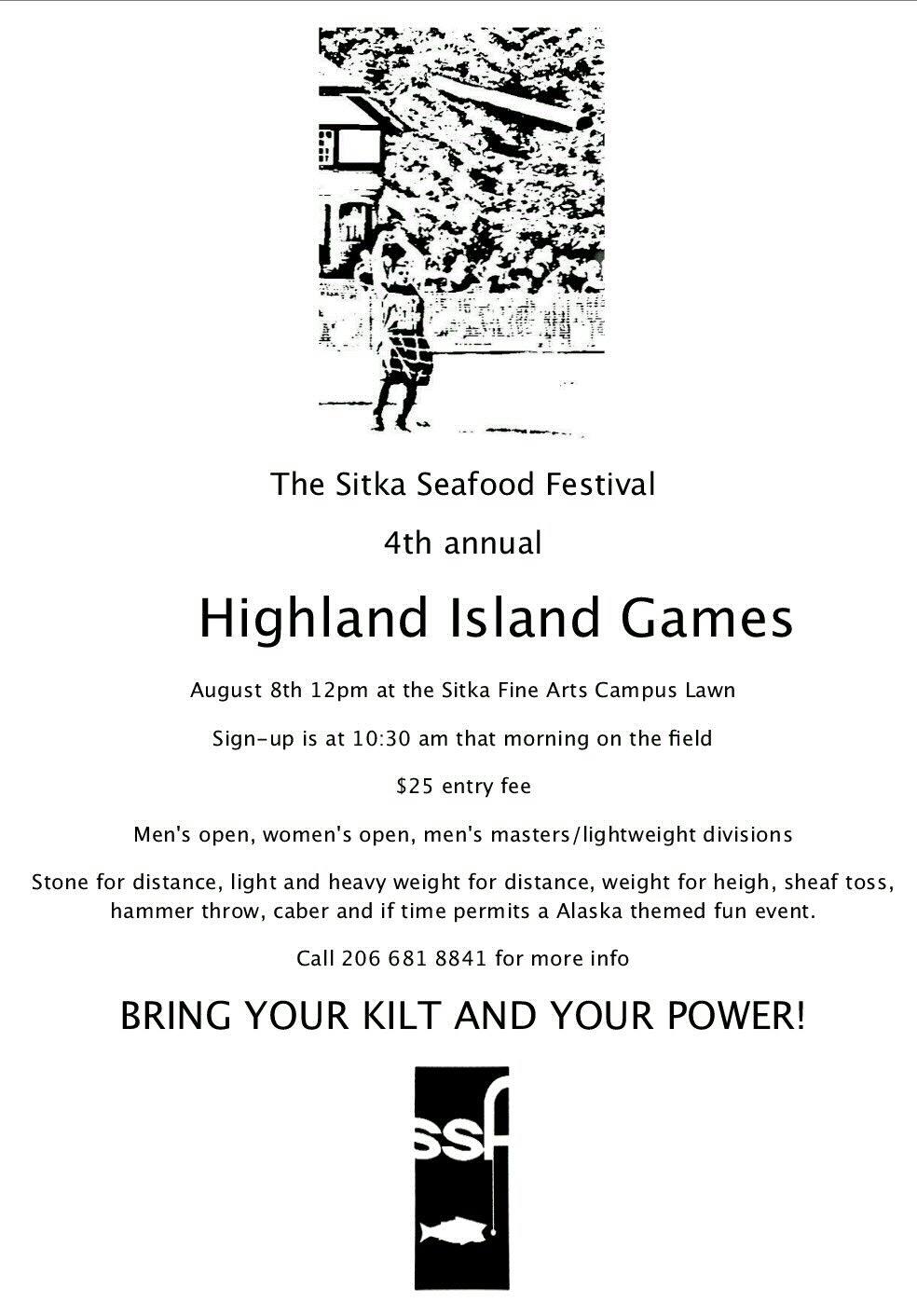
highland gamesIn addition to the marketplace, there will be kids games on the lawn, live music and other entertainment until 5 p.m., and the Sitka Highland Games until 6 p.m. The highland games participants already are practicing their events, and potential participants can check out the Sitka Highland Games group on Facebook for practice times (usually 5-6:30 p.m. on Tuesday, Thursday and Sunday, depending on weather and work schedules).

There will be other events announced over the next week or two, and some may happen on Thursday, Aug. 6, or Sunday, Aug. 9.

The festival also is looking for volunteers to help prior, during and after the festival. There are countless ways to help, such as kitchen help, banquet help, parade, contests, games, highland games, booths, tent set-up and take down, stage help for bands and cooking demos, etc. If you are interested in volunteering, please contact Alicia Olson Haseltine at alaska_al33@hotmail.com. For more info on the festival, go to http://www.sitkaseafoodfestival.org.


• SEARHC, Cooperative Extension to host free food preservation and entrepreneurship workshops at Sitka Kitch

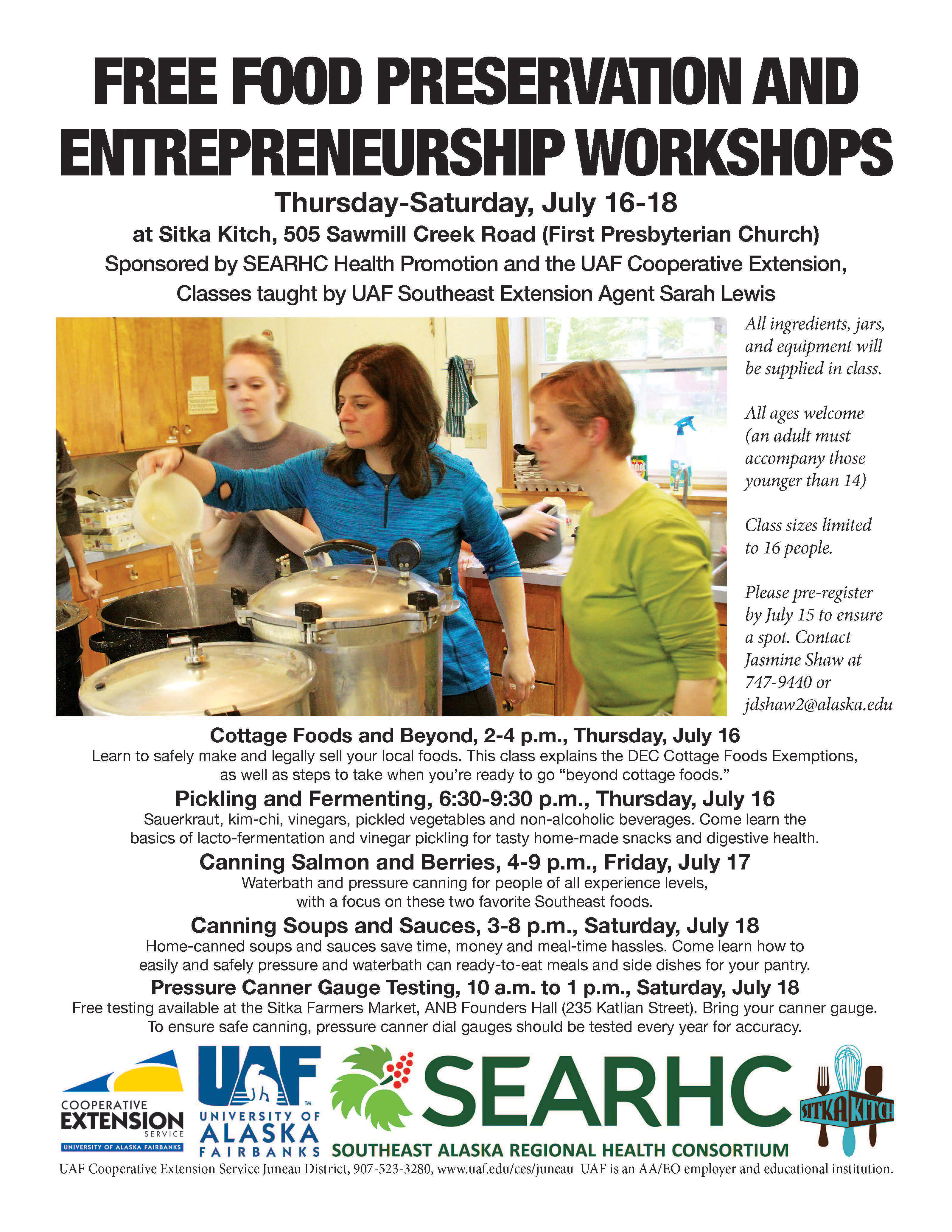
SitkaKitch2015CanningClasses

The SouthEast Alaska Regional Health Consortium (SEARHC) WISEFAMILIES Traditional Foods program and the University of Alaska Fairbanks Cooperative Extension Service are teaming up to offer a series of four free food preservation and entrepreneurship workshops on Thursday through Saturday, July 16-18, at the Sitka Kitch. There also will be free pressure canner gauge testing at the Sitka Farmers Market on July 18.

The Sitka Kitch is a rental community commercial kitchen project coordinated by the Sitka Conservation Society, in partnership with the Sitka Local Foods Network, located inside the First Presbyterian Church, 505 Sawmill Creek Road. The Sitka Kitch was a project from the 2013 Sitka Health Summit designed to improve food security in Sitka while also providing a space for people wanting to get into the cottage food business or wanting to preserve their harvest for storage in the home pantry. Sitka Kitch officially opened in March 2015 after a series of renovations to make it pass Alaska Department of Environmental Conservation commercial kitchen food safety standards.

UAF Southeast Extension Agent Sarah Lewis of the Juneau District Office will teach four classes — Cottage Foods and Beyond, Pickling and Fermenting, Canning Salmon and Berries, and Canning Soups and Sauces. These classes are open to Sitka residents of all ages, but an adult must accompany those younger than 14 years old. Class sizes are limited to 16 people. Thanks to a grant from the SEARHC WISEFAMILIES Traditional Foods program, all ingredients, jars, and equipment will be supplied in class.

“The WISEFAMILIES Traditional Foods program is partnering with the UAF Cooperative Extension Service because their work complements our purposes, which is to help Native families reduce their risk for disease while working toward getting back to a traditional way of eating,” said SEARHC Health Educator Clara Gray, of the SEARHC WISEFAMILIES Traditional Foods program.

The SEARHC WISEFAMILIES Traditional Foods program promotes healthy lifestyles by connecting Alaska Natives in Southeast Alaska to their culture. Members of the program learn how to harvest, cook, and preserve their traditional Alaska Native foods, which usually are healthier than heavily processed store-bought foods. In addition, participants learn traditional language, dancing, carving, weaving, and other skills that help reconnect them to their culture.

SarahLewisWithBoilingPotsThe UAF Cooperative Extension Service offers a variety of programs geared toward food, how to grow it, how to preserve it for storage, and how to make it into cottage foods you can sell. For those who can’t make the classes, the service offers a series of free online tutorials about home canning called Preserving Alaska’s Bounty.

“As a UAF Cooperative Extension Agent, I try to teach that family and community resilience are strengthened when local foods are used to cook meals at home,” Lewis said. “Through my food preservation and entrepreneurship workshops I offer the knowledge and skills needed for people to discover the nutritional benefits and financial stability that come from making and preserving homemade meals with local ingredients.”

Here are the details and schedules of the four classes:

  • Cottage Foods and Beyond, 2-4 p.m., Thursday, July 16 — Learn to safely make and legally sell your local foods. This class explains the DEC Cottage Foods Exemptions, as well as steps to take when you’re ready to go “beyond cottage foods.”
  • Pickling and Fermenting, 6:30-9:30 p.m., Thursday, July 16 — Sauerkraut, kim-chi, vinegars, pickled vegetables and non-alcoholic beverages. Come learn the basics of lacto-fermentation and vinegar pickling for tasty home-made snacks and digestive health.
  • Canning Salmon and Berries, 4-9 p.m., Friday, July 17 — Waterbath and pressure canning for people of all experience levels, with a focus on these two favorite Southeast foods.
  • Canning Soups and Sauces, 3-8 p.m., Saturday, July 18 — Home-canned soups and sauces save time, money and meal-time hassles. Come learn how to easily and safely pressure and waterbath can ready-to-eat meals and side dishes for your pantry.

In addition to teaching the four classes, Lewis will offer free pressure canner gauge testing at the Sitka Farmers Market, from 10 a.m. to 1 p.m. on Saturday, July 18, at the Alaska Native Brotherhood Founders Hall, 235 Katlian Street. She also will provide other resources about home canning and food preservation. To ensure safe canning, pressure canner dial gauges should be tested every year for accuracy.

Due to limited class space, please pre-register by Wednesday, July 15, to ensure a spot. To pre-register, contact Jasmine Shaw of the Sitka District Office of the UAF Cooperative Extension Service at 747-9440 or jdshaw2@alaska.edu.
• Harmful algal bloom warning issued for shellfish harvested in Starrigavan Beach

Clam diggers work the beach at Starrigavan in this file photo. The Sitka Tribe of Alaska is warning Sitkans against harvesting clams in the area due to a harmful algae detected Monday, June 8, 2015. (Daily Sitka Sentinel file photo by James Poulson)

Clam diggers work the beach at Starrigavan State Recreation Area in this file photo. The Sitka Tribe of Alaska is warning Sitkans against harvesting clams in the area due to a harmful algae detected Monday, June 8, 2015. (Daily Sitka Sentinel file photo by James Poulson)

Southeast Alaska Tribal Ocean Research (SEATOR) on Monday, June 8, issued a warning that people should not be eating shellfish harvested at Starrigavan Beach in Sitka.

Pseudo-nitzchia“Yes, we are seeing a bloom of Pseudo-nitszchia. This species of plankton can produce domoic acid which can cause amnesic shellfish poisoning (ASP),” Sitka Tribe of Alaska Environmental Program Manager Chris Whitehead said.

Whitehead is coordinating SEATOR and the Southeast Alaska Tribal Toxins (SEATT) partnership program where seven tribes in Southeast Alaska are partnering to test shellfish for harmful algal booms that can cause problems such as paralytic shellfish poisoning (PSP) or other health issues. The SEATT partnership program and SEATOR were launched a little bit over a year ago because there is no harmful algal bloom testing of Southeast beaches by the state, even though there had been many recent cases of PSP outbreaks that resulted in people being hospitalized or even dying.

According to the SEATOR website, Pseudo-nitzchia spp is a genus of diatoms found worldwide. In North America, it can be found on the Pacific Northwest Coast from Alaska to mid-California, the Northeast Atlantic Coast of Canada, in North Carolina, and in the Gulf of Mexico. Domoic acid is a neurotoxin that binds glutamate receptors, which are involved in memory processing.

Amnesic shellfish poisoning (ASP) causes gastrointestinal and neurologic issues. Mild cases usually occur within 24 hours after eating shellfish exposed to the ASP toxin. Symptoms include nausea, vomiting, diarrhea, and abdominal cramps. In more severe cases there also will be neurological problems, such as headaches, confusion, hallucinations, short-term memory loss, respiratory difficulty, seizures, coma, and in extreme cases, death.

According to a recent story from Oregon Public Broadcasting’s KUOW/EarthFix program, there currently is a massive harmful algal bloom extending from Homer, Alaska, on the north to Monterey Beach, Calif., in the south. In addition to impacting shellfish, the toxic harmful algal bloom has caused problems in fish and marine mammals that ate infected shellfish.

If you recently have eaten shellfish harvested in the Starrigavan State Recreation Area and have any of the above symptoms, you should seek medical help immediately.

• Alaskans Own community-supported fisheries program announces 2015 season subscription prices

AOFlyer2015Sitka

Sitka-based Alaskans Own seafood recently announced its subscription prices for its 2015 community-supported fisheries (CSF) program in Sitka, Juneau, Anchorage, and, new this year, Seattle.

Alaskans Own was the first CSF program in the state, modeling its program after the successful community-supported agriculture (CSA) programs that let customers deal directly with harvesters so they can buy subscription shares to the year’s crop/catch. In addition to the CSF program, Alaskans Own usually has a table at the Sitka Farmers Markets during the summer.

AO flier no tagsThis is the sixth year of the Alaskans Own CSF program, and there are four-month and six-month subscriptions available starting in May. The six-month subscriptions allow people to keep receiving freshly caught seafood through October instead of August, when the traditional four-month subscriptions end. Half-subscriptions also are available. Subscriptions include a mix of locally caught black cod (sablefish), halibut, king salmon, coho salmon, lingcod and miscellaneous rockfish, depending on the commercial fishing season and prices.

According to newly hired director Caroline Lester, this year’s price for a six-month full subscription (about 60 pounds, or 10 pounds a month) in Sitka is $886.16 (includes sales tax) and $446.40 for a half subscription (about 30 pounds). The price for a four-month full subscription (about 40 pounds) is $606.32 and $326.46 for a half subscription (about 20 pounds). Prices are slightly higher for the other communities participating in the program. People can use the Alaskans Own online store site to purchase their CSF shares. Deliveries in Sitka will be either the last or second-to-last Thursday of the month at the old mill building next to the Sitka Sound Science Center.

The Alaskans Own program is associated with the Alaska Sustainable Fisheries Trust. The Alaska Sustainable Fisheries Trust’s mission is to strengthen Alaskan fishing communities and marine resources through scientific research, education, and economic opportunity.

For more information, contact Caroline Lester at info@alaskansown.com or 738-2275.

• Rep. Jonathan Kreiss-Tomkins of Sitka introduces bill to allow donations of fish and game to nonprofit meal programs

041614_JKT_house-floor

Rep. Jonathan Kreiss-Tomkins (D-Sitka) is the prime sponsor of a tripartisan bill that will allow nonprofit meal programs — such as those found at schools, hospitals and senior centers — to serve donated fish and game from sport and subsistence harvesters.

The bill, HB 179, is co-sponsored by seven other legislators — four Republicans (Cathy Muñoz of Juneau, Charisse Millett of Anchorage, Louise Stutes of Kodiak and Tammie Wilson of North Pole), two Democrats (Neal Foster of Nome and Sam Kito III of Juneau), and an Independent (Dan Ortiz of Ketchikan). The was introduced on April 1 and already has hearings set for next week in the resources (Monday, April 6) and fisheries (Tuesday, April 7) committees. If those committees pass the bill, it could go before the House floor for a vote as early as late next week.

“Because of that broad support, this bill is in not just the fast lane, but in the Autobahn-style fast lane,” Kreiss-Tomkins told the Daily Sitka Sentinel. “This bill could go from being introduced to a vote on the floor in eight or nine days.”

Kreiss-Tomkins said the bill was inspired in part by Sitka’s Fish to Schools program, which allows commercial fishermen to donate locally caught seafood to local schools so it can be served in student lunches. However, many parts of the state don’t have commercial fisheries, and Alaska law currently bars food service organizations funded by state or federal meal programs from serving subsistence- and sport-harvested fish and game, even if it is donated.

In the sponsor statement for the bill, Kreiss-Tomkins writes:

Hunting and fishing is at the heart of our shared heritage as Alaskans. Every Alaskan looks forward to the season he or she can again fill the freezer with salmon, moose, caribou, seal, or berries. Alaskans happily share this food with family, children, and elders.

This sharing is not possible in our public institutions, however. Well-meaning state laws intended to prevent the commercialization of wild game have also largely prevented children in schools and elders in hospitals and senior centers from eating the traditional Alaska foods that we treasure. As a result, even though we are surrounded by some of the best food in the world, our children eat corndogs rather than caribou at school lunch; our elders are served spaghetti rather than seal.

This action follows a 2013 amendment U.S. Rep. Don Young (R-Alaska) included in an agriculture bill that removed barriers that previously prohibited American Indians and Alaska Natives from serving traditional foods in hospitals, elder care facilities and schools. The amendment authorized the U.S. Department of Agriculture to allow for the donation and serving of traditional foods, which meet specific safety standards, in public facilities that primarily serve American Indians and Alaska Natives.

In his sponsor statement, Kreiss-Tomkins writes:

The bill also ensures traditional wild foods donated to and served by food service programs are safe to eat. The Department of Environmental Conservation already has regulations in place providing for the safe handling and processing of many traditional wild foods. HB 179 affirms the Department’s authority to oversee the safety of these foods.

HB 179 will nourish Alaska’s children and elders, both physically and spiritually. It will limit the amount of expensive and unhealthy processed food shipped to communities that have incredible food available just a short boat or snowmachine ride away. Children will develop an appreciation where their food comes from and elders will be able to keep eating the foods they love.

• HB 179 — Traditional Foods Bill

• HB 179 — Traditional Foods Bill Sponsor Statement

• Sitka Seafood Festival offers culinary scholarship and paid internship opportunity

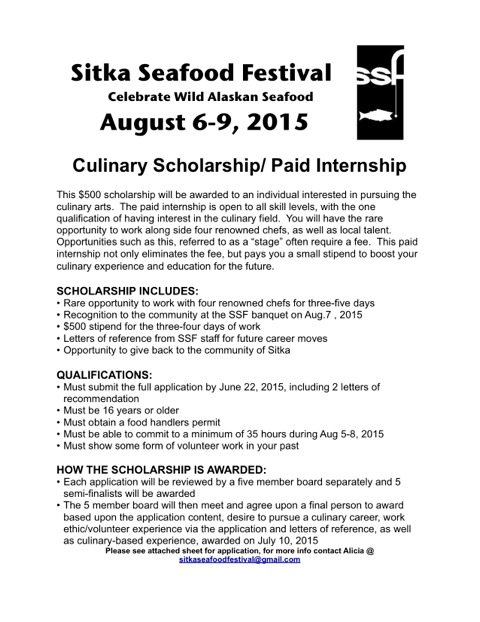
culinary scholarship description

Scholarship 2015Are you a budding chef from Sitka who’d like an opportunity to work with some top-notch chefs from around the country? The Sitka Seafood Festival is offering its culinary scholarship and paid internship again for 2015. The application deadline is Monday, June 22.

This $500 scholarship will be awarded to an individual interested in pursuing the culinary arts. The program includes the opportunity to work with renowned chefs for 3-5 days, a $500 stipend for three days of work, letters of recommendation from Sitka Seafood Festival staff for future career moves, and recognition to the community during the Sitka Seafood Festival community banquet on Friday, Aug. 7. This is a great opportunity to give back to the community of Sitka.

This year’s guest chefs haven’t been announced yet. But last year the executive guest chef was Caleb France, with returning guest chefs Seth Caswell from Seattle, Mickey Neely from Chicago, Robert Kinneen from Anchorage, and Jeren Schmidt from Sitka.

This year’s Sitka Seafood Festival takes place on Thursday-Sunday, Aug. 6-9, with a variety of activities around Sitka. This year’s event schedule hasn’t been announced yet, but typically there is a community banquet featuring a variety of local seafood on Friday night, while Saturday’s activities include fish-tote races at Crescent Harbor, a parade down Lincoln Street, Scottish Highland Games at the Sitka Fine Arts Camp, live music, cooking demonstrations, and a variety of food, informational and artist booths in the marketplace at the Sitka Fine Arts Camp.

For more information, go to the Sitka Seafood Festival website, or contact the festival at sitkaseafoodfestival@gmail.com. You also can contact Alicia Haseltine at (928) 607-4845.

• Click here for a detailed description of the SSF Scholarship program.

• Click here for an application to the SSF Scholarship program.

• Second annual Sitka Herring Festival kicks off March 16 with month of events

Festival Flyer

You feel it in the air; you see it in the lengthening days; you smell it with the changing tides. That’s right, herring season (and Spring!) is right around the corner. And with the arrival of the herring comes the Sitka Tribe of Alaska‘s second annual Sitka Herring Festival, a month of fantastic event for adults and kids alike.

First, for the adults. This year, we’ve been able to bring an excellent speaker from Stonybrook University in New York thanks to a generous donation from Sealaska. At the community potluck from 6-9 p.m. on Tuesday, April 7, at Harrigan Centennial Hall, Dr. Ellen Pikitch will present on herring management and conservation throughout the world. Dr. Pikitch was one of the leading scientists on the Lenfest Forage Fish Task Force, is a pioneer in ocean conservation, and is a leader in ecosystem-based management of fisheries. This event will be a potluck style, so please bring a dish to share. We’re very excited to have her here during the herring season.

In addition to the community potluck, there will be a talk at the University of Alaska Southeast Sitka Campus from Dr. Shingo Hamada. Dr. Hamada is an anthropologist at the Research Institute for Humanity and Nature in Kyoto, Japan. His talk will be on Herring Fisheries and Food Culture in Japan. Mark your calendars for 7:30 p.m. on Monday, March 23, in UAS Sitka Campus Room 218. This is a partnership from the Natural History Seminar Series with UAS and the Sitka Sound Science Center. All are welcome, but be sure to bring your questions.

But what would a festival be without fun activities for the kids? This year’s festival will also include Yaa Khusgé Yaaw Woogoo — The Knowledge of Herring Camp, hosted by the Sitka School District and the Outdoor Foundation, in partnership with Sitka Tribe of Alaska and Sitka National Historical Park. This is a free, hands-on spring break camp connecting kids to culture that will take place from March 16-20 at Sitka National Historical Park. Middle school youth (grades 6-8) are welcome and encouraged to participate in this free camp. More information can be found at Sitka National Historical Park. Feel free to or pick up an application at the main office of STA or at the Sitka National Historical Park Visitor Center.

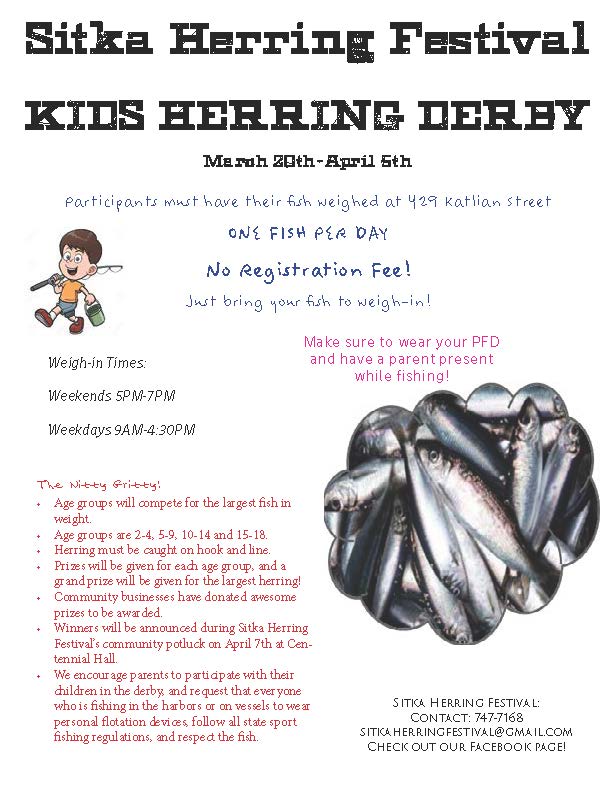
Derby FlyerFor those who like a little competition, there’s the Herring Derby and the Herring Run. Like last year, the Herring Derby will be a fun event for kids and parents. The Derby starts on Friday, March 20, and continues through Monday, April 6. Weigh your biggest fish every day (from 9 a.m. to 4:30 p.m. on Monday through Friday and from 5-7 p.m. on Saturday and Sunday) at the Sitka Tribe of Alaska Resources Production Office at 429 Katlian Street. May the best (biggest) fish win. Also like last year, Sitka Community Schools will host the Herring Run. The run will start at 11 a.m. on Saturday, April 4, at Harrigan Centennial Hall and will wind through the Totem Park trails before returning to Centennial Hall. Herring swim in schools, so bring your friends.

There will be more fun and educational events during the Festival, including a 4-H class through Sitka Conservation Society, Herring in the Hallway at Keet Gooshi Heen Elementary School, Discovery Days at the Sitka Sound Science Center, and the showing of a herring film showing at 7 p.m. on Friday, March 27, and at 2 p.m. on Saturday, March 28, at the Sitka National Historical Park  For the dancers among us, there will also be a Herring Hop from 6-11 p.m. on Saturday, March 28, at the Alaska Native Brotherhood Fellowship Hall. The Herring Hop is a fundraiser for the Cape Decision Lighthouse Society. The Herring Festival will also feature a Food Web Cruise on Saturday, March 21, as a fundraiser for another fantastic festival, the Sitka Whalefest.

More info for all these events can be found online at http://sitkaherringfestival.wordpress.com or at our Facebook page. Or you can email sitkaherringfestival@gmail.com or call 747-7168.

• 2015 Sitka Herring Fest calendar of events