• Sitka Local Foods Network to host annual meeting and potluck on Thursday, Feb. 11 (NOTE NEW DATE)

DisplayBasketOfCrops

The Sitka Local Foods Network will host its annual meeting and potluck dinner from 5:30-7:30 p.m. on Thursday, Feb. 11, at the Sitka Unitarian Universalist Fellowship Hall (408 Marine St., parking off of Spruce Street). Please note that this event has been rescheduled from its original time and date.

Participants are encouraged to bring a dish featuring local foods to share, and please bring your own utensils (note, this is a non-alcoholic event). This event is a good event to attend for people who want to learn more about the Sitka Local Foods Network and what we do around town. In addition, we will host a small fundraising auction for a variety of local-food-related items.

Attendees will hear about project updates, plus the current board will vote on by-law changes. We will introduce our new board members for 2016, and we will confirm the election of our officers.

Individuals interested in learning more about the Sitka Local Foods Network can email sitkalocalfoodsnetwork@gmail.com to learn about our projects and volunteer opportunities. For more information, call Michelle Putz at 747-2708.

• Highlights from 2015 for your Sitka Local Foods Network

Some carrots grown at St. Peter's Fellowship Farm communal garden on sale at the Sitka Farmers Market

Some carrots grown at St. Peter’s Fellowship Farm communal garden on sale at the Sitka Farmers Market

As 2015 comes to a close, here are some highlights from the past year for your Sitka Local Foods Network. We are looking forward to a lot of new adventures in 2016, and encourage people to join us. We always need new volunteers, and please donate to us through Pick.Click.Give. when you file for your Alaska Permanent Fund Dividend starting on Jan. 1 and ending March 31. Your donations help fund a variety of Sitka Local Foods Network programs, such as the Sitka Farmers Market, St. Peter’s Fellowship Farm communal garden, and a host of garden and food education opportunities.

Our annual meeting and potluck will be from 5:30-8 p.m. on Saturday, Jan. 30, at the Sitka Unitarian Universalist Fellowship Hall (408 Marine Street, parking is off Spruce Street). This event is open to the public, just bring a dish (preferably with local foods) to share with everybody. We usually introduce new board members, confirm our new officers, and give an update on our finances and programs.

And now here are those 2015 highlights from your Sitka Local Foods Network:

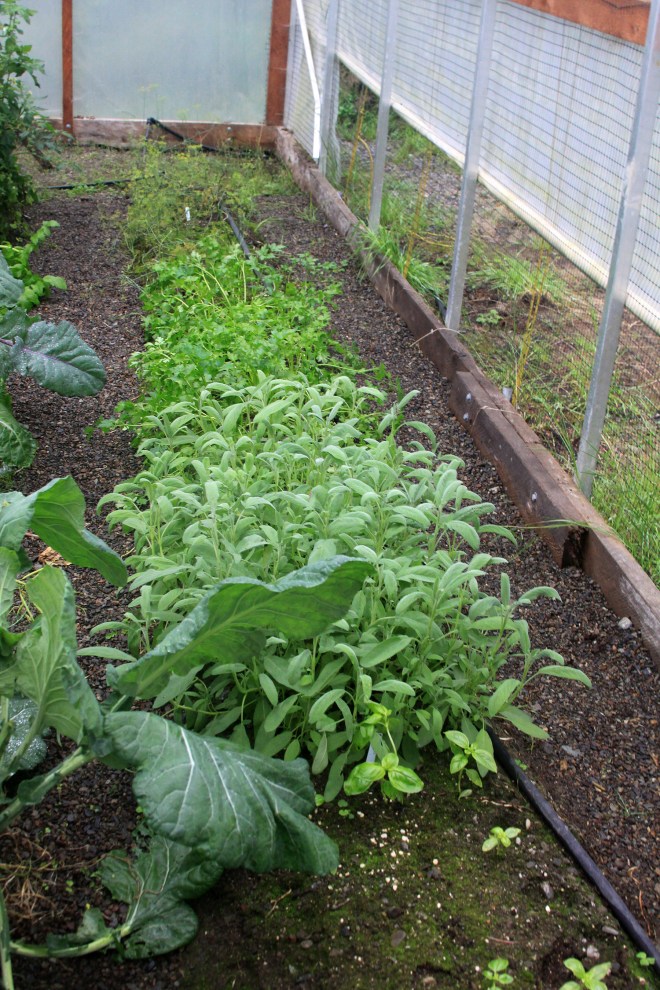
Grew food at St. Peter’s Fellowship Farm and extension gardens

St. Peter's Fellowship Farm communal garden

St. Peter’s Fellowship Farm communal garden

For the eighth straight year, the Sitka Local Foods Network expanded its produce-growing operations at the St. Peter’s Fellowship Farm communal garden and our extension gardens, such as the one on land owned by Pat Arvin. The food grown from these gardens is sold at the Sitka Farmers Market, where Sitka residents, including people with SNAP (food stamps) and WIC (supplemental nutrition program for women, infants and children) benefits, have access to fresh local produce. In addition to supplying the Sitka Farmers Market, this year we grew enough to sell to some school lunch programs, at the Sitka Seafood Festival, at the Running of the Boots costumed fun run, and at a booth on days when Chelan Produce was in Sitka.

Hosted six Sitka Farmers Market events

Some of the booths at the Sitka Farmers Market

Some of the booths at the Sitka Farmers Market

We hosted the Sitka Farmers Market for the eighth straight summer, and this year there were six markets on alternate Saturdays from July 4 through Sept. 12. In addition to selling produce from St. Peter’s Fellowship Farm and our extension gardens, the Sitka Farmers Market serves as a business incubator where budding entrepreneurs sell jams/jellies, baked goods, fish, prepared food ready to eat, and a variety of local arts and crafts. Our emphasis is on local products always. The Sitka Farmers Market also provides a venue for local musicians (we hire a few to play at each market). One of the highlights this year was a brief performance by the students involved in the musical with the Sitka Fine Arts Camp. Another highlight was the inaugural Sitka Slug Races, where Sitka residents brought their own slugs (or rented ones we harvested) for a series of races on a glass table.

Taught a variety of garden education classes and mentored some novice gardeners

Tammy O'Neill, a student in the garden mentor program, poses with her garden beds after her second year in the program

Tammy O’Neill, a student in the garden mentor program, poses with her garden beds during her second year in the program

The Sitka Local Foods Network education committee hosted a variety of classes this year for local food gardeners. We started out with a couple of classes about basic gardening in Sitka, and followed those with classes on starting seeds, composting, chickens, rabbits, fruit trees, potatoes, carrots, rhubarb, and more. In addition, we hosted the second year of our family garden mentoring program with funding from First Bank. In this program we provided one-on-one mentoring for four families of novice gardeners and two families returning for a second year of the program. We are hoping to bring this innovative program back in 2016 and we are recruiting for new families. This fall we received a small grant from the United Way of Southeast Alaska that we will use to develop a teaching garden at Baranof Elementary School near downtown Sitka.

Partnered with several organizations to launch and operate the Sitka Kitch

LisaSadleirHartHelpsRebaAndRobertScoopCultureStarterIntoMilk

Sitka Kitch “Cooking From Scratch” instructor Lisa Sadleir-Hart, center, helps Reba Traini and Robert Baines make homemade yogurt

This year we partnered with the Sitka Conservation Society, UAF Cooperative Extension Service, First Presbyterian Church, Sitka Food Co-op, and other organizations to help launch the Sitka Kitch community rental commercial kitchen, which officially opened in March 2015. The Sitka Kitch is available for cottage food entrepreneurs to rent as they make their products, plus we have been offering a variety of food preservation and cooking classes. The Sitka Kitch also is available for people to rent who need a larger kitchen to cook a community meal.

Helped launch the Sitka Food Collaborative

Toward the end of the year, the Sitka Local Foods Network, Sitka Conservation Society, Sitka Kitch, Sitka Food Co-op, Sitka Seedling Farms, and other food groups created the Sitka Food Collaborative and then submitted an application for a USDA grant to conduct a Sitka Food Systems Assessment. This will build on the work done in 2013-14 with the Sitka Community Food Assessment, but will look at ways we can improve our local food system so we have better food security.

Fundraising and strategic planning
50-states-logoThe Sitka Local Foods Network is maturing as an organization, and this year we decided we needed to start raising money so we eventually can hire a part-time director to take care of some of the daily chores dealt with by our volunteer board of directors. We have started to set aside a little bit of money, still have a ways to go. This year we received a grant from the Alaska Community Foundation that will allow us to work with the Foraker Group in 2016 to create a fundraising and long-term strategic plan. We participated in the Pick.Click.Give. program for the second year, and we are preparing for our third year of receiving donations from Alaskans when they file for their Permanent Fund Dividends. We launched an online donation page on Razoo.com (a donation website for nonprofit groups), and hosted fundraisers for St. Peter’s Fellowship Farm, the Sitka Sound Suppers (with a totally local meal) and #GivingTuesday (#GivingTuesdayAK in Alaska). This fall we received a small grant from the United Way of Southeast Alaska that we will use to develop a teaching garden at Baranof Elementary School near downtown Sitka. In December, the Sitka Local Foods Network was named Alaska’s winner in the 50 States For Good contest, hosted by Tom’s of Maine. Each of the winning community nonprofits from each state won $20,000 to improve their programming, which we should receive in January.

• USDA Natural Resources Conservation Service offers funding support program for high tunnels

picture8

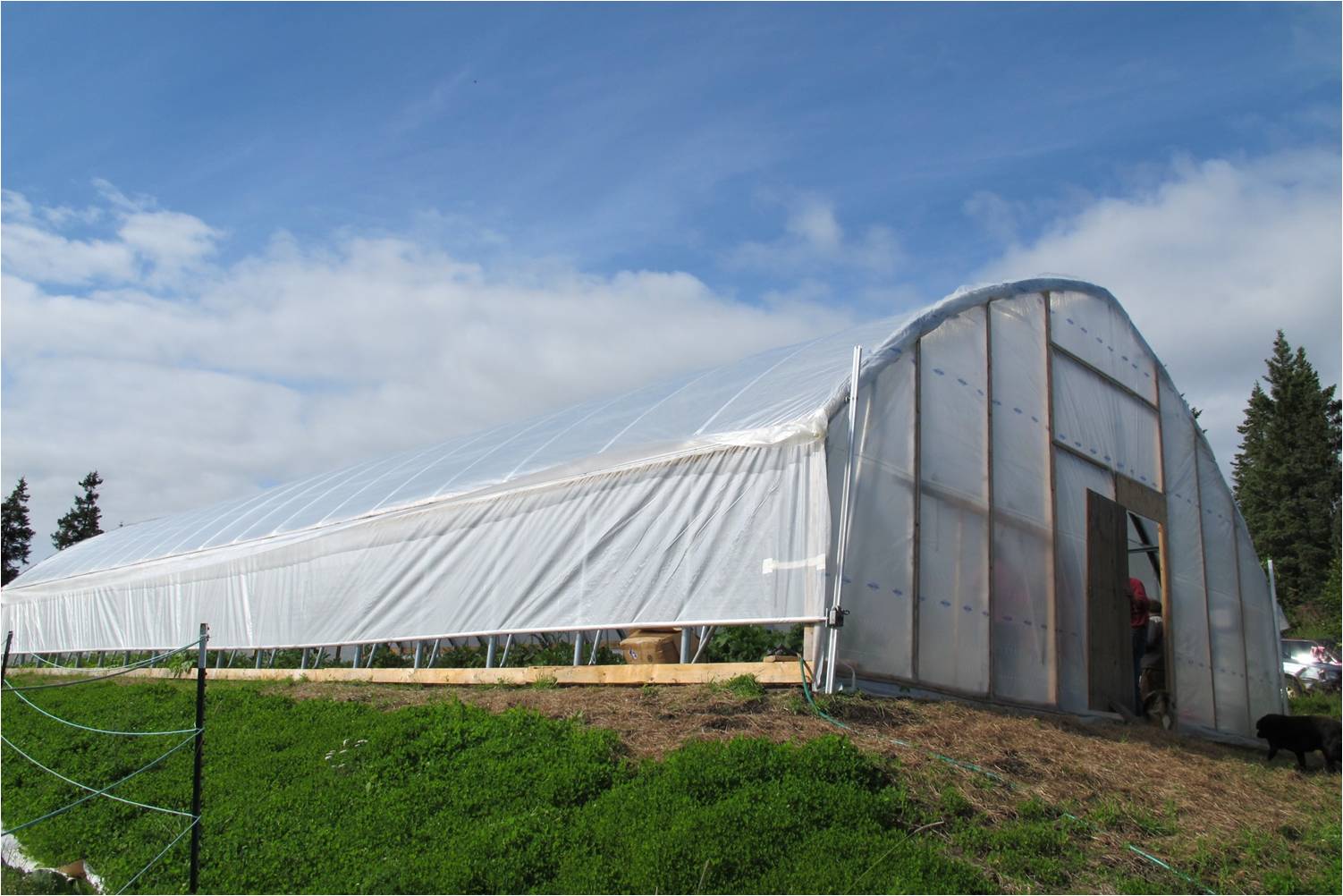
The deadline has been set for the next round of applications for the U.S. Department of Agriculture’s Natural Resources Conservation Service (NRCA) cost-sharing program. This program enables qualifying landowners who produce food to build high tunnels with financial assistance from the USDA.

The next NRCS Alaska program deadline is June 15, 2016. However, the program usually sets two applications deadlines a year so applications can be batched and ranked. Applications that miss the June 15 deadline will be held for the next deadline (usually about Oct. 15, but it hasn’t yet been posted online for 2016). Applicants are encouraged to apply outside two deadline cycles, because sometimes funding is available.

“The next deadline is June 15, 2016 – for funding in the 2017 fiscal year,” said Samia Savell, of the Juneau Field Office of the USDA-NRCS. “However, we often get additional funding in the current fiscal year and have the opportunity to fund applications that have been submitted past the prior deadlines. In other words, if you know of people who are interested in the program, please have them contact me to get the application materials. We do accept applications at any time.”

High tunnels, also known as hoop houses or temporary greenhouses, extend the growing season so more food is produced before and after the traditional weather dates for growing stuff outdoors. They also can help with irrigation and drainage, and with pest control.

High tunnels are different than greenhouses in that they are passively heated by the sun, so they have lower energy costs than greenhouses. High tunnels are at least nine feet tall (an increase from six feet tall in recent years), so people can walk upright in them. Low tunnels, which usually involve some PVC pipe bent over a garden bed and covered with row cover, aren’t eligible in this program. Food in high tunnels is planted either directly into the ground or in raised beds, not in containers. To learn more about the USDA’s high tunnel program, click here, and click here to get information about the application procedure. This link has frequently asked questions and answers about seasonal high tunnel systems for crops.

Picture10This program started a couple of years ago as a pilot program, but now is a permanent part of of the NRCS EQIP (Environmental Quality Incentive Programs). The program recently was revamped, and one major change is there now is no size restriction on the structures NRCS provides cost-sharing funds (previously it was limited to up to 2,178 square feet, or 5 percent of one acre). Also, geodesic domes are now eligible. Both the land owner and land must meet certain eligibility requirements.

Funding is provided on a reimbursable status once the high tunnel is installed and certified to meet NRCS standards. In 2012 there was just one high tunnel in Sitka, but in 2013 there were six. Other areas of the state, such as Homer, have built dozens of high tunnels through the program.

For information regarding the NRCS technical service or program participation in Southeast Alaska, please contact Samia Savell or Will Murray at the Juneau field office at (907) 586-7220 or 586-7208, or send email to samia.savell@ak.usda.gov or william.murray@ak.usda.gov. The June 15, 2016, deadline is the first deadline for the Fiscal Year 2017 funding cycle. Click here for a link to the Alaska NRCS page. Click here for an interview with Samia Savell on KRBD-FM (Ketchikan) about the program.

• High Tunnels In Alaska Fact Sheet (October 2015)

• Flier about Southeast Alaska cost-sharing program for FY2016 (March 2015, note, information should be similar for FY2017)

• Sitka Kitch sets scheduled orientation schedules for potential renters of the commercial kitchen

LisaSadleirHartKristyMillerSarahLewisDorrieFarrell

kitch_logo_mainAre you a budding entrepreneur who wants to use the Sitka Kitch community rental commercial kitchen to make cottage foods products? Are you wanting to rent the Sitka Kitch (Facebook page) to teach cooking or food preservation classes, or to host a large gathering where you need a larger kitchen than what’s in your home?

The Sitka Kitch, which is located at First Presbyterian Church (505 Sawmill Creek Road), will offer some scheduled orientation sessions for a significant price reduction for a solo orientation. The scheduled orientations every other month are $10 per person or group vs. $75 for a solo orientation. These one-hour orientations will teach you how to use the Sitka Kitch facilities and show you what items are available for your use.

The scheduled orientations will be from 4-5 p.m. on the first Fridays and 11 a.m. to noon on the first Saturdays of February, April, and June (Feb. 5-6, April 1-2, and June 3-4). Please note this orientation schedule may change if we have people wanting to rent the Sitka Kitch at these times.

For more information, contact Kristy Miller at the church at 747-3356 or millerkris50@gmail.com.

• New ‘Make It Local’ cookbook highlights Alaska recipes for kids

make_it_local_cookbook_cover-600x391

There has been a renaissance of local food in Alaska in recent years, but sometimes it’s difficult to get the kids to eat meals sourced with food from Alaska.

A new cookbook, “Make It Local: Recipes For Alaska’s Children,” produced by the Alaska Child Nutrition Programs, is full of kid-friendly recipes from around the state. The 111-page cookbook can be downloaded free online, or you can order a printed copy (see info at the bottom of the story). The cookbook is a joint project of the Alaska Department of Education and Early Development, the University of Alaska Fairbanks Cooperative Extension Service, and the Farm to School Program. It is funded by a grant from USDA Team Nutrition.

The cookbook features a variety of recipes, such as reindeer ratatouille, baked halibut, and teriyaki salmon Caesar salad. It also includes portion sizes and nutrition info that meets the strict USDA requirements for school lunch programs. All of the recipes have been sampled by kids from around the state.

Unfortunately, the cookbook didn’t become available until after the state’s Nutritional Alaskan Foods in Schools program was cut from the budget. That program helped school districts purchase local foods for their students, and also helped Alaska farmers and fishermen meet expenses.

Tanya Dube, the kitchen manager for the Bristol Bay Borough School District, told Dillingham radio station KDLG the cuts made it difficult for small school districts to keep buying local foods. She said she sent a letter to Gov. Bill Walker asking him to return the Nutritional Alaskan Foods in Schools program to the 2017 budget.

“Here in Naknek, or up on the North Slope, or in the Southwest Region School District, we can’t really dedicate money to pay $3.99 a pound for Alaska carrots when we can get carrots grown way far away for $1.00 a pound,” Dube said. “So, losing those funds was a big hit for a lot of districts, but I think rural districts took the biggest hit.”

With deeper budget cuts on their way, Dube is not optimistic about that request, but she says she has to try.

“Asking for money is kind of an exercise in futility, but I feel like if we don’t ask, they’re gonna forget,” Dube said. “They’re gonna forget that there’s not only school children that benefit from having these products, but it benefits growers and producers. It benefits Alaska businesses, because they can plant more barley, or raise more cattle or pigs. It really benefits the whole food supply chain.”

This cookbook is available for online downloads at https://education.alaska.gov/tls/cnp/cookbook/Make_It_Local.pdf.  If you are interested in a printed copy, please contact Jan Mays at jan.mays@alaska.gov or 907-465-8712.

• Sitka Seedling Farms project to host informational lunch meeting on Dec. 18

GreensInUAFHoopHouse

Farm DesignSitka Seedling Farms is an initiative to meet Sitka’s food system needs in a thought-out, comprehensive way. Many food-related initiatives have been proposed over the last several years, but most have stalled for lack of space.

Sitka Seedling Farms, which is a finalist in the Paths to Prosperity economic development contest for Southeast Alaska, will solve this problem by exploring innovative land relationships with major landowners in our community to develop the resources Sitka’s food system needs to thrive, such as production space for food entrepreneurs, community greenhouses, food storage and processing facilities and more. Sitka Seedling Farms is currently in the land exploration phase.

To learn more about this local foods systems project, there will be an informational lunch meeting from noon until 1 p.m. on Friday, Dec. 18, at the Larkspur Café. Please contact Matthew Jackson with questions or comments at 907-821-1412. Also, please feel free to sign this online letter of support to the city to help promote the project.

• Sitka Seedling Farms business plan executive summary (Fall 2015)

• Potential Sitka Seedling Farms community farm design (by Monique Anderson)

• Scenes from the fourth class in the Sitka Kitch’s Cooking From Scratch series — Making Yogurt From Low-Fat Powdered Milk

LisaSadleirHartHelpsRebaAndRobertScoopCultureStarterIntoMilk

kitch_logo_mainThe fourth of four classes in the Sitka Kitch‘s Cooking From Scratch lesson series — Making Yogurt From Low-Fat Powdered Milk — was held on Monday, Dec. 7, at the Sitka Kitch community rental commercial kitchen.

Students learned the basics of making yogurt from instructor Lisa Sadleir-Hart, and each student took home a quart jar of yogurt (that needed to culture overnight) and the supplies to make a second batch. The class focussed on powdered milk due to the cost savings, though regular milk can be used.

This was the fourth and final class in a fall series of Cooking From Scratch classes. Lisa Sadleir-Hart, a registered dietitian and certified health educator, coordinated the class series and also taught the first two classes —Beans 101 and Baking Whole-Grain Bread. Bridget Kauffman taught the third class — Gluten-Free Holiday Baking.

All classes took place at the Sitka Kitch community rental commercial kitchen (link opens Facebook page) located at the First Presbyterian Church, 505 Sawmill Creek Road. Watch for updates about upcoming classes this winter and spring, including a Culinary Skills series of classes in March geared toward giving prospective restaurant and catering employees the skills they need to get jobs in the industry.

There also will be more Cooking From Scratch classes. The Cooking from Scratch series goal is to teach basic cooking skills using high-quality ingredients, and to help Sitkans take back their kitchens and reduce their food budgets. Interested individuals can register for Sitka Kitch classes at https://sitkakitch.eventsmart.com/ (click on the event title to register, and pay when you attend the class).

Here is a slideshow of several photos from the fourth class in the Cooking From Scratch series, Making Yogurt From Low-Fat Powdered Milk.

This slideshow requires JavaScript.

• Check out the December 2015 edition of the Sitka Local Foods Network newsletter

SLFNDecember2015NewsletterScreenshot

The Sitka Local Foods Network just sent out the December 2015 edition of its newly launched monthly newsletter. Feel free to click this link to get a copy.

This edition of the newsletter has brief stories about how one 140-character tweet won the Sitka Local Foods Network $20,000 from Tom’s of Maine, how the opening of the new Sitka Biotoxin Lab on Katlian Street will mean safer shellfish in Southeast Alaska, and an appeal for new first-year gardening families for the garden mentor program. Each story has links to our website for more information.

You can sign up for future editions of our newsletter by clicking on the registration form image in the right column of our website and filling in the information. If you received a copy but didn’t want one, there is a link at the bottom of the newsletter so you can unsubscribe. Our intention is to get the word out about upcoming events and not to spam people. We will protect your privacy by not sharing our email list with others.

• New biotoxin lab in Sitka allows for quicker, better monitoring of harmful algal blooms in Southeast Alaska

MichaelJamrosChrisWhiteheadEstherKennedyJohnDorothyOrbisonDeanOrbison

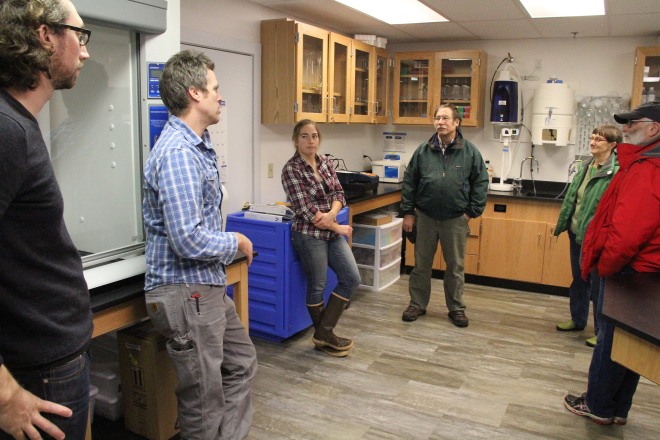
From left, Sitka Tribe of Alaska Environmental Lab Manager Michael Jamros, STA Environmental Program Manager Chris Whitehead, and STA Environmental Specialist Esther Kennedy discuss the new Sitka Biotoxin Lab with visitors to an open house on Monday, Nov. 30, 2015. The new lab will help Southeast subsistence and sport shellfish harvesters learn about harmful algal blooms in the region so they can avoid paralytic shellfish poisoning (PSP) or amnesic shellfish poisoning (ASP).

Most shellfish eaters are aware of the massive algal bloom that shut down many shellfish operations on the Pacific Coast this summer. The algal bloom even reached Sitka’s Starrigavan Beach with the June discovery of Pseudo-nitzchia, a species of plankton that sometimes produces domoic acid which can cause amnesic shellfish poisoning (ASP). ASP causes gastrointestinal issues in mild cases, such as nausea, vomiting, diarrhea, and abdominal cramps. In more severe cases there will be neurological problems, such as headaches, confusion, hallucinations, short-term memory loss, respiratory difficulty, seizures, coma, and in extreme cases, death.

SEAKTribalToxinsSEATTPartnerLocationsUntil two years ago, Southeast Alaska beaches and subsistence- and sport-harvested shellfish weren’t tested for harmful biotoxins. That changed with the Southeast Alaska Tribal Testing (SEATT) program, a partnership of regional tribes coordinated by Sitka Tribe of Alaska, that began training technicians from six villages (now 12 villages) in the region on how to gather water samples so they could be tested. SEATT is part of a program called Southeast Alaska Tribal Ocean Research (SEATOR).

Now the project has moved to the next phase, the creation of a Sitka Biotoxin Lab, located at 429 Katlian Street, that can provide quicker and better testing results to people in the region who want to eat shellfish. Instead of sending samples to the Lower 48 for testing, which can take more than a week or two, samples from Southeast Alaska can be tested in Sitka and data can be available in less than 24 hours, Sitka Tribe of Alaska Environmental Program Manager Chris Whitehead said during an open house at the lab on Monday, Nov. 30. Before the lab opened, the program just took water samples. But now it will be able to actually test the shellfish for biotoxins.

Whitehead said one of the purposes of the lab is to give shellfish harvesters as much information as possible about possible harmful algal blooms so they can make informed decisions about if they still want to harvest and eat local shellfish. Harmful algal blooms spread a variety of biotoxins, such as domoic acid and saxitoxin, which can cause paralytic shellfish poisoning (PSP) and amnesic shellfish poisoning (ASP). PSP and ASP can be deadly, and in 2010 there were two people in Southeast Alaska who died from PSP.

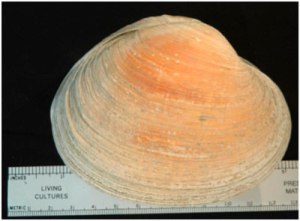
Cockles-Alaska-Department-of-Health-and-Social-Services“The toxins can stay in butter clams for 2 1/2 to three years,” Whitehead said, disproving the common local myth that shellfish is safe to eat in months with R in the name. “We’re still seeing blooms in December.”

Whitehead said he’s hoping to eventually be able to do baseline sampling of a variety of beaches in Southeast Alaska. He said they are sampling bays for cyst beds by digging cores in the beach soil, and they’ve found cysts 3-4 meters (9-13 feet) below the surface. While the beach might be safe for now, if people start building piers or docks it can stir up the cyst beds and launch a harmful algal bloom.

The lab and testing program is funded by the Environmental Protection Agency (EPA) Indian Environmental General Assistance Program, the Bureau of Indian Affairs (BIA) and Tribal Cooperative Landscape Conservation Program, and the Administration for Native Americans’Environmental Regulatory Enhancement program. The National Oceanic and Atmospheric Administration (NOAA) Marine Biotoxin Programs from Seattle, Wash., and Charleston, S.C., provided training through workshops to help develop the SEATT program.

raw-clams-350Michael Jamros, PhD, was hired in October as the STA Environmental Lab Manager, and he will be handling most of the actual testing and diagnosis of the seawater and shellfish. He said right now the lab is focused on subsistence and sports harvests, but down the road it’s hoping to become FDA-certified so it can test commercial harvests.

Esther Kennedy is the STA Environmental Specialist, and she said “every week I go plankton hunting.” This summer all of her tests were at Starrigavan State Recreation Area, but now that the lab is open she will be able to test in more areas, “wherever you think people might harvest shellfish.”

pe-fig1“I think this will help our food security,” Kennedy said. “People will be able to see this abundant resource of shellfish, and now they’ll have better information about whether it’s safe to harvest.”

In addition to the Sitka staff, the program also trains monitors from 12 partner villages to test in their areas, which range from Ketchikan on the south to Yakutat on the north. These monitors come to Sitka twice a year for training, with their most recent training in early November. A slideshow of photos from the training is posted below.

This slideshow requires JavaScript.

• Sitka Local Foods Network to host education brainstorming session on Dec. 3

GreensInHoopHouseStPeters

Are you an experienced gardener who might be willing to help teach a class about growing food in Sitka? Maybe you’ll let people tour your garden? We might even start a Sitka Garden Club.

Join the Sitka Local Foods Network education committee for a brainstorming session as we try and come up with education activities for the upcoming year. We’ll meet from 6:30-8 p.m. on Thursday, Dec. 3, at the Sitka Unitarian Universalist Fellowship Hall (408 Marine Street, parking off Spruce Street).

For more information, contact Jennifer Carter at 747-0520.