• New biotoxin lab in Sitka allows for quicker, better monitoring of harmful algal blooms in Southeast Alaska

MichaelJamrosChrisWhiteheadEstherKennedyJohnDorothyOrbisonDeanOrbison

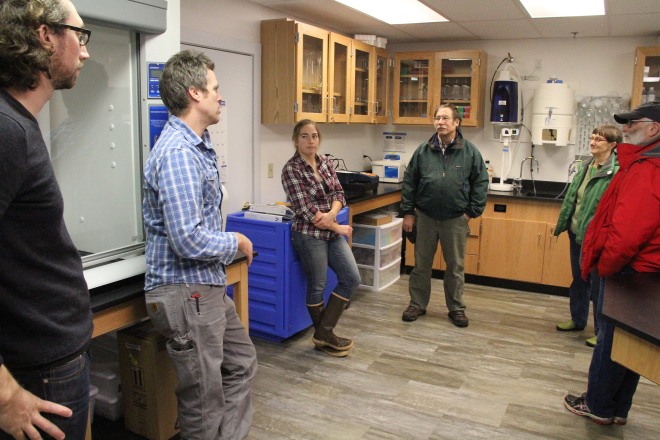
From left, Sitka Tribe of Alaska Environmental Lab Manager Michael Jamros, STA Environmental Program Manager Chris Whitehead, and STA Environmental Specialist Esther Kennedy discuss the new Sitka Biotoxin Lab with visitors to an open house on Monday, Nov. 30, 2015. The new lab will help Southeast subsistence and sport shellfish harvesters learn about harmful algal blooms in the region so they can avoid paralytic shellfish poisoning (PSP) or amnesic shellfish poisoning (ASP).

Most shellfish eaters are aware of the massive algal bloom that shut down many shellfish operations on the Pacific Coast this summer. The algal bloom even reached Sitka’s Starrigavan Beach with the June discovery of Pseudo-nitzchia, a species of plankton that sometimes produces domoic acid which can cause amnesic shellfish poisoning (ASP). ASP causes gastrointestinal issues in mild cases, such as nausea, vomiting, diarrhea, and abdominal cramps. In more severe cases there will be neurological problems, such as headaches, confusion, hallucinations, short-term memory loss, respiratory difficulty, seizures, coma, and in extreme cases, death.
SEAKTribalToxinsSEATTPartnerLocationsUntil two years ago, Southeast Alaska beaches and subsistence- and sport-harvested shellfish weren’t tested for harmful biotoxins. That changed with the Southeast Alaska Tribal Testing (SEATT) program, a partnership of regional tribes coordinated by Sitka Tribe of Alaska, that began training technicians from six villages (now 12 villages) in the region on how to gather water samples so they could be tested. SEATT is part of a program called Southeast Alaska Tribal Ocean Research (SEATOR).

Now the project has moved to the next phase, the creation of a Sitka Biotoxin Lab, located at 429 Katlian Street, that can provide quicker and better testing results to people in the region who want to eat shellfish. Instead of sending samples to the Lower 48 for testing, which can take more than a week or two, samples from Southeast Alaska can be tested in Sitka and data can be available in less than 24 hours, Sitka Tribe of Alaska Environmental Program Manager Chris Whitehead said during an open house at the lab on Monday, Nov. 30. Before the lab opened, the program just took water samples. But now it will be able to actually test the shellfish for biotoxins.

Whitehead said one of the purposes of the lab is to give shellfish harvesters as much information as possible about possible harmful algal blooms so they can make informed decisions about if they still want to harvest and eat local shellfish. Harmful algal blooms spread a variety of biotoxins, such as domoic acid and saxitoxin, which can cause paralytic shellfish poisoning (PSP) and amnesic shellfish poisoning (ASP). PSP and ASP can be deadly, and in 2010 there were two people in Southeast Alaska who died from PSP.

Cockles-Alaska-Department-of-Health-and-Social-Services“The toxins can stay in butter clams for 2 1/2 to three years,” Whitehead said, disproving the common local myth that shellfish is safe to eat in months with R in the name. “We’re still seeing blooms in December.”

Whitehead said he’s hoping to eventually be able to do baseline sampling of a variety of beaches in Southeast Alaska. He said they are sampling bays for cyst beds by digging cores in the beach soil, and they’ve found cysts 3-4 meters (9-13 feet) below the surface. While the beach might be safe for now, if people start building piers or docks it can stir up the cyst beds and launch a harmful algal bloom.

The lab and testing program is funded by the Environmental Protection Agency (EPA) Indian Environmental General Assistance Program, the Bureau of Indian Affairs (BIA) and Tribal Cooperative Landscape Conservation Program, and the Administration for Native Americans’Environmental Regulatory Enhancement program. The National Oceanic and Atmospheric Administration (NOAA) Marine Biotoxin Programs from Seattle, Wash., and Charleston, S.C., provided training through workshops to help develop the SEATT program.
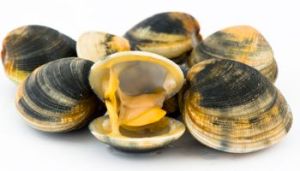
raw-clams-350Michael Jamros, PhD, was hired in October as the STA Environmental Lab Manager, and he will be handling most of the actual testing and diagnosis of the seawater and shellfish. He said right now the lab is focused on subsistence and sports harvests, but down the road it’s hoping to become FDA-certified so it can test commercial harvests.

Esther Kennedy is the STA Environmental Specialist, and she said “every week I go plankton hunting.” This summer all of her tests were at Starrigavan State Recreation Area, but now that the lab is open she will be able to test in more areas, “wherever you think people might harvest shellfish.”
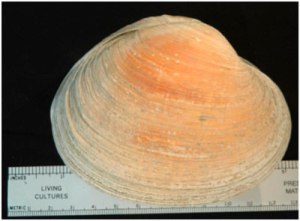
pe-fig1“I think this will help our food security,” Kennedy said. “People will be able to see this abundant resource of shellfish, and now they’ll have better information about whether it’s safe to harvest.”

In addition to the Sitka staff, the program also trains monitors from 12 partner villages to test in their areas, which range from Ketchikan on the south to Yakutat on the north. These monitors come to Sitka twice a year for training, with their most recent training in early November. A slideshow of photos from the training is posted below.

This slideshow requires JavaScript.

• Three community wellness projects receive MAPP Tier 2 grant funding from SEARHC

SitkaMAPPGraphic
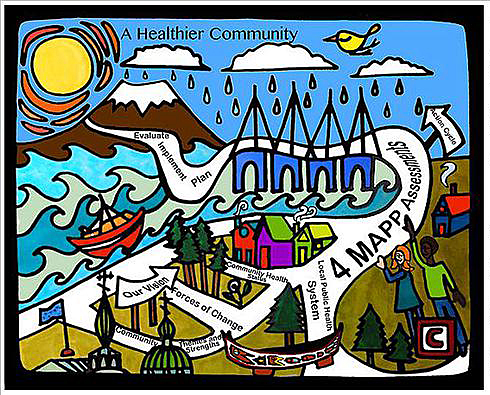
Three Sitka community wellness projects will each receive $10,000 in funding through the MAPP (Mobilizing for Action through Planning and Partnerships) Tier 2 grants from the SouthEast Alaska Regional Health Consortium (SEARHC).

SEARHC-logo-rgb-150-web“Fostering health and wellness in a community is complex and multifaceted,” SEARHC Health Educator Lauren Hughey said. “We are pleased to support these three projects with MAPP Teir 2 funding because while each project has a different approach. All will make Sitka a healthier place to live.”

Earlier this year, the Sitka Health Summit collected MAPP data about community health issues in Sitka, identifying healthy weight as a key focus area. In order to help more Sitkans achieve a healthy weight, SEARHC and the Sitka Health Summit requested project proposals that addressed this key area using the identified strategies that also address the health status of Alaska Native people.

Projects must use one of these strategies and plan an intervention based on evidence-based policy, systems, and environmental (PSE) changes. PSE changes will increase access to and use of traditional and other healthy foods or increase health literacy by making them more readily available at home, work, and in the community. PSE changes are long term changes and reach a large proportion of the population. PSE changes can occur in the community, tribal organizations, schools, healthcare systems, childcare facilities, worksites, or in families.

Here are brief descriptions about the three projects to receive MAPP Tier 2 grant funding:

  • Sitka Seedling Farms (project info provided by Matthew Jackson) — Sitka Seedling Farms is an initiative to meet Sitka’s food system needs in a thought-out, comprehensive way. Many food-related initiatives have been proposed over the last several years, but most have stalled for lack of space. Sitka Seedling Farms, which is a finalist in the Paths to Prosperity economic development contest for Southeast Alaska, will solve this problem by exploring innovative land relationships with major landowners in our community to develop the resources Sitka’s food system needs to thrive, such as production space for food entrepreneurs, community greenhouses, food storage and processing facilities and more. Sitka Seedling Farms is currently in the land exploration phase. Please contact Matthew Jackson with questions or comments at 907-821-1412.
  • Sitka Community Playground (project info provided by Lynne Brandon) — The grant award is to assist with the Sitka Community Playground Project Phase II, the design process. The design will help with the subsequent fundraising effort. The Phase III goal is to construct the new playground during the summer of 2017. Phase I was establishing a steering committee with volunteers, getting Assembly approval for the playground location at Crescent Harbor Park playground incorporating one of the three tennis courts, creating a funding plan and a timeline with tasks. The Sitka Community Playground project also is a 2015 Sitka Health Summit community wellness project.
  • Hames Center Elder Connect project (project info provided by Caitlin Blaisdell) — The Hames Center‘s Tier 2 grant will be used to create delegated senior hours for everyone older than age 65 and their caregivers to use our gym floor free of cost. These hours will incorporate group fitness activities, serve as an indoor walking space, create senior service information dissemination, and spark active, social groups for our growing senior demographic. Through bringing seniors together at the Hames Center with transportation assistance, we aim to remove many of the obstacles, such as social isolation, transportation limitations, and fixed income restrictions, that seniors may face in maintaining their physical and mental well-being all year round. The Hames Center Elder Connect project also is a 2015 Sitka Health Summit community wellness project.

Selected projects are awarded up to $10,000 for the project period of Nov. 1, 2015, through Oct. 31, 2016. For more information about the MAPP Tier 2 grant program, please contact Lauren Hughey at 966-8797 or lauren.hughey@searhc.org.


• Sitka rooftop greenhouse project to meet on Tuesday, Nov. 17

Rooftop greenhouses, such as this one on top of a parking garage in Vancouver, British Columbia, are becoming more popular around the world. The rooftop greenhouse project from the 2015 Sitka Health Summit is hoping this might be an option for Sitka, where land is at a premium. (Photo from http://www.cityfarmer.info/)

Rooftop greenhouses, such as this one on top of a parking garage in Vancouver, British Columbia, are becoming more popular around the world. The rooftop greenhouse project from the 2015 Sitka Health Summit is hoping this might be an option for Sitka, where land is at a premium. (Photo from http://www.cityfarmer.info/)

The rooftop greenhouse project from the 2015 Sitka Health Summit will meet from 5-6:30 p.m. on Tuesday, Nov. 17, at the Sitka Pioneers’ Home manager’s house/Brave Heart Volunteers office.

Sitka's city-owned cold storage plant on Katlian Street is one place that has been suggested for a possible rooftop greenhouse.

Sitka’s city-owned cold storage plant on Katlian Street is one place that has been suggested for a possible rooftop greenhouse.

After several years of running into problems finding useable land for a Sitka Community Greenhouse and Education Center that didn’t require large investments in remediation, the group hopes a rooftop greenhouse on a flat-roofed building, such as the city’s cold storage plant on Katlian Street, might be the solution. Not only would wasted heat be recaptured for the greenhouse, but moving it onto the roof will provide better sun exposure and fewer garden pests (such as snails and deer).

Rooftop greenhouses of all sizes are becoming more popular around the world, and there have been several large ones pop up in New York City, Chicago, Montréal, Berlin, and other communities. Come join us as we see if this option is possible for Sitka. For more information, please contact Charles Bingham at 623-7660 or charleswbingham3@gmail.com

• Sitka Economic Development Association to host Sitka Seafood Innovation Summit

INVITATION SSIS poster_web

The Sitka Economic Development Association (SEDA) invites anyone interested in developing the opportunities of our local and regional seafood industry to attend the Sitka Seafood Innovation Summit at 6:30 p.m. on Thursday, Oct. 1, in the Sheet’ka Kwáan Naa Kahídi.

Presenters will provide examples of some innovative products and processes now being developed and marketed. Learn how the Iceland Ocean Cluster model is working, and how Iceland, despite a 60 percent reduction in their codfish harvest, has used innovation to increase the value of each pound of fish harvested by more than 400 percent.

Want to learn more? Then come to this free event sponsored and hosted by the Sitka Economic Development Association. For more information, contact Garry White, 747-2660.

• Alaska’s potential for increasing agricultural potential immense; hard work, clear vision needed

AlaskaFoodPolicyCouncilLogo

(The following is a commentary about increasing Alaska’s access to local food by Alaska Food Policy Council co-chairs Liz Snyder and Victoria Briggs. It originally ran in the Sept. 10, 2015, edition of the Homer News.)


If you’ve visited a local farmers market recently, you’ll appreciate the bounty of delicious, healthy food that Alaska can produce when cultivated by knowledgeable, dedicated hands.

The prospects for increasing this bounty are immense. To take full advantage of our agricultural potential, we will need political will, consumer advocacy, recruitment and education of new farmers, financial support and incentives and a long-term vision. This vision, of course, will also need to take into account the changing climate in which Alaska farmers grow our food.

Imagine a glacier that retreats, then expands for several years, only to retreat again, repeating this process over and over. Such has been the history of agriculture in Alaska. We’ve experienced several booms and busts of both enthusiasm and productivity since the early 1900s.

Booms were the result of such things as co-development with gold mining, collaboration with local businesses, federal support of farming settlements and agricultural innovations. Busts came when challenges (that still exist today) got the better of farmers — the temptation to grow too big too fast, unsustainable and mismanaged support mechanisms, high costs and resulting debt; competition from the Lower 48, infrastructure designed for resource development instead of agriculture, inexperience and being far from home, a lack of replacements for retiring farmers, and, of course, climate.

Today, farmers and consumers are enjoying a boom of interest and enthusiasm around local foods. While it’s true that we send about 1.9 billion Alaska dollars out of the state each year to import food (which supplements the impressive $900 million worth of subsistence and personal-use foods), the good news is that direct sales between farmers and consumers are strong (13 times greater than the national average), Alaska farmers are notoriously tenacious and innovative, and demand continues to motivate increases in supply.

What we have now is a fantastic opportunity to throw a wrench into the boom/bust cycle, expand on the status quo and ultimately pump about $2 billion into, instead of out of, the Alaska economy each year — in effect, supporting the local farmers we know and love, strengthening our food system, lowering food costs, and increasing food security and resilience.

Of course, strengthening our food system will require both short-term goals and long-term planning. When it comes to climate change and agriculture, we’ve got three courses of action to consider:

  1. reduce our impact;
  2. respond to current changes; and
  3. prepare for future changes.

In the Lower 48, agriculture is a major contributor to climate change with high fossil fuel use (to manufacture pesticides and fertilizers, and to operate machinery) and greenhouse gas emissions from concentrated animal feeding operations (CAFOs).

In Alaska, however, the relative scales of agriculture and pest pressure are small. Our primary agriculturally related contribution to climate change is through the importation of approximately 95 percent of our food, which requires the burning of fossil fuels to power transport. Just think of the impact we could have if we expanded Alaska agriculture in thoughtful, sustainable ways to simultaneously produce more food and reduce total greenhouse gas emissions.

With respect to responding to current changes in Alaska’s climate and preparing for the future, we have a host of actions that are either already being taken or need to be taken. These actions should use the best natural, economic and social science information available.

Such preparations include the conservation of arable land; crop diversification and expansion into new growing zones; anticipation of changes in water distribution and quality; measures to address changes in pest, disease and invasive species pressures; education and support of new farmers focused on sustainable agricultural development, and construction of weather-resistant food caches and transportation routes.

Of course, in reality there is an even longer list of recommendations that can be made to strengthen Alaska’s food system, but all of these recommendations will need to be made in light of the climate changes we’re experiencing now and those that lie ahead. The Alaska Food Policy Council is dedicated to helping develop, share and advocate for policies that will result in an Alaska food system that is sustainable, resilient and healthy — and we ask our local, state, and federal leaders to tune in to the issues of food security and climate change and make them a priority. The health of our great state depends on it.

Liz Snyder and Victoria Briggs are co-chairs of the Alaska Food Policy Council, or AFPC. To learn more about food security in Alaska, find the following research resources on the AFPC webpage (akfoodpolicycouncil.wordpress.com):

Building Food Security in Alaska (a report commissioned by AFPC).

• A three-part series of articles (Part I, Part II, Part III) on circumpolar agriculture by Stevenson et al. (2014) and

• An article entitled “Food in the Last Frontier” by Snyder and Meter (2015).

• Sitka Local Foods Network education committee seeks new families for garden mentor program

KubackiCoupleWithGarden

DasallaAndPutzFor a third year (2015-16), the Sitka Local Foods Network (SLFN) education committee wants to help families in Sitka learn how easy it can be to grow some of their own food. We are looking for up to three families who would like to learn about and try vegetable gardening in their own backyard through our Family Garden Mentor project.

Through a series of six workshops to be held at the families’ homes, Sitka Local Foods Network education committee volunteers will help the families:

  • Choose a location for a vegetable bed (learning about sun, drainage, etc.),
  • Build (or find) a planter/container or raised bed, and acquire soil and soil amendments,
  • Learn about soil and prepare the soil for planting,
  • Plant 2-4 easy-to-grow plants — specifically potatoes, lettuce, kale, and maybe a perennial edible such as rhubarb or fruit bushes,
  • Learn to take care of their plants over the summer — teaching how to care for and pick the vegetables (without killing the plant),
  • Harvest potatoes, and
  • Cook a meal using the vegetables they have grown.

IMG_0005The Sitka Local Foods Network will provide all materials — soil, lumber, seeds, etc. — free to the participating families. Families will be expected to provide the labor, enthusiasm for gardening, and healthy appetites to eat the vegetables they grow.

The requirement to own your property or home was dropped in 2015, and people who rent now are participating through container gardening. Interested families must meet only three requirements:

  1. They must be first-time vegetable gardeners (this project is meant to help people who are just starting to garden, not people with previous experience, even if it was not in Alaska),
  2. They must want to try vegetable gardening and be committed to participating throughout the summer, and
  3. They must agree to let others come and attend classes at their property.

Other criteria, such as availability and interest in a second year of mentoring, will also be used to help select the final three families. Families that are not selected will be placed on a waiting list in the hope of future continuation and expansion of this project.

IMG_0751The Sitka Local Foods Network has expanded the program this year to include more families and to include at least two households living in rental housing that will garden in portable containers or planters appropriately sized for their space (in case moving is necessary). We also will offer a second year of mentoring to previous participants, so families can expand their knowledge and try growing more “difficult” vegetables such as carrots and green onions.

IMG_0022Workshops may start as early as this fall or winter with selecting the site, ramp up in the spring of 2016 and run through September’s late harvest. First-year classes will focus on the easiest-to-grow vegetables (and fruit) in Sitka — potatoes, lettuce, kale, and rhubarb.

Families interested in participating should contact Michelle Putz at 747-2708, and provide a name, address, and contact phone number.

• Help the Sitka Local Foods Network education committee brainstorm ideas for a 2016 Sitka garden tour

LauraSchmidtStPetersFellowshipFarm

St. Peter’s Fellowship Farm Lead Gardener Laura Schmidt, right, shows off the garden to members of the International Master Gardeners Conference cruise that toured Sitka in September 2013.

Do you have a food garden in Sitka you love to show off? Do you have a friend or neighbor who always seems to be growing lots of fresh veggies and fruit?

The Sitka Local Foods Network education committee invites you to a meeting to brainstorm ideas for a possible food garden tour of Sitka in the summer of 2016 or 2017. The meeting will take place from 6:30-8 p.m. on Wednesday, Sept. 2, at the Sitka Unitarian Universalist Fellowship Hall (408 Marine Street, parking off Spruce Street).

Bring your ideas and help us come up with a plan for a garden tour. For more information, contact Jennifer Carter at 747-0520.

• Experience the best of Sitka’s local food scene with our updated Sitka Sound Suppers fundraiser

SitkaSoundSuppersLogoEating local in Sitka can be an amazing experience. We have wide variety of high-quality seafood, including five types of salmon, halibut, blackcod, dozens of varieties of rockfish, ling cod, Alaska king crab, Dungeness crab, scallops, spot prawns, yum. There also is Sitka black-tailed deer and other wild game. And there’s nothing like the taste of fresh produce from the garden, and our berries are exquisite.

Now you can experience the best of Sitka’s local food scene with Sitka Sound Suppers: A Chef-To-Table Experience, a fundraiser for the Sitka Local Foods Network. (NOTE: Please see the update below.)

Three Sitka chefs — Kathy Jones (Westmark/Dock Shack), Edith Johnson (Fly-In Fish Inn), and Jackie Barmoy (former owner of Loaves and Fishes in Seattle) — have volunteered their talents to prepare a totally local meal that will be brought to your Sitka home for you to enjoy.

  • Donate at the $500 level and you receive a local Sitka dinner for two people.
  • Donate at the $1,000 level and you receive a local Sitka dinner for four people.
  • Donate at the $2,000 level and you receive a local Sitka dinner for eight people.

We are planning on preparing just one special dinner at each donation level, so get in on the promotion early. (UPDATE: We have decided to allow multiple dinners for each donation level instead of a single dinner. We didn’t know how many people would respond, so didn’t want to overtask our chefs, who are donating their time and talents to this promotion. So, even though we already have a donor at the $500 level, we can accommodate a second and/or third donor at that level.)

The Sitka Sound Suppers fundraiser launched on July 16 and ends after our final Sitka Farmers Market of the summer on Sept. 12. The winners of our meals will be connected to our chefs, so they can agree on a menu and date for the meal during the Fall 2015 harvest season (late September to November). All meals will be prepared and served in Sitka, Alaska. You can learn more about the Sitka Sound Suppers fundraiser by watching this video.

The funds raised by this promotion will help the Sitka Local Foods Network continue its work promoting local foods in Sitka and Southeast Alaska through the Sitka Farmers Market, St. Peter’s Fellowship Farm communal garden, and our education programs. As the organization has grown and matured, we’ve reached a point where we need to hire a part-time staff person to handle some of the daily duties of our organization. Your donations will go into a fund to help us eventually be able to hire that staff person.

Your support for the Sitka Local Foods Network is greatly appreciated. Thanks.

By the way, if you want to contribute to the Sitka Local Foods Network but not receive one of the Sitka Sound Suppers, you can go to our main fundraising page on Razoo.com (a fundraising/crowdfunding site for nonprofit organizations) and donate in any amount over $10 there. Your online donation is secure and tax-deductible (we have federal 501(c)(3) nonprofit status). Thanks again.

• Sitka Sound Suppers information flier (opens as PDF file)

• Fish to Schools program seeks donations of coho salmon, photos from commercial fishermen

FishtoSchool

The Fish to Schools program needs help from Sitka’s commercial fishermen. The program needs a few hundred pounds of coho salmon to help make Fish to Schools meals for Sitka students during the upcoming 2015-16 school year. The program also is seeking photos of commercial fishermen at work, which can be used to teach the students more about how the fish got to their plates.

The coho salmon donation period is Monday. Aug. 24, through Monday, Aug. 31. To donate, commercial fishermen can sign up and indicate how many pounds they want to donate when they offload at Seafood Producers Cooperative or Sitka Sound Seafoods during the donation period. The program can only accept commercially caught fish (no sport or subsistence fish). The hope is to get enough coho donated that locally caught salmon can be offered to students at least once a week.

The Sitka Fish To Schools project (click here to see short video) got its start as a community wellness project at the 2010 Sitka Health Summit, and now is managed by the Sitka Conservation Society. It started by providing a monthly fish dish as part of the school lunch as Blatchley Middle School, and since then has grown to feature regular fish dishes as part of the lunch programs at Baranof Elementary School, Keet Gooshi Heen Elementary SchoolBlatchley Middle School, Sitka High SchoolPacific High School (where the alternative high school students cook the meals themselves), the SEER School, and Mount Edgecumbe High School.

FishtoSchool2In addition to serving locally caught fish meals as part of the school lunch program, the Fish To Schools program also brings local fishermen, fisheries biologists and chefs to the classroom to teach the kids about the importance of locally caught fish in Sitka. The program received an innovation award from the Alaska Farm To Schools program during a community celebration dinner in May 2012, and now serves as a model for other school districts from coastal fishing communities. In May 2014, the Fish to Schools program released a guidebook so other school districts in Alaska could create similar programs.

For more information, contact Sophie Nethercut of the Sitka Conservation Society, sophie@sitkawild.org or 747-7509. You also can contact Beth Short-Rhoads at 738-9942 or elianise@yahoo.com. Photos and captions of commercial fishermen working out on the water should be sent to Sophie.

• UAF Cooperative Extension Service, Alaska Sea Grant team up to offer online course on the specialty food business

Specialty food business

Are you interested in starting a specialty food business? The University of Alaska Fairbanks Cooperative Extension Service and the UAF Alaska Sea Grant program are teaming up to offer a five-class online course about how to start a specialty foods course in October.

The class is only available online and it will be from 5:30-8 p.m. on Oct. 5, 7, 12, 14, and 19. You must attend all five classes during the times they are offered. The course costs $50 and is limited to the first 25 who register from around the state. More details about the class and its technology requirements can be found here. The instructors will be Quentin Fong of the Alaska Sea Grant program and Kate Idzorek of the UAF Cooperative Extension Service.

This course is intended for individuals interested in starting and operating a specialty food business to sell foods under the DEC Cottage Foods Exemption, a temporary DEC permit, DEC-permitted food production businesses to sell wholesale in Alaska or DEC-permitted Mobile Food Units (food trucks). This course is NOT intended for individuals starting or operating a restaurant or starting an interstate or international wholesale food business. It is for people who want to make specialty food products, such as jams and jellies, handmade chocolates, salsa, pickled fish, or operate a food truck. Many specialty food products are perfect for selling at the Sitka Farmers Market.

To register online, go to http://bit.ly/ces-workshops. For more information, contact Kate Idzorek of the UAF Cooperative Extension Service at 1-907-474-5391 (Fairbanks number).