• Hoonah Healing Community Garden helps Hoonah improve health and prevent diabetes

End of May 114

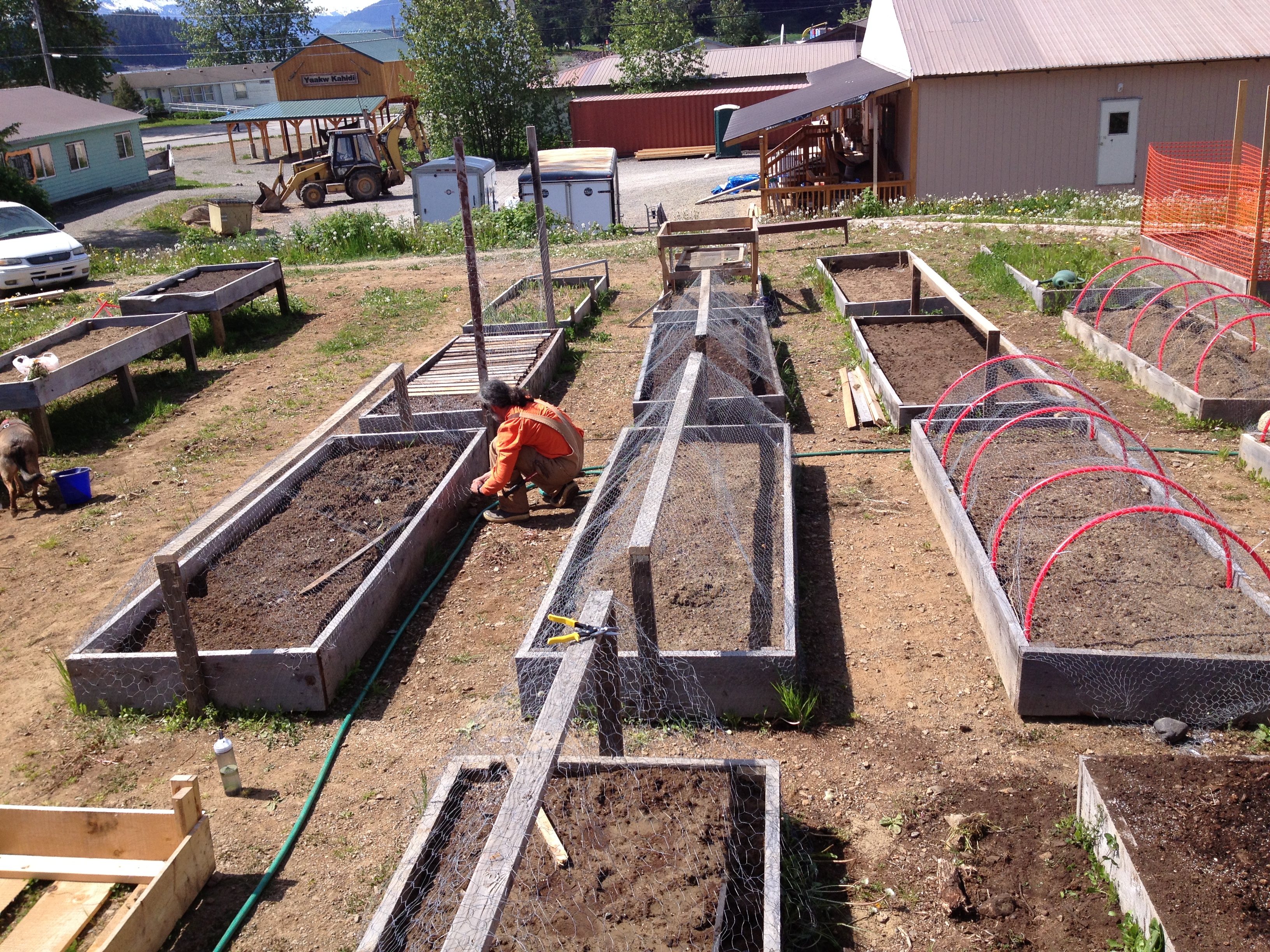
Terrence McCrobie builds three Hoonah Healing Community Garden plots for the Hoonah Senior Center in May 2015. (Photo by Kathy McCrobie)

By Kathy McCrobie
SEARHC Traditional Foods Project Assistant

Creating the Hoonah Healing Community Garden was Bob Starbard’s idea. He is the Hoonah Indian Association‘s (HIA) Tribal Administrator. He worked with Bob Christensen from Southeast Alaska Conservation Council (SEACC), and by 2012 our first plots had been built.

I was hired by SouthEast Alaska Regional Health Consortium (SEARHC) as the Traditional Foods Project Assistant. When I took over for the 2013 growing season, I really had no gardening experience. I posted notices for the community to let them know the garden was available. We had 22 plots available for growing, and that summer half were in production.

Many community members made important contributions; our gravel business donated two large loads of fine sand and the time and skills shared made building the garden easier. Soon there was a dirt sifter to screen out the many rocks in the local dirt and heavy equipment leveled the ground. The Southeast Soil and Water Conservation District in Juneau sold us 14 berry plants at a discounted price. A community member donated 30 strawberry plants. Our space was soon coming together.

Most of our gardeners have prior gardening experience. Some used their own soil. Last year the zucchini, broccoli, potatoes, beets, bush beans and snap peas did well. The biggest challenge came from the ravens. After putting in starts, out of their curiosity, they would fly down when everyone left and pull them up.

We ask that our gardeners not use fish in their compost so the bears won’t come by to check us out and so far the deer have left the plots alone. Lia Heifetz from the Sustainable Southeast Partnership was a big help with our garden last year; she acquired some fence to protect our plots from critters. We hope to get the fence up this year. Lia also came to the William and Mary Johnson Youth Center to teach the Big Brothers Big Sisters of Hoonah about composting with her worm bin and then we gathered seaweed for the garden.

For 2015 we are off to a great start with six returning and four new gardeners. Community members donated 20 raspberry plants and 20 gooseberry plants. Through the program, I purchased and planted a Nadine plum tree and a Terry Berry apple tree. My husband volunteers at the Hoonah Senior Center and is helping me with the traditional foods plot, as well as planting three plots for the seniors.

I just received an email from Lauren Hughey, a Community Health Educator based out of SEARHC Sitka. What exciting news! They just received a diabetes grant carry-forward. With the approval of this grant, Hoonah will receive $1,650 with the main goal of reducing the financial barriers to gardening for American Indian/Alaska Native diabetic patients. This grant will pay for plot fees and gardening supplies in the community garden: soil, seeds, raised-bed repair supplies, shovels, pots, gloves, buckets, and cold frames.

If you are ever in Hoonah please stop by to see us.   The garden is in town next to the Sacred Heart Catholic Church. Sharing about the Hoonah Healing Community Garden lets our and other communities be informed that food security starts with us. Also that it really does work! For additional information, feel free to contact me at kathymc@searhc.org.

A slideshow of Hoonah community garden photos from former Sitka Local Foods Network board member Cathy Lieser is posted below.

This slideshow requires JavaScript.

• Path to Prosperity economic development contest semifinalists include two Sitka-based agriculture projects

P2P_logo

Two Sitka residents with agriculture projects have been named among the 12 semifinalists in the annual Path to Prosperity economic development contest for Southeast Alaska.

This is the third year of the contest, and Bobbi Daniels’ The Sawmill Farm project has been a semifinalist each year. New to the program is the Sitka Seedling Farms project by Sitka Local Foods Network Vice-President Matthew Jackson (who goes by Jackson). A total of 28 projects promoting economic development in Southeast Alaska were entered this year, and more details about the 12 semifinalist projects can be found here.

The year-long Path to Prosperity program provides budding entrepreneurs with the technical assistance they need to develop business plans and follow them through to successful businesses. The program is sponsored by Haa Aaní Community Development Fund, Inc. and The Nature Conservancy, with the goal to develop community resiliency by supporting Southeast Alaska entrepreneurs with creating a business plan.

Applications were solicited in March, with an informational webinar in April and application due date of May 31. The entries were whittled down to 12 semifinalists in July. The semifinalists will attend a three-day business boot camp in September, then they have until Dec. 1 to submit a business plan.

A panel of five judges from the business community will select two winning business plans in February, which each receive $40,000 seed funding for consulting and technical assistance to develop their businesses. The remaining 10 semifinalists will then compete through social media for the People’s Choice Award, which will give an additional $40,000 to one semifinalist.

Here is the list of the 2015 Path to Prosperity semifinalists:

  1. Alaska Accessible Adventures, Juneau, Lindsay Halvik
  2. AlaskaSmart Biodiesel, Hoonah, Jeff Hastings
  3. Columbine Farm, Haines, Spencer Douthit
  4. Micki’s House, Hydaburg, Margaret O’Neil
  5. Northern Edge Craftworks, Juneau, Reid Harris
  6. Petersburg Indian Association, Petersburg, Marco Banda
  7. Sandbar Bed and Breakfast, Metlakatla, Karen Thompson
  8. Sitka Seedling Farms, Sitka, Matthew Jackson
  9. Skya’ana Coffee Co., Klawock, Tina Steffen
  10. The Salty Pantry Market and Deli, Petersburg, Mindy Anderson
  11. The Sawmill Farm, Sitka, Bobbi Daniels
  12. Wrangell Cooperative Association, Wrangell, Aaron Angerman

• Saving seeds helps improve your future food crops, and it can be an act of defiance


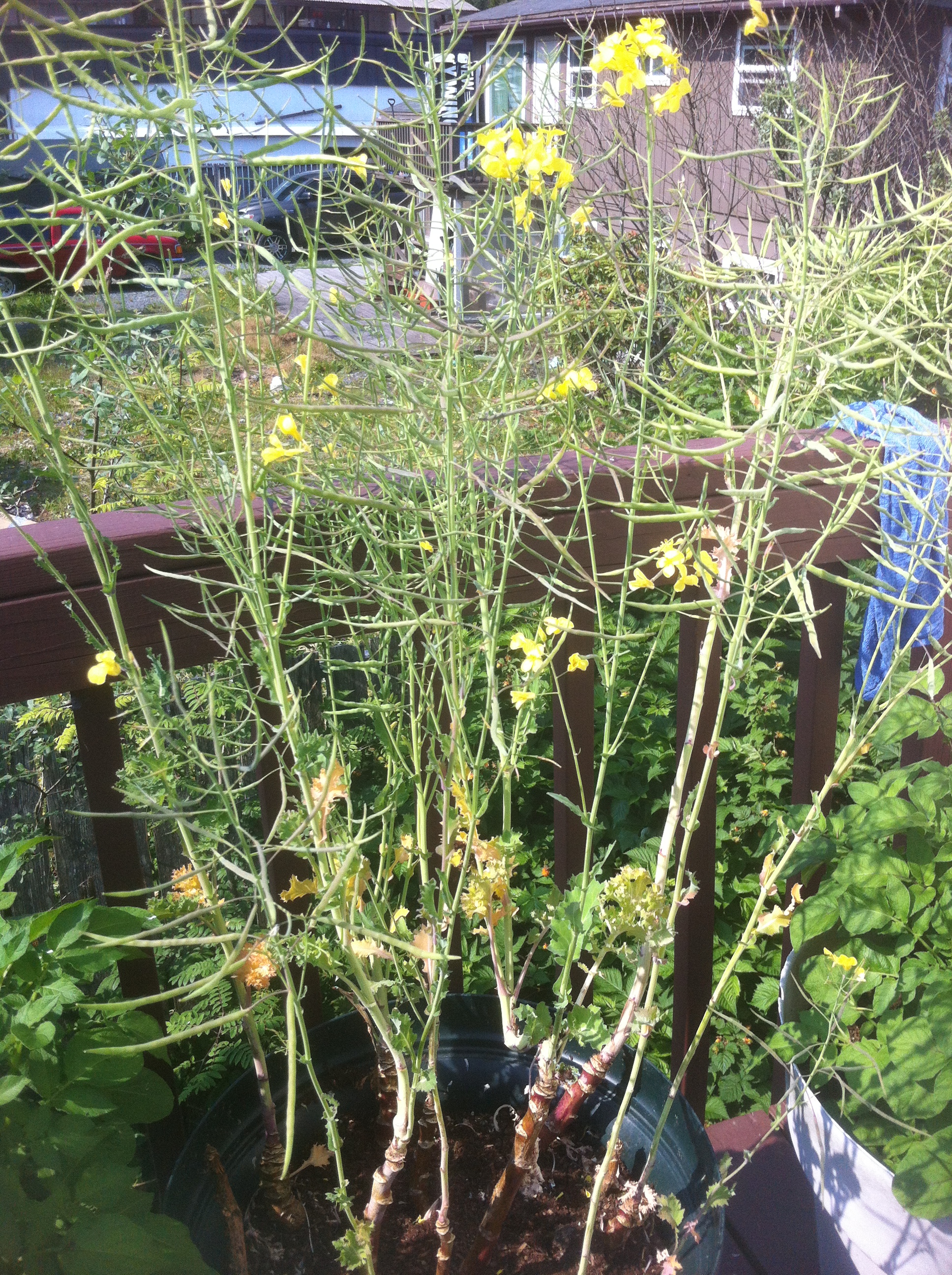
Container of kale bolting (going to seed)

Container of kale bolting (going to seed)

photo 2

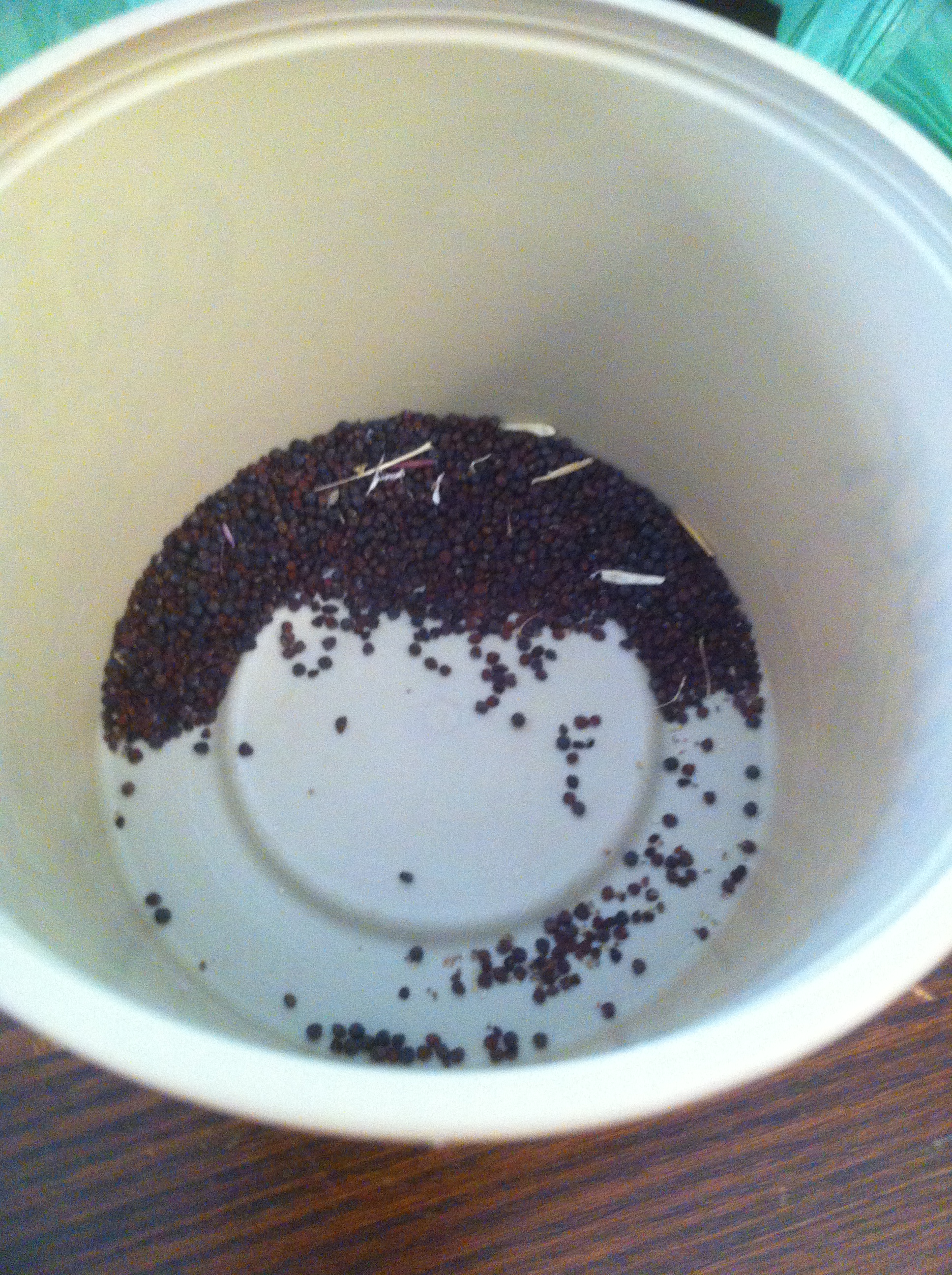
Collected kale seed

Farmers have been saving seeds for thousands of years, but in recent years saving seeds also has become an act of defiance. Saving seeds is a way to preserve and improve the biodiversity of your crops, while also thumbing your nose at agribusiness giants such as Monsanto who have made it difficult and even illegal for small farmers to save their own seeds.

In Sitka, saving seeds means preserving the best crops that grow in our rainy climate. You also can share seeds among friends to help them get the best varieties of a particular crop.

photo 1

Kale seed pods ready to be split so the seeds can be extracted and saved

So how do you do it? Saving seeds isn’t that difficult and there are many resources available online that can give you the basics. Here is a primer on saving seeds from the Colorado State University Cooperative Extension Service, and the Seed Savers Exchange provides these resources.

The John Trigg Ester Library, located in the town of Ester just outside Fairbanks, provides a list of Alaska resources for saving seeds. The Growing Ester’s Biodiversity program is believed to be the state’s only official seed library, where saved seeds are collected with the intention of sharing them with other gardeners and farmers. That’s different from a seed bank, where seeds are collected and stored, but not for sharing. Here is a FAQ page about how people can borrow seeds from the Ester seed library, and here is a tutorial from the seed library about saving tomato seeds.

Deirdre Helfferich, who also is the managing editor for the University of Alaska Fairbanks Agricultural & Forestry Experiment Station, coordinates the Growing Ester’s Biodiversity seed library at the John Trigg Ester Library. This is how she explains the difference between a seed library and a seed bank, and this is why she says we need to save seeds:

A seed bank is a depository for the owners of its seeds or germplasm. So, the Svalbard Global Seed Vault (in Norway) is a seed bank. Until recently, Native Seeds/SEARCH  (in Tucson, Ariz.) was a seed bank with limited availability for growing. It now has a seed library program.

The basic difference is the mode of preservation and distribution: the bank holds the seeds for its depositors, and as though the seeds are in a museum, to be regenerated only every so often to keep the line going. Seed banks won’t just share the seed with anyone, and will store their seed in deep dormancy as long as possible.

A seed library, on the other hand, preserves through distribution and growth each year. This means that the plants tend to adapt to the local where they are grown over time, of course, and don’t remain unchanged.

Seed libraries are also usually focused on the traditions and human context associated with the seed: what it means, the stories associated, the uses, the histories, etc. Seed libraries have to do with the cultures in which their charges were domesticated, preserved, passed down, donated. This can be as simple as “We traditionally use this tomato in grandma’s lasagne recipe so we call it Grandma’s Lasagne Tomato,” to “This tomato has been in our family for generations back when we were living in a little village in Italy and tomatoes were first introduced from the New World.”

The other thing about seed libraries is that they are libraries, and a library is grounded in sharing, in the abundance mentality. One gives away, trusting that good things will come back. And that network of relationships builds a community of trust. Contrast this to a bank, which holds its contents at bay from a hostile world.

Of course, we need things like Svalbard because there ARE nuts out there running our regulatory agencies and monocropping everything to the point where we simply may not have the variety we need. Seed libraries and seed banks offer two kinds of bulwarks to the crazies.

In an earlier conversation, Deirdre said part of the mission of the Ester seed library is “to inspire other seed library programs or variations on the theme.” With that in mind, I decided to see if I could save some seed.

HangingKaleSeedPodBagphoto

My bag of kale seed pods hanging in my living room to dry

I’m not the most experienced gardener, but this year I had a container of second-year kale that bolted after growing all winter (see photo at top of article), providing me with a nice crop of seed pods instead of leafy kale this summer. So, rather than toss the kale, I decided to collect the seed pods and see if I could save some seed.

Since it’s so rainy in Sitka, I couldn’t dry the seed pods outdoors. So I threw them into a plastic shopping bag and hung them in my living room for a month or two (out of the reach of my cats).

When the seed pods were finally dry enough so you could split them like shelling peanuts, I took the bag down and started collecting the seeds in a plastic margarine tub (see third photo). It can be somewhat tedious work, splitting all the seed pods to get the seeds loose, but it also can be meditative. Once you have all of the seeds separated from the seed pods, you should store them in a cool, dry place until you are ready to germinate them. Hopefully, these kale seeds will sprout next spring.


• Scenes from the 2015 Sitka Seafood Festival events held Saturday, Aug. 8

SonnyCropleyScoopsOutShrimp

ssflogo2There were tote races, a parade, a marathon/half-marathon, food booths, live music, canning classes, salmon-head bobbing, halibut-head tossing, the Sitka Highland Games, and scores of other events Saturday during the sixth annual Sitka Seafood Festival at Sheldon Jackson Campus.

There also was nice weather — a little cloudy with light rain for the marathon/half-marathon, followed by warm sunny weather for the tote races, parade, and marketplace events later in the day.

A few scenes from the 2015 Sitka Seafood Festival are in a slideshow below.

This slideshow requires JavaScript.

• Scenes from a series of Sitka Seafood Festival food preservation classes at the Sitka Kitch

JasmineShawMichellePutzLeslieShallcrossConsult

ssflogo2On Aug. 6-8, the Sitka Seafood Festival hosted Leslie Shallcross from the Anchorage District Office of the University of Alaska Fairbanks Cooperative Extension Service to teach a series of food preservation classes at the Sitka Kitch community rental commercial kitchen (Aug. 6-7) and Sweetland Hall on Sheldon Jackson Campus (Aug. 8).

Leslie taught a class on Thursday at the Sitka Kitch about how to make low-sugar jams and jellies (a class on preserving local garden greens was canceled), and on Friday she taught a class on making kelp pickles and sauerkraut and a class on canning salmon. On Saturday, she moved over to the Sweetland Hall to be closer to the Sitka Seafood Festival events and she taught another canning salmon class and a class on the process of smoking salmon.

For those who missed the classes but still want to learn more about home canning, the UAF Cooperative Extension Service has a series of online tutorials on its website called “Preserving Alaska’s Bounty.”

Also, don’t forget to make sure your pressure canner gauge is tested at least once a year. Jasmine Shaw from the Sitka District Office of the UAF Cooperative Extension Service has a tester in her office and you can call her at 747-9440 to schedule a test.

kitch_logo_mainSitka Kitch is a community wellness project from the 2013 Sitka Health Summit designed to improve food security in Sitka. The different parts of the project include creating a community kitchen Sitka residents can rent to prepare food for their small businesses or to preserve their family harvest of fish, game, or garden veggies; expanding Sitka’s emergency food storage capacity; and providing education about preserving food and building family emergency food pantries.

For more information about the Sitka Kitch project, go to the Sitka Kitch website or Facebook page. For rental information, contact Kristy Miller at sitkakitch@sitkawild.org. Click this link to take a quick tour of the facility.

A slideshow with scenes from the various classes is posted below.

This slideshow requires JavaScript.

• Schedule firming up for 2015 Sitka Seafood Festival on Aug. 7-8

salmon boat header

ssflogo2While the official schedule for the 2015 Sitka Seafood Festival still hasn’t been posted on the event’s website at the Sheldon Jackson Campus, the schedule is firming up.

The Friday night, Aug. 7, Sitka Seafood Festival Extravaganza banquet is close to selling out, so if you haven’t gone online to reserve your tickets you better do it now. Tickets are $65 each for this special seafood dinner event (cooked by guest chefs) at Allen Hall on the Sheldon Jackson Campus, but there are only a handful left. This event starts at 6:30 p.m. and will feature a variety of seafood dishes prepared by guest chefs Caleb France of Indianapolis, Dave Thorne of Anchorage, Rob Kinneen of Anchorage, Jeren Schmidt of Sitka, and SSF culinary scholarship winner Adam Kanayurak. Don’t forget to get your VIP cocktail hour tickets ($35) from 5:30-6:30 p.m., too.

OK, got your banquet tickets? Here is information on the other events.

Sitka cooks can participate in the banquet by entering the dessert contest, which will feature cakes, cupcakes and pies (no refrigerated desserts, please). The desserts will be auctioned off at the banquet, and the top desserts will receive prizes. Rules and entry forms are at the link above. The entry forms must be submitted by Wednesday, Aug. 5. For more information, contact contest coordinator Megan Pasternak at 738-2290 or mwpstnk@ptialaska.net.

As usual, the bulk of the sixth annual Sitka Seafood Festival events take place on Saturday (Aug. 8, this year). The fish tote races usually start at 11 a.m. at Crescent Harbor, with the parade following afterward from Crescent Harbor to the Sheldon Jackson Campus.

The Sitka Seafood Festival Marketplace opens at noon, and this year all of the booths will be outdoors on the Sheldon Jackson Campus. The booths usually stay open until 6 p.m., but some may close earlier if they run out of product. You can find out more information about hosting a booth here.

highland gamesIn addition to the marketplace, there will be kids games on the lawn, live music and other entertainment until 5 p.m., and the Sitka Highland Games until 6 p.m. The highland games participants already are practicing their events, and potential participants can check out the Sitka Highland Games group on Facebook for practice times (usually 5-6:30 p.m. on Tuesday, Thursday and Sunday, depending on weather and work schedules).

There will be other events announced over the next week or two, and some may happen on Thursday, Aug. 6, or Sunday, Aug. 9.

The festival also is looking for volunteers to help prior, during and after the festival. There are countless ways to help, such as kitchen help, banquet help, parade, contests, games, highland games, booths, tent set-up and take down, stage help for bands and cooking demos, etc. If you are interested in volunteering, please contact Alicia Olson Haseltine at alaska_al33@hotmail.com. For more info on the festival, go to http://www.sitkaseafoodfestival.org.


• Take the $5 Per Week Alaska Grown Challenge and help improve Alaska’s food security

AlaskaGrown2_Graphic

AlaskaGrown3_GraphicThe Alaska Farm Bureau announces the $5 Per Week Alaska Grown Challenge – a statewide campaign to increase consumer spending on Alaska Grown products with the goal of strengthening local economies and increasing Alaska’s food security.

The Kenai Peninsula Chapter of the Alaska Farm Bureau, in partnership with the Kenai Soil and Water Conservation District and several other local organizations (including the Sitka Local Foods Network), launched the $5 Per Week Alaska Grown Challenge on May 5, in honor of Alaska Agriculture Day. Now the Challenge is going statewide with the help of social media, Alaska Farm Bureau chapters, and local food advocates across the state.

“We’d like to see the state investing in agriculture the way it invests in the resource extraction industries,” said Heidi Chay, district manager of the Kenai Soil and Water Conservation District. “After all, everyone needs to eat, and Alaska is at the end of a very long and vulnerable food chain. The signs of agriculture’s growth potential are all around us. … However, if the state can’t or won’t invest in agriculture the way it should, it’s on Alaskan consumers to take the lead. That’s why the District joined with local partners last month to launch the $5 Per Week Alaska Grown Challenge. We’re calling on Alaskans to invest a small part of their food dollars in the future of Alaskan agriculture, by spending $5 per week per person year-round. Farmers market season is a great time to start.”

Sitka residents will be able to participate in the Challenge by purchasing local veggies at the Sitka Farmers Markets this summer. The markets take place from 10 a.m. to 1 p.m. on alternate Saturdays, July 4, July 18, Aug. 1, Aug. 15, Aug. 29, and Sept. 12, at the Alaska Native Brotherhood Founders Hall, 235 Katlian St.

“I’m excited by the prospect of growing local producers pocketbooks with the $5 Per Week Alaska Grown Challenge in Sitka,” said Lisa Sadleir-Hart, Sitka Local Foods Network Board President. “It’s about supporting local foods and your neighbors as well as giving your body the benefit of fresh food. I plan on spending at least $5 a week on local food and doing it at the Sitka Farmers Market makes absolute sense.”

The Challenge calls on Alaskans to spend $5 per week per person on Alaska Grown products year-round. With farmers market season just around the corner, this is the perfect time for Alaskans to commit to investing a portion of their consumer dollars in the future of Alaskan agriculture.

graphic1Agriculture has played an important role in Alaska’s history. Today it is a growing industry with increasing numbers of farms producing food, forage and fiber for local consumers, as well as peonies and rhodiola for sale around the world.

Although farm production is rising, the economic potential of Alaskan farms is far from realized.  More than 95 percent of Alaska’s food is imported, which means that most of our food dollars are leaving the state.

Are Alaska farmers prepared to scale up to meet increasing demand? Yes. According to the Alaska Division of Agriculture, 67 percent of Alaska farmers surveyed indicate that they would increase production if they had more market options. Meanwhile, a warming climate and the rapid adoption of season-extension technologies such as high tunnels are creating more favorable conditions for agriculture.

The Alaska Farm Bureau is calling on every resident in Alaska to join the $5 Per Week Alaska Grown Challenge. If every Alaskan spent $5 per week on Alaska Grown products, year-round, it would have a $188 million dollar impact.

Why buy Alaska grown? Not only are you supporting Alaskans and boosting our economy, you’re also getting a fresher, tastier, more nutritious product. In a blind taste test, 82 percent of Alaskans surveyed could taste the difference between products grown here and those shipped up. Adults and kids say Alaska grown is sweeter, fresher-tasting and crispier.

The $5 Per Week Alaska Grown Challenge isn’t hard. The key, simply enough, is to eat what grows here. You can find a wide variety of produce and value-added products like bread, jam and pickles at farmers markets throughout the summer. Alaska Grown carrots, potatoes, cabbage, milk and barley products (flour, couscous and even pancake mix!) are available year-round in local grocery stores, joined by lettuce, tomatoes, cucumbers and broccoli during the growing season. Local farms produce meat, poultry, eggs and honey, which are available direct from the farm and at locally-owned retailers. Farmers grow more than just food; Alaska also has cut flower and natural fiber industries with products available. Local restaurants, breweries, distilleries and wineries purchase local products to use in their recipes. And don’t forget our local seafood products.

Not sure where to find Alaska Grown? Check out the $5 Per Week Alaska Grown Challenge website (http://www.alaskafb.org/challenge/) where you will find links to local and statewide resources including the Alaska Grown Source Book, a list of local producers and farmers markets. Be sure to ask for Alaska Grown when you are eating out as well.

Take the challenge: $5 per person per week. You’ll help local farmers, boost the local economy, increase Alaska’s food security, and eat better too. Sign up for the challenge here, http://www.alaskafb.org/challenge.

• Taste of Alaska white paper

• USDA offers cost-share assistance program to help farms get certified as organic

Carrots2

2000px-USDA_organic_seal.svgWith the growth of the local foods movement in recent years, many consumers are more aware of the health benefits of eating organically grown food. But in Alaska, getting certified as organic is a challenge due to high costs and no accredited certifying agents being in the state.

In an effort to meet the growing demand for organic food, the U.S. Department of Agriculture (USDA) introduced two cost-share assistance programs to increase the number of farmers and manufacturers working with organic products. The programs cover three-quarters of the certification costs, up to $750 per category (up to $3,000 total), for each of the four categories of organic food — crops, livestock, processed products, and wild crops.

“The organic industry saw record growth in 2014, accounting for over $39 billion in retail sales in the United States,” said Agriculture Secretary Tom Vilsack. “The organic certification cost-share programs help more organic businesses succeed and take advantage of economic opportunities in this growing market.”

The USDA Agriculture Marketing Service National Organic Program (NOP) has allocated approximately $11.9 million to participating state departments of agriculture to help defray the costs of organic certification incurred by organic producers and processors. Reimbursements to organic operations will be made under the Agricultural Management Assistance (AMA) Certification Cost Share Program or the National Organic Certification Cost Share Program (NOCCSP).

The cost-share programs were included in the 2014 Farm Bill. NOCCSP has approximately $11 million available for producers and processors in participating states, U.S. territories and the District of Columbia. AMA has $900,000 for producers in 16 participating states (Alaska is not in the AMA program).

Each state has its own application process, and Barbara Hanson from the Alaska Division of Agriculture in Palmer is Alaska’s contact for the NOCCSP program. She can be contacted at (907) 761-3854 or barbara.hanson@alaska.gov. The program this year is for organic certification costs incurred between Oct. 1, 2014, and Sept. 30, 2015.

Organic certification is important because no food can claim to be organic without the certification, even if it’s grown or processed following organic standards. In Alaska, this has been a challenge because it’s difficult to get a USDA-accredited certifying agent out to our farms and there are none based in our state. So many Alaska farms go without the label. Click this link to learn more about the process for becoming certified as an organic farm.

• 2014 Alaska USDA organic certification cost-share program letter

• 2014 Alaska USDA organic certification cost-share program application

• What Is Organic Certification Fact Sheet

• USDA Organic Cost-Share Programs Information Sheet

• Harmful algal bloom warning issued for shellfish harvested in Starrigavan Beach

Clam diggers work the beach at Starrigavan in this file photo. The Sitka Tribe of Alaska is warning Sitkans against harvesting clams in the area due to a harmful algae detected Monday, June 8, 2015. (Daily Sitka Sentinel file photo by James Poulson)

Clam diggers work the beach at Starrigavan State Recreation Area in this file photo. The Sitka Tribe of Alaska is warning Sitkans against harvesting clams in the area due to a harmful algae detected Monday, June 8, 2015. (Daily Sitka Sentinel file photo by James Poulson)

Southeast Alaska Tribal Ocean Research (SEATOR) on Monday, June 8, issued a warning that people should not be eating shellfish harvested at Starrigavan Beach in Sitka.

Pseudo-nitzchia“Yes, we are seeing a bloom of Pseudo-nitszchia. This species of plankton can produce domoic acid which can cause amnesic shellfish poisoning (ASP),” Sitka Tribe of Alaska Environmental Program Manager Chris Whitehead said.

Whitehead is coordinating SEATOR and the Southeast Alaska Tribal Toxins (SEATT) partnership program where seven tribes in Southeast Alaska are partnering to test shellfish for harmful algal booms that can cause problems such as paralytic shellfish poisoning (PSP) or other health issues. The SEATT partnership program and SEATOR were launched a little bit over a year ago because there is no harmful algal bloom testing of Southeast beaches by the state, even though there had been many recent cases of PSP outbreaks that resulted in people being hospitalized or even dying.

According to the SEATOR website, Pseudo-nitzchia spp is a genus of diatoms found worldwide. In North America, it can be found on the Pacific Northwest Coast from Alaska to mid-California, the Northeast Atlantic Coast of Canada, in North Carolina, and in the Gulf of Mexico. Domoic acid is a neurotoxin that binds glutamate receptors, which are involved in memory processing.

Amnesic shellfish poisoning (ASP) causes gastrointestinal and neurologic issues. Mild cases usually occur within 24 hours after eating shellfish exposed to the ASP toxin. Symptoms include nausea, vomiting, diarrhea, and abdominal cramps. In more severe cases there also will be neurological problems, such as headaches, confusion, hallucinations, short-term memory loss, respiratory difficulty, seizures, coma, and in extreme cases, death.

According to a recent story from Oregon Public Broadcasting’s KUOW/EarthFix program, there currently is a massive harmful algal bloom extending from Homer, Alaska, on the north to Monterey Beach, Calif., in the south. In addition to impacting shellfish, the toxic harmful algal bloom has caused problems in fish and marine mammals that ate infected shellfish.

If you recently have eaten shellfish harvested in the Starrigavan State Recreation Area and have any of the above symptoms, you should seek medical help immediately.

• Rep. Jonathan Kreiss-Tomkins of Sitka introduces bill to allow donations of fish and game to nonprofit meal programs

041614_JKT_house-floor

Rep. Jonathan Kreiss-Tomkins (D-Sitka) is the prime sponsor of a tripartisan bill that will allow nonprofit meal programs — such as those found at schools, hospitals and senior centers — to serve donated fish and game from sport and subsistence harvesters.

The bill, HB 179, is co-sponsored by seven other legislators — four Republicans (Cathy Muñoz of Juneau, Charisse Millett of Anchorage, Louise Stutes of Kodiak and Tammie Wilson of North Pole), two Democrats (Neal Foster of Nome and Sam Kito III of Juneau), and an Independent (Dan Ortiz of Ketchikan). The was introduced on April 1 and already has hearings set for next week in the resources (Monday, April 6) and fisheries (Tuesday, April 7) committees. If those committees pass the bill, it could go before the House floor for a vote as early as late next week.

“Because of that broad support, this bill is in not just the fast lane, but in the Autobahn-style fast lane,” Kreiss-Tomkins told the Daily Sitka Sentinel. “This bill could go from being introduced to a vote on the floor in eight or nine days.”

Kreiss-Tomkins said the bill was inspired in part by Sitka’s Fish to Schools program, which allows commercial fishermen to donate locally caught seafood to local schools so it can be served in student lunches. However, many parts of the state don’t have commercial fisheries, and Alaska law currently bars food service organizations funded by state or federal meal programs from serving subsistence- and sport-harvested fish and game, even if it is donated.

In the sponsor statement for the bill, Kreiss-Tomkins writes:

Hunting and fishing is at the heart of our shared heritage as Alaskans. Every Alaskan looks forward to the season he or she can again fill the freezer with salmon, moose, caribou, seal, or berries. Alaskans happily share this food with family, children, and elders.

This sharing is not possible in our public institutions, however. Well-meaning state laws intended to prevent the commercialization of wild game have also largely prevented children in schools and elders in hospitals and senior centers from eating the traditional Alaska foods that we treasure. As a result, even though we are surrounded by some of the best food in the world, our children eat corndogs rather than caribou at school lunch; our elders are served spaghetti rather than seal.

This action follows a 2013 amendment U.S. Rep. Don Young (R-Alaska) included in an agriculture bill that removed barriers that previously prohibited American Indians and Alaska Natives from serving traditional foods in hospitals, elder care facilities and schools. The amendment authorized the U.S. Department of Agriculture to allow for the donation and serving of traditional foods, which meet specific safety standards, in public facilities that primarily serve American Indians and Alaska Natives.

In his sponsor statement, Kreiss-Tomkins writes:

The bill also ensures traditional wild foods donated to and served by food service programs are safe to eat. The Department of Environmental Conservation already has regulations in place providing for the safe handling and processing of many traditional wild foods. HB 179 affirms the Department’s authority to oversee the safety of these foods.

HB 179 will nourish Alaska’s children and elders, both physically and spiritually. It will limit the amount of expensive and unhealthy processed food shipped to communities that have incredible food available just a short boat or snowmachine ride away. Children will develop an appreciation where their food comes from and elders will be able to keep eating the foods they love.

• HB 179 — Traditional Foods Bill

• HB 179 — Traditional Foods Bill Sponsor Statement