• UAS Sitka Campus offers ‘Flora of Southeast Alaska’ course as a hybrid

Salmonberries await picking near the entrance to Sitka National Historical Park

Salmonberries await picking near the entrance to Sitka National Historical Park

A newish biology class by University of Alaska Southeast Sitka Campus associate professor Kitty LaBounty will itself be a “hybrid”, and it’s back for its second year.

FloraOfSEAK_Poster11x17_2016The DNA of most traditional botany classes is to gather students around a table of samples and look at them in a face-to-face classroom setting. By offering Flora of Southeast Alaska as both a local and distance-delivery (eLearning) class, students from anywhere can get up to speed on how to identify the common native trees, shrubs and herbs of southeast and south central Alaska. Local students can participate in the lectures on campus, while students across Alaska can see the imagery online and hear the lectures either live or via digital recording.

Flora of Southeast Alaska is a one-credit, seven-week workshop. The focus will be on identification of common species and attaining an understanding of their place in the ecosystem of Southeast Alaska. Students will discover how these plants interact with other plants and animals, and how humans use these plants for food, fuel, medicine, or simply enjoyment.

In addition to illustrated weekly lectures, there will be written exercises and “check for understanding” activities. The class is available to any student without prerequisites. It does not count as credit toward a biology major at UAS.

Professor LaBounty brings her lifelong passion as a gardener and scientist to this topic, along with more than 25 years experience working on plant identification for state, federal and nonprofit agencies in Alaska.

The class will meet from 5:30-7 p.m. on Thursdays from Feb. 25 to April 30 — with time off for spring break. The cost is $187 for local students and $227 for eLearning (distance) students.

For more information, contact Kitty LaBounty at UAS Sitka Campus. 747-9432. To register, call 747-7700. or toll-free, 800-478-6653.

• Northwest Farm Credit Services awards grants to Alaskans Own and Sitka Kitch projects

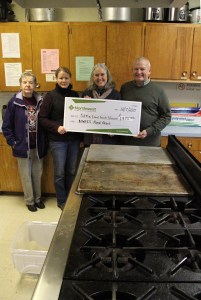
From left, Linda Behnken of the Alaska Longline Fisherman's Association and Anya Grenier of the Alaskans Own Seafood community supported fishery project receive a check for $4,500 from Michael Wittman of Northwest Farm Credit Services to help promote local seafood for Alaskans.

From left, Linda Behnken of the Alaska Longline Fisherman’s Association and Anya Grenier of the Alaskans Own Seafood community supported fishery project receive a check for $4,500 from Michael Wittman of Northwest Farm Credit Services to help promote local seafood for Alaskans.

image003Northwest Farm Credit Services recently awarded two rural community grants to help fund a pair of local foods projects in Sitka. The Alaska Longline Fishermen’s Association received $4,500 for its Alaskans Own Seafood community supported fisheries program, and the Sitka Local Foods Network received $1,975 for a series of basic culinary skills classes to take place in March at the Sitka Kitch community rental commercial kitchen (which is coordinated by the Sitka Conservation Society with assistance from the Sitka Local Foods Network).

“The support of Northwest Farm Credit Services will allow ALFA to improve and expand Alaskans Own so we can provide premium seafood to more rural residents,” said Linda Behnken, ALFA’s executive director.  “We believe healthy fisheries and healthy fishing communities go together and with this grant support we will reinvest in both.”

Alaskans Own connects residents of Alaska’s rural communities with great Alaskan seafood through monthly subscriptions. Subscription sales support ALFA’s research and conservation work to promote sustainable fisheries and sustainable fishing communities. Click here for KCAW-Raven Radio’s coverage of the grant.

From left, Dorrie Farrell and Kristy Miller of the Sitka Kitch community rental commercial kitchen advisory team and Sitka Local Foods Network president Lisa Sadleir-Hart receive a check for $1,975 from Michael Wittman of Northwest Farm Credit Services to support a Sitka Kitch project to teach basic culinary skills to people wanting to get jobs in the food/restaurant industry. The classes will take place in March.

From left, Dorrie Farrell and Kristy Miller of the Sitka Kitch community rental commercial kitchen advisory team and former Sitka Local Foods Network president/interim Sitka Kitch project coordinator Lisa Sadleir-Hart receive a check for $1,975 from Michael Wittman of Northwest Farm Credit Services to support a Sitka Kitch project to teach basic culinary skills to people wanting to get jobs in the food/restaurant industry. The classes will take place in March.

“Sitka Kitch will use the resources to launch a basic culinary training series taught by Chef Kathy Jones (executive chef for the Westmark Sitka Hotel),” said Lisa Sadleir-Hart, Sitka Kitch interim coordinator and former Sitka Local Foods Network board president. “Chef Kathy will model the four-session training on a curriculum from Indianapolis. She sees it as a way to get local Sitkans trained on entry-level culinary skills that could land them jobs in one of Sitka’s many restaurants or food-related businesses.”

The Sitka Kitch basic culinary skills training series is modeled after a similar program designed to help give people work skills for the restaurant/catering industry offered by a hunger relief nonprofit called Second Helpings in Indianapolis. More details about the Sitka Kitch basic culinary skills program will be announced in the next week or so. The classes also will be open to Sitka residents wanting to improve their home culinary skills.

Sitka Kitch is a community wellness project from the 2013 Sitka Health Summit designed to improve food security in Sitka. The different parts of the project include creating a community kitchen Sitka residents can rent to prepare food for their small businesses or to preserve their family harvest of fish, game, or garden veggies; expanding Sitka’s emergency food storage capacity; and providing education about cooking and preserving food and building family emergency food pantries.

Northwest Farm Credit Services is committed to helping rural communities succeed. In 2015, Northwest FCS awarded 62 rural grants totaling more than $134,000 to projects in Alaska, Idaho, Montana, Oregon, and Washington. Since the program’s inception in 2007, the company has presented 464 rural grants totaling more than $948,000.

The next rural grant deadline is Feb. 1, with two other deadline cycles later in the year. If you think your rural project may be eligible for a grant, visit http://northwestfcs.com/Stewardship/Rural-Communities for more information and an application.

Northwest FCS is a financial cooperative providing financing and related services to farmers, ranchers, agribusinesses, commercial fishermen, timber producers, rural homeowners and crop insurance customers in Montana, Idaho, Oregon, Washington and Alaska. Northwest FCS provides approximately $13 billion in loans and is a member of the Farm Credit System, a nationwide network of borrower-owned lending institutions that provide approximately $221 billion in loans to rural America. For more information, go to http://northwestfcs.com.

• USDA Natural Resources Conservation Service offers funding support program for high tunnels

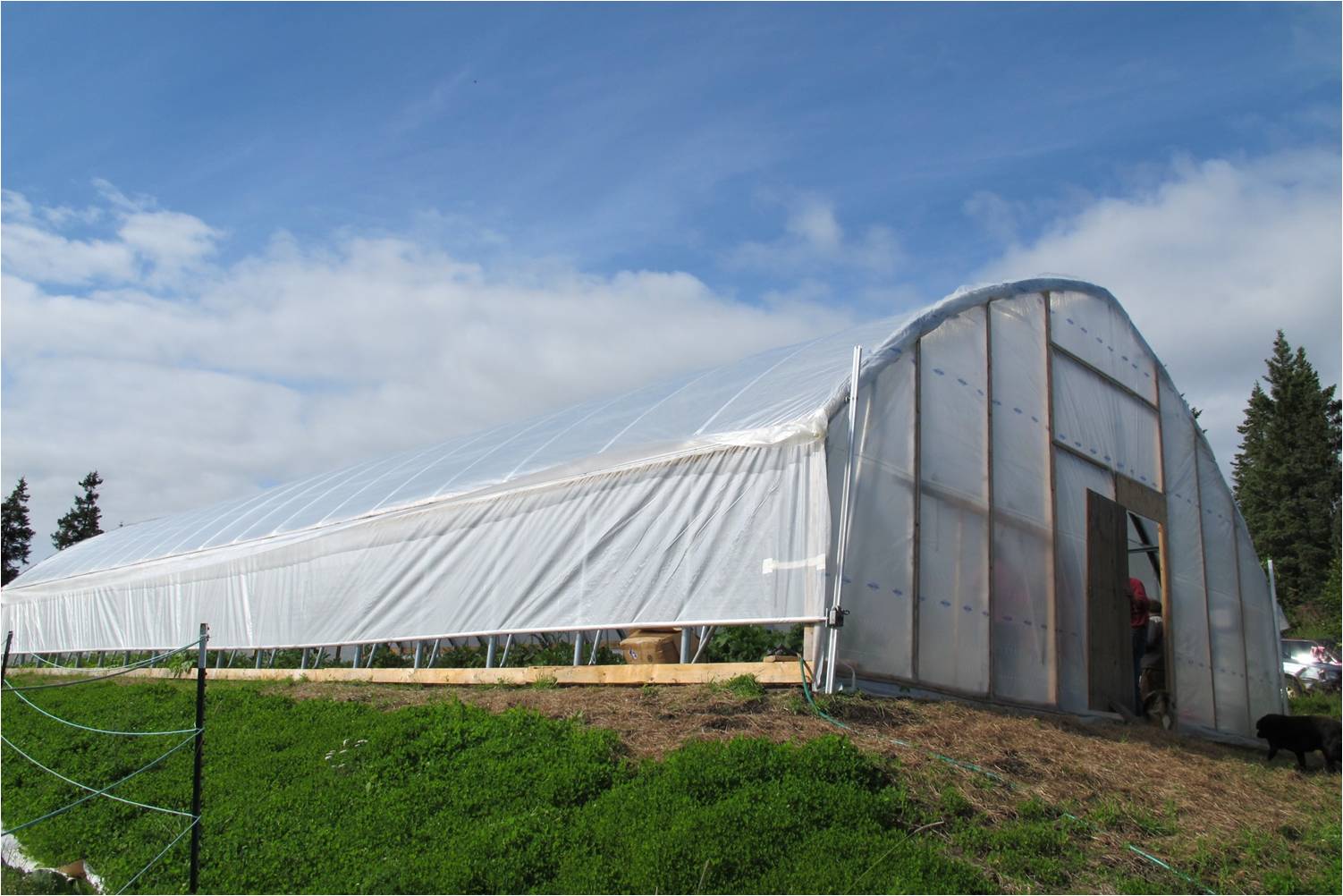
picture8

The deadline has been set for the next round of applications for the U.S. Department of Agriculture’s Natural Resources Conservation Service (NRCA) cost-sharing program. This program enables qualifying landowners who produce food to build high tunnels with financial assistance from the USDA.

The next NRCS Alaska program deadline is June 15, 2016. However, the program usually sets two applications deadlines a year so applications can be batched and ranked. Applications that miss the June 15 deadline will be held for the next deadline (usually about Oct. 15, but it hasn’t yet been posted online for 2016). Applicants are encouraged to apply outside two deadline cycles, because sometimes funding is available.

“The next deadline is June 15, 2016 – for funding in the 2017 fiscal year,” said Samia Savell, of the Juneau Field Office of the USDA-NRCS. “However, we often get additional funding in the current fiscal year and have the opportunity to fund applications that have been submitted past the prior deadlines. In other words, if you know of people who are interested in the program, please have them contact me to get the application materials. We do accept applications at any time.”

High tunnels, also known as hoop houses or temporary greenhouses, extend the growing season so more food is produced before and after the traditional weather dates for growing stuff outdoors. They also can help with irrigation and drainage, and with pest control.

High tunnels are different than greenhouses in that they are passively heated by the sun, so they have lower energy costs than greenhouses. High tunnels are at least nine feet tall (an increase from six feet tall in recent years), so people can walk upright in them. Low tunnels, which usually involve some PVC pipe bent over a garden bed and covered with row cover, aren’t eligible in this program. Food in high tunnels is planted either directly into the ground or in raised beds, not in containers. To learn more about the USDA’s high tunnel program, click here, and click here to get information about the application procedure. This link has frequently asked questions and answers about seasonal high tunnel systems for crops.

Picture10This program started a couple of years ago as a pilot program, but now is a permanent part of of the NRCS EQIP (Environmental Quality Incentive Programs). The program recently was revamped, and one major change is there now is no size restriction on the structures NRCS provides cost-sharing funds (previously it was limited to up to 2,178 square feet, or 5 percent of one acre). Also, geodesic domes are now eligible. Both the land owner and land must meet certain eligibility requirements.

Funding is provided on a reimbursable status once the high tunnel is installed and certified to meet NRCS standards. In 2012 there was just one high tunnel in Sitka, but in 2013 there were six. Other areas of the state, such as Homer, have built dozens of high tunnels through the program.

For information regarding the NRCS technical service or program participation in Southeast Alaska, please contact Samia Savell or Will Murray at the Juneau field office at (907) 586-7220 or 586-7208, or send email to samia.savell@ak.usda.gov or william.murray@ak.usda.gov. The June 15, 2016, deadline is the first deadline for the Fiscal Year 2017 funding cycle. Click here for a link to the Alaska NRCS page. Click here for an interview with Samia Savell on KRBD-FM (Ketchikan) about the program.

• High Tunnels In Alaska Fact Sheet (October 2015)

• Flier about Southeast Alaska cost-sharing program for FY2016 (March 2015, note, information should be similar for FY2017)

• The Inuit Circumpolar Council-Alaska (ICC-AK) releases report on Inuit food security

Food Security Summary and Reccomendations Report _Page_01
Drastic changes are occurring within the Arctic and Inuit are on the forefront of these changes. In recent years food security has increasingly become a topic of conversation and is gaining more attention. But what does food security mean to those that call the Arctic home?

Through this Inuit Circumpolar Council-Alaska (ICC-AK) project led by the Alaskan Inuit (Iñupiaq, St. Lawrence Island Yupik, Central Yup’ik and Cup’ik), the Alaskan Inuit Food Security Conceptual Framework: How to Access the Arctic from an Inuit Perspective report illuminates the meaning of Alaskan Inuit food security and lay out an assessment process.

In the report it is clear that Inuit food security is more than calories, more than nutrients, as explained by a contributing author:  “We are speaking about the entire Arctic ecosystem and the relationships between all components within; we are talking about how our language teaches us when, where and how to obtain, process, store and consume food; we are talking about the importance of dancing and potlucks to share foods and how our economic system is tied to this; we are talking about our rights to govern how we obtain, process, store and consume food; about our Indigenous knowledge and how it will aid in illuminating these changes that are occurring. We are talking about what food security means to us, to our people, to our environment and how we see this environment; we are talking about our culture.” — Executive Summary

The report is the product of 146 contributing Inuit authors, a 12-member advisory committee, ICC-AK and their membership organizations. A summary and recommendations report was created for those who are looking for a quick glimpse at what food security means to Alaskan Inuit, what it means to apply a food security lens to assessments, and recommendations for strengthening food security. For a deeper understanding and more in-depth discussion, a technical report has been created. Within both reports you will find: 1) recommendations, 2) key barriers, 3) the food security conceptual framework, and 4) drivers of food security and insecurity. The technical report also lays out a food security assessment process.

“To look at environmental health through an Inuit food security lens requires one to undergo a paradigm shift. One must be willing to attempt to understand the Inuit culture to know what Inuit mean when they talk about food security.” — James Stotts

ICC-Alaska hopes that the report will be of use to a broad spectrum of people. Villages may use the report to aid in communicating with those from outside their communities. Decision-makers, academics, environmentalists, policy-makers and industry may use the reports as a tool to enhance their understanding of the Arctic. The report is accessible on the ICC-Alaska website.

The food security report also is linked below:

• Inuit Circumpolar Council-Alaska Food Security Summary and Recommendations Report

• Inuit Circumpolar Council-Alaska Food Security Technical Report

• New ‘Make It Local’ cookbook highlights Alaska recipes for kids

make_it_local_cookbook_cover-600x391

There has been a renaissance of local food in Alaska in recent years, but sometimes it’s difficult to get the kids to eat meals sourced with food from Alaska.

A new cookbook, “Make It Local: Recipes For Alaska’s Children,” produced by the Alaska Child Nutrition Programs, is full of kid-friendly recipes from around the state. The 111-page cookbook can be downloaded free online, or you can order a printed copy (see info at the bottom of the story). The cookbook is a joint project of the Alaska Department of Education and Early Development, the University of Alaska Fairbanks Cooperative Extension Service, and the Farm to School Program. It is funded by a grant from USDA Team Nutrition.

The cookbook features a variety of recipes, such as reindeer ratatouille, baked halibut, and teriyaki salmon Caesar salad. It also includes portion sizes and nutrition info that meets the strict USDA requirements for school lunch programs. All of the recipes have been sampled by kids from around the state.

Unfortunately, the cookbook didn’t become available until after the state’s Nutritional Alaskan Foods in Schools program was cut from the budget. That program helped school districts purchase local foods for their students, and also helped Alaska farmers and fishermen meet expenses.

Tanya Dube, the kitchen manager for the Bristol Bay Borough School District, told Dillingham radio station KDLG the cuts made it difficult for small school districts to keep buying local foods. She said she sent a letter to Gov. Bill Walker asking him to return the Nutritional Alaskan Foods in Schools program to the 2017 budget.

“Here in Naknek, or up on the North Slope, or in the Southwest Region School District, we can’t really dedicate money to pay $3.99 a pound for Alaska carrots when we can get carrots grown way far away for $1.00 a pound,” Dube said. “So, losing those funds was a big hit for a lot of districts, but I think rural districts took the biggest hit.”

With deeper budget cuts on their way, Dube is not optimistic about that request, but she says she has to try.

“Asking for money is kind of an exercise in futility, but I feel like if we don’t ask, they’re gonna forget,” Dube said. “They’re gonna forget that there’s not only school children that benefit from having these products, but it benefits growers and producers. It benefits Alaska businesses, because they can plant more barley, or raise more cattle or pigs. It really benefits the whole food supply chain.”

This cookbook is available for online downloads at https://education.alaska.gov/tls/cnp/cookbook/Make_It_Local.pdf.  If you are interested in a printed copy, please contact Jan Mays at jan.mays@alaska.gov or 907-465-8712.

• New biotoxin lab in Sitka allows for quicker, better monitoring of harmful algal blooms in Southeast Alaska

MichaelJamrosChrisWhiteheadEstherKennedyJohnDorothyOrbisonDeanOrbison

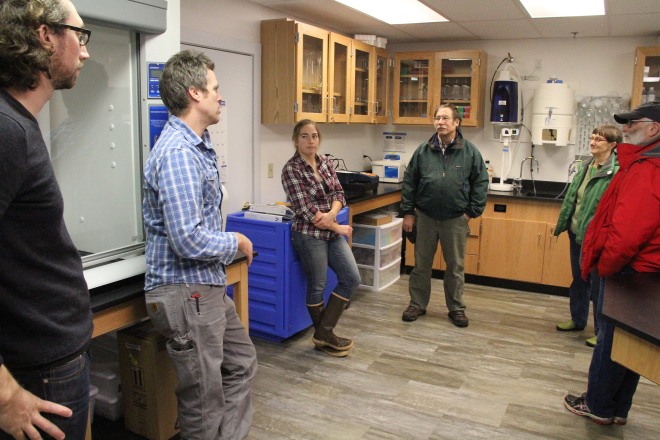
From left, Sitka Tribe of Alaska Environmental Lab Manager Michael Jamros, STA Environmental Program Manager Chris Whitehead, and STA Environmental Specialist Esther Kennedy discuss the new Sitka Biotoxin Lab with visitors to an open house on Monday, Nov. 30, 2015. The new lab will help Southeast subsistence and sport shellfish harvesters learn about harmful algal blooms in the region so they can avoid paralytic shellfish poisoning (PSP) or amnesic shellfish poisoning (ASP).

Most shellfish eaters are aware of the massive algal bloom that shut down many shellfish operations on the Pacific Coast this summer. The algal bloom even reached Sitka’s Starrigavan Beach with the June discovery of Pseudo-nitzchia, a species of plankton that sometimes produces domoic acid which can cause amnesic shellfish poisoning (ASP). ASP causes gastrointestinal issues in mild cases, such as nausea, vomiting, diarrhea, and abdominal cramps. In more severe cases there will be neurological problems, such as headaches, confusion, hallucinations, short-term memory loss, respiratory difficulty, seizures, coma, and in extreme cases, death.
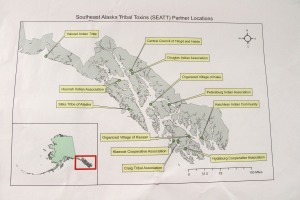
SEAKTribalToxinsSEATTPartnerLocationsUntil two years ago, Southeast Alaska beaches and subsistence- and sport-harvested shellfish weren’t tested for harmful biotoxins. That changed with the Southeast Alaska Tribal Testing (SEATT) program, a partnership of regional tribes coordinated by Sitka Tribe of Alaska, that began training technicians from six villages (now 12 villages) in the region on how to gather water samples so they could be tested. SEATT is part of a program called Southeast Alaska Tribal Ocean Research (SEATOR).

Now the project has moved to the next phase, the creation of a Sitka Biotoxin Lab, located at 429 Katlian Street, that can provide quicker and better testing results to people in the region who want to eat shellfish. Instead of sending samples to the Lower 48 for testing, which can take more than a week or two, samples from Southeast Alaska can be tested in Sitka and data can be available in less than 24 hours, Sitka Tribe of Alaska Environmental Program Manager Chris Whitehead said during an open house at the lab on Monday, Nov. 30. Before the lab opened, the program just took water samples. But now it will be able to actually test the shellfish for biotoxins.

Whitehead said one of the purposes of the lab is to give shellfish harvesters as much information as possible about possible harmful algal blooms so they can make informed decisions about if they still want to harvest and eat local shellfish. Harmful algal blooms spread a variety of biotoxins, such as domoic acid and saxitoxin, which can cause paralytic shellfish poisoning (PSP) and amnesic shellfish poisoning (ASP). PSP and ASP can be deadly, and in 2010 there were two people in Southeast Alaska who died from PSP.

Cockles-Alaska-Department-of-Health-and-Social-Services“The toxins can stay in butter clams for 2 1/2 to three years,” Whitehead said, disproving the common local myth that shellfish is safe to eat in months with R in the name. “We’re still seeing blooms in December.”

Whitehead said he’s hoping to eventually be able to do baseline sampling of a variety of beaches in Southeast Alaska. He said they are sampling bays for cyst beds by digging cores in the beach soil, and they’ve found cysts 3-4 meters (9-13 feet) below the surface. While the beach might be safe for now, if people start building piers or docks it can stir up the cyst beds and launch a harmful algal bloom.

The lab and testing program is funded by the Environmental Protection Agency (EPA) Indian Environmental General Assistance Program, the Bureau of Indian Affairs (BIA) and Tribal Cooperative Landscape Conservation Program, and the Administration for Native Americans’Environmental Regulatory Enhancement program. The National Oceanic and Atmospheric Administration (NOAA) Marine Biotoxin Programs from Seattle, Wash., and Charleston, S.C., provided training through workshops to help develop the SEATT program.
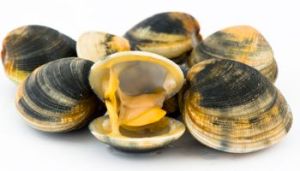
raw-clams-350Michael Jamros, PhD, was hired in October as the STA Environmental Lab Manager, and he will be handling most of the actual testing and diagnosis of the seawater and shellfish. He said right now the lab is focused on subsistence and sports harvests, but down the road it’s hoping to become FDA-certified so it can test commercial harvests.

Esther Kennedy is the STA Environmental Specialist, and she said “every week I go plankton hunting.” This summer all of her tests were at Starrigavan State Recreation Area, but now that the lab is open she will be able to test in more areas, “wherever you think people might harvest shellfish.”
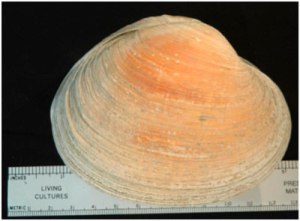
pe-fig1“I think this will help our food security,” Kennedy said. “People will be able to see this abundant resource of shellfish, and now they’ll have better information about whether it’s safe to harvest.”

In addition to the Sitka staff, the program also trains monitors from 12 partner villages to test in their areas, which range from Ketchikan on the south to Yakutat on the north. These monitors come to Sitka twice a year for training, with their most recent training in early November. A slideshow of photos from the training is posted below.

This slideshow requires JavaScript.

• Three community wellness projects receive MAPP Tier 2 grant funding from SEARHC

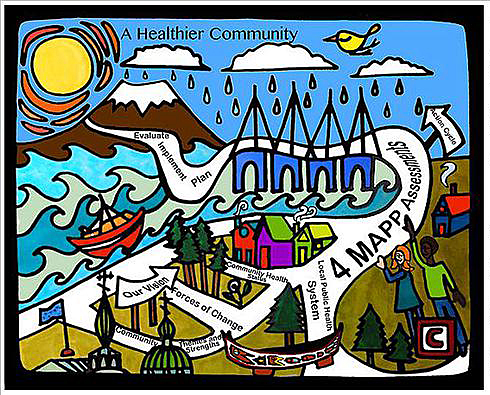
SitkaMAPPGraphic
Three Sitka community wellness projects will each receive $10,000 in funding through the MAPP (Mobilizing for Action through Planning and Partnerships) Tier 2 grants from the SouthEast Alaska Regional Health Consortium (SEARHC).

SEARHC-logo-rgb-150-web“Fostering health and wellness in a community is complex and multifaceted,” SEARHC Health Educator Lauren Hughey said. “We are pleased to support these three projects with MAPP Teir 2 funding because while each project has a different approach. All will make Sitka a healthier place to live.”

Earlier this year, the Sitka Health Summit collected MAPP data about community health issues in Sitka, identifying healthy weight as a key focus area. In order to help more Sitkans achieve a healthy weight, SEARHC and the Sitka Health Summit requested project proposals that addressed this key area using the identified strategies that also address the health status of Alaska Native people.

Projects must use one of these strategies and plan an intervention based on evidence-based policy, systems, and environmental (PSE) changes. PSE changes will increase access to and use of traditional and other healthy foods or increase health literacy by making them more readily available at home, work, and in the community. PSE changes are long term changes and reach a large proportion of the population. PSE changes can occur in the community, tribal organizations, schools, healthcare systems, childcare facilities, worksites, or in families.

Here are brief descriptions about the three projects to receive MAPP Tier 2 grant funding:

  • Sitka Seedling Farms (project info provided by Matthew Jackson) — Sitka Seedling Farms is an initiative to meet Sitka’s food system needs in a thought-out, comprehensive way. Many food-related initiatives have been proposed over the last several years, but most have stalled for lack of space. Sitka Seedling Farms, which is a finalist in the Paths to Prosperity economic development contest for Southeast Alaska, will solve this problem by exploring innovative land relationships with major landowners in our community to develop the resources Sitka’s food system needs to thrive, such as production space for food entrepreneurs, community greenhouses, food storage and processing facilities and more. Sitka Seedling Farms is currently in the land exploration phase. Please contact Matthew Jackson with questions or comments at 907-821-1412.
  • Sitka Community Playground (project info provided by Lynne Brandon) — The grant award is to assist with the Sitka Community Playground Project Phase II, the design process. The design will help with the subsequent fundraising effort. The Phase III goal is to construct the new playground during the summer of 2017. Phase I was establishing a steering committee with volunteers, getting Assembly approval for the playground location at Crescent Harbor Park playground incorporating one of the three tennis courts, creating a funding plan and a timeline with tasks. The Sitka Community Playground project also is a 2015 Sitka Health Summit community wellness project.
  • Hames Center Elder Connect project (project info provided by Caitlin Blaisdell) — The Hames Center‘s Tier 2 grant will be used to create delegated senior hours for everyone older than age 65 and their caregivers to use our gym floor free of cost. These hours will incorporate group fitness activities, serve as an indoor walking space, create senior service information dissemination, and spark active, social groups for our growing senior demographic. Through bringing seniors together at the Hames Center with transportation assistance, we aim to remove many of the obstacles, such as social isolation, transportation limitations, and fixed income restrictions, that seniors may face in maintaining their physical and mental well-being all year round. The Hames Center Elder Connect project also is a 2015 Sitka Health Summit community wellness project.

Selected projects are awarded up to $10,000 for the project period of Nov. 1, 2015, through Oct. 31, 2016. For more information about the MAPP Tier 2 grant program, please contact Lauren Hughey at 966-8797 or lauren.hughey@searhc.org.


• Check out the November 2015 edition of the Sitka Local Foods Network newsletter

December2015SLFNNewsletter

The Sitka Local Foods Network just sent out the November 2015 edition of its newly launched monthly newsletter. Feel free to click this link to get a copy.

This edition of the newsletter has brief stories about Giving Tuesday on Dec. 1, the Sitka Local Foods Network being listed in the Good Food Org Guide 2015, an appeal for new Sitka Local Foods Network board members, and an appeal for new first-year gardening families for the garden mentor program. Each story has links to our website for more information.

You can sign up for future editions of our newsletter by clicking on the registration form image in the right column of our website and filling in the information. If you received a copy but didn’t want one, there is a link at the bottom of the newsletter so you can unsubscribe. Our intention is to get the word out about upcoming events and not to spam people. We will protect your privacy by not sharing our email list with others.

• Sitka Conservation Society to host its annual Wild Foods Potluck on Sunday, Nov. 15

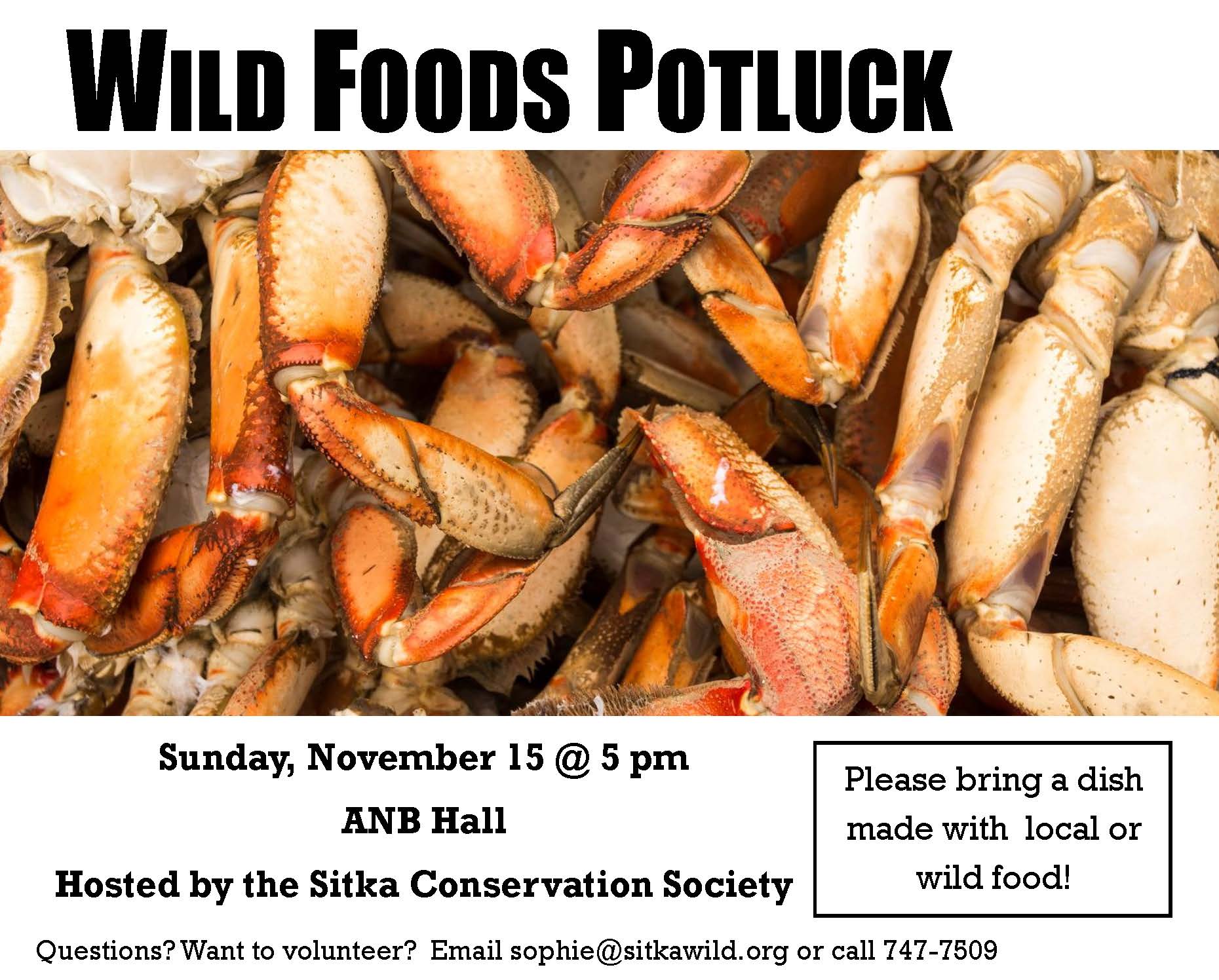
Wild foods potluck poster 2015 - CRAB

The Sitka Conservation Society will host its annual Wild Foods Potluck from 5-7 p.m. on Sunday, Nov. 15, at the Alaska Native Brotherhood Founders Hall (235 Katlian St.).

Please bring a dish featuring ingredients that were fished, foraged, hunted, or cultivated in Southeast Alaska. Prizes will be awarded for first place in the following categories — Best Dish, Best Dessert, and Most Creative.

The event will highlight subsistence stories and the work performed by the Sitka Conservation Society over the last year. SCS members can pick up their 2016 SCS Calendars at the potluck.

The potluck is open to SCS members, friends, family, and anyone else interested in learning about the Sitka Conservation Society. Come celebrate Alaska’s wild food bounty.

Interested in volunteering at the potluck or want more information? Contact Sophie Nethercut at sophie@sitkawild.org or call 747-7509.

• Sitka Local Foods Network one of nine Alaska organizations in the 2015 Good Food Org Guide

2015FoodOrgGuide

2015_GFOG_SEAL_HIRESThe Sitka Local Foods Network is one of nine Alaska food organizations included in the Food Tank and James Beard Foundation‘s 2015 Good Food Org Guide, released on Oct. 16. This year’s second annual guide is more than triple the size of last year’s inaugural offering.

According to the Food Tank website, ‘This definitive guide highlights nonprofit organizations that are doing exemplary work in the United States in the areas of food and agriculture, nutrition and health, hunger and obesity, and food justice. Only nonprofit, scholarly, and municipal initiatives have been selected in order to spotlight efforts that are focused on community building and engagement, advocacy, and service.”

The guide is meant to be a definitive resource that highlights the exemplary work non-profit organizations in the United States are doing on food and agriculture, nutrition and health, hunger and obesity, and food justice.

In addition to the Sitka Local Foods Network, the other Alaska groups included in the guide for the second straight year are the Alaska Food Coalition, the Alaska Food Policy Council, the Kenai Peninsula Food Bank, and Kids’ Kitchen, Inc. New to the guide this year are the Alaska Sustainable Fisheries Trust/Alaskans Own Seafoods of Sitka, the Southeast Soil and Water Conservation District of Juneau, the University of Alaska Fairbanks Cooperative Extension Service, and Alaska Community Agriculture.

You can view the online version of the 2015 Food Org Guide by clicking this link, or you can download a hard copy of the 2015 Food Org Guide by clicking the link below.

• Food Tank and James Beard Foundation’s 2015 Good Food Org Guide