UAF Cooperative Extension Service to host Preserving Alaska’s Bounty online class series

Sarah Lewis of the University of Alaska Fairbanks Cooperative Extension Service will teach a series of online Preserving Alaska’s Bounty classes about home food preservation. The classes will be held from 1-4 p.m. on Sunday afternoons, Jan. 7, Jan. 14, Jan. 21, Jan. 28, and Feb. 4 using Zoom. For more information, or to register, please visit bit.ly/PAB2024.

This course is designed to lead students through a series of food preservation methods, building on food safety knowledge and the development of skills for use in the home. Each module will start with a live lesson, instructing students on the topic and outlining the assignments to be completed for the module.

After completion of all modules, students will have both the knowledge and the experience to confidently continue preserving food in their homes. There is an optional exam available for participants who wish to become Food Preservation Educators within their home community.

There are important, but simple, food safety considerations when preserving food at home. In Alaska we preserve a variety of wild harvested meats, vegetables, fruits, and berries to ensure food security and nutrition through the non-harvest seasons. Alaskans also preserve their garden harvests for the winter months.

The preservation methods you will learn about (and practice in your own kitchen throughout this course) include: pickling and fermenting vegetables; boiling water-bath canning of fruits, berries, and pickles; pressure canning of meat, fish, and vegetables; dehydration of fruits and vegetables; making jerky; smoking fish. Other topics will include emergency preparedness, how to start a Cottage Foods business, and information about wild harvested plants. At the end of this course, students will feel confident that they have gained the skills necessary to safely preserve foods for the benefit of their household.

Those students who wish to receive a certificate of course completion and become a Food Preservation Educator within their home community may do so by attending all sessions, completing all assignments, and passing a final exam. Students who wish to become Food Preservation Educators must complete all assignments and pass a final exam to receive a certificate of completion.

Participants must be 16 or older (unless joining a household adult). The registration deadline is Sunday, Dec. 31. A course fee of $150 per household or Zoom connection includes one class textbook, which will be mailed to students. A 50-percent reduction is available if requested. The Preserving Alaska’s Bounty series will be taught by Sarah Lewis, an agent with the University of Alaska Fairbanks Cooperative Extension Service‘s Juneau District Office. Accommodation requests related to a disability should be made 10 business days in advance of the Jan. 7 start, to sarah.lewis@alaska.edu.

UAF Cooperative Extension Service to teach online Preserving Alaska’s Bounty class series

UAF Cooperative Extension Service agent Sarah Lewis will teach the Preserving Alaska’s Bounty online class series from Jan. 7 to Feb. 4, 2023. The five-week series will give participants the skills necessary to safely preserve foods for their own household. Anyone who wishes to become a food preservation educator within their community may also complete a final exam.

Students will learn about and practice pickling and fermenting vegetables; boiling water-bath canning of fruits, berries, and pickles; pressure canning of meat, fish, and vegetables; as well as dehydration of fruits and vegetables; making jerky; and smoking fish. Other topics will include emergency preparedness, how to start a cottage foods business (aka, a home-based foods business), and information about wild harvested plants.

The course will be offered on the Canvas platform. Live instruction will be offered in a 3-hour Zoom session each Saturday at 1 p.m., with assignments to be completed in the student’s kitchen on their own schedule, as well as assigned readings and other activities. The final session will be on Feb. 4.

Participants must be 16 or older (unless joining a household adult). The registration deadline is Dec. 31. Registration and more class details are available at http://bit.ly/PreservingAlaska2022, or by contacting Sarah at sarah.lewis@alaska.edu. Even though Sarah is based in Juneau, this is an online class so you can take it from anywhere in the state.

A course fee of $150 per household or Zoom connection includes one class textbook, which will be mailed to students. A 50-percent reduction (scholarship) is available if requested. Accommodation requests related to a disability should be made 10 business days in advance of the Jan. 7 start, to sarah.lewis@alaska.edu.
The University of Alaska Fairbanks (UAF) is an Affirmative Action/Equal Opportunity employer, educational institution and provider and prohibits illegal discrimination against any individual: http://www.alaska.edu/nondiscrimination.

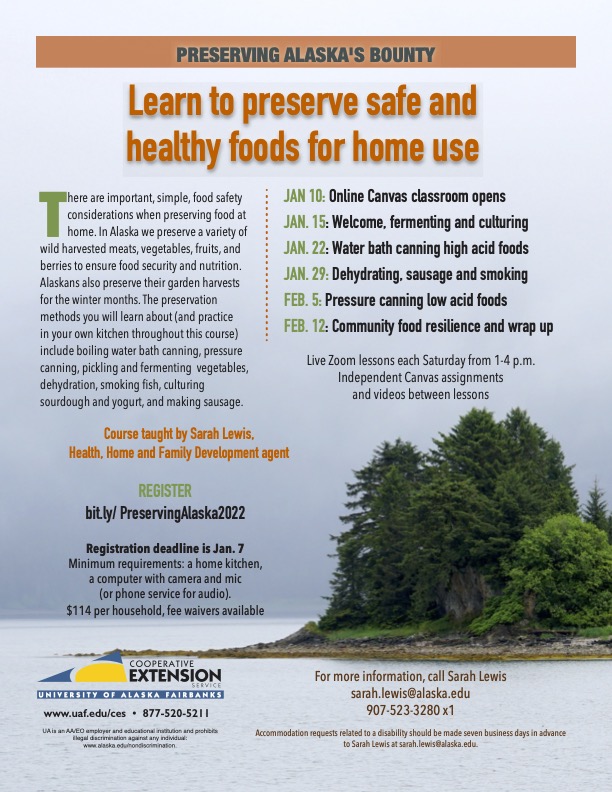
Learn to preserve safe and healthy foods for home use with Sarah Lewis

In Alaska, we preserve a variety of wild harvested meats, vegetables, fruits, and berries to ensure food security and nutrition. Alaskans also preserve their garden harvests for the winter months. 

University of Alaska Fairbanks Cooperative Extension Service agent Sarah Lewis will demonstrate how to preserve this bounty by canning, dehydrating, pickling, fermenting, and smoking.

There are important, simple, food safety considerations when preserving food at home. The preservation methods you will learn about (and practice in your own kitchen throughout this course) include water-bath canning, pressure canning, pickling and fermenting vegetables, dehydration, smoking fish, culturing sourdough and yogurt, and making sausage.

Lewis will teach the course online via Zoom, and participants can practice these techniques in their own kitchens. They’ll complete independent online assignments and view videos via the Canvas online course platform, which will open Jan. 10. Zoom classes will be held from 1-4 p.m. on Saturdays, Jan. 15 through Feb. 12. 

The course will use “So Easy to Preserve,” sixth edition, from the University of Georgia Cooperative Extension Service. The book is included in the cost of the course and will be mailed to each student. 

Students must have a home kitchen, a computer with a camera, and either a computer microphone or phone service for audio. The cost is $114 per household; fee waivers are available.

Register at bit.ly/PreservingAlaska2022. The registration deadline is Jan. 7. 

For more information, contact Sarah Lewis at sarah.lewis@alaska.edu or 907-523-3280, ext. 1. 

UAF Cooperative Extension Service offers online Preserving Alaska’s Bounty series

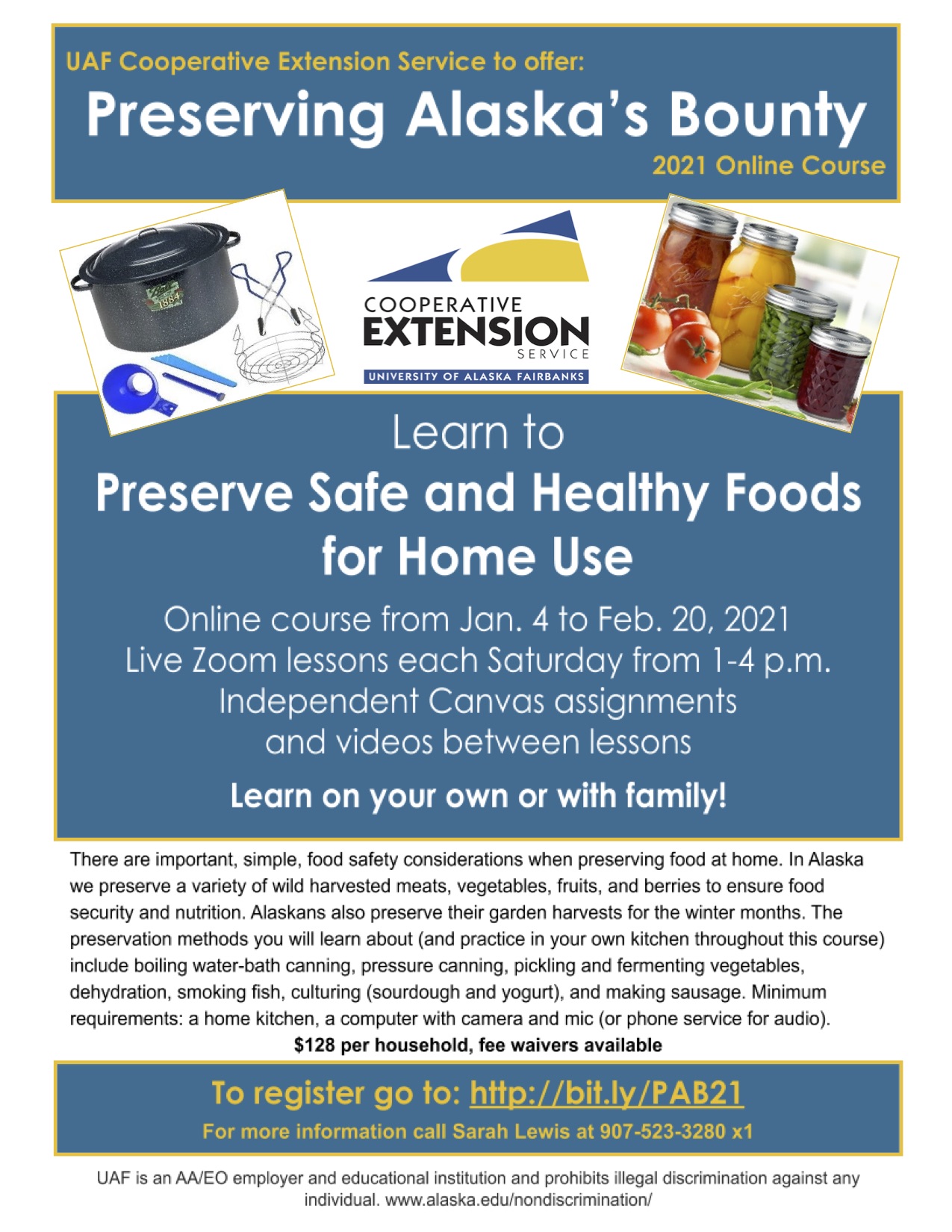
Did you have a productive garden or catch a lot of fish this year? Did you struggle with how to save the food so it doesn’t go bad? The University of Alaska Fairbanks Cooperative Extension Service is offering its Preserving Alaska’s Bounty online course this winter via Zoom.

Online classes will be held from 1-4 p.m. on Saturdays, from Jan. 4 to Feb. 20. The fee is $128 per household, and fee waivers are available. 

For more information, please contact Sarah Lewis at 907-523-3280 x1. To register go to: http://bit.ly/PAB21.

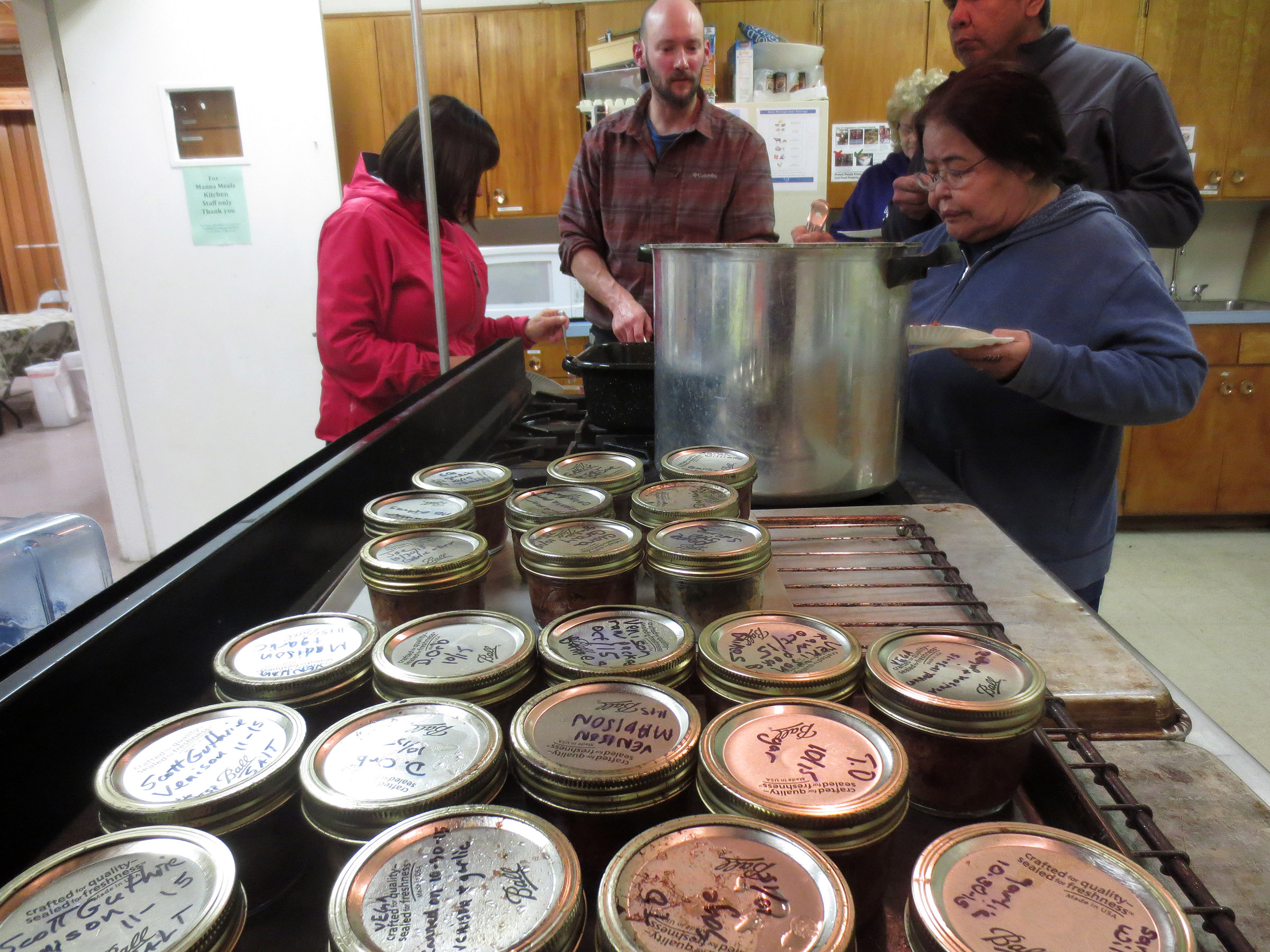
• Scenes from the Sitka Kitch venison class hosted by UAF Cooperative Extension, SEARHC

22747125432_327d8c7356_o

kitch_logo_mainSitka residents love their venison, so the University of Alaska Fairbanks Cooperative Extension Service and the SouthEast Alaska Regional Health Consortium (SEARHC) WISEFAMILIES Traditional Foods program hosted a free class on canning, smoking, and making deer jerky on Oct. 30 at the Sitka Kitch community rental commercial kitchen.

The Oct. 30 class featured lessons on how to can venison in jars, taught by Ellen Ruhle, as well as info about how to prepare deer jerky and how to smoke venison roasts, taught by Jud Kirkness. Due to the popularity of the class, the Sitka Kitch is hoping to schedule a second class on deer/venison in the near future.

Below is a slideshow of photos taken during the class by Jasmine Shaw of the UAF Cooperative Extension Service Sitka District Office.

This slideshow requires JavaScript.


• SEARHC, UAF Cooperative Extension Service to host deer/venison canning classes

Participants in Sitka's Alaska Way Of Life 4-H program, aka the Sitka Spruce Tips 4-H program, learn how to skin and butcher a deer. (Photo courtesy of the Sitka Conservation Society/Sitka Spruce Tips 4-H program)

Participants in Sitka’s Alaska Way Of Life 4-H program, aka the Sitka Spruce Tips 4-H program, learn how to skin and butcher a deer. (Photo courtesy of the Sitka Conservation Society/Sitka Spruce Tips 4-H program)

kitch_logo_mainThe SouthEast Alaska Regional Health Consortium (SEARHC) WISEFAMILIES Traditional Foods program and the University of Alaska Fairbanks Cooperative Extension Service are teaming up to offer a deer and venison workshop from 3-7 p.m. on Friday, Oct. 30, at the Sitka Kitch.

The Sitka Kitch is a rental community commercial kitchen project coordinated by the Sitka Conservation Society, in partnership with the Sitka Local Foods Network, located inside the First Presbyterian Church, 505 Sawmill Creek Road. The Sitka Kitch was a project from the 2013 Sitka Health Summit designed to improve food security in Sitka while also providing a space for people wanting to get into the cottage food business or wanting to preserve their harvest for storage in the home pantry. Sitka Kitch officially opened in March 2015 after a series of renovations to make it pass Alaska Department of Environmental Conservation commercial kitchen food safety standards.

The Oct. 30 class will feature lessons on how to can venison in jars, taught by Ellen Ruhle, as well as how to prepare deer jerky and how to smoke venison, taught by Jud Kirkness.

There is a possibility we will be able to harvest a deer next week, and if so we will add on a portion of the workshop to focus on butchering and meat care. And this time we are just offering the food preservation class (canning, jerky, and smoking hind quarters).

Thanks to a grant from the SEARHC WISEFAMILIES Traditional Foods program, all ingredients, jars, and equipment will be supplied in class.

The SEARHC WISEFAMILIES Traditional Foods program promotes healthy lifestyles by connecting Alaska Natives in Southeast Alaska to their culture. Members of the program learn how to harvest, cook, and preserve their traditional Alaska Native foods, which usually are healthier than heavily processed store-bought foods. In addition, participants learn traditional language, dancing, carving, weaving, and other skills that help reconnect them to their culture.

The UAF Cooperative Extension Service offers a variety of programs geared toward food, how to grow it, how to preserve it for storage, and how to make it into cottage foods you can sell. For those who can’t make the classes, the service offers a series of free online tutorials about home canning called Preserving Alaska’s Bounty.

Pre-registration is required for this class, and there are only 12 spots available. For more information and to pre-register, please contact Jasmine Shaw at 747-9440 or jdshaw2@alaska.edu.

• Scenes from a series of home canning and cottage foods classes July 16-18 at Sitka Kitch

SarahLewisPlacesLidOnAllAmericanCanner kitch_logo_mainOn July 16-18, the Sitka Kitch project hosted Sarah Lewis of the Juneau District Office of the University of Alaska Fairbanks Cooperative Extension Service to host four classes in Sitka on the cottage food industry and home canning. These classes were free and paid for by a grant from the SouthEast Alaska Regional Health Consortium (SEARHC) WISEFAMILIES Traditional Foods program. In addition, Sarah had a table at the Sitka Farmers Market on July 18 where she tested pressure canner gauges.

For those who missed the classes and want to learn more about home canning, the UAF Cooperative Extension Service has a series of online tutorials on its website called “Preserving Alaska’s Bounty.” In addition, Leslie Shallcross from the Anchorage District Office of the UAF Cooperative Extension Service will be in town during the Sitka Seafood Festival to teach canning classes on Thursday and Friday, Aug. 6-7, at Sitka Kitch, and on Saturday, Aug. 8, at Sweetland Hall on the Sheldon Jackson Campus. Watch for a class schedule to be posted soon (note, these classes will cost $15 each).

A reminder, pressure canner gauges should be tested at least once a year to make sure they are hitting the right pressures for safe food preservation. For those who couldn’t get to the July 18 Sitka Farmers Market for pressure canner gauge testing, the Sitka District Office of the UAF Cooperative Extension Service has a tester in its office and you can call Jasmine Shaw at 747-9440 to set up an appointment for testing. The office also has a variety of resources — many of them free — on home canning, gardening and other topics.

Sitka Kitch is a community wellness project from the 2013 Sitka Health Summit designed to improve food security in Sitka. The different parts of the project include creating a community kitchen Sitka residents can rent to prepare food for their small businesses or to preserve their family harvest of fish, game, or garden veggies; expanding Sitka’s emergency food storage capacity; and providing education about preserving food and building family emergency food pantries.

For more information about the Sitka Kitch project, go to the Sitka Kitch website or Facebook page. For rental information, contact Kristy Miller at sitkakitch@sitkawild.org. Click this link to take a quick tour of the facility.

Slideshows featuring scenes from Friday’s class on canning salmon and berries and Saturday’s class on canning soups and sauces are below. Also, KCAW-Raven Radio attended the pickling and fermenting class and filed this story (which also includes a slideshow at the bottom). The Alaska Dispatch News recently posted this link on how to can salmon.

This slideshow requires JavaScript.


Slideshow from the Friday, July 17, class about canning salmon and berries (above).


This slideshow requires JavaScript.


Slideshow from the Saturday, July 18, class about canning soups and sauces (above).

• Free pressure canner gauge testing offered at the Sitka Farmers Market on Saturday, July 18

Canner

SarahLewisTestsCannerGaugeThis is a great time of the year to be in Sitka. The fish are running, gardens are starting to produce, and berries are ripe for the picking.

Many Sitka residents have pressure canners to preserve their harvest, and this weekend Sarah Lewis of the Juneau District Office of the University of Alaska Fairbanks Cooperative Extension Service is in town to teach four classes about canning on Thursday, Friday and Saturday at the Sitka Kitch (a rental community commercial kitchen at First Presbyterian Church, 505 Sawmill Creek Road, note, all classes are full). She also provide free pressure canner gauge testing at the Sitka Farmers Market from 10 a.m. to 1 p.m. on Saturday, July 18, at the Alaska Native Brotherhood Founders Hall.

“People can bring the gauge or the lid with the gauge still attached,” Sarah said about the pressure canner gauge testing. “If they have any questions about the full canner (gaskets, damage, how to use, etc.) they can bring the whole thing.”

In addition to testing pressure canner gauges, Sarah plans to work with Jasmine Shaw of the Sitka District Office of the UAF Cooperative Extension Service to have a wide variety of publications available about home canning. In addition, the UAF Cooperative Extension Service has a series of online tutorials on its website called “Preserving Alaska’s Bounty.” Pressure canner gauges should be tested at least once a year to make sure they are hitting the right pressures for safe food preservation.

A reminder about the Sitka Farmers Market, due to health codes we can’t allow any pets other than licensed service dogs in the ANB Hall or the parking lot. We also don’t allow smoking at the Sitka Farmers Market (in ANB Hall or the parking lot) because this is a health event.

Also, if you are in Sitka and you can’t make the pressure canner gauge testing event at the Sitka Farmers Market, you can call Jasmine Shaw at 747-9440 at the Sitka office of the UAF Cooperative Extension Service to set up a time when you can stop by and have her test your gauge in the office. She now has a gauge and is trained on using it.

• SEARHC, Cooperative Extension to host free food preservation and entrepreneurship workshops at Sitka Kitch

SitkaKitch2015CanningClasses

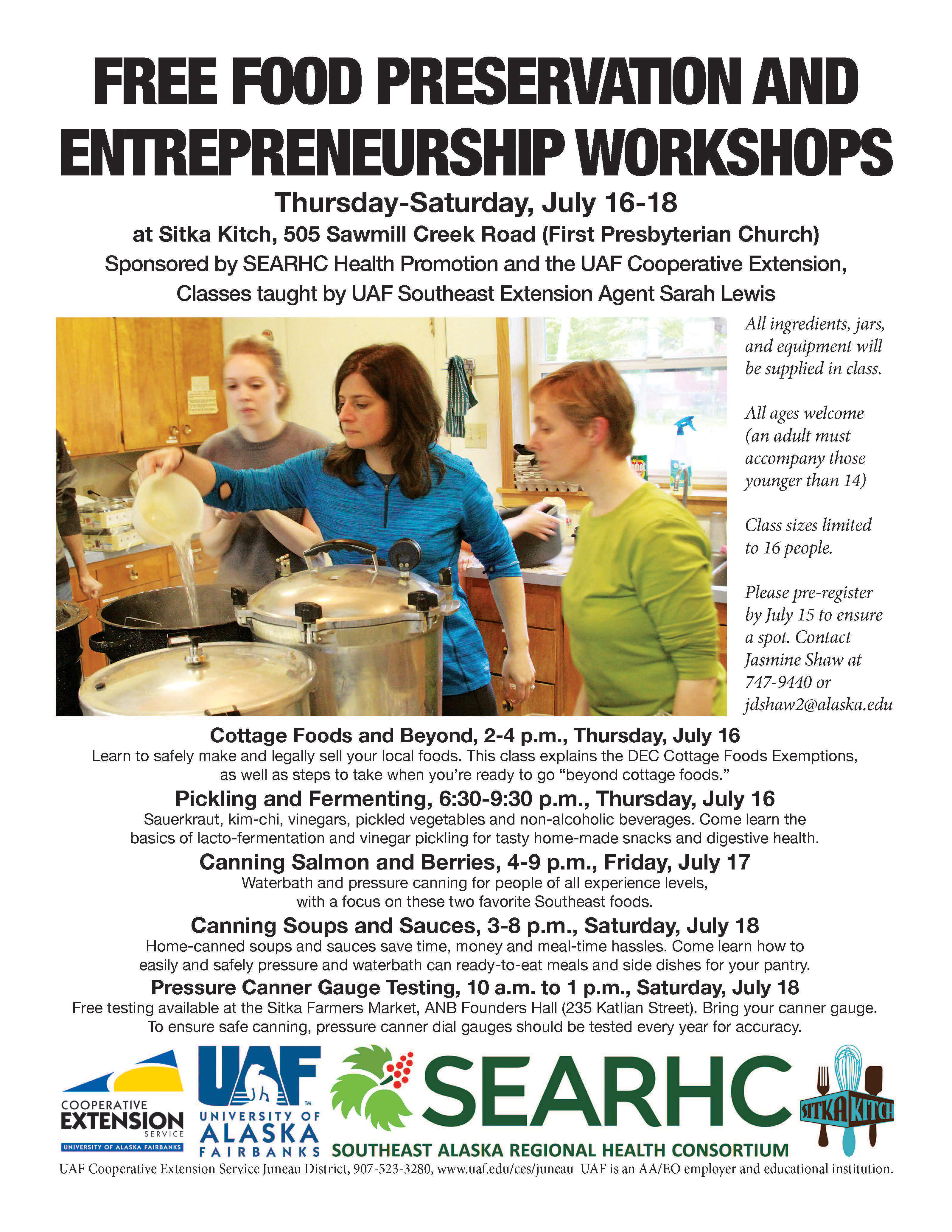
The SouthEast Alaska Regional Health Consortium (SEARHC) WISEFAMILIES Traditional Foods program and the University of Alaska Fairbanks Cooperative Extension Service are teaming up to offer a series of four free food preservation and entrepreneurship workshops on Thursday through Saturday, July 16-18, at the Sitka Kitch. There also will be free pressure canner gauge testing at the Sitka Farmers Market on July 18.

The Sitka Kitch is a rental community commercial kitchen project coordinated by the Sitka Conservation Society, in partnership with the Sitka Local Foods Network, located inside the First Presbyterian Church, 505 Sawmill Creek Road. The Sitka Kitch was a project from the 2013 Sitka Health Summit designed to improve food security in Sitka while also providing a space for people wanting to get into the cottage food business or wanting to preserve their harvest for storage in the home pantry. Sitka Kitch officially opened in March 2015 after a series of renovations to make it pass Alaska Department of Environmental Conservation commercial kitchen food safety standards.

UAF Southeast Extension Agent Sarah Lewis of the Juneau District Office will teach four classes — Cottage Foods and Beyond, Pickling and Fermenting, Canning Salmon and Berries, and Canning Soups and Sauces. These classes are open to Sitka residents of all ages, but an adult must accompany those younger than 14 years old. Class sizes are limited to 16 people. Thanks to a grant from the SEARHC WISEFAMILIES Traditional Foods program, all ingredients, jars, and equipment will be supplied in class.

“The WISEFAMILIES Traditional Foods program is partnering with the UAF Cooperative Extension Service because their work complements our purposes, which is to help Native families reduce their risk for disease while working toward getting back to a traditional way of eating,” said SEARHC Health Educator Clara Gray, of the SEARHC WISEFAMILIES Traditional Foods program.

The SEARHC WISEFAMILIES Traditional Foods program promotes healthy lifestyles by connecting Alaska Natives in Southeast Alaska to their culture. Members of the program learn how to harvest, cook, and preserve their traditional Alaska Native foods, which usually are healthier than heavily processed store-bought foods. In addition, participants learn traditional language, dancing, carving, weaving, and other skills that help reconnect them to their culture.

SarahLewisWithBoilingPotsThe UAF Cooperative Extension Service offers a variety of programs geared toward food, how to grow it, how to preserve it for storage, and how to make it into cottage foods you can sell. For those who can’t make the classes, the service offers a series of free online tutorials about home canning called Preserving Alaska’s Bounty.

“As a UAF Cooperative Extension Agent, I try to teach that family and community resilience are strengthened when local foods are used to cook meals at home,” Lewis said. “Through my food preservation and entrepreneurship workshops I offer the knowledge and skills needed for people to discover the nutritional benefits and financial stability that come from making and preserving homemade meals with local ingredients.”

Here are the details and schedules of the four classes:

  • Cottage Foods and Beyond, 2-4 p.m., Thursday, July 16 — Learn to safely make and legally sell your local foods. This class explains the DEC Cottage Foods Exemptions, as well as steps to take when you’re ready to go “beyond cottage foods.”
  • Pickling and Fermenting, 6:30-9:30 p.m., Thursday, July 16 — Sauerkraut, kim-chi, vinegars, pickled vegetables and non-alcoholic beverages. Come learn the basics of lacto-fermentation and vinegar pickling for tasty home-made snacks and digestive health.
  • Canning Salmon and Berries, 4-9 p.m., Friday, July 17 — Waterbath and pressure canning for people of all experience levels, with a focus on these two favorite Southeast foods.
  • Canning Soups and Sauces, 3-8 p.m., Saturday, July 18 — Home-canned soups and sauces save time, money and meal-time hassles. Come learn how to easily and safely pressure and waterbath can ready-to-eat meals and side dishes for your pantry.

In addition to teaching the four classes, Lewis will offer free pressure canner gauge testing at the Sitka Farmers Market, from 10 a.m. to 1 p.m. on Saturday, July 18, at the Alaska Native Brotherhood Founders Hall, 235 Katlian Street. She also will provide other resources about home canning and food preservation. To ensure safe canning, pressure canner dial gauges should be tested every year for accuracy.

Due to limited class space, please pre-register by Wednesday, July 15, to ensure a spot. To pre-register, contact Jasmine Shaw of the Sitka District Office of the UAF Cooperative Extension Service at 747-9440 or jdshaw2@alaska.edu.

• Scenes from the Sitka Kitch class on canning the harvest


SarahLewisWatchesBetsyDeckerAddWaterToCooker

Sarah Lewis, right, watches as Betsy Decker adds water to a pressure cooker before jars of produce are added to start the canning process.

kitch_logo_mainOn July 25-27, the Sitka Kitch project hosted Sarah Lewis of the Juneau District Office of the University of Alaska Fairbanks Cooperative Extension Service to host three classes in Sitka on the cottage food industry and home canning. In addition, Sarah had a table at the Sitka Farmers Market on July 26 where she tested pressure canner gauges.

The slideshow below features photos from Saturday’s Canning The Harvest class at First Presbyterian Church. For those who missed the classes and want to learn more about home canning, the UAF Cooperative Extension Service has a series of online tutorials on its website called “Preserving Alaska’s Bounty.” Pressure canner gauges should be tested at least once a year to make sure they are hitting the right pressures for safe food preservation. The Sitka District Office of the UAF Cooperative Extension Service also has a variety of resources on home canning, gardening and other topics.

Sitka Kitch is a community wellness project from the 2013 Sitka Health Summit designed to improve food security in Sitka. The different parts of the project include creating a community kitchen Sitka residents can rent to prepare food for their small businesses or to preserve their family harvest of fish, game, or garden veggies; expanding Sitka’s emergency food storage capacity; and providing education about preserving food and building family emergency food pantries.

For more information about the Sitka Kitch project, contact Marjorie Hennessy at marjorie@sitkawild.org or 747-7509.

This slideshow requires JavaScript.