• Scenes from the fifth Sitka Farmers Market of the 2015 summer, and the Sitka Slug Races

Sitka Farmers Market Assistant Manager Francis Wegman-Lawless, left, and Sitka Farmers Market Manager Debe Brincefield, right, present the Table Of The Day Award to Rock Peterson of Jam-N-Peppers at the fifth Sitka Farmers Market of the 2015 summer on Saturday, Aug. 29, at the Alaska Native Brotherhood Founders Hall in Sitka. Peterson sells an apricot and pepper jam/glaze. He received a gift bag with fresh chard, kale, beets, and other veggies. The market also featured the inaugural Sitka Slug Races, won by Linda Wilson's slug Moses, with Sophie Nethercut and Maybelle Filler's slug Thug The Slug second, and Thomas Witherspoon's slug Slugzilla third. This is the eighth year of Sitka Farmers Markets, hosted by the Sitka Local Foods Network. The last market of the summer is from 10 a.m. to 1 p.m. on Saturday, Sept. 12, at the Alaska Native Brotherhood Founders Hall, 235 Katlian St. For more information about the Sitka Farmers Markets and Sitka Local Foods Network, go to http://www.sitkalocalfoodsnetwork.org/, check out our Facebook page at https://www.facebook.com/SitkaLocalFoodsNetwork, or follow us on Twitter at https://www.twitter.com/SitkaLocalFoods. (PHOTO COURTESY OF SITKA LOCAL FOODS NETWORK)

Sitka Farmers Market Assistant Manager Francis Wegman-Lawless, left, and Sitka Farmers Market Manager Debe Brincefield, right, present the Table Of The Day Award to Rock Peterson of Jam-N-Peppers at the fifth Sitka Farmers Market of the 2015 summer on Saturday, Aug. 29, at the Alaska Native Brotherhood Founders Hall in Sitka. Peterson sells an apricot and pepper jam/glaze. He received a gift bag with fresh chard, kale, beets, and other veggies. The market also featured the inaugural Sitka Slug Races, won by Linda Wilson’s slug Moses, with Sophie Nethercut and Maybelle Filler’s slug Thug The Slug second, and Thomas Witherspoon’s slug Slugzilla third. This is the eighth year of Sitka Farmers Markets, hosted by the Sitka Local Foods Network. The last market of the summer is from 10 a.m. to 1 p.m. on Saturday, Sept. 12, at the Alaska Native Brotherhood Founders Hall, 235 Katlian St. For more information about the Sitka Farmers Markets and Sitka Local Foods Network, go to http://www.sitkalocalfoodsnetwork.org/, check out our Facebook page at https://www.facebook.com/SitkaLocalFoodsNetwork, or follow us on Twitter at https://www.twitter.com/SitkaLocalFoods. (PHOTO COURTESY OF SITKA LOCAL FOODS NETWORK)

For the first time this summer, we had a minimal amount of moisture at the Sitka Farmers Market, with a brief rain during our Aug. 29 market. But the slugs in the Sitka Slug Races love moisture.

The highlight of the Aug. 29 market was the inaugural Sitka Slug Races, which included a preliminary heat before the main event. The top finisher was Moses, handled by Linda Wilson. In second place was Thug The Slug, handled by Sophie Nethercut and Maybelle Filler. In third place was Slugzilla, trained by Thomas Witherspoon.

The next market is from 10 a.m. to 1 p.m. on Saturday, Sept. 12, at the ANB Founders Hall. This will be our last market of the summer.

A reminder, due to health codes we can’t allow any pets in the ANB Founders Hall or the parking lot other than service dogs. We also don’t allow tobacco (smoking or chewing) at the Sitka Farmers Market because this is a health event (our event started out as a Sitka Health Summit project).

Finally, if you’ve ever wanted to be a vendor you can learn more by clicking this link or sending an email to sitkafarmersmarket@gmail.com. We always need new vendors, especially those selling produce from their home gardens, commercially caught fish or locally baked bread.

A slideshow from the fifth Sitka Farmers Market is posted below.

This slideshow requires JavaScript.

• Sitka Local Foods Network education committee seeks new families for garden mentor program

KubackiCoupleWithGarden

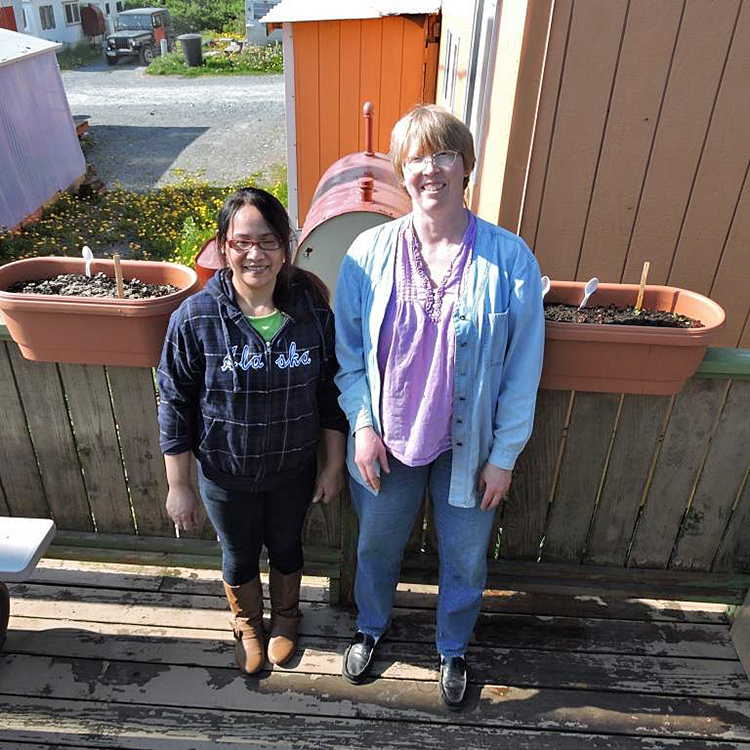
DasallaAndPutzFor a third year (2015-16), the Sitka Local Foods Network (SLFN) education committee wants to help families in Sitka learn how easy it can be to grow some of their own food. We are looking for up to three families who would like to learn about and try vegetable gardening in their own backyard through our Family Garden Mentor project.

Through a series of six workshops to be held at the families’ homes, Sitka Local Foods Network education committee volunteers will help the families:

  • Choose a location for a vegetable bed (learning about sun, drainage, etc.),
  • Build (or find) a planter/container or raised bed, and acquire soil and soil amendments,
  • Learn about soil and prepare the soil for planting,
  • Plant 2-4 easy-to-grow plants — specifically potatoes, lettuce, kale, and maybe a perennial edible such as rhubarb or fruit bushes,
  • Learn to take care of their plants over the summer — teaching how to care for and pick the vegetables (without killing the plant),
  • Harvest potatoes, and
  • Cook a meal using the vegetables they have grown.

IMG_0005The Sitka Local Foods Network will provide all materials — soil, lumber, seeds, etc. — free to the participating families. Families will be expected to provide the labor, enthusiasm for gardening, and healthy appetites to eat the vegetables they grow.

The requirement to own your property or home was dropped in 2015, and people who rent now are participating through container gardening. Interested families must meet only three requirements:

  1. They must be first-time vegetable gardeners (this project is meant to help people who are just starting to garden, not people with previous experience, even if it was not in Alaska),
  2. They must want to try vegetable gardening and be committed to participating throughout the summer, and
  3. They must agree to let others come and attend classes at their property.

Other criteria, such as availability and interest in a second year of mentoring, will also be used to help select the final three families. Families that are not selected will be placed on a waiting list in the hope of future continuation and expansion of this project.

IMG_0751The Sitka Local Foods Network has expanded the program this year to include more families and to include at least two households living in rental housing that will garden in portable containers or planters appropriately sized for their space (in case moving is necessary). We also will offer a second year of mentoring to previous participants, so families can expand their knowledge and try growing more “difficult” vegetables such as carrots and green onions.

IMG_0022Workshops may start as early as this fall or winter with selecting the site, ramp up in the spring of 2016 and run through September’s late harvest. First-year classes will focus on the easiest-to-grow vegetables (and fruit) in Sitka — potatoes, lettuce, kale, and rhubarb.

Families interested in participating should contact Michelle Putz at 747-2708, and provide a name, address, and contact phone number.

• Experience the best of Sitka’s local food scene with our updated Sitka Sound Suppers fundraiser

SitkaSoundSuppersLogoEating local in Sitka can be an amazing experience. We have wide variety of high-quality seafood, including five types of salmon, halibut, blackcod, dozens of varieties of rockfish, ling cod, Alaska king crab, Dungeness crab, scallops, spot prawns, yum. There also is Sitka black-tailed deer and other wild game. And there’s nothing like the taste of fresh produce from the garden, and our berries are exquisite.

Now you can experience the best of Sitka’s local food scene with Sitka Sound Suppers: A Chef-To-Table Experience, a fundraiser for the Sitka Local Foods Network. (NOTE: Please see the update below.)

Three Sitka chefs — Kathy Jones (Westmark/Dock Shack), Edith Johnson (Fly-In Fish Inn), and Jackie Barmoy (former owner of Loaves and Fishes in Seattle) — have volunteered their talents to prepare a totally local meal that will be brought to your Sitka home for you to enjoy.

  • Donate at the $500 level and you receive a local Sitka dinner for two people.
  • Donate at the $1,000 level and you receive a local Sitka dinner for four people.
  • Donate at the $2,000 level and you receive a local Sitka dinner for eight people.

We are planning on preparing just one special dinner at each donation level, so get in on the promotion early. (UPDATE: We have decided to allow multiple dinners for each donation level instead of a single dinner. We didn’t know how many people would respond, so didn’t want to overtask our chefs, who are donating their time and talents to this promotion. So, even though we already have a donor at the $500 level, we can accommodate a second and/or third donor at that level.)

The Sitka Sound Suppers fundraiser launched on July 16 and ends after our final Sitka Farmers Market of the summer on Sept. 12. The winners of our meals will be connected to our chefs, so they can agree on a menu and date for the meal during the Fall 2015 harvest season (late September to November). All meals will be prepared and served in Sitka, Alaska. You can learn more about the Sitka Sound Suppers fundraiser by watching this video.

The funds raised by this promotion will help the Sitka Local Foods Network continue its work promoting local foods in Sitka and Southeast Alaska through the Sitka Farmers Market, St. Peter’s Fellowship Farm communal garden, and our education programs. As the organization has grown and matured, we’ve reached a point where we need to hire a part-time staff person to handle some of the daily duties of our organization. Your donations will go into a fund to help us eventually be able to hire that staff person.

Your support for the Sitka Local Foods Network is greatly appreciated. Thanks.

By the way, if you want to contribute to the Sitka Local Foods Network but not receive one of the Sitka Sound Suppers, you can go to our main fundraising page on Razoo.com (a fundraising/crowdfunding site for nonprofit organizations) and donate in any amount over $10 there. Your online donation is secure and tax-deductible (we have federal 501(c)(3) nonprofit status). Thanks again.

• Sitka Sound Suppers information flier (opens as PDF file)

• Fish to Schools program seeks donations of coho salmon, photos from commercial fishermen

FishtoSchool

The Fish to Schools program needs help from Sitka’s commercial fishermen. The program needs a few hundred pounds of coho salmon to help make Fish to Schools meals for Sitka students during the upcoming 2015-16 school year. The program also is seeking photos of commercial fishermen at work, which can be used to teach the students more about how the fish got to their plates.

The coho salmon donation period is Monday. Aug. 24, through Monday, Aug. 31. To donate, commercial fishermen can sign up and indicate how many pounds they want to donate when they offload at Seafood Producers Cooperative or Sitka Sound Seafoods during the donation period. The program can only accept commercially caught fish (no sport or subsistence fish). The hope is to get enough coho donated that locally caught salmon can be offered to students at least once a week.

The Sitka Fish To Schools project (click here to see short video) got its start as a community wellness project at the 2010 Sitka Health Summit, and now is managed by the Sitka Conservation Society. It started by providing a monthly fish dish as part of the school lunch as Blatchley Middle School, and since then has grown to feature regular fish dishes as part of the lunch programs at Baranof Elementary School, Keet Gooshi Heen Elementary SchoolBlatchley Middle School, Sitka High SchoolPacific High School (where the alternative high school students cook the meals themselves), the SEER School, and Mount Edgecumbe High School.

FishtoSchool2In addition to serving locally caught fish meals as part of the school lunch program, the Fish To Schools program also brings local fishermen, fisheries biologists and chefs to the classroom to teach the kids about the importance of locally caught fish in Sitka. The program received an innovation award from the Alaska Farm To Schools program during a community celebration dinner in May 2012, and now serves as a model for other school districts from coastal fishing communities. In May 2014, the Fish to Schools program released a guidebook so other school districts in Alaska could create similar programs.

For more information, contact Sophie Nethercut of the Sitka Conservation Society, sophie@sitkawild.org or 747-7509. You also can contact Beth Short-Rhoads at 738-9942 or elianise@yahoo.com. Photos and captions of commercial fishermen working out on the water should be sent to Sophie.

• UAF Cooperative Extension Service, Alaska Sea Grant team up to offer online course on the specialty food business

Specialty food business

Are you interested in starting a specialty food business? The University of Alaska Fairbanks Cooperative Extension Service and the UAF Alaska Sea Grant program are teaming up to offer a five-class online course about how to start a specialty foods course in October.

The class is only available online and it will be from 5:30-8 p.m. on Oct. 5, 7, 12, 14, and 19. You must attend all five classes during the times they are offered. The course costs $50 and is limited to the first 25 who register from around the state. More details about the class and its technology requirements can be found here. The instructors will be Quentin Fong of the Alaska Sea Grant program and Kate Idzorek of the UAF Cooperative Extension Service.

This course is intended for individuals interested in starting and operating a specialty food business to sell foods under the DEC Cottage Foods Exemption, a temporary DEC permit, DEC-permitted food production businesses to sell wholesale in Alaska or DEC-permitted Mobile Food Units (food trucks). This course is NOT intended for individuals starting or operating a restaurant or starting an interstate or international wholesale food business. It is for people who want to make specialty food products, such as jams and jellies, handmade chocolates, salsa, pickled fish, or operate a food truck. Many specialty food products are perfect for selling at the Sitka Farmers Market.

To register online, go to http://bit.ly/ces-workshops. For more information, contact Kate Idzorek of the UAF Cooperative Extension Service at 1-907-474-5391 (Fairbanks number).

• Hoonah Healing Community Garden helps Hoonah improve health and prevent diabetes

End of May 114

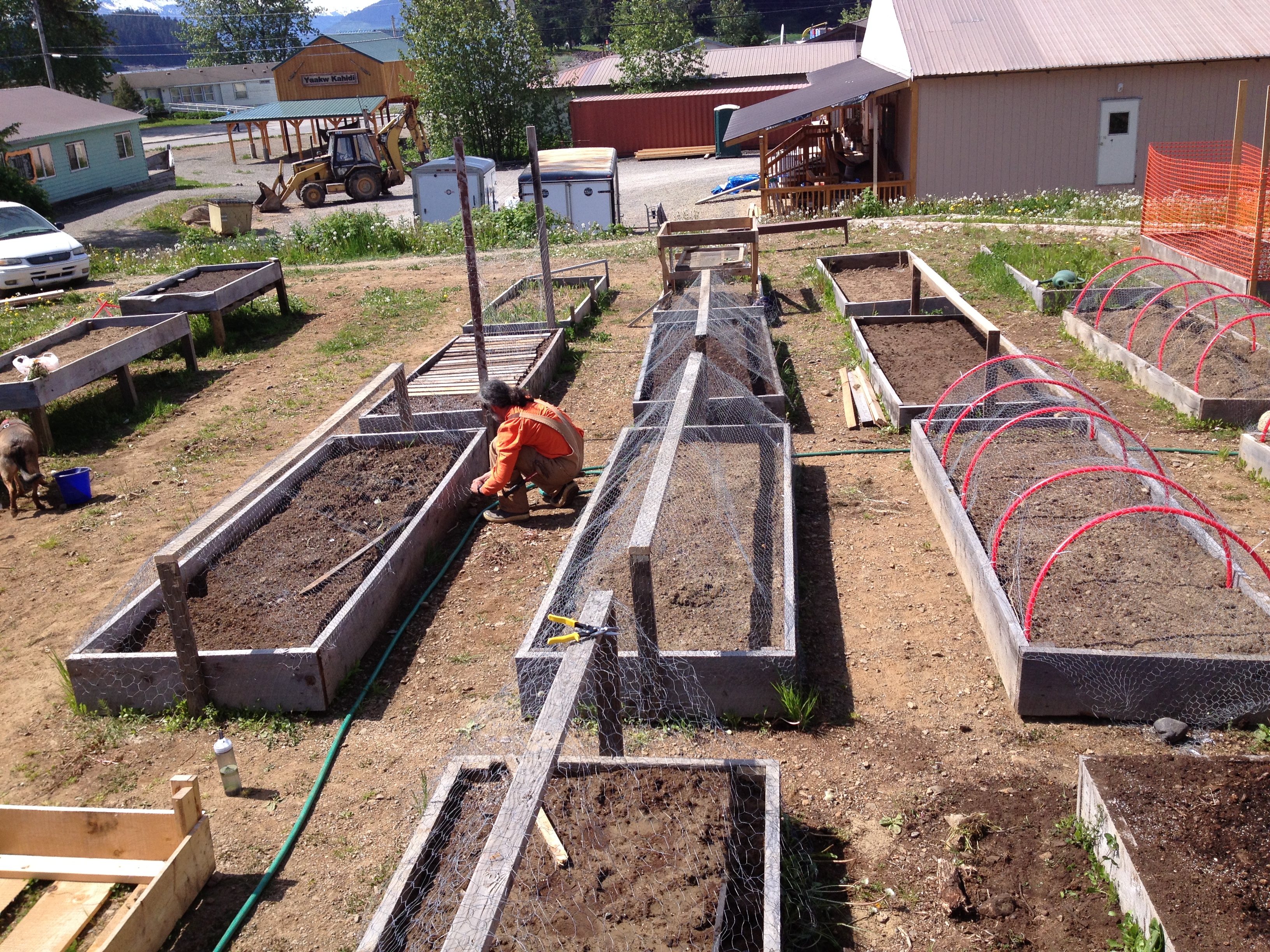
Terrence McCrobie builds three Hoonah Healing Community Garden plots for the Hoonah Senior Center in May 2015. (Photo by Kathy McCrobie)

By Kathy McCrobie
SEARHC Traditional Foods Project Assistant

Creating the Hoonah Healing Community Garden was Bob Starbard’s idea. He is the Hoonah Indian Association‘s (HIA) Tribal Administrator. He worked with Bob Christensen from Southeast Alaska Conservation Council (SEACC), and by 2012 our first plots had been built.

I was hired by SouthEast Alaska Regional Health Consortium (SEARHC) as the Traditional Foods Project Assistant. When I took over for the 2013 growing season, I really had no gardening experience. I posted notices for the community to let them know the garden was available. We had 22 plots available for growing, and that summer half were in production.

Many community members made important contributions; our gravel business donated two large loads of fine sand and the time and skills shared made building the garden easier. Soon there was a dirt sifter to screen out the many rocks in the local dirt and heavy equipment leveled the ground. The Southeast Soil and Water Conservation District in Juneau sold us 14 berry plants at a discounted price. A community member donated 30 strawberry plants. Our space was soon coming together.

Most of our gardeners have prior gardening experience. Some used their own soil. Last year the zucchini, broccoli, potatoes, beets, bush beans and snap peas did well. The biggest challenge came from the ravens. After putting in starts, out of their curiosity, they would fly down when everyone left and pull them up.

We ask that our gardeners not use fish in their compost so the bears won’t come by to check us out and so far the deer have left the plots alone. Lia Heifetz from the Sustainable Southeast Partnership was a big help with our garden last year; she acquired some fence to protect our plots from critters. We hope to get the fence up this year. Lia also came to the William and Mary Johnson Youth Center to teach the Big Brothers Big Sisters of Hoonah about composting with her worm bin and then we gathered seaweed for the garden.

For 2015 we are off to a great start with six returning and four new gardeners. Community members donated 20 raspberry plants and 20 gooseberry plants. Through the program, I purchased and planted a Nadine plum tree and a Terry Berry apple tree. My husband volunteers at the Hoonah Senior Center and is helping me with the traditional foods plot, as well as planting three plots for the seniors.

I just received an email from Lauren Hughey, a Community Health Educator based out of SEARHC Sitka. What exciting news! They just received a diabetes grant carry-forward. With the approval of this grant, Hoonah will receive $1,650 with the main goal of reducing the financial barriers to gardening for American Indian/Alaska Native diabetic patients. This grant will pay for plot fees and gardening supplies in the community garden: soil, seeds, raised-bed repair supplies, shovels, pots, gloves, buckets, and cold frames.

If you are ever in Hoonah please stop by to see us.   The garden is in town next to the Sacred Heart Catholic Church. Sharing about the Hoonah Healing Community Garden lets our and other communities be informed that food security starts with us. Also that it really does work! For additional information, feel free to contact me at kathymc@searhc.org.

A slideshow of Hoonah community garden photos from former Sitka Local Foods Network board member Cathy Lieser is posted below.

This slideshow requires JavaScript.

• Path to Prosperity economic development contest semifinalists include two Sitka-based agriculture projects

P2P_logo

Two Sitka residents with agriculture projects have been named among the 12 semifinalists in the annual Path to Prosperity economic development contest for Southeast Alaska.

This is the third year of the contest, and Bobbi Daniels’ The Sawmill Farm project has been a semifinalist each year. New to the program is the Sitka Seedling Farms project by Sitka Local Foods Network Vice-President Matthew Jackson (who goes by Jackson). A total of 28 projects promoting economic development in Southeast Alaska were entered this year, and more details about the 12 semifinalist projects can be found here.

The year-long Path to Prosperity program provides budding entrepreneurs with the technical assistance they need to develop business plans and follow them through to successful businesses. The program is sponsored by Haa Aaní Community Development Fund, Inc. and The Nature Conservancy, with the goal to develop community resiliency by supporting Southeast Alaska entrepreneurs with creating a business plan.

Applications were solicited in March, with an informational webinar in April and application due date of May 31. The entries were whittled down to 12 semifinalists in July. The semifinalists will attend a three-day business boot camp in September, then they have until Dec. 1 to submit a business plan.

A panel of five judges from the business community will select two winning business plans in February, which each receive $40,000 seed funding for consulting and technical assistance to develop their businesses. The remaining 10 semifinalists will then compete through social media for the People’s Choice Award, which will give an additional $40,000 to one semifinalist.

Here is the list of the 2015 Path to Prosperity semifinalists:

  1. Alaska Accessible Adventures, Juneau, Lindsay Halvik
  2. AlaskaSmart Biodiesel, Hoonah, Jeff Hastings
  3. Columbine Farm, Haines, Spencer Douthit
  4. Micki’s House, Hydaburg, Margaret O’Neil
  5. Northern Edge Craftworks, Juneau, Reid Harris
  6. Petersburg Indian Association, Petersburg, Marco Banda
  7. Sandbar Bed and Breakfast, Metlakatla, Karen Thompson
  8. Sitka Seedling Farms, Sitka, Matthew Jackson
  9. Skya’ana Coffee Co., Klawock, Tina Steffen
  10. The Salty Pantry Market and Deli, Petersburg, Mindy Anderson
  11. The Sawmill Farm, Sitka, Bobbi Daniels
  12. Wrangell Cooperative Association, Wrangell, Aaron Angerman

• Sitka Local Foods Network education committee announces the inaugural Sitka Slug Races

Slug Races Sign

The Sitka Local Foods Network education committee invites Sitkans to take part in Sitka’s first slug races.

“Do slugs move into your garden faster than a speeding bullet? Are you sure your slugs are breeding with Olympic runners and pole vaulters? Could you have the next winner of the Triple Crown? The Sitka Local Foods Network invites you to come and put your fastest slug to the test against Sitka’s best!” race organizer and SLFN board member Michelle Putz said.

The SLFN education committee will hold its inaugural Sitka Slug Races at 12:30 p.m. on Saturday, Aug. 29, at the fifth Sitka Farmers Market of the summer at the Alaska Native Brotherhood Founders Hall (235 Katlian St.). Registration for the race is from 10 a.m. until noon.

Those interested in participating  will pay $5 per slug entered into the race. Participants are encouraged to bring their own fast slugs, but “rental slugs” will also be available at the race. The participants with the three fastest slugs in Sitka will be crowned and awarded a certificate and commemorative pin.

“Slug races help to support Sitka Local Foods Network’s mission to increase the amount of locally produced and harvested food in the diets of Southeast Alaskans,” Michelle said. “By getting slugs out of our gardens and into the race arena, we are saving valuable cabbage, kale, onions, and other foods from their hungry mouths. And we’ll find out which slugs were tromping to and through our gardens the quickest!”

We ask those who bring slugs to only bring black slugs, which are not native to Sitka, and not the California banana slugs which are native (can grow to three inches or longer, usually yellow or shades of green). Also, please don’t release your slugs in new places. We don’t want to introduce any invasive species, and the black slugs (sometimes brown or gray) are pretty destructive to Sitka gardens.

Funds raised will be used to support the network’s projects and activities including family garden mentoring, garden education classes, the Sitka Farmers Market, and the St. Peter’s Fellowship Farm communal garden.

For more information about helping with the race or the SLFN education committee, please contact Michelle Putz at 747-2708.

• Don’t forget, you still can add Pick.Click.Give. donations to your 2015 PFD application through Aug. 31


PickClickGiveFlier3DYDWEB

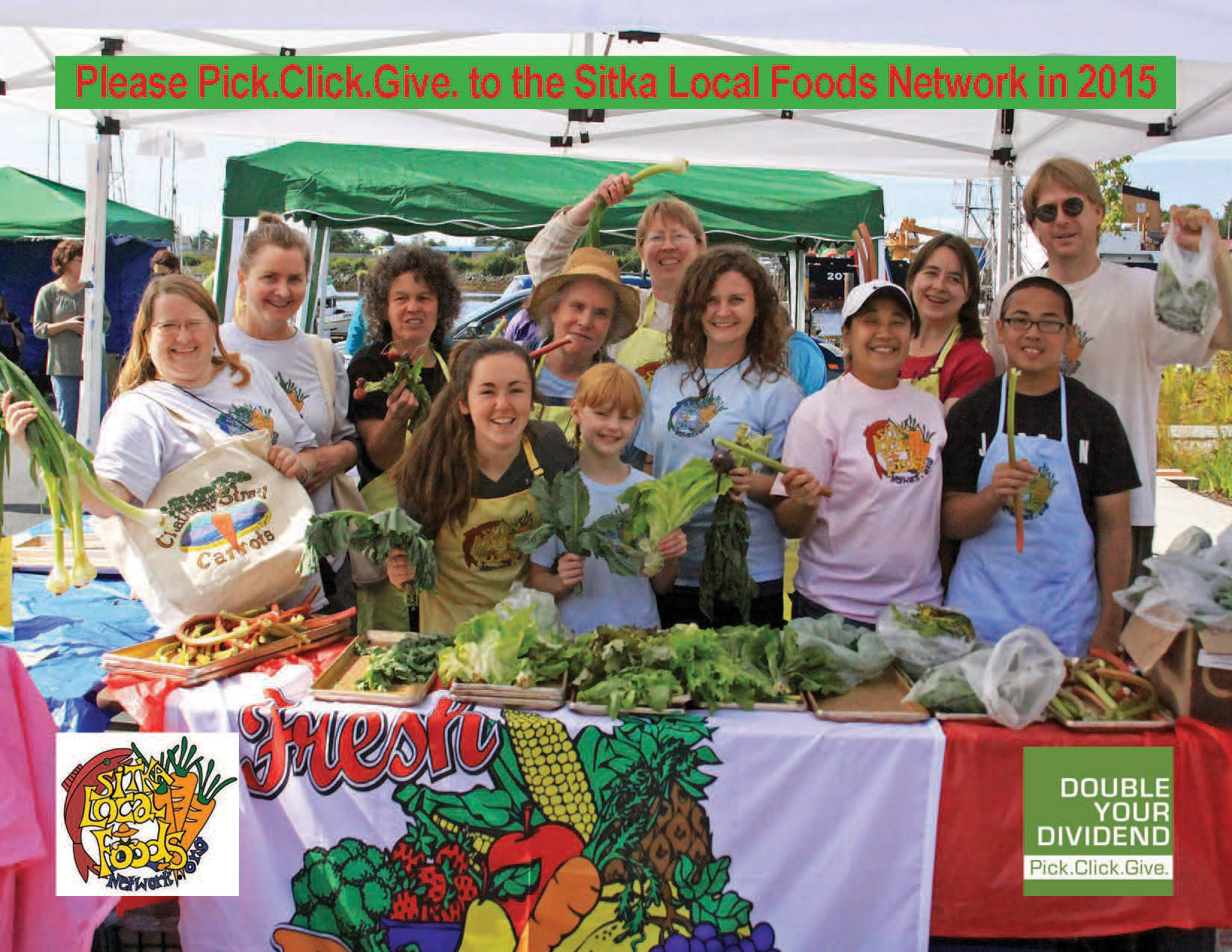
PCGKidsHarvest2015If you’re like most Alaskans you probably filed your 2015 Alaska Permanent Fund Dividend (PFD) application before the March deadline. But did you know you still can add Pick.Click.Give. donations to your 2015 application through Monday, Aug. 31? If you haven’t already, please consider making a Pick.Click.Give. donation to the Sitka Local Foods Network.

Here’s how to add or change your Pick.Click.Give. donations. First, go to the Alaska Permanent Fund Dividend application website, http://pfd.alaska.gov/, and find the green “Add A Pick.Click.Give. Donation” bar in the right column. Click the green bar, and follow the directions. You’ll need to enter your driver’s license number, Social Security number, and birthday to access your application, but once on the page you’ll be able to see your current Pick.Click.Give. donations (if any) and you can add or change them. Click here for an FAQ page about making Pick.Click.Give. donations.

Unfortunately, new donations made after the March 31 Alaska Permanent Fund Dividend filing deadline do not qualify for entry into the Double Your Deadline Sweepstakes, where 10 lucky Alaskans will win the equivalent of a second PFD. However, this year’s PFD is expected to be around $2,000, so please feel free to share the wealth with the more than 500 Alaska nonprofit organizations participating in the Pick.Click.Give. program.

Lovalaska FB Square PhotoGrid Tag (1)This is the second year the Sitka Local Foods Network is participating in the Pick.Click.Give. program, which allows people to donate in $25 increments to their favorite statewide and local 501(c)(3) nonprofit organizations when they file their PFD applications. When you choose to donate part of your PFD to the Sitka Local Foods Network, you support the Sitka Farmers Market, St. Peter’s Fellowship Farm, education programs about growing and preserving food, the Sitka Kitch community rental commercial kitchen, Blatchley Community Gardens, the sustainable use of traditional foods, the Sitka Community Food Assessment, the Sitka Food Summit, the Fish-To-Schools program, and a variety of other projects designed to increase access to healthy local foods in Sitka.

PCGFarmersMarket2015You still can donate to the Sitka Local Foods Network if you aren’t from Alaska or aren’t eligible for a 2015 PFD. To donate, send your check to the Sitka Local Foods Network, 408 Marine St., Suite D, Sitka, Alaska, 99835. Our EIN is 26-4629930. You also can make an online donation through our Razoo.com crowdfunding page. Please let us know if you need a receipt for tax purposes. For more information about donating, you can send an email to sitkalocalfoodsnetwork@gmail.com.

Thank you to everybody making a Pick.Click.Give. donation to your Sitka Local Foods Network. We appreciate your support.

• Saving seeds helps improve your future food crops, and it can be an act of defiance


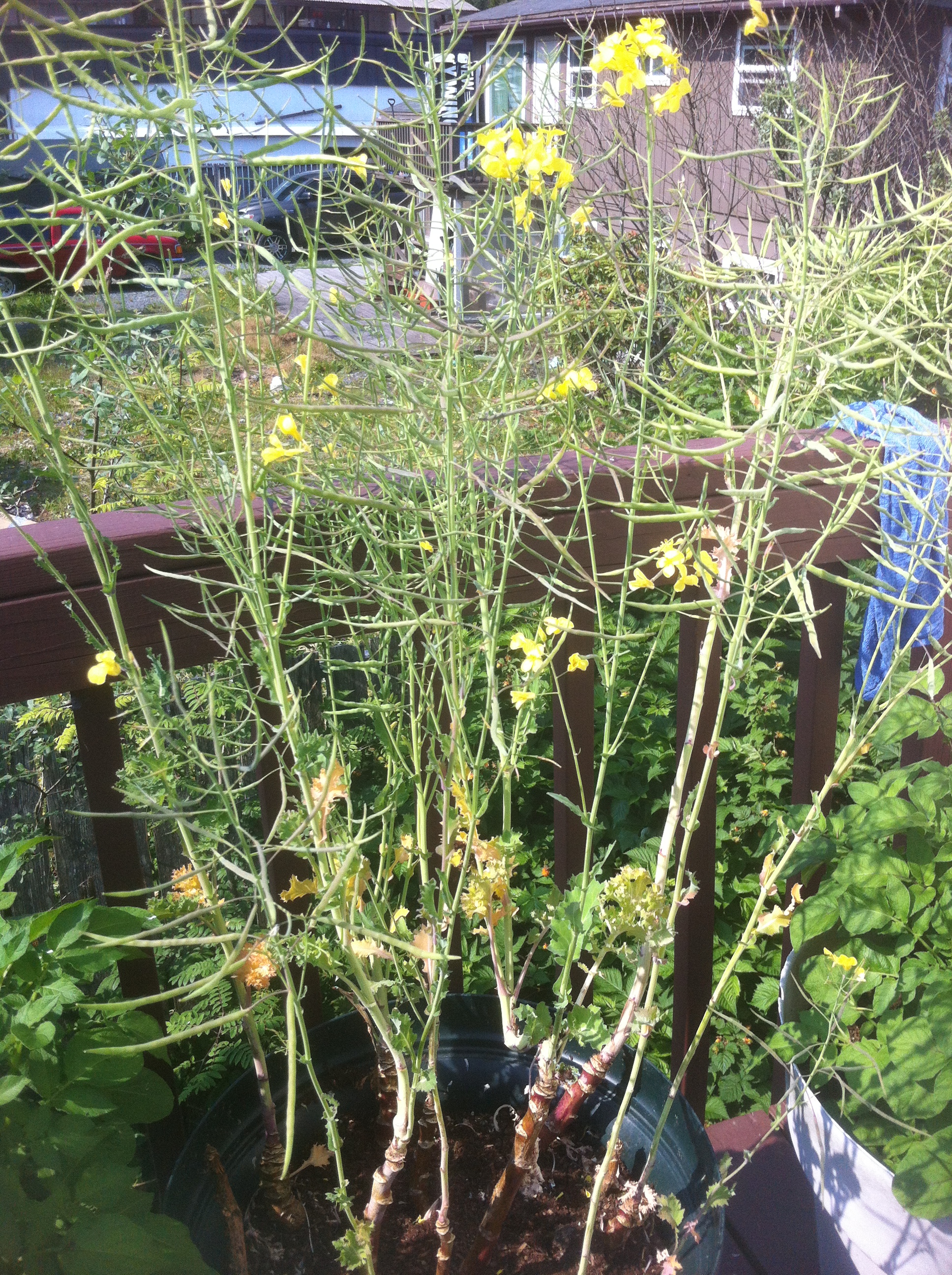
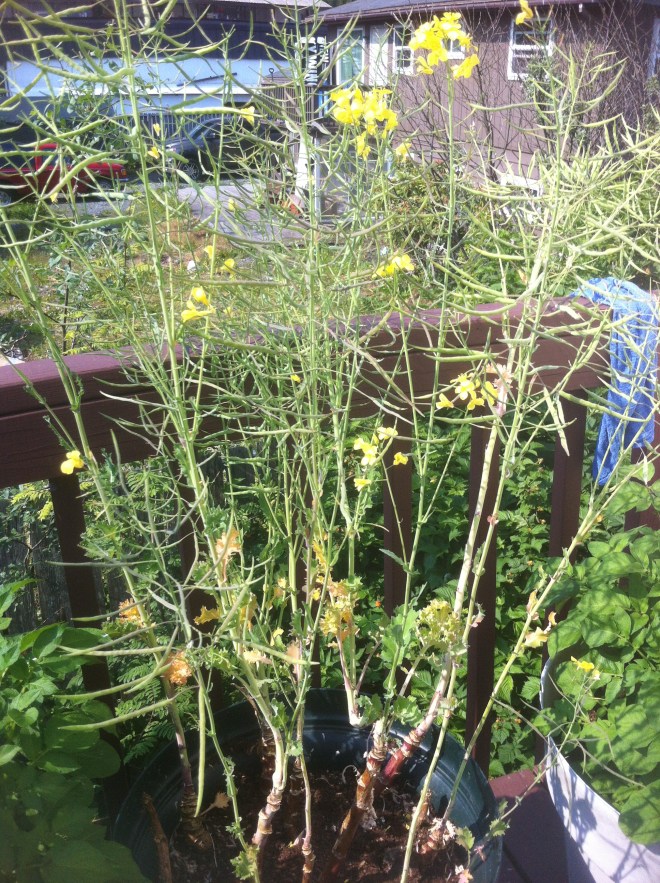
Container of kale bolting (going to seed)
Container of kale bolting (going to seed)

photo 2

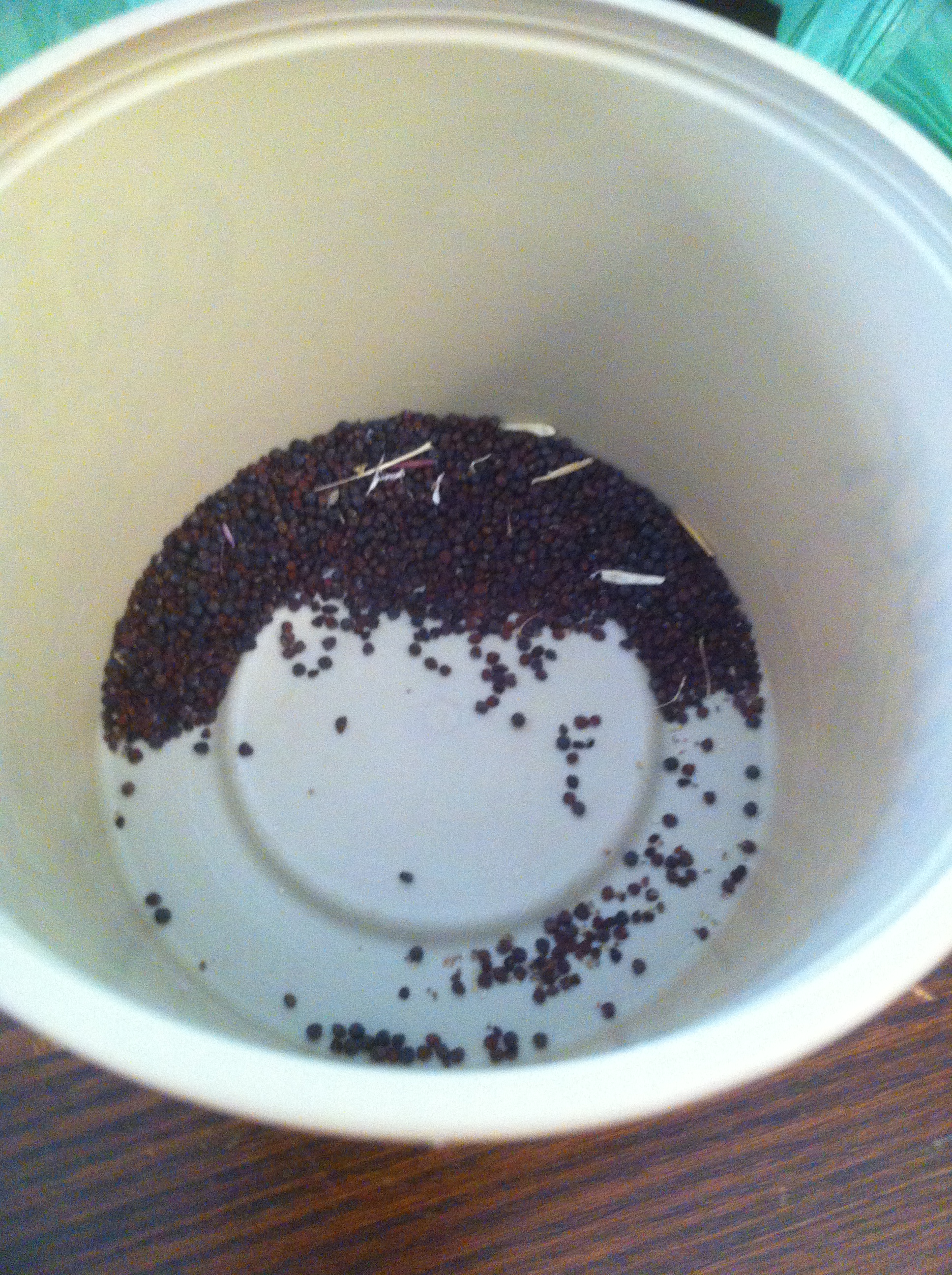
Collected kale seed

Farmers have been saving seeds for thousands of years, but in recent years saving seeds also has become an act of defiance. Saving seeds is a way to preserve and improve the biodiversity of your crops, while also thumbing your nose at agribusiness giants such as Monsanto who have made it difficult and even illegal for small farmers to save their own seeds.

In Sitka, saving seeds means preserving the best crops that grow in our rainy climate. You also can share seeds among friends to help them get the best varieties of a particular crop.

photo 1

Kale seed pods ready to be split so the seeds can be extracted and saved

So how do you do it? Saving seeds isn’t that difficult and there are many resources available online that can give you the basics. Here is a primer on saving seeds from the Colorado State University Cooperative Extension Service, and the Seed Savers Exchange provides these resources.

The John Trigg Ester Library, located in the town of Ester just outside Fairbanks, provides a list of Alaska resources for saving seeds. The Growing Ester’s Biodiversity program is believed to be the state’s only official seed library, where saved seeds are collected with the intention of sharing them with other gardeners and farmers. That’s different from a seed bank, where seeds are collected and stored, but not for sharing. Here is a FAQ page about how people can borrow seeds from the Ester seed library, and here is a tutorial from the seed library about saving tomato seeds.

Deirdre Helfferich, who also is the managing editor for the University of Alaska Fairbanks Agricultural & Forestry Experiment Station, coordinates the Growing Ester’s Biodiversity seed library at the John Trigg Ester Library. This is how she explains the difference between a seed library and a seed bank, and this is why she says we need to save seeds:

A seed bank is a depository for the owners of its seeds or germplasm. So, the Svalbard Global Seed Vault (in Norway) is a seed bank. Until recently, Native Seeds/SEARCH  (in Tucson, Ariz.) was a seed bank with limited availability for growing. It now has a seed library program.

The basic difference is the mode of preservation and distribution: the bank holds the seeds for its depositors, and as though the seeds are in a museum, to be regenerated only every so often to keep the line going. Seed banks won’t just share the seed with anyone, and will store their seed in deep dormancy as long as possible.

A seed library, on the other hand, preserves through distribution and growth each year. This means that the plants tend to adapt to the local where they are grown over time, of course, and don’t remain unchanged.

Seed libraries are also usually focused on the traditions and human context associated with the seed: what it means, the stories associated, the uses, the histories, etc. Seed libraries have to do with the cultures in which their charges were domesticated, preserved, passed down, donated. This can be as simple as “We traditionally use this tomato in grandma’s lasagne recipe so we call it Grandma’s Lasagne Tomato,” to “This tomato has been in our family for generations back when we were living in a little village in Italy and tomatoes were first introduced from the New World.”

The other thing about seed libraries is that they are libraries, and a library is grounded in sharing, in the abundance mentality. One gives away, trusting that good things will come back. And that network of relationships builds a community of trust. Contrast this to a bank, which holds its contents at bay from a hostile world.

Of course, we need things like Svalbard because there ARE nuts out there running our regulatory agencies and monocropping everything to the point where we simply may not have the variety we need. Seed libraries and seed banks offer two kinds of bulwarks to the crazies.

In an earlier conversation, Deirdre said part of the mission of the Ester seed library is “to inspire other seed library programs or variations on the theme.” With that in mind, I decided to see if I could save some seed.

HangingKaleSeedPodBagphoto

My bag of kale seed pods hanging in my living room to dry

I’m not the most experienced gardener, but this year I had a container of second-year kale that bolted after growing all winter (see photo at top of article), providing me with a nice crop of seed pods instead of leafy kale this summer. So, rather than toss the kale, I decided to collect the seed pods and see if I could save some seed.

Since it’s so rainy in Sitka, I couldn’t dry the seed pods outdoors. So I threw them into a plastic shopping bag and hung them in my living room for a month or two (out of the reach of my cats).

When the seed pods were finally dry enough so you could split them like shelling peanuts, I took the bag down and started collecting the seeds in a plastic margarine tub (see third photo). It can be somewhat tedious work, splitting all the seed pods to get the seeds loose, but it also can be meditative. Once you have all of the seeds separated from the seed pods, you should store them in a cool, dry place until you are ready to germinate them. Hopefully, these kale seeds will sprout next spring.