• Sitka’s Fish to Schools program on international list of 16 innovative school lunch programs

SCS-031_smFishToSchoolsTaco

FoodTankLogoSitka’s Fish to Schools program is one of 16 school lunch programs from around the world making a difference, according to an international list released this month by the organization Food Tank.

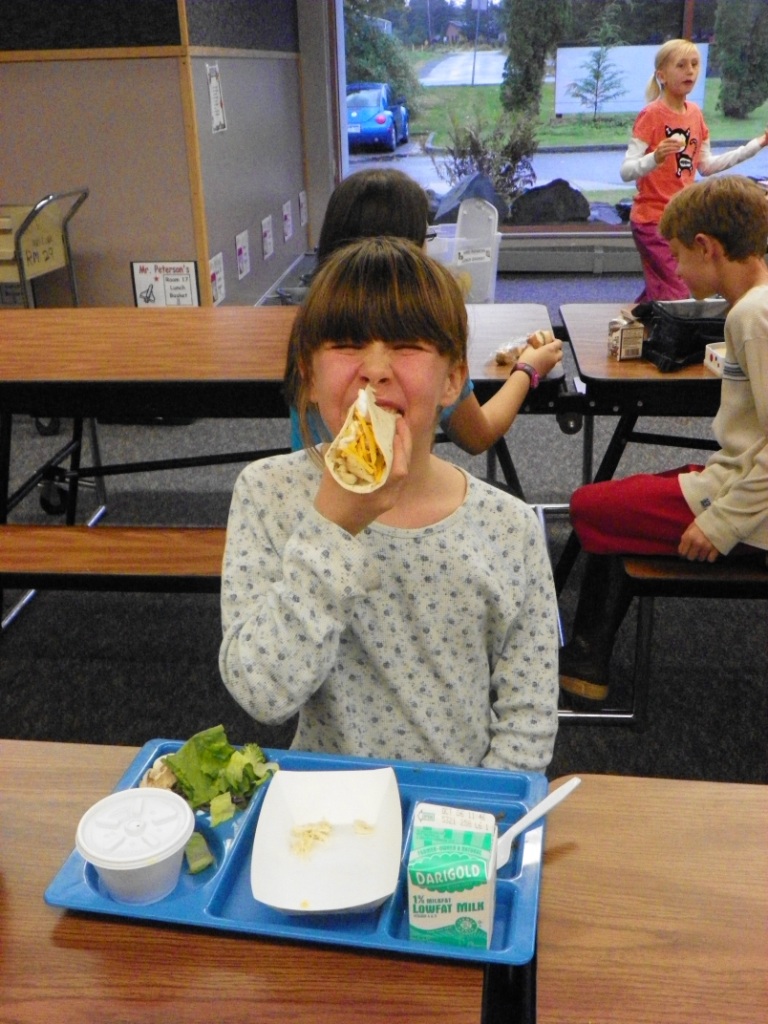
The Fish to Schools program got its start at the 2010 Sitka Health Summit, when community members decided they wanted to see more locally harvested fish in school lunches. The Sitka Conservation Society coordinates the program, in partnership with local schools.

The program started off with a monthly local fish lunch choice at Blatchley Middle School, but the program quickly expanded to include weekly local fish lunch choices at all Sitka schools (including the state-run Mount Edgecumbe High School boarding school and the private The SEER School).

In addition to putting local fish on the school lunch menu, the program also includes education about the fishing industry and its impact on the community (about one in five adults in Sitka work in the fishing industry). Local fishermen and women periodically share lunches with the students, which helps the students connect with their local food system. Local fishermen also donate coho salmon to the program, to help keep it sustainable.

In May 2014, the Sitka Fish to Schools program released a guidebook so other school districts in Alaska could create similar programs. For more information about the Fish to Schools program in Sitka, contact Sophie Nethercut of the Sitka Conservation Society, sophie@sitkawild.org or 747-7509.

• Sitka Health Summit chooses three 2015-16 community wellness projects

SitkaHealthSummitGroup

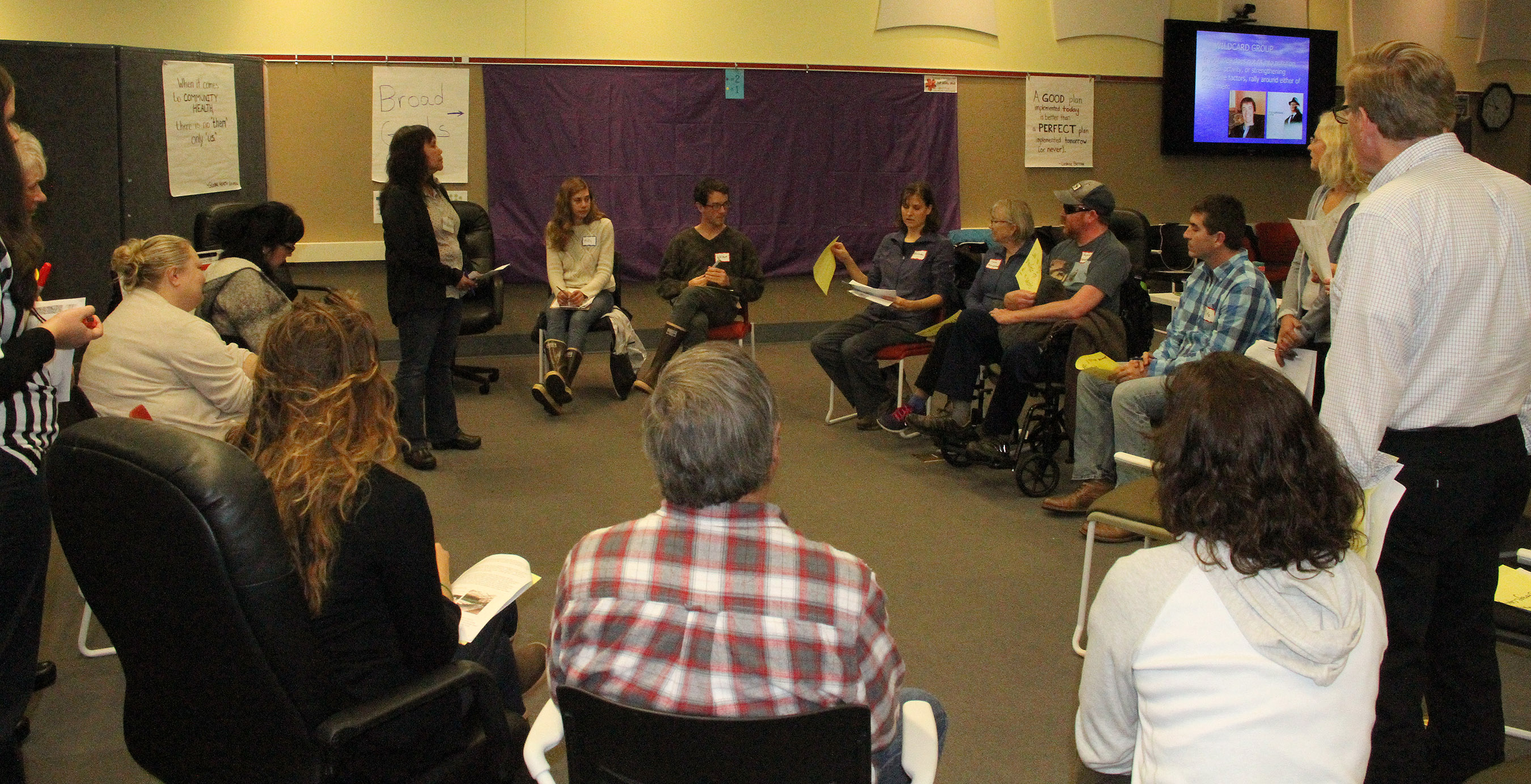
newsitkahealthsummitlogoSitka residents decided to find ways to honor and support our elders, build an accessible community playground near Crescent Harbor, and build a community greenhouse on the roof of the city cold storage building (or a similar-flat-roofed structure), choosing those as the three community wellness projects Sitka residents chose to pursue in 2015-16 at the ninth annual Sitka Health Summit planning day Friday, Oct. 9, at the University of Alaska Southeast Sitka Campus.

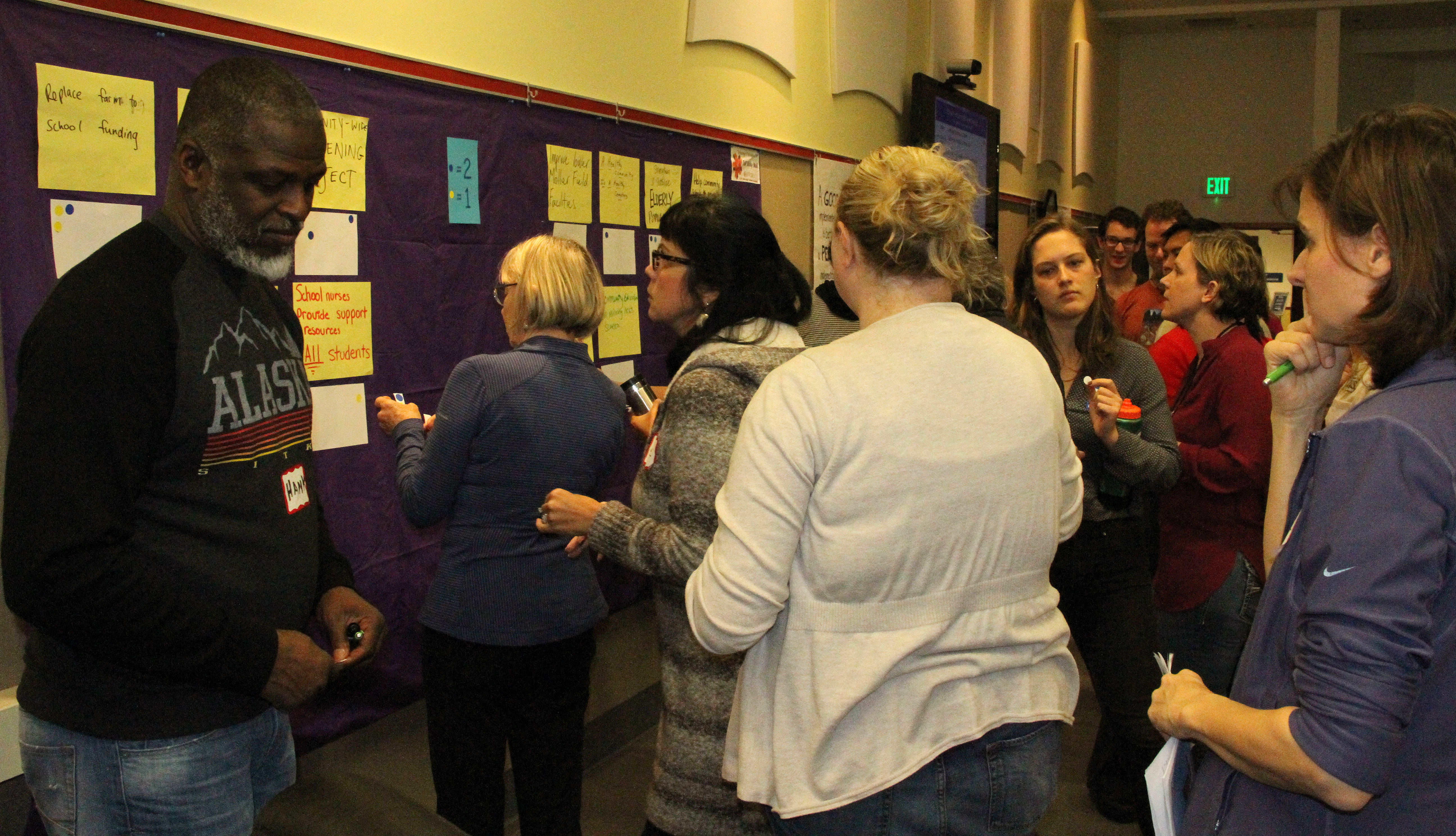
VotingForBroadProjectsThese three projects (one broad topic, and two specific topic projects that tied as top vote-getters) each were awarded with $2,000 in Tier 1 seed money to help get them started. The three projects were picked after 57 Sitka residents brainstormed and discussed the advantages and disadvantages of a wide variety of community wellness projects. In addition to the Tier 1 awards, the Sitka Health Summit also made applications available for Tier 2 grants of $10,000 for projects dealing with nutrition (applications are due Oct. 23, contact Lauren Hughey at lauren.hughey@searhc.org or go to http://www.sitkahealthsummitak.org/ for more information).

LynneBrandonAwardThe Sitka Health Summit also honored Lynne Brandon with a lifetime achievement award for her work promoting healthy lifestyles during her 13 years as Sitka’s Director of Parks and Recreation and now in her new position as executive director of Sitka Trail Works Inc.

Each of the three Tier 1 projects will host a kick-off event in the near future, and these events are open to the public and anybody who wants to help with the project. More information about the projects, their kick-off meetings, and contact people are listed below.

  • Design and build an ADA-accessible Sitka Community Playground, 6 p.m., Monday, Oct. 26, Sitka Community Hospital classroom, contact Kealoha Harmon, 747-3500 — This project is to create an accessible, attractive, low maintenance and safe community playground that will meet the needs of both children and their families. Right now Sitka does not have any playgrounds that are compliant with the Americans with Disability Act. Building the community playground was selected as a Sitka Health Summit goal in 2011, and a lot of important work has been done. Now it’s time to move this community-supported project forward.
  • Build a Sitka Community Greenhouse on the roof of the city cold storage plant (or similar flat-roofed building), 6 p.m., Wednesday, Oct. 28, Sitka Pioneer’s Home Manager’s House (Brave Heart Volunteers building), contact Charles Bingham, 623-7660 or charleswbingham3@gmail.com — This project’s goal is to increase local food production and food security by using greenhouses, including ones situated on rooftops, a practice growing in popularity around the world. Everyone needs the nutritional boost that only vegetables provide and the more we grow locally the better. There are so many benefits to growing food here; freshness, nutritional value, sustainability and the economic benefits that come from keeping dollars in Sitka. Rooftop greenhouses also can capture waste heat and provide a flat, slug-free growing environment that will help us with food security. Rooftop greenhouses can be a point of interest for visitors, a point of learning for students, and a point of community pride for everyone who believes in innovation and using space wisely.
  • Create a way to honor and support the well-being of elders in Sitka, 3 p.m., Friday, Nov. 6, Hames Athletic and Wellness Center, contact Caitlin Blaisdell, 747-5080 — One of the largest and fastest-growing populations in Sitka is its elders. The Elder Connection action group is focused on organizing systems to support the health and well-being of seniors living is Sitka. We want everyone’s Golden Years to be just that, and we know that we can do more to support this critical group of wisdom keepers.

NutritionGroupDiscussesProjectIdeasThe Sitka Health Summit is coordinated by a coalition of local groups that includes the SouthEast Alaska Regional Health Consortium (SEARHC), Sitka Community Hospital, Brave Heart Volunteers, the University of Alaska Southeast Sitka Campus, and the State of Alaska Division of Public Health Nursing, with financial help from the Federal Reserve Bank of San Francisco-Seattle Branch Community Development Division.

Over the years there have been a variety of Sitka Health Summit projects — create a local market for local fish and produce, build a Sitka community greenhouse, become a Bicycle Friendly Community, become a Walk Friendly Community, encourage more kids and families to get outdoors for recreation, support a community health and wellness center (Hames), plant fruit trees around town, get more local fish into school lunches, build a Choose Respect mural, Revitalize Sitka, the Sick-a-Waste compost project, the Sitka Community Food AssessmentPark PrescriptionsTogether for a Meth-Free Sitka, and Sitka Kitch (a project to create a community rental kitchen and improve Sitka’s emergency food storage capacity). The 2014 Sitka Health Summit projects were Celebrate Katlian Street: A Vibrant Community and the Southeast Youth Resource Guide (which evolved into Family Fun Days at the Hames Athletic and Wellness Center).

For more information about the Sitka Health Summit and its current and past projects, go to http://www.sitkahealthsummitak.org/.

• Sitka Health Summit planning day to be Oct. 9 at UAS Sitka Campus

SHS 2015 Promo Flyer 2 (1)

newsitkahealthsummitlogoJoin us for the ninth annual Sitka Health Summit planning day, which takes place from 8:30 a.m. to 4 p.m. on Friday, Oct. 9, at the University of Alaska Southeast Sitka Campus.

The Sitka Health Summit got its start in 2007 when then-Sitka Community Hospital CEO Moe Chaudry and then-SouthEast Alaska Regional Health Consortium (SEARHC) Vice President of Hospital Services Frank Sutton decided they needed to bridge the gaps between Sitka’s largest two health services. They launched the Sitka Health Summit, with the help of other supporters in Sitka, as a way to improve community wellness, honor local wellness champions, and more.

One of the highlights of the Sitka Health Summit has been the annual community wellness planning day. During planning day, Sitka residents get together to discuss the health needs of the community and create community wellness projects to address these needs.

Over the years there have been a variety of Sitka Health Summit projects — create a local market for local fish and produce, build a Sitka community greenhouse, become a Bicycle Friendly Community, become a Walk Friendly Community, encourage more kids and families to get outdoors for recreation, support a community health and wellness center (Hames), plant fruit trees around town, get more local fish into school lunches, build a Choose Respect mural, Revitalize Sitka, the Sick-a-Waste compost project, the Sitka Community Food Assessment, Park PrescriptionsTogether for a Meth-Free Sitka, and Sitka Kitch (a project to create a community rental kitchen and improve Sitka’s emergency food storage capacity). The 2014 Sitka Health Summit projects were Celebrate Katlian Street: A Vibrant Community and the Southeast Youth Resource Guide.

This year community members will select two Tier One projects, which will receive $2,000 in seed money to get started. Also, qualifying projects will have the opportunity to apply for Tier Two funding of up to an additional $20,000.

To register for the Sitka Heath Summit planning day, call Zachary Desmond at 747-4600 or email him at zachary@braveheartvolunteers.org. A free lunch with locally sourced food will be provided.

• Fish to Schools program seeks donations of coho salmon, photos from commercial fishermen

FishtoSchool

The Fish to Schools program needs help from Sitka’s commercial fishermen. The program needs a few hundred pounds of coho salmon to help make Fish to Schools meals for Sitka students during the upcoming 2015-16 school year. The program also is seeking photos of commercial fishermen at work, which can be used to teach the students more about how the fish got to their plates.

The coho salmon donation period is Monday. Aug. 24, through Monday, Aug. 31. To donate, commercial fishermen can sign up and indicate how many pounds they want to donate when they offload at Seafood Producers Cooperative or Sitka Sound Seafoods during the donation period. The program can only accept commercially caught fish (no sport or subsistence fish). The hope is to get enough coho donated that locally caught salmon can be offered to students at least once a week.

The Sitka Fish To Schools project (click here to see short video) got its start as a community wellness project at the 2010 Sitka Health Summit, and now is managed by the Sitka Conservation Society. It started by providing a monthly fish dish as part of the school lunch as Blatchley Middle School, and since then has grown to feature regular fish dishes as part of the lunch programs at Baranof Elementary School, Keet Gooshi Heen Elementary SchoolBlatchley Middle School, Sitka High SchoolPacific High School (where the alternative high school students cook the meals themselves), the SEER School, and Mount Edgecumbe High School.

FishtoSchool2In addition to serving locally caught fish meals as part of the school lunch program, the Fish To Schools program also brings local fishermen, fisheries biologists and chefs to the classroom to teach the kids about the importance of locally caught fish in Sitka. The program received an innovation award from the Alaska Farm To Schools program during a community celebration dinner in May 2012, and now serves as a model for other school districts from coastal fishing communities. In May 2014, the Fish to Schools program released a guidebook so other school districts in Alaska could create similar programs.

For more information, contact Sophie Nethercut of the Sitka Conservation Society, sophie@sitkawild.org or 747-7509. You also can contact Beth Short-Rhoads at 738-9942 or elianise@yahoo.com. Photos and captions of commercial fishermen working out on the water should be sent to Sophie.

• Rep. Jonathan Kreiss-Tomkins of Sitka introduces bill to allow donations of fish and game to nonprofit meal programs

041614_JKT_house-floor

Rep. Jonathan Kreiss-Tomkins (D-Sitka) is the prime sponsor of a tripartisan bill that will allow nonprofit meal programs — such as those found at schools, hospitals and senior centers — to serve donated fish and game from sport and subsistence harvesters.

The bill, HB 179, is co-sponsored by seven other legislators — four Republicans (Cathy Muñoz of Juneau, Charisse Millett of Anchorage, Louise Stutes of Kodiak and Tammie Wilson of North Pole), two Democrats (Neal Foster of Nome and Sam Kito III of Juneau), and an Independent (Dan Ortiz of Ketchikan). The was introduced on April 1 and already has hearings set for next week in the resources (Monday, April 6) and fisheries (Tuesday, April 7) committees. If those committees pass the bill, it could go before the House floor for a vote as early as late next week.

“Because of that broad support, this bill is in not just the fast lane, but in the Autobahn-style fast lane,” Kreiss-Tomkins told the Daily Sitka Sentinel. “This bill could go from being introduced to a vote on the floor in eight or nine days.”

Kreiss-Tomkins said the bill was inspired in part by Sitka’s Fish to Schools program, which allows commercial fishermen to donate locally caught seafood to local schools so it can be served in student lunches. However, many parts of the state don’t have commercial fisheries, and Alaska law currently bars food service organizations funded by state or federal meal programs from serving subsistence- and sport-harvested fish and game, even if it is donated.

In the sponsor statement for the bill, Kreiss-Tomkins writes:

Hunting and fishing is at the heart of our shared heritage as Alaskans. Every Alaskan looks forward to the season he or she can again fill the freezer with salmon, moose, caribou, seal, or berries. Alaskans happily share this food with family, children, and elders.

This sharing is not possible in our public institutions, however. Well-meaning state laws intended to prevent the commercialization of wild game have also largely prevented children in schools and elders in hospitals and senior centers from eating the traditional Alaska foods that we treasure. As a result, even though we are surrounded by some of the best food in the world, our children eat corndogs rather than caribou at school lunch; our elders are served spaghetti rather than seal.

This action follows a 2013 amendment U.S. Rep. Don Young (R-Alaska) included in an agriculture bill that removed barriers that previously prohibited American Indians and Alaska Natives from serving traditional foods in hospitals, elder care facilities and schools. The amendment authorized the U.S. Department of Agriculture to allow for the donation and serving of traditional foods, which meet specific safety standards, in public facilities that primarily serve American Indians and Alaska Natives.

In his sponsor statement, Kreiss-Tomkins writes:

The bill also ensures traditional wild foods donated to and served by food service programs are safe to eat. The Department of Environmental Conservation already has regulations in place providing for the safe handling and processing of many traditional wild foods. HB 179 affirms the Department’s authority to oversee the safety of these foods.

HB 179 will nourish Alaska’s children and elders, both physically and spiritually. It will limit the amount of expensive and unhealthy processed food shipped to communities that have incredible food available just a short boat or snowmachine ride away. Children will develop an appreciation where their food comes from and elders will be able to keep eating the foods they love.

• HB 179 — Traditional Foods Bill

• HB 179 — Traditional Foods Bill Sponsor Statement

• Registration opens for Southeast Alaska Farm and Fish to School Conference on April 2-3 in Juneau

FlyerPromoDecPoster-page-001

Registration has begun for the inaugural Southeast Alaska Farm and Fish to Schools Conference, which takes place April 2-3 at Centennial Hall in Juneau.

This event will be the first regional opportunity focused on building connections between Alaska’s school systems and local food entrepreneurs. Anyone interested in bringing more local foods into our school system is invited to collaborate and connect with regional experts to strengthen fish and farm to school programming across the state.

Southeast Conference, the regional economic development organization, is coordinating the conference in conjunction with the newly formed Sustainable Southeast Partnership, a diverse network of organizations working together on community sustainability in Southeast Alaska.

Farm&Fish-logo-on-photos Cropped“Often we find that the barriers to achieving access to local, healthy foods can be overcome if we work together as a region to make this initiative a priority,” said Alana Peterson, program director of the Sustainable Southeast Partnership, Haa Aani, Community Development Fund Inc. “By bringing all the key players together for a conference we are hoping to achieve just that.”

Fish and farm to school programming offers significant economic, environmental cultural and nutritional opportunities to our rural communities and region.

“Schools in southeast received more than $500,000 last year to buy Alaskan produced foods through the Nutritional Alaska Foods to Schools grant program.” said Shelly Wright, Executive Director of Southeast Conference. “However, schools are often limited by what they can procure. There are untapped opportunities for, farmers, fishermen and small business in our region. We are eager to break down barriers and grow the opportunities for everyone.”

Online registration and more detailed conference information is available at http://www.seconference.org/southeast-farm-and-fish-schools-conference. Register before Feb. 28 to be eligible for a travel stipend. For more information, contact Lia Heifetz at growsoutheast@gmail.com.

• Sitka Health Summit planning day is Oct. 3 at Harrigan Centennial Hall

Planning Day Flyer 1 - 2014NewSitkaHealthSummitLogoJoin us for the eighth annual Sitka Health Summit planning day, which takes place from 8:30 a.m. to 4:30 p.m. on Friday, Oct. 3, at Harrigan Centennial Hall.

The Sitka Health Summit got its start in 2007 when then-Sitka Community Hospital CEO Moe Chaudry and then-SouthEast Alaska Regional Health Consortium (SEARHC) Vice President of Hospital Services Frank Sutton decided they needed to bridge the gaps between Sitka’s largest two health services. They launched the Sitka Health Summit, with the help of other supporters in Sitka, as a way to improve community wellness, honor local wellness champions, and more.

One of the highlights of the Sitka Health Summit has been the annual community wellness planning day. During planning day, Sitka residents get together to discuss the health needs of the community and create community wellness projects to address these needs.

Over the years there have been a variety of Sitka Health Summit projects — create a local market for local fish and produce, build a Sitka community greenhouse, become a Bicycle Friendly Community, become a Walk Friendly Community, encourage more kids and families to get outdoors for recreation, support a community health and wellness center (Hames), plant fruit trees around town, get more local fish into school lunches, build a Choose Respect mural, Revitalize Sitka, the Sick-a-Waste compost project, the Sitka Community Food Assessment, and Park Prescriptions. The 2013 Sitka Health Summit projects were Together for a Meth-Free Sitka and Sitka Kitch (a project to create a community rental kitchen and improve Sitka’s emergency food storage capacity). The 2014 Sitka Health Summit will choose two new projects, which will receive $2,000 in seed money to get started.

To register for the Sitka Heath Summit planning day, go to http://www.sitkahealthsummitak.org/ or call 738-0468. A free lunch with locally sourced food will be provided.


• Kathy Hope Erickson’s salmon/potato patties win top honors in Fish To Schools recipe contest

Members of the panel of judges sample one of the recipes in the Fish To Schools Recipe Contest at the Sitka Seafood Festival on Saturday, Aug. 2, 2014, at the Sheldon Jackson Campus/Sitka Fine Arts Camp.

Members of the panel of judges sample one of the recipes in the Fish To Schools Recipe Contest at the Sitka Seafood Festival on Saturday, Aug. 2, 2014, at the Sheldon Jackson Campus/Sitka Fine Arts Camp.

Recipe Contest FinalKathy Hope Erickson claimed top honors in the Fish To Schools recipe contest during the Sitka Seafood Festival, and two younger chefs tied for second place.

Kathy submitted a recipe for salmon and potato patties, which she served with a special chili ketchup, and won a gift certificate to Ludvig’s Bistro for her efforts. Tying for second place were Zoe Trafton, age 8, with her recipe for salmon mac and cheese, and Ava Newell (with her father Mike), age 8, with her recipe for coconut pecan rockfish with a blueberry dipping sauce. Zoe and Ava both won t-shirts. A panel of nine judges, including a couple of students, rated the recipes.

In all, eight local chefs submitted recipes for the contest, which was hosted by the Sitka Conservation Society, which coordinates the Sitka Fish To Schools Program to put more healthy local seafood into school lunches. The other recipes included sesame-veggie salmon cakes with tangy apple slaw by Beth Short-Rhoads and her daughter Kat Rhoads, age 6; salmon pinwheels from Judi Ozment; healthy salmon fish fingers from Anna Bisaro; baked salmon with dill from Matt Jones; and salmon-veggie wraps from Charles Bingham.

The purpose of the contest was to collect kid-friendly fish entree recipes that can be made for school lunches as part of the Fish to Schools program. The dishes should be healthy and easy to make (no special appliances). Baking the fish is preferred over frying, and recipes should be low in sodium and fat. The top seafood dishes will be used in school lunches at the Sitka School District, the state-run Mount Edgecumbe High School, and the private SEER School.

The top three recipes are posted below, and all eight recipes can be found in the attachment. For more information about the recipe contest and the Sitka Fish To Schools Program, click this link or call Sophie Nethercut or Tracy Gagnon of the Sitka Conservation Society at 747-7509.

• 2014 Fish To Schools Recipe Contest Submissions (attachment includes all eight recipes)

School Lunch Salmon Patties With Chili Ketchup (Makes 12)

Winning Recipe submitted by Kathy Hope Erickson, Sitka

  • KathyHopeErickson1 pint jar salmon
  • 2 cups cooked potatoes
  • 1/3 cup chopped onions
  • 1 egg
  • 1 teaspoon garlic seasoning
  • 1 teaspoon onion seasoning
  • 1/2 teaspoon salad herbs – dried
  • 12 Ritz crackers

Mix all, form into patties, fry in heated vegetable oil, or alternatively, spray with cooking spray and bake in 400-degree oven.

Chili Ketchup

For dipping fish patties: Combine 2 teaspoons chili powder, 1/2 teaspoon cumin, 4 1/2 teaspoon onion, and 3/4 cup ketchup.


Coconut Pecan Rockfish With Blueberry Dipping Sauce

2nd place: Submitted by Mike and Ava Newell (age 8), Sitka

  • MikeAndAvaNewel1 lb. rockfish fillets
  • 1 T coconut milk
  • salt and pepper
  • 1/2 C pecans, chopped
  • 1/2 C shredded coconut
  • 2 T plain breadcrumbs

Preheat oven to 400 degrees. Place rockfish on baking sheet. Pour coconut milk over fish. Sprinkle fish with salt and pepper. Combine pecans, coconut, and bread crumbs in a bowl. Press coconut mixture onto top of fish fillets. Bake for 15-20 minutes, just until fish is opaque throughout

Blueberry Dipping Sauce

  • 1 C wild blueberries, rinsed
  • 1/4 C water
  • 1/4 C coconut milk
  • 1/2 T cornstarch
  • salt

Place blueberries and water in small saucepan. Simmer until berries burst. Strain berries through fine mesh sieve into small bowl. Add coconut milk to bowl. Pour sauce back into saucepan. Mix cornstarch with a little bit of cold water until smooth. Add cornstarch mixture to sauce. Stir and heat until boiling. Continue to boil until desired thickness. Serve with rockfish


Salmon Mac ‘n Cheese
2nd place: Submitted by Zoe Trafton (age 8), Sitka

  • ZoeTrafton1 cup cooked salmon, chopped
  • 2 cups shredded cheese (cheddar and jack recommended)
  • 2 cups shell pasta
  • ½ cup finely chopped onions
  • ½ cup finely chopped mushrooms
  • 1 teaspoon basil
  • ½ cup Alfredo sauce
  • 1 tablespoon Frank’s Red Hot sauce
  • 1 teaspoon chili powder

Boil shells in medium pot. Sauté onions and mushrooms for three minutes. Add salmon to mushrooms and onions. Drain water and add pasta. Add cheese. Add Alfredo sauce and hot sauce. Mix carefully. Add spices and serve.

• Fish to Schools program seeks donations of coho salmon from commercial fishermen

SCS-031_smFishToSchoolsTaco

The Fish to Schools program needs help from Sitka’s commercial fishermen. The program needs 500 pounds of coho salmon to help make Fish to Schools meals for Sitka students during the upcoming school year.

“Please donate a few of your fish at the closure of the second king opener to Fish to Schools this August and help us meet our goal to get locally caught coho in all Sitka schools,” Fish to Schools program coordinator Tracy Gagnon said. “We’re also collecting photos of you (fishermen) in action — please email a photo of you on the water.”

The Sitka Fish To Schools project (click here to see short video) got its start as a community wellness project at the 2010 Sitka Health Summit, and now is managed by the Sitka Conservation Society. It started by providing a monthly fish dish as part of the school lunch as Blatchley Middle School, and since then has grown to feature regular fish dishes as part of the lunch programs at Baranof Elementary School, Keet Gooshi Heen Elementary School,Blatchley Middle School, Sitka High School, Pacific High School (where the alternative high school students cook the meals themselves), the SEER School, and Mount Edgecumbe High School.

In addition to serving locally caught fish meals as part of the school lunch program, the Fish To Schools program also brings local fishermen, fisheries biologists and chefs to the classroom to teach the kids about the importance of locally caught fish in Sitka. The program received an innovation award from the Alaska Farm To Schools program during a community celebration dinner in May 2012, and now serves as a model for other school districts from coastal fishing communities. In May 2014, the Fish to Schools program released a guidebook so other school districts in Alaska could create similar programs.

To donate, sign up in the main offices at Seafood Producers Cooperative or Sitka Sound Seafoods. The program can only accept commercially caught fish (no sport or subsistence fish).

For more information, contact Tracy Gagnon at Sitka Conservation Society, tracy@sitkawild.org or 747-7509.

• Fish to Schools seafood recipe contest seeks kid-friendly dishes at Sitka Seafood Festival

Recipe Contest FinalDo you have a favorite kid-friendly and healthy fish entree recipe that uses local seafood? The program wants you to enter your dish in its recipe contest at the .

Do you have a favorite kid-friendly and healthy fish entree recipe that uses local seafood? The Fish to Schools program wants you to enter your dish in its recipe contest at the Sitka Seafood Festival.

The contest is free, just type up your recipe and email it to Sophie Nethercut of the Sitka Conservation Society at sophie@sitkawild.org. You also will be asked to make up a batch for sampling. A panel of local residents will judge the recipes at 4:30 p.m. on Saturday, Aug. 2, at the Sitka Seafood Festival’s main tent on the Sheldon Jackson Campus, and the winners receive prizes (including a gift certificate for Ludvig’s Bistro for the grand prize).

2014SSFSchedule5The purpose of the contest is to collect kid-friendly fish entree recipes that can be made for school lunches as part of the Fish to Schools program. The dishes should be healthy and easy to make (no special appliances). Baking the fish is preferred over frying, and recipes should be low in sodium and fat. The top seafood dishes will be used in school lunches at the Sitka School District, the state-run Mount Edgecumbe High School, and the private SEER School.

Samples of the dish (enough for at least 15 people to nibble) should be brought by 4:15 p.m. on Saturday to the Sitka Seafood Festival main tent at Sheldon Jackson Campus for judging. Entrants are encouraged to print out a copy of the recipe to include with your samples, and bring a photo of you making the dish (if possible).

For more information, click this link or call Sophie at 747-7509. This is one of many events as part of this year’s Sitka Seafood Festival, which has events on July 31-Aug. 2 at various locations around Sitka. Additional info about the Sitka Seafood Festival can be found here.