A Q&A about growing garlic in Sitka with Andrea Fraga of Middle Island Gardens

In recent years, Andrea Fraga and her partner, Kaleb Aldred, have been growing garlic at Middle Island Gardens, which they sell at Sitka Farmers Markets and on Sitka Food Co-Op pick-up days. They also are selling some of their garlic to local restaurants. Recently, Andrea responded to some questions about Middle Island Gardens.

Q: What prompted you to start Middle Island Gardens? Also, please tell me some of the basics about how you started the operation.

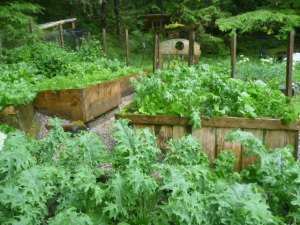
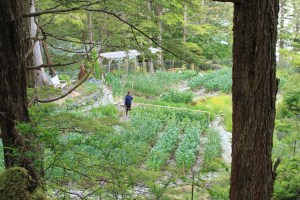
A: Kaleb and I began gardening as a means to be more self-sufficient, and after finding it immensely satisfying, we expanded our efforts into every semi-flat, semi-sunny spot. We even got away with growing unfenced potatoes before the deer developed a taste for them. So, one garden became two, then three years ago we were able to expand our efforts to a third, much larger and sunnier spot, and the idea to grow food commercially naturally arose. The hard work that stood between us and our goal was encouraged by the excitement of a shared vision to grow lots of local produce in a place where food security is a real consideration. At the same time, we got to create an artistic edible space together that we are both rather addicted to spending time in, and when someone eats our produce they get to share in that beauty a bit.
beach garden

Q: Did you have much of a farming or gardening background before you started Middle Island Gardens? If not, how did you learn about growing garlic in Southeast Alaska?

A: We both come from grandparents who worked the soil, though Kaleb took to fishing the seas as a young adult. Meanwhile, I was dabbling in gardening down in southern Oregon, and working on a few farms as well. When I moved to Sitka I was eager to continue in this vein, which seemed especially important considering how far fruits and veggies have to travel to get here. Kaleb likes to be helpful, so he whacked together a couple of raised beds, and we were off. Luckily there are some great local resources for a gardener adapting to Southeast Alaska’s soggy climate, and I remember reading Juneau Garden Club’s Gardening in Southeast Alaska and discovering Juneau master gardener Joe Orsi’s article Growing Garlic in Rain Country, as well as Florence Welsh’s excellent blog “Sitkavores.” She very generously donated some planting stock to us after I asked her which varieties she recommends (Georgian crystal and Persian Star, a.k.a Samarkand).  Washington grower Ron Engeland also wrote the very informative book Growing Great Garlic.

Q: What types of garlic do you grow, and what are the differences?

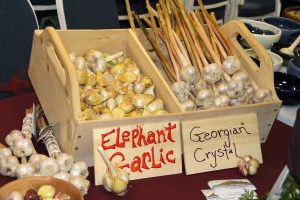
A: There are two main types of garlic. The softneck, or non-bolting type, and the hardneck type which produces a flowering scape.  We grow hardneck garlic, as it is hardier, more delicious, and produces those tasty scapes too. Among the hardneck garlics there are several subcategories — rocambole are most sought after for flavor; porcelain types have fewer, but larger cloves (2-6); then there are the purple-striped. We grow Killarney red, German red, Russian red and carpathian (rocambole), Georgian crystal, music and Russian giant (porcelain) chesnok red (purple stripe), and purple glazer (glazed purple stripe), as well as elephant garlic.

Q: What other crops do you grow and how have they done?

A: We grow just about everything that can tolerate this cool, wet, short season climate — potatoes, kale, carrots, peas, parsley, fava beans, broccoli, beets, lettuce, raspberries, strawberries, blueberries, gooseberries. We have also planted hardy kiwi vines, apple, plum and cherry trees, but they are still in their unfruitful adolescence at this point. One challenge I have noticed in the past couple of years is the arrival of a few different defoliating caterpillars. They seem to prefer berry bushes, especially raspberry canes, but will also eat apple leaves and even kale. It’s been a challenge that we have been dealing with by squishing them so far.
Q: Do you have any secrets for growing garlic in Southeast Alaska you’d like to share? (Andrea taught a growing garlic class Sept. 14 and her handout is linked at the bottom of this Q&A.)

A: We have had such wonderful results by using IRT (infrared-transmitting) plastic. Because garlic spends 10 months in the ground, many of which involve torrential rains, planting through this plastic mulch protects the soil from erosion, while also suppressing weed growth and warming the soil.  We’ve also increased the plant spacing from 4×4” to 6×8” and noticed a major increase in bulb size, which could also be a result of planting a couple of weeks earlier …. in late September. Mixing a nitrogenous cover crop such as vetch into the soil may also help, as it provides slow-release nitrogen and a loose, fluffy soil environment for bulbs to grow in.

Q: How hard is it to make a small garden/farm work in Southeast Alaska? What kinds of barriers and rewards are there?

A: The climate is by far the most challenging aspect of growing food here, but the landscape is also rather unsuitable. As many Southeast Alaska gardeners know, it can be difficult to come up with enough soil to get started, and then this soil must be heavily amended every year to counteract the incredible rinsing it receives. Kaleb and I are constantly carrying loads of seaweed and shell sand uphill to gardens, but the rewards are well worth it – nutritious food, lovely gardens, mandatory exercise, and spending time in beautiful places.

Q: You are growing garlic on one of Sitka’s barrier islands? Does that help give you better sun exposure, soil, etc.? Does it also make things harder when you need to bring product into town?

A: I think Middle Island may be just a couple of degrees warmer than Baranof Island at times.  Other than that, we are just fortunate to have the majority of our growing space be in a rather sunny spot, though we did work hard clearing trees to achieve this. We are also fortunate in that we don’t have any farming neighbors to compete with when it comes to collecting seaweed off the beaches after a storm. As far as bringing produce into town, I do often envy the farmer who’s able to park a pickup in the field, fill it up and drive it directly to the market. Lately I have made sure to provide a sort of mattress pad for the garlic to sit on in its tote as we skiff to town over autumn’s bumpy seas.

Q: Do you have any mentors who have helped you in your business?

A: Speaking of bringing produce to town, Bo Varsano and Marja Smets of Farragut Farm (outside Petersburg) have a much more challenging situation to overcome.  They live and farm up a tidal slough, and sometimes have to get up in the middle of the night to load their boat for the four-hour journey to Petersburg.  Those folks have definitely been an inspiration to us, as have Sally Boisvert and Rafe McGuire of Four Winds Farm in Haines, Joe Orsi of Orsi Organic Produce in Juneau, and of course Florence Welsh of Sitka, who is so incredibly generous with both her knowledge and her plants. Keith Nyitray of the Sitka Food Co-Op has been very encouraging and helpful, providing us a space to sell veggies and promoting our produce to boot. And, of course, we appreciate the Sitka Local Foods Network doing the same.

Q: How large is your operation and what is your ultimate goal?

A: We have approximately 4,500 square feet in production, minus paths, and are definitely eying every reasonable area for expansion. Though this is ridiculously tiny for agriculture, for Sitka we feel blessed to have so much space, and while we may not be able to ever make our entire living off of it, we’re going to try our best and just have fun along the way, meanwhile providing Sitkans as much nutritious food as the land and our efforts will allow.

Q: Do you have any other comments about Middle Island Gardens you think might interest others in Sitka and Southeast Alaska about your business?

A: I urge everyone to read the incredibly eye-opening book Eating on the Wild Side by Jo Robinson. The premise of the book is that modern-day produce varieties, which have been bred primarily for storage, shipping and appearance, have inadvertently become less tasty and nutritious. In fact, some veggies, such as broccoli, lose a lot of nutrients in transit. This great book recommends specific varieties of plants to grow to maximize your nutrient intake, and Middle Island Gardens will be selecting next year’s varieties with this in mind. Also, when you eat local produce, grown with the seaweed, sand, fish and rain of this place, you are yourself made of this place, which is a really cool thing.

• Growing Garlic In Sitka handout from Middle Island Gardens

Check out the October 2017 edition of the Sitka Local Foods Network newsletter

The Sitka Local Foods Network just sent out the October 2017 edition of its monthly newsletter. Feel free to click this link to get a copy.

This month’s newsletter includes brief items about the Sitka Farmers Markets being named the top market in Alaska in online national voting, the Sitka Health Summit taking place on Oct. 11-13, and an invitation to join our board of directors. Each story has links to our website for more information.

You can sign up for future editions of our newsletter by clicking on the newsletter image in the right column of our website and filling in the information. If you received a copy but didn’t want one, there is a link at the bottom of the newsletter so you can unsubscribe. Our intention is to get the word out about upcoming events and not to spam people. We will protect your privacy by not sharing our email list with others. Don’t forget to like us on Facebooklike our new Sitka Farmers Market page on Facebook and follow us on Twitter.

Sitka Ranger District, Sitka Tribe to harvest Tlingit community potato garden

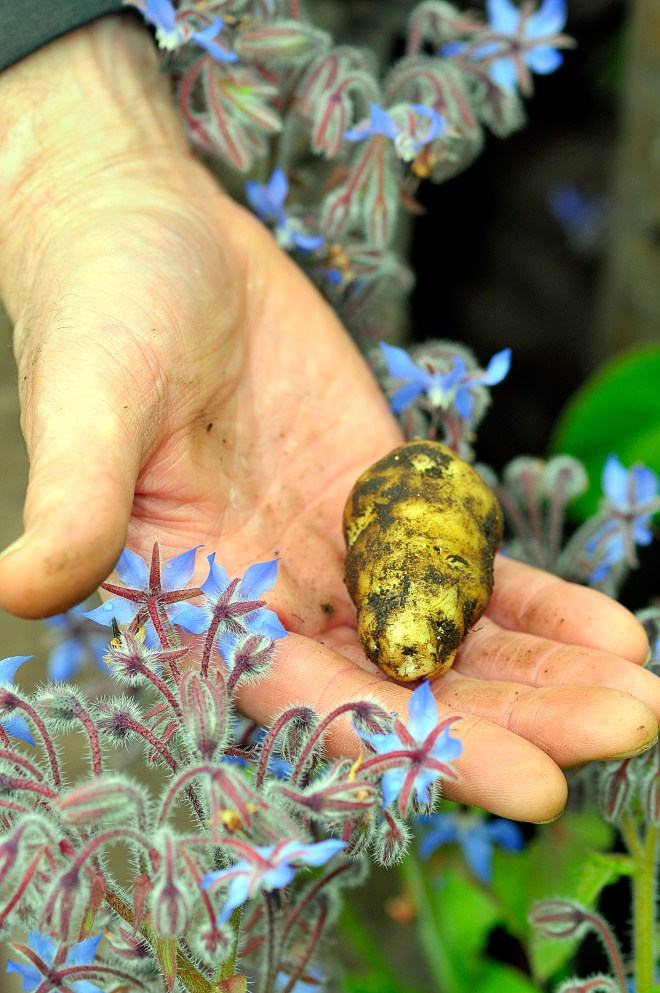
(Photo courtesy of Klas Stolpe/Juneau Empire) Bill Ehlers, assistant gardener at the Jensen-Olson Arboretum in Juneau, holds a Tlingít potato next to some of the potato plant’s flowers.

The community is invited to help harvest the Sitka Ranger District/Sitka Tribe of Alaska Tlingit potato garden and learn scientific and cultural information about the unique crop at 3 p.m. on Monday, Sept. 25, at the USDA Forest Service Sitka Ranger District office, 2108 Halibut Point Road.

Leading Tlingit potato researcher Elizabeth Kunibe will join the group to present information on the biology, history, and cultural aspects Tlingit potatoes. Topics will include harvesting potatoes, learning to store potatoes for seed and for food, preparation for next year’s garden, and the cultural aspects of Tlingit potatoes and native gardening.

The Sitka Ranger District provided the sunny plot of land for the shared potato garden and tended the garden over the summer after volunteers from the Sitka Tribe’s Traditional Foods Program, the gardening class from Pacific High School, and others from the community planted the potatoes in April.

Community involvement is needed for the harvest. Participants should come prepared for the weather as all activities will occur outdoors. All of the attendees are asked to wear boots, gardening gloves, and bring hand trowels or shovels. Bringing buckets of kelp to incorporate into the soil after harvesting would be beneficial.

The potatoes will need to be dried and prepared for storage. Many of the potatoes harvested will be saved for next year’s seed potatoes, Depending on the size of the harvest, the group hopes to share the harvest among the volunteers and through the Sitka Tribe’s Traditional Foods Program and Social Services.

Tlingit potatoes (sometimes called Maria’s potatoes) have been present in Tlingit gardens for over 200 years. The potatoes originate from Mexico or Chile and were a trade item in Southeast Alaska in the early 1800s.

This work day and educational opportunity will be at the Sitka Ranger District office, located at 2108 Halibut Point Road. For more information, contact Michelle Putz at 907-747-2708 or mputz@fs.fed.us. For interviews and information to be used for publication, contactthe Tongass Public Affairs Officer Paul Robbins at 907-228-6201 or paulrobbins@fs.fed.us.

Learn how to grow garlic with Andrea Fraga and Kaleb Aldred of Middle Island Gardens
Most gardeners do their planting in the spring. But if you’re growing garlic, the fall is the best time to plant.

The Sitka Local Foods Network education committee will host a free class on growing garlic with Andrea Fraga and Kaleb Aldred of Middle Island Gardens from 6:30-8 p.m. on Thursday, Sept. 14, at the Sitka Unitarian Universalist Fellowship Hall (408 Marine Street, parking off Spruce Street).

Andrea and Kaleb have been selling their locally grown garlic at the Sitka Farmers Market and on Sitka Food Co-Op pick-up days this year. They grow a variety of garlic types, including music, Killarney red, and Georgian crystal.

For more information, contact Andrea or Kaleb at middleislandgardens@gmail.com, or contact Jennifer Carter of the Sitka Local Foods Network at 747-0520 or jlc63@alaska.net.

First-graders harvest the seeds they planted while in kindergarten last spring

LITTLE HARVEST – First-grader Taylor McCarty, 6, holds up a slightly deformed carrot at the Russian Bishop’s House garden this morning (Thursday, Sept. 7, 2017). Students in Sarah Eddy’s Baranof Elementary School class and other first graders were harvesting the vegetables they planted in the spring when they were in kindergarten. This summer was not good for growing crops said Sitka National Historical Park Ranger Ryan Carpenter. Most of the carrots were only about an inch or so long. (Daily Sitka Sentinel Photo by James Poulson)

Scenes from the sixth Sitka Farmers Market of the 2017 summer

TABLE OF THE DAY — Sitka Farmers Market Manager Nina Vizcarrondo, left, and Sitka Conservation Society Jesuit Volunteer Sean Mackinson, right, present the Table of the Day award to the Suminski family of Sweet Sisters Caramels (from left, Greta Terry, Mary and Lydia Suminski) during the sixth Sitka Farmers Market of the summer on Sept. 2 at the Alaska Native Brotherhood Founders Hall. The Suminskis sold a variety of home-made caramels. They received a couple of Sitka Local Foods Network t-shirts, some Inga’s Spice Rub, and some Alaska Flour Company chocolate chip-barley cookie mix. There is one Sitka Farmers Market left this summer, from 10 a.m. to 1 p.m. on Saturday, Sept. 9, at the ANB Founders Hall (235 Katlian St.). Also, don’t forget to mark your calendars for the 23rd annual Running of the Boots costumed fun run fundraiser on Saturday, Sept. 23, at the Totem Square park, which this year benefits the Sitka Local Foods Network and Big Brothers Big Sisters of Alaska. For more information, go to the Sitka Local Foods Network website at http://www.sitkalocalfoodsnetwork.org. We also have a new Sitka Farmers Market page on Facebook.

It was sunny when we held our sixth Sitka Farmers Market of the 2017 summer season on Saturday, Sept. 2, at the Alaska Native Brotherhood Founders Hall (235 Katlian Street), but we still had a decent crowd even though we had some competition with the Labor Day holiday.

While our cold weather this spring slowed down some of our produce production this year, we are starting to get some decent crops in. We also have had several other local produce vendors at the market. We also had about three dozen vendors at the market (between those inside ANB Founders Hall and those outside in the Baranof Island Housing Authority parking lot) so there was a nice variety of items being sold. Vendors sold harvested foods (such as chaga tea and traditional medicinal tinctures), homemade baked goods, banana-Nutella crepes, hot seafood dishes, fresh smoothies, reindeer hot dogs, blackcod tips, arts and crafts, and home-baked bread. We also had an expanded selection of Alaska Grown products at the Sitka Local Foods Network farm stand.

The last Sitka Farmers Market of the summer takes place from 10 a.m. to 1 p.m. on Saturday, Sept. 9, at the ANB Founders Hall. To learn how to be a vendor at the market, contact market manager Nina Vizcarrondo at (907) 738-9301 (new number) or assistant manager Charles Bingham (907) 623-7660, or email us at sitkafarmersmarket@gmail.com. We also have a new kids vendor program at the market for young entrepreneurs age 12 or younger. Don’t forget to like our new Sitka Farmers Market page on Facebook.

Also, mark your calendars for the 23rd annual Running of the Boots costumed fun run fundraiser, which will take place on Saturday, Sept. 23, and this year will benefit the Sitka Local Foods Network and Big Brothers Big Sisters of Alaska. More details on the Running of the Boots will be posted in the near future.

A slideshow of scenes from the sixth Sitka Farmers Market is posted below.

This slideshow requires JavaScript.

Beyond Leafy LLC grows fresh, local basil for Sitka market using vertical hydroponics

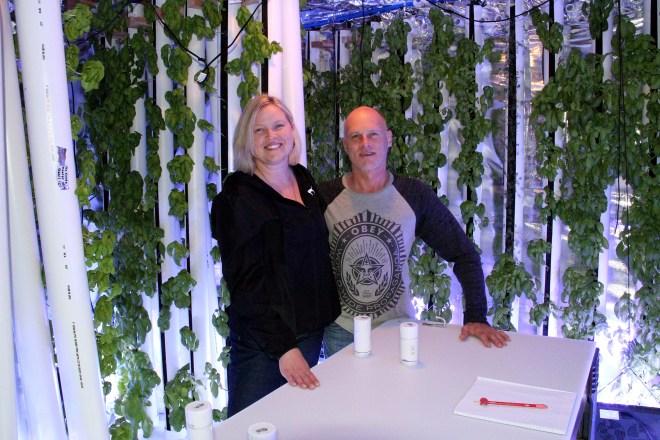
From the outside, it looks like any suburban garage. But inside there’s a 2,000-cubic-foot box where Jimmie and Leslie Kranz are growing fresh, local basil for the Sitka market using a vertical hydroponic greenhouse system.

Their company, called Beyond Leafy LLC, recently started supplying basil to a few Sitka restaurants and also provides it for the Market Center grocery store. Soon, the couple hopes to expand their business so their basil is available at Sea Mart.

“We’ve been brainstorming for years to find a product or service that would serve the people and our community,” Jimmie Kranz said. “The thing about this business is we’re not selling a service or product that people question. We’re selling what most people already have in their refrigerator.”

They also wanted something they could do together, especially since until earlier this year Jimmie was working about 14 hours a day with the Alaska Marine Highway System at the ferry terminal and Leslie was working about 10 hours a day with the Transportation Security Administration at the airport. Jimmie quit his state job in February, and Leslie quit her federal gig in June.

“We like working together,” Leslie Kranz said. “We’re having fun and the reception from the community has been extraordinarily positive.”

In addition to the couple, there are five kids and all except the oldest (Kameron, 32, who runs his own business in Arizona) are involved in the company. Tray, 25, is based in Grenada, but he’s been doing the website and social media for the company and helps with finances. Jake, 22, is a commercial fisherman but spent 3 1/2 months helping Jimmie build the hydroponic towers. The younger two kids, Madi, a 17-year-old senior at Sitka High School, and Kale, an 11-year-old sixth-grader at Blatchley Middle School, both help Jimmie and Leslie trim the basil plants and prepare orders. The family also has weekly business meetings.

Beyond Leafy LLC is serving a big need in Sitka. Many restaurants and bars use basil in their food dishes and drinks, and locally grown basil tastes better and is picked at peak freshness (not a week or two early so it can be sent here by barge). When food has to travel long distances it can lose nutrients and flavor. Beyond Leafy also fills a niche found by a previous company in Sitka that provided basil to local restaurants and grocery stores, but switched to growing weed once marijuana was legalized. When the switch to weed happened last year, it left some restaurants scrambling for a new source of local basil.

“The Mean Queen is thrilled to once again have a local basil provider,” said Mary Magnuson, co-owner of the Mean Queen restaurant. “Beyond Leafy provides a very high quality product that graces both pizzas and our signature LA Preppy Martini. There is literally no comparison in the local product and what we can order from our suppliers. We are looking forward to their growth into more items.”

To grow the basil, Jimmie and Leslie take a package of rock wool (A-OK Starter Plugs) and plant seeds into each section square. The seeds grow in trays until they are a couple of weeks old, when their rock wool section squares are broken apart and the pieces of rock wool are inserted into the towers, spaced about 6-8 inches apart.

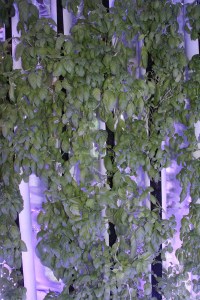
Each tower features an eight-foot-long piece of four-inch-diameter PVC pipe that has been split vertically so a felt/foam media can be inserted into each piece (the felt/foam media is purchased locally from Ben Franklin). The individual towers can be removed from their spots and moved to another spot (they move the towers every two weeks to chart the progress of their basil plants), or they can be placed on the table in the middle of the box for trimming.

Scattered throughout the box and within each tower section, there are lights connected to a roller system that moves the lights back and forth and up and down so each plant gets what it needs to grow. The light system is on a timer. The roller system helps control the temperature in the box and prevents the basil leaves from being burned by stationary lights, and also means they don’t have to use as many lights as some operations. The vertical hydroponic system also includes a recirculating watering tank and hoses that deliver water to each of the towers.

Jimmie said he designed the family’s system after taking an online university class on vertical hydroponics from Bright Agrotech, which recently was bought out by a company called Plenty that plans to develop larger-scale vertical hydroponic systems.

Jimmie and Leslie usually harvest the basil from 6-9 a.m., and it’s in the stores and restaurants by 10 a.m. From seed to harvest, it usually takes about 8-10 weeks for the basil to reach maturity. Beyond Leafy is selling its basil for $56 a pound or $3.50 an ounce (it takes a lot of basil to make an ounce), which might seem high but Jimmie noted that most restaurants only get about six ounces of usable product out of a pound of basil because of all the stems and other parts. Because they hand-trim their basil it’s all usable product, so Jimmie said the price works out to be about the same.

Right now, Beyond Leafy LLC is growing several types of basil (Genovese, Italian, sweet, purple opal, Thai and lemon), and also experimenting with dill and rosemary. They currently are growing about 10-15 pounds of basil a week, and expect to grow to about 40-50 pounds a week once Sea Mart starts carrying their product.

“Since we started the business it changed our whole mindset, and now we’re thinking more about what we can do for our community,” Jimmie said. “We also are eating more local, healthy food. I’d say basically the four of us still in the house (Jimmie, Leslie, Madi, and Kale) have lost about 100 pounds since we started the business.”

Eventually, they hope to find a warehouse unit to lease so they can expand their operation to include several types of lettuce, kale and chard. In order to help the business grow and expand, the couple set up a GoFundMe site.

“We can’t do it alone,” Jimmie said. “There is a bit of fear when you quit your jobs, cash in your retirements and take your family on a venture like this. But entrepreneurs have to take risks to move forward.”

This slideshow requires JavaScript.

Scenes from the fourth Sitka Farmers Market of the 2017 summer

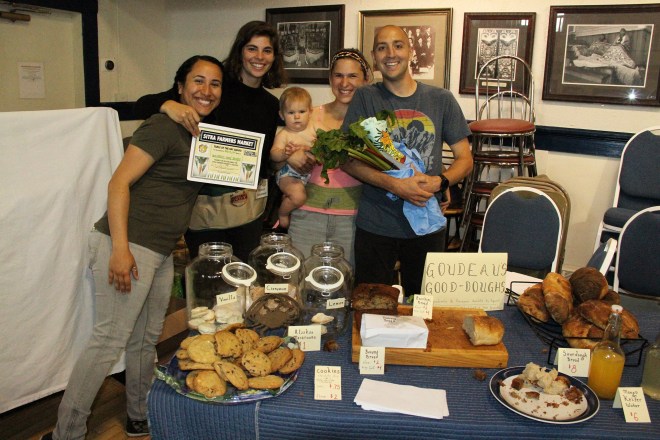
Table of the Day: Sitka Farmers Market manager Nina Vizcarrondo, left, and Sitka Local Foods Network Bulldog On Baranof intern Al Simon, second from left, present the Table of the Day award to Ariane Martin Goudeau (holding baby Elodie Goudeau) and Geoffrey Goudeau of Goudeau’s Good-Doughs during the fourth Sitka Farmers Market of the 2017 summer, held Saturday, Aug. 12, at the Alaska Native Brotherhood Founders Hall. Ariane and Geoffrey sold cookies, bread, and a variety of other baked goods. They received a Sitka Local Foods Network apron loaded with some rhubarb, beets, a Sitka Local Foods Network t-shirt, and an Alaska Grown sticker.

It rained when we held our fourth Sitka Farmers Market of the 2017 summer season on Saturday, Aug. 12, at the Alaska Native Brotherhood Founders Hall (235 Katlian Street), so we moved most of our booths indoors. It also was National Farmers Markets Week, so we had a decent crowd despite some competition from the Sitka Seafood Festival.

While our cold weather this spring means we don’t have as much produce as we like, we still had several local produce vendors at the market (did you see the size of those zucchinis at the Sitka Local Foods Network farm stand?). We also had about three dozen vendors at the market (between those inside ANB Founders Hall and those outside in the Baranof Island Housing Authority parking lot) so there was a nice variety of items being sold. Vendors sold harvested foods (such as chaga tea and traditional medicinal tinctures), homemade baked goods, banana-Nutella crepes, hot seafood dishes, fresh smoothies, reindeer hot dogs, blackcod tips, arts and crafts, and home-baked bread. We also had an expanded selection of Alaska Grown products at the Sitka Local Foods Network farm stand.

The next Sitka Farmers Market takes place from 10 a.m. to 1 p.m. on Saturday, Aug. 19, at the ANB Founders Hall. There also are markets scheduled for Sept. 2, and Sept. 9. To learn how to be a vendor at the market, contact market manager Nina Vizcarrondo at (907) 738-9301 (new number) or assistant manager Charles Bingham (907) 623-7660, or email us at sitkafarmersmarket@gmail.com. We also have a new kids vendor program at the market for young entrepreneurs age 12 or younger. Don’t forget to like our new Sitka Farmers Market page on Facebook.

A slideshow of scenes from the fourth Sitka Farmers Market is posted below.

This slideshow requires JavaScript.

Do you like zucchini? We have lots of fresh local zucchini for sale

While our cold, wet summer hampered the growth of some of our veggies, zucchini has been our bumper crop of the season at the St. Peter’s Fellowship Farm communal garden. We’re harvesting about 70 pounds a week right now. We tried a new type of zucchini seed from FoundRoot seed company in Haines, and it really does well in Sitka.

So if you need any zucchini, please give St. Peter’s Fellowship Farm lead gardener Laura Schmidt a call at 738-7009. We also will have zucchini for sale at the Sitka Farmers Market from 10 a.m. to 1 p.m. on Saturday, Aug. 12, at the Alaska Native Brotherhood Founders Hall (and again on Aug. 19, and possibly on Sept. 2 and Sept. 9).

Don’t know how to use zucchini? The UAF Cooperative Extension Service has this free publication that has all kinds of information about zucchini and several recipes. Zucchini is very versatile and can be used in main dishes, side dishes, pickles, breads, salads, and desserts.

Celebrate National Farmers Market Week by attending the Sitka Farmers Market on Aug. 12

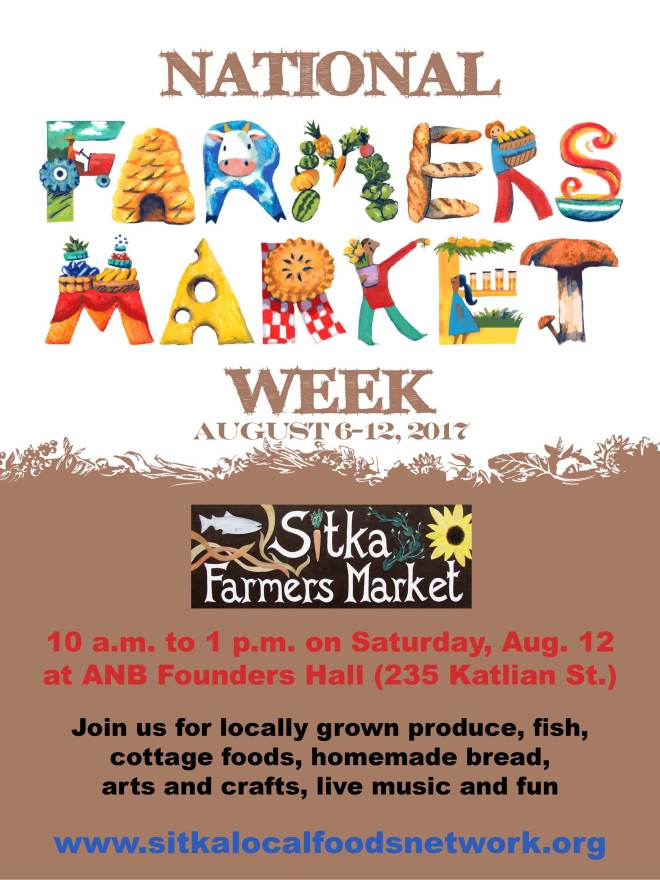
The 18th annual National Farmers Market Week is Aug. 6-12 this year, so stop by the Sitka Farmers Market to join the celebration, from 10 a.m. to 1 p.m. on Saturday, Aug. 12, at the Alaska Native Brotherhood Founders Hall. This is the 10th season of Sitka Farmers Markets.

The annual National Farmers Market Week celebration is the first full week of August, when growing season is peaking around the country. Click here to read this year’s National Farmers Market Week proclamation from U.S. Secretary of Agriculture Sonny Perdue.

The number of farmers markets in the country has more than tripled since 1996, growing from 2,410 markets in 1996 to 8,675 in 2016. There has been similar growth in Alaska, and now markets can be found in many Bush communities from Bethel to Thorne Bay. This growth has improved Alaska’s food security while also serving as an incubator for new businesses.

According to the Farmers Market Coalition, farmers markets …

  • Preserve America’s rural livelihoods and farmland. Farmers markets provide one of the only low-barrier entry points for beginning farmers, allowing them to start small, test the market, and grow their businesses.
  • Stimulate local economies. Growers selling locally create 13 full-time farm operator jobs per $1 million in revenue earned. Those growers that do not sell locally create three jobs.
  • Increase access to fresh, nutritious food. Several  studies have found lower prices for conventional and organic produce at farmers markets than at supermarkets. Due to this and other factors, 52 percent more SNAP households shop at farmers markets and from direct marketing farmers today than in 2011. The Sitka Farmers Market was the first market in Southeast Alaska to accept SNAP and WIC benefits, and we have a matching program for SNAP and WIC beneficiaries.
  • Support healthy communities. Farmers market vendors educate their shoppers. Four out of five farmers selling at markets discuss farming practices with their customers, and three in five discuss nutrition and how to prepare food.
  • Promote sustainability. Three out of every four farmers selling at farmers markets say they use practices consistent with organic standards.