• Sitka Health Summit planning day to be Oct. 9 at UAS Sitka Campus

SHS 2015 Promo Flyer 2 (1)

newsitkahealthsummitlogoJoin us for the ninth annual Sitka Health Summit planning day, which takes place from 8:30 a.m. to 4 p.m. on Friday, Oct. 9, at the University of Alaska Southeast Sitka Campus.

The Sitka Health Summit got its start in 2007 when then-Sitka Community Hospital CEO Moe Chaudry and then-SouthEast Alaska Regional Health Consortium (SEARHC) Vice President of Hospital Services Frank Sutton decided they needed to bridge the gaps between Sitka’s largest two health services. They launched the Sitka Health Summit, with the help of other supporters in Sitka, as a way to improve community wellness, honor local wellness champions, and more.

One of the highlights of the Sitka Health Summit has been the annual community wellness planning day. During planning day, Sitka residents get together to discuss the health needs of the community and create community wellness projects to address these needs.

Over the years there have been a variety of Sitka Health Summit projects — create a local market for local fish and produce, build a Sitka community greenhouse, become a Bicycle Friendly Community, become a Walk Friendly Community, encourage more kids and families to get outdoors for recreation, support a community health and wellness center (Hames), plant fruit trees around town, get more local fish into school lunches, build a Choose Respect mural, Revitalize Sitka, the Sick-a-Waste compost project, the Sitka Community Food Assessment, Park PrescriptionsTogether for a Meth-Free Sitka, and Sitka Kitch (a project to create a community rental kitchen and improve Sitka’s emergency food storage capacity). The 2014 Sitka Health Summit projects were Celebrate Katlian Street: A Vibrant Community and the Southeast Youth Resource Guide.

This year community members will select two Tier One projects, which will receive $2,000 in seed money to get started. Also, qualifying projects will have the opportunity to apply for Tier Two funding of up to an additional $20,000.

To register for the Sitka Heath Summit planning day, call Zachary Desmond at 747-4600 or email him at zachary@braveheartvolunteers.org. A free lunch with locally sourced food will be provided.

• Alaska’s potential for increasing agricultural potential immense; hard work, clear vision needed

AlaskaFoodPolicyCouncilLogo

(The following is a commentary about increasing Alaska’s access to local food by Alaska Food Policy Council co-chairs Liz Snyder and Victoria Briggs. It originally ran in the Sept. 10, 2015, edition of the Homer News.)


If you’ve visited a local farmers market recently, you’ll appreciate the bounty of delicious, healthy food that Alaska can produce when cultivated by knowledgeable, dedicated hands.

The prospects for increasing this bounty are immense. To take full advantage of our agricultural potential, we will need political will, consumer advocacy, recruitment and education of new farmers, financial support and incentives and a long-term vision. This vision, of course, will also need to take into account the changing climate in which Alaska farmers grow our food.

Imagine a glacier that retreats, then expands for several years, only to retreat again, repeating this process over and over. Such has been the history of agriculture in Alaska. We’ve experienced several booms and busts of both enthusiasm and productivity since the early 1900s.

Booms were the result of such things as co-development with gold mining, collaboration with local businesses, federal support of farming settlements and agricultural innovations. Busts came when challenges (that still exist today) got the better of farmers — the temptation to grow too big too fast, unsustainable and mismanaged support mechanisms, high costs and resulting debt; competition from the Lower 48, infrastructure designed for resource development instead of agriculture, inexperience and being far from home, a lack of replacements for retiring farmers, and, of course, climate.

Today, farmers and consumers are enjoying a boom of interest and enthusiasm around local foods. While it’s true that we send about 1.9 billion Alaska dollars out of the state each year to import food (which supplements the impressive $900 million worth of subsistence and personal-use foods), the good news is that direct sales between farmers and consumers are strong (13 times greater than the national average), Alaska farmers are notoriously tenacious and innovative, and demand continues to motivate increases in supply.

What we have now is a fantastic opportunity to throw a wrench into the boom/bust cycle, expand on the status quo and ultimately pump about $2 billion into, instead of out of, the Alaska economy each year — in effect, supporting the local farmers we know and love, strengthening our food system, lowering food costs, and increasing food security and resilience.

Of course, strengthening our food system will require both short-term goals and long-term planning. When it comes to climate change and agriculture, we’ve got three courses of action to consider:

  1. reduce our impact;
  2. respond to current changes; and
  3. prepare for future changes.

In the Lower 48, agriculture is a major contributor to climate change with high fossil fuel use (to manufacture pesticides and fertilizers, and to operate machinery) and greenhouse gas emissions from concentrated animal feeding operations (CAFOs).

In Alaska, however, the relative scales of agriculture and pest pressure are small. Our primary agriculturally related contribution to climate change is through the importation of approximately 95 percent of our food, which requires the burning of fossil fuels to power transport. Just think of the impact we could have if we expanded Alaska agriculture in thoughtful, sustainable ways to simultaneously produce more food and reduce total greenhouse gas emissions.

With respect to responding to current changes in Alaska’s climate and preparing for the future, we have a host of actions that are either already being taken or need to be taken. These actions should use the best natural, economic and social science information available.

Such preparations include the conservation of arable land; crop diversification and expansion into new growing zones; anticipation of changes in water distribution and quality; measures to address changes in pest, disease and invasive species pressures; education and support of new farmers focused on sustainable agricultural development, and construction of weather-resistant food caches and transportation routes.

Of course, in reality there is an even longer list of recommendations that can be made to strengthen Alaska’s food system, but all of these recommendations will need to be made in light of the climate changes we’re experiencing now and those that lie ahead. The Alaska Food Policy Council is dedicated to helping develop, share and advocate for policies that will result in an Alaska food system that is sustainable, resilient and healthy — and we ask our local, state, and federal leaders to tune in to the issues of food security and climate change and make them a priority. The health of our great state depends on it.

Liz Snyder and Victoria Briggs are co-chairs of the Alaska Food Policy Council, or AFPC. To learn more about food security in Alaska, find the following research resources on the AFPC webpage (akfoodpolicycouncil.wordpress.com):

Building Food Security in Alaska (a report commissioned by AFPC).

• A three-part series of articles (Part I, Part II, Part III) on circumpolar agriculture by Stevenson et al. (2014) and

• An article entitled “Food in the Last Frontier” by Snyder and Meter (2015).

• Sitka Local Foods Network recruiting new board members and other volunteers

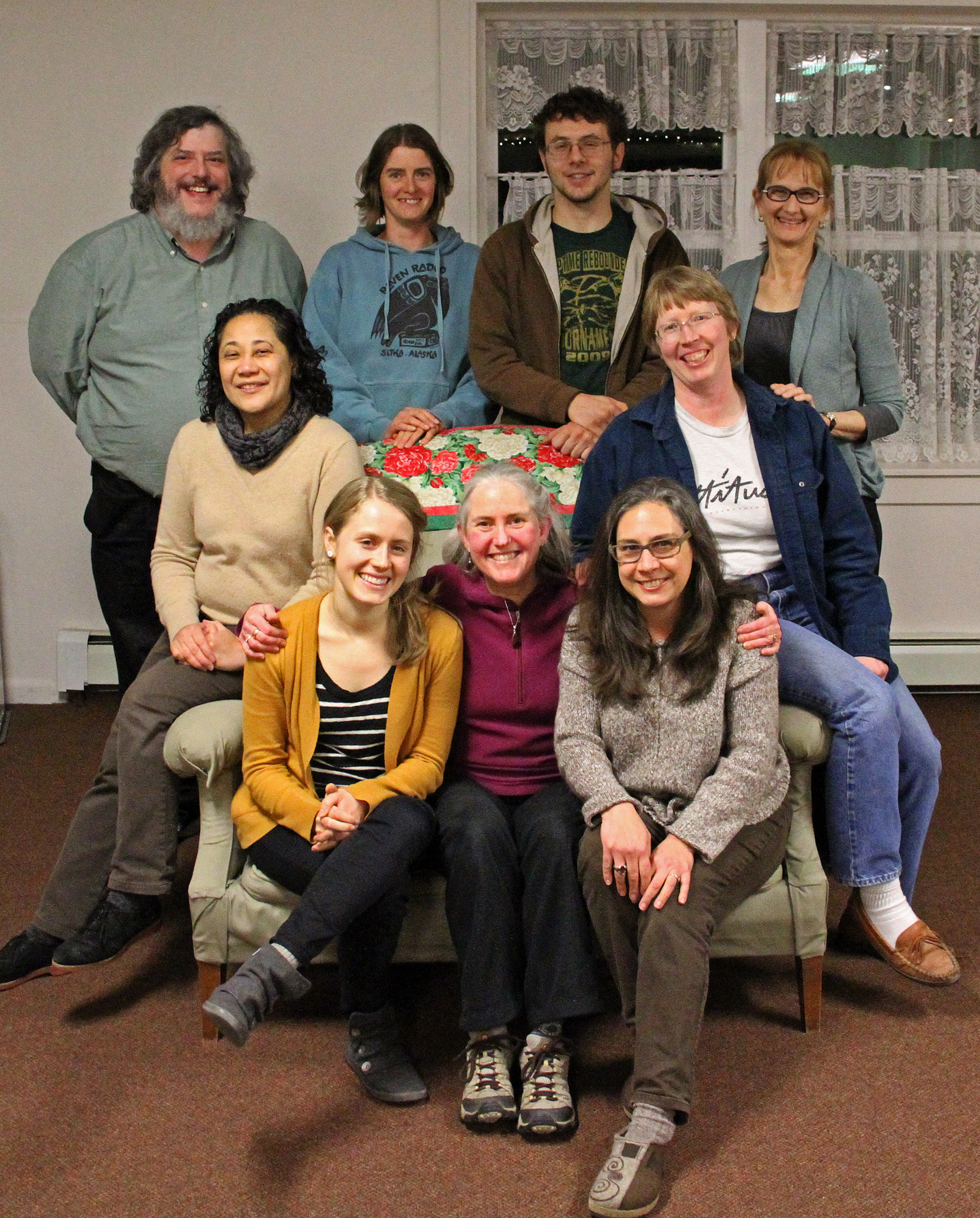
The 2015 Sitka Local Foods Network board of directors. Front row, from left, Alli Gabbert, Lisa Sadleir-Hart, and Jennifer Carter. Middle row, from left, Maybelle Filler and Michelle Putz. Back row, from left, Charles Bingham, Brandie Cheatham, Matthew Jackson, and Beth Kindig.

The 2015 Sitka Local Foods Network board of directors. Front row, from left, Alli Gabbert, Lisa Sadleir-Hart, and Jennifer Carter. Middle row, from left, Maybelle Filler and Michelle Putz. Back row, from left, Charles Bingham, Brandie Cheatham, Matthew Jackson, and Beth Kindig (note, Beth Kindig resigned from the board and was replaced by Kathy Jones).

Are you concerned about increasing access to local food for all Sitka residents? Are you worried about rising food prices in Sitka, or do you want to advocate for more community gardens in Sitka?

Then consider joining the board of directors for the Sitka Local Foods Network for the 2016 calendar year. Due to the pending retirements of a couple of long-time board members, we are trying to build up a pool of possible replacements to help keep us moving into the future.

Board members help direct the Sitka Local Foods Network, a non-profit that promotes the harvest and use of local food in Sitka. In addition to setting the focus of the group, board members also help on a wide variety of projects such as the Sitka Farmers Market, St. Peter’s Fellowship Farm, garden education and mentoring, Sitka Kitch, Blatchley Community Garden, Let’s Grow Sitka, the Sick-A-Waste compost project, the Sitka Community Food Assessment project, Sitka Fish-To-Schools, other school education projects and more.

To apply for a spot on the board, please fill out the application linked below and submit it to sitkalocalfoodsnetwork@gmail.org. For more information, contact Lisa Sadleir-Hart at 747-5985.

We also are looking to increase our pool of volunteers who will help out during the various projects hosted by the network each year (no formal application needed, just send us your name/contact info and what types of projects you enjoy).

The next Sitka Local Foods Network board meeting is at 6:30 p.m. on Monday, Oct. 12, at the See House behind St. Peter’s By The Sea Episcopal Church (611 Lincoln St.). The board usually meets from 6:30-8 p.m. on the second Monday of each month, except during the summer when board members are busy working with the Sitka Farmers Market and St. Peter’s Fellowship Farm communal garden.

Click here for a copy of the Sitka Local Foods Network board of directors job description. Click here for a copy of the board application.

• Baranof Elementary students pick veggies they grew at the Russian Bishop’s House garden

CABBAGE PATCH KIDS- Baranof Elementary School first-grader Alice Ann Ricketts, 6, carries a cabbage out of the Russian Bishop’s House garden Friday, Sept. 11, 2015. First-graders were harvesting the vegetables they planted last spring when they were kindergartners during the annual event. Teachers and students were planning on making a soup with their harvested vegetables. (Daily Sitka Sentinel Photo by James Poulson)

CABBAGE PATCH KIDS — Baranof Elementary School first-grader Alice Ann Ricketts, 6, carries a cabbage out of the Russian Bishop’s House garden Friday, Sept. 11, 2015. First-graders were harvesting the vegetables they planted last spring when they were kindergartners during the annual event. Teachers and students were planning on making a soup with their harvested vegetables. (Daily Sitka Sentinel Photo by James Poulson, this photo appeared on Page 1 of the Monday, Sept. 14, 2015, edition)

• Check out the September 2015 edition of the Sitka Local Foods Network newsletter

September2015NewsletterScreenGrab

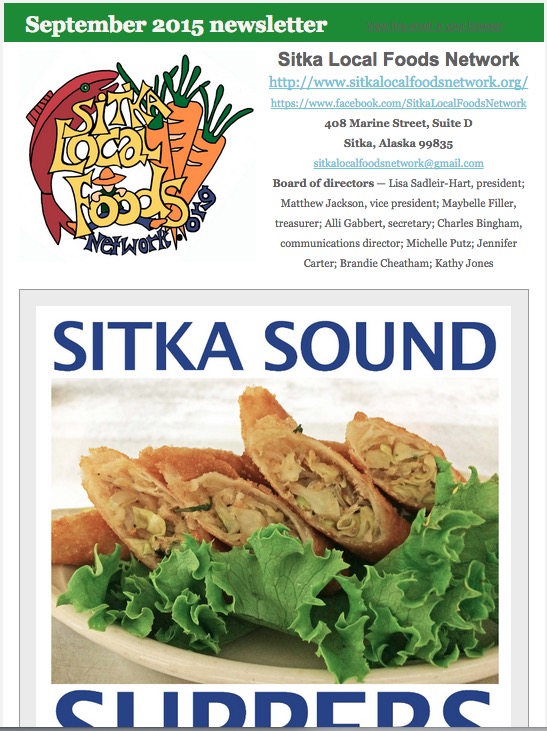
The Sitka Local Foods Network just sent out the September 2015 edition of its newly launched monthly newsletter. Feel free to click this link to get a copy.

This edition of the newsletter has brief stories about the Sitka Sound Suppers fundraiser, the Sitka Local Foods Network recruiting new families for the garden mentor program, an update on the Sitka Farmers Markets, and information about saving seeds. Each story has links to our website for more information.

You can sign up for future editions of our newsletter by clicking on the registration form image in the right column of our website and filling in the information. If you received a copy but didn’t want one, there is a link at the bottom of the newsletter so you can unsubscribe. Our intention is to get the word out about upcoming events and not to spam people. We will protect your privacy by not sharing our email list with others.

• How does your garden grow? For some in Sitka, quite well, thank you

gerry

(This photo appeared on Page 3 of the Thursday, Aug. 20, 2015, edition of the Daily Sitka Sentinel, and is used here with permission.)

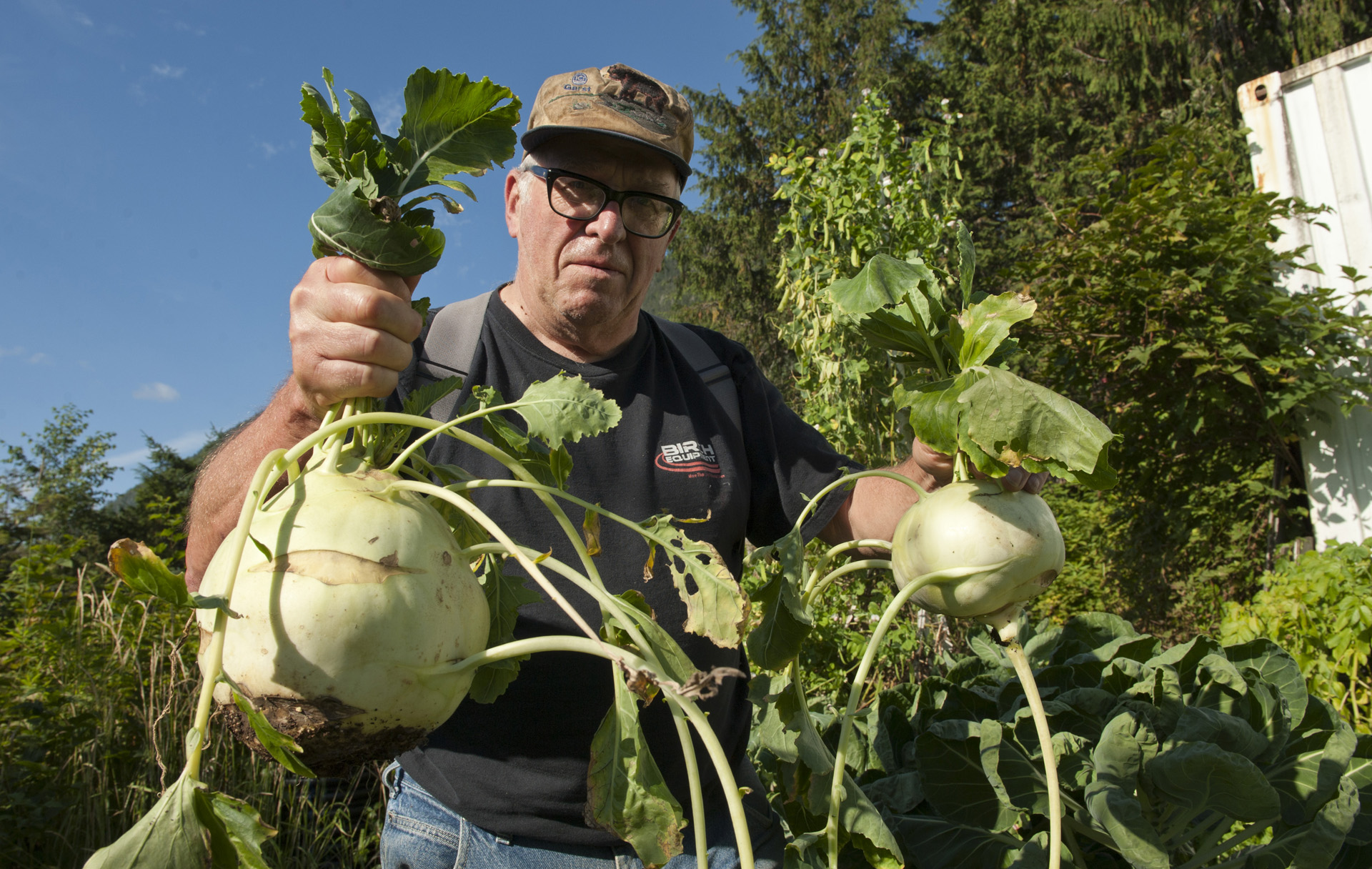
MASTER GARDENER — Gerry Fleming holds up a giant Kohlrabi he grew in his Dodge Circle garden recently. The vegetable weighed nearly six pounds. He also grew a summer squash that weighed more than six pounds, which donated to the Sitka Farmers Market. He said his secret to growing giant vegetables, something he’s done for years, is to talk to the veggies. (Daily Sitka Sentinel Photo By James Poulson)

• Help the Sitka Local Foods Network education committee brainstorm ideas for a 2016 Sitka garden tour

LauraSchmidtStPetersFellowshipFarm

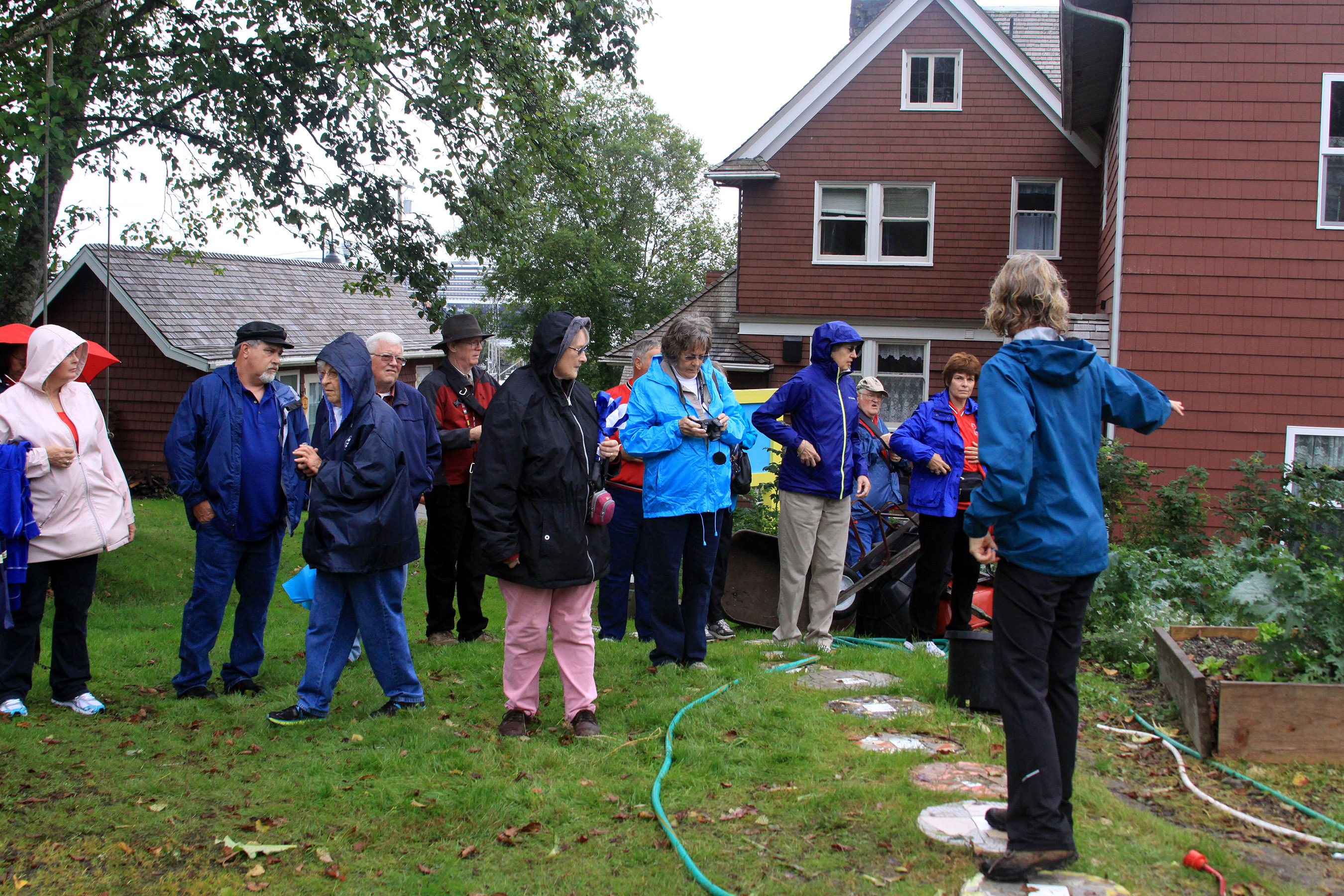
St. Peter’s Fellowship Farm Lead Gardener Laura Schmidt, right, shows off the garden to members of the International Master Gardeners Conference cruise that toured Sitka in September 2013.

Do you have a food garden in Sitka you love to show off? Do you have a friend or neighbor who always seems to be growing lots of fresh veggies and fruit?

The Sitka Local Foods Network education committee invites you to a meeting to brainstorm ideas for a possible food garden tour of Sitka in the summer of 2016 or 2017. The meeting will take place from 6:30-8 p.m. on Wednesday, Sept. 2, at the Sitka Unitarian Universalist Fellowship Hall (408 Marine Street, parking off Spruce Street).

Bring your ideas and help us come up with a plan for a garden tour. For more information, contact Jennifer Carter at 747-0520.

• Fish to Schools program seeks donations of coho salmon, photos from commercial fishermen

FishtoSchool

The Fish to Schools program needs help from Sitka’s commercial fishermen. The program needs a few hundred pounds of coho salmon to help make Fish to Schools meals for Sitka students during the upcoming 2015-16 school year. The program also is seeking photos of commercial fishermen at work, which can be used to teach the students more about how the fish got to their plates.

The coho salmon donation period is Monday. Aug. 24, through Monday, Aug. 31. To donate, commercial fishermen can sign up and indicate how many pounds they want to donate when they offload at Seafood Producers Cooperative or Sitka Sound Seafoods during the donation period. The program can only accept commercially caught fish (no sport or subsistence fish). The hope is to get enough coho donated that locally caught salmon can be offered to students at least once a week.

The Sitka Fish To Schools project (click here to see short video) got its start as a community wellness project at the 2010 Sitka Health Summit, and now is managed by the Sitka Conservation Society. It started by providing a monthly fish dish as part of the school lunch as Blatchley Middle School, and since then has grown to feature regular fish dishes as part of the lunch programs at Baranof Elementary School, Keet Gooshi Heen Elementary SchoolBlatchley Middle School, Sitka High SchoolPacific High School (where the alternative high school students cook the meals themselves), the SEER School, and Mount Edgecumbe High School.

FishtoSchool2In addition to serving locally caught fish meals as part of the school lunch program, the Fish To Schools program also brings local fishermen, fisheries biologists and chefs to the classroom to teach the kids about the importance of locally caught fish in Sitka. The program received an innovation award from the Alaska Farm To Schools program during a community celebration dinner in May 2012, and now serves as a model for other school districts from coastal fishing communities. In May 2014, the Fish to Schools program released a guidebook so other school districts in Alaska could create similar programs.

For more information, contact Sophie Nethercut of the Sitka Conservation Society, sophie@sitkawild.org or 747-7509. You also can contact Beth Short-Rhoads at 738-9942 or elianise@yahoo.com. Photos and captions of commercial fishermen working out on the water should be sent to Sophie.

• UAF Cooperative Extension Service, Alaska Sea Grant team up to offer online course on the specialty food business

Specialty food business

Are you interested in starting a specialty food business? The University of Alaska Fairbanks Cooperative Extension Service and the UAF Alaska Sea Grant program are teaming up to offer a five-class online course about how to start a specialty foods course in October.

The class is only available online and it will be from 5:30-8 p.m. on Oct. 5, 7, 12, 14, and 19. You must attend all five classes during the times they are offered. The course costs $50 and is limited to the first 25 who register from around the state. More details about the class and its technology requirements can be found here. The instructors will be Quentin Fong of the Alaska Sea Grant program and Kate Idzorek of the UAF Cooperative Extension Service.

This course is intended for individuals interested in starting and operating a specialty food business to sell foods under the DEC Cottage Foods Exemption, a temporary DEC permit, DEC-permitted food production businesses to sell wholesale in Alaska or DEC-permitted Mobile Food Units (food trucks). This course is NOT intended for individuals starting or operating a restaurant or starting an interstate or international wholesale food business. It is for people who want to make specialty food products, such as jams and jellies, handmade chocolates, salsa, pickled fish, or operate a food truck. Many specialty food products are perfect for selling at the Sitka Farmers Market.

To register online, go to http://bit.ly/ces-workshops. For more information, contact Kate Idzorek of the UAF Cooperative Extension Service at 1-907-474-5391 (Fairbanks number).

• Sitka Local Foods Network education committee announces the inaugural Sitka Slug Races

Slug Races Sign

The Sitka Local Foods Network education committee invites Sitkans to take part in Sitka’s first slug races.

“Do slugs move into your garden faster than a speeding bullet? Are you sure your slugs are breeding with Olympic runners and pole vaulters? Could you have the next winner of the Triple Crown? The Sitka Local Foods Network invites you to come and put your fastest slug to the test against Sitka’s best!” race organizer and SLFN board member Michelle Putz said.

The SLFN education committee will hold its inaugural Sitka Slug Races at 12:30 p.m. on Saturday, Aug. 29, at the fifth Sitka Farmers Market of the summer at the Alaska Native Brotherhood Founders Hall (235 Katlian St.). Registration for the race is from 10 a.m. until noon.

Those interested in participating  will pay $5 per slug entered into the race. Participants are encouraged to bring their own fast slugs, but “rental slugs” will also be available at the race. The participants with the three fastest slugs in Sitka will be crowned and awarded a certificate and commemorative pin.

“Slug races help to support Sitka Local Foods Network’s mission to increase the amount of locally produced and harvested food in the diets of Southeast Alaskans,” Michelle said. “By getting slugs out of our gardens and into the race arena, we are saving valuable cabbage, kale, onions, and other foods from their hungry mouths. And we’ll find out which slugs were tromping to and through our gardens the quickest!”

We ask those who bring slugs to only bring black slugs, which are not native to Sitka, and not the California banana slugs which are native (can grow to three inches or longer, usually yellow or shades of green). Also, please don’t release your slugs in new places. We don’t want to introduce any invasive species, and the black slugs (sometimes brown or gray) are pretty destructive to Sitka gardens.

Funds raised will be used to support the network’s projects and activities including family garden mentoring, garden education classes, the Sitka Farmers Market, and the St. Peter’s Fellowship Farm communal garden.

For more information about helping with the race or the SLFN education committee, please contact Michelle Putz at 747-2708.