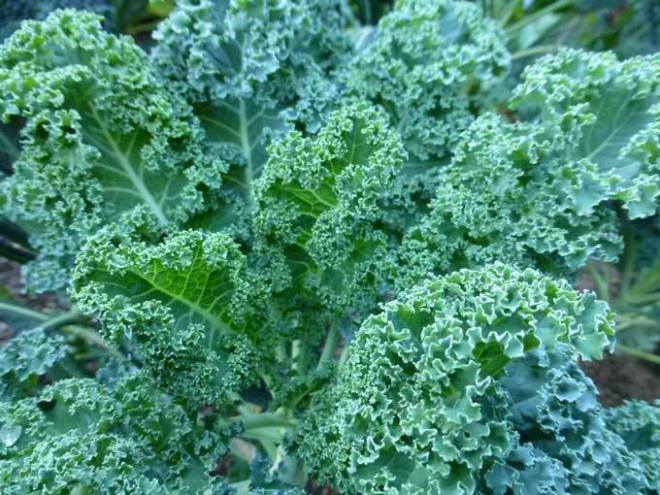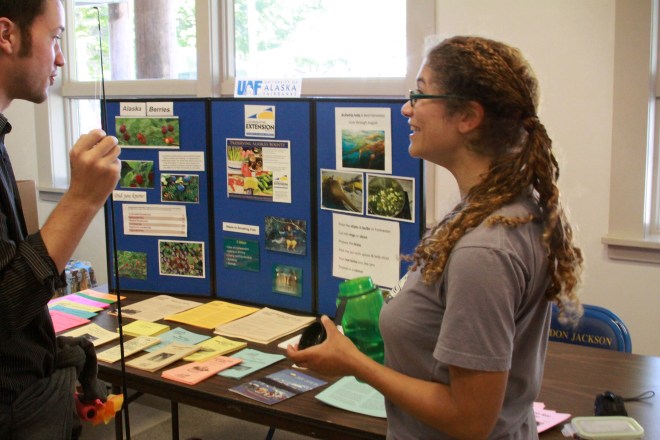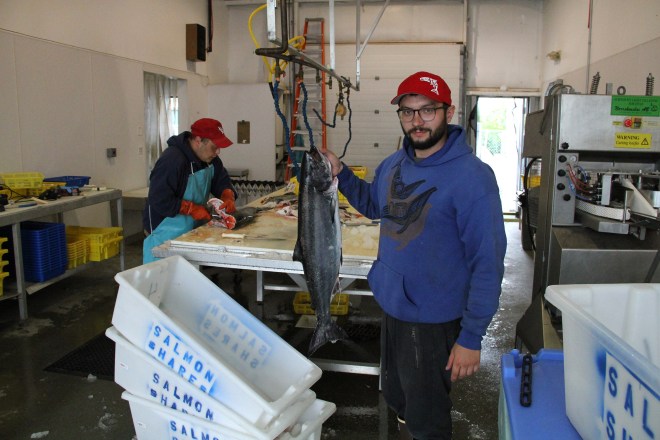
Scenes from the Community Kale Celebration held Sept. 26 at the Sitka Kitch

communitykalecelebration

bridgetkauffmanotherwomancheckoutkaledishesKale grows well in Sitka and has lots of important vitamins and minerals, but what do you do with it once it’s ready to harvest from your garden? Sitka residents were able to find out more about how to grow and prepare kale at the inaugural Community Kale Celebration on Monday, Sept. 26, at the Sitka Kitch community rental commercial kitchen, located in the First Presbyterian Church (505 Sawmill Creek Road).

There was a variety of dishes using kale, prepared by the Sitka Kitch advisory team and the 4H Food and Nutrition club, including a crustless kale quiche, a savory kale bread pudding, kale chips, reindeer sausage kale soup, and chocolate kale cupcakes. In addition, there was kale juice (with carrots, apples, ginger and lemons) and kale smoothies (with bananas and blueberries). Participants learned how to incorporate more of this “super food” into their diets and how easy it is to grow in Sitka.

kalecupcakeskalechipskalebreadpuddingkalequicheMoney raised from this event will help the Sitka Kitch develop a scholarship fund for future Sitka Kitch classes, such as the class on making your own yogurt at home that takes place from 6-8:30 p.m. on Monday, Oct. 10. To learn more about our upcoming classes and to register for them, please check out our online registration page at https://sitkakitch.eventsmart.com (click on the class title to register).

A slideshow of scenes from the Community Kale Celebration is posted below.

This slideshow requires JavaScript.

Sitka Kitch to host Community Kale Celebration on Monday, Sept. 26

communitykalecelebration

Kale grows well in Sitka and has lots of important vitamins and minerals, but what do you do with it once it’s ready to harvest from your garden? Join us for the inaugural Community Kale Celebration from 5:30-7 p.m. on Monday, Sept. 26, at the Sitka Kitch community rental commercial kitchen, located in the First Presbyterian Church (505 Sawmill Creek Road).

Sitka Kitch will join the 4H Food and Nutrition club and local cooks to introduce Sitkans to the wonders and scrumptiousness of kale. Participants will learn how to incorporate more of this “super food” into their diets and how easy it is to grow in Sitka. The 4H club will prepare several recipes for people to try, and local chefs will prepare a couple of additional recipes during the event.

Tickets are $10 and can be purchased at the door (family rates are available) or online at http://sitkakitch.eventsmart.com (just click on the event title to sign up). Money raised will help us develop a scholarship fund for future Sitka Kitch classes. Hope to see you there.

UAF Cooperative Extension Service offices in Sitka, Anchorage to remain open

JasmineShawUAFCooperativeExtensionService

The announcement that the University of Alaska Fairbanks Cooperative Extension Service will keep its Sitka and Anchorage offices open, means Jasmine Shaw, right, will continue to staff the Sitka office instead of the office being closed.

The University of Alaska Fairbanks Cooperative Extension Service will keep its offices in Sitka and Anchorage open instead of closing them under a new plan developed by Extension leaders this summer.

The plan means the Anchorage office will move to a new location and become an outreach center rather than a district office. Outreach centers have no Extension agents, but offer Extension publications and face-to-face and distance-delivered programs led by agents from other district offices. Classes also will be taught by program staff and by community experts. Services at the Sitka office will be relatively unchanged, but operations will be mostly grant funded.

In May, the university announced a plan to close both the Anchorage and Sitka offices by the end of October due to budget shortfalls. This summer, office and classroom space with another university program became available and Extension received some additional grant funding. Those changes allowed the university to re-examine the decision to close the offices.

“We knew that the closure of these two offices would be a loss to the Sitka and Anchorage communities,” said Extension director Fred Schlutt. “We are pleased that these new developments will allow us to have a physical presence in these communities.”

The Anchorage office will move to the Chugachmiut Tribal Consortium Building at 1840 Bragaw St. It will share space with the Mining and Petroleum Training Service, a former UA statewide program that was transferred to Extension in July. The new office will have classroom space and use of the university’s videoconference network. It will house grant-funded faculty and staff with a specific focus, including, an invasive plants instructor, integrated pest management technician and a nutrition educator. Extension is planning to seek additional funding for a program assistant to coordinate Extension offerings in the area.

As was previously planned, the three Anchorage Extension agents have been transferred to vacant positions at the Fairbanks and Soldotna offices. The Extension economist will also move to a new office at the Matanuska Experiment Farm.

The Sitka office, which has not had an agent for two years, will continue to have a program assistant (currently Jasmine Shaw), who will coordinate Extension activities in the community and offer programming. The Sitka office helps coordinate statewide videoconference training in Sitka, assists the Sitka Conservation Society in coordinating the Sitka Spruce Tips-Alaska Way of Life 4-H Club, helps with education programming at the Sitka Kitch community rental commercial kitchen, and provides other services, such as pressure canner gauge testing.

Schlutt told the Alaska Dispatch News that between grants and having the University of Alaska Southeast providing office space, costs for the Sitka office are less than $5,000 a year in state general funds. “If we can keep a rural office open for under $5,000, we’ll do it every time,” he said.

Other Extension reductions have included layoffs, the elimination of four open agents’ positions and a 15 percent reduction to its operating budget.

• UAF Cooperative Extension Service FAQ’s about keeping Anchorage, Sitka offices open

Scenes from the Sitka Kitch’s fourth Preserving the Harvest class — Simple Chutneys and Salsas

JillScheidtAndAnnetteBlankenshipStirPotsWhileLisaSadleirHartWatches

kitch_logo_mainStudents learned how to make pa variety of chutneys and salsas during the fourth Preserving the Harvest series class of the summer on Monday, Aug. 29, at the Sitka Kitch community rental commercial kitchen.

The chutneys and salsas class was taught by Lisa Sadleir-Hart, with assistance from Betsy Decker. It is one of six classes in the Preserving the Harvest class series, which will teach people how to safely preserve the summer’s bounty so it can be eaten in the summer.

Other classes in the series will include simple pickles and sauerkraut, low-sugar jams and jellies, canning salmon, chutneys and salsas, apple and fruit butters, and a community kale celebration. More details can be found at this link.

The Sitka Kitch was a project of the 2013 Sitka Health Summit, and the project is coordinated by the Sitka Conservation Society in partnership with the Sitka Local Foods Network. The Sitka Kitch can be rented to teach cooking and food preservation classes, by local cottage food industry entrepreneurs who need a commercial kitchen to make their products, and for large groups needing a large kitchen for a community dinner. To learn more about how to rent the Sitka Kitch, please go to the website at http://www.sitkawild.org/sitka_kitch.

RhubarbJalapenoChutneyOnStoveThe next class in the series will be apple and fruit butters, from 6-8:30 p.m. on Monday, Sept. 12, at the Sitka Kitch. To register for classes, go to our online registration page at http://sitkakitch.eventsmart.com/ and click on the class name.

We now have a PayPal option so people can pay the registration fees before the class. There are food/supply fees for most of the classes, which are split between the students, and those are paid by cash or check (made out to the Sitka Conservation Society) at the class. Other than for the Kale Celebration event, each class has a limited number of spots available, so register early. Registration for each class closes at 11:55 p.m. on the Friday before the class.

If you have any questions about the class series, please email sitkakitch@sitkawild.org. A slideshow of images from the chutneys and salsas class is posted below.

This slideshow requires JavaScript.

Sitka Spruce Tips-Alaska Way of Life 4-H club to host Wild Edibles Series this fall

WildEdiblesAdvertisement22

The Sitka Spruce Tips-Alaska Way of Life 4-H Club will begin a six-week Wild Edible Series  starting on Wednesday, Sept. 7.

Kids will get outside and explore the bounty of wild edibles in Southeast Alaska. Activities include picking berries, identifying mushrooms, hiking through the muskeg, smoking salmon, and making jam and fruit leather. Get ready to taste the Tongass.

4-H members ages 5-8 will meet from 3:30-5 p.m. on Wednesdays and ages 9 and older will meet from 3:30-5 p.m. on Thursdays (the location will be revealed once you have registered). The registration fee is $20 and scholarships are available. Please register by Sept. 2.

For more information, email Julia Tawney at julia@sitkawild.org or call the Sitka Conservation Society at 747-7509.

Fish to Schools program seeks donations of coho salmon from commercial fishermen

Spencer2

The Fish to Schools program needs help from Sitka’s commercial fishermen. The program needs a few hundred pounds of coho salmon to help make Fish to Schools meals for Sitka students during the upcoming 2016-17 school year. The program also is seeking photos of commercial fishermen at work, which can be used to teach the students more about how the fish got to their plates.

The coho salmon donation period is Wednesday. Aug. 17, through Tuesday, Aug. 23. To donate, commercial fishermen can sign up and indicate how many pounds they want to donate when they offload at Seafood Producers Cooperative or Sitka Sound Seafoods during the donation period. The program can only accept commercially caught fish (no sport or subsistence fish). The hope is to get enough coho donated that locally caught salmon can be offered to students at least once a week. Sign-up sheets will be posted at the scale shacks and in the main offices. Coho salmon is preferred.

Excited red haired kidThe Sitka Fish To Schools project (click here to see short video) got its start as a community wellness project at the 2010 Sitka Health Summit, and now is managed by the Sitka Conservation Society. It started by providing a monthly fish dish as part of the school lunch as Blatchley Middle School, and since then has grown to feature regular fish dishes as part of the lunch programs at Baranof Elementary School, Keet Gooshi Heen Elementary SchoolBlatchley Middle School, Sitka High SchoolPacific High School (where the alternative high school students cook the meals themselves), the SEER School, and Mount Edgecumbe High School.

In addition to serving locally caught fish meals as part of the school lunch program, the Fish To Schools program also brings local fishermen, fisheries biologists and chefs to the classroom to teach the kids about the importance of locally caught fish in Sitka. The program received an innovation award from the Alaska Farm To Schools program during a community celebration dinner in May 2012, and now serves as a model for other school districts from coastal fishing communities. In May 2014, the Fish to Schools program released a guidebook so other school districts in Alaska could create similar programs.

For more information, contact Sophie Nethercut of the Sitka Conservation Society at sophie@sitkawild.org or 747-7509.

Sitka Salmon Shares brings Southeast Alaska fish to Midwest markets

MarshSkeeleHoldsSalmonAsGuyFilletsBehind

Sitka Salmon Shares vice president-fisherman Marsh Skeele holds up a chinook salmon during a recent tour of the company’s new plant on Smith Street in Sitka.

NicolaasMinkWithBookOnSalmon

Sitka Salmon Shares founder-president Nicolaas Mink holds a copy of his book “Salmon: A Global History” during a 2014 visit to Sitka.

What started out as a one-off fundraiser for a Sitka nonprofit has grown into a thriving business with sales approaching $4 million, with 2,500 members and 100 wholesale accounts spread out over six states.

Sitka Salmon Shares is a community-supported fishery (CSF) program, where members buy shares in the harvest similar to the process of a community-supported agriculture (CSA) program. But instead of the members being local to Sitka, where most of the fish is caught, the members of Sitka Salmon Shares live in Indiana, Illinois, Wisconsin, Michigan, Minnesota and Iowa.

“Each member gets a five-pound box of fish delivered to their door nine months of the year,” said Marsh Skeele, who serves as Sitka Salmon Shares vice president/co-founder and one of its 13 fishermen-owners. “A lot of them are former Alaskans or from Seattle, so they know good fish. The fish in the grocery stores there tends to have poor quality.”

SitkaSalmonSharesSignThe company distributes four types of salmon (chinook, coho, sockeye and chum), rockfish, ling cod, halibut, spot prawns, Pacific cod and blackcod, with most of the fish caught out of Sitka or Juneau. Sitka Salmon Shares also sells fish at 23 different farmers markets around the Midwest. Last year, Sitka Salmon Shares bought the former Big Blue Fisheries plant in Sitka, and is renovating it so the company can keep up with the special processing and freezing needs of its growing customer base while also developing new value-added products such as smoked salmon to add to the mix.

Sitka Salmon Shares got its start in 2011, when founder-president Nicolaas “Nic” Mink was in Sitka with a couple of his Knox College students working on a sustainable fishing and food-sourcing project with the Sitka Conservation Society. Mink, who still teaches environmental science part-time at Knox (he had a brief stint at Butler University a couple of years ago), decided to take some fish back with him to Galesburg, Ill., which he personally delivered to customers. Then those customers asked for more fish, and Sitka Salmon Shares was born.

TraysOfSalmonPortions“I think that first load of 750 pounds of fish raised about $10,000,” Mink said. “This year, our sixth, we sold more than 100,000 pounds of fish, just under $4 million.”

Some people laughed at his business plan when Mink decided to sell fish more than 2,000 miles away from its source, with a headquarters in a landlocked Midwest town away from most fish markets. But Mink and his partners found out that even people in the Midwest want high-quality fish from sustainable sources, fish that’s well-treated along the journey so it’s still in good shape when it reaches its customers.

“They want to be fish-eaters, but they don’t know how,” Mink said. “Sitka Salmon Shares gives them steps to know how, and it gave us a lot of opportunities to sell fish. Midwesterners are used to eating farmed salmon, but they heard about wild salmon. They want to eat wild, because it’s more resilient and sustainable than farmed.”

GuysFilletingFishEducation is a big part of the Sitka Salmon Shares story. In addition to providing the monthly boxes of fish, there is a newsletter with information about the fishermen-owners, where and how the fish is caught, and a variety of recipes geared toward wild fish and not farmed. The recipes come from four sources — Sitka Salmon Shares members, our chefs, the Alaska Seafood Marketing Institute (ASMI) Cook It Frozen site and from online sources.

“If you take a piece of coho (aka, silver salmon) and cook it as long as a piece of farmed salmon, the flesh becomes mealy and doesn’t taste good,” Mink said. “There’s a lot of education. With farmed salmon, the flesh is soft and thicker than wild salmon, so people need to cook it twice as long as wild salmon. We know wild salmon doesn’t need a lot of time on the grill, and that’s been one of the biggest hurdles.”

“We provide a lot of information,” Skeele said. “They definitely want to know more when you provide them with quality fish. We teach them about pressure bleeding, flash freezing, accountability and traceability. They want to know as much information as we can tell them about the fish that comes through our plant.”
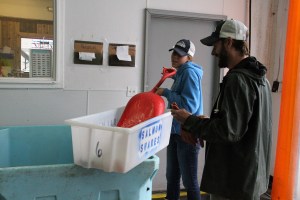
AriannaShovelsIceIntoToteWithJasonCroftThe owner-fishermen are longliners and trollers, for the most part, with some who gillnet sockeye and use pots to catch the spot prawns. Skeele said all of the fishermen are owners in the company, “so they have some skin in the game.” By having skin in the game, the fishermen are more likely to treat the fish better once it comes onto the boat, so it maintains its high quality.

Right now, Sitka Salmon Shares doesn’t sell a lot of its fish in Sitka, although it does sell fish to a couple of local restaurants such as the Westmark HotelTotem Square Inn and Sitka Hotel. Sitka Salmon Shares doesn’t want to compete locally with the Alaskans Own Seafood CSF program that sells to members in Alaska. But now that Sitka Salmon Shares has its own plant, it does offer local processing of fish to charter fishing operations, personal-use and sport fishermen from Sitka, and to commercial fishermen who sell their own fish to various markets around the country.

“We’d like to sell more locally, and it would be great to have our fish in Sea Mart,” Mink said. “We’re excited about our community processing program, and we’re trying to do more processing for Sitka fishermen.”
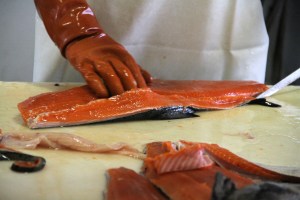
CloseUpOfSalmonFilletingIn recent years, Sitka Salmon Shares has received national exposure with articles in Food & Wine, New Food Economy, Entrepreneur and Forbes, plus a variety of regional publications and Sitka exposure with a story on KCAW-Raven Radio. Mink said there is still more Sitka Salmon Shares can do in the Midwest and Alaska.

“With our plant, we have our own ice and our own value-added room,” Mink said. “We have a talented individual, Pat Glabb, rebuilding Big Blue. He built Silver Bay Seafoods plant. Right now we’re focused on the Midwest, and we have a ways to go to develop our markets there. But we have assets on the ground and systems in place and tons of room to grow. We think there are a lot of cool things to do with value-added. For example, we have Chris Eley, a chef-butcher from the Smoking Goose Meatery in Indianapolis, developing some salmon sausages for us.”

Fishermen wanting to learn more about the Sitka Salmon Shares community processing program can call Jason Croft at 966-9999, or stop by the plant on Smith Street (across from Baranof Island Brewing Company). You also can visit the Sitka Salmon Shares website at http://www.sitkasalmonshares.com/.

This slideshow requires JavaScript.

Sitka chef Colette Nelson to represent Alaska in Great American Seafood Cook-Off

ColetteGarnishesRabbitThighs

Ludvig’s Bistro owner and executive chef Colette Nelson garnishes rabbit thighs with beach asparagus for a special local foods dinner she prepared as a February 2015 fundraiser for The Sawmill Farm.

Next week, Sitka chef Colette Nelson will carry a special cargo in a violin case when she heads to New Orleans to represent Alaska in the Great American Seafood Cook-Off.

Nelson, the owner and executive chef of Ludvig’s Bistro, will be carrying a frozen white king salmon in her violin case, the fish she plans to cook for the annual contest. The white king salmon was caught July 4 by troller Lou Barr of Auke Bay (who Nelson used to commercial fish with) and flash-frozen earlier this month. Nelson doesn’t plan to let the fish out of her control as she travels to New Orleans.

“I’m going to hold that fish with me. I’m not going to let somebody put it under the plane because that’s our gold,” Nelson told the Juneau Empire in a July 25 article.

On Aug. 6, Nelson will compete against chefs from Alabama, Arkansas, Florida, Louisiana, Massachusetts, Mississippi, Oregon, South Carolina, Texas and Utah. The Great American Seafood Cook-Off is sponsored by the Louisiana Seafood Promotion and Marketing Board, and focuses on domestic, sustainable seafood and local ingredients.

Nelson, who will compete with her sous chef Josh Miller, hopes to become the second straight Alaska chef to win the Best Seafood Chef title, joining Beau Schooler and Travis Hotch of The Rookery Café in Juneau who won last year with a sockeye salmon dish. Nelson was nominated for this year’s contest by Gov. Bill Walker.

Nelson hasn’t said exactly how she plans to cook her white king salmon, but did hint that it will have a Spanish theme in keeping with her restaurant’s use of Mediterranean flavors.

“For me this experience is not only about representing Alaska, but it’s about what Alaska has given to me,” Nelson told the Empire. “I came here to fish in college so that I could study abroad in Spain. I did that and had a great time fishing. I fished for three seasons, then went to Spain and fell in love with the cuisine and with Mediterranean food as a whole. So to go to this competition 25 years later — after being in both the seafood industry and the restaurant business — it feels complete to go there with Spanish ideas.”

The dish will feature a pan-seared fillet of the fish that includes the belly meat.

“For anybody that knows king salmon, the belly meat is where the best flavor is,” Nelson said. “We like it just perfectly cooked so it just starts to separate, when the flakes come off. You can feel the oil, get it on your lips and really taste it.”

Nelson opened Ludvig’s Bistro in 2002, and has been a big supporter of local foods in Sitka (including using her restaurant to host fundraisers for the Sitka Local Foods Network and developing recipes and lesson plans for Sitka’s Fish To Schools lunch program coordinated by the Sitka Conservation Society). She grew up in Oregon and attended the University of Washington, where she trained under Seattle restauranteur Susan Kaufman, who also had a food cart and restaurants in Juneau. She moved to Alaska in 1998, working as chef for Kingfisher Charters & Lodge in Sitka before opening her restaurant.

During the competition, Nelson and sous chef Josh Miller will have an hour to prepare six plates for the judges and one for photos. Nelson and Miller have been practicing, and now feel they’re ready.

“We do this all the time. We cook under pressure,” Nelson said. “When we were practicing (Sunday) I said, ‘Look, we’re just having a dinner party for seven guests and let’s just make it in an hour. We got this.’”

Sitka Spruce Tips 4H club to host 4H Fair at July 30 Sitka Farmers Market

4H Fair flyer

SitkaFarmersMarketSignThe Sitka Spruce Tips 4H club will host its inaugural 4H Fair at the Sitka Farmers Market from 10 a.m. to 1 p.m. on Saturday, July 30, at the Alaska Native Brotherhood Founders Hall (235 Katlian Street).

The Sitka Spruce Tips 4H club is co-sponsored by the University of Alaska Fairbanks Cooperative Extension Service and the Sitka Conservation Society. It provides a variety of programming promoting the Alaska Way of Life for youth and their families.

According to event organizer Jasmine Shaw of the UAF Cooperative Extension Service Sitka District Office, the 4H members are going to be submitting projects in six different divisions:

  • Division 1 — Food Preservation (jams, jellies, preserves, canned goods, smoked fish, jerky)
  • Division 2 — Baked Goods (pies, cakes, cookies, donuts/frybread, breads)
  • Division 3 — Produce (fruits and vegetables) and Flowers
  • Division 4 — Arts and Crafts (knitting, basketry, natural products, recycled crafts, woodworking, sewing)
  • Division 5 — Art (photography, drawings, paintings)
  • Division 6 — Presentations (posters, reports, displays)
Only one entry per individual per category is allowed, so we are asking members to choose your best item. Other items can be displayed but not entered for judging.
“This is a chance for community members to see what 4H has been up to all year and become involved if they want,” Shaw said. “(We will have registration forms).
“Some members will have items for sale alongside the fair display,” Shaw added. “I’m not sure all of what will be for sale yet, but I do some of our members in our natural product series will be making lotion and lip balm.”

Scenes from the Sitka Kitch’s first Preserving the Harvest class — Simple Pickles and Sauerkraut

LisaSadleirHartDiscussesProperHeadSpace

kitch_logo_mainStudents learned how to make pickles from squash and small-batch sauerkraut at the first Preserving the Harvest series class of the summer on Monday, July 18, at the Sitka Kitch community rental commercial kitchen.

The Simple Pickles and Sauerkraut class was taught by Lisa Sadleir-Hart, with assistance from Jasmine Shaw. It is one of six classes in the Preserving the Harvest class series, which will teach people how to safely preserve the summer’s bounty so it can be eaten in the summer.

Other classes in the series will include low-sugar jams and jellies, canning salmon, chutneys and salsas, apple and fruit butters, and a community kale celebration. More details can be found at this link.

JarsPackedWithSquashThe Sitka Kitch was a project of the 2013 Sitka Health Summit, and the project is coordinated by the Sitka Conservation Society in partnership with the Sitka Local Foods Network. The Sitka Kitch can be rented to teach cooking and food preservation classes, by local cottage food industry entrepreneurs who need a commercial kitchen to make their products, and for large groups needing a large kitchen for a community dinner. To learn more about how to rent the Sitka Kitch, please go to the website at http://www.sitkawild.org/sitka_kitch.

To register for classes, go to our online registration page at http://sitkakitch.eventsmart.com/ and click on the class name. We now have a PayPal option so people can pay the registration fees before the class. There are food/supply fees for most of the classes, which are split between the students, and those are paid by cash or check (made out to the Sitka Conservation Society) at the class. Other than for the Kale Celebration event, each class has a limited number of spots available, so register early. Registration for each class closes at 11:55 p.m. on the Friday before the class.

If you have any questions about the class series, please email sitkakitch@sitkawild.org. A slideshow of images from the simple pickles and sauerkraut class is posted below.

This slideshow requires JavaScript.