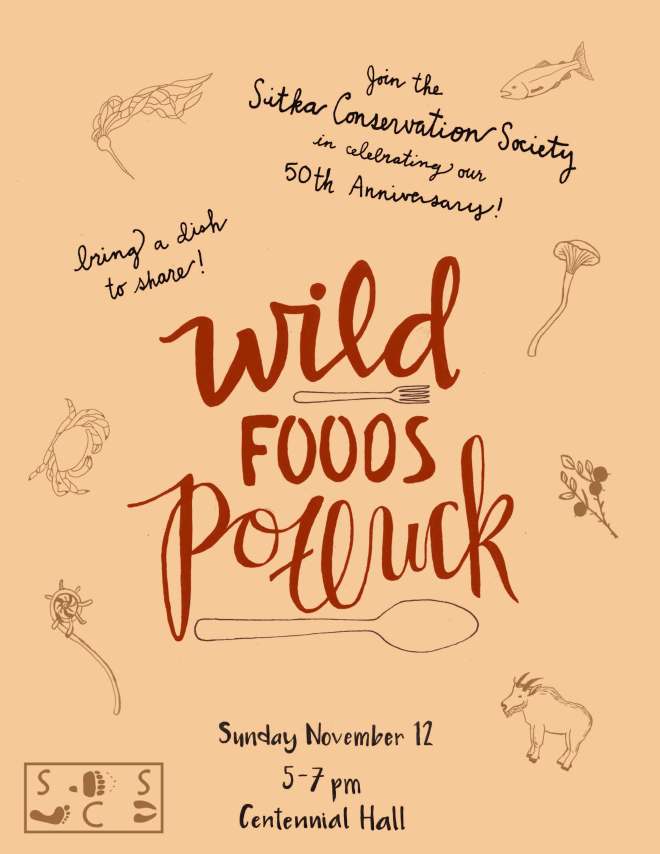
Sitka Conservation Society to host annual Wild Foods Potluck on Sunday, Nov. 12

The Sitka Conservation Society is hosting its annual Wild Foods Potluck, starting at 5 p.m. on Sunday, Nov. 12, at Harrigan Centennial Hall. It’s more important than ever to come together to celebrate all the ways the Tongass National Forest feeds and sustains us. Please bring a dish that features ingredients that were fished, foraged, hunted, or cultivated in Southeast Alaska.

Did you know that Sitka Conservation Society is celebrating its 50th year? At the potluck, SCS will have an amazing photography display showcasing 50 years of grassroots conservation activism. SCS dug through its archives to find old photos and videos from the early days of Sitka Conservation Society to pair with newer photos, illustrating the enduring legacy of conservation in Sitka. Also, if you’re a SCS member or want to become one, you can pick up your 2018 SCS calendar at the potluck.

The potluck is open to the entire community, especially SCS members, friends, family, and anyone else interested in learning about the Sitka Conservation Society. Come celebrate Alaska’s wild food bounty with your friends and neighbors.

Interested in volunteering at the potluck or want more information? Contact info@sitkawild.org or call 747-7509.

Sitka Health Summit chooses two community wellness projects for the next year

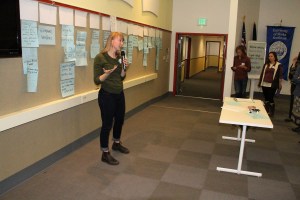
Starting a series of trauma-informed community conversations and reducing Sitka’s carbon emissions were the theme as Sitka residents gathered to choose two community wellness projects to pursue in 2017-18 at the 11th annual Sitka Health Summit, held Oct. 11-13, at the University of Alaska Southeast Sitka Campus and Sitka Public Library. The Sitka Local Foods Network got its start through a couple of Sitka Health Summit projects.

This year, the summit featured Justin Rivas, MPH, MIPA, of the University of Wisconsin Population Health Institute, who also works with the Robert Wood Johnson Foundation (RWJF). Rivas led a boundary-spanning leadership workshop on Wednesday morning to help leaders learn how to be more inclusive in their planning. He also gave a presentation on health equity on Wednesday night.

The Sitka Health Summit Planning Day was expanded to a day and a half this year, with Rivas facilitating. On Thursday afternoon, Rivas discussed health equity and also went over some of the Sitka and Alaska health information gathered from the RWJF County Health Rankings (http://www.countyhealthrankings.org/). He also discussed the site’s What Works For Health project (http://www.countyhealthrankings.org/policies) that lists hundreds of possible health projects and the evidence-based research that shows how they work. On Friday, about 30-40 Sitkans gathered to select the two community wellness projects to pursue for the next year.

“The Sitka Health Summit team was successful in using data and evidence to inform the goal-setting process at this year’s planning day,” Rivas said. “They also met the challenge of strategically incorporating health equity in the selection of the year’s goals.”

There were 33 initial projects proposed, in a variety of categories such as physical activity, nutrition (including two people suggesting a veggie prescriptions project), mental health, health equity, etc. They were narrowed down to five semifinalists, and two of those were combined to make it four semifinal projects. The two chosen projects each will receive $2,000 in seed money, as well as some facilitation services from the Sitka Health Summit advisory team, to help get the projects off the ground.

“The planners chose two important goals for this year,” Sitka Health Summit Coalition member Doug Osborne said. “The first group decided to have some critical conversations about our community’s past and present as well as the kind of future we want for all of our residents. Understanding our ‘history’ (including the painful parts that often don’t get discussed), becoming a trauma-informed community, and uniting to end racism are going to contribute to a healthier Sitka that’s built on a foundation of mutual respect.

“The second goal the planners chose was to help protect our ocean, forest, and quality of life by reducing carbon emissions and addressing climate change. As the planners brainstormed ways to reduce CO2 emissions (the main greenhouse gas) it was clear that the solutions had several layers of benefits, such as saving money, improving air quality, promoting fitness and more. I wish both of the groups the best of luck as they work to make our world and our town healthier, more sustainable, and more equitable.”

Each of the two chosen community wellness projects will host a kick-off event in the near future, and these events are open to the public and anybody who wants to help with the project. More information about the projects, their kick-off meetings, and contact people are listed below.

  • Reduce carbon emissions in Sitka — 6:30-8 p.m., Monday, Oct. 23, Harrigan Centennial Hall, contact Heather Bauscher, 747-7509, heather@sitkawild.org (NOTE: Second meeting is 6-7:30 p.m. on Monday, Oct. 30, at the Island Institute offices across from Baranof Elementary School) — Sitkans have a direct self interest in healthy oceans, forests and quality of life. By being better stewards of our resources, we can save money while helping the environment, protect our quality of life, help the next generation, and create a livable world now and in the future. All are invited to discuss CO2 reduction, stewardship, and a sustainable Sitka. (Note: Growing local food can be a part of this project.)
  • Trauma-informed community conversations — 6-7:30 p.m., Thursday, Nov. 9, Harrigan Centennial Hall, contact Loyd Platson, 747-3636, lplatson@scpsak.org (NOTE: This is a change from the time, date and location originally announced for this meeting) — This project’s goal is in bringing together partners interested in community healing and equity, fostering community healing and understanding through dialogue, increasing cross-cultural understanding and respect, and creating a forum where conversations can be brought together. We as a community recognize that historical trauma affects the well-being and health equity of our community. We are going to have continuing conversations surrounding these topics, and this will be a safe space to talk about these things and our shared experience.

The Sitka Health Summit is coordinated and funded by a coalition of local groups that includes the SouthEast Alaska Regional Health Consortium (SEARHC), Sitka Community Hospital, Sitka Conservation Society, Sitka Counseling, the State of Alaska Division of Public HealthSection of Public Health Nursing, the University of Alaska Southeast Sitka Campus, Southeast Radiation Oncology Center, White’s Pharmacy, the Sitka Health Summit Coalition.

For more information about the Sitka Health Summit and its current and past projects, go to http://www.sitkahealthsummit.org/. Photos from the summit are posted on the Sitka Health Summit page on Facebook, https://www.facebook.com/SitkaHealthSummit.

Cross boundaries at the 11th annual Sitka Health Summit on Oct. 11-13

The 11th annual Sitka Health Summit will be October 11-13 at various locations around Sitka.
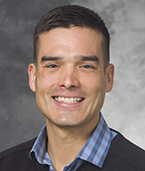
​​Justin Rivas, MPH, MIPA, from the University of Wisconsin Population Health Institute will be leading two workshops and then providing facilitation for the planning days. All the events are free and open to the public.

The summit opens with the boundary spanning leadership workshop from 10:30 a.m. to noon, on Wednesday, Oct. 11, in Room 229 at the University of Alaska Southeast Sitka Campus. This interactive workshop comes from the Center for Creative Leadership and is based on the book Boundary Spanning Leadership by Chris Ernst.

For a diverse group of stakeholders to effectively cross boundaries and work together, partners must first define and understand the lines that differentiate them. You must be able to clearly see group boundaries before you can span them. This important step is often skipped in forming new partnerships. Throughout this class five types of universal boundaries will be examined and deconstructed with the goal of improving teamwork and, ultimately, results.

The next event is a presentation by Rivas on health equity and the impact income, race and geography has on health outcomes. This event takes place from 6:30-7:30 p.m. on Wednesday, Oct. 11, at the Sitka Public Library. Information and case studies about public health efforts to understand and address disparities, while promoting access and equity for all, will be shared and discussed.

This year we’ve expanded the Sitka Health Summit planning day into a day and a half of planning community wellness projects. They will take place from 1-4:30 p.m. on Thursday, Oct. 12, and from 8:30 a.m. to 4 p.m. on Friday, Oct. 13, in Room 229 at the UAS Sitka Campus. For lunch during Friday’s events, Chef Edith Johnson of Our Town Catering will prepare a lunch with locally caught coho salmon and a locally grown kale and mixed-green salad with a champagne vinaigrette.

All ideas and all people are welcome to brainstorm, evaluate, select two inspiring health goals that will promote equity and well-being in Sitka. Each of the newly selected initiatives receives $2,000 in start-up funds, initial facilitation services, technical assistance, and a letter of support. Some of the past community initiatives include the Sitka Farmers Market, Sitka Kitch, Fish to Schools, Hames Athletic and Wellness Center, Sitka Community Playground, and earning Bicycle Friendly Community and Walk Friendly Communities designations, among other projects.

Sponsors for this year’s Health Equity themed Summit include the SouthEast Alaska Regional Health Consortium (SEARHC), Sitka Community Hospital, Sitka Conservation Society, Sitka Counseling, White’s Inc./Harry Race Pharmacy, Southeast Radiation Oncology Center, the Alaska Department of Health and Social Services-Section of Public Health Nursing, the University of Alaska Southeast-Sitka Campus, and the Sitka Health Summit Coalition.

For more information or to save your spot at any the three events, contact Doug Osborne at 747-0373 or dosborne@sitkahospital.org or Holly Marban at 966-8938 or holly.marban@searhc.org. Doug and Holly also are requesting people RSVP for the events, to help planning.

Please email them and let them know if you plan to attend the Wednesday morning workshop with Justin Rivas at UAS Sitka Campus (Event A), the health equity presentation Wednesday night at Sitka Public Library (Event B), and/or the Sitka Health Summit Planning Days on Thursday and Friday at UAS Sitka Campus (Event C).

Scenes from the Sitka Kitch classes on filleting and canning salmon for the Sitka Seafood Festival

As part of the rekindled Sitka Seafood Festival, the Sitka Kitch community rental commercial kitchen hosted two classes this week — Tuesday, Aug. 15, on how to fillet a salmon, and Wednesday, Aug. 16, on how to can salmon.

The Tuesday class was taught by Renée Jakaitis Trafton, chef-owner of Beak Restaurant. Renée taught students the basics of filleting a salmon (using freshly caught, ungutted salmon), and she taught them how to pull pinbones and how to skin the fillet.

The Wednesday class was led by Jasmine Shaw, who works for the University of Alaska Fairbanks Cooperative Extension Service‘s Sitka District Office. In addition to teaching students how to can salmon, Jasmine also taught them how to make a simple raspberry-currant jam while the salmon was processing.

Slideshows from both classes are posted below, with the Tuesday class slideshow on top of the Wednesday class. In the Wednesday class slideshow there are photos of several UAF Cooperative Extension Service publications, including several free handouts that can be downloaded off the UAF CES website and a couple of books that can be purchased from Jasmine at her office (contact her at 747-9440 or jdshaw2@alaska.edu to set up a time to get them).

Also, don’t forget the Sitka Kitch still has openings in its Ring Around The Rose Hip class from its Preserving The Harvest class series. You can learn more about our upcoming classes by going to http://sitkakitch.eventsmart.com and clicking on the class title to register.

Tuesday class slideshow

This slideshow requires JavaScript.

Wednesday class slideshow

This slideshow requires JavaScript.


Fish to Schools program launches coho salmon donation drive for commercial fishermen

The Fish to Schools program needs help from Sitka’s commercial fishermen. The program needs a few hundred pounds of coho salmon to help make Fish to Schools meals for Sitka students during the upcoming 2017-18 school year. The program also is seeking photos of commercial fishermen at work, which can be used to teach the students more about how the fish got to their plates.

The coho salmon donation period is Wednesday. Aug. 16, through Thursday, Aug. 31. To donate, commercial fishermen can sign up and indicate how many pounds they want to donate when they offload at Seafood Producers Cooperative or Sitka Sound Seafoods during the donation period. The program can only accept commercially caught fish (no sport or subsistence fish). The hope is to get enough coho donated that locally caught salmon can be offered to students at least once a week. Sign-up sheets will be posted at the scale shacks and in the main offices. Only coho salmon will be accepted.

The Sitka Fish To Schools project (click here to see short video) got its start as a community wellness project at the 2010 Sitka Health Summit, and now is managed by the Sitka Conservation Society. It started by providing a monthly fish dish as part of the school lunch as Blatchley Middle School, and since then has grown to feature regular fish dishes as part of the lunch programs at Baranof Elementary SchoolKeet Gooshi Heen Elementary SchoolBlatchley Middle SchoolSitka High SchoolPacific High School (where the alternative high school students cook the meals themselves), the SEER School, and Mount Edgecumbe High School.

In addition to serving locally caught fish meals as part of the school lunch program, the Fish To Schools program also brings local fishermen, fisheries biologists and chefs to the classroom to teach the kids about the importance of locally caught fish in Sitka. The program received an innovation award from the Alaska Farm To Schools program during a community celebration dinner in May 2012, and now serves as a model for other school districts from coastal fishing communities. In May 2014, the Fish to Schools program released a guidebook so other school districts in Alaska could create similar programs.

For more information, contact Sophie Nethercut of the Sitka Conservation Society at 747-7509 or email sophie@sitkawild.org. If you would like to donate FAS (frozen at sea) fish, please call or text Lexi Fish Hackett at 738-5684.

Sitka Kitch to offer two classes in conjunction with the Sitka Seafood Festival

Sitkans love their seafood, and the Sitka Kitch community rental commercial kitchen is offering two great classes in conjunction with the Sitka Seafood FestivalHow to Fillet a Salmon and How to Can Salmon.

In the first class, held from 6-8 p.m. on Tuesday, Aug. 15, at the Sitka Kitch (505 Sawmill Creek Road, inside First Presbyterian Church), local chef Renée Jakaitis Trafton of the Beak Restaurant will teach students how to fillet a salmon. This includes lessons on how to remove the pinbones from the salmon and how to remove the skin. Participants must bring a fillet knife or let the instructor know they need one in advance. Knives can be made available for $15 for those who need them. This class costs $15.

In the second class, held from 5-9 p.m. on Wednesday, Aug. 16, at the Sitka Kitch, Jasmine Shaw of the UAF Cooperative Extension Service‘s Sitka District Office will teach students how to can the salmon (using the filleted salmon from Tuesday’s class). In addition, she will teach students how to make a simple berry jam while the class waits for the salmon to process in the canner. This class costs $27.50.

As a special deal, the Sitka Kitch has a $35 fee for students registering for both classes. The Sitka Seafood Festival is providing fish and jars for the classes, so there should be little or no food/supply fee.

The registration deadline is 6:55 p.m. on Monday, Aug. 14. Registration is capped at 10 students so sign up early to secure your space in these classes.

Register online at our EventSmart page, http://sitkakitch.eventsmart.com/ (click on class title, there is a separate class title to register for both classes and get the discount), using a debit or credit card or PayPal account. You also can call Chandler or Clarice at Sitka Conservation Society (747-7509) to arrange payment by cash or check. For more information about the two classes, contact Jasmine Shaw at 747-9440 or email sitkakitch@sitkawild.org.

Scenes from the Sitka Kitch’s Preserving the Harvest class on making jams and jellies

Students learned about jams, jellies, fruit butters, marmalades, preserves and conserves during the Jam Session: Preserving Jams and Jellies class on Monday, July 24, at the Sitka Kitch community rental commercial kitchen. This was the fourth of six scheduled classes in the Preserving the Harvest food preservation class series offered this summer.

The class was taught by Lisa Sadleir-Hart, a Sitka dietitian and health educator who has taught several cooking and food preservation classes for the Sitka Kitch. In this class, students learned how to make strawberry-kiwi jam, a blueberry conserve (with lemon, orange and raisins), a rhubarb-strawberry conserve (with cranberries or raisins and walnuts), and plum jam.

This was the fourth class in the Preserving the Harvest food preservation class series, which is sponsored by the SouthEast Alaska Regional Health Consortium (SEARHC). The other classes in the series are (underlined titles take you to the class registration page):

  • Ring Around the Rose Hip: Rose Hip Relish and More — 6-8:30 p.m., Monday, Sept. 18, taught by Lisa Sadleir-Hart, $27.50 registration fee
  • Venison Jerky — 6-8:30 p.m., Monday, Oct. 30 (this date and class topic may change), taught by Lisa Sadleir-Hart and Jasmine Shaw, $27.50 registration fee

The Sitka Kitch programming team is working on other classes to be offered later this summer and next fall. We also might reschedule the Clear the Freezer, Fill the Pantry community canning session for later this summer, but on a Saturday instead of during the week. Watch the Sitka Kitch page on Facebook or our online registration page to see when these and any future classes are scheduled.

When registering, students should prepay for the class through the Sitka Kitch online registration sitehttp://sitkakitch.eventsmart.com, using PayPal or credit/debit card. If you need other payment arrangements, contact Chandler or Clarice of Sitka Conservation Society at 747-7509 to arrange a time when you can pay with cash or check. To qualify for a partial refund, please notify us at least three days in advance if you need to cancel. The registration deadline is three days before each class so our instructors have time to purchase materials. Please email sitkakitch@sitkawild.org with any questions.

A slideshow of scenes from the jams and jellies class follows below.

• Link to UAF Cooperative Extension Service publication Jams and Jellies

• Link to UAF Cooperative Extension Service publication Alaska Blueberries

• Link to UAF Cooperative Extension Service publication Wild Strawberries

This slideshow requires JavaScript.

Date set for Sitka Kitch’s Preserving the Harvest class Ring Around The Rose Hip

Lisa Sadleir-Hart, MPH, RDN, will offer the fifth class in the Preserving the Harvest class series, Ring Around The Rose Hip, from 6-8:30 p.m. on Monday, Sept. 18, at Sitka Kitch. Students will learn how to harvest rose hips, prepare rose hip puree for long term storage and prepare recipes using the puree.

Cost is $27.50 and, thanks to a donation from the SouthEast Alaska Regional Health Consortium (SEARHC), the food and supply fee will be minimal. Registration is capped at 10 students, so sign up early to secure your space in this fifth food preservation class of the season.

Register online here, https://sitkakitch.eventsmart.com/events/pth-ring-around-the-rosehip/, using a debit or credit card or PayPal account. A cash or check payment can be arranged by calling Chandler or Clarice of Sitka Conservation Society at 747-7509. Email sitkakitch@sitkawild.org with any questions.

Scenes from the Sitka Kitch’s Preserving the Harvest class on simple pickles and sauerkraut

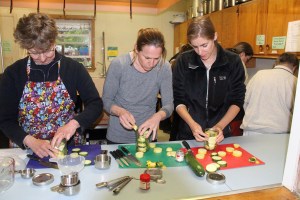
Students learned how to make pickled squash and sauerkraut during the Simple Pickles and Sauerkraut class on Tuesday, July 11, at the Sitka Kitch community rental commercial kitchen. This was the third of six scheduled classes in the Preserving the Harvest food preservation class series offered this summer.

The class was taught by Lisa Sadleir-Hart, a Sitka dietitian and health educator who has taught several cooking and food preservation classes for the Sitka Kitch. In this class, students learned how to make a variety of fermented foods, with the focus on squash pickles and sauerkraut (many of the recipes came from the food preservation book So Easy To Preserve, which is produced by the University of Georgia with the book’s meat and fish recipes coming from the University of Alaska Fairbanks Cooperative Extension Service). She also discussed how probiotics help with digestion and gut health.

This was the third class in the Preserving the Harvest food preservation class series, which is sponsored by the SouthEast Alaska Regional Health Consortium (SEARHC). The other classes in the series are (underlined titles take you to the class registration page):

  • Jam Session: Preserving Jams and Jellies — 6-8:30 p.m., Monday, July 24, taught by Lisa Sadleir-Hart, $27.50 registration fee (NOTE: Class is full. Email sitkakitch@sitkawild.org to ask about a waiting list)
  • Ring Around the Rose Hip: Rose Hip Relish and More — 6-8:30 p.m., Monday, Sept. 18, taught by Lisa Sadleir-Hart, $27.50 registration fee
  • Venison Jerky — 6-8:30 p.m., Monday, Oct. 30 (this date may change), taught by Lisa Sadleir-Hart and Jasmine Shaw, $27.50 registration fee

The Sitka Kitch programming team is working on other classes to be offered later this summer and next fall. Watch the Sitka Kitch page on Facebook or our online registration page to see when these and any future classes are scheduled.

When registering, students should prepay for the class through the Sitka Kitch online registration sitehttp://sitkakitch.eventsmart.com, using PayPal or credit/debit card. If you need other payment arrangements, contact Chandler or Clarice of Sitka Conservation Society at 747-7509 to arrange a time when you can pay with cash or check. To qualify for a partial refund, please notify us at least three days in advance if you need to cancel. The registration deadline is three days before each class so our instructors have time to purchase materials. Please email sitkakitch@sitkawild.org with any questions.

A slideshow of scenes from the Simple Pickles and Sauerkraut class follows below.

• UAF Cooperative Extension Service free publication “Pickles and Relishes”

• UAF Cooperative Extension Service free publication “Sauerkraut”

This slideshow requires JavaScript.

Scenes from the Sitka Kitch’s Preserving the Harvest class on creative ways to use rhubarb

Students learned how to make a variety of dishes featuring rhubarb in the Rambunctious Rhubarb: Creative Ways To Use Rhubarb class on Monday, June 26, at the Sitka Kitch community rental commercial kitchen. This was the second of six scheduled classes in the Preserving the Harvest food preservation class series offered this summer.

The class was taught by Lisa Sadleir-Hart, a Sitka dietitian and health educator who has taught several cooking and food preservation classes for the Sitka Kitch. In this class, students learned how to make a curried rhubarb lentils dish (served over rice), a rhubarb chutney, a jalapeño rhubarb chutney, rhubarb pickles, rhubarb ketchup, and a rhubarb salsa. (Most of the recipes came from the book The Joy Of Rhubarb).

This was the second class in the Preserving the Harvest food preservation class series, which is sponsored by the SouthEast Alaska Regional Health Consortium (SEARHC). The other classes in the series are (underlined titles take you to the class registration page):

The Sitka Kitch programming team is working on other classes to be offered later this summer and next fall. We also might reschedule the Clear the Freezer, Fill the Pantry community canning session for later this summer, but on a Saturday instead of during the week. Watch the Sitka Kitch page on Facebook or our online registration page to see when these and any future classes are scheduled.

When registering, students should prepay for the class through the Sitka Kitch online registration sitehttp://sitkakitch.eventsmart.com, using PayPal or credit/debit card. If you need other payment arrangements, contact Chandler or Clarice of Sitka Conservation Society at 747-7509 to arrange a time when you can pay with cash or check. To qualify for a partial refund, please notify us at least three days in advance if you need to cancel. The registration deadline is three days before each class so our instructors have time to purchase materials. Please email sitkakitch@sitkawild.org with any questions.

A slideshow of scenes from the Rambunctious Rhubarb class follows below.

This slideshow requires JavaScript.