UAF Cooperative Extension Service offices in Sitka, Anchorage to remain open

JasmineShawUAFCooperativeExtensionService

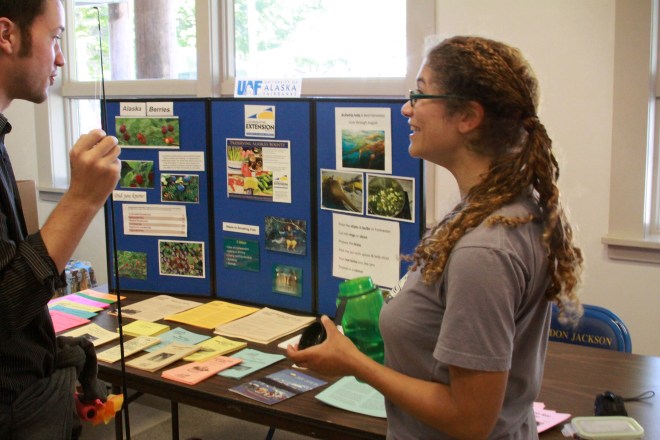
The announcement that the University of Alaska Fairbanks Cooperative Extension Service will keep its Sitka and Anchorage offices open, means Jasmine Shaw, right, will continue to staff the Sitka office instead of the office being closed.

The University of Alaska Fairbanks Cooperative Extension Service will keep its offices in Sitka and Anchorage open instead of closing them under a new plan developed by Extension leaders this summer.

The plan means the Anchorage office will move to a new location and become an outreach center rather than a district office. Outreach centers have no Extension agents, but offer Extension publications and face-to-face and distance-delivered programs led by agents from other district offices. Classes also will be taught by program staff and by community experts. Services at the Sitka office will be relatively unchanged, but operations will be mostly grant funded.

In May, the university announced a plan to close both the Anchorage and Sitka offices by the end of October due to budget shortfalls. This summer, office and classroom space with another university program became available and Extension received some additional grant funding. Those changes allowed the university to re-examine the decision to close the offices.

“We knew that the closure of these two offices would be a loss to the Sitka and Anchorage communities,” said Extension director Fred Schlutt. “We are pleased that these new developments will allow us to have a physical presence in these communities.”

The Anchorage office will move to the Chugachmiut Tribal Consortium Building at 1840 Bragaw St. It will share space with the Mining and Petroleum Training Service, a former UA statewide program that was transferred to Extension in July. The new office will have classroom space and use of the university’s videoconference network. It will house grant-funded faculty and staff with a specific focus, including, an invasive plants instructor, integrated pest management technician and a nutrition educator. Extension is planning to seek additional funding for a program assistant to coordinate Extension offerings in the area.

As was previously planned, the three Anchorage Extension agents have been transferred to vacant positions at the Fairbanks and Soldotna offices. The Extension economist will also move to a new office at the Matanuska Experiment Farm.

The Sitka office, which has not had an agent for two years, will continue to have a program assistant (currently Jasmine Shaw), who will coordinate Extension activities in the community and offer programming. The Sitka office helps coordinate statewide videoconference training in Sitka, assists the Sitka Conservation Society in coordinating the Sitka Spruce Tips-Alaska Way of Life 4-H Club, helps with education programming at the Sitka Kitch community rental commercial kitchen, and provides other services, such as pressure canner gauge testing.

Schlutt told the Alaska Dispatch News that between grants and having the University of Alaska Southeast providing office space, costs for the Sitka office are less than $5,000 a year in state general funds. “If we can keep a rural office open for under $5,000, we’ll do it every time,” he said.

Other Extension reductions have included layoffs, the elimination of four open agents’ positions and a 15 percent reduction to its operating budget.

• UAF Cooperative Extension Service FAQ’s about keeping Anchorage, Sitka offices open
UAF Cooperative Extension Service updates Alaska’s Sustainable Gardening Handbook

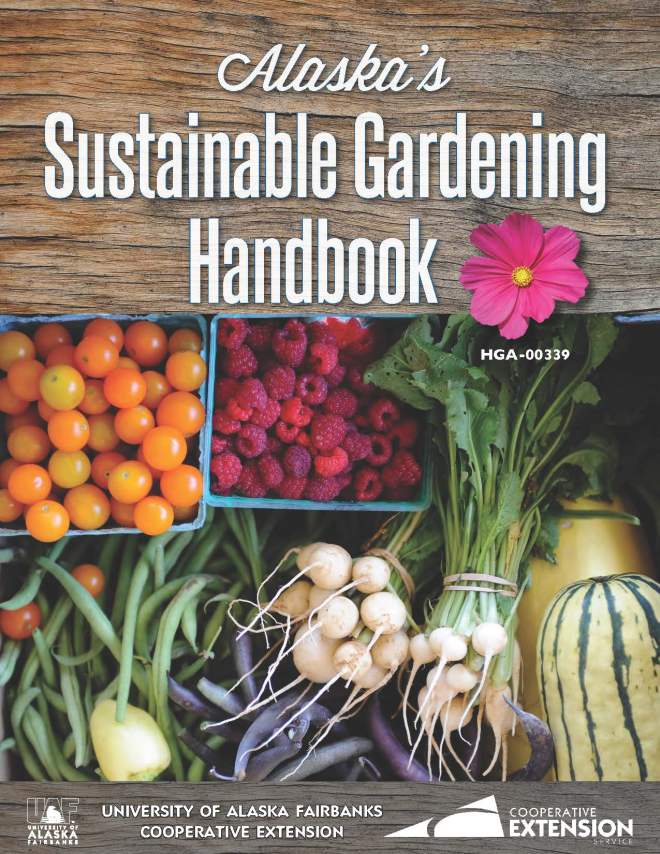
Sustainable Gardening 2015 cover

Alaska’s Sustainable Gardening Handbook” has been updated.

This publication was first produced in 2010 as an adaptation of “Sustainable Gardening: The Oregon-Washington Master Gardener Handbook” and this is the first revision. It is used as one component in Master Gardener training programs for University of Alaska Cooperative Extension Service volunteers in Alaska, but is also a must-have for all Alaska gardeners.

UAF Cooperative Extension Service agriculture and horticulture agents have contributed their expertise to provide information on topics such as basic botany, lawns, vegetable gardening, orchards, entomology, pest management and more.

Call 877-520-5211 (toll-free in Alaska) to order the handbook, or check with Jasmine Shaw of the Sitka District Office at 747-9440 to see if she has any copies available locally. The 490-page book costs $50.

UAF Cooperative Extension Service offers Certified Food Protection Manager class by videoconference Oct. 4 in Sitka

CFPMClass10042016

Tuesday, Sept. 20, is the registration deadline for a certified food protection manager workshop being taught on Tuesday, Oct. 4, by University of Alaska Fairbanks Cooperative Extension Service. This is an all-day statewide class that will be offered by videoconferencing to Bethel, Delta Junction, Fairbanks, Juneau, Kodiak, Palmer, Sitka and Valdez.

A certified food protection manager (CFPM) is responsible for monitoring and managing all food establishment operations to ensure that the facility is operating in compliance with food establishment regulations.

A CFPM is knowledgeable about food safety practices and uses this knowledge to provide consumers with safe food, protect public health and prevent food-borne illnesses. Alaska regulations require food establishments to have at least one CFPM on staff.

This course takes place from 8:30 a.m. to 5 p.m. (with a half-hour lunch), and participants will take a computer-based exam at the end of the class. The reason the deadline is two weeks before the class is to guarantee course materials reach all the students in time for the class. The cost is $200, and the course will be taught by Julie Cascio of Palmer. Students can register here.

The Sitka videoconference for the class will take place in Room 106 at the University of Alaska Southeast Sitka Campus. To learn more, contact Jasmine Shaw at the Sitka District Office of the UAF Cooperative Extension Service at 747-9440, or contact Julie Cascio at (907) 745-3360 (Palmer number) or jmcascio@alaska.edu. Note, this class is taught in English but textbooks are available in Korean, Chinese and Spanish, just contact Julie at least three weeks before the class.

Also, the ServSafe book ($70) and certification exam ($75) now are available online, if people want to order the book and study independently without taking the class. Just go to this website and purchase the book and exam items.

Scenes from the Sitka Kitch’s fourth Preserving the Harvest class — Simple Chutneys and Salsas

JillScheidtAndAnnetteBlankenshipStirPotsWhileLisaSadleirHartWatches

kitch_logo_mainStudents learned how to make pa variety of chutneys and salsas during the fourth Preserving the Harvest series class of the summer on Monday, Aug. 29, at the Sitka Kitch community rental commercial kitchen.

The chutneys and salsas class was taught by Lisa Sadleir-Hart, with assistance from Betsy Decker. It is one of six classes in the Preserving the Harvest class series, which will teach people how to safely preserve the summer’s bounty so it can be eaten in the summer.

Other classes in the series will include simple pickles and sauerkraut, low-sugar jams and jellies, canning salmon, chutneys and salsas, apple and fruit butters, and a community kale celebration. More details can be found at this link.

The Sitka Kitch was a project of the 2013 Sitka Health Summit, and the project is coordinated by the Sitka Conservation Society in partnership with the Sitka Local Foods Network. The Sitka Kitch can be rented to teach cooking and food preservation classes, by local cottage food industry entrepreneurs who need a commercial kitchen to make their products, and for large groups needing a large kitchen for a community dinner. To learn more about how to rent the Sitka Kitch, please go to the website at http://www.sitkawild.org/sitka_kitch.

RhubarbJalapenoChutneyOnStoveThe next class in the series will be apple and fruit butters, from 6-8:30 p.m. on Monday, Sept. 12, at the Sitka Kitch. To register for classes, go to our online registration page at http://sitkakitch.eventsmart.com/ and click on the class name.

We now have a PayPal option so people can pay the registration fees before the class. There are food/supply fees for most of the classes, which are split between the students, and those are paid by cash or check (made out to the Sitka Conservation Society) at the class. Other than for the Kale Celebration event, each class has a limited number of spots available, so register early. Registration for each class closes at 11:55 p.m. on the Friday before the class.

If you have any questions about the class series, please email sitkakitch@sitkawild.org. A slideshow of images from the chutneys and salsas class is posted below.

This slideshow requires JavaScript.

Sitka Spruce Tips-Alaska Way of Life 4-H club to host Wild Edibles Series this fall

WildEdiblesAdvertisement22

The Sitka Spruce Tips-Alaska Way of Life 4-H Club will begin a six-week Wild Edible Series  starting on Wednesday, Sept. 7.

Kids will get outside and explore the bounty of wild edibles in Southeast Alaska. Activities include picking berries, identifying mushrooms, hiking through the muskeg, smoking salmon, and making jam and fruit leather. Get ready to taste the Tongass.

4-H members ages 5-8 will meet from 3:30-5 p.m. on Wednesdays and ages 9 and older will meet from 3:30-5 p.m. on Thursdays (the location will be revealed once you have registered). The registration fee is $20 and scholarships are available. Please register by Sept. 2.

For more information, email Julia Tawney at julia@sitkawild.org or call the Sitka Conservation Society at 747-7509.

UAS Sitka Campus to host annual class on how to identify Southeast Alaska mushrooms

SE mushrooms Flyer 2016

The University of Alaska Southeast Sitka Campus Office of Continuing Education will host its annual class “Southeast Mushrooms: How to Identify Them.”

This two-day class takes place from 7:30-8:30 p.m. on Thursday, Sept. 1, and from 9 a.m. to noon on two Saturdays, Sept. 3 and Sept. 17, at the UAS Sitka Campus (with field trips). The course fee is $45 and students should dress for the outdoors, bring waxed paper and a bucket for gathering.

This course is designed to introduce students to the mushroom flora of Southeast Alaska. The focus will be on the use of taxonomic keys for identification of fungi and recognition of both edible and poisonous mushrooms. Cooking and preservation of mushrooms will be discussed. Field trips are followed by in-class identification of collected mushrooms.

There is a maximum of 18 students allowed in this class, and the class may be canceled if at least 10 people don’t pre-register for it. For more information, contact the UAS Sitka Campus Office of Continuing Education at 747-7762. To register, call 1-800-478-6653, Ext. 7762, or go to https://uas.ce.alaska.edu.

Sitka Local Foods Network to host informal garden club for Sitka gardeners on Sept. 2

GreensLowTunnelAtStPeters

Do you grow vegetables or fruit or want to? Would you like to meet and learn from other gardeners in Sitka and visit their gardens?

Then come to Sitka Local Foods Network’s informal, unofficial Garden Club meeting from 7-9 p.m. on Friday, Sept. 2, at the home of Jennifer and Brinnen Carter, 113 Jamestown Drive. This is a chance for Sitka gardeners to share successes and discuss problems they may be having with their gardens. Appetizers will be provided.

Participants will decide the next location and club meeting date (so bring your calendars). If parking looks tight, please walk up the hill. For more information, contact Jennifer at 747-0520.

Scenes from the fifth Sitka Farmers Market of the 2016 summer

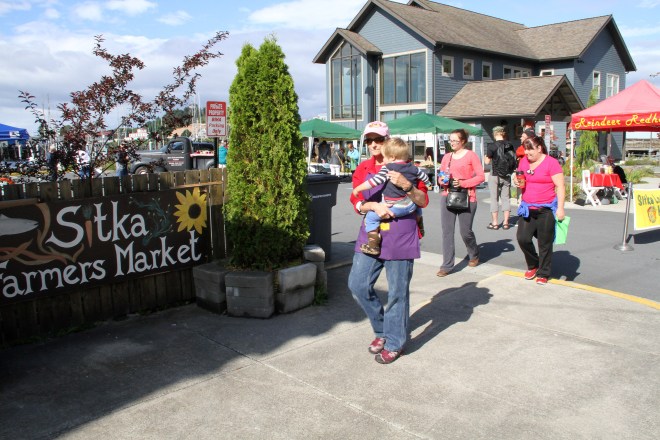
SitkaFarmersMarketCrowdAtEntrance

For the first time in eight years, the Sitka Local Foods Network hosted Sitka Farmers Markets in back-to-back weeks, with our fifth of seven Sitka Farmers Markets of the 2016 summer taking place on Saturday, Aug. 20, at the Alaska Native Brotherhood Founders Hall. We also had a rainy market on Aug. 13, so it was nice to see a bit of sun for this week’s market.

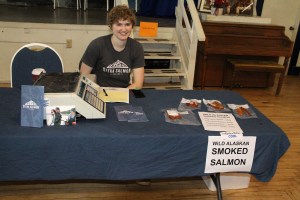
SitkaSalmonSharesBoothGenevieveCrowOne of our new vendors this week was Sitka Salmon Shares, a community-supported fishery program that sells a variety of fish caught in Sitka and other parts of Southeast Alaska to 2,500 subscribers in six Midwest states. Sitka Salmon Shares, which sells fish in 23 farmers markets in the Lower 48, brought out some of its new smoked salmon products to the Sitka Farmers Market.

We always welcome new vendors who want to sell produce they’ve grown, fish they’ve caught, and local cottage food products they’ve made. To learn more about how to be a vendor, contact Matthew Jackson at (907) 821-1412 or jackson.mw08@gmail.com.

AudreySaizAnnaSaizHomemadeFudgeThe two remaining markets this summer are from 10 a.m. to 1 p.m. on Saturdays, Sept. 3, and Sept. 10 at the ANB Founders Hall (235 Katlian St.). The Sitka Farmers Markets receive sponsorship funding from the SouthEast Alaska Regional Health Consortium (SEARHC). Don’t forget to vote for the Sitka Farmers Market in the American Farmland Trust’s eighth annual Farmers Market Celebration.

Also, mark your calendars for Saturday, Sept. 17, which is the tentative date of the annual Running of the Boots costumed fun-run fundraiser for the Sitka Local Foods Network. We’ll post more details later, once we get the event organized.

A slideshow of scenes from the fifth Sitka Farmers Market of the 2016 summer is below.

This slideshow requires JavaScript.

New harmful algal bloom warnings issued for shellfish harvested in Starrigavan Beach, other SE beaches

SEATORPSPWarningAug17

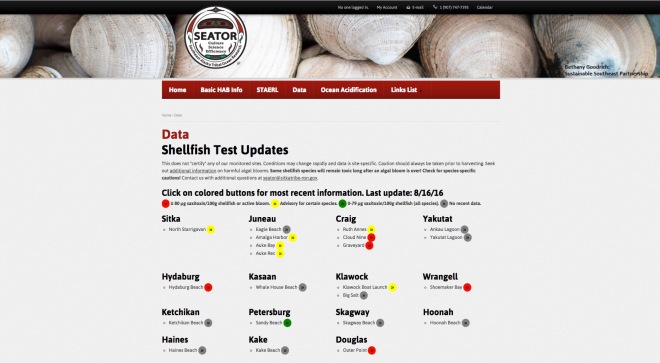
The SouthEast Alaska Tribal Ocean Research (SEATOR) project, SouthEast Alaska Tribal Toxins (SEATT) partnership and the Sitka Tribe of Alaska Environmental Research Lab (STAERL) on Wednesday, Aug. 17, issued a warning that people should not eat shellfish harvested at Starrigavan Beach in Sitka and Hydaburg Beach in Hydaburg.

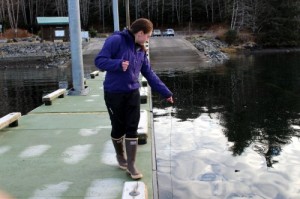
Esther Kennedy of the Sitka Tribe of Alaska Resource Protection Department samples water near the Starrigavan Recreation Area dock for marine biotoxins such as paralytic shellfish poisoning. (Photos by Emily Kwong, KCAW-Raven Radio)

Esther Kennedy of the Sitka Tribe of Alaska Resource Protection Department samples water near the Starrigavan Recreation Area dock for marine biotoxins such as paralytic shellfish poisoning in 2015. (Photo by Emily Kwong, KCAW-Raven Radio)

Samples harvested Aug. 17 at those beaches showed the presence of Alexandrium, a phytoplankton that produces saxitoxins that can cause paralytic shellfish poisoning (PSP). Mulluscan shellfish (bivalve shellfish such as clams, mussels, oysters, cockles, scallops, etc.) from these sites should not be harvested at this time.

In addition, mulluscan shellfish from Hydaburg Beach on Aug. 17 tested near or above the regulatory limit of 80μg/100g for saxitoxins and all species of mulluscan shellfish should not be harvested at this time. On Aug. 18, butter clams from Shoemaker Beach in Wrangell tested near or above the regulatory limit of 80μg/100g for saxitoxins and should not be harvested at this time.

The PSP advisory is for bivalve shellfish that have been recreationally or subsistence harvested. It does not apply to commercially harvested shellfish, which are tested before they enter the market. The advisory does not apply to other shellfish, such as crabs or shrimp, which do not carry PSP (unless you eat the crab butter or viscera).

There have been several harmful algal bloom alerts released by SEATOR this summer, but it’s the first one in about a month or so for Sitka. In addition to the saxitoxins that cause PSP, the lab in Sitka has been monitoring for other blooms that cause amnesic shellfish poisoning (ASP). PSP and ASP can cause severe health problems, including death in some cases.

According to SEATOR, “This does not ‘certify’ any of our monitored sites. Conditions may change rapidly and data is site-specific. Caution should always be taken prior to harvesting.”

The butter clam has one set of rings that go one direction only, around the same center point (Photo courtesy of Alaska Department of Environmental Conservation)

The butter clam has one set of rings that go one direction only, around the same center point (Photo courtesy of Alaska Department of Environmental Conservation)

SEATOR posts updates and information to its website at seator.org/data, which can help provide Southeast Alaska residents with reliable information so they can choose whether or not to harvest shellfish. In addition to testing water samples weekly from certain Southeast beaches, STAERL also tests samples of butter clams, littleneck clams, and blue mussels (which is STAERL’s indicator species, because of how quickly blue mussels absorb saxotoxins).

Since most beaches in Alaska aren’t tested for harmful algal blooms, SEATOR and the SEATT partnership were formed in October 2014 to train people to test beaches in Southeast Alaska. In April 2015, the Sitka Tribe of Alaska opened a regional lab on Katlian Street, so samples could be tested in Sitka without having to be sent to the Lower 48, which delayed results. By testing for harmful algal blooms, SEATOR and the SEATT partnership hope to be able to provide information so people can make informed choices whether or not to harvest or eat shellfish.

Harmful algal blooms, such as paralytic shellfish poisoning (PSP), typically have not been monitored in Southeast Alaska for subsistence and recreational harvesters of clams, mussels, oysters, cockles, and other bivalves (commercial harvests are tested). Even though many people in Southeast Alaska love to harvest shellfish, eating it comes with some risks. There have been several PSP outbreaks in recent years that sent people to the hospital, and in 2010 two deaths were attributed to PSP and other HABs, such as Alexandrium, Pseudo-nitzchia and Dinophysis.

To learn more about harmful algal blooms and how they can raise the risk for PSP and ASP (amnesic shellfish poisoning, which also can be fatal), go to SEATOR’s resources page. If you have shellfish you recently harvested and want to test it, click this link to learn what you need to do to have it tested by STAERL. Please contact STAERL at 747-7395 with any additional questions.

Fish to Schools program seeks donations of coho salmon from commercial fishermen

Spencer2

The Fish to Schools program needs help from Sitka’s commercial fishermen. The program needs a few hundred pounds of coho salmon to help make Fish to Schools meals for Sitka students during the upcoming 2016-17 school year. The program also is seeking photos of commercial fishermen at work, which can be used to teach the students more about how the fish got to their plates.

The coho salmon donation period is Wednesday. Aug. 17, through Tuesday, Aug. 23. To donate, commercial fishermen can sign up and indicate how many pounds they want to donate when they offload at Seafood Producers Cooperative or Sitka Sound Seafoods during the donation period. The program can only accept commercially caught fish (no sport or subsistence fish). The hope is to get enough coho donated that locally caught salmon can be offered to students at least once a week. Sign-up sheets will be posted at the scale shacks and in the main offices. Coho salmon is preferred.

Excited red haired kidThe Sitka Fish To Schools project (click here to see short video) got its start as a community wellness project at the 2010 Sitka Health Summit, and now is managed by the Sitka Conservation Society. It started by providing a monthly fish dish as part of the school lunch as Blatchley Middle School, and since then has grown to feature regular fish dishes as part of the lunch programs at Baranof Elementary School, Keet Gooshi Heen Elementary SchoolBlatchley Middle School, Sitka High SchoolPacific High School (where the alternative high school students cook the meals themselves), the SEER School, and Mount Edgecumbe High School.

In addition to serving locally caught fish meals as part of the school lunch program, the Fish To Schools program also brings local fishermen, fisheries biologists and chefs to the classroom to teach the kids about the importance of locally caught fish in Sitka. The program received an innovation award from the Alaska Farm To Schools program during a community celebration dinner in May 2012, and now serves as a model for other school districts from coastal fishing communities. In May 2014, the Fish to Schools program released a guidebook so other school districts in Alaska could create similar programs.

For more information, contact Sophie Nethercut of the Sitka Conservation Society at sophie@sitkawild.org or 747-7509.