Check out the June 2019 edition of the Sitka Local Foods Network newsletter

The Sitka Local Foods Network just sent out the June 2019 edition of its monthly newsletter. Feel free to click this link to get a copy.

This month’s newsletter includes short stories about vendor registration being open for the 2019 Sitka Farmers Markets, the Sitka Kitch hosting a class on starting a cottage foods business, and an invitation to join the Sitka Local Foods Network board of directorsEach story has links to our website for more information.

You can sign up for future editions of our newsletter by clicking on the newsletter image in the right column of our website and filling in the information. If you received a copy but didn’t want one, there is a link at the bottom of the newsletter so you can unsubscribe. Our intention is to get the word out about upcoming events and not to spam people. We will protect your privacy by not sharing our email list with others. Don’t forget to like us on Facebooklike our Sitka Farmers Market page on Facebook and follow us on Twitter (@SitkaLocalFoods).

The Garden Show returns to KCAW-Raven Radio spring programming lineup for 28th year

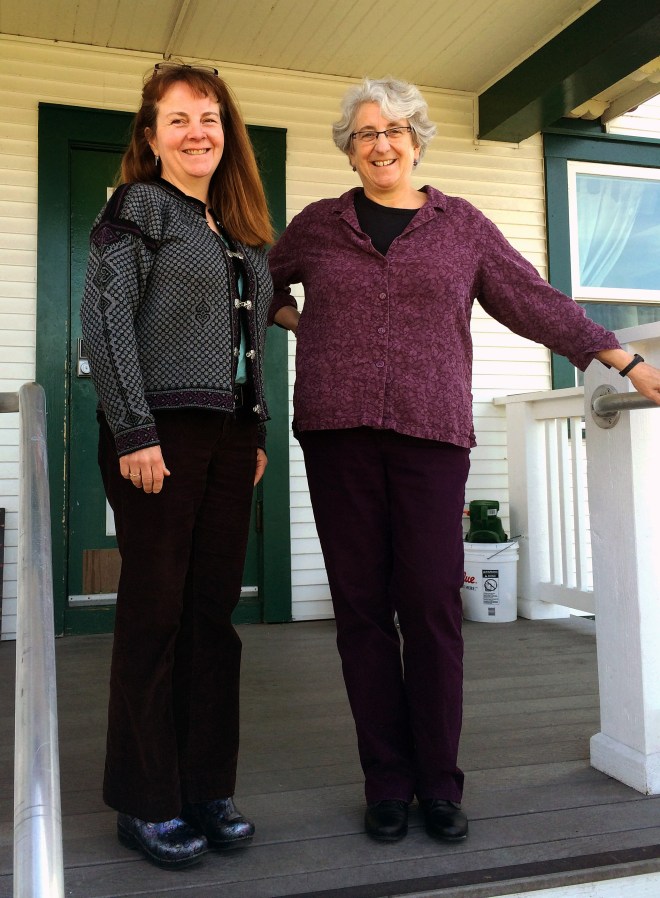
For 28 years, Mollie Kabler and Kitty LaBounty have taken to the KCAW-Raven Radio airwaves during the spring months to broadcast The Garden Show.

This year there’s a change to the show, as the show will hold three scheduled sessions from 10:30-11 a.m. on Saturdays, May 11, May 25, and June 15, when people can call in with gardening questions. In past years the show aired from April through June, or longer into the summer if work schedules permit. Kitty has a regular music show (Hometown Brew) from 2-4 p.m. on Thursdays, and sometimes the half-hour Garden Shows may take place during her program.

Garden Show topics include timely tasks for gardening in Southeast Alaska, taking on-air questions, and themes around basic and more advanced gardening of vegetables, flowers, fruit, trees, etc. The station’s website recently posted a news item about the upcoming schedule that also had links to previous shows.

Mollie and Kitty each have been gardening in Sitka for more than 28 years, and they also have significant gardening experience from their childhoods in Wisconsin (Mollie) and Oregon (Kitty). They both are certified as Master Gardeners, after completing the class series offered by the University of Alaska Fairbanks Cooperative Extension Service.

To call the show with gardening questions, call 747-5877 and ask to be connected to the show.

Celebrate local farmers and gardeners on Alaska Agriculture Day on Tuesday, May 7

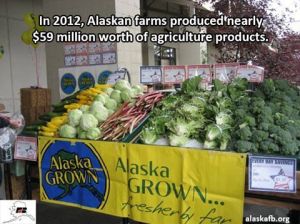
Alaskans will celebrate Alaska Agriculture Day on Tuesday, May 7. On this day, Alaskans are encouraged to support local agriculture by seeking out and purchasing products produced in Alaska and educating youth about the vital role that agriculture plays in our economy. This is Alaska’s version of National Ag Day (which took place on March 14 this year, when many parts of Alaska were still thawing out). The 2019 Alaska Ag Day theme is Farm Animal Fun. Don’t forget Monday, May 6, is the third annual Drive Your Tractor To Work Day in Alaska.

Here are a few ideas from the Division of Agriculture on how to celebrate Alaska Agriculture Day:

In Sitka, you can celebrate Alaska Agriculture Day by starting a food garden (even a couple of containers on your deck can provide you with potatoes, carrots or greens). Teachers are encouraged to offer a lesson plan or two about the importance of agriculture in Alaska and in Sitka. Here’s a link to an article about how Sitka was Alaska’s original garden city back in the late 19th and early 20th Centuries. Also, the Sitka History Minute feature on KCAW-Raven Radio has had several episodes about agriculture in Sitka (click here to listen to a feature about the potato in Sitka, click here to listen to a feature about the Sitka Agricultural Station, and click here to listen to a feature about the cows of Iris Meadows).

During the growing season, please support the Sitka farmers and production gardeners listed in the 2016-17 Alaska Grown Source Book (chief contact in parentheses, the Buy Alaska Grown website is still using this information even though it is somewhat dated) — Anam Cara Family Garden (Lisa Sadleir-Hart), Blatchley Community Gardens (David Nuetzel, this garden closed in 2016 and there is a group seeking a new location for what will be called Sitka Community Gardens, but its 2019 status is unknown), Down To Earth U-Pick Garden (Lori Adams, switched to a CSA in 2017 and no longer is a public u-pick garden), Finn Island Farm (Keith Nyitray, this farm closed), Sprucecot Gardens (Judy Johnstone, this may be closed), and St. Peter’s Fellowship Farm (Laura Schmidt/Sitka Local Foods Network). There also are a few Sitka farms and production gardens not listed in the 2016-17 Alaska Grown Source Book, such as Beyond Leafy LLC (Jimmy and Leslie Kranz, this hydroponic basil growing operation may be closed in 2019), Middle Island Gardens (Andrea Fraga/Kaleb Aldred), and Welsh Family Forget-Me-Not Garden (Florence Welsh).

Many of these farms and gardens will be vendors during the Sitka Farmers Markets this summer. The Sitka Farmers Markets take place from 10 a.m. to 1 p.m. on seven Saturdays — July 6, July 27, Aug. 10, Aug. 17, Aug. 31, Sept. 7, and Sept 21 — at the Alaska Native Brotherhood Founders Hall (235 Katlian St.). We are in the process of scheduling a Sitka Farmers Market vendors meeting or two where rules and responsibilities will be discussed.

Check out the May 2019 edition of the Sitka Local Foods Network newsletter

The Sitka Local Foods Network just sent out the May 2019 edition of its monthly newsletter. Feel free to click this link to get a copy.

This month’s newsletter includes short stories about registration being open for the 2019 Sitka Farmers Market, the winners being announced in the second annual Sitka Food Business Innovation Contest, a new Filipino cooking class from the Sitka Kitch, and an invitation to join our board of directors. Each story has links to our website for more information.

You can sign up for future editions of our newsletter by clicking on the newsletter image in the right column of our website and filling in the information. If you received a copy but didn’t want one, there is a link at the bottom of the newsletter so you can unsubscribe. Our intention is to get the word out about upcoming events and not to spam people. We will protect your privacy by not sharing our email list with others. Don’t forget to like us on Facebooklike our Sitka Farmers Market page on Facebook and follow us on Twitter (@SitkaLocalFoods).

UAF Cooperative Extension Service offers Certified Food Protection Manager class by videoconference May 22 in Sitka

The University of Alaska Fairbanks Cooperative Extension Service will teach a certified food protection manager workshop on Wednesday, May 22. This is an all-day statewide class that will be offered by videoconferencing to Fairbanks, Palmer, Juneau, and Sitka, plus other locations that may arrange for the class.

A certified food protection manager (CFPM) is responsible for monitoring and managing all food establishment operations to ensure that the facility is operating in compliance with food establishment regulations.

A CFPM is knowledgeable about food safety practices and uses this knowledge to provide consumers with safe food, protect public health and prevent food-borne illnesses. Alaska regulations require food establishments to have at least one CFPM on staff.

This course takes place from 8 a.m. to 5:30 p.m. (with a half-hour lunch), and participants will take a computer-based exam at the end of the class. The reason the deadline is two weeks before the class is to guarantee course materials reach all the students in time for the class. The cost is $200, and the course will be taught by Julie Cascio of Palmer. Students can register here, and the registration deadline is May 8.

The Sitka videoconference for the class will take place in a room TBA at the University of Alaska Southeast Sitka Campus. To learn more, contact Jasmine Shaw at the Sitka District Office of the UAF Cooperative Extension Service at 747-9440, or contact Julie Cascio at (907) 745-3677 (Palmer number) or jmcascio@alaska.edu. Note, this class is taught in English but textbooks are available in Korean, Chinese and Spanish, just contact Julie at least three weeks before the class.

Also, the ServSafe book ($70) and certification exam ($75) now are available online, if people want to order the book and study independently without taking the class. Just go to this website and purchase the book and exam items.


Sitka Farmers Market vendor registration information for 2019 now available

Registration for the 2019 Sitka Farmers Markets is open, and vendors looking to sell local food, arts and crafts, and other items at the markets can find all the vendor forms, information sheets, rules and regulations for this year by going to the Documents page on this site (scroll down to vendor forms), or look at the bottom of this post for the documents. The forms include information about how to register your table for this year’s markets.

The 2019 Sitka Farmers Market manager is Nina Vizcarrondo, who managed the market the past two years and before that helped manage a New York City farmers market. She can be reached at sitkafarmersmarket@gmail.com or (907) 738-9301 during the market season. Sitka Local Foods Network board president Charles Bingham is assisting with the market again this year.

The dates for our 2019 Sitka Farmers Markets will be from 10 a.m. to 1 p.m. on seven Saturdays — July 6, July 27, Aug. 10, Aug. 17, Aug. 31, Sept. 7, and Sept. 21 — at the Alaska Native Brotherhood Founders Hall at 235 Katlian Street. We hope to schedule a vendor information meeting or two before the markets, which might be attended by Bruce Gazaway of the Food Safety Program from the Alaska Department of Environmental Conservation. We also hope to schedule another cottage foods basics class with Sarah Lewis of the UAF Cooperative Extension Service’s Juneau office, which in past years has been done through videoconference at the University of Alaska Southeast Sitka Campus.

This year we don’t have many changes from our last 2-3 years, when the Sitka Local Foods Network rolled back its Sitka Farmers Market table prices to 2015 levels and simplified them. We hope this helps us reclaim and keep some of the vendors we lost in previous years. The table fees will be $40 for a full table (slightly longer than eight feet) or $20 for a half table per market. We also have a deal where vendors who reserve space for and participate in all seven markets can receive a refund of one market fee after the season (so get seven markets for the price of six). There no longer is a price differential between indoor and outdoor booths (outdoor booths are charged the full table rate). We want to bring back some of the excitement to the markets, where it returns to being a community gathering place, and that means we have to make the market attractive to vendors.

If you are an Alaska food vendor and don’t have the time to host a table at the market, we might be interested in buying your products at wholesale rates or selling them on consignment at our Sitka Local Foods Network farm stand. Most of the produce we sell at the SLFN farm stand is grown at St. Peter’s Fellowship Farm communal garden and its satellite gardens, but we do sell some donated local produce. We also offer a matching program for people using WIC and SNAP benefits at our SLFN farm stand.

We want to show Sitkans the variety of local food products available in our community and state. In recent years we expanded our Alaska Grown products at the Sitka Local Foods Network farm stand, selling Chugach Chocolates from Girdwood, barley products from Alaska Flour Company of Delta Junction, fermented foods from Evie’s Brinery of Anchorage, and kelp pickles and salsa from Barnacle Foods of Juneau. This year we plan to try some new products in addition to keeping the rest of these brands in stock.
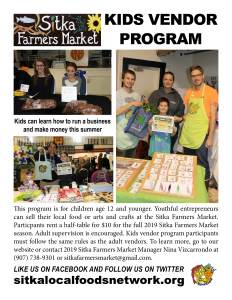
We are hosting a third year of the children’s vendor program, where kids get to become entrepreneurs and sell their own locally made food or arts and crafts. This program is modeled after the city’s program where children younger than age 12 buy a season permit to sell items near Harrigan Centennial Hall on cruise ship days. In our children’s vendor program, the fee is $10 for the full market season.

Nina is available to answer questions and to make suggestions that will help new and returning vendors adjust to any food regulation changes from the Alaska Department of Environmental Conservation, updates to the Alaska Quest electronic benefits program and WIC (Women, Infants, Children) supplemental food program, etc.

We have updated the 2019 vendor rules and responsibilities, but the only major changes are we won’t have access to the Alaska Native Sisterhood Kitchen (if you want to use it to cook something for the market, you will have to contact ANS to rent the kitchen) and vendors will not be able to store equipment at ANB Founders Hall between markets. The last page of the rules and responsibilities packet has the vendor registration form for adult and child vendors.

In addition, we are trying to increase our labor pool of volunteers to help out with the market. We need people to help us set up, take down, sell produce at the Sitka Local Foods Network farm stand, and more. If you are interested in volunteering, send us a note with your contact info. We usually have musicians play at the market, so we are gathering a list of music groups that want to perform.

For more information, contact Sitka Farmers Market manager Nina Vizcarrondo at (907) 738-9301 or sitkafarmersmarket@gmail.com, or you can email the Sitka Local Foods Network Board of Directors at sitkalocalfoodsnetwork@gmail.com. Amanda Anjum is the SLFN board liaison to the market (and board treasurer) and Charles Bingham is the SLFN board president, and both will assist with the market.

Sitka Farmers Market vendor forms

• 2019 Vendor Rules and Responsibilities (with Registration Form, updated April 26, 2019)

• Sitka Farmers Market vendor agreement to accept Alaska Quest SNAP EBT tokens (2017)

• Link to 2015 Farmers Market Resource Fact Sheets from Alaska Division of Agriculture

• 2015 City and Borough of Sitka Sales Tax Form for Sitka Farmers Market Vendors

• Cottage Food Fact Sheet — “Understanding Alaska’s Cottage Food Exemptions”

• Cottage Food Exemptions

• Washington Farmers Market Vendor Marketing Guide (March 2014)

• Guide to Operating a Successful Home-Based Food Business (March 2014 document from UAF Cooperative Extension Service and Alaska Department of Environmental Conservation includes Alaska food safety information and regulations for farmers markets and other food sales)

Peter Bradley to give talk about commercial herring harvest history around Sitka Sound

Come to the Sitka Public Library from 6-7:30 p.m. on Monday night, April 8, for a presentation and conversation by Peter Bradley about the history of commercial herring fishing in Southeast Alaska and its impacts on the traditional harvest of herring.

Using excerpts from Alaska Department of Fish & Game research reports, Alaska Board of Fisheries meetings, Daily Sitka Sentinel articles, and various other sources, Peter will share some notes and observations from my ongoing research into the history of commercial herring fishing in Southeast Alaska and Sitka Sound. Although Peter will highlight some of the early history of herring fishing from 1878-1970, he will mostly focus on the 1970s, 80s, and 90s in an attempt to demonstrate some of the ways that the fishery has evolved over the years into what it is today.

Throughout, he will offer an outline to the long history of opposition to herring fishing in Southeast Alaska and will share some ideas about why there is such a discrepancy between widespread local observational knowledge and ADF&G data.

After the presentation Peter will open up for questions and conversation, recognizing that what he has been looking at is only a small part of the story.

Check out the April 2019 edition of the Sitka Local Foods Network newsletter

The Sitka Local Foods Network just sent out the April 2019 edition of its monthly newsletter. Feel free to click this link to get a copy.

This month’s newsletter includes short stories about today being the deadline to apply for Permanent Fund Dividends (and a reminder about Pick.Click.Give. donations), a reminder about the April 5 deadline for the Sitka Local Foods Business Innovation Contest, info about the 2019 Sitka Local Foods Network sponsors, and a request for new board members. Each story has links to our website for more information.

You can sign up for future editions of our newsletter by clicking on the newsletter image in the right column of our website and filling in the information. If you received a copy but didn’t want one, there is a link at the bottom of the newsletter so you can unsubscribe. Our intention is to get the word out about upcoming events and not to spam people. We will protect your privacy by not sharing our email list with others. Don’t forget to like us on Facebooklike our Sitka Farmers Market page on Facebook and follow us on Twitter (@SitkaLocalFoods).

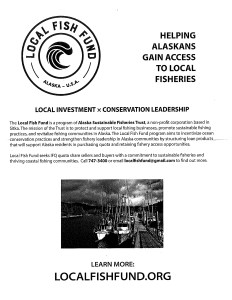
Local Fish Fund to help Alaska’s next generation of commercial fishers find financing

The Local Fish Fund is a program of Alaska Sustainable Fisheries Trust, a non-profit corporation based in Sitka, Alaska. The mission of the Trust is to protect and support local fishing businesses, promote sustainable fishing practices, and revitalize fishing communities in Alaska. The Local Fish Fund program aims to incentivize ocean conservation practices and strengthen fishery leadership in Alaska communities by structuring loan products that will support Alaska residents in purchasing quota and retaining fishery access opportunities. (Photo by Laurie Mistretta)

The Local Fish Fund is an innovative fisheries loan program that will provide a new financing tool for the next generation of commercial fishers in Alaska’s fishing communities.

The Local Fish Fund is a collaborative effort spearheaded by the Alaska Sustainable Fisheries Trust, a Sitka-based nonprofit organization that protects and promotes fishing and fisheries. The loan fund aims to support Alaska’s fishing communities by reducing specific barriers to entry into commercial fisheries and engaging next-generation fishermen in marine stewardship and policy leadership.  Alaska Sustainable Fisheries Trust was supported in setting up and capitalizing the fund by The Nature Conservancy, Craft3, Rasmuson Foundation, and Catch Together.

“The cost and risk involved in accessing Alaska’s quota share fisheries are comparable to purchasing a hotel as a first step in home ownership,” says Linda Behnken, commercial fisherman and founding member of the Alaska Sustainable Fisheries Trust. “As a result, the number of young rural residents entering the fisheries has dropped over the past 15 years. Local Fish Fund aims to change that trend by lowering barriers to entry while engaging the next generation of community-based fishermen in resource conservation and management.”

The Local Fish Fund loan structure has been developed in close consultation with commercial fishermen in Alaska to increase local ownership of halibut and sablefish quota. Traditional commercial fish loans require fixed payments, like a home loan. This presents substantial risk for entry-level commercial fishing businesses because the allowable catch and fish price can vary dramatically from year to year. In contrast, the Local Fish Fund loans use a “revenue participation” approach in which loan repayment is based on fish landings rather than a fixed loan repayment structure. The Local Fish Fund offers loans with competitive interest rates and reduced down payment options, and allows fishermen to build sufficient equity to eventually access conventional loans.

In addition to providing easier access to quota purchase, this loan program has been developed to increase marine stewardship and leadership capacity in the field of sustainable fisheries management. Loan recipients will be incentivized to participate in a flexible set of conservation programs that contribute to sustainable fisheries management by collecting better scientific data; engaging in policy and management decision-making; and working on conservation education and outreach.

Alaska Longline Fishermen’s Association executive director and Alaska Sustainable Fisheries Trust founding member Linda Behnken’s longliner, the Woodstock (Photo Copyright Josh Roper)

“Alaska has some of the most sustainably managed fisheries in the world,” says Christine Woll, the Southeast Alaska program director for The Nature Conservancy. “This is due in large part to Alaskans having an active voice in how our fisheries are managed. Encouraging local participation in our commercial fisheries helps foster a long-standing Alaska tradition of community-based stewardship of our natural resources.”

The launch of this loan fund was made possible by a unique collaboration that brought together varied expertise across fisheries, conservation, and finance. In addition to the  Alaska Sustainable Fisheries Trust, the launch of the fund was supported by the Alaska Longline Fishermen’s Association, which has a long history of leadership in Alaskan fisheries management; The Nature Conservancy, which has worked with fishing communities to develop economic incentives for fisheries conservation in communities across the globe; and Craft3, a community development financial institution, which provides loans to benefit Pacific Northwest communities, and is originating and servicing loans on Local Fish Fund’s behalf. The Rasmuson Foundation and Catch Together have capitalized the loan fund, which will seek to make a series of loans over the next two to three years.

“We know how important quota ownership is to fishing communities in Southeast Alaska, and we are pleased to be a financing partner to the Local Fish Fund and its program to keep quota in the hands of local fishermen” says Kelly Wachowicz, Managing Partner of Catch Together.

“Joining Alaska Sustainable Fisheries Trust and The Nature Conservancy to launch the Local Fish Fund makes perfect sense to Craft3. This effort expands on our decades-long commitment to sustainable fisheries, conservation, and community development,” stated Craft3 President & CEO Adam Zimmerman. “The Local Fish Fund’s flexible credit and conservation incentives will preserve local fishery ownership, build equity in communities and families, and sustain fisheries health. This can be a model for how private, nonprofit, and philanthropic partners can work together to invest in current and next generation fishermen committed to sustainability.”

“The Local Fish Fund relies on creative thinking – and strong local and national partners – to open up economic opportunities in one of Alaska’s most valued industries, fishing,” said Chris Perez, Rasmuson Foundation senior program officer.

Behnken also thanked the National Fish and Wildlife Foundation and The Oak Foundation, which provided long-time support for the Alaska Sustainable Fisheries Trust and helped out with the development of the Local Fish Fund.

• Local Fish Fund two page summary (opens as PDF)

UAF Cooperative Extension Service offers Certified Food Protection Manager class by videoconference April 2 in Sitka

The University of Alaska Fairbanks Cooperative Extension Service will teach a certified food protection manager workshop on Tuesday, April 2. This is an all-day statewide class that will be offered by videoconferencing to Fairbanks, Unalaska/Dutch Harbor, Skagway, Valdez, Palmer, Juneau, and Sitka.

A certified food protection manager (CFPM) is responsible for monitoring and managing all food establishment operations to ensure that the facility is operating in compliance with food establishment regulations.

A CFPM is knowledgeable about food safety practices and uses this knowledge to provide consumers with safe food, protect public health and prevent food-borne illnesses. Alaska regulations require food establishments to have at least one CFPM on staff.

This course takes place from 8 a.m. to 5:30 p.m. (with a half-hour lunch), and participants will take a computer-based exam at the end of the class. The reason the deadline is two weeks before the class is to guarantee course materials reach all the students in time for the class. The cost is $200, and the course will be taught by Julie Cascio of Palmer. Students can register here, and the registration deadline is March 20.

The Sitka videoconference for the class will take place in a room TBA at the University of Alaska Southeast Sitka Campus. To learn more, contact Jasmine Shaw at the Sitka District Office of the UAF Cooperative Extension Service at 747-9440, or contact Julie Cascio at (907) 745-3677 (Palmer number) or jmcascio@alaska.edu. Note, this class is taught in English but textbooks are available in Korean, Chinese and Spanish, just contact Julie at least three weeks before the class.

Also, the ServSafe book ($70) and certification exam ($75) now are available online, if people want to order the book and study independently without taking the class. Just go to this website and purchase the book and exam items.