Sitka Tribe of Alaska and partners celebrate fifth annual Sitka Herring Camp

A Mount Edgecumbe High School student examines herring gills under a microscope. (Photo courtesy of Bethany Goodrich)

Students in Sitka schools have been diving deep into the study of herring during Sitka Tribe of Alaska’s fifth annual Herring Camp. The Herring Camp programming was centered on the cultural and ecological importance of Pacific herring and timed to coincide with the arrival of herring in Sitka Sound. Sitka Tribe of Alaska staff spent a week at both Mount Edgecumbe High School and Sitka High School studying herring anatomy and collecting oceanographic data. Sitka Tribe of Alaska staff also examined marine food webs with Blatchley Middle School and will present a “Herring in the Hallways” microscopy event at Keet Gooshi Heen Elementary School next week.

A Sitka High School student collects plankton aboard a Sitka Herring Camp research cruise. (Photo courtesy of Tara Racine)

Students and teachers have responded positively to the herring programming. Chohla Moll, MEHS science teacher said, “The STA Herring Camp curriculum is an amazing integration of science and traditional ecological knowledge. It illustrates to students the strong connection between the knowledge of their elders and the scientific information they are learning in school.”

The purpose of Sitka Tribe of Alaska’s Herring Camp is to invest in youth skills, providing students with hands-on science experience and exposing them to Alaska-based career opportunities. Kyle Rosendale, Sitka Tribe of Alaska’s Fisheries Biologist said, “We hope students will gain a greater understanding and appreciation of their local ecosystems and be motivated to become the next generation of stewards for important cultural and ecological resources like herring.”

Students who participated in the Herring Camp learned scientific techniques, gained exposure to traditional ecological knowledge, and connected with Sitka professionals working on natural resource management. The week-long high school camp sessions included dissection labs, discussions on cultural connections and herring ecology, oceanographic and morphometric data analysis, an introduction to fisheries management techniques, career path discussions, and a research cruise during which students applied a variety of field observation and data collection skills.

Herring provide a rich topic of study for local students. Sitka Sound is the last remaining population of herring in the state that consistently provides a significant subsistence herring egg harvest. Sitka herring eggs are shared widely throughout Alaska. Herring are a forage fish and a critical part of the marine food web, providing food for other important species such as lingcod, coho salmon, king salmon, halibut, sea lions and humpback whales. Coastal archeologist Iain McKechnie called herring the “central node of the marine ecosystem”, adding “they aren’t the base, they aren’t the top, but they are the thing through which everything else flows.

Herring Camp (aka, Yaa Khusgé Yaaw Woogoo, or Knowledge of Herring Camp) was started in 2014 and was originally held at Sitka National Historical Park. Now in its fifth year, the Herring Camp has grown to reach classrooms in four local schools and is made possible through collaboration with MEHS, the Sitka School District, the Alaska Department of Fish & Game, the US Forest Service, the National Park Service, the University of Alaska Southeast Sitka Campus, the Sitka Conservation Society, the Sitka Sound Science Center, and Allen Marine. Rosendale explains, “Collaboration is absolutely critical to the success of Herring Camp; we couldn’t do it without our collaborators, all of whom have made important contributions to herring outreach and education in Sitka.”

Sitka Tribe of Alaska’s work with Blatchley students was also a part of another community collaboration on herring and food webs. In addition to working with Sitka Tribe of Alaska staff, BMS science teacher Stacy Golden also planned lessons with Charlie Skulkta, Jr., St. Lazaria National Wildlife Refuge, the Alaska Raptor Center, and a boat trip to St. Lazaria.

Financial support for this initiative was generously provided the Bureau of Indian Affairs and the Alaska Conservation Foundation.

This year’s camp is held in loving memory of Michelle Ridgeway of Oceanus Alaska. Michelle was a passionate scientist and youth educator. She helped get the Herring Camp off the ground in 2014 and was an integral part of the camp every year until her passing in January of 2018. Her creativity and enthusiasm are deeply missed.

As you build your 2018 garden this spring, don’t forget to Plant A Row For The Hungry

(EDITOR’S NOTE: The following article first appeared on this site in April 2010. It is repeated because much of the information remains current and newsworthy.)

As you start to plan your garden for this spring and summer, don’t forget to Plant A Row For The Hungry. The Plant A Row For The Hungry program (also known as Plant A Row or PAR) is a national campaign by the Garden Writers Association of America that has its roots in Alaska.

In the cold winter of 1994, Anchorage Daily News garden columnist and former Garden Writers Association of America President Jeff Lowenfels was returning to his hotel after a Washington, D.C., event when he was approached by a homeless person who asked for some money to buy food. Lowenfels said Washington, D.C., had signs saying, “Don’t give money to panhandlers,” so he shook his head and kept on walking. But the man’s reply, “I really am homeless and I really am hungry. You can come with me and watch me eat,” stayed with Lowenfels for the rest of his trip.

Jeff Lowenfels

Jeff Lowenfels

The encounter continued to bother Lowenfels, even as he was flying back to Anchorage. During the flight, Lowenfels came up with an idea when he started writing his weekly garden column (the longest continuously running garden column in the country, with no missed weeks since it started on Nov. 13, 1976). He asked his readers to plant one extra row in their gardens to grow food to donate to Bean’s Café, an Anchorage soup kitchen. The idea took off.

When Anchorage hosted the Garden Writers Association of America convention in 1995, Lowenfels took the GWAA members to Bean’s Café to learn about the Plant A Row For Bean’s Café program. The Garden Writers Association of America liked the idea, and it became the national Plant A Row For The Hungry campaign (also known as Plant A Row or PAR). In 2002, the Garden Writers Association Foundation was created as a national 501(c)(3) nonprofit to manage the Plant A Row For The Hungry program.

“I am not surprised by the growth of PAR,” Lowenfels wrote in an e-mail to the Sitka Local Foods Network. “It is now in all 50 states and across Canada and there are thousands of variations of the original program — from prison gardens for the hungry to botanical gardens donating their produce from public display gardens. This is because gardeners always share information and extra food, so the idea was a natural.”

It took five years for the program to reach its first million pounds of donated food, but the second million only took two years and the next eight years saw a million pounds of donated food (or more) each year. Since 1995, more than 14 million pounds of food have been donated. Not only that, the program is getting ready to expand overseas to Australia, England and other countries with avid gardeners.

“We have supplied something in the vicinity of enough food for 50 million meals,” Lowenfels wrote in his e-mail. “Gardeners can solve this hunger problem without the government. And we don’t need a tea party to do it! Or chemicals, I might add, as author of a book on organic gardening!” Lowenfels is the author of Teaming With Microbes, written with Wayne Lewis. He released a second book, Teaming With Nutrients, as a follow-up to his first book, and in 2017 released a third book, Teaming With Fungi, as a second follow-up book.

According to the U.S. Department of Agriculture, one out of every eight U.S. households experiences hunger or the risk of hunger. Many people skip meals or eat too little, sometimes going an entire day or more without food. About 33 million Americans, including 13 million children, have substandard diets or must resort to seeking emergency food because they can’t always afford to buy the food they need. In recent years, the demand for hunger assistance has increased 70 percent, and research shows that hundreds of children and adults are turned away from food banks each year because of lack of resources.

According to the 2014 Sitka Community Food Assessment Indicators Report, about one in six people in Sitka is food insecure. In 2013, there were 1,410 Sitkans (out of a population of about 9,000) and 766 families receiving food assistance (SNAP, aka food stamps). There also were 229 individuals who received food pantry assistance from the Salvation Army and 7,243 meals served through its lunch soup kitchen in 2013, and that number has grown substantially since then.

While many people credit Lowenfels for creating the Plant A Row For The Hungry program, Lowenfels says the real heroes are the gardeners growing the extra food and donating it to local soup kitchens, senior programs, schools, homeless shelters and neighbors. You can hear him pass along the credit to all gardeners at the end of this 2009 interview with an Oklahoma television station (video also embedded below).

“One row. That’s all it takes. No rules other than the food goes to the hungry. You pick the drop-off spot or just give it to a needy friend or neighbor. Nothing slips between the lip and the cup, I say,” Lowenfels wrote in his e-mail.

For people wanting to Plant A Row For The Hungry in Sitka, there are several places that would love to help distribute some fresh locally grown veggies or berries to those who are less fortunate, such as the Salvation ArmySitkans Against Family Violence (SAFV), local churches, Sitka Tribe of Alaska and other organizations. The food the Sitka Local Foods Network grows at St. Peter’s Fellowship Farm communal garden goes to the Sitka Farmers Market, school lunches and other programs.

People who participate in the Alaska Food Stamp program can use their Alaska Quest Cards to purchase produce and fish at the Sitka Farmers Market and other farmers markets around the state. People who participate in the  WIC (Women, Infants, Children) supplemental food program (operated in Southeast Alaska by the SouthEast Alaska Regional Health Consortium or SEARHC) also can use special farmers market vouchers to buy fresh vegetables at the Sitka Farmers Market and other farmers markets in Alaska (this is part of the national WIC Farmers Market Nutrition Program). The Sitka Local Foods Network matches up to $20 for produce purchased using WIC or SNAP benefits at the Sitka Farmers Market.

The Sitka Local Foods Network also takes donations of local produce to sell at the Sitka Farmers Markets, and all proceeds are used to help pay for SLFN projects geared toward helping more people in Sitka grow and harvest local food. For more information, contact the Sitka Local Foods Network board members at sitkalocalfoodsnetwork@gmail.com.

• Plant A Row informational brochure (2017)

Sitka Kitch hosts two classes in partnership with UAF Cooperative Extension Service

The Sitka Kitch is hosting two food and home skills classes this month in partnership with the Juneau office of the University of Alaska Fairbanks Cooperative Extension Service. The first class is Naturally Clean Home Products, and the second class is Starting a Cottage Foods Business. Both classes will be taught by videoconference in Sitka with Sarah Lewis teaching in Juneau.

  • Naturally Clean Home Products — 1-3 p.m., Saturday, April 7, Videoconference with Sarah Lewis of Juneau office of UAF Cooperative Extension Service. This class will teach you how to reduce your use of harsh, chemical cleaners but still be able to do deep cleaning. Students need to bring five 32-ounce spray bottles and a 20-ounce jar with lid (or six quart canning jars to store products to take home and then transfer to spray bottles). Class fee is $20, no supply fee.
  • Starting A Cottage Foods Business — 1-3 p.m., Saturday, April 14, Videoconference with Sarah Lewis of Juneau office of UAF Cooperative Extension Service. Learn about state laws regarding home food businesses, and get ideas for businesses you might take to the Sitka Farmers Market or local trade shows. Tours of the Sitka Kitch and rental information will be available. Class fee is $10, no supply fee. The Sitka Local Foods Network offers class participants half-off the registration fee for their first Sitka Farmers Market in 2018.

You can register online and pre-pay using credit/debit cards or PayPal at https://sitkakitch.eventsmart.com (click on the class title to register). To pre-pay by cash or check, contact Chandler, Claire, or Clarice at 747-7509 to arrange payment. For more information about the class series, contact Jasmine at 747-9440.

Check out the April 2018 edition of the Sitka Local Foods Network newsletter

The Sitka Local Foods Network just sent out the April 2018 edition of its monthly newsletter. Feel free to click this link to get a copy.

This month’s newsletter has short articles that include the announcement of spring gardening classes, a deadline reminder about the Pick.Click.Give. donation program, an update on the deadline for our new Sitka Food Business Innovation Contest, information about our sponsorship program, and an invitation to join our board of directors. Each story has links to our website for more information.

You can sign up for future editions of our newsletter by clicking on the newsletter image in the right column of our website and filling in the information. If you received a copy but didn’t want one, there is a link at the bottom of the newsletter so you can unsubscribe. Our intention is to get the word out about upcoming events and not to spam people. We will protect your privacy by not sharing our email list with others. Don’t forget to like us on Facebooklike our new Sitka Farmers Market page on Facebook and follow us on Twitter (@SitkaLocalFoods).

Sitka Kitch offers Herring Appreciation With Renée Trafton class April 3 as part of Seasonal Cooking series

Renée Jakaitis Trafton, the chef-owner of the Beak Restaurant, will teach the fifth class in the Sitka Kitch‘s new class series, Seasonal Cooking, from 6-8:30 p.m. on Tuesday, April 3, at the Sitka Kitch community rental commercial kitchen. The class is called Herring Appreciation With Renée Trafton.

Renée will teach students how to make a herring egg salad and sushi. Due to the vagaries of the seasons in Sitka, this class will be moved to April 10 if the herring are running late (students will be notified and refunds will be available for students who can’t make the later date).

The next classes in the Seasonal Cooking class series are:

  • National Nutrition Month Healthy Cooking Demonstration — 5:30-7 p.m., Tuesday, March 27, Free event with SEARHC health educator Heleena Van Veen, health educator Holly Marban, registered dietitian Jessica Holland and diabetes nurse Kelly Lakin. This year’s National Nutrition Month theme is “Go Further With Food,” so students will learn creative ways to use leftovers and how to store food so it doesn’t spoil.
  • Herring Appreciation With Renee Trafton (Beak Restaurant) — 6-8:30 p.m., Tuesday, April 3 (alternate date is April 10 if herring running late), Celebrate the return of herring to Sitka by making herring egg salad and sushi.
  • Naturally Clean Home Products — 1-3 p.m., Saturday, April 7, Videoconference with Sarah Lewis of Juneau office of UAF Cooperative Extension Service. This class will teach you how to reduce your use of harsh, chemical cleaners but still be able to do deep cleaning. Students need to bring five 32-ounce spray bottles and a 20-ounce jar with lid (or six quart canning jars to store products to take home and then transfer to spray bottles). Class fee is $20, no supply fee.
  • Starting A Cottage Foods Business — 1-3 p.m., Saturday, April 14, Videoconference with Sarah Lewis of Juneau office of UAF Cooperative Extension Service. Learn about state laws regarding home food businesses, and get ideas for businesses you might take to the Sitka Farmers Market or local trade shows. Tours of the Sitka Kitch and rental information will be available. Class fee is $10, no supply fee. The Sitka Local Foods Network offers class participants half-off the registration fee for their first Sitka Farmers Market in 2018.
  • Puerto Rican Cooking With Nina Vizcarrondo — 6-8:30 p.m., Wednesday, May 2, Learn how to cook sofrito with recao, empanadas or pastelon, and arroz con gandules from Nina, a former U.S. Coast Guard chef and the current Sitka Farmers Market manager.

Class space is limited, so register early. This class costs $27.50 per person, plus a food/supply fee split between the registered students. The Herring Appreciation class registration deadline is 11 p.m. on Saturday, March 31.

You can register online and pre-pay using credit/debit cards or PayPal at https://sitkakitch.eventsmart.com (click on the class title to register). To pre-pay by cash or check, contact Chandler, Claire, or Clarice at 747-7509 to arrange payment. For more information about the class series, contact Jasmine at 747-9440.

SEARHC to host National Nutrition Month food demonstration March 27 at Sitka Kitch

Learn how to “Go Further With Food,” as registered dietitians and health educators from the SouthEast Alaska Regional Health Consortium (SEARHC) offer a free National Nutrition Month food demonstration from 5:30-7 p.m. on Tuesday, March 27, at the Sitka Kitch community rental commercial kitchen. This event is part of the Seasonal Cooking class series offered at the Sitka Kitch this spring.

SEARHC health educator Heleena Van Veen, health educator Holly Marban, registered dietitian Jessica Holland and diabetes nurse Kelly Lakin will lead this demonstration. Topics include which grocery staples people should buy for their kitchens, how to prevent food waste, how to make a variety of meals using grocery staples and subsistence food, and how to use leftovers to fertilize your garden.

Since this event is free, there is no online registration page. For more details, contact Heleena Van Veen at 966-8914 or heleenav@searhc.org.

After this event, the next Seasonal Cooking classes include:

  • Herring Appreciation With Renee Trafton (Beak Restaurant) — 6-8:30 p.m., Tuesday, April 3 (alternate date is April 10 if herring running late), Celebrate the return of herring to Sitka by making herring egg salad and sushi.
  • Naturally Clean Home Products — 1-3 p.m., Saturday, April 7, Videoconference with Sarah Lewis of Juneau office of UAF Cooperative Extension Service. This class will teach you how to reduce your use of harsh, chemical cleaners but still be able to do deep cleaning. Students need to bring five 32-ounce spray bottles and a 20-ounce jar with lid (or six quart canning jars to store products to take home and then transfer to spray bottles). Class fee is $20, no supply fee.
  • Starting A Cottage Foods Business — 1-3 p.m., Saturday, April 14, Videoconference with Sarah Lewis of Juneau office of UAF Cooperative Extension Service. Learn about state laws regarding home food businesses, and get ideas for businesses you might take to the Sitka Farmers Market or local trade shows. Tours of the Sitka Kitch and rental information will be available. Class fee is $10, no supply fee. The Sitka Local Foods Network offers class participants half-off the registration fee for their first Sitka Farmers Market in 2018.
  • Puerto Rican Cooking With Nina Vizcarrondo — 6-8:30 p.m., Wednesday, May 2, Learn how to cook sofrito with recao, empanadas or pastelon, and arroz con gandules from Nina, a former U.S. Coast Guard chef and the current Sitka Farmers Market manager.

Class space is limited, so register early. Unless noted, the Seasonal Cooking classes cost $27.50 per person, plus a food/supply fee split between the registered students.

Register online at https://sitkakitch.eventsmart.com/ (click on class title) and pre-pay using credit/debit cards or PayPal. To pre-pay by cash or check, contact Chandler, Claire, or Clarice at 747-7509 to arrange payment. For more information about the class series, contact Jasmine at 747-9440.

Check out the March 2018 edition of the Sitka Local Foods Network newsletter

The Sitka Local Foods Network just sent out the March 2018 edition of its monthly newsletter. Feel free to click this link to get a copy.

This month’s newsletter has short articles that include a reminder about the Pick.Click.Give. donation program, our new Sitka Food Business Innovation Contest, a request for volunteer gardening instructors this spring, information about our sponsorship program, and an invitation to join our board of directors. Each story has links to our website for more information.

You can sign up for future editions of our newsletter by clicking on the newsletter image in the right column of our website and filling in the information. If you received a copy but didn’t want one, there is a link at the bottom of the newsletter so you can unsubscribe. Our intention is to get the word out about upcoming events and not to spam people. We will protect your privacy by not sharing our email list with others. Don’t forget to like us on Facebooklike our new Sitka Farmers Market page on Facebook and follow us on Twitter (@SitkaLocalFoods).

Scenes from the third Seasonal Cooking class: Pakistani Cooking With Shanzila Ahmed at the Sitka Kitch

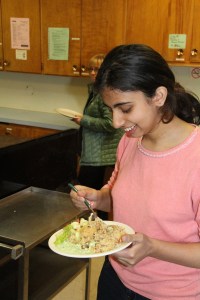
Students learned how to make a classic Pakistani dish called biryani during the Pakistani Cooking With Shanzila Ahmed class on Tuesday, Feb. 27, at the Sitka Kitch community rental commercial kitchen. This was the third class of the Seasonal Cooking class series at the Sitka Kitch.

Shanzila (pronounced SHAN-zi-la) is an AFS exchange student from Pakistan. She taught students how to make biryani, which features chicken, rice, veggies, and a lot of different spices, as well as a chutney and salad to go with it.

The next classes in the Seasonal Cooking series are:

  • National Nutrition Month Healthy Cooking Demonstration — 5:30-7 p.m., Tuesday, March 27, Free event with SEARHC health educator Heleena Van Veen, health educator Holly Marban, registered dietitian Jessica Holland and diabetes nurse Kelly Lakin. This year’s National Nutrition Month theme is “Go Further With Food,” so students will learn creative ways to use leftovers and how to store food so it doesn’t spoil.
  • Herring Appreciation With Renee Trafton (Beak Restaurant) — 6-8:30 p.m., Tuesday, April 3 (alternate date is April 10 if herring running late), Celebrate the return of herring to Sitka by making herring egg salad and sushi.
  • Naturally Clean Home Products — 1-3 p.m., Saturday, April 7, Videoconference with Sarah Lewis of Juneau office of UAF Cooperative Extension Service. This class will teach you how to reduce your use of harsh, chemical cleaners but still be able to do deep cleaning. Students need to bring five 32-ounce spray bottles and a 20-ounce jar with lid (or six quart canning jars to store products to take home and then transfer to spray bottles). Class fee is $20, no supply fee.
  • Starting A Cottage Foods Business — 1-3 p.m., Saturday, April 14, Videoconference with Sarah Lewis of Juneau office of UAF Cooperative Extension Service. Learn about state laws regarding home food businesses, and get ideas for businesses you might take to the Sitka Farmers Market or local trade shows. Tours of the Sitka Kitch and rental information will be available. Class fee is $10, no supply fee. The Sitka Local Foods Network offers class participants half-off the registration fee for their first Sitka Farmers Market in 2018.
  • Puerto Rican Cooking With Nina Vizcarrondo — 6-8:30 p.m., Wednesday, May 2, Learn how to cook sofrito with recao, empanadas or pastelon, and arroz con gandules from Nina, a former U.S. Coast Guard chef and the current Sitka Farmers Market manager.

Class space is limited, so register early. Unless noted, the Seasonal Cooking classes cost $27.50 per person, plus a food/supply fee split between the registered students.

Register online at https://sitkakitch.eventsmart.com/ (click on class title) and pre-pay using credit/debit cards or PayPal. To pre-pay by cash or check, contact Chandler, Claire, or Clarice at 747-7509 to arrange payment. For more information about the class series, contact Jasmine at 747-9440.

A slideshow of scenes from the Pakistani Cooking class is posted below.

This slideshow requires JavaScript.

ALFA wins major grant to improve, expand electronic monitoring on fishing boats

Alaska Longline Fishermen’s Association executive director Linda Behnken’s longliner, the Woodstock (Photo Copyright Josh Roper)

A photo taken from electronic monitoring camera

The Sitka-based Alaska Longline Fishermen’s Association (ALFA) has been awarded a major grant from the National Fish and Wildlife Foundation (NFWF) to improve at-sea monitoring of Alaska’s longline fisheries through the use of electronic monitoring technologies.

At-sea electronic monitoring (EM) technology uses video cameras aboard fishing vessels to monitor catch and bycatch in lieu of a human observer.  Since many small boats do not have the capacity to take an additional person aboard during fishing trips, EM can be more operationally compatible for the vessel, and potentially more cost effective. After several years of research and pre-implementation, the North Pacific Fishery Management Council approved electronic monitoring as an option for small fixed-gear vessels in the partial coverage sector of the Observer Program in 2016. The grant — awarded by NFWF with funding from the National Oceanic and Atmospheric Administration, the Gordon and Betty Moore Foundation and the Kingfisher Foundation — will provide ALFA $577,959 to improve Alaska’s longline electronic monitoring program for vessels participating in sablefish, halibut and Pacific cod fixed-gear fisheries.

With this support, ALFA will assist the National Marine Fisheries Service’s work to provide electronic monitoring hardware and field service support for vessels joining the EM program, and also support stakeholder engagement in the program’s development. The project will result in electronic monitoring of up to 120 hook and line vessels and will improve the utility of electronic monitoring data for fishermen and fishery managers alike.

“In Alaska, fishermen pay a large part of the at-sea monitoring costs needed to support our fisheries. By offsetting start-up costs and helping fishermen equip their vessels with EM systems, we can meet at-sea monitoring needs in a way that is more compatible with small vessels and improve cost effectiveness,” says Dan Falvey, Program Director at ALFA.

This is the second NFWF grant that ALFA has received to assist with EM implementation, which will help provide the equipment and field services needed to expand the program to the new vessels.

Over the next two years, 120 longline vessels in Alaska will use electronic monitoring while fishing.

The National Fish and Wildlife Foundations’ Electronic Monitoring and Reporting Grant Program seeks to catalyze the implementation of electronic technologies in U.S. fisheries in order to systematically integrate technology into fisheries data collection and modernized data management systems for improved fisheries management. This year, it awarded a total of more than $3.59 million in grants. The 12 national awards announced generated $3.15 million in match from the grantees, providing a total conservation impact of more than $6.75 million. 

Mighty Bear Roots, Game Creek Family Orchards win 2017 Path to Prosperity contest

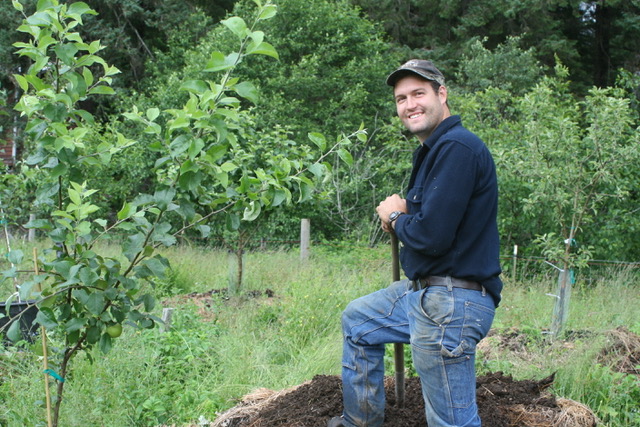
Rob Bishop of Game Creek Family Orchards in Hoonah poses with some of his fruit trees. Game Creek Family Orchards supplies fruit trees, tree maintenance and support services, and fresh, locally grown apples to and Southeast Alaska. After years of experimenting with local and disease resistant rootstocks, Game Creek Family Orchards has developed a reputation for producing apple trees uniquely crafted to thrive in Southeast Alaska.

Two Southeast Alaska businesses have won a contest for innovative entrepreneurs. Mighty Bear Roots in Wrangell and Hoonah’s Game Creek Family Orchards will each receive prizes of $25,000 for winning top honors in the Path to Prosperity business competition. Winners were presented with their awards on Thursday evening (Feb. 23) at the annual Innovation Summit in Juneau.

Path to Prosperity, or P2P, is a partnership between The Nature Conservancy and Spruce Root Inc.  This sustainable business development competition grows entrepreneurs whose businesses will have a positive economic, social and environmental impact on communities all across Southeast Alaska. In 2017, the contest focused on food security and food businesses. In 2018, the contest will be open to a variety of business types when it opens in April.

Dixie and Chris Booker of Mighty Bear Roots of Wrangell. Mighty Bear Roots is an aeroponic greenhouse start-up that will provide the community of Wrangell with a local source of fresh healthy produce. The clean and green operation will utilize energy efficient full spectrum LED lighting, solar panels, rain catch and ground-to-air heat transfer systems to reduce its ecological footprint while growing delicious, healthy food that doesn’t need to be barged in.

Mighty Bear Roots is an aeroponic greenhouse start-up that will provide the community of Wrangell with a local source of fresh healthy produce.

“The Path to Prosperity has really helped us organize our thinking around our business” says Dixie Booker, the company’s co-founder. “We are excited for the potential to enhance our community’s food security and bring fresh produce to Wrangell. I highly recommend P2P for anyone who wants to start or further a small business.”

Game Creek Family Orchards supplies fruit trees, tree maintenance and support services, and fresh, locally grown apples to and Southeast Alaska.  After years of experimenting with local and disease resistant rootstocks, Game Creek Family Orchards has developed a reputation for producing apple trees uniquely crafted to thrive in Southeast Alaska.

Over the past four years, P2P has received 197 applications from 24 Southeast Alaska communities representing 12 different industries. In addition, 60 entrepreneurs have participated in P2P’s intensive Business Boot Camp workshops. There are now 11 Path to Prosperity winners in Southeast Alaska, all of whom continue to grow and build their businesses in ways that contribute to the community, are environmentally sustainable and are profitable.

“We’re very excited about not only this year’s winners but the entire group of 12 finalists we brought to our Business Boot Camp in September,” says Paul Hackenmueller, Spruce Root program manager and P2P administrator. “Each year the competition has grown more competitive. You can see the impact the program and, more importantly, our contestants are having on their local communities and the region.”

There are more and more signs that P2P, which began as a unique experiment in 2013, has proven itself as a dynamic program that’s making a difference in Southeast Alaska.

“These food businesses don’t only create local jobs; they also decrease the environmental impacts of shipping and transport, and provide food security and healthy food choices in our communities,” says Christine Woll, who directs Southeast Alaska programs for The Nature Conservancy. “These types of businesses are key to building a prosperous triple-bottom-line future for Southeast Alaska.”

Continued Growth
After focusing on food, the 2018 competition will once again be open to sustainable businesses from any industry. “Strengthening local food systems in Southeast Alaska is important to The Nature Conservancy and Spruce Root, but we know there are businesses of all stripes that can benefit from the P2P experience,” Hackenmueller says. “We’ve already seen a lot of interest in the 2018 competition, so I anticipate we’ll see another group of passionate, motivated entrepreneurs for out next Boot Camp in the fall.”

About Spruce Root
Our goal is to build community resiliency. We believe a strong locally controlled economy creates the foundation for a healthy and thriving community. Spruce Root promotes economic development and job creation in Southeast Alaska by providing access to small business loans and business advisory services. Spruce Root is a not-for-profit 501(c)3 organization.

Spruce Root was founded by Haa Aaní LLC in 2012 under Haa Aaní Community Development Fund Inc. with the goal of improving access to capital for entrepreneurs in Southeast Alaska.

Learn more at www.spruceroot.org | 907.586.9251 |  grow@spruceroot.org

About The Nature Conservancy
The Nature Conservancy envisions a world where the diversity of life thrives, and people act to conserve nature for its own sake and its ability to fulfill our needs and enrich our lives. As a non-profit conservation organization, the Conservancy is committed to solving big challenges to nature and human well-being. For nearly 30 years, The Nature Conservancy in Alaska has crafted lasting science-based conservation solutions with diverse partners all across the state. Learn more at www.nature.org/alaska.