Local Fish Fund to help Alaska’s next generation of commercial fishers find financing

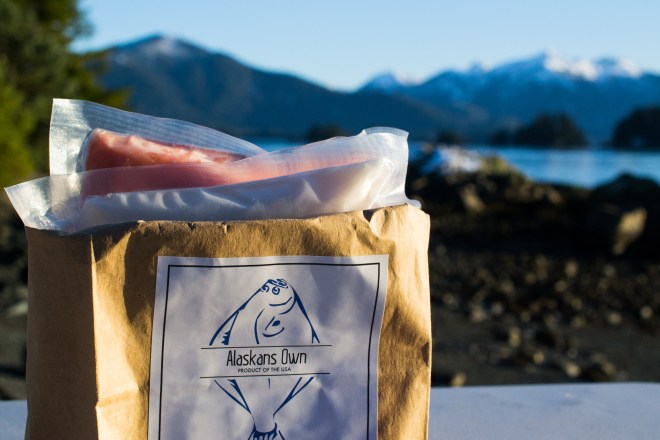
The Local Fish Fund is a program of Alaska Sustainable Fisheries Trust, a non-profit corporation based in Sitka, Alaska. The mission of the Trust is to protect and support local fishing businesses, promote sustainable fishing practices, and revitalize fishing communities in Alaska. The Local Fish Fund program aims to incentivize ocean conservation practices and strengthen fishery leadership in Alaska communities by structuring loan products that will support Alaska residents in purchasing quota and retaining fishery access opportunities. (Photo by Laurie Mistretta)

The Local Fish Fund is an innovative fisheries loan program that will provide a new financing tool for the next generation of commercial fishers in Alaska’s fishing communities.

The Local Fish Fund is a collaborative effort spearheaded by the Alaska Sustainable Fisheries Trust, a Sitka-based nonprofit organization that protects and promotes fishing and fisheries. The loan fund aims to support Alaska’s fishing communities by reducing specific barriers to entry into commercial fisheries and engaging next-generation fishermen in marine stewardship and policy leadership.  Alaska Sustainable Fisheries Trust was supported in setting up and capitalizing the fund by The Nature Conservancy, Craft3, Rasmuson Foundation, and Catch Together.

“The cost and risk involved in accessing Alaska’s quota share fisheries are comparable to purchasing a hotel as a first step in home ownership,” says Linda Behnken, commercial fisherman and founding member of the Alaska Sustainable Fisheries Trust. “As a result, the number of young rural residents entering the fisheries has dropped over the past 15 years. Local Fish Fund aims to change that trend by lowering barriers to entry while engaging the next generation of community-based fishermen in resource conservation and management.”
The Local Fish Fund loan structure has been developed in close consultation with commercial fishermen in Alaska to increase local ownership of halibut and sablefish quota. Traditional commercial fish loans require fixed payments, like a home loan. This presents substantial risk for entry-level commercial fishing businesses because the allowable catch and fish price can vary dramatically from year to year. In contrast, the Local Fish Fund loans use a “revenue participation” approach in which loan repayment is based on fish landings rather than a fixed loan repayment structure. The Local Fish Fund offers loans with competitive interest rates and reduced down payment options, and allows fishermen to build sufficient equity to eventually access conventional loans.

In addition to providing easier access to quota purchase, this loan program has been developed to increase marine stewardship and leadership capacity in the field of sustainable fisheries management. Loan recipients will be incentivized to participate in a flexible set of conservation programs that contribute to sustainable fisheries management by collecting better scientific data; engaging in policy and management decision-making; and working on conservation education and outreach.

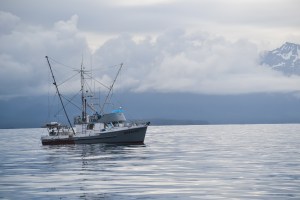
Alaska Longline Fishermen’s Association executive director and Alaska Sustainable Fisheries Trust founding member Linda Behnken’s longliner, the Woodstock (Photo Copyright Josh Roper)

“Alaska has some of the most sustainably managed fisheries in the world,” says Christine Woll, the Southeast Alaska program director for The Nature Conservancy. “This is due in large part to Alaskans having an active voice in how our fisheries are managed. Encouraging local participation in our commercial fisheries helps foster a long-standing Alaska tradition of community-based stewardship of our natural resources.”

The launch of this loan fund was made possible by a unique collaboration that brought together varied expertise across fisheries, conservation, and finance. In addition to the  Alaska Sustainable Fisheries Trust, the launch of the fund was supported by the Alaska Longline Fishermen’s Association, which has a long history of leadership in Alaskan fisheries management; The Nature Conservancy, which has worked with fishing communities to develop economic incentives for fisheries conservation in communities across the globe; and Craft3, a community development financial institution, which provides loans to benefit Pacific Northwest communities, and is originating and servicing loans on Local Fish Fund’s behalf. The Rasmuson Foundation and Catch Together have capitalized the loan fund, which will seek to make a series of loans over the next two to three years.

“We know how important quota ownership is to fishing communities in Southeast Alaska, and we are pleased to be a financing partner to the Local Fish Fund and its program to keep quota in the hands of local fishermen” says Kelly Wachowicz, Managing Partner of Catch Together.

“Joining Alaska Sustainable Fisheries Trust and The Nature Conservancy to launch the Local Fish Fund makes perfect sense to Craft3. This effort expands on our decades-long commitment to sustainable fisheries, conservation, and community development,” stated Craft3 President & CEO Adam Zimmerman. “The Local Fish Fund’s flexible credit and conservation incentives will preserve local fishery ownership, build equity in communities and families, and sustain fisheries health. This can be a model for how private, nonprofit, and philanthropic partners can work together to invest in current and next generation fishermen committed to sustainability.”

“The Local Fish Fund relies on creative thinking – and strong local and national partners – to open up economic opportunities in one of Alaska’s most valued industries, fishing,” said Chris Perez, Rasmuson Foundation senior program officer.

Behnken also thanked the National Fish and Wildlife Foundation and The Oak Foundation, which provided long-time support for the Alaska Sustainable Fisheries Trust and helped out with the development of the Local Fish Fund.

• Local Fish Fund two page summary (opens as PDF)

Sitka Food Co-op to host annual meeting and potluck on Saturday, March 9

The seventh annual Sitka Food Co-op annual meeting and potluck dinner will be from 4-6 p.m. on Saturday, March 9, at the Alaska Raptor Center. This meeting is free and open to the public, so please bring a dish to share (what’s a food co-op meeting without food?). You can RSVP for the meeting by clicking this link (Note: this link also includes a survey for those who can’t make the annual meeting).

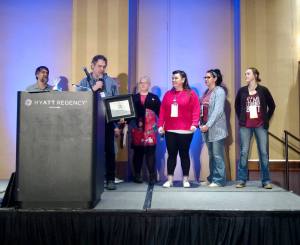
Sitka Food Co-Op general manager Keith Nyitray accepts the Co-Op Citizen Award this week at the 2019 Up & Coming Food Co-Op Conference in Milwaukee. Also pictured are (from left) Food Co-Op Initiative (FCI) executive director Stuart Reid, Jacqueline Hannah of FCI, Sitka Food Co-Op (SFC) member Donna Barragan, SFC board member Hannah Green and SFC board member/staff person Kate DesRosiers.

General Manager Keith Nyitray will go over all the operations and financials of this past year and the board will review the results from its recent survey and talk about future needs and plans for the co-op. The co-op paid members also will vote on by-law changes and where to send the “Co-op Cares” donations.

The co-op also is looking for new board members. The terms will last one or two years so that we can stagger terms out for board continuity. The co-op needs an active board to handle all the things a general manager can not, or should not, handle.

If you’re interested in joining the board, let us know by filling out the board application form. A copy of the tentative agenda can be found here.

In addition, the Sitka Food Co-Op earlier this week won the Co-Op Citizen award at the 2019 Up & Coming Food Co-Op Conference. There were three co-ops from around the country nominated for the award.

According to Nyitray, “The Cooperative Citizen award is awarded for exceptional embodiment of cooperative principle six, ‘cooperation among cooperatives’, within the startup food co-op community. Awardees have gone far above and beyond to share their knowledge, experience, and solutions with peer startups, contributing significantly to the growth of the overall food co-op startup community. Sitka Food Co-op was recognized specifically for its passionate and generous sharing of their unique development with other rural and small town food co-op startups that may benefit from using a similar model.”

UAF Cooperative Extension Service offers Certified Food Protection Manager class by videoconference April 2 in Sitka

The University of Alaska Fairbanks Cooperative Extension Service will teach a certified food protection manager workshop on Tuesday, April 2. This is an all-day statewide class that will be offered by videoconferencing to Fairbanks, Unalaska/Dutch Harbor, Skagway, Valdez, Palmer, Juneau, and Sitka.

A certified food protection manager (CFPM) is responsible for monitoring and managing all food establishment operations to ensure that the facility is operating in compliance with food establishment regulations.

A CFPM is knowledgeable about food safety practices and uses this knowledge to provide consumers with safe food, protect public health and prevent food-borne illnesses. Alaska regulations require food establishments to have at least one CFPM on staff.

This course takes place from 8 a.m. to 5:30 p.m. (with a half-hour lunch), and participants will take a computer-based exam at the end of the class. The reason the deadline is two weeks before the class is to guarantee course materials reach all the students in time for the class. The cost is $200, and the course will be taught by Julie Cascio of Palmer. Students can register here, and the registration deadline is March 20.

The Sitka videoconference for the class will take place in a room TBA at the University of Alaska Southeast Sitka Campus. To learn more, contact Jasmine Shaw at the Sitka District Office of the UAF Cooperative Extension Service at 747-9440, or contact Julie Cascio at (907) 745-3677 (Palmer number) or jmcascio@alaska.edu. Note, this class is taught in English but textbooks are available in Korean, Chinese and Spanish, just contact Julie at least three weeks before the class.

Also, the ServSafe book ($70) and certification exam ($75) now are available online, if people want to order the book and study independently without taking the class. Just go to this website and purchase the book and exam items.

Check out the March 2019 edition of the Sitka Local Foods Network newsletter

The Sitka Local Foods Network just sent out the March 2019 edition of its monthly newsletter. Feel free to click this link to get a copy.

This month’s newsletter includes short stories about Pick.Click.Give. donations, a request for volunteer garden class teachers, a reminder about the deadline for the Sitka Local Foods Business Innovation Contest, info about the 2019 Sitka Local Foods Network sponsors, info about Sitka Kitch classes in March, and a request for new board members. Each story has links to our website for more information.

You can sign up for future editions of our newsletter by clicking on the newsletter image in the right column of our website and filling in the information. If you received a copy but didn’t want one, there is a link at the bottom of the newsletter so you can unsubscribe. Our intention is to get the word out about upcoming events and not to spam people. We will protect your privacy by not sharing our email list with others. Don’t forget to like us on Facebooklike our Sitka Farmers Market page on Facebook and follow us on Twitter (@SitkaLocalFoods).

Scenes from the Sitka Kitch Indian cooking class with Mohan Arul

Students learned how to cook chicken biriyani during the Sitka Kitch’s Cooking Around The World class Indian Cooking With Mohan Raj Arul on Tuesday, Feb. 19, at the new Sitka Kitch location in the Sitka Lutheran Church. This class was originally scheduled for Jan. 15, but was postponed after Mohan had to return to India after a death in the family.

Biriyani — which Mohan said is the spelling in southern India, while biryani is the spelling in northern India and Pakistan — is a popular dish featuring chicken, lamb or vegetables mixed with spices and basmati rice.

The Sitka Kitch has a few upcoming events on its schedule. They include (clicking on the date takes you to the registration pages for the classes, clicking the other link takes you to the story on this website):

A slideshow of images from the Indian cooking class is posted below.

This slideshow requires JavaScript.


White E awards Sitka Local Foods Network 2019 grant to match SNAP/WIC produce sales

Charles Bingham of the Sitka Local Foods Network, left, and Donna Donohoe and Jessica Christianson of Friends of Sitka Circus Arts, right, pose with White Elephant Shop (White E) volunteer Cheryl Call, second from left, after receiving 2019 grant checks from the White E.

The Sitka White Elephant Shop (aka, the White E thrift shop) awarded the Sitka Local Foods Network with a $1,500 grant during its 2019 grant cycle. In 2018, the White E awarded the Sitka Local Foods Network $1,000.

The grant will be used to provide matching funds for SNAP and WIC beneficiaries who purchase produce at the Sitka Farmers Market and other events where the SLFN sells produce, such as at the Running of the Boots. The Sitka Local Foods Network began providing SNAP matching dollars for the first $20 of produce purchases at the markets a few years ago when there was a state grant, but in 2017 those grant funds ran out and we used our Sitka Local Foods Network general fund to match the produce purchases. We also started matching the $5 WIC farmers market produce coupons in 2017, using our general fund. We grow most of the produce at St. Peter’s Fellowship Farm communal garden, and our satellite gardens around town.

“Our mission is to increase the amount of locally produced and harvested food in the diets of Southeast Alaskans, but buying local produce can be difficult for people on food assistance programs,” Sitka Local Foods Network board president Charles Bingham said. “Our matching funds help get more healthy local produce into the diets of lower-income residents of Sitka. A lot of people don’t realize how much income inequality there is in Sitka, and according to the Sitka Community Food Assessment Indicators Report released in 2014, there were 1,410 people and 766 families receiving SNAP benefits in Sitka during 2013. That’s about one out of six Sitka residents who need extra access to this healthy local produce.”

The White E made several grants during the 2019 grant cycle, but a complete list wasn’t available. The Sitka Local Foods Network thanks the White E for its support.

Scenes from the Sitka Kitch potluck dinner and silent auction fundraiser on Feb. 17

The Sitka Kitch hosted a potluck dinner and silent auction fundraiser on Sunday, Feb. 17, at the new location of the Sitka Kitch community rental commercial kitchen (inside Sitka Lutheran Church).

The event served two purposes — it was an introduction to the new space, and it provided a meal to people staying over from the just-concluded Southeast Alaska Farmers Summit. In addition to a variety of potluck food, the event featured a silent auction and a Sitka Kitch trivia contest with the winners getting chocolate-covered strawberries.

The Sitka Kitch has a few upcoming events on its schedule. They include (clicking on the date takes you to the registration pages for the classes, clicking the other link takes you to the story on this website):

A slideshow of images from the fundraiser is posted below.

This slideshow requires JavaScript.

Scenes from the Southeast Alaska Farmers Summit held Feb. 15-17

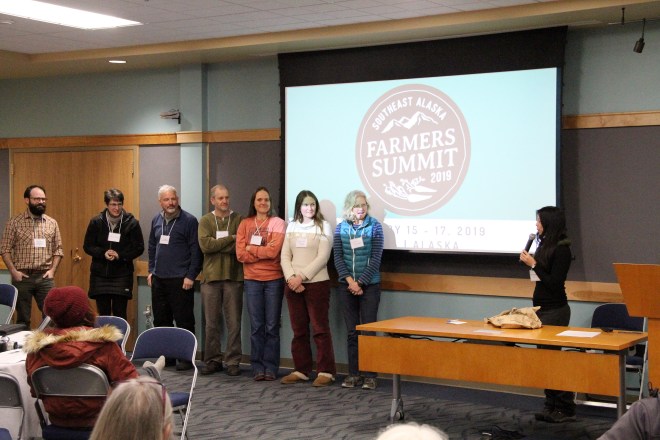
Southeast Alaska Farmers Summit event organizer Jennifer Nu (Juneau), far right, introduces the members of the planning committee after the final session on Sunday. From left are Colin Peacock (Juneau), Lori Adams (Sitka), Joe Orsi (Juneau), Bo Varsano (Petersburg), Marja Smets (Petersburg), Andrea Fraga (Sitka) and Laura Schmidt (Sitka).

The 2019 Southeast Alaska Farmers Summit came to Sitka last week, with events Feb. 15-17 at the Sitka Fine Arts Camp’s Sweetland Hall and downtown at Harrigan Centennial Hall.

Started in 2015 in Petersburg as a way to bring the farmers and commercial food and flower growers in Southeast Alaska together, the Summit provides them with a forum to discuss what works and doesn’t work in their communities. The Summit takes place every other year, and in 2017 it was in Haines.

A variety of small farms around the region made presentations about how they grow food. There also was a vendor showcase and educational talks by farmers from outside the region.

The event was organized by Jennifer Nu and Colin Peacock of the Southeast Alaska Watershed Coalition out of Juneau, with support from the Sitka Local Foods Network, Sitka Kitch, Sitka Food Co-Op, and other groups.

A slideshow of scenes from the Summit is posted below.

This slideshow requires JavaScript.

Moby the Mobile Greenhouse to spend rest of year at Pacific High School in Sitka

Pacific High School gardening class teacher Maggie Gallin, center right facing camera, shows Moby the Mobile Greenhouse to her students during Friday’s class.

During the Pacific High School gardening class last Friday (Feb. 15), school social worker Maggie Gallin, who teaches the class, was showing the students around Moby the Mobile Greenhouse when she asked the students to visualize what they wanted to grow in the greenhouse this year. Moby arrived in Sitka earlier in the week, just in time for the Southeast Alaska Farmers Summit.

The students already have raised garden beds outside the school where they grow more traditional food crops for Sitka, such as lettuce, kale, potatoes, carrots, etc. So the students were a bit more daring in their choices.

George wants to try growing citrus. Hannah wants to grow peppers, Doug wants to grow bell peppers, while Karl and Jayvan want to try growing corn. These are crops that need a greenhouse to grow in Sitka, and they won’t grow well outside. Our climate isn’t hot enough.

“Our culinary program is really strong,” Gallin said. “But we have a garden program and a subsistence program that we want to get stronger. This will be a mini-learning lab for us on a small scale, and the students want to experiment.”

Pacific High School gardening class students discuss what crops they want to grow in the garden beds inside Moby the Mobile Greenhouse.

Pacific High School is Sitka’s alternative high school, which promotes different styles of learning and more personal attention. Principal Mandy Summer, who taught gardening classes before she became principal, said the school built its first raised garden bed in 2010 after Phil Burdick’s English class read the Paul Fleischman novel Whirligig, and the garden bed served as a place to put the whirligigs the class made where they could catch the wind. To supplement the novel, the class read articles about how to grow plants.

Over time the project grew into two classes, including one on how to build things such as more garden beds, a composter, a sifter and other items for the garden. There now are about a half-dozen raised garden beds behind the school.

The addition of Moby the Mobile Greenhouse will elevate the garden class project at Pacific High School. Moby the Mobile Greenhouse is a tiny house greenhouse project that travels to different schools in Southeast Alaska by Grow Southeast in partnership with the Sustainable Southeast Partnership, Spruce Root and the Southeast Alaska Watershed Coalition. It was built with support from the University of Alaska Southeast, the Juneau School District, the Nature Conservancy and the Sitka Conservation Society. Before coming to Sitka, Moby spent a year each in Kake, Hoonah and Yakutat.

“Our (Pacific High’s) theme this year is growth and legacy, and Moby fits our theme,” Gallin said. “The students will be leaving something behind, and they’ll be contributing something that’s individually fulfilling.”

Moby is the size of a tiny house, and it can be pulled behind a pick-up truck. There are six small garden beds inside about waist height (three on each side), plus there are places for hanging baskets. In addition, there are rain gutters to catch rainwater to use in the garden beds. The program’s link includes a handout about Moby and a downloadable curriculum for the teachers to use.

The Pacific High School garden program already has several student-built raised garden beds, a composter, a sifter, and a small older greenhouse (from a kit) behind the school.

“Part of having Moby here is for our partnership with Baranof Elementary School, where our kids can be mentors,” Summer said, adding that in time the school hopes to grow enough food for the school lunches at both Pacific High and Baranof Elementary. There is a plot of land behind the school where Summer, Gallin and others at the school are hoping to expand the garden program, and that includes having a greenhouse or high tunnel to extend the garden season. “The plan is to have a more permanent structure.”

“Moby the Mobile Greenhouse travels to a different rural Southeast Alaska community, each growing season to kickstart interest in growing local produce, especially among young people,” said Jennifer Nu, a local foods director for the Southeast Alaska Watershed Coalition and a community food sustainability catalyst for the Sustainable Southeast Partnership. “We hope that the greenhouse inspires a new wave of vegetable gardeners, builders, local food system advocates in Sitka and beyond. Pacific High School was chosen for strong leadership, commitment to hands-on, place-based, project-centered learning that also has wellness and community at the heart of its mission. Students at Pacific High will share their learning experience with children at Baranof Elementary school and possibly students even younger. Moby will mobilize a longer-term vision as a local food system learning center for educators around the region.”

Pacific High School garden class students and class teacher Maggie Gallin (in stocking cap with back to camera) check out Moby the Mobile Greenhouse during their class on Friday, Feb. 15.

Pacific will have Moby through October, when the garden season ends. The students will still work through the summer, even though school won’t be in session. While Moby is in Sitka, the students discussed dressing up the mobile greenhouse with Native formline drawings.

“I’m excited for more fresh produce in lunch, and working with kids,” sophomore Melissa Gibson said.

“I want to grow stuff and take care of it,” sophomore George Stevenson added.

While in Sitka, Claire Sanchez of the Sitka Spruce Tips 4-H program will work with Gallin. There also will be other gardeners who might help with the class. The staff at Pacific hopes having Moby in Sitka will encourage more people in town to garden.

“One of the stats Sustainable Southeast Partnership wants us to track is how many gardens are inspired by Moby,” Gallin said.

This slideshow requires JavaScript.

Alaska Longline Fishermen’s Association seeks applicants for crewmember apprenticeship program

Sophie Nethercut is one of about 25 greenhorns who has served a short stint as a crew member on Eric Jordan’s troller, the I Gotta, in recent years.

Eric Jordan, back center, poses with crew members (l-r) Alyssa Russell, Sarah Jordan (his wife) and Anya Grenier on his troller the I Gotta.

The Alaska Longline Fishermen’s Association (ALFA), a Sitka-based fishing group, is seeking applicants for its Crewmember Apprenticeship Program. Through a safe and well-guided entry level experience, the program aims to provide young people an opportunity to gain experience in, as well as an understanding of, commercial fishing and its importance to supporting coastal communities.

In late 2017, ALFA was awarded a $70,000 grant from the National Fish and Wildlife Foundation (NFWF) to expand this program in Sitka and to support efforts to launch similar programs in other parts of the state. The grant, leveraged with support from the City of Sitka and ALFA members, was awarded as part of NFWF’s Fisheries Innovation Fund. According to NFWF, “the work funded by these grants will result in improved management that strengthens the welfare of fishermen and local communities, promoting healthy fish stocks and healthy fisheries.”

Cathryn Klusmeier, left, and Jacob Metzger are among the greenhorns who crewed on Eric Jordan’s troller, the I Gotta.

Last year, ALFA’s apprentice program received over 100 local, national, and international applicants, and ALFA placed 13 apprentices on commercial fishing boats over the 2018 fishing season. In 2019, ALFA plans to increase the number of participating apprentices, skippers, and fishing vessels and to enhance local employment opportunity. As Executive Director of ALFA, Linda Behnken explains, “With support from NFWF, we plan to expand the program to include more boats, crew, and communities. Our goal is to provide young people with a safe introduction to Alaska’s fisheries and to share the curriculum we have developed through our program with fishing groups in other parts of the State and country”.

Lea LeGardeur, a crewmember apprentice from last year, says of her experience in the program, “Beyond giving me an entry point into an industry that I otherwise would have had a harder getting into … the skippers in the program all wanted to teach, and sign up to take greenhorns so they could pass on what they know.”

ALFA is seeking applicants for the 2019 fishing season. Crewmember application period is currently open and will close Feb. 28. Applicants must be over 18 years of age. Application information can be found at http://www.alfafish.org/apprenticeship/.