Sitka Conservation Society receives $300,000 grant from Indigenous Animals Harvesting and Meat Processing grant program

U.S. Department of Agriculture (USDA) Secretary Tom Vilsack on Dec. 7, 2023, announced the first grant recipients under the Indigenous Animals Harvesting and Meat Processing Grant Program, as well as advances in Forest Service co-stewardship with Tribes. More than $7 million will support tribal nations in Alaska. The Sitka Conservation Society received one of the grants.

Secretary Vilsack made the announcements at the 2023 White House Tribal Nations Summit, where Tribal leaders gathered for nation-to-nation conversations with President Biden and senior administration officials on key priorities, new policies, and critical issues facing tribal nations.

Two tribal nations in Alaska are receiving Indigenous Animals Harvesting and Meat Processing Grants in the first round of funding:

  • The Alutiiq Tribe of Old Harbor is receiving a $1 million grant to buy and modernize an unused processing facility that will help the community address food shortages due to climate change. Members of the tribe live in a remote village accessible only by boat or small plane. Severe weather can delay food deliveries, and algae are depleting fishing stocks. The funding will allow the tribe to increase the amount of local game and fish they can process using traditional methods. This includes meat from the Sitkalidak bison herd the tribe manages.
  • The Tribal Government of St. Paul Island is receiving a grant of more than $668,000 to re-establish a local reindeer meat processing operation at the Aleut Community Store. The Aleut community will use the grant to develop a program to harvest, process, market and sell local reindeer products. The project will increase the availability of locally sourced organic meat products and drive profits back to the island. It also will help tribal members remember, relearn, and practice traditional herding techniques important to the cultural heritage of the island.

At the Summit, Secretary Vilsack announced a partnership with the Sitka Conservation Society to create a new curriculum to educate rural citizens, especially Alaska Native Youth about the Federal Subsistence Management Board, which manages fish and wildlife for subsistence uses on federal public lands and waters in Alaska. The Sitka Conservation Society will receive $300,000 through a cooperative agreement to support this endeavor.

“Subsistence and traditional and customary resources are extremely important to the people of Southeast Alaska,” Sitka Conservation Society Executive Director Andrew Thomas said. “The forest and waters provide food that takes care of families and households throughout the year. Ensuring that the fish, animals, shellfish, kelp, plants, fungi, and everything else that is harvested and gathering is managed and protected in ways that support the long-term opportunities for us to use and depend on these resources across generations is essential for food sovereignty and food security in rural communities across Southeast Alaska. This program will help educate the next generation of Southeast Alaskans on how they can participate in the stewardship of these natural resources through the federal subsistence management program, which is critical for ensuring that the food resources and traditions that have long supported communities to thrive in Alaska will continue to do so in the future.”

In 2023, the Forest Service signed 120 new co-stewardship agreements, and nearly tripled annual co-stewardship investments with tribal communities. These co-stewardship agreements incorporate Indigenous knowledge such as traditional plant management and ethnobotany, cultural interpretation, and traditional land stewardship methodologies and techniques.

These agreements mark important milestones in relationship-building with tribal governments and are significant advancements in the co-stewardship of the ancestral lands of tribal nations. Alaska’s first co-stewardship agreement is:

  • Co-stewardship of the Mendenhall Glacier Recreation Area: The Forest Service and the Central Council of Tlingit and Haida have implemented a Memoranda of Understanding on co-stewardship of the Mendenhall Glacier Recreation Area. This agreement will ensure that the history and cultural connection tribes have to the glacier and the surrounding lands are represented through cooperative interpretive programs.

Coinciding with the White House Tribal Nations Summit, Secretary Vilsack, the Chair and Ranking member of Senate Indian Affairs, and the House and Senate Agricultural Committees named 11 new members to the inaugural USDA Tribal Advisory Committee. This is a permanent committee created by the 2018 Farm Bill to ensure Tribal perspectives are well represented at USDA and to ensure the Department’s policies and decisions are informed by the unique Nation-to-Nation relationship.

For more information on co-stewardship agreements with tribes, visit: https://storymaps.arcgis.com/stories/31d169da03704089b28080c7e707bbc0.

UAF Cooperative Extension Service to host Preserving Alaska’s Bounty online class series

Sarah Lewis of the University of Alaska Fairbanks Cooperative Extension Service will teach a series of online Preserving Alaska’s Bounty classes about home food preservation. The classes will be held from 1-4 p.m. on Sunday afternoons, Jan. 7, Jan. 14, Jan. 21, Jan. 28, and Feb. 4 using Zoom. For more information, or to register, please visit bit.ly/PAB2024.

This course is designed to lead students through a series of food preservation methods, building on food safety knowledge and the development of skills for use in the home. Each module will start with a live lesson, instructing students on the topic and outlining the assignments to be completed for the module.

After completion of all modules, students will have both the knowledge and the experience to confidently continue preserving food in their homes. There is an optional exam available for participants who wish to become Food Preservation Educators within their home community.

There are important, but simple, food safety considerations when preserving food at home. In Alaska we preserve a variety of wild harvested meats, vegetables, fruits, and berries to ensure food security and nutrition through the non-harvest seasons. Alaskans also preserve their garden harvests for the winter months.

The preservation methods you will learn about (and practice in your own kitchen throughout this course) include: pickling and fermenting vegetables; boiling water-bath canning of fruits, berries, and pickles; pressure canning of meat, fish, and vegetables; dehydration of fruits and vegetables; making jerky; smoking fish. Other topics will include emergency preparedness, how to start a Cottage Foods business, and information about wild harvested plants. At the end of this course, students will feel confident that they have gained the skills necessary to safely preserve foods for the benefit of their household.

Those students who wish to receive a certificate of course completion and become a Food Preservation Educator within their home community may do so by attending all sessions, completing all assignments, and passing a final exam. Students who wish to become Food Preservation Educators must complete all assignments and pass a final exam to receive a certificate of completion.

Participants must be 16 or older (unless joining a household adult). The registration deadline is Sunday, Dec. 31. A course fee of $150 per household or Zoom connection includes one class textbook, which will be mailed to students. A 50-percent reduction is available if requested. The Preserving Alaska’s Bounty series will be taught by Sarah Lewis, an agent with the University of Alaska Fairbanks Cooperative Extension Service‘s Juneau District Office. Accommodation requests related to a disability should be made 10 business days in advance of the Jan. 7 start, to sarah.lewis@alaska.edu.

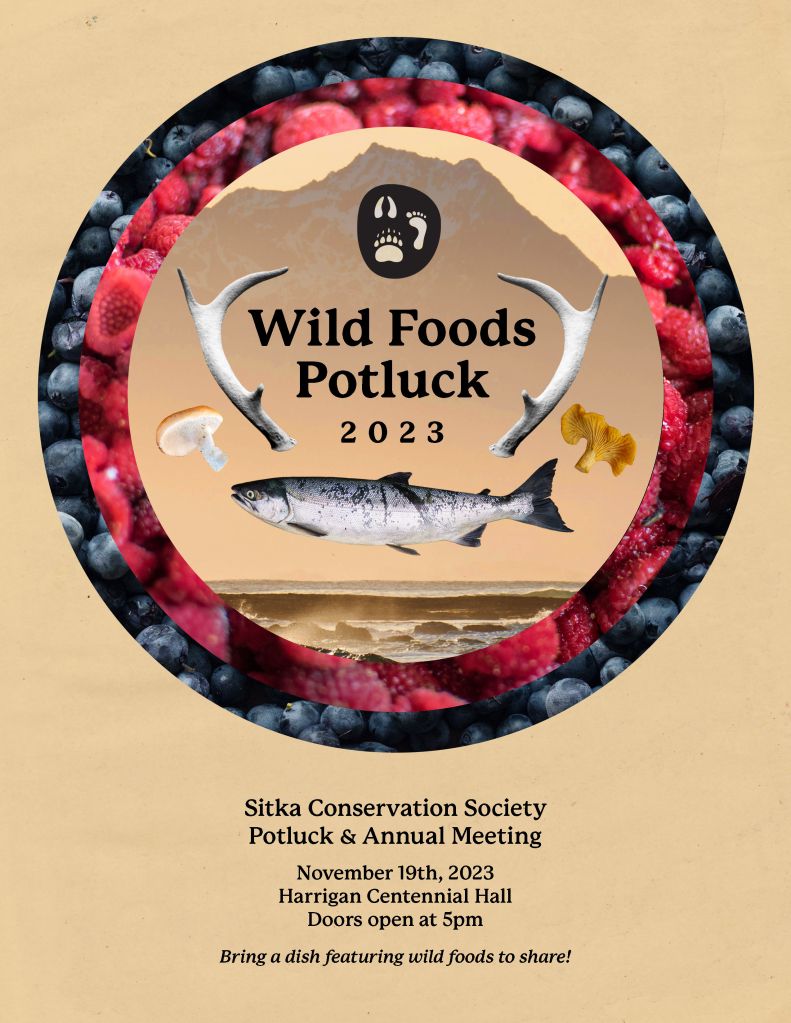
Sitka Conservation Society to host annual Wild Foods Potluck and Annual Meeting on Sunday, Nov. 19

Join the Sitka Conservation Society for its Wild Foods Potluck and Annual Meeting.

This event will be held on Sunday, Nov. 19, at Harrigan Centennial Hall, with doors opening at 5 p.m. All are welcome to attend. Please bring a dish featuring local wild foods to share.

For more information, contact info@sitkawild.org or call 907-747-7509.

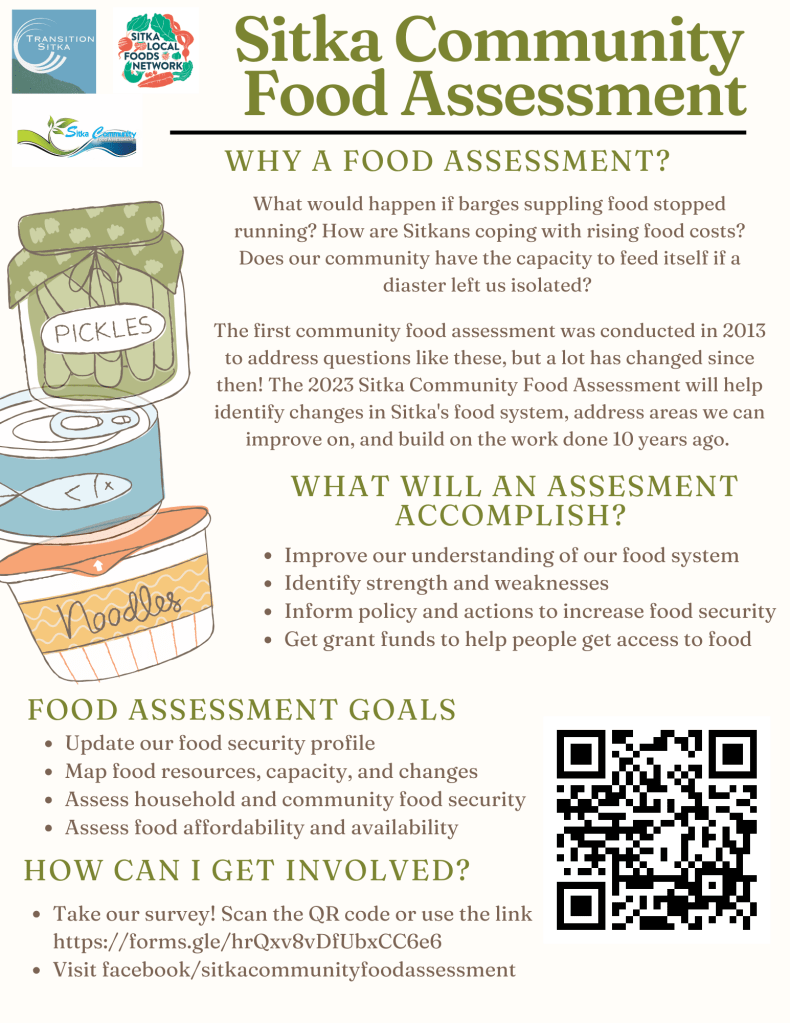
Sitka Community Food Assessment Team thanks those who helped with food security survey

Thank you, Sitka, for taking, sharing, and supporting the Sitka Food Security Survey! Our survey ran from September to the end of October, and we gathered more than 400 responses. This survey is part of a larger effort to better understand food security in Sitka and capture the ways in which we can make it easier for all Sitkans to have access to affordable, nutritious, and culturally relevant food. We are so grateful for the outpouring of support and for each person who took time out of their day to complete the survey.

This work is a result of a partnership between the Sitka Local Foods Network and Transition Sitka, both local nonprofits with a vested interest in food security in Sitka. We are grateful to the dedicated members of those organizations who donated their time to help spread the word about the survey, especially Charles Bingham, Leah Mason, Barbara Bingham, and Toby Campbell. This work would not be possible without the dedicated support and guidance of our steering committee which include community partners at the Sitka Tribe of Alaska Social Services Department, The Sitka Public Library, Sitkans Against Family Violence, Blessings in a Backpack, Sitka Conservation Society, and UAF Cooperative Extension Services.

A special thanks to the organizations and events in town that shared and hosted the survey including the Sitka Sound Science Center, the Sitka Public Library, Indigenous People’s Day, Coffee with Elders, Southeast Alaska Independent Living, UAS Sitka Campus, AC Lakeside, Sitka Homeless Coalition, Sitka Sentinel, and Raven Radio.

Gunalchéesh, thank you for your support in this work! We plan to share results from the survey in early spring. If you would like to be added to our listserv to receive updates, including summary survey results, please email sitkafoodassessment@gmail.com.

In gratitude and service,
The Sitka Community Food Assessment Team

Like what we do? Now you or your business can sponsor the Sitka Local Foods Network in 2024

The Sitka Local Foods Network in recent years created a sponsorship program to help promote our mission, and Sitka businesses and individuals are welcome to join for 2024. The goal of the sponsorship program is to make the projects we undertake (Sitka Farmers Market, St. Peter’s Fellowship Farm, gardening education, food business development, etc.) more sustainable.

“Sitka has a precarious position when it comes to food security, and the Sitka Local Foods Network is trying to improve our community food security through our mission to increase the amount of locally harvested and produced foods in the diets of Southeast Alaskans,” Sitka Local Foods Network president Charles Bingham said. “Sponsors of the Sitka Local Foods Network are working with an organization and a farmers market that places a high value on local food and businesses, fun, premium quality goods and experiences.”

In recent years, the Sitka Local Foods Network has hosted 7-8 Sitka Farmers Markets during the summer (from July to September). Due to COVID-19, we had to greatly scale back our 2020 Sitka Farmers Markets, focusing just on produce sales and using an online sales portal, but we did double our number of market weeks. In 2021, we hosted an outdoor-only market that brought back some of our vendors. In 2022, we returned to our usual venue of the Alaska Native Brotherhood Founders Hall after a two-year absence, and we almost had a normal market (with masking to prevent the spread of COVID-19 and no half-tables to spread out vendors). We had a similar experience in our 2023 markets. We haven’t set our 2024 market dates yet, but we anticipate we will announce them in the spring.

In addition, we grow most of the local produce sold at the markets at St. Peter’s Fellowship Farm communal garden and a couple of other locations in town. In March 2020 we built a new high tunnel at St. Peter’s Fellowship Farm, and we were able to add another new high tunnel before the 2021 growing season. These high tunnels allowed us to extend our growing season and helped reduce the impact of our last couple of cold, wet summers. We usually offer a variety of garden education classes in the spring. And one way we ensured fresh, local produce is available to lower-income Sitkans is through our matching program for WIC and SNAP beneficiaries (the first $20 spent on produce at the market), courtesy of recent grants from the Sitka White Elephant Shop and the Sitka Legacy Foundation.

In 2018 we launched the Sitka Food Business Innovation Contest to inspire food entrepreneurs in Sitka, and have continued the program with the expectation of hosting it again in 2024 (our 2023 winners were Andrea Fraga of Middle Island Gardens and Michael and Julie Miller of Field to Fire). In 2023-24, the Sitka Local Foods Network is partnering with Transition Sitka on two projects — one to update the 2014 Sitka Community Food Assessment Indicators Report and the other to build a new community garden at the top of Jarvis Street. In addition, we support other local food projects in Sitka, such as the Fish to Schools lunch program and the Sitka Kitch community rental commercial kitchen.

There are four levels of sponsorship available, and each has its own set of perks.

  • Grower ($2,500-plus) — We’ll hang your banner at ANB Hall during the Sitka Farmers Markets, include your logo and company name prominently in our merchandise and advertisements, and thank you on our social media and web pages. If appropriate for the Sitka Farmers Market, you may set up a free promotional booth.
  • Harvester ($1,000-$2,499) — We’ll hang your banner at ANB Hall during the Sitka Farmers Markets and include your logo and company name in our merchandise and advertisements.
  • Planter ($250-$999) — Your banner will hang at ANB Hall during the Sitka Farmers Markets.
  • Friend ($50-$249) — You are listed on our online sponsor page.

We have limited space for banners at the Sitka Farmers Markets, so please contact us before June 1 to guarantee your spot. To learn more about the sponsorship program, click the link below for details and a registration form. For more information, contact Charles Bingham at (907) 623-7660 or by email at sitkalocalfoodsnetwork@gmail.com.

• 2024 Sitka Local Foods Network sponsorship program details and registration form

Thanks for a successful 16th season of the Sitka Farmers Market

2023 Sitka Farmers Market Manager Anastasia Stefanowicz with fresh produce at the Sitka Local Foods Network farm stand

The Sitka Local Foods Network just completed its 16th season of hosting the Sitka Farmers Market. We hope Sitka residents enjoyed the market, and we plan to be back next summer for a 17th season.

Over the last couple of years, we had to make some adjustments as we dealt with this Covid-19 pandemic thing, which meant relocating our market for two years and in one of those years reformatting it to an online-purchase system. The last two years we’ve been able to return to our usual venue, the Alaska Native Brotherhood Founders Hall, even though we still had to require masks when we had markets during high-Covid risk weeks. 

But we got through it and hope to have a better season next year.

The Sitka Local Foods Network couldn’t host the market without the support of a wide range of sponsors. We have a tiered sponsorship program with four levels — Grower ($2,500-plus), Harvester ($1,000-$2,499), Planter ($250-$999) and Friend ($50-$249). These are local businesses and individuals, and even a few not from Sitka, who are supporting our programs.

Our Grower Level sponsors in 2022 and/or 2023 included the Alaska Cancer Partnership (a program of the Alaska Division of Public Health), The Alaska Community Foundation, and Alaska Food Policy Council.

Our Harvester Level sponsors were the Sitka Salmon Shares/Sitka Seafood Market 1% For The Wild Fund, The Sitka Legacy Foundation, SouthEast Alaska Regional Health Consortium (SEARHC), Sitka White Elephant Shop (White E), the GCI Gives Fund, ALPS/Tongass Federal Credit Union, the Alaska Farmers Markets Association, Northrim Bank, David and Margaret Steward, and Joel and Alice Hanson.

Our Planter Level sponsors were Harry Race Pharmacy/White’s Inc., Sea Mart, Market Center, Fish and Family Seafoods, the Sitka Employees of First National Bank Alaska, Sitka True Value/Ace Hardware, Linda Schmidt, Amanda Anjum, Colin McIntosh of Outpost Agriculture, and Charles Bingham.

Our Friend Level sponsors included Beth Short-Rhoads, Patricia Atkinson, Guillermo Espinoza, Ehsan Espinoza, Robb Garni, Jud Kirkness, Catherine Allgood-Mellema, Joe Leghorn, Pat Hanson, Beth Kindig, Lisa Sadleir-Hart, Jaime Zelhuber, Christina Kowalczewski, Traci Gale, Math Trafton, Zoe Trafton, Leah Mason, Moira McBride, Steve Paustian and Mary Beth Nelson, Aubrey Nelson, Kent Barkhau, Deborah Brincefield, and Robin Sherman. 

We thank you for your support. We also appreciate everybody who came to one of our markets this summer to support the local businesses selling local food or arts and crafts. 

This brings us to our offseason, where we plan and raise funds for 2024. The Sitka Local Foods Network is a 501c3 nonprofit whose mission is to increase the amount of locally produced and harvested food in the diets of Southeast Alaskans. In addition to the Sitka Farmers Market, we grow food at St. Peter’s Fellowship Farm, sponsor the Sitka Food Business Innovation Contest, and connect residents to education opportunities for growing, cooking, and preserving local food. 

We also are partnering this year with Transition Sitka on two food security projects — to update the data from the 2014 Sitka Community Food Assessment Indicators Report and to start a new community garden at the top of Jarvis Street.

We always need new board members and volunteers. For more information, go to our website at www.sitkalocalfoodsnetwork.org or contact SLFN Board President Charles Bingham at sitkalocalfoodsnetwork@gmail.com.

Carissa Cullins of CC’s Berries wins table of the day award at seventh Sitka Farmers Market

PHOTO COURTESY OF SITKA LOCAL FOODS NETWORK
TABLE OF THE DAY AWARD:
 Sitka Farmers Market manager Anastasia Stefanowicz, right, presents Carissa Cullins of CC’s Berries with the Table of the Day Award for the seventh and final Sitka Farmers Market of the season; on Saturday, Sept. 23, at the Alaska Native Brotherhood Founders Hall. Carissa sold strawberries hand-dipped in chocolate and cake lollipops. She received a certificate; a SLFN totebag; Sitka Farmers Market chocolate bars (from Theobroma); jars of kelp pickles and pasta sauce from Foraged and Found; and other prizes. This was the last Sitka Farmers Market of the 2023 summer, and we hope to announce the 2024 schedule in the spring. Potential vendors will be able to register at https://sitkafarmersmarket.eventsmart.com once the schedule is announced. For more information about the markets and the host Sitka Local Foods Network; go to http://www.sitkalocalfoodsnetwork.org.

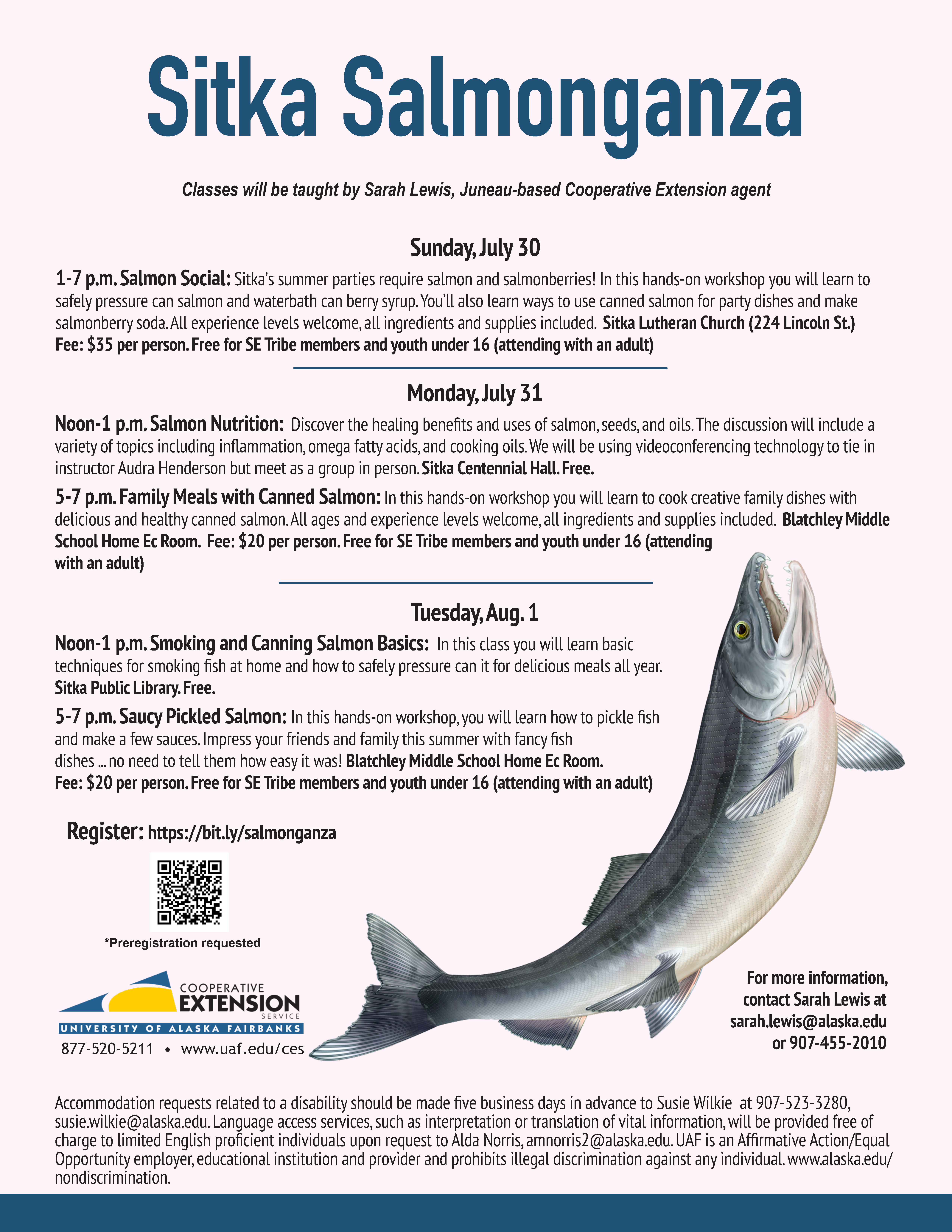
UAF Cooperative Extension Service to host ‘Sitka Salmonganza’ classes on using salmon

SitkaSalmonganza

The University of Alaska Fairbanks Cooperative Extension Service will host its “Sitka Salmonganza” on Sunday through Tuesday, July 30 to Aug. 1, at various locations in Sitka.

Classes about how to use and preserve will be taught by Sarah Lewis, a Juneau-based Cooperative Extension agent. Preregistration is requested so we have enough ingredients and supplies for everyone. Register at https://bit.ly/salmonganza

Sunday, July 30, 1-7 p.m. Salmon Social: Sitkaʼs summer parties require salmon and salmonberries. In this hands-on workshop you will learn to safely pressure can salmon and waterbath can berry syrup. Youʼll also learn ways to use canned salmon for party dishes and make salmonberry soda. All experience levels welcome, all ingredients and supplies included. Sitka Lutheran Church kitchen (224 Lincoln St., enter from back of church but use street parking), Fee: $35 per person. Free for Southeast tribe members and youth under 16 (attending with an adult).

Monday, July 31, Noon-1 p.m. Salmon Nutrition: Discover the healing benefits and uses of salmon, seeds, and oils. The discussion will include a variety of topics including inflammation, omega fatty acids, and cooking oils. We will be using videoconferencing technology to tie-in instructor Audra Henderson but meet as a group in person. Sitka’s Harrigan Centennial Hall. Free.

Monday, July 31, 5-7 p.m. Family Meals with Canned Salmon: In this hands-on workshop you will learn to cook creative family dishes with delicious and healthy canned salmon. All ages and experience levels welcome, all ingredients and supplies included. Blatchley Middle School Home Ec Room. Fee: $20 per person. Free for Southeast tribe members and youth under 16 (attending with an adult).

Tuesday, Aug. 1, Noon-1 p.m. Smoking and Canning Salmon Basics: In this class you will learn basic techniques for smoking fish at home and how to safely pressure can it for delicious meals all year. Sitka Public Library. Free.

Tuesday, Aug. 1, 5-7 p.m. Saucy Pickled Salmon: In this hands-on workshop, you will learn how to pickle fish and make a few sauces. Impress your friends and family this summer with fancy fish dishes, no need to tell them how easy it was! Blatchley Middle School Home Ec Room. Fee: $20 per person. Free for Southeast tribe members and youth under 16 (attending with an adult).

For more information, contact Sarah Lewis at sarah.lewis@alaska.edu or call 907-455-2010.

Sitka-based fishing group, Bristol Bay community members collect more than 5,000 pounds of donated salmon for Yukon and Chignik communities 

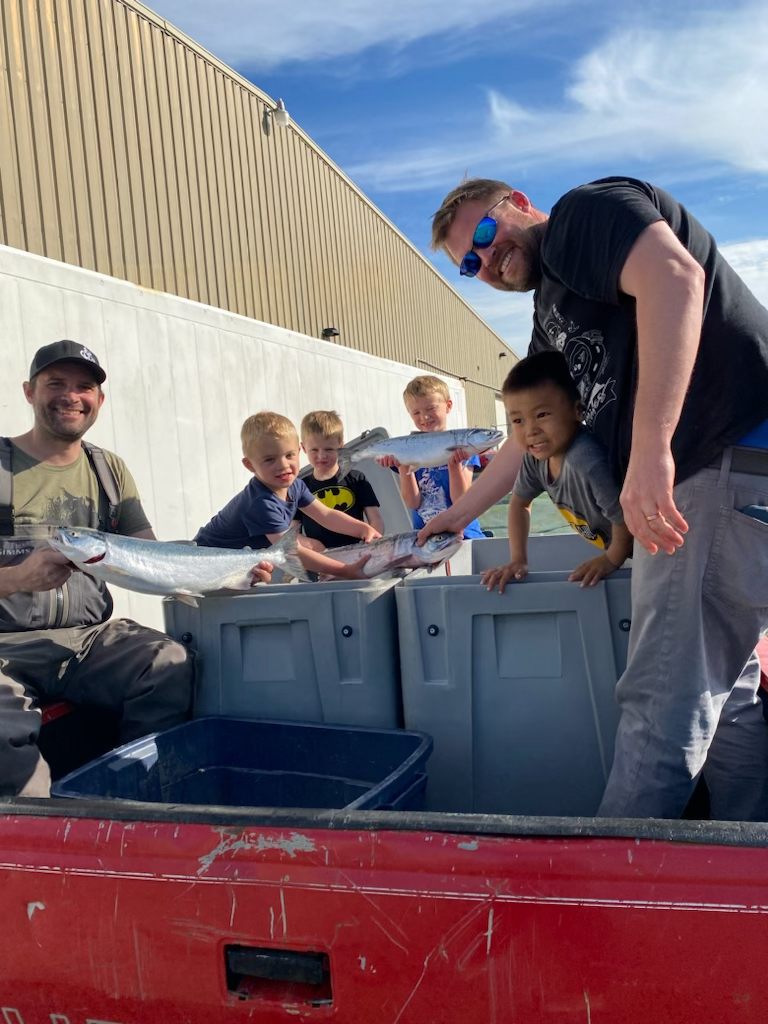
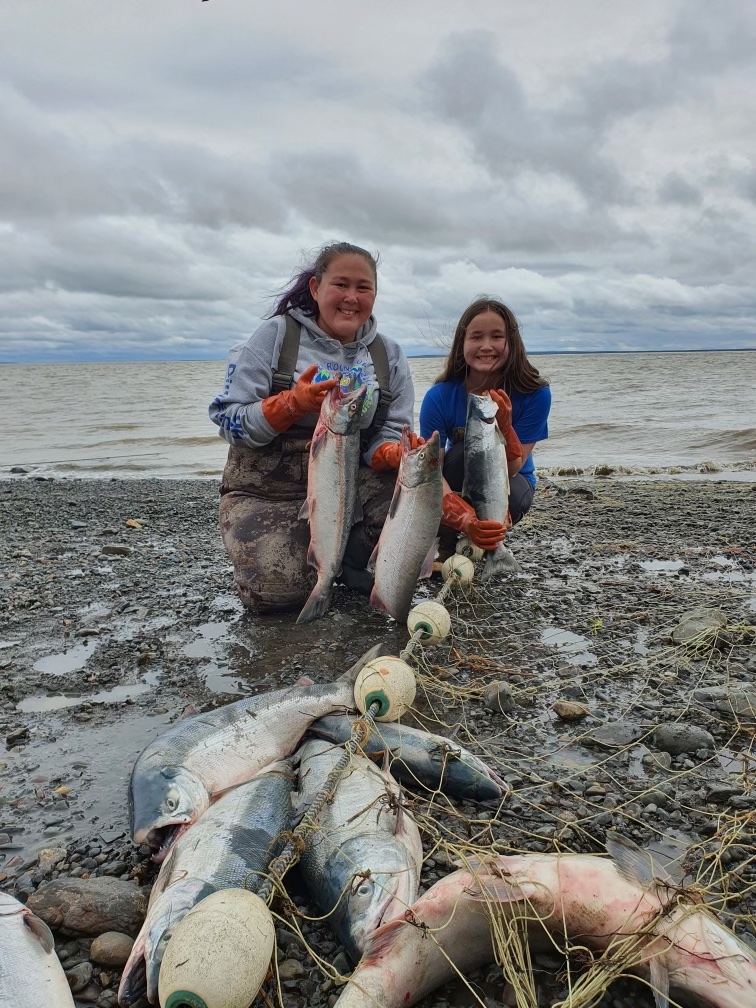
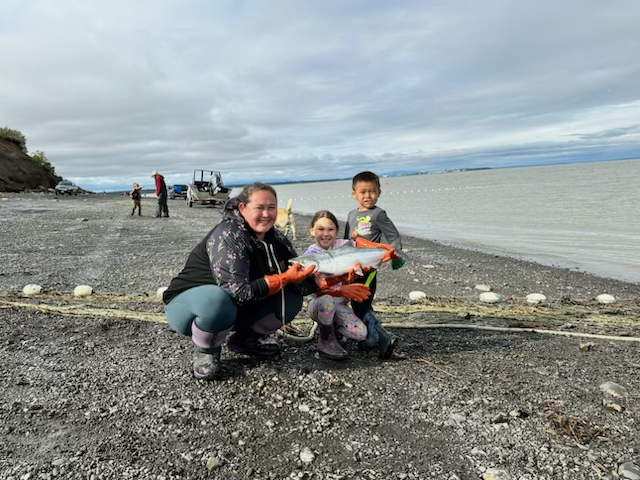
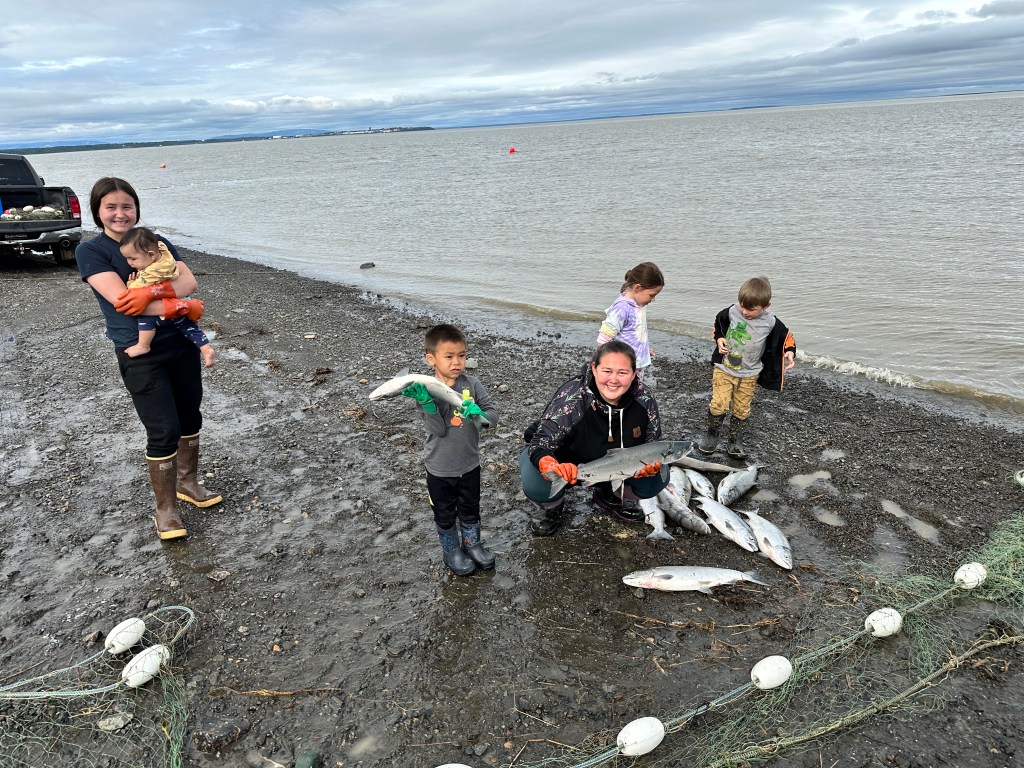
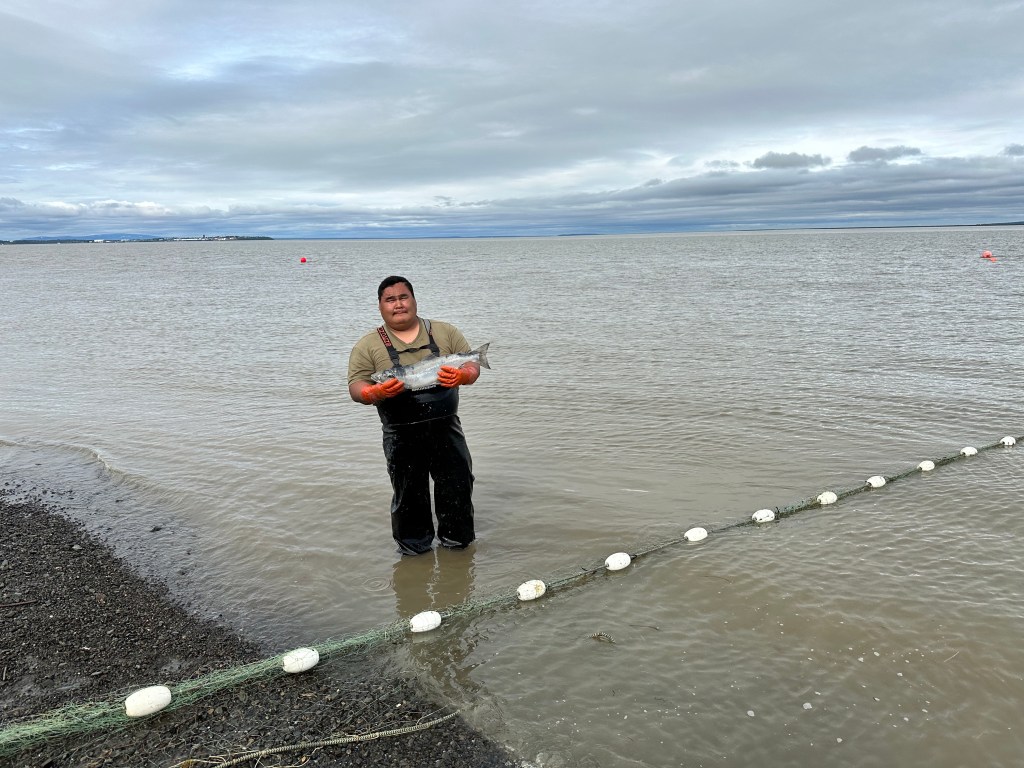
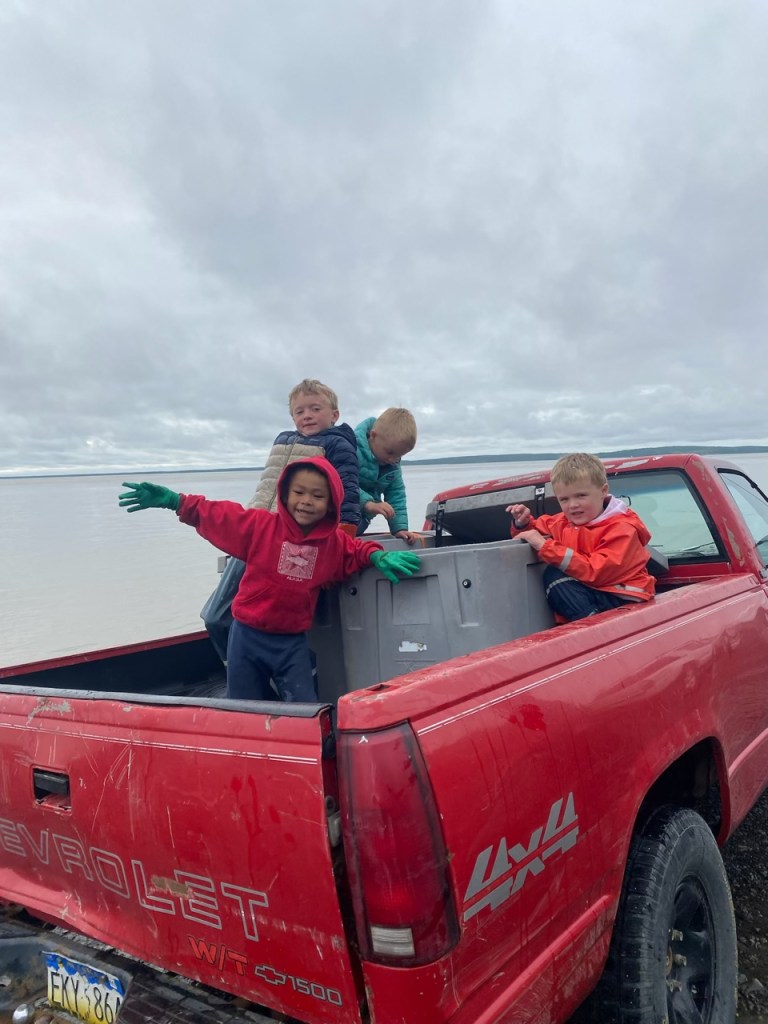
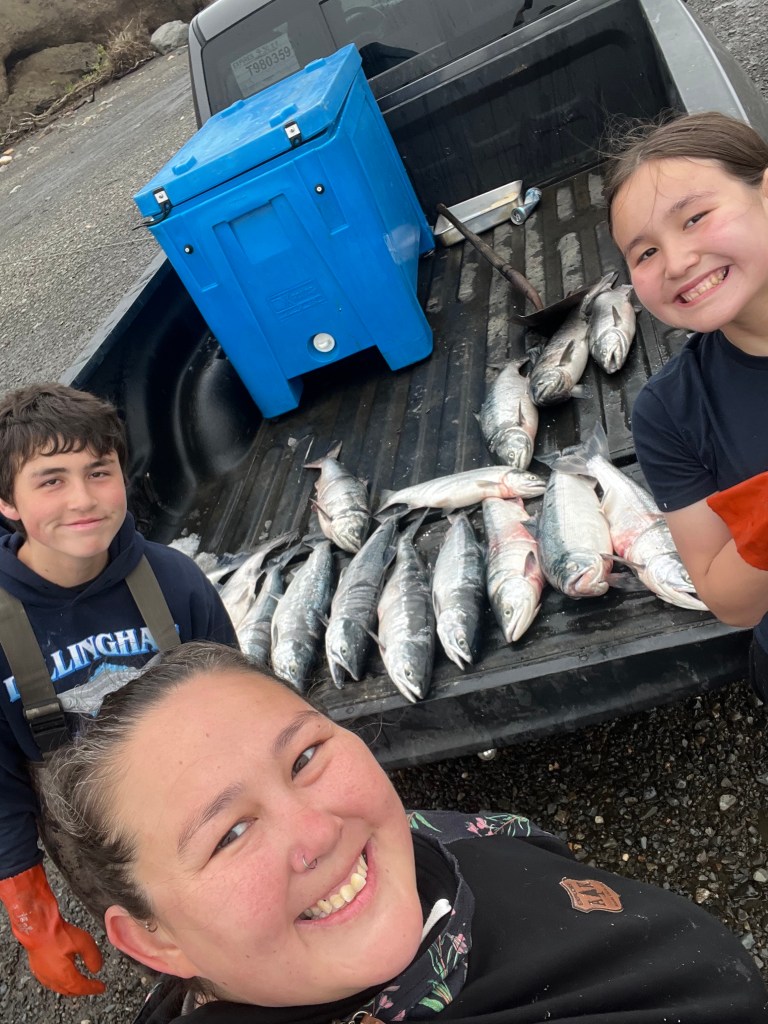
Cody Larson of Bristol Bay Native Association and Sitka’s Ben Blakey of Northline Seafoods show some of the donated salmon to Dillingham children. (Photo courtesy of Alaska Longline Fishermen’s Association (ALFA).

DILLINGHAM, Alaska — In June, Dillingham-area residents harvested and collected more than 5,000 pounds of subsistence-caught sockeye salmon that will be distributed to families in the Yukon and Chignik river areas unable to harvest their own local salmon due to low salmon returns.

The salmon donation was coordinated through the Sitka-based Alaska Longline Fishermen’s Association’s (ALFA) Seafood Distribution Network with the help of local partners, including Northline Seafoods, Bristol Bay Native Association, Grant Aviation, and Bristol Bay Native Corporation.

In June, before Bristol Bay’s commercial fishery opened, local Dillingham residents helped ALFA collect subsistence salmon from families who were fishing at Dillingham’s Kanakanak Beach. Sitka-based Northline Seafoods — a new seafood processor in Bristol Bay that specializes in processing and freezing whole fish — helped oversee the cleaning and freezing of the salmon. The salmon was frozen whole in response to requests from Yukon and Chignik communities for whole fish so that they could fully use the salmon and practice their food traditions. In addition, each salmon was labeled with the name of the family that donated it.

In the coming weeks, Grant Aviation will help fly the salmon to Yukon and Chignik villages, including Alakanuk, Pitkas Point, Saint Mary’s, Chignik Lagoon, and Chignik Bay. The fish will also be used by the Yukon River Drainage Fishermen’s Association Educational Exchange program where several youth will travel to communities on the Yukon and share their experiences around salmon.

“This salmon donation project was a bit of an experiment for us; we didn’t know how many people would be willing to contribute a portion of their subsistence harvest for families that they didn’t know. When people heard that we were collecting salmon for the Yukon and Chigniks, they jumped at the chance to contribute and help other Alaskans — especially those who depend on subsistence for their diet and culture. We were thrilled by the positive responses and were able to collect our target of 5,000 pounds of salmon much quicker than anticipated,” said Natalie Sattler, program director for the Alaska Longline Fishermen’s Association. “We couldn’t have done it without the generous support of our partners, especially Bristol Bay Native Association, Grant Aviation, and Northline Seafoods.”

“Our company was first approached in 2020 to help address the growing shortage of salmon in Alaska’s rural communities and have been involved in the Seafood Distribution Network ever since. Making sure local Alaskans have access to high quality seafood is incredibly important to us and we are committed to supporting the Network’s ongoing efforts to build the infrastructure and distribution systems needed to improve the resiliency and sustainability of Alaska’s local food system,” CEO of Northline Seafoods Ben Blakey said. 

“At a time when so many communities are struggling with low salmon returns and facing another summer of empty smokehouses and freezers, I am filled with hope to see local, grassroots efforts like this salmon donation project in Dillingham. This project not only embodies what subsistence is all about, but it is also an example of Alaskans at their best: sharing and taking care of each other during times of need. Low salmon abundance is an issue that needs to be addressed at every level, from the federal government down to individual communities, and efforts like this are an important piece of that larger goal, ” Alaska U.S. Rep. Mary Peltola said.

The Seafood Distribution Network emerged through ALFA’s Seafood Donation Program, which was started in March 2020 in response to COVID-19 and its impacts on local fisheries and families. Since then, ALFA’s Seafood Donation Program has provided more than 645,000 donated Alaska seafood meals to families experiencing food insecurity in Alaska and the Pacific Northwest.

With funding from the USDA, ALFA is currently undergoing a Regional Food System Partnership planning process in which it will develop a more long-term plan for the Seafood Distribution Network and future seafood donation efforts.

• Seabank, the 2022 annual report of the Alaska Sustainable Fisheries Trust

Sitka Tribe of Alaska to host Little Clam Camp on July 10-13

The Sitka Tribe of Alaska Resource Protection Department will host its Little Clam Camp so youth can learn more about Tlingít culture this summer. The camp takes place from 1-4:30 p.m. on Monday through Thursday, July 10-13, at Harrigan Centennial Hall.

During the camp, youth in grades kindergarten through fifth grade will take part in a wide variety of engaging activities, from learning how to identify different species of shellfish in Tlingít, to nature walks, and even hands-on art lessons.

For more information, contact the STA Resource Protection Department or register at jacob.kohlhoff@sitkatribe-nsn.gov.