Learn what the basics of starting and running a cottage foods business as Sarah Lewis teaches students how to Start a Cottage Foods Business from noon to 2 p.m. on Wednesday, June 19, in Room 106 at the University of Alaska Southeast Sitka Campus.
This class is a fundraiser for the Sitka Kitch community rental commercial kitchen, and also is designed to help vendors prepare for the upcoming Sitka Farmers Markets hosted by the Sitka Local Foods Network.
Sarah Lewis — the home, health and family development agent for the Juneau office of the UAF Cooperative Extension Service — will teach this class by videoconference from Juneau. Students will learn about state laws regarding home food businesses, and get ideas for businesses you might take to the Sitka Farmers Market or local trade shows. The first hour will be spent discussing rules and regulations, and the second hour will be for questions and answers.
The class fee is $10, and the funds go to the Sitka Kitch. Class space is limited, so register early. The registration deadline for this class is 11 p.m. on Monday, June 17. The Sitka Local Foods Network is offering students of this class half off their Sitka Farmers Market vendor fee for the first market of the season where they host a table. Representatives from the Sitka Local Foods Network/Sitka Farmers Market and (hopefully) the Sitka food safety office of the Alaska Department of Environmental Conservation are planning to attend so they can answer any questions potential cottage foods business owners may have.
Register online at https://sitkakitch.eventsmart.com/ (click on class title) and pre-pay using credit/debit cards or PayPal. To pre-pay by cash or check, contact Chandler, Claire, or Clarice at 747-7509 to arrange payment. For more information about the class series, contact Jasmine at 747-9440.
For 28 years, Mollie Kabler and Kitty LaBounty have taken to the KCAW-Raven Radio airwaves during the spring months to broadcast The Garden Show.
This year there’s a change to the show, as the show will hold three scheduled sessions from 10:30-11 a.m. on Saturdays, May 11, May 25, and June 15, when people can call in with gardening questions. In past years the show aired from April through June, or longer into the summer if work schedules permit. Kitty has a regular music show (Hometown Brew) from 2-4 p.m. on Thursdays, and sometimes the half-hour Garden Shows may take place during her program.
Garden Show topics include timely tasks for gardening in Southeast Alaska, taking on-air questions, and themes around basic and more advanced gardening of vegetables, flowers, fruit, trees, etc. The station’s website recently posted a news item about the upcoming schedule that also had links to previous shows.
Mollie and Kitty each have been gardening in Sitka for more than 28 years, and they also have significant gardening experience from their childhoods in Wisconsin (Mollie) and Oregon (Kitty). They both are certified as Master Gardeners, after completing the class series offered by the University of Alaska Fairbanks Cooperative Extension Service.
To call the show with gardening questions, call 747-5877 and ask to be connected to the show.
Alaskans will celebrate Alaska Agriculture Day on Tuesday, May 7. On this day, Alaskans are encouraged to support local agriculture by seeking out and purchasing products produced in Alaska and educating youth about the vital role that agriculture plays in our economy. This is Alaska’s version of National Ag Day (which took place on March 14 this year, when many parts of Alaska were still thawing out). The 2019 Alaska Ag Day theme is Farm Animal Fun. Don’t forget Monday, May 6, is the third annual Drive Your Tractor To Work Day in Alaska.
Here are a few ideas from the Division of Agriculture on how to celebrate Alaska Agriculture Day:
Join the 58,201 people who “like” the Alaska Grown Facebook page at https://www.facebook.com/dnr.alaskagrown and learn about the exciting things Alaskans are producing around the state.
Sign up for a Community Supported Agriculture (CSA) program at a local farm.
Buy and incorporate Alaska Grown products into your meals. The Alaska Grown program has a new Buy Alaska Grown website (with cellphone apps) where it is registering Alaska farmers so they can list their items on the web. In Southeast Alaska, a new food hub called the Salt and Soil Marketplace just launched a similar website where Southeast food producers (including fishermen) can list their products.
If you are a farmer, consider asking a local school if you can visit a classroom to educate children about your operation and Alaska agriculture. The Alaska Division of Agriculture provided this lesson plan for how to make carrot seed tape.
In Sitka, you can celebrate Alaska Agriculture Day by starting a food garden (even a couple of containers on your deck can provide you with potatoes, carrots or greens). Teachers are encouraged to offer a lesson plan or two about the importance of agriculture in Alaska and in Sitka. Here’s a link to an article about how Sitka was Alaska’s original garden city back in the late 19th and early 20th Centuries. Also, the Sitka History Minute feature on KCAW-Raven Radio has had several episodes about agriculture in Sitka (click here to listen to a feature about the potato in Sitka, click here to listen to a feature about the Sitka Agricultural Station, and click here to listen to a feature about the cows of Iris Meadows).
During the growing season, please support the Sitka farmers and production gardeners listed in the 2016-17 Alaska Grown Source Book (chief contact in parentheses, the Buy Alaska Grown website is still using this information even though it is somewhat dated) — Anam Cara Family Garden (Lisa Sadleir-Hart), Blatchley Community Gardens (David Nuetzel, this garden closed in 2016 and there is a group seeking a new location for what will be called Sitka Community Gardens, but its 2019 status is unknown), Down To Earth U-Pick Garden (Lori Adams, switched to a CSA in 2017 and no longer is a public u-pick garden), Finn Island Farm (Keith Nyitray, this farm closed), Sprucecot Gardens (Judy Johnstone, this may be closed), and St. Peter’s Fellowship Farm (Laura Schmidt/Sitka Local Foods Network). There also are a few Sitka farms and production gardens not listed in the 2016-17 Alaska Grown Source Book, such as Beyond Leafy LLC (Jimmy and Leslie Kranz, this hydroponic basil growing operation may be closed in 2019), Middle Island Gardens (Andrea Fraga/Kaleb Aldred), and Welsh Family Forget-Me-Not Garden (Florence Welsh).
Many of these farms and gardens will be vendors during the Sitka Farmers Markets this summer. The Sitka Farmers Markets take place from 10 a.m. to 1 p.m. on seven Saturdays — July 6, July 27, Aug. 10, Aug. 17, Aug. 31, Sept. 7, and Sept 21 — at the Alaska Native Brotherhood Founders Hall (235 Katlian St.). We are in the process of scheduling a Sitka Farmers Market vendors meeting or two where rules and responsibilities will be discussed.
The Sitka Local Foods Network just sent out the May 2019 edition of its monthly newsletter. Feel free to click this link to get a copy.
This month’s newsletter includes short stories about registration being open for the 2019 Sitka Farmers Market, the winners being announced in the second annual Sitka Food Business Innovation Contest, a new Filipino cooking class from the Sitka Kitch, and an invitation to join our board of directors. Each story has links to our website for more information.
You can sign up for future editions of our newsletter by clicking on the newsletter image in the right column of our website and filling in the information. If you received a copy but didn’t want one, there is a link at the bottom of the newsletter so you can unsubscribe. Our intention is to get the word out about upcoming events and not to spam people. We will protect your privacy by not sharing our email list with others. Don’t forget to like us on Facebook, like our Sitka Farmers Market page on Facebook and follow us on Twitter (@SitkaLocalFoods).
Brittany Dumag leans out one of the windows of her food trailer business, called Castaway, that will serve Cuban pork sandwiches with beans and rice.
One winner is opening a food cart so she can sell Alaska-raised pork sandwiches. Another will use her prize to jump start her sauerkraut business. And another is making seasoning mixes to sell at the Sitka Farmers Market and outside Harrigan Centennial Hall this summer.
Tamara Kyle of Sitka Sauers poses with some of her sauerkraut and her two children at a 2017 Sitka Farmers Market.
This year’s winners of the second annual Sitka Food Business Innovation Contest are Brittany Dumag and her food cart, Castaway, in the start-up business category (younger than two years); Tamara Kyle of Sitka Sauers in the established business division; and Abigail Ward, age 12, who won a special youth business award. The Sitka Food Business Innovation Contest awarded a $1,500 prize each to Dumag and Kyle, while Ward won $250.
The contest is sponsored by the Sitka Local Foods Network as a way to encourage Sitka entrepreneurs to start businesses using food from Sitka or Alaska. It also is meant to promote better food security with more locally made food products.
“We were pleased with the response this year, five times as many applications as last year,” Sitka Local Foods Network board president Charles Bingham said. “We hope our prizes help these businesses grow and become successful and sustainable. We also want to see our other entrants come back for next year’s contest. And we hope all of our entrants have booths at this year’s Sitka Farmers Market.”
Dumag’s food cart is her first business venture, but others in her family have run businesses. Dumag, her husband, and others started with a bare trailer, and built it from a 4×8-foot flat trailer to a 6×12-foot trailer with walls, a kitchen, a skylight, and more. She plans to be at all of the Sitka Farmers Markets this summer, and she is talking with a couple of places in town to park the trailer, which she hopes to open on June 1.
Even though she has yet to open, Dumag has had to change her plans. She originally planned to make rockfish tacos, but the cost was too high and she had difficulty finding rockfish. So she decided to start with Cuban pork sandwiches with rice and beans (the pork is from Dream Acres Farm in North Pole), and hopes to add the rockfish tacos after she has her business up and running.
“I want to feed local families,” Dumag said. “I want to source what I can locally.”
Tamara Kyle has been making sauerkraut for several years, but with two toddlers she hasn’t been able to make it on a consistent basis. Her sauerkraut takes five weeks to ferment, so she has to be thinking ahead about her plans when she makes it.
“This is going to jump-start it,” Kyle said. “I’m going to get the right machinery and get an apprentice, so my sauerkraut will be more consistently available.”
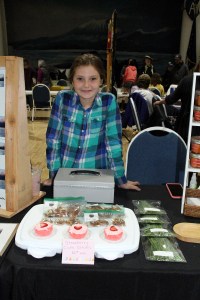
Abigail Ward sells cupcakes and herbs at her youth booth at a 2018 Sitka Farmers Market.
Kyle makes two types of sauerkraut — her classic with organic cabbage and pink Himalayan sea salt and another with caraway dill seasonings. Eventually, she’d like to add local beets, local carrots, and even local salt, if the price is right.
Ward has been a regular youth vendor at the Sitka Farmers Market for the past two years, selling a variety of products while her parents and sister ran a table next to her. Her business will be to make two seasoning mixes — one for red meat/venison and one for seafood — which she plans to sell at the farmers market and with the youth vendor tables in front of Harrigan Centennial Hall when cruise ships are in town.
“The contest prize money will help to improve and expand my business from a hobby to an official business,” Ward wrote on her entry form.
Ward, who splits time between Washington state and Sitka, was the only entrant to include product samples with her entry form. She said her spice mixes are meant to enhance locally harvested seafood and venison, and she hopes to eventually make her own sea salt and grow her own rosemary for the mixes.
Registration for the 2019 Sitka Farmers Markets is open, and vendors looking to sell local food, arts and crafts, and other items at the markets can find all the vendor forms, information sheets, rules and regulations for this year by going to the Documents page on this site (scroll down to vendor forms), or look at the bottom of this post for the documents. The forms include information about how to register your table for this year’s markets.
The 2019 Sitka Farmers Market manager is Nina Vizcarrondo, who managed the market the past two years and before that helped manage a New York City farmers market. She can be reached at sitkafarmersmarket@gmail.com or (907) 738-9301 during the market season. Sitka Local Foods Network board president Charles Bingham is assisting with the market again this year.
The dates for our 2019 Sitka Farmers Markets will be from 10 a.m. to 1 p.m. on seven Saturdays — July 6, July 27, Aug. 10, Aug. 17, Aug. 31, Sept. 7, and Sept. 21 — at the Alaska Native Brotherhood Founders Hall at 235 Katlian Street. We hope to schedule a vendor information meeting or two before the markets, which might be attended by Bruce Gazaway of the Food Safety Program from the Alaska Department of Environmental Conservation. We also hope to schedule another cottage foods basics class with Sarah Lewis of the UAF Cooperative Extension Service’s Juneau office, which in past years has been done through videoconference at the University of Alaska Southeast Sitka Campus.
This year we don’t have many changes from our last 2-3 years, when the Sitka Local Foods Network rolled back its Sitka Farmers Market table prices to 2015 levels and simplified them. We hope this helps us reclaim and keep some of the vendors we lost in previous years. The table fees will be $40 for a full table (slightly longer than eight feet) or $20 for a half table per market. We also have a deal where vendors who reserve space for and participate in all seven markets can receive a refund of one market fee after the season (so get seven markets for the price of six). There no longer is a price differential between indoor and outdoor booths (outdoor booths are charged the full table rate). We want to bring back some of the excitement to the markets, where it returns to being a community gathering place, and that means we have to make the market attractive to vendors.
If you are an Alaska food vendor and don’t have the time to host a table at the market, we might be interested in buying your products at wholesale rates or selling them on consignment at our Sitka Local Foods Network farm stand. Most of the produce we sell at the SLFN farm stand is grown at St. Peter’s Fellowship Farm communal garden and its satellite gardens, but we do sell some donated local produce. We also offer a matching program for people using WIC and SNAP benefits at our SLFN farm stand.
We want to show Sitkans the variety of local food products available in our community and state. In recent years we expanded our Alaska Grown products at the Sitka Local Foods Network farm stand, selling Chugach Chocolates from Girdwood, barley products from Alaska Flour Company of Delta Junction, fermented foods from Evie’s Brinery of Anchorage, and kelp pickles and salsa from Barnacle Foods of Juneau. This year we plan to try some new products in addition to keeping the rest of these brands in stock.
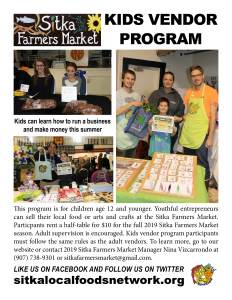
We are hosting a third year of the children’s vendor program, where kids get to become entrepreneurs and sell their own locally made food or arts and crafts. This program is modeled after the city’s program where children younger than age 12 buy a season permit to sell items near Harrigan Centennial Hall on cruise ship days. In our children’s vendor program, the fee is $10 for the full market season.
Nina is available to answer questions and to make suggestions that will help new and returning vendors adjust to any food regulation changes from the Alaska Department of Environmental Conservation, updates to the Alaska Quest electronic benefits program and WIC (Women, Infants, Children) supplemental food program, etc.
We have updated the 2019 vendor rules and responsibilities, but the only major changes are we won’t have access to the Alaska Native Sisterhood Kitchen (if you want to use it to cook something for the market, you will have to contact ANS to rent the kitchen) and vendors will not be able to store equipment at ANB Founders Hall between markets. The last page of the rules and responsibilities packet has the vendor registration form for adult and child vendors.
In addition, we are trying to increase our labor pool of volunteers to help out with the market. We need people to help us set up, take down, sell produce at the Sitka Local Foods Network farm stand, and more. If you are interested in volunteering, send us a note with your contact info. We usually have musicians play at the market, so we are gathering a list of music groups that want to perform.
For more information, contact Sitka Farmers Market manager Nina Vizcarrondo at (907) 738-9301 or sitkafarmersmarket@gmail.com, or you can email the Sitka Local Foods Network Board of Directors at sitkalocalfoodsnetwork@gmail.com. Amanda Anjum is the SLFN board liaison to the market (and board treasurer) and Charles Bingham is the SLFN board president, and both will assist with the market.
(EDITOR’S NOTE: The following article first appeared on this site in April 2010. It is repeated because much of the information remains current and newsworthy.)
In the cold winter of 1994, Anchorage Daily News garden columnist and former Garden Writers Association of America President Jeff Lowenfels was returning to his hotel after a Washington, D.C., event when he was approached by a homeless person who asked for some money to buy food. Lowenfels said Washington, D.C., had signs saying, “Don’t give money to panhandlers,” so he shook his head and kept on walking. But the man’s reply, “I really am homeless and I really am hungry. You can come with me and watch me eat,” stayed with Lowenfels for the rest of his trip.
Jeff Lowenfels
The encounter continued to bother Lowenfels, even as he was flying back to Anchorage. During the flight, Lowenfels came up with an idea when he started writing his weekly garden column (the longest continuously running garden column in the country, with no missed weeks since it started on Nov. 13, 1976). He asked his readers to plant one extra row in their gardens to grow food to donate to Bean’s Café, an Anchorage soup kitchen. The idea took off.
When Anchorage hosted the Garden Writers Association of America convention in 1995, Lowenfels took the GWAA members to Bean’s Café to learn about the Plant A Row For Bean’s Café program. The Garden Writers Association of America liked the idea, and it became the national Plant A Row For The Hungry campaign (also known as Plant A Row or PAR). In 2002, the Garden Writers Association Foundation (now Garden Communicators International) was created as a national 501(c)(3) nonprofit to manage the Plant A Row For The Hungry program.
“I am not surprised by the growth of PAR,” Lowenfels wrote in an e-mail to the Sitka Local Foods Network. “It is now in all 50 states and across Canada and there are thousands of variations of the original program — from prison gardens for the hungry to botanical gardens donating their produce from public display gardens. This is because gardeners always share information and extra food, so the idea was a natural.”
It took five years for the program to reach its first million pounds of donated food, but the second million only took two years and the next eight years saw a million pounds of donated food (or more) each year. Since 1995, more than 14 million pounds of food have been donated. Not only that, the program is getting ready to expand overseas to Australia, England and other countries with avid gardeners.
“We have supplied something in the vicinity of enough food for 50 million meals,” Lowenfels wrote in his e-mail. “Gardeners can solve this hunger problem without the government. And we don’t need a tea party to do it! Or chemicals, I might add, as author of a book on organic gardening!” Lowenfels is the author of Teaming With Microbes, written with Wayne Lewis. He released a second book, Teaming With Nutrients, as a follow-up to his first book, and in 2017 released a third book, Teaming With Fungi, as a second follow-up book.
According to the U.S. Department of Agriculture, one out of every eight U.S. households experiences hunger or the risk of hunger. Many people skip meals or eat too little, sometimes going an entire day or more without food. About 33 million Americans, including 13 million children, have substandard diets or must resort to seeking emergency food because they can’t always afford to buy the food they need. In recent years, the demand for hunger assistance has increased 70 percent, and research shows that hundreds of children and adults are turned away from food banks each year because of lack of resources.
According to the 2014 Sitka Community Food Assessment Indicators Report, about one in six people in Sitka is food insecure. In 2013, there were 1,410 Sitkans (out of a population of about 9,000) and 766 families receiving food assistance (SNAP, aka food stamps). There also were 229 individuals who received food pantry assistance from the Salvation Army and 7,243 meals served through its lunch soup kitchen in 2013, and that number has grown substantially since then.
While many people credit Lowenfels for creating the Plant A Row For The Hungry program, Lowenfels says the real heroes are the gardeners growing the extra food and donating it to local soup kitchens, senior programs, schools, homeless shelters and neighbors. You can hear him pass along the credit to all gardeners at the end of this 2009 interview with an Oklahoma television station (video also embedded below).
“One row. That’s all it takes. No rules other than the food goes to the hungry. You pick the drop-off spot or just give it to a needy friend or neighbor. Nothing slips between the lip and the cup, I say,” Lowenfels wrote in his e-mail.
For people wanting to Plant A Row For The Hungry in Sitka, there are several places that would love to help distribute some fresh locally grown veggies or berries to those who are less fortunate, such as the Salvation Army, Sitkans Against Family Violence (SAFV), local churches, Sitka Tribe of Alaska and other organizations. The food the Sitka Local Foods Network grows at St. Peter’s Fellowship Farm communal garden goes to the Sitka Farmers Market, school lunches and other programs.
The Sitka Local Foods Network also takes donations of local produce to sell at the Sitka Farmers Markets, and all proceeds are used to help pay for SLFN projects geared toward helping more people in Sitka grow and harvest local food. For more information, contact the Sitka Local Foods Network board members at sitkalocalfoodsnetwork@gmail.com.
The USDA Forest Service Sitka Ranger District and Sitka Tribe of Alaska will work together again from 10:45 a.m. to 12:30 p.m. on Friday, April 19, at the Sitka Ranger District (2108 Halibut Point Road) to create an educational opportunity and traditional food source for community members. Forest Service staff and the tribe will share how to grow Tlingít (sometimes called Maria’s) potatoes, and share the biology, history, and cultural aspects of these interesting potatoes.
Since 2017, the Sitka Ranger District has provided a sunny plot of land to serve as the shared Tlingít potato garden. Together, the Tribe and the Forest Service provide the seed potatoes to plant the garden. The Sitka Tribe’s Traditional Foods Program and the gardening class from Pacific High School will again assist with the planting.
Community involvement is also needed to get the garden planted. Volunteers are asked to bring boots, gardening gloves, and shovels. Five-gallon buckets of seaweed to incorporate into the soil are beneficial, too. Members of the community who help tend the shared garden may receive more than gratitude as their reward.
“Last fall we harvested 90 pounds of potatoes. We shared the harvest among those helping out and through the Sitka Tribe’s Traditional Foods Program. And this year, we will be expanding the garden so we can grow even more potatoes,” said District Ranger Perry Edwards. “This project teaches people how to grow and sustain a traditional food, while supporting the need for food security among Sitka Families. It’s also a fun and very sustainable way to celebrate Earth Day.”
Tlingit potatoes have been present in Tlingit gardens for over 200 years. The potatoes originate from Mexico or Chile* and were a trade item in Southeast Alaska in the early 1800’s.
This work day and educational opportunity will be from 10:45 a.m. to 12:30 p.m. on Friday, April 19, at the Sitka Ranger District office, located at 2108 Halibut Point Road. For more information, contact Michelle Putz at 907-747-2708 ormichelle.putz@usda.gov.
*Zhang, Linhai with Charles R. Brown, David Culley, Barbara Baker, Elizabeth Kunibe, Hazel Denney, Cassandra Smith, Neuee Ward, Tia Beavert, Julie Coburn, J. J. Pavek, Nora Dauenhauer and Richard Dauenhauer. Inferred origin of several Native American potatoes from the Pacific Northwest and Southeast Alaska using SSR markers. Euphytica 174:15-29
The Sitka Local Foods Network just sent out the April 2019 edition of its monthly newsletter. Feel free to click this link to get a copy.
This month’s newsletter includes short stories about today being the deadline to apply for Permanent Fund Dividends (and a reminder about Pick.Click.Give. donations), a reminder about the April 5 deadline for the Sitka Local Foods Business Innovation Contest, info about the 2019 Sitka Local Foods Network sponsors, and a request for new board members. Each story has links to our website for more information.
You can sign up for future editions of our newsletter by clicking on the newsletter image in the right column of our website and filling in the information. If you received a copy but didn’t want one, there is a link at the bottom of the newsletter so you can unsubscribe. Our intention is to get the word out about upcoming events and not to spam people. We will protect your privacy by not sharing our email list with others. Don’t forget to like us on Facebook, like our Sitka Farmers Market page on Facebook and follow us on Twitter (@SitkaLocalFoods).
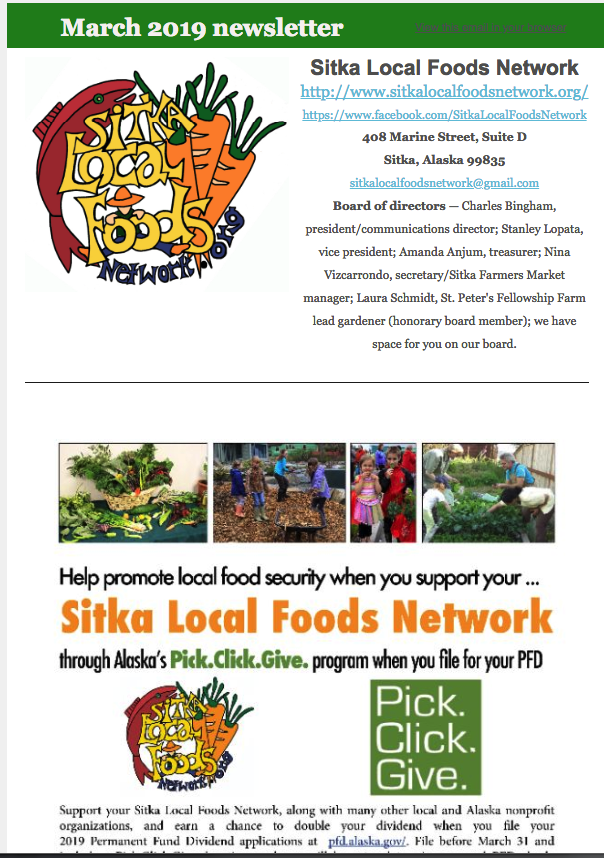
The Sitka Local Foods Network just sent out the March 2019 edition of its monthly newsletter. Feel free to click this link to get a copy.
This month’s newsletter includes short stories about Pick.Click.Give. donations, a request for volunteer garden class teachers, a reminder about the deadline for the Sitka Local Foods Business Innovation Contest, info about the 2019 Sitka Local Foods Network sponsors, info about Sitka Kitch classes in March, and a request for new board members. Each story has links to our website for more information.
You can sign up for future editions of our newsletter by clicking on the newsletter image in the right column of our website and filling in the information. If you received a copy but didn’t want one, there is a link at the bottom of the newsletter so you can unsubscribe. Our intention is to get the word out about upcoming events and not to spam people. We will protect your privacy by not sharing our email list with others. Don’t forget to like us on Facebook, like our Sitka Farmers Market page on Facebook and follow us on Twitter (@SitkaLocalFoods).


 Learn what the basics of starting and running a cottage foods business as Sarah Lewis teaches students how to Start a Cottage Foods Business from noon to 2 p.m. on Wednesday, June 19, in Room 106 at the University of Alaska Southeast Sitka Campus.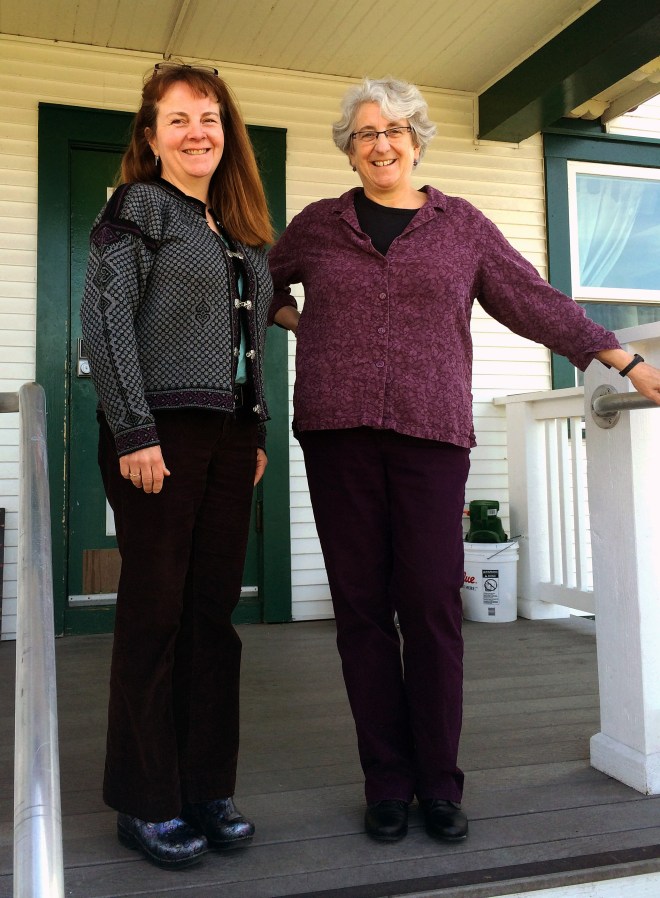









 Sitka Local Foods Network
You must be logged in to post a comment.