Foundroot, Village Coffee Company win $25,000 each in 2019 Path to Prosperity business development contest

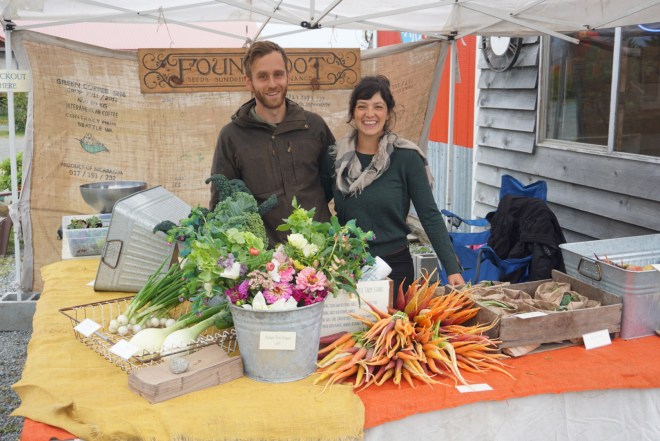
Nick Schlosstein, left, and Leah Wagner of Foundroot seed company man their farm stand in Haines. Foundroot was one of the 2019 winners of the Path to Prosperity business development competition.

Two Southeast Alaska businesses — Foundroot seed company of Haines and Village Coffee Company of Yakutat — recently were selected as winners of the 2019 Path to Prosperity economic development contest. As winners, Foundroot and Village Coffee Company were awarded $25,000 each for consulting and technical services. The winners were announced on Feb. 5, during the 2020 Mid-Session Summit hosted by Southeast Conference in Juneau.

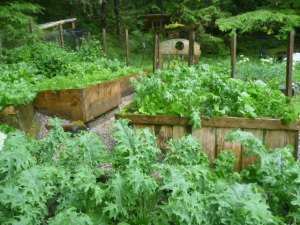
Foundroot is an open-pollinated seed company run by Leah Wagner and Nick Schlosstein in Haines that sells vegetable, herb, and flower seeds proven for Alaskan growing conditions. On their small sustainable farm in Haines, Foundroot is growing seed varieties that are adapted to Alaska’s climatic challenges and have sent seeds to over 65 different communities throughout the state. Teaching their customers how to save their own seeds and supporting their gardening and farming endeavors is integral to the company’s philosophy. Foundroot’s mission is for all Alaskans to feel confident growing food, no matter the scale, and fostering self-reliance and a deeper sense of food security for us all.

Justyne Wheeler of Village Coffee Company in Yakutat. Village Coffee Company was one of the two 2019 winners of the Path to Prosperity competition.

Village Coffee Company is a drive-thru espresso shop in Yakutat run by Justyne Wheeler that serves custom coffee drinks and homemade pastries crafted from locally-sourced ingredients, including fresh salmonberry upside down cake and spruce tip tea. In the small community of Yakutat, Village Coffee Company has found itself serving many regulars, who oftentimes drive up in 4x4s or forklifts to get their daily cup. Village Coffee Company works closely with the community to be as environmentally sustainable as possible. They provide coffee grinds for composting; use compostable stir-sticks, cups, and packaging; and source locally when possible.

These two companies were chosen from 13 finalist businesses from Southeast Alaska (including the Sitka Food Co-Op and M/V Adak Short- and Long-Term Rentals from Sitka) that participated in the Path to Prosperity’s Business Boot Camp in September in Juneau. They were chosen from 43 businesses from 12 Southeast Alaska communities that applied for the 2019 Path to Prosperity contest.

The following businesses were selected as 2019’s finalists:

  • Business Name, Applicant, Location
  • Alaska Costal Seaweed, Theresa Abbas, Juneau
  • Around the Bay Lodging, Susan Ritchie, Wrangell
  • Foundroot, Leah Wagner and Nick Schlosstein, Haines
  • Gale Force Gardens, Stephanie Jurries, Craig
  • Jellyfish Donuts, Brianna Krantz, Ketchikan
  • Kaawu Shellfish Co., Anthony Lindoff, Hoonah
  • Kootéeyaa Koffee House, Lee Wallace, Saxman
  • M/V Adak Short- and Long-Term Rentals, Brendan and Rachel Jones, Sitka
  • Sagebrush Dry Gear, John Peterka, Kake
  • Sitka Food Co-Op, Keith Nyitray, Sitka
  • Tamico, Inc., Carrie J. K. Martinsen, Petersburg
  • Tommaso Shellfish, James Greeley, Whale Pass
  • Village Coffee Co., Justyne Wheeler, Yakutat

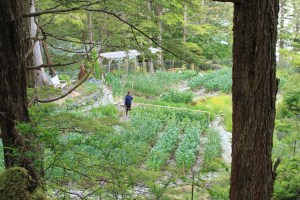
An aerial view of the gardens at Foundroot.

At Boot Camp, the finalists learn about triple-bottom-line principles, worked with mentors, and received one-on-one counseling on how to develop their business models and plans. Following this intensive business training weekend, the finalists spent two months working with Spruce Root business coaches to create thorough business plans and pitch videos to be submitted to the judges. The winners are selected based on the feasibility, social impact, and environmental sustainability of their businesses.

Path to Prosperity is run by Spruce Root, Inc., and is made possible through a partnership with The Nature Conservancy and the Sustainable Southeast Partnership. Since the first competition in 2013, Path to Prosperity has received over 300 applications from Southeast Alaskan small business owners and entrepreneurs across 22 communities. The program has trained 89 finalists at Business Boot Camp and awarded 15 winners $510,000 to build their businesses. All of the participants have been trained in the “triple bottom line” approach to building a business by learning to measure their profitability as well as the environmental and social impacts of their business. Previous competition winners include Skyaana Coffee Co. (Klawock), Barnacle Foods (Juneau), The Salty Pantry (Petersburg), Port Chilkoot Distillery (Haines), Icy Straits Lumber (Hoonah), and others.

The Village Coffee Company trailer.

Spruce Root is an Alaska Native-run CDFI (Community Development Financial Institution) that provides local entrepreneurs with access to business development and financial resources in the form of loan capital, business coaching, workshops, and competitions. Together these programs support both new and existing businesses in Southeast Alaska and empower business owners through increased self-sufficiency.

Applications for the 2020 Path to Prosperity competition will open on April 1 and will close on May 31. This year there will be a focus on minority-run businesses.

To learn more about Path to Prosperity or Spruce Root’s other services (such as small business loans), visit their website at www.spruceroot.org or email grow@spruceroot.org.

Sitka Local Foods Network hosts third annual Sitka Food Business Innovation Contest

A sampling of food products grown, manufactured or processed in Sitka in recent years.

Do you think you have a great idea for a food business or product from Sitka? Do you grow food, fish for food, or cook food in Sitka? The Sitka Local Foods Network is hosting the third annual Sitka Food Business Innovation Contest in an effort to spark local food entrepreneurs so we can make more local food available to residents and visitors. The contest entry deadline is March 6.

This contest will provide two $1,500 kicker prizes — one for established food businesses and one for start-up businesses (no older than two years) — to help entrepreneurs launch or expand their food businesses. The contest is open to food businesses and individuals making and selling food products in Sitka, Alaska. All food business ideas must be geared toward getting more locally grown, harvested and/or produced food into the Sitka marketplace through sales in grocery stores, the Sitka Food Co-Op, the Sitka Farmers Market, restaurants, or individual marketing (such as a community supported agriculture/CSA or community supported fisheries/CSF program).

“The Sitka Local Foods Network’s mission is to get more locally harvested and produced food into the diets of Southeast Alaskans,” said Charles Bingham, Sitka Local Foods Network board president. “For the past decade we’ve offered a entrepreneurs a chance to sell their produce, bread and fish at the Sitka Farmers Market, grown produce to sell at the market through St. Peter’s Fellowship Farm, and provided a garden education program to residents. We think this contest is the next step toward getting more local food into the Sitka marketplace.”

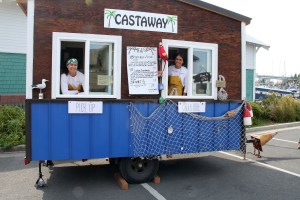
Last year, we gave $1,500 prizes to Brittany Dumag of the Castaway food cart in the start-up business category and to Tamara Kyle of Sitka Sauers in the established business category. We also gave a special $250 award to 12-year-old Abigail Ward who entered her Sitka Seasonings business. Brittany made Cuban pork sandwiches (using pork from North Pole) and other food to sell at various places in Sitka, including the Sitka Farmers Market. Tamara planned to ramp up her fermented foods business, but she ended up having some health issues that prevented her from completing her project and she ended up refunding most of her prize money. Abby made spice blends for seafood and other meats, which she sold at the first two Sitka Farmers Markets and at other venues.

In our inaugural contest in 2018, we gave a $1,500 prize to Hope Merritt of Gimbal Botanicals in the established business category. We had no entrants in the start-up business category, so no prize was awarded in 2018. Hope used her prize money to hire two interns to help her harvest seaweed and kelp and to help produce her products.

Participants in this contest are eligible and encouraged to enter other food business innovation contests, such as the Path To Prosperity or Symphony of Seafood contests. All participants retain the proprietary rights to their products and ideas. This contest is open to new and existing food businesses in Sitka. Student businesses (such as those fostered by Junior Achievement or similar programs) are welcome.

There is a small $25 entry fee for this contest. All participants (business and individual) must complete and submit our contest entry form by 5 p.m. on Friday, March 6, 2020 (by snail mail so it arrives before the deadline to Sitka Local Foods Network, Food Business Innovation Contest Entries, 408-D Marine Street, Sitka, Alaska, 99835, or by email with the Subject Line of “Food Business Innovation Contest Entries” to sitkalocalfoodsnetwork@gmail.com). Submitting a business plan (up to 20 pages) is recommended, but not required.

Our entry form will have room for you to describe your food business idea in a few paragraphs, but submitting a business plan will give you more room to outline your plans for funding and marketing the idea and will help your overall score. Judging will be based on how your food business idea provides new local food options in Sitka, how novel is your food business idea, how feasible is your food business (can it make a profit and be sustainable), and how professional is your presentation. At some time in late March or early April, the Sitka Local Foods Network may host a pitch presentation, where judges will interview the contest entrants and try samples of the food products. Our judging panel will score your presentation and entry form based on how your idea has a measurable impact on providing local food in Sitka (25%), has the potential for commercialization (25%), provides new employment in Sitka (25%) and fills a need in the Sitka marketplace (25%).

In 2020 we are making some changes to the rules. First, each entry now MUST include a sample, itemized budget showing how the business owner plans to use the prize money. Second, each prize winner will sign a winner’s agreement contract before receiving the prize money that lists a series of benchmarks toward getting the product/service to market that need to be met by a certain date or else all or part of the prize money will need to be refunded to the Sitka Local Foods Network.

If we find additional sponsors, we may add additional prizes and categories (such as fish or farm). Depending on the number of entries and interest of the participants, we may host a reception where contestants can demonstrate their products to Sitka residents. If the reception happens, there will be a chance for people to vote on their favorite products with the winner receiving the People’s Choice Award (this will be separate than the two main prizes selected by our judging panel). We are hoping to find a sponsor for the People’s Choice Award. Note, if our panel of judges determine there isn’t a worthy entrant in one or both categories, then the Sitka Local Foods Network reserves the right not to award a prize. Marijuana edibles are not eligible for the contest.

• Sitka Food Business Innovation Contest Entry Form 2020

Sitka Food Co-op to host annual meeting and potluck on Saturday, March 9

The seventh annual Sitka Food Co-op annual meeting and potluck dinner will be from 4-6 p.m. on Saturday, March 9, at the Alaska Raptor Center. This meeting is free and open to the public, so please bring a dish to share (what’s a food co-op meeting without food?). You can RSVP for the meeting by clicking this link (Note: this link also includes a survey for those who can’t make the annual meeting).

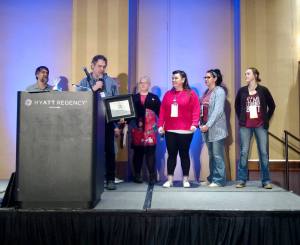
Sitka Food Co-Op general manager Keith Nyitray accepts the Co-Op Citizen Award this week at the 2019 Up & Coming Food Co-Op Conference in Milwaukee. Also pictured are (from left) Food Co-Op Initiative (FCI) executive director Stuart Reid, Jacqueline Hannah of FCI, Sitka Food Co-Op (SFC) member Donna Barragan, SFC board member Hannah Green and SFC board member/staff person Kate DesRosiers.

General Manager Keith Nyitray will go over all the operations and financials of this past year and the board will review the results from its recent survey and talk about future needs and plans for the co-op. The co-op paid members also will vote on by-law changes and where to send the “Co-op Cares” donations.

The co-op also is looking for new board members. The terms will last one or two years so that we can stagger terms out for board continuity. The co-op needs an active board to handle all the things a general manager can not, or should not, handle.

If you’re interested in joining the board, let us know by filling out the board application form. A copy of the tentative agenda can be found here.

In addition, the Sitka Food Co-Op earlier this week won the Co-Op Citizen award at the 2019 Up & Coming Food Co-Op Conference. There were three co-ops from around the country nominated for the award.

According to Nyitray, “The Cooperative Citizen award is awarded for exceptional embodiment of cooperative principle six, ‘cooperation among cooperatives’, within the startup food co-op community. Awardees have gone far above and beyond to share their knowledge, experience, and solutions with peer startups, contributing significantly to the growth of the overall food co-op startup community. Sitka Food Co-op was recognized specifically for its passionate and generous sharing of their unique development with other rural and small town food co-op startups that may benefit from using a similar model.”

Sitka Local Foods Network hosts second annual Sitka Food Business Innovation Contest

A sampling of current food products grown, manufactured or processed in Sitka

Do you think you have a great idea for a food business or product from Sitka? Do you grow food, fish for food, or cook food in Sitka? The Sitka Local Foods Network is hosting the second annual Sitka Food Business Innovation Contest in an effort to spark local food entrepreneurs so we can make more local food available to residents and visitors.

This contest will provide two $1,500 kicker prizes — one for established food businesses and one for start-up businesses (no older than two years) — to help entrepreneurs launch or expand their food businesses. The contest is open to food businesses and individuals making and selling food products in Sitka, Alaska. All food business ideas must be geared toward getting more locally grown, harvested and/or produced food into the Sitka marketplace through sales in grocery stores, the Sitka Food Co-Op, the Sitka Farmers Market, restaurants, or individual marketing (such as a community supported agriculture/CSA or community supported fisheries/CSF program).

“The Sitka Local Foods Network’s mission is to get more locally harvested and produced food into the diets of Southeast Alaskans,” said Charles Bingham, Sitka Local Foods Network board president. “For the past decade we’ve offered a entrepreneurs a chance to sell their produce, bread and fish at the Sitka Farmers Market, grown produce to sell at the market through St. Peter’s Fellowship Farm, and provided a garden education program to residents. We think this contest is the next step toward getting more local food into the Sitka marketplace.”

In 2018, we gave a $1,500 prize to Hope Merritt of Gimbal Botanicals in the established business category. We had no entrants in the start-up business category, so no prize was awarded. Hope used her prize money to hire two interns to help her harvest seaweed and kelp and to help produce her products.

Participants in this contest are eligible and encouraged to enter other food business innovation contests, such as the Path To Prosperity or Symphony of Seafood contests. All participants retain the proprietary rights to their products and ideas. This contest is open to new and existing food businesses in Sitka. Student businesses (such as those fostered by Junior Achievement or similar programs) are welcome.

There is a small $25 entry fee for this contest. All participants (business and individual) must complete and submit our contest entry form by 5 p.m. on Friday, April 5, 2019 (by snail mail so it arrives before the deadline to Sitka Local Foods Network, Food Business Innovation Contest Entries, 408-D Marine Street, Sitka, Alaska, 99835, or by email with the Subject Line of “Food Business Innovation Contest Entries” to sitkalocalfoodsnetwork@gmail.com). Submitting a business plan (up to 20 pages) is recommended, but not required.

Our entry form will have room for you to describe your food business idea in a few paragraphs, but submitting a business plan will give you more room to outline your plans for funding and marketing the idea and will help your overall score. Judging will be based on how your food business idea provides new local food options in Sitka, how novel is your food business idea, how feasible is your food business (can it make a profit and be sustainable), and how professional is your presentation. At some time about the third week of April, the Sitka Local Foods Network will host a pitch presentation where judges will interview the contest entrants and try samples of the food products. Our judging panel will score your presentation and entry form based on how your idea has a measurable impact on providing local food in Sitka (25%), has the potential for commercialization (25%), provides new employment in Sitka (25%) and fills a need in the Sitka marketplace (25%).

If we find additional sponsors, we may add additional prizes and categories (such as fish or farm). Depending on the number of entries and interest of the participants, we may host a reception where contestants can demonstrate their products to Sitka residents. If the reception happens, there will be a chance for people to vote on their favorite products with the winner receiving the People’s Choice Award (this will be separate than the two main prizes selected by our judging panel). We are hoping to find a sponsor for the People’s Choice Award. Note, if our panel of judges determine there isn’t a worthy entrant in one or both categories, then the Sitka Local Foods Network reserves the right not to award a prize. Marijuana edibles are not eligible for the contest.

• Sitka Food Business Innovation Contest Entry Form 2019

Scenes from the community conversation about our food with food systems expert/author Mark Winne

This past week, noted food systems/food policy expert and author Mark Winne was in Sitka to research his new book, tentatively called “Food Town, USA,” about the local food systems of seven communities around the country.

During his time in Sitka, Mark visited the Sitka Farmers Market, the Sitka Food Co-op, the Sitka Kitch, and several food businesses around town. He also helped lead a community conversation about our food on Wednesday, July 11, at the Sitka Public Library, a free event co-sponsored by the Sitka Local Foods Network and the Sitka Food Co-op.

This event was moderated by Doug Osborne, health promotion director at Sitka Community Hospital and a former Sitka Local Foods Network board member. It also featured a brief history of Sitka’s food system from current Sitka Local Foods Network board president Charles Bingham and an introduction to the Sitka Food Co-op by manager Keith Nyitray.

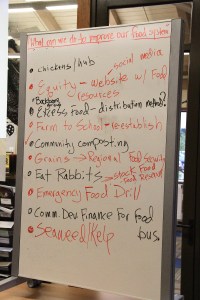
Those in attendance then had a chance to discuss Sitka’s food system, to find strengths and weaknesses. They also broke into small groups to discuss where they wanted for Sitka’s food system in the future.

A slideshow of scenes from the event is posted below. A PDF version of the brief history of Sitka’s food system also is posted below.

• A Story About Food In Sitka (opens as 13.5 MB PDF file, originally a much larger PowerPoint presentation)

This slideshow requires JavaScript.

Scenes from the first Sitka Farmers Market of the 2018 summer

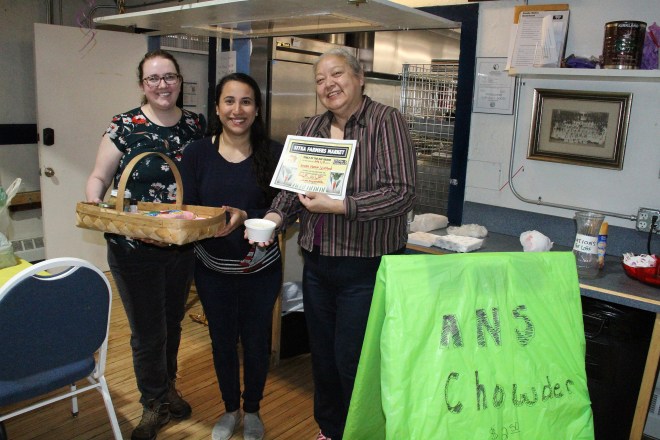
Sitka Farmers Market manager Nina Vizcarrondo, center, presents the Table of the Day Award to Rachel Henderson, left, and Liz Maric of the Alaska Native Sisterhood Camp 4 Clam Chowder Booth during the first market of the summer held Saturday, July 7, at the Alaska Native Brotherhood Founders Hall. ANS served bowls and cups of homemade clam chowder with pilot bread or crackers. As Table Of The Day Award-winners, Rachel and Liz received two Sitka Farmers Market t-shirts, some Evie’s Brinery fermented food, some birch syrup products from Kahiltna Birchworks, and a jar of Inga’s Spice Rub. The next Sitka Farmers Market is scheduled for 10 a.m. to 1 p.m. on Saturday, July 21, at ANB Founders Hall (235 Katlian Street). To learn more about the Sitka Farmers Market and how to be a vendor, go to the Sitka Local Foods Network website, http://www.sitkalocalfoodsnetwork.org, or check out our Facebook pages for the Sitka Local Foods Network and the Sitka Farmers Market.

We held our first Sitka Farmers Market of the summer on Saturday, July 7, with a full slate of booths and a big crowd. The weather even cooperated, providing just a few light sprinkles even though the forecast was for rain showers.

We kept running out of fresh produce at the Sitka Local Foods Network farm stand, even though our lead gardener made two extra runs back to the St. Peter’s Fellowship Farm communal garden to restock our supplies. Our vendors had a wide range of products for sale, including frozen fish and canned salmon (we’ve been without a regular fish vendor for a couple of years). We had vendors selling homemade clam chowder, home-baked bread, jams and jellies, sea veggies and teas, garlic scapes, carrots and other produce, locally produced medicinal herbs and tinctures, arts and crafts, and more. We also had a couple of food trucks and a hot dog vendor outside. And we introduced a couple of new Alaska Grown product lines at the Sitka Local Foods Network’s farm stand.

The next Sitka Farmers Market takes place from 10 a.m. to 1 p.m. on Saturday, July 21, at the ANB Founders Hall. There also are markets scheduled for Aug. 4, Aug. 11, Aug. 25, Sept. 1, and Sept. 15. To learn how to be a vendor at the market or how to be a volunteer, contact market manager Nina Vizcarrondo at (907) 738-9301 or assistant manager Charles Bingham (907) 623-7660, or email us at sitkafarmersmarket@gmail.com. We also have a kids vendor program at the market for young entrepreneurs age 12 or younger. Don’t forget to like our Sitka Farmers Market page on Facebook.

Also, join the Sitka Local Foods Network and Sitka Food Co-Op at 6 p.m. on Wednesday, July 11, at the Sitka Public Library, as we host a free community conversation about our food and food systems with nationally known food policy/food systems expert and author Mark Winne. Mark is in town researching a book where he’s looking at the local food systems of 8-10 small communities around the country, and he chose Sitka. Healthy snacks will be provided.

A slideshow of scenes from the first Sitka Farmers Market of 2018 is posted below.

This slideshow requires JavaScript.

Check out the July 2018 edition of the Sitka Local Foods Network newsletter

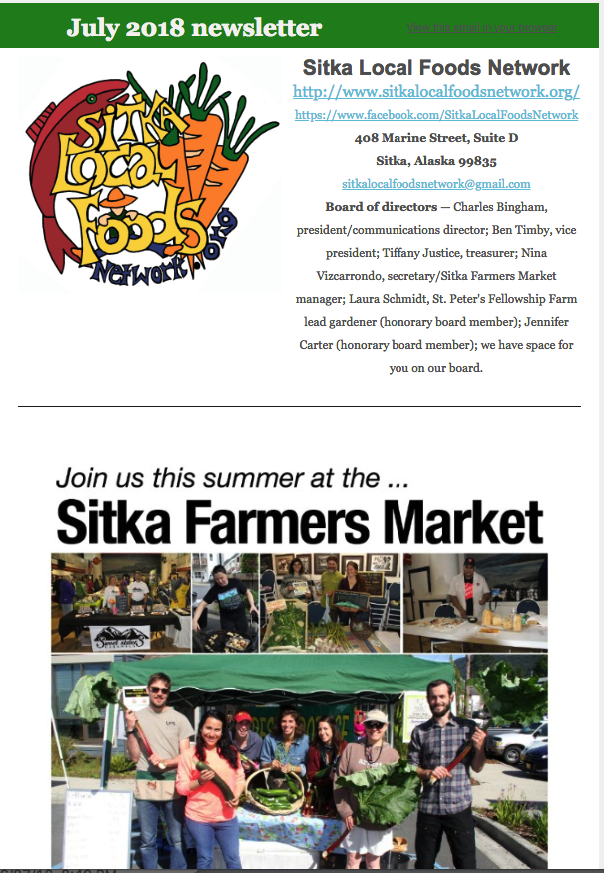
The Sitka Local Foods Network just sent out the July 2018 edition of its monthly newsletter. Feel free to click this link to get a copy.

This month’s newsletter includes short stories about the first Sitka Farmers Market taking place on Saturday, a a community discussion about our food with food policy expert Mark Winne, an invitation to join our board of directors, and an item about our sponsorship program.. Each story has links to our website for more information.

You can sign up for future editions of our newsletter by clicking on the newsletter image in the right column of our website and filling in the information. If you received a copy but didn’t want one, there is a link at the bottom of the newsletter so you can unsubscribe. Our intention is to get the word out about upcoming events and not to spam people. We will protect your privacy by not sharing our email list with others. Don’t forget to like us on Facebooklike our new Sitka Farmers Market page on Facebook and follow us on Twitter (@SitkaLocalFoods).

Food policy/food systems expert and author Mark Winne coming to Sitka to research new book

Nationally recognized food policy/food systems expert and author Mark Winne will be in Sitka from July 6-13 to do research on a new book, tentatively called “Food Town, USA,” where he examines the local food systems of eight to 10 small communities around the country.

“I’ll be visiting what may be America’s best little food town for research,” Mark wrote about Sitka on his website.

As part of his stay in Sitka, Mark will visit the Sitka Farmers Market, the Sitka Kitch, Sitka Food Co-Op, and a variety of local food businesses in town. He also will be part of a free community discussion about food from 6-7:30 p.m. on Wednesday, July 11, at the Sitka Public Library. This event is co-hosted by the Sitka Local Foods Network and Sitka Food Co-Op and moderated by Doug Osborne.

Mark’s career in food policy and food systems spans 40 years. From 1979 to 2003, Mark was the executive director of the Hartford Food System, a Connecticut nonprofit food organization. He is the co-founder of the now-closed Community Food Security Coalition where he also worked as the food policy council program director from 2005-12. During his time with the Community Food Security Coalition, he did some work to help get the Alaska Food Policy Council up and running.

He was a Kellogg Foundation Food and Society Fellow, a Johns Hopkins School of Public Health Visiting Scholar, and a member of the U.S. Delegation to the 2000 Rome Conference on Food Security. As a writer on food issues, Mark’s work has appeared in the Washington Post, The Nation, Sierra, Orion, and Yes!, to name a few. He is the author of three books — Closing the Food Gap: Resetting the Table in the Land of PlentyFood Rebels, Guerrilla Gardeners, and Smart Cookin’ Mamas; and Stand Together or Starve Alone: Unity and Chaos in the U.S. Food System, which was released at the end of 2017. All three books are published by Beacon Press.

Through his own firm, Mark Winne Associates, Mark speaks, trains, and writes on topics related to community food systems, food policy, and food security. He also serves as senior advisor to the Center for a Livable Future at the Johns Hopkins University School of Public Health. He now lives in Santa Fe, N.M.

In an email he sent to various members of Sitka’s food community, Mark wrote:

“Food continues to become a larger but not fully acknowledged force in the lives of American communities. From health and nutrition, to food security, to economic development, to the simple need for a good quality of life, food can define a community’s identity as well as determine who benefits and who doesn’t. I am going to tell “stories” about eight to 10 small to mid-size cities and regions for whom a ‘food scene,’ a food consciousness, a sense of commitment to those who do not benefit from a growing prosperity, and an expanding number of local ‘food system’ stakeholders are on display if not actually working collaboratively. I want to know about the history of each community’s food evolution, what its key moments might have been, and who has played timely roles. The purpose of the story I’m telling about these places, which I am not claiming are exceptional, is to stress that food is a “bigger deal” than we think, and that if you take it seriously, food will not only lift up our quality of life, it will ensure that everyone can enjoy a better quality of life. I am selecting places that are not Berkeley, Boulder, or Brooklyn, but are understated and often overlooked.”

For more details about the community discussion about food on July 11, contact Charles Bingham at 623-7660 or charleswbingham3@gmail.com

Sitka Food Co-op to host annual meeting and potluck on Sunday, March 11

The sixth annual Sitka Food Co-op annual meeting and potluck dinner will be from 3-5 p.m. on Sunday, March 11, at the Sitka Fire Hall Conference Room. This meeting is free and open to the public, so please bring a dish to share (what’s a food co-op meeting without food?). You can RSVP for the meeting by clicking this link.

General Manager Keith Nyitray will go over all the operations and financials of this past year and the board will review the results from our recent survey and talk about future needs and plans for the co-op. We will also vote on a by-law changes and where to send the “Co-op Cares” donations.

We also are looking for board members. Currently, we are just an interim board with some of us hoping to get officially elected in. The terms will last one or two years so that we can stagger terms out for board continuity. The co-op needs an active board to handle all the things a general manager can not, or should not, handle.

If you’re interested in joining the board, let us know by filling out the board application form.

We can’t wait to see you all on March 11 and, together, we’ll eat some yummy food and help the co-op continue thriving

A Q&A about growing garlic in Sitka with Andrea Fraga of Middle Island Gardens

In recent years, Andrea Fraga and her partner, Kaleb Aldred, have been growing garlic at Middle Island Gardens, which they sell at Sitka Farmers Markets and on Sitka Food Co-Op pick-up days. They also are selling some of their garlic to local restaurants. Recently, Andrea responded to some questions about Middle Island Gardens.

Q: What prompted you to start Middle Island Gardens? Also, please tell me some of the basics about how you started the operation.

A: Kaleb and I began gardening as a means to be more self-sufficient, and after finding it immensely satisfying, we expanded our efforts into every semi-flat, semi-sunny spot. We even got away with growing unfenced potatoes before the deer developed a taste for them. So, one garden became two, then three years ago we were able to expand our efforts to a third, much larger and sunnier spot, and the idea to grow food commercially naturally arose. The hard work that stood between us and our goal was encouraged by the excitement of a shared vision to grow lots of local produce in a place where food security is a real consideration. At the same time, we got to create an artistic edible space together that we are both rather addicted to spending time in, and when someone eats our produce they get to share in that beauty a bit.

beach garden

Q: Did you have much of a farming or gardening background before you started Middle Island Gardens? If not, how did you learn about growing garlic in Southeast Alaska?

A: We both come from grandparents who worked the soil, though Kaleb took to fishing the seas as a young adult. Meanwhile, I was dabbling in gardening down in southern Oregon, and working on a few farms as well. When I moved to Sitka I was eager to continue in this vein, which seemed especially important considering how far fruits and veggies have to travel to get here. Kaleb likes to be helpful, so he whacked together a couple of raised beds, and we were off. Luckily there are some great local resources for a gardener adapting to Southeast Alaska’s soggy climate, and I remember reading Juneau Garden Club’s Gardening in Southeast Alaska and discovering Juneau master gardener Joe Orsi’s article Growing Garlic in Rain Country, as well as Florence Welsh’s excellent blog “Sitkavores.” She very generously donated some planting stock to us after I asked her which varieties she recommends (Georgian crystal and Persian Star, a.k.a Samarkand).  Washington grower Ron Engeland also wrote the very informative book Growing Great Garlic.

Q: What types of garlic do you grow, and what are the differences?

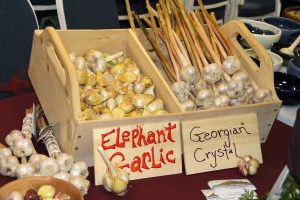
A: There are two main types of garlic. The softneck, or non-bolting type, and the hardneck type which produces a flowering scape.  We grow hardneck garlic, as it is hardier, more delicious, and produces those tasty scapes too. Among the hardneck garlics there are several subcategories — rocambole are most sought after for flavor; porcelain types have fewer, but larger cloves (2-6); then there are the purple-striped. We grow Killarney red, German red, Russian red and carpathian (rocambole), Georgian crystal, music and Russian giant (porcelain) chesnok red (purple stripe), and purple glazer (glazed purple stripe), as well as elephant garlic.

Q: What other crops do you grow and how have they done?

A: We grow just about everything that can tolerate this cool, wet, short season climate — potatoes, kale, carrots, peas, parsley, fava beans, broccoli, beets, lettuce, raspberries, strawberries, blueberries, gooseberries. We have also planted hardy kiwi vines, apple, plum and cherry trees, but they are still in their unfruitful adolescence at this point. One challenge I have noticed in the past couple of years is the arrival of a few different defoliating caterpillars. They seem to prefer berry bushes, especially raspberry canes, but will also eat apple leaves and even kale. It’s been a challenge that we have been dealing with by squishing them so far.

Q: Do you have any secrets for growing garlic in Southeast Alaska you’d like to share? (Andrea taught a growing garlic class Sept. 14 and her handout is linked at the bottom of this Q&A.)

A: We have had such wonderful results by using IRT (infrared-transmitting) plastic. Because garlic spends 10 months in the ground, many of which involve torrential rains, planting through this plastic mulch protects the soil from erosion, while also suppressing weed growth and warming the soil.  We’ve also increased the plant spacing from 4×4” to 6×8” and noticed a major increase in bulb size, which could also be a result of planting a couple of weeks earlier …. in late September. Mixing a nitrogenous cover crop such as vetch into the soil may also help, as it provides slow-release nitrogen and a loose, fluffy soil environment for bulbs to grow in.

Q: How hard is it to make a small garden/farm work in Southeast Alaska? What kinds of barriers and rewards are there?

A: The climate is by far the most challenging aspect of growing food here, but the landscape is also rather unsuitable. As many Southeast Alaska gardeners know, it can be difficult to come up with enough soil to get started, and then this soil must be heavily amended every year to counteract the incredible rinsing it receives. Kaleb and I are constantly carrying loads of seaweed and shell sand uphill to gardens, but the rewards are well worth it – nutritious food, lovely gardens, mandatory exercise, and spending time in beautiful places.

Q: You are growing garlic on one of Sitka’s barrier islands? Does that help give you better sun exposure, soil, etc.? Does it also make things harder when you need to bring product into town?

A: I think Middle Island may be just a couple of degrees warmer than Baranof Island at times.  Other than that, we are just fortunate to have the majority of our growing space be in a rather sunny spot, though we did work hard clearing trees to achieve this. We are also fortunate in that we don’t have any farming neighbors to compete with when it comes to collecting seaweed off the beaches after a storm. As far as bringing produce into town, I do often envy the farmer who’s able to park a pickup in the field, fill it up and drive it directly to the market. Lately I have made sure to provide a sort of mattress pad for the garlic to sit on in its tote as we skiff to town over autumn’s bumpy seas.

Q: Do you have any mentors who have helped you in your business?

A: Speaking of bringing produce to town, Bo Varsano and Marja Smets of Farragut Farm (outside Petersburg) have a much more challenging situation to overcome.  They live and farm up a tidal slough, and sometimes have to get up in the middle of the night to load their boat for the four-hour journey to Petersburg.  Those folks have definitely been an inspiration to us, as have Sally Boisvert and Rafe McGuire of Four Winds Farm in Haines, Joe Orsi of Orsi Organic Produce in Juneau, and of course Florence Welsh of Sitka, who is so incredibly generous with both her knowledge and her plants. Keith Nyitray of the Sitka Food Co-Op has been very encouraging and helpful, providing us a space to sell veggies and promoting our produce to boot. And, of course, we appreciate the Sitka Local Foods Network doing the same.

Q: How large is your operation and what is your ultimate goal?

A: We have approximately 4,500 square feet in production, minus paths, and are definitely eying every reasonable area for expansion. Though this is ridiculously tiny for agriculture, for Sitka we feel blessed to have so much space, and while we may not be able to ever make our entire living off of it, we’re going to try our best and just have fun along the way, meanwhile providing Sitkans as much nutritious food as the land and our efforts will allow.

Q: Do you have any other comments about Middle Island Gardens you think might interest others in Sitka and Southeast Alaska about your business?

A: I urge everyone to read the incredibly eye-opening book Eating on the Wild Side by Jo Robinson. The premise of the book is that modern-day produce varieties, which have been bred primarily for storage, shipping and appearance, have inadvertently become less tasty and nutritious. In fact, some veggies, such as broccoli, lose a lot of nutrients in transit. This great book recommends specific varieties of plants to grow to maximize your nutrient intake, and Middle Island Gardens will be selecting next year’s varieties with this in mind. Also, when you eat local produce, grown with the seaweed, sand, fish and rain of this place, you are yourself made of this place, which is a really cool thing.

• Growing Garlic In Sitka handout from Middle Island Gardens