As you build your 2020 garden this spring, don’t forget to Plant A Row For The Hungry

(EDITOR’S NOTE: The following article first appeared on this site in April 2010. It is repeated with some updates because much of the information remains current and newsworthy.)

As you start to plan your garden for this spring and summer, don’t forget to Plant A Row For The Hungry. The Plant A Row For The Hungry program (also known as Plant A Row or PAR) is a national campaign by the Garden Writers Association of America (which recently changed its name to the Garden Communicators International) that has its roots in Alaska.

In the cold winter of 1994, Anchorage Daily News garden columnist and former Garden Writers Association of America President Jeff Lowenfels was returning to his hotel after a Washington, D.C., event when he was approached by a homeless person who asked for some money to buy food. Lowenfels said Washington, D.C., had signs saying, “Don’t give money to panhandlers,” so he shook his head and kept on walking. But the man’s reply, “I really am homeless and I really am hungry. You can come with me and watch me eat,” stayed with Lowenfels for the rest of his trip.

Jeff Lowenfels

Jeff Lowenfels

The encounter continued to bother Lowenfels, even as he was flying back to Anchorage. During the flight, Lowenfels came up with an idea when he started writing his weekly garden column (the longest continuously running garden column in the country, with no missed weeks since it started on Nov. 13, 1976). He asked his readers to plant one extra row in their gardens to grow food to donate to Bean’s Café, an Anchorage soup kitchen. The idea took off.

When Anchorage hosted the Garden Writers Association of America convention in 1995, Lowenfels took the GWAA members to Bean’s Café to learn about the Plant A Row For Bean’s Café program. The Garden Writers Association of America liked the idea, and it became the national Plant A Row For The Hungry campaign (also known as Plant A Row or PAR). In 2002, the Garden Writers Association Foundation (now Garden Communicators International) was created as a national 501(c)(3) nonprofit to manage the Plant A Row For The Hungry program.

“I am not surprised by the growth of PAR,” Lowenfels wrote in a 2010 e-mail to the Sitka Local Foods Network. “It is now in all 50 states and across Canada and there are thousands of variations of the original program — from prison gardens for the hungry to botanical gardens donating their produce from public display gardens. This is because gardeners always share information and extra food, so the idea was a natural.”

It took five years for the program to reach its first million pounds of donated food, but the second million only took two years and the next eight years saw a million pounds of donated food (or more) each year. Since 1995, more than 20 million pounds of food (about 80 million meals, as of 2020) have been donated by American gardeners. Not only that, the program is getting ready to expand overseas to Australia, England and other countries with avid gardeners.

“We have supplied something in the vicinity of enough food for 50 million meals,” Lowenfels wrote in his e-mail. “Gardeners can solve this hunger problem without the government. And we don’t need a tea party to do it! Or chemicals, I might add, as author of a book on organic gardening!” Lowenfels is the author of Teaming With Microbes, written with Wayne Lewis. He released a second book, Teaming With Nutrients, as a follow-up to his first book, and in 2017 released a third book, Teaming With Fungi, as a second follow-up book.

According to the U.S. Department of Agriculture, one out of every eight U.S. households experiences hunger or the risk of hunger. Many people skip meals or eat too little, sometimes going an entire day or more without food. About 33 million Americans, including 13 million children, have substandard diets or must resort to seeking emergency food because they can’t always afford to buy the food they need. In recent years, the demand for hunger assistance has increased 70 percent, and research shows that hundreds of children and adults are turned away from food banks each year because of lack of resources.

According to the 2014 Sitka Community Food Assessment Indicators Report, about one in six people in Sitka is food insecure. In 2013, there were 1,410 Sitkans (out of a population of about 9,000) and 766 families receiving food assistance (SNAP, aka food stamps). There also were 229 individuals who received food pantry assistance from the Salvation Army and 7,243 meals served through its lunch soup kitchen in 2013, and that number has grown substantially since then.

While many people credit Lowenfels for creating the Plant A Row For The Hungry program, Lowenfels says the real heroes are the gardeners growing the extra food and donating it to local soup kitchens, senior programs, schools, homeless shelters and neighbors. You can hear him pass along the credit to all gardeners at the end of this 2009 interview with an Oklahoma television station (video also embedded below).

“One row. That’s all it takes. No rules other than the food goes to the hungry. You pick the drop-off spot or just give it to a needy friend or neighbor. Nothing slips between the lip and the cup, I say,” Lowenfels wrote in his e-mail.

With all of the jobs lost because of the COVID-19 coronavirus quarantines in 2020, this year there will be even more people who need food assistance. It will be more important than ever to help get extra produce into our local food banks and soup kitchens.

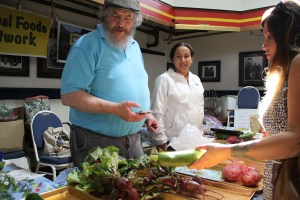
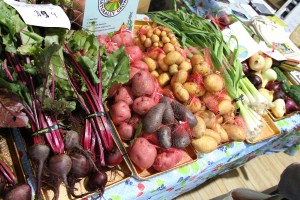
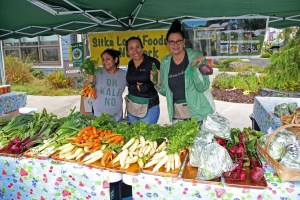
For people wanting to Plant A Row For The Hungry in Sitka, there are several places that would love to help distribute some fresh locally grown veggies or berries to those who are less fortunate, such as the Salvation ArmySitkans Against Family Violence (SAFV), local churches, Sitka Tribe of Alaska and other organizations. The food the Sitka Local Foods Network grows at St. Peter’s Fellowship Farm communal garden goes to the Sitka Farmers Market, school lunches and other programs.

People who participate in the Alaska Food Stamp program can use their Alaska Quest Cards to purchase produce and fish at the Sitka Farmers Market and other farmers markets around the state. People who participate in the  WIC (Women, Infants, Children) supplemental food program (operated in Southeast Alaska by the SouthEast Alaska Regional Health Consortium or SEARHC) also can use special farmers market vouchers to buy fresh vegetables at the Sitka Farmers Market and other farmers markets in Alaska (this is part of the national WIC Farmers Market Nutrition Program). The Sitka Local Foods Network matches up to $20 for produce purchased using WIC or SNAP benefits at the Sitka Farmers Market.

The Sitka Local Foods Network also takes donations of local produce to sell at the Sitka Farmers Markets, and all proceeds are used to help pay for SLFN projects geared toward helping more people in Sitka grow and harvest local food. For more information, contact the Sitka Local Foods Network board members at sitkalocalfoodsnetwork@gmail.com.

• Plant A Row informational brochure (2017)
Applications open for the 2020 Path to Prosperity competition, this year with a focus on minority-owned businesses

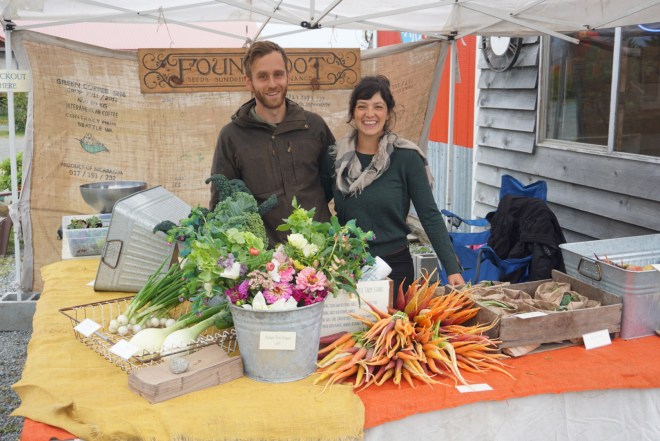
Nick Schlosstein, left, and Leah Wagner of Foundroot seed company operate their farm stand in Haines. Foundroot was one of the two 2019 winners of the Path to Prosperity business development competition.

In a time of economic upheaval, resilient businesses are needed more than ever. The 2020 Path to Prosperity (P2P) Competition aims to identify and support resilient, relevant, and innovative Southeast Alaskan businesses. Many of the winning businesses over the years have focused on food, including in 2019 with Foundroot seed company of Haines and Village Coffee Company of Yakutat winning, but there have been guitar manufacturers, ski makers, and other non-food businesses that have won.

This year, the competition is focused on supporting minority-led businesses and is now accepting applications for its eighth competition cycle. Twelve applicants will be selected as finalists to advance to Round 2 and receive an all-expenses paid trip to Juneau to attend Business Boot Camp. They also will receive one-on-one mentorship and consulting that they can use to help write their business plans and grow their businesses after Boot Camp. Two winners will be selected from the pool of finalists to win $25,000 each to start or grow their businesses.

Each year, Path to Prosperity aims to improve the program for entrepreneurs. Based off of feedback from past program participants, key insights by the McDowell Group, and in an effort to further align the program with Spruce Root’s core mission, the program will be making the following changes:

Awards

In the past competition cycles, two winners were selected to win awards of $25,000 for consulting and technical assistance to grow their business. This year, the program will expand the use of these awards to include long-term capital expenditures, such as equipment.

Justyne Wheeler of Village Coffee Company in Yakutat. Village Coffee Company was one of the two 2019 winners of the Path to Prosperity competition.

“At Spruce Root, we believe that through the business planning process, entrepreneurs are able to identify what they really need to take their business to the next level. We want the award to align with that fundamental belief,” program administrator Ashley Snookes said. “We still want to see the award being used for the capacity development of the entrepreneurs, but we recognize that along with that development, entrepreneurs may want and need to purchase equipment or other fixed assets.”.

Awards will not be able to be used for short-term purchases such as payroll or rent but are open to be individualized according to the business plan. Businesses that are able to make a strong case for how their award purchases will catapult their business forward will stand a greater chance of winning the competition, especially for businesses that do so by emphasizing the triple-bottom-line impacts of their business.

COVID-19

COVID-19 is disrupting daily operations for businesses throughout the nation, and Southeast Alaska is no exception.

“Applications are open as usual beginning April 1st, but other aspects of the competition will adapt with the changing health and economic environments of today,” Snookes said.

Instead of conducting in-person community visits, Spruce Root will be working virtually with community catalysts and leaders to encourage entrepreneurs to apply. As Business Boot Camp in September nears, Spruce Root will hold Boot Camp in person only if it’s safe to do so. The content of Boot Camp will be adapted to meet the changing needs of consumers.

“Demand for products and services that remain relevant and meet the needs of consumers is still as strong as it was six months ago, but what consumers want and need has changed,” Snookes said. “More than ever, Path to Prosperity will deliver content that’s relevant to today’s economic climate.”

Businesses that are looking to develop new products or services to adapt to the COVID-19 pandemic are strongly encouraged to apply.

Round 2 Scoring

This year, program administrators will be simplifying the Round 2 score sheet and providing finalists with a template that aligns with the new scoring guidelines.

“Business plans are as unique as the businesses they capture on paper. We hope that a shorter set of criteria and an optional template will enable entrepreneurs to work more clearly through what can be an intimidating and lengthy process,” Snookes said.

The program will also be shortening business plan submissions to a maximum of 30 pages (not counting the financial model). The template and shortened score sheet will go hand in hand with coaching and workshops from Spruce Root and other partner organizations to assist business as they develop business plans that work dynamically with their business.

Minority Focus

One of the unique opportunities in Path to Prosperity this year is the program’s focus on minority-led businesses.

“Southeast Alaska is a diverse region, and we hope the program will be especially beneficial to Alaska Natives and other minority communities this year,” Snookes said.

The 2020 program is sponsored largely by the Minority Business Development Agency, which defines minority-led businesses as United States citizens who are Asian, Black, Hispanic, Hasidic Jews, Native American, and Pacific Islanders. Ownership by minority individuals means the business is at least 51 percent owned by such individuals.

Timeline for 2019 Path to Prosperity Competition:

  • April 1, 2020 – Applications Open
  • May 31, 2020 – Applications Due at 11:59 PM
  • July 1, 2020 – Finalists Announced
  • September 18-20, 2020 – Business Boot Camp in Juneau, AK
  • December 7, 2020 – Round 2 Business Plans Due
  • February 2021 – Winners Announced

To apply or learn more, please visit https://www.spruceroot.org/path-to-prosperity

Over the past seven years, Path to Prosperity has received applications from 271 applicants in 23 Southeast Alaskan communities. We have trained 86 finalists at our award-winning Business Boot Camp and have awarded 15 finalists $510,000 to start or grow their business.

Path to Prosperity is a Spruce Root program that was started as a collaboration between Sealaska and The Nature Conservancy. Spruce Root is committed to assisting Southeast Alaska’s people and businesses to reach their full potential through loan capital and support services to promote economic, social, cultural, and environmental resiliency.

Alaskans Own community-supported seafood program opens 2020 membership sales

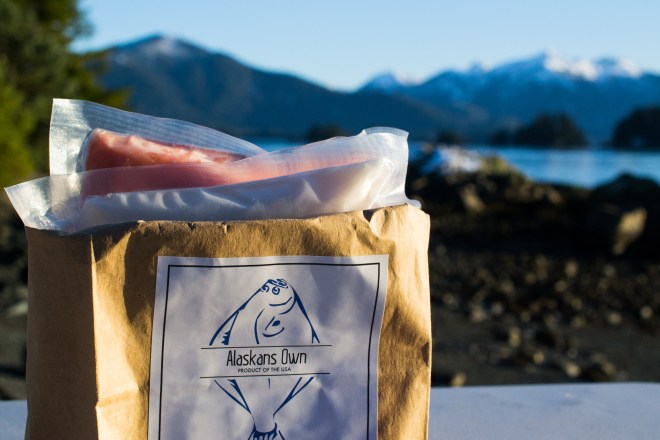
Alaskans Own (AO), a community-supported fishery (CSF) program run by the Alaska Longline Fishermen’s Association (ALFA), has opened and is receiving subscription orders for the 2020 season.

Alaskans Own was the first community-supported fishery (CSF) program in Alaska. Now in its 11th year, AO was created to connect consumers to small-boat fishermen, ensure that more fish caught in Alaska stays in Alaska, and create a sustainable source of revenue to support ALFA’s Fishery Conservation Network, which engages fishermen and scientists in conservation and research initiatives.

Similar to community-supported agriculture (CSA) programs, CSF programs address an important environmental and socio-economic need by strengthening consumer-producer relationships. By forward-funding a season of seafood, subscribers invest in sustainable harvest and the rural fishermen who catch their fish, as well as supporting the web of seafood-related jobs that provide the economic backbone for our coastal communities.

New this year, Alaskans Own is working with Seafood Producers Cooperative on the AO website for people to donate to cover a box of IQF (individually quick frozen) fillets delivered to the doors of Sitka’s families in need. Boxes are $30 and weigh approximately 10 pounds. Families will be identified through partnering Sitka wellness and aid programs. The donating person can specify a family to receive the box or allow families in need to be identified through mutual aid programs such as SAFV (Sitkans Against Family Violence) and other programs.. SAFV shelter is happy to take weekly donations.

ALFA and SPC are covering costs and will adjust as appropriate. Additional funding support for this program is welcomed.

There are four-month and six-month subscriptions available starting in May. The six-month subscriptions allow people to keep receiving fish through October instead of August, when the traditional four-month subscriptions end. Subscriptions include a mix of premium locally hook-and-line caught black cod (sablefish), halibut, king salmon, coho salmon, lingcod and rockfish, depending on the commercial fishing season and prices.

Alaskans Own has just released its 2020 prices, which are the same as the 2019 prices — choose either monthly installments or pay all at once and receive 5 percent off. Alaskans Own is currently doing a spring sale, where customers receive 10 percent off their entire order, including CSF shares, by using code Discount10 at checkout. Also, there is free shipping via Alaska Airlines Cargo for orders over 20 pounds.

CSF Prices:

  • Four-Month Feed-A-Few share (5 lbs/month, May-August, 20 lbs total), $375 paid in full or $99 monthly payment ($396 total for four months)
  • Six-Month Feed-A-Few share (5 lbs/month, May-October, 30 lbs total), $565 paid in full or $99 monthly payment ($594 total for six months)

In addition to the Feed-A-Few option, there also are larger Feed-A-Family and Feed-A-Neighborhood options for folks who need more fish than what’s in the regular package. Besides the monthly shares there are a variety of other packages, including different sampler boxes and individual species orders of wild-caught, flash-frozen, high-quality seafood available on the AO website.

In a Feb. 2019 customer survey taken by 40 randomly-selected Alaskans Own CSF subscribers, more than 73 percent gave their overall experience the highest possible rating, 5 out of 5 stars, which was designated as “very satisfied.” The survey asked CSF members what they liked best about Alaskans Own CSF, and the most common answers were excellent, great quality seafood, the variety of species, and supporting local, Alaskan fishermen.

Alaskans Own not only connects consumers with the local fishermen who caught their seafood, which is so important for transparency of the seafood supply chain, it also gives customers the opportunity to give to conservation projects because all AO profits go to the Fishery Conservation Network.

Customers who don’t live in one of Alaskans Own’s CSF cities (Sitka, Juneau, Anchorage, Fairbanks, and Seattle) can also partake by setting up a custom order with the Alaskans Own staff. The AO staff can be reached at alaskansownfish@gmail.com or (907) 747-3400.

Shares and seafood boxes can be purchased on the AO online store at alaskansown.com, and the deadline to order for this year is May 15.

Alaskans Own is a non-profit, community supported fisheries program. Joining Alaskans Own is about a lot more than buying great fish. It’s an investment in the health of both fish and fisherman, in a cleaner environment, more vibrant local economies and a better future for Alaska. Learn more about our Fishery Conservation Network at alfafish.org. You can follow the the Alaskans Own program on Facebook and on Instagram.

• Alaskans Own seafood brochure (from 2019, info still good, opens as PDF document)

Check out the April 2020 edition of the Sitka Local Foods Network newsletter

The Sitka Local Foods Network just sent out the April 2020 edition of its monthly newsletter. Feel free to click this link to get a copy.

This month’s newsletter includes short articles about the winners of the Sitka Food Business Innovation Contest, this week’s deadline to apply for the Alaska Permanent Fund Dividend and Pick.Click.Give. donations, an update on the Sitka Farmers Market and our contingency plans for the COVID-19 coronavirus outbreak, a fundraiser to help us build a new high tunnel at St. Peter’s Fellowship Farm, an invitation to join our board of directors, and an opportunity to sponsor us for 2020. Each story has links to our website for more information.

You can sign up for future editions of our newsletter by clicking on the newsletter image in the right column of our website and filling in the information. If you received a copy but didn’t want one, there is a link at the bottom of the newsletter so you can unsubscribe. Our intention is to get the word out about upcoming events and not to spam people. We will protect your privacy by not sharing our email list with others. Don’t forget to like us on Facebooklike our Sitka Farmers Market page on Facebook and follow us on Twitter (@SitkaLocalFoods).

Levi Adams, Andrew Jylkka win $1,500 prizes in third annual Sitka Food Business Innovation Contest

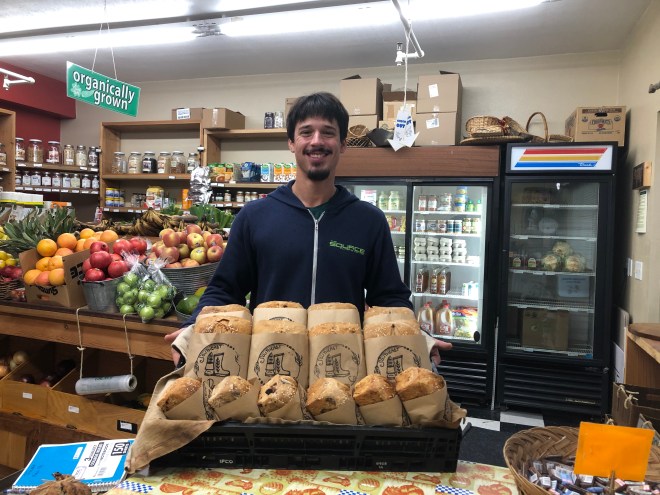
Andrew Jylkka of Southeast Dough Company baked sourdough bread in Wrangell before moving to Sitka earlier this year.

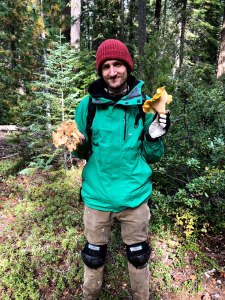
Levi Adams of Forage and Farm holds white and rainbow chanterelle mushrooms he harvested

One winner plans to cultivate mushrooms. The other is a baker who is selling bread and fermented foods to Sitka residents. Congratulations to Levi Adams of Forage and Farm and Andrew Jylkka of Southeast Dough Company, who won the two $1,500 prizes in the third annual Sitka Food Business Innovation Contest.

“We had some really good entries this year, but these two rose to the top,” said Charles Bingham, board president of the Sitka Local Foods Network, which sponsors the contest. “Even with the coronavirus outbreak, Andrew is actively baking and selling his bread. Levi is still getting his business started, but his entry was the most thoroughly written and researched, by far, of any we’ve received in the three years we’ve hosted the contest. The Sitka Local Foods Network’s mission is to increase the amount of locally harvested and produced foods into the diets of Southeast Alaskans, so we hope our prizes encourage local food entrepreneurs here in Sitka.”

The Sitka Food Business Innovation Contest has $1,500 prizes for each of two categories, start-ups (less than two years old) and existing businesses. This year all of the entries were in the start-up category, but since Andrew already was baking and selling bread and had a history of baking in Wrangell, his entry was moved to the existing business category so there could be two awards. “We felt both entries were deserving of awards,” Bingham said.

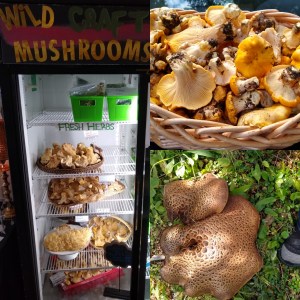
In his entry, Levi wrote, “My business will provide the opportunity for Sitkans to experience the healthful and flavorful addition of fresh and dried wild and cultivated mushrooms, both native and exotic to their daily routines. Forage and Farm will strive to meet the growing demand for culinary and medicinal fungi in the community by foraging fresh wild mushrooms in the warm seasons and bringing them to market at the Sitka Food Co-op, as well as distributing through an independent CSA (Community Sponsored Agriculture) program (Levi’s mother, Lori Adams, operates the Down To Earth Gardens CSA in Sitka). In the colder seasons, cultivated mushrooms will be provided.”

With several scouting trips under his belt, Levi said he is waiting for commercial harvest permits from the USDA Forest Service and the Alaska Department of Natural Resources (state forests). While waiting for the permits, Levi said he plans to gather red alder and hemlock logs so he can cultivate mushrooms on his family’s property. He also is looking to purchase refrigerator and dehydrator equipment to store and process the mushrooms.

“With funds obtained from the Sitka Food Business Innovation Contest I will redouble my efforts toward cultivation. I hope to bring a large number of diverse and nutritious mushroom species to the market as soon as possible,” Levi wrote. “Nothing supercharges my sense of purpose like applying permaculture principles to foraging and farming, and understanding that I can leverage those efforts to enrich and enliven my community. For partnering with me in this, the Sitka Local Foods Network has my deep gratitude and respect.”

Since moving to Sitka, Andrew has been baking about 50 loaves for Sitka Food Co-op deliveries and also selling through social media. He also was scheduled to teach a Sitka Kitch class on baking brioche before the coronavirus forced its postponement. In addition to baking his bread, Andrew has been making sauerkraut and kimchi to sell.

“Southeast Dough Company does not aim to just make a good loaf of bread,” Andrew wrote in his entry. “The goal here is to continue building on the positive food culture that exists in Sitka and strengthen the foundations of our community. I have a strong belief that good food brings people together and allows them an avenue to connect to one another that they may otherwise not find. My chosen medium for this product is bread. The mixing of water, flour, salt, and yeast has been at the heart of society for millennia and the breaking of bread is symbolic of neighbors coming together to build lasting connections.”

Andrew currently is using his home kitchen to bake his bread, and he estimated he could ramp up production to 400 loaves a week in his current kitchen. But he really wants to move into a larger commercial kitchen and possibly hire an assistant.

“This prize will help me take the next step to move out of my home kitchen and into a commercial space. I’m excited to be able to offer my products more consistently to the members of this community,” Andrew wrote. “I would love to participate in the farmers market, and I understand that everything is a waiting game right now so no worries there. I also need to make some decisions as to when I chose to expand with everything that’s going on.”

Last year’s winners were Brittany Dumag of Castaway (food cart with Cuban pork sandwiches using Alaska pork) and Tamara Kyle of Sitka Sauers (fermented foods), with a special youth winner award for Abigail Ward of Sitka Spices (meat and fish rubs). In 2018, the winner was Hope Merritt of Gimbal Botanicals (beach greens and local teas).

An update about the 2020 Sitka Farmers Market and our contingency plans

Usually the Sitka Local Foods Network has announced the dates of the summer’s Sitka Farmers Market by now. But, as most of you are aware, these are not ordinary times.

We had been making our usual plans, and even had dates we planned to announce about now, but with the COVID-19 coronavirus outbreak we had to go into wait-and-see mode. We even hired two new people to coordinate the Sitka Farmers Market this year — Ariane Martin Goudeau and Nalani James — because we’re losing our market manager of the past three years, Nina Vizcarrondo, to Coast Guard relocation.

Even though we’re in wait-and-see mode, the SLFN feels it does need to update the community.

First, we had big plans to grow even more produce than before at St. Peter’s Fellowship Farm communal garden. We bought a second high tunnel, which has been erected on the site, so we can extend our growing season and have a little help with climate control. Laura Schmidt has been our lead gardener for about a decade, and deserves a lot of respect for how much produce she grows on the small patch of land we have access to behind St. Peter’s By The Sea Episcopal Church. We thank St. Peter’s for allowing us to continue growing food for the community on its property.

Regardless of whether we hold the Sitka Farmers Market or not, we will grow produce this summer at St. Peter’s Fellowship Farm. Sitka’s food security needs more local food, so we plan to find ways to get the food into the community, somehow, someway.

If all things were normal, our plan was to hold seven Sitka Farmers Markets again this summer for our 13th season. Our tentative dates are from 10 a.m. to 1 p.m. on Saturdays, July 4, July 25, Aug. 8, Aug. 15, Aug. 29, Sept. 5, and Sept. 19, all at the Alaska Native Brotherhood Founders Hall.

The Sitka Farmers Market is about local food, but it’s so much more. It’s about community and providing local entrepreneurs with a place to sell their products. We really enjoy seeing everybody come together to see their neighbors and friends at the market. That’s a big reason we want to host the market, if it’s possible.

But we don’t know when our shelter-in-place orders are going to end and we can start returning to normal. We are researching alternative ways to get our fresh produce into the hands of Sitka residents. We want to provide fresh produce, but also need to be conscious of everybody’s health during an outbreak.

That may mean going to an online portal, such as the Salt and Soil Marketplace out of Juneau, which has been expanding into Sitka and other towns in Southeast Alaska. Middle Island Gardens, Gimbal Botanicals, and a couple of other Sitka businesses have used Salt and Soil Marketplace, so it’s not a new concept. How it works for Sitka is vendors post their products online, and from Tuesday through Thursday Sitka residents go online and order what they want, with a delivery usually on Saturday.

This is great and relatively easy, except you lose the community aspect of the market when it’s online. Also, the Sitka Farmers Market serves as a business incubator, and we lose that when we can’t have a market.

There’s another thing we lose, and that’s the ability to accept WIC farmers market coupons and SNAP Alaska Quest EBT cards, which is how we get local produce into the hands of lower-income Sitkans. We are still trying to work that problem out. We want to get fresh local produce into this part of the community, because Sitka has some major inequality with about one in every six residents on some form of food assistance program. Our mission is “to increase the amount of locally harvested and produced food into the diets of Southeast Alaskans,” so we have to make sure we include getting food to lower income people.

We will come up with a plan of some sort to make sure we do get produce into the hands of all Sitkans, but we have to be conscious of not spreading the coronavirus. It may mean we donate produce to a local food bank for distribution, or we donate some produce to WIC/SNAP beneficiaries and skip the normal reimbursement we’d get from the state. We have our White E grant to match WIC/SNAP benefits, so we can use that grant to help distribute the food, and absorb some of the loss through our general fund. It’s within our mission, and we can afford to do it for a few months.

Ideally, we will host our Sitka Farmers Markets as normal. But these are unusual times. We will look at what’s happening in mid-May, and we will make a further announcement then as to what our plans are. Hopefully we will be recruiting vendors for our market. If not, we will start setting up an account so people can order produce online.

If you have any questions, feel free to call Sitka Local Foods Network board chairman Charles Bingham at 623-7660 or email sitkalocalfoodsnetwork@gmail.com.

UAF Cooperative Extension Service to host online Master Gardener class for Sitka

The Sitka Master Gardener training— originally scheduled to start on Wednesday, March 25, and then postponed due to coronavirus precautions — will become distance-delivered and start on Monday, March 30.

Participants will meet from 6-8:30 p.m. on Mondays with the Juneau Master Gardeners class, through May 11. Because the Juneau training has already begun, additional classes will be scheduled online for Sitka participants at 6 p.m. on Wednesdays from April 1-22 to make up some of the hours missed. There also is one class session from 9 a.m. to noon on Saturday, April 25.

The session will provide basic and practical horticultural training on a wide range of topics, including how to design, plant and maintain successful gardens in Southeast Alaska. The classes will follow the Alaska Master Gardener program coordinated by the University of Alaska Fairbanks Cooperative Extension Service.

The UAF Cooperative Extension Service will host the session and the additional classes via Zoom webinar. The Juneau class is taught by Extension agent Darren Snyder, experts, and other Extension agents and staff. The Sitka additions will be organized by Extension assistant Jasmine Shaw and University of Alaska Southeast Sitka Campus biology professor Kitty LaBounty. Those also will be available by Zoom, through home internet.

Participants will commit to providing at least 40 hours of volunteer service to their communities within a year of completing the class. Trainees will be provided opportunities to share their skills with the community through various service projects and other venues.

Registration and additional details are available at http://bit.ly/SitkaMG. The $300 fee includes an Alaska gardening manual (Alaska’s Sustainable Gardening Handbook) and a $150 deposit that will be refunded if service hours are completed within a year. For more information, contact Jasmine Shaw at jdshaw2@alaska.edu.

UAF Cooperative Extension Service offers free online gardening classes

The Kenai District Office of the University of Alaska Fairbanks Cooperative Extension Service is offering a series of free online gardening classes.

These classes start on Thursday, March 19, and continue through May 21. You can find out more and register at this link. All of the classes start at 5:30 p.m., with most of the classes being on Thursdays and the other classes on Tuesdays.

Due to the COVID-19 coronavirus, UAF Cooperative Extension Service offices are closed to the public, so hopefully this online class series will help gardeners get their fix as they build their gardens this spring and summer. The link above also include access to some national online gardening classes.

Check out the March 2020 edition of the Sitka Local Foods Network newsletter

The Sitka Local Foods Network just sent out the March 2020 edition of its monthly newsletter. Feel free to click this link to get a copy.

This month’s newsletter includes short articles about the Alaska Permanent Fund Dividend and Pick.Click.Give. deadlines, the Sitka Food Business Innovation Contest deadline on March 6, a fundraiser to help us build a new high tunnel at St. Peter’s Fellowship Farm, an invitation to join our board of directors, an update on Sitka Kitch Winter Baking Series classes and a fundraiser event, and an invitation to sponsor us for 2020. Each story has links to our website for more information.

You can sign up for future editions of our newsletter by clicking on the newsletter image in the right column of our website and filling in the information. If you received a copy but didn’t want one, there is a link at the bottom of the newsletter so you can unsubscribe. Our intention is to get the word out about upcoming events and not to spam people. We will protect your privacy by not sharing our email list with others. Don’t forget to like us on Facebooklike our Sitka Farmers Market page on Facebook and follow us on Twitter (@SitkaLocalFoods).

Sitka Kitch to host Winter Baking Series class ‘Dumplings With Serena Tang’ on March 24

Learn how to make Asian-style dumplings in the sixth class of the new Winter Baking Series at the Sitka Kitch. The Dumplings With Serena Tang class takes place from 6-8:30 p.m. on Tuesday, March 24, at the Sitka Kitch community commercial kitchen.

Come learn about the really broad history of dumplings.  Once you understand the basics of how to make your very own dumpling wrappers — the world is your oyster.

In this class you’ll learn how to 1) make dumpling dough, 2) make wrappers, 3) make dumpling fillings, 4) fold different styles of dumplings, 5) cook dumplings in different styles (boiled, steam, pot stickers, etc.). and finally 6) how to make different sauces to accompany your dumplings. We’ll also go over standard East Asian flavor profiles and the locavore reasoning behind why different spices/flavors are in different cultures.

If you have any dietary restrictions or other preferences, let us know.  Dumplings are super versatile, but for learning’s sake we’ll be focusing on Chinese-style cabbage-and-pork dumplings (which can easily become vegetarian/vegan/pescatarian, etc.).

Serena, who works as a law clerk for the Alaska Court System, has a pretty broad culinary background. Growing up in Texas with Chinese-Malaysian parents, Serena has always been curious about the history of food and the reason why certain things are the way they are.  Serena’s been making dumplings with her parents since she was a little kid. She taught a similar class to the Sitka Spruce Tips 4-H program.

The registration deadline is 11:30 p.m. on Sunday, March 22. Space is limited, so register early to secure your place in the class. We need at least eight students to register and pre-pay to make this class happen. The class costs $40, which is part of our new all-inclusive fee system (you no longer have to pay a class fee to register, then a separate food/supply fee). You can register and pre-pay using credit/debit cards or PayPal on our EventSmart page, http://sitkakitch.eventsmart.com (click on class title). For those wanting to pre-pay with cash or check, please call Chandler O’Connell or Clarice Johnson at Sitka Conservation Society (747-7509) to arrange a payment.

Current (paid) members of the Sitka Food Co-Op are now able to attend the classes for $30 each (the co-op will cover the other $10 of your class fee). Please use the Sitka Food Co-Op ticket when you register and send an email to sitkafoodcoop@gmail.com letting them know you’re in the class. (NOTE, Only one person per Sitka Food Co-op household may use the co-op discount per class. Please name that person when you register so the name can be checked against the co-op membership list. If you register with the discount and can’t attend the class, the person who uses the ticket should be a co-op member or agree to pay the $10 discount difference.)

For more information about the class, contact Jasmine Shaw at 747-9440. We do offer one potential scholarship spot per class for people with limited incomes, so long as we have enough students registered to make the class happen. Contact Chandler at SCS for more details about the scholarship. This class is a fundraiser for the Sitka Kitch.

Also, the registration deadline for the fifth class in the Winter Baking Series, Brioche (and Pizza) With Andrew Jylkka, is 11:30 p.m. on Sunday, March 15, at the Sitka Kitch. This class takes place from 5:30-8:30 p.m. on Tuesday, March 17, at the Sitka Kitch. Details on other classes in the series will be posted as they become available.

In addition, the Sitka Kitch is hosting a vegetarian Indian food buffet fundraiser and silent auction from 5:30-8 p.m. on Wednesday, March 18, at Beak Restaurant. Doors open at 5:30 p.m., and the silent auction closes at 7:30 p.m. Seating is limited for this event, so register early. The cost is $40, with all proceeds going to the Sitka Kitch to promote new classes.

Students should enter the Sitka Lutheran Church through the back entrance (through the alley off Harbor Drive by the old Bev’s Flowers and Gifts location). The door on the right should be open for students to enter. Please do not park in the church’s back parking lot. Please use the public parking lots off Harbor Drive.

The Sitka Kitch also has a new class cancelation policy. If you register for a class, then find out you can’t attend, please email us at sitkakitch@sitkawild.org and we may be able to help fill your slot through our waiting list. If you cancel from the class at least five days in advance (eg, by Wednesday the week before for a Monday class), you are eligible for a partial refund of your class fee, minus $5 for processing (in this case, $35). If you need to cancel with less than five days advance notice, there is no refund.